Category: News

  • 11 Modern Metallic French Tip Nail Ideas From Silver Bands to Plum Cat-Eye

    11 Modern Metallic French Tip Nail Ideas From Silver Bands to Plum Cat-Eye

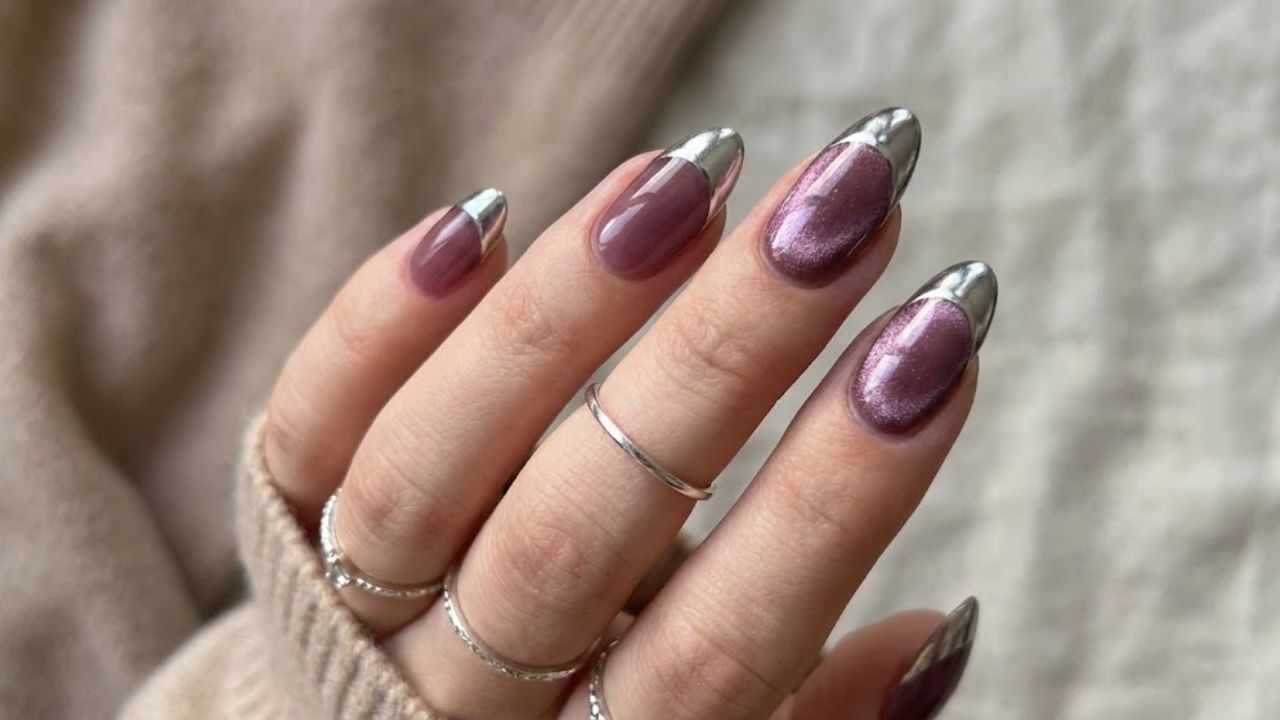
    Few things refresh a timeless manicure faster than changing its finish. Enter the metallic French tip—a modern update that replaces the classic white edge with shimmering arcs of gold, silver, and rich, jewel-toned hues that catch the light with every movement.

    While you can recreate the effect using metallic or glitter polish, the look truly shines when paired with cat-eye or chrome finishes. Today’s cat-eye formulas offer a more refined, subtle sheen than earlier glitter-heavy versions, giving nail tips a luminous, gemstone-like glow. Chrome accents, meanwhile, feel boldly luxurious. Beyond silver and gold, this trend also appears in berry, copper, olive, and soft romantic pink tones.

    Below are 12 metallic French tip nail ideas to inspire your next manicure dipped in molten-metal elegance.

    Silver Glaze Ombre

    A traditional white ombre French tip feels familiar, but a silver chrome ombre instantly modernizes the look. Here, a sheer chrome gradient seamlessly melts into a glossy nude base, creating a sleek, reflective finish.

    Latte Cat-Eye Tips

    Latte-toned nude cat-eye tips radiate quiet luxury. Keep the manicure feeling timeless by pairing the finish with a precisely filed square shape for clean, polished lines.

    Plum and Bronze Accents

    Soft plum cat-eye tips framed with bronze chrome edges create a mesmerizing contrast. Beyond its chic appeal, bronze complements both gold and silver jewelry, making it effortlessly versatile.

    Outlined in Gold

    Delicate gold chrome outlines give French tips the feel of built-in jewelry. Let these subtle details shine by pairing them with a crisp white and blush-pink base.

    Dark Glitter Finish

    Black French tips get a playful upgrade with a layer of fine holographic silver glitter. The added texture pairs beautifully with luxurious winter fabrics like velvet and leather.

    Chrome Smile Lines

    Tangerine and lilac aura nails evoke early spring energy, especially when topped with a sheer chrome overlay. Slim gold smile lines add structure while enhancing depth and dimension.

    24-Karat Gold Tips

    Gold chrome French tips make a striking statement against a soft pink base. For maximum impact, apply chrome over a black underlayer or choose a finish with green-gold reflections.

    Mixed Metal Details

    Combining metals instantly elevates any manicure. This look features a blush-pink cat-eye base with French tips and abstract accents coated in both gold and silver chrome.

    Pale Pink Romance

    Soft pink cat-eye tips paired with gold chrome ribbons feel undeniably romantic. Switching to silver chrome offers a cooler, icier interpretation of the same design.

    Persimmon Cat-Eye

    Inspired by winter’s persimmon hues, this manicure features a pinky-nude base with tips painted in a juicy orange cat-eye finish, perfect for subtle seasonal flair.

    Stained Glass Tips

    Stained glass French tips balance delicate detailing with a maximalist feel. They’re an ideal way to showcase ultra-fine cat-eye polishes in shades of pink, gold, and emerald green.

  • Lip Definition Trick: Liner Placement That Makes Lips Look Fuller Without Overlining

    Lip Definition Trick: Liner Placement That Makes Lips Look Fuller Without Overlining

    The girl in the cafe bathroom has no idea anyone is watching but several people in line are quietly fascinated by what she does with her lips. She runs a pencil along her lips with two fast strokes and presses them together before adding some gloss. She skips the exaggerated overlining and the complicated contouring routine. When she faces the mirror her lips look like she just came back from vacation and got plenty of rest. The effect is so natural that you cannot identify exactly what she did. There is no obvious outline or dramatic Instagram border. Her lips just appear soft and full and somehow more dimensional than other people’s lips. Later when you stand in front of your own mirror you attempt to recreate the look. You use the same pencil and the same gloss and the same expression. The result still looks flat though. Something about where she placed the pencil is different. It seems like a minor detail but it makes all the difference.

    This Isn’t About Bigger Lips — It’s About Guiding Where the Eye Lands

    Why the Classic Lip-Liner Rule Starts to Fail

    You know the traditional lip-liner advice: trace slightly outside your natural lip line, blur it, fill everything in, and you’re done. It’s a technique many of us learned early on, and for a long time, it worked well enough. But on real faces, in real daylight, heavy overlining can start to feel disconnected. Instead of enhancing your features, it can look like your lips and the rest of your face aren’t quite in sync, especially when seen up close or in natural light.

    The Subtle Shift Modern Lip Artists Are Making

    Today’s top lip artists are taking a more refined approach. Rather than trying to create the illusion of a dramatically bigger mouth, they focus on directing attention to very specific areas. The fullness you notice isn’t the goal—it’s a side effect. That’s why this method photographs so well, whether it’s a selfie, a Zoom call, or a casual conversation across a table. The change is subtle, but the impact is surprisingly strong.

    Millimetres Matter More Than Bold Lines

    The real trick happens in tiny adjustments, not thicker outlines. Once you notice where the pencil is actually placed, it completely reframes how you see lip lining. It’s not about reshaping your lips into something new; it’s about highlighting the natural structure that’s already there. This micro-precision approach keeps everything looking believable and softly enhanced rather than obviously drawn on.

    Where Makeup Artists Really Place the Liner

    If you scroll through TikTok or Instagram, you’ll start spotting the same pattern. Artists barely define the corners of the mouth. Instead, they concentrate pigment on three key zones: the peak of the Cupid’s bow, the center of the lower lip, and the small “pillows” just off-center. Around the edges, the liner is diffused and whisper-light, creating an outline that’s more suggestion than statement.

    Why the Results Look Effortlessly Natural

    A London-based makeup artist once explained that she uses the same lip pencil on every client, but changes the placement based on how light naturally hits their lips. People constantly ask her which filler clinic she recommends. She just laughs and replies with the name of a £7 lip liner and a grainy, low-light video of her technique. The most common reaction? “I don’t know what you did, but I look rested.” Fuller lips read as healthier, but the real effect is balance—the mouth suddenly feels in harmony with the rest of the face.

    The Science Behind Why This Technique Works

    There’s a simple reason this approach is so convincing. Our eyes don’t scan faces evenly; they jump to areas of contrast and shape changes. The dip of the Cupid’s bow, the soft curve at the center of the lower lip, and the light-catching areas where gloss naturally sits all pull attention. By enhancing these points and softening the corners, your brain quietly interprets the lips as fuller—without needing a bold or obvious outline.

    The Precise Liner Placement That Creates Fullness Without Crossing Your Natural Lip Line

    Start with dry lips and keep your mouth relaxed. No posing or duck face. Take a sharpened nude liner that matches your lip tone. Draw a tiny bridge straight across the cupid’s bow and connect the two peaks just slightly above your natural dip. Not a full M shape but a softened plateau. Next move to the center of your lower lip. Place the pencil about a millimeter outside your natural line at the fullest point only and sketch a short arc no wider than your iris when you look straight ahead. Leave the outer thirds of your lower lip almost untouched. Now join these central sections to your natural corners with feathery upward strokes that fade as they reach the edges. You’re almost losing the line as you move outwards. Smudge lightly with a fingertip and then tap a hint of gloss or balm just in the center. That’s it. The corners stay softer and the middle looks pillowy and nobody can quite see why. This trick sounds simple but the temptation is to overdo it. You add a little more on the sides and a bit more height and suddenly you’re in full overline territory again. On a phone screen it might look fine but in a lift with harsh lighting not so much. The restraint is what keeps it believable. We’ve all had that moment where we catch ourselves in daylight and think was my bathroom lying to me this morning. That’s usually the corners giving you away. When the liner hugs those outer edges too tightly any mismatch between skin & pencil becomes obvious. So work in stages. Line the center and check in a mirror from a step back and then gently connect to the corners only where you truly need it. Let’s be honest because nobody really does this every day. But learning this on a slow Sunday means you can swipe it on almost from muscle memory when you’re half awake before work.

    Why This Soft-Blur Lip Liner Technique Looks Natural on Real, Unfiltered Faces

    Rewritten Text Part of what makes this placement appealing goes beyond just how it looks. On a difficult Tuesday morning applying a sharp line around your lips can feel like putting on protective gear. This gentler approach feels more like enhancing what you already have. People will notice you look refreshed rather than obviously made up. From a practical standpoint it also reduces pressure. If your hand trembles slightly or the line comes out a bit uneven the effect still works because people see the overall impression rather than tiny imperfections. On days when your skin isn’t cooperating or your confidence is low that small margin for error means more than most people acknowledge. During an evening out this technique holds up well under different lighting conditions from bright bar lights to soft restaurant ambiance. Your lips maintain definition in the middle while staying soft on the edges & they move naturally with your facial expressions instead of looking stiff. It’s makeup that recognizes you’re a living person rather than a frozen image.

    Principe clé Nouvelle approche Bénéfice visible
    Mise au point centrale Le liner est appliqué principalement sur l’arc de Cupidon et le centre de la lèvre du bas Crée une impression de volume instantanée sans contours trop marqués
    Coins de la bouche allégés Application minimale ou absente du liner sur les commissures, avec un léger flou Aspect doux et équilibré, naturel même en plein jour
    Accent lumineux ciblé Gloss ou baume appliqué uniquement au centre des lèvres Amplifie le relief et donne des lèvres plus charnues en photo comme en réalité
  • MAD Method Builds Muscle Without Junk Volume When Used Correctly

    MAD Method Builds Muscle Without Junk Volume When Used Correctly

    The debate between high-intensity training and high-volume training continues to divide opinions, and we still refuse to take a hard stance. Both approaches have value, and the smartest path is often the one that fits your goals, experience, and recovery capacity.

    Experimenting with different training styles helps you discover what truly works for your body. Some lifters thrive at the extremes, while others perform best by blending methods. Finding that balance is often more effective than committing blindly to one philosophy.

    With high-intensity training, the biggest challenge is execution. Most people struggle to reach the true intensity required to stimulate muscle growth with very few sets. Limited experience, inconsistent technique, lack of confidence, or the absence of supportive training partners can all make genuine high-intensity work difficult to sustain.

    This is where advanced intensity techniques become valuable. Methods like supersets, forced reps, rest-pause sets, and drop sets help push muscles beyond standard fatigue. Among them, mechanical advantage drop sets stand out for their flexibility and effectiveness.

    Understanding Mechanical Advantage Drop Sets

    A mechanical advantage drop set involves performing a demanding exercise variation, then immediately shifting to an easier version of the same movement. If possible, you continue progressing to even simpler variations, with minimal rest and sustained effort.

    Take push-ups as an example. You might begin with feet-elevated or handstand push-ups, then move to standard push-ups, and finally to hands-elevated push-ups. Each transition reduces difficulty while allowing you to continue producing reps even as fatigue accumulates.

    Unlike traditional drop sets that reduce load, this method changes lever length, joint angles, or range of motion. This keeps muscles working through multiple sticking points, activating fibres that might otherwise remain underused.

    As with all high-intensity strategies, moderation is key. These sets are most effective when used sparingly—often as a final set—to drive muscles into deep fatigue while sharpening mental toughness.

    Effective Mechanical Advantage Drop Set Examples

    Upper-Body Pull Ladder: Chest-to-Bar Progression

    Targets: Lats, upper back, biceps

    • Strict chest-to-bar pull-ups: Pull the chest fully to the bar with controlled tempo until clean reps are no longer possible.
    • Chin-ups: Switch to an underhand grip and continue through a full range of motion until form deteriorates.
    • Inverted rows: Move to rows using a bar or rings, adjusting foot position to extend the set close to failure.

    Each transition improves leverage, creating a single extended set that thoroughly exhausts the pulling muscles without reducing load.

    Upper-Body Push Ladder: Bench Press Sequence

    Targets: Chest, shoulders, triceps

    • Wide-grip guillotine bench press: Lower under control toward the upper chest, stopping when control fades.
    • Standard bench press: Narrow the grip slightly and press to mid-chest, continuing with improved leverage.
    • Board press: Use boards or blocks to shorten range of motion and press to near-failure.

    This ladder shifts emphasis from chest to triceps, delivering maximum muscular stress within one prolonged effort.

    Lower-Body Squat Ladder

    Targets: Quads, glutes

    • Front squat: Maintain an upright torso and consistent depth until technical failure approaches.
    • Low-bar back squat: Reposition the bar to allow greater hip involvement and extend the set.
    • Box squat: Sit back under control and drive upward, using the box to maintain depth under fatigue.

    Each step reduces stability demands while preserving load, allowing for high-volume stimulus without compromising form.

    Bodyweight Pressing Ladder

    Targets: Shoulders, triceps, upper chest

    • Strict handstand push-ups: Maintain full-body tension and controlled movement until range breaks down.
    • Standard push-ups: Transition immediately to floor push-ups to continue pressing.
    • Incline push-ups: Elevate the hands and push close to failure.

    Reducing the percentage of bodyweight lifted at each stage preserves the pressing pattern while delivering deep shoulder fatigue.

    Shoulder Isolation-to-Compound Ladder

    Targets: Mid delts, rear delts, upper back

    • Lateral raises: Lift with strict control, keeping constant tension on the medial delts.
    • Rear delt raises: Perform from a hinged position to maintain tension without momentum.
    • Bent-over rows: Transition to rows to recruit the back and extend the set.

    This progression moves from isolation to compound work, finishing the entire shoulder complex with an intense muscular burn.

    Lower-Body Hinge Ladder

    Targets: Hamstrings, glutes, posterior chain

    • Dumbbell Romanian deadlift: Push the hips back with minimal knee bend, controlling the eccentric.
    • Dumbbell conventional deadlift: Introduce greater leg drive to continue pulling.
    • Single-dumbbell sumo deadlift: Widen the stance to shorten the lever and finish strong.

    By increasing mechanical advantage at each step, this ladder becomes a highly effective posterior-chain finisher.

  • Haircut for Fine Hair: Invisible Layering Trick Lifts Volume and Creates a Younger Look

    Haircut for Fine Hair: Invisible Layering Trick Lifts Volume and Creates a Younger Look

    Her stylist stands ready, scissors poised, head tilted with the calm patience that comes from years behind the chair. She lowers her voice. “My hair feels so thin now,” she says, almost apologetically. “I want volume, but I don’t want it to look… hacked.” She’s 56, her hair is silky soft, yet every extra centimetre seems to pull her features downward. In the mirror, the salon lights reveal a sparse crown, flat sides, and a fringe that’s lost its energy.

    The stylist smiles and suggests something unfamiliar: invisible layering. No harsh steps. No obvious graduation. Just hidden internal layers, placed quietly inside the cut to lift everything without announcing a dramatic change. When she leaves an hour later, her jaw appears sharper, her cheekbones subtly lifted, and her hair suddenly full of movement.

    Nothing about it looks layered. Yet everything looks different.

    The subtle revolution of invisible layers after 50

    Step into a busy city salon on a Saturday and the pattern repeats itself. Women over 50 twist the ends of their hair, pull it away from their faces, and scroll through photos on their phones. They aren’t chasing extremes. They want lighter hair, soft fullness, and a younger-looking shape that still feels like themselves.

    Fine hair makes this balance delicate. One wrong cut and the hair can appear thinner instead of fuller. This is where invisible layering excels. The stylist creates micro-layers inside the haircut, keeping the outer surface smooth. Think of it as hidden support: hair lifts gently at the roots, moves naturally, and frames the face in a way that quietly turns back time.

    It’s the kind of cut you only truly notice when you see the “before” image.

    At a London salon specialising in mature clients, stylists estimate that nearly 60% of over-50 appointments involve fine hair and a request for more volume. One regular client, Claire, 62, spent years relying on headbands and low ponytails. Her frustration was familiar: “If I cut it, it looks thinner. If I grow it, it drags my face down.”

    Her stylist suggested a collarbone-length bob with invisible layers. No choppy edges. No surface texture. Weight was removed from the interior, with slightly shorter strands hidden beneath longer ones, especially at the crown and the nape. The result wasn’t a dramatic makeover. It was something quieter and far more convincing.

    A week later, Claire returned simply to say people kept asking if she’d lost weight or changed her skincare. No one mentioned her hair. That’s the hallmark of invisible layering: people sense a difference, but can’t quite name it.

    Fine hair follows its own rules. Each strand is thinner, often softer, and sits closer to the scalp. Traditional visible layers remove weight from the ends, exposing fragile lengths. The result can be wispy separation that exaggerates hollows and sagging, ageing the face instead of refreshing it.

    • The benefits of journaling about daily interactions to uncover patterns in social behaviors
    • Why people reassess priorities after major life milestones
    • The hidden reason procrastination increases during emotional overload
    • How placing a small bell on the inside of your front door increases awareness of comings and goings
    • Why chernozem, known as “black gold,” has layers up to one meter deep and shaped global agriculture
    • Emergency declared in Greenland after researchers observe orcas near melting ice shelves
    • Why waiting twenty minutes after eating before brushing protects tooth enamel
    • The overlooked impact of urban noise on wildlife

    Invisible layering works in reverse. The stylist removes weight where hair naturally collapses: near the roots, under the crown, and behind the ears. These tiny internal changes encourage hair to stack softly on itself. The outer edge remains clean and full, so the ends never look chewed or thin.

    This directly affects how the face is framed. A gentle lift at the crown can visually raise the face. Subtle interior layers near the front open the eyes, while fuller ends around the jaw create a soft contour. The brain reads this structure as energy and youth, without shouting “new haircut.”

    How invisible layering creates volume and softens facial lines

    Invisible layering isn’t a single haircut; it’s a cutting technique. It works just as well on a pixie, a French bob, a midi length, or longer hair that grazes the chest. The difference lies in scissor placement. Instead of carving visible layers on the surface, the stylist works inside the shape, shortening tiny sections you never see.

    Ask your stylist to concentrate internal layers around three areas: the crown, the occipital bone, and the cheekbone-framing zone. These are common collapse points in fine hair. Lightening them from within allows the rest of the hair to sit on top and appear fuller, much like padding beneath a cushion.

    The result is a haircut that looks simple but styles effortlessly.

    Invisible layers perform best when paired with realistic habits. Length should suit your lifestyle. If you dislike blow-drying, a jaw-length bob with internal layering and a natural part will serve you better than a complex, high-maintenance cut.

    Many women over 50 hold onto length hoping it feels more feminine, even as density changes. Long, fine hair can elongate the face and make features look tired. A slightly shorter cut with smart internal structure and fuller ends often does the opposite: it lifts. On an exhausting morning, that lift can feel transformative.

    Let’s be honest: almost no one recreates elaborate salon blow-outs daily. A well-designed invisible-layer cut builds in structural support, so even a quick finger dry looks intentional.

    As one senior stylist explained, “After 50, my job isn’t to chase trends. It’s to make the face look awake. Invisible layers let me do that without destroying the haircut.”

    • Ask for invisible or internal layers, not heavy layering
    • Bring photos showing movement, not just length
    • Keep the perimeter solid for fullness
    • Use a soft fringe or face-framing pieces to ease lines
    • Schedule regular light trims instead of drastic changes

    Living with invisible layers: everyday volume without effort

    An effective invisible-layer cut must work beyond salon lighting. It needs to survive busy mornings, commutes, heat, and humidity. The strength of this technique is that the effort is built into the shape. At home, you’re simply guiding the volume.

    For fine hair, that can mean rough-drying roots in the opposite direction of your part, then flipping back. The internal layers catch against each other, creating natural lift. A small amount of lightweight mousse or root spray at the crown can enhance this effect.

    You don’t need to battle your hair every day. You need a cut that does some of the work for you.

    Certain mistakes can undermine invisible layering. Over-texturising with razors or thinning shears can cause fine hair to fray and separate, destroying the illusion of density. Pairing heavy interior layers with a blunt fringe can also create imbalance.

    Product choice matters too. Rich, heavy conditioners can flatten fine hair and erase internal lift. Switching to a light volumising conditioner, applied only to mid-lengths and ends, often reveals movement you didn’t realise was there.

    Emotionally, hair after 50 often feels like negotiation. Texture shifts, density changes, greys appear, yet you still want to recognise yourself. A cut with hidden intelligence can be a quiet affirmation that you’re still you.

    For many women, the first invisible-layer cut feels risky. It sounds less comforting than “just a trim.” But the change isn’t about losing length; it’s about internal architecture. One client described it as “air being put back into my hair.”

    An unexpected benefit is freedom. When hair is structured from within, minor imperfections look intentional, not messy. Flyaways suggest lift. Irregular ends suggest movement. Invisible layers allow hair to be slightly imperfect and still polished.

    This is the real youth trick: not copying twenty-something styles, but working intelligently with what you have so your hair and face tell the same story — current, alive, and authentic.

    Once you experience hair that lifts and moves without effort, heavy one-length styles feel hard to return to. You may notice subtle changes too: how you tuck hair behind your ear, how earrings sit, how confidently you catch your reflection.

    More women are now asking for hair that supports the lives they actually live. Invisible layering, especially for fine hair after 50, is a quiet answer to that request: clever, low-drama, and effective.

    It often begins with one question: “How can we add volume without making my hair look obviously layered?” From there, you discuss where your hair collapses, your daily routine, and the features you love.

    The scissors handle the rest, subtly reshaping how your hair sits and how your face is framed. You leave not looking transformed, but more like yourself. And that’s the kind of change people notice without ever quite knowing why.

    • Invisible layering: Hidden micro-layers inside the haircut to create volume without thinning fine hair
    • Face-framing effect: Gentle lift at the crown and around cheekbones and jawline for a fresher look
    • Low-effort styling: Internal structure that works with minimal products and daily routines
  • Skipping the Gym for Walking Works Only When You Maintain Continuous Movement at a Steady Pace

    Skipping the Gym for Walking Works Only When You Maintain Continuous Movement at a Steady Pace

    Every January, gyms crowd with people chasing a fresh start, yet a growing number quietly step away. Some feel uncomfortable in gym spaces, others struggle to stay motivated, and many simply dislike indoor workouts altogether. For these individuals, walking has become the preferred alternative. It requires no contracts, no mirrors, and no entry barriers. Just a pair of shoes and an open path. Increasingly, people are discovering that walking can deliver meaningful health benefits without the pressure or complexity often associated with gym-based exercise.

    Scientific research supports this shift. Regular walking helps strengthen the heart and lungs, supports weight management by encouraging fat use, improves circulation, protects bones and muscles, and reduces the risk of chronic conditions such as type 2 diabetes and cardiovascular disease.

    Walking can function as a quiet yet effective workout for those who avoid gyms, but only when it reaches the right intensity and duration.

    The challenge is that a slow, interrupted stroll between errands does not produce the same results as a focused, continuous walk. Public health advice can feel vague, leading many people to overestimate what casual steps achieve.

    The 30-minute guideline and why steady walking matters

    Sports nutritionists and trainers often highlight a simple rule: when walking replaces structured exercise, it should last at least 30 minutes, completed in one continuous session, without frequent stops, at a steady pace of around 5 km/h (3.1 mph).

    This pace places most healthy adults in the moderate-intensity zone. The heart works harder, breathing becomes faster, and the body shifts toward using fat as a primary fuel source. Shorter or broken walks still offer benefits, but they rarely challenge the cardiovascular system in the same way.

    The practical target is clear: 30 minutes without stopping, at roughly 5 km/h, where speaking in short sentences is possible but singing feels uncomfortable.

    How a 5 km/h pace feels in real life

    Many people are unsure how fast they actually walk. While fitness trackers provide numbers, the body gives reliable signals that indicate the right pace:

    • You can hold a conversation in short sentences, but long explanations feel tiring.
    • Your breathing becomes deeper and slightly quicker, without gasping.
    • You feel warm or lightly sweaty after 10–15 minutes, even in cool weather.
    • Your stride naturally lengthens, and your arms swing more freely.

    This is not race walking. It is brisk, intentional movement that keeps you progressing forward, without long pauses at shop windows or constant phone use at crossings.

    Why continuous effort outperforms scattered steps

    Many people accumulate 8,000 or even 10,000 steps across an entire day, yet notice limited changes in fitness or body weight. Continuous walking affects the body differently than low-intensity movement spread over many hours.

    How walking patterns influence results

    • Short, scattered walks: Support joint mobility and circulation, but provide only mild cardiovascular stimulation.
    • One 30-minute brisk walk: Creates a stronger challenge for the heart and lungs, increases calorie use, and has a clearer effect on mood and sleep.

    During a sustained 30-minute walk, the cardiovascular system remains engaged long enough to adapt. Blood flow increases, the heart pumps more efficiently, and muscles use oxygen more effectively. Hormones involved in mood and stress regulation, including endorphins, respond more strongly to continuous effort.

    Health benefits that extend beyond weight management

    Weight control often dominates conversations about walking, but the benefits reach much further. Regular brisk walking is linked to better digestion and fewer episodes of constipation, as body movement stimulates gut activity. Improved circulation and sleep quality also support immune function.

    The brain benefits as well. Moderate, consistent activity is associated with stronger memory, improved focus, and a lower risk of age-related cognitive decline. Researchers highlight the hippocampus, a region critical for memory formation, which appears to shrink more slowly in physically active adults.

    Brisk walking supports mental health and cognitive function, not just physical fitness.

    Outdoor walking adds further advantages. Exposure to daylight supports vitamin D production, which contributes to bone strength and immune health. Time outside also helps regulate the body’s internal clock, improving sleep patterns and overall rest quality.

    Reduced swelling, improved posture, and a calmer mind

    Regular walking can reduce leg swelling by improving venous return. The calf muscles act as a pump, helping blood flow back toward the heart, which is especially important for people who sit or stand for long periods.

    Posture often improves over time. Brisk walking encourages an upright position, relaxed shoulders, and gentle core engagement. This reduces strain on the lower back and neck, particularly when combined with simple habits such as looking ahead instead of down at a phone.

    Mentally, daily walking is associated with lower perceived stress, fewer low-mood episodes, and better sleep. Many people use their walk as a transition between work and home, creating a simple routine that helps the mind reset.

    Who the 30-minute brisk walk is suitable for

    One reason health authorities consistently recommend walking is its wide accessibility. Young adults, working professionals, and many older individuals can all adjust it to their ability. Beyond comfortable footwear and weather-appropriate clothing, no special equipment is required.

    This accessibility matters in regions where gym access is limited or costly. Walking transforms streets, parks, and even long corridors into usable training spaces. For people with mild joint discomfort, it often feels gentler than running while still offering meaningful physical challenge.

    From students to retirees, a daily 30-minute brisk walk can anchor a healthier routine.

    When 30 minutes at 5 km/h feels too demanding

    Not everyone should begin at this pace and duration. Individuals with heart conditions, severe joint pain, respiratory issues, or long periods of inactivity may need medical guidance before increasing intensity.

    A gradual progression can help:

    • Weeks 1–2: 10–15 minutes at a comfortable pace, once daily.
    • Weeks 3–4: 20 minutes, including 5–10 minutes at a brisk pace.
    • Weeks 5–6: 30 minutes total, aiming to maintain a steady, faster rhythm.

    Those unable to walk continuously can divide the time into two 15-minute brisk sessions. The focus remains on maintaining rhythm and limiting idle pauses.

    Making walking a consistent daily habit

    Turning guidelines into habits often depends on small adjustments rather than major promises. Many people succeed by scheduling their walk like an appointment, whether before breakfast, during lunch, or after work, with backup indoor routes for poor weather.

    • Use a timer to ensure the full 30 minutes is completed.
    • Choose a familiar loop that takes roughly the same amount of time.
    • Walk with a friend occasionally for accountability.
    • Keep simple gear ready, such as a cap, gloves, or a light waterproof layer.

    Combining walking with other low-impact activities, such as light strength exercises or mobility work at home, enhances results. Stronger leg and core muscles make brisk walking easier and help protect joints.

    Additional benefits and potential risks to note

    Even those who train regularly can benefit from a 30-minute brisk walk. It works well on recovery days, improving circulation and reducing muscle stiffness without adding heavy strain. Office workers gain valuable movement after long hours of sitting.

    There are some risks. Sudden increases in speed or distance can lead to overuse injuries such as shin splints or knee discomfort. Poor lighting and uneven surfaces increase fall risk. Choosing stable footwear, well-lit routes, and progressing gradually helps reduce these issues.

    For individuals with pre-diabetes or borderline blood pressure, daily brisk walking often acts as a supportive health measure. It assists with blood sugar control, weight management, and vascular flexibility. When combined with adequate sleep and modest dietary adjustments, this routine can meaningfully influence long-term health without any gym attendance.

  • The 8 Best Self Help Books for 2026 That Reshape Mindset Habits Finances and Career Direction

    The 8 Best Self Help Books for 2026 That Reshape Mindset Habits Finances and Career Direction

    Self-help books have become a vital resource for individuals in Canada seeking to improve their personal growth, financial management, and career direction. As 2026 unfolds, readers are exploring new titles that promise to reshape mindset habits, boost financial knowledge, and inspire career growth strategies. From understanding daily routines to mastering emotional intelligence, these books offer practical guidance for those aiming to take control of their lives. Whether you’re a young professional or a senior looking to refresh your outlook, the latest self-help books provide tools that are both accessible and transformational.

    Top Self Help Books for Mindset Transformation

    The best self-help books in 2026 focus on cultivating a resilient growth mindset and breaking free from limiting beliefs. Titles that guide readers through daily reflection exercises and offer practical goal-setting techniques are leading the way. Canadian readers are particularly drawn to works that combine psychological insights with actionable advice, allowing individuals to tackle stress management and enhance overall wellbeing. By incorporating habit-building strategies, these books empower readers to make lasting changes in their personal and professional lives, reshaping how they approach challenges and opportunities.

    Essential Self Help Books for Financial Mastery

    Financial literacy remains a top priority in 2026, and self-help books targeting this area are in high demand. Readers can discover methods for budget optimization, smart investing, and debt reduction techniques that align with Canadian economic realities. Many books also provide retirement planning tips and strategies for generating multiple income streams, helping individuals secure long-term stability. By translating complex concepts into approachable steps, these books make managing finances less intimidating while encouraging readers to take charge of their monetary future confidently.

    Leading Self Help Books for Career Development

    Career-focused self-help books are transforming how Canadians navigate professional growth in 2026. They emphasize leadership skills, effective communication, and strategic networking to accelerate career advancement. Many guides offer insights into job transition strategies and techniques for enhancing productivity at work. These books cater to professionals aiming to pivot roles, climb the corporate ladder, or launch entrepreneurial ventures. By integrating both mindset and skill development, they help readers unlock potential and align their career trajectory with long-term personal goals.

    Summary of 2026 Self Help Trends

    Overall, the self-help landscape in Canada for 2026 emphasizes a holistic approach to personal growth. The most impactful books combine mindset reshaping, financial empowerment, and career guidance in ways that are practical and inspiring. Readers benefit from structured habit formation, actionable insights, and motivational techniques that encourage consistent improvement. By choosing titles tailored to their unique goals, Canadians can embrace lasting transformation in multiple areas of life, making self-help literature a cornerstone for success in the coming year.

    Book Title Focus Area Recommended Audience Key Takeaway
    Mindset Reset 2026 Mindset Adults & Young Professionals Break limiting beliefs
    Financial Freedom Guide Finance Individuals & Seniors Smart money management
    Career Compass Career Professionals & Entrepreneurs Strategic career planning
    Habits for Success Mindset & Habits All Adults Build consistent routines
    Invest Smart Canada Finance Young Adults & Retirees Grow wealth safely

    Frequently Asked Questions (FAQs)

    1. What is the best self-help book for mindset?

    “Mindset Reset 2026” is highly recommended for reshaping personal beliefs.

    2. Which books help improve financial skills?

    “Financial Freedom Guide” and “Invest Smart Canada” offer practical tips.

    3. Are these books suitable for seniors?

    Yes, most titles include strategies for adults of all ages.

    4. Can these books boost career growth?

    Yes, “Career Compass” provides actionable strategies for professional advancement.

  • Spot the Difference Test: Can You Find 3 Differences in the Dog Images Within 10 Seconds

    Spot the Difference Test: Can You Find 3 Differences in the Dog Images Within 10 Seconds

    Spot the Difference games remain among the most popular visual puzzles for everyone regardless of age. They appear easy and feel calming but they secretly test your brain in meaningful ways. In this 10 second challenge you see two dog pictures that look nearly identical. Your goal is to find three hidden differences before the timer ends. When you first look at them both images appear to match perfectly. The dog seems the same & the background looks familiar and nothing seems wrong. But this is exactly how the puzzle tricks you. The differences are small & deliberately hidden to measure how well you catch tiny details when you’re under pressure.

    Why Spot the Difference Games Are So Popular

    The appeal of spot the difference puzzles lies in how they combine entertainment with mental exercise. No special abilities or complicated rules are required. The only thing needed is concentration. These puzzles attract people of all ages including kids, grown-ups and older individuals because they are simple to grasp yet often challenging to complete. They appear regularly in newspapers puzzle collections, school lessons and smartphone applications. Over recent years they have gained traction on the internet since they take little time to try and can be easily shared with others.

    How This Dog Puzzle Challenges Your Brain

    This puzzle evaluates three fundamental abilities. It measures observation skills attention to detail and visual memory. The brain attempts to conserve energy when it encounters two similar images placed next to each other by treating them as identical. This automatic process frequently leads people to overlook minor modifications. The dog images exploit this tendency deliberately. The primary subject remains unchanged to reduce vigilance. The differences are concealed in sections that most viewers examine hastily or disregard entirely.

    The Role of the 10 Seconds Time Limit

    Adding a 10 second limit transforms a relaxed task into a thrilling test. The pressure of time alters brain function. Rather than methodically examining each part most people hurry & depend on rapid instincts. Successful participants typically use an organized method. They examine the picture systematically from one side to the other or from top to bottom rather than looking around randomly. Maintaining composure during the countdown often determines whether someone succeeds.

    Common Mistakes Players Make

    One common mistake is focusing only on the dog itself. While the dog matters these puzzles often hide changes in the background. Flowers and grass and small objects are popular hiding places. Another mistake is assuming differences must be large. In reality the smallest changes are often the hardest to spot. A missing color or a tiny object or a slight shape change can be enough to throw off the entire image.

    The Three Hidden Differences Explained

    If you found all three differences in 10 seconds your observation skills are excellent. If you did not find them here is what changed between the two images. The first difference is on the left side. One purple flower from the original picture became a group of white flowers in the second image. This change is hard to notice because the flowers blend into the background. The second difference is on the dog. The red ring around the tag on the dog’s collar is gone in the second image. Many people miss this detail even though the collar is still there. The third difference is near the dog’s tail on the right side. A section of green grass was replaced with gray rocks in the second image. This background change is subtle but you can see it when you look closely at that spot.

    What Your Result Says About Your Observation Skills

    Finding all three differences quickly shows that you have strong attention to detail and good visual processing abilities. It means your brain can resist making assumptions and can carefully analyze what it sees. If you missed one or more differences it does not mean you have poor observation skills. It simply shows how powerful visual illusions can be. With practice your ability to notice small changes will improve significantly.

    Mental Benefits of Spot the Difference Puzzles

    Spot the difference games offer more than just entertainment. They help improve concentration by making the brain stay focused on a single task. They also build visual memory since you need to remember details from one image while looking at another. These puzzles appear frequently in educational settings because they promote patience and careful thinking. Just a few minutes of daily practice can help sharpen mental clarity.

    Tips to Get Better at Spot the Difference Games

    To improve your performance you should divide the image into sections and scan one section at a time. This approach reduces the chance of missing hidden details. Another useful tip is to look for color changes first since they are often easier to detect than shape changes. Most importantly you need to stay relaxed. A calm mind processes visual information more accurately than a rushed one.

    Final Thoughts on the Dog Spot the Difference Challenge

    The “Within 10 Seconds Spot the 3 Differences in the Dog Pictures” game shows how small details matter. What seems easy at first often turns into a real challenge that tests your focus & patience. Whether you found all the differences right away or needed help with the answer every try helps improve your brain function. Keep working on similar puzzles and you will see your observation skills improve with each new challenge.

  • 15 Chic Winter Nail Art Designs Perfect for Your Next Cold-Season Manicure Refresh

    15 Chic Winter Nail Art Designs Perfect for Your Next Cold-Season Manicure Refresh

    The first truly cold winter day always seems to arrive without warning, often right when a manicure appointment is overdue. Suddenly, gloves become essential, warm drinks are everywhere, and that familiar neutral nail polish starts to feel a little out of place. Winter weather has a way of changing beauty moods, and nails are no exception.

    This is where winter nail inspiration really shines. Cooler colour palettes, cozy textures, and subtle shimmer finishes feel far more suited to chunky knits and frosty mornings than a standard pink manicure. Whether you’re craving something playful or leaning toward a more detailed winter nail design, the colder months offer the perfect reason to refresh your look.

    Below are some of the most stylish winter nail ideas to inspire your cold-weather manicures.

    Silver Accents on Soft Lavender

    Silver nail art layered over a light purple base creates a dreamy, snow-goddess effect. Fine metallic lines and soft pastel tones work together for a look that feels elegant yet seasonal. A slim nail art brush and metallic polish help achieve this delicate design.

    Blue and Silver Mixed Designs

    A combination of blue and silver nail designs gives this winter manicure a clean, icy aesthetic. Each nail features a unique pattern, from chrome finishes to metallic accents, while the cohesive colour palette keeps the overall look refined.

    Tortoise Nails with a Blue French Tip

    Tortoise shell nails paired with a bright blue French tip offer a fresh winter update to a classic animal print. The contrast feels bold yet balanced, making it a fun seasonal twist.

    Bedazzled Snowflake Details

    For lovers of winter maximalism, bedazzled snowflake nails bring all the drama.  Layered snowflake patterns, crystal embellishments, and glossy finishes.

    Striped Sweater-Inspired Tips

    Striped sweater tips add warmth to the traditional French manicure. Knit-inspired lines that echo cozy winter sweaters create a subtle yet stylish manicure that’s perfect for cold days.

    Textured Snowfall French Tips

    These textured French tips resemble a soft snowfall resting on your nails. Raised detailing and delicate patterns add depth while keeping the design crisp and elegant.

    Plaid Scarf Nail Design

    If matching your nails to your favourite plaid scarf sounds appealing, this manicure delivers. Start with a neutral base, then layer thin multicoloured lines vertically and horizontally to recreate a cozy plaid effect.

    Soft Snowstorm Manicure

    This manicure captures the look of freshly fallen snow. A neutral base, subtle shimmer, and gentle texture come together to create a soft, swirling winter finish.

    Silver-Textured Marble Nails

    Marble nails provide a refined take on a white manicure. Soft silver detailing adds gentle dimension, giving the nails a minimalist yet elevated appearance suitable for the entire season.

    High-Shine Chrome White Nails

    A glossy chrome finish transforms a basic white manicure into something winter-ready. High shine and sleek texture make this look polished, modern, and effortlessly chic for colder months.

  • Anyone Can Do It This Easy 10 Minute Morning Workout Boosts Fitness Levels Faster Than Expected

    Anyone Can Do It This Easy 10 Minute Morning Workout Boosts Fitness Levels Faster Than Expected

    So, the gym isn’t happening today. Your schedule is packed, your steps are falling short, and the thought of squeezing into cold, tight workout clothes just doesn’t appeal.

    We get it. That’s exactly where the Fit (Enough) Club comes in. It focuses on small, realistic habits that slot neatly into everyday life. Simple changes you can actually maintain. With that in mind, GH fitness expert Kim has created a clever solution: a workout you can do straight from bed.

    This ten-minute morning routine is designed for everyone, regardless of age, fitness level, or how chaotic your mornings are. Ten minutes is manageable before the day truly begins. Kim has also included easy modifications, so you can adjust each move depending on your energy levels. There’s only one guideline: if you’re doing this first thing, Kim says, “please remember to put a bra on.”

    The routine includes eight simple exercises, with enough time to move comfortably between positions. Practised regularly, it helps build strength, increase energy, and support overall wellbeing. Looking after yourself, after all, is just good everyday maintenance.

    Two Minutes: Gentle Warm-Up

    Start by tapping your toes from side to side, adding loose arm swings overhead, then wide circles, and finally movements up and down in front of your body. Rise onto your toes and bounce lightly to wake up your muscles, get your blood flowing, and prepare your heart for the workout ahead.

    One Minute: Squats for Lower Body

    Stand with your feet at shoulder width. Push your hips back as you lower into a squat, then press through your heels to stand again. Beginners can lower slightly, while others may go halfway down. Feeling confident? Lower halfway, then rise up onto your toes to increase intensity.

    One Minute: Push-Ups for Arms and Core

    Move down onto all fours with your hands under your shoulders, slightly wider apart. Slide your knees back, lower your chest toward the floor, then push up. Breathe in on the way down and out as you rise. To challenge yourself, lift onto your toes. If it feels tough, simply do what you can and build strength gradually.

    One Minute: Lunges to Strengthen Legs

    Stand tall with feet hip-width apart. Step one foot forward, bending both knees so your back knee lowers toward the floor. Alternate legs at a steady pace. On your final step, hold the lunge and pulse gently eight times. Switch legs and repeat. Feeling good? Add another round.

    One Minute: Tabletop Hold for Core Stability

    Return to all fours with hands beneath your shoulders. Tuck your toes, draw your belly button in, and lift your knees just an inch off the floor. Hold steady. For more challenge, gently shift one knee at a time forward and back, or try touching your knee to the opposite hand.

    Two Minutes: Side Squats for Legs and Glutes

    Stand with feet slightly narrower than hip width. Step one leg out to the side, then return to centre, alternating sides. To make it harder, sink into a squat with each step. Turn your feet out, letting your knees follow, and lower into a plié-style squat. The deeper you go, the more your legs will work.

    After one full round, hold the wide stance. With knees and toes turned out, rise to standing and lower again. Keep your chest lifted and smile. Aim for eight reps, then hold and pulse gently for 20 seconds if possible.

    One Minute: Crunches to Finish Strong

    Lie on your back with knees bent and feet flat on the floor. Draw your rib cage inward. Place your hands behind your head and lift gently, just enough to raise your shoulders off the floor. Lower with control, keeping your chin away from your chest as you complete the final move.

  • This Abs Exercise Targets the Core Deeply Without Putting Stress on Your Lower Back

    This Abs Exercise Targets the Core Deeply Without Putting Stress on Your Lower Back

    Want to skip the sit-ups? Here’s an alternative that I find much easier on my lower back and it doesn’t require heavy weights or standing.

     This move might look simple but it focuses on building stability & control while keeping your muscles under tension. It comes from Pilates and you only need a Pilates ball and your mat.

    Instead of the repetitive up and down motion of sit-ups that can hurt some people’s backs you’ll rest your back on a ball at about shoulder blade height. I recommend using one of the best yoga mats for your butt and feet. This exercise will challenge those deeper stabilizer muscles and activate your abs so consider yourself warned.

    Learning to engage your core properly does not guarantee that every exercise will feel comfortable or right for your body. Sit-ups are not necessarily bad, but you should think about whether other exercises might work better for your specific needs and goals.

    Pilates offers a gentle workout approach that focuses on building core strength and improving posture. When you practice Pilates regularly for about an hour at a time the positive changes in your body can be remarkable.

    This particular crunch variation using a Pilates ball has some unique advantages. Between repetitions you can extend your head and upper back down toward the floor behind you. This movement allows you to stretch your spine and chest muscles at the same time as working your core.

    Focus on breathing out strongly as you reach forward and lift your chest upward. Keep your hands resting gently against your head while pulling your elbows back & opening your chest wide.

    Notice in the video above that Savanna keeps her back straight as she lifts with her core and then presses lightly back down into the ball. Her knees stay bent and her feet stay pressed into the floor. You could consider slowing this down to control the movement even more and focus on crunching your abdominals as you lift. Think about curling yourself up & peeling your back away from the ball that will be positioned at your shoulder blades and then slowly unfurling down into the ball. As mentioned I have been taught this exercise with a fuller range of motion that involves lowering your upper back & head fully to the floor behind you for a deep stretch & increased intensity. This is totally optional but if you do it imagine uncurling your spine slowly into the ball as you open your chest.

    –  Start seated with a Pilates ball behind you with your knees bent and your feet planted on the mat in front of you.

    –  Lower your back onto the ball and rest along the shoulder blades.

    – Place your hands behind your head and gaze forward.

    – Engage your core & then as you exhale lift your chest and upper back away & drive up while thinking about pulling your ribcage down.

    – Pause and then lower your back onto the ball again with light pressure without arching your lower back.

    – Keep it controlled. Repeat for 10 to 15 reps and several rounds and the option to lower fully to the ground each rep is there to release the spine.

     If you watch the demonstration carefully you will notice not much is happening. There is not a huge amount of movement and nowhere near as much work on the back as regular sit-ups. This is about stability and control and contraction in the abs and deep abdominal muscles. A little bit of trembling is pretty much mandatory but if you experience pain stop immediately and do not push your body further than it wants to go.

    Sam Hopes works as a level 3 qualified trainer and holds a level 2 Reiki practitioner certification. She serves as the fitness editor at Tom’s Guide & is currently studying to complete her Yoga For Athletes training course. Throughout her career Sam has contributed to numerous fitness brands and websites. She has worked with several Future brands including Live Science, Fit&Well, Coach and T3. Her background includes coaching experience at fitness studios such as F45 and Virgin Active where she worked as a personal trainer. These days Sam focuses mainly on teaching outdoor bootcamps & specializes in bodyweight training calisthenics and kettlebell workouts. She teaches mobility and flexibility classes multiple times each week. Sam believes that genuine strength develops through a comprehensive approach to physical training that addresses the whole body. Sam has participated in two mixed doubles Hyrox competitions held in London and the Netherlands. She completed her first doubles event with a finishing time of 1:11.