Category: News

  • 8 Quiet Micro Trends That Are Redefining Modern Style and Influencing Fashion Choices in 2026

    8 Quiet Micro Trends That Are Redefining Modern Style and Influencing Fashion Choices in 2026

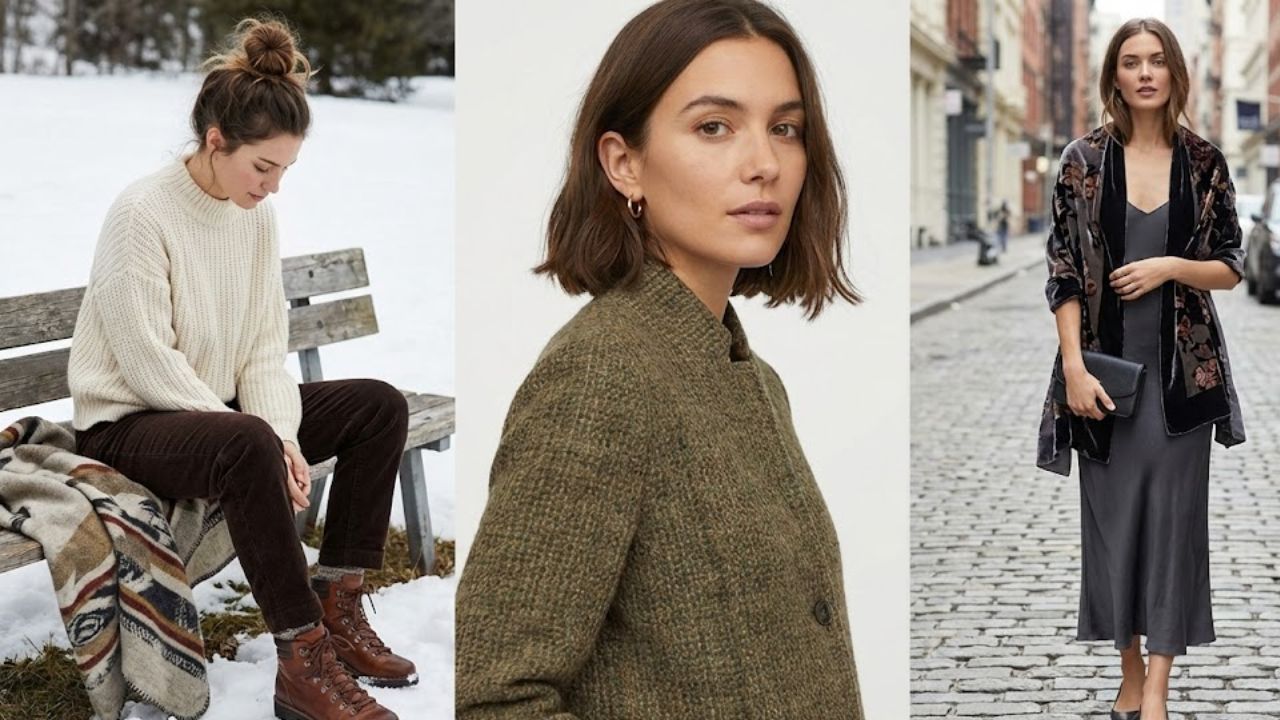
    While major runway trends often shape the broader direction of fashion each year, it’s the subtle styling moves, unexpected accessories, and small yet impactful details that truly separate good style from great style. Big, viral looks are easy to spot as they flow from runways to Instagram and TikTok, but discovering influential micro-trends requires a sharper eye and following the right tastemakers. These understated ideas are the ones that make you pause on the streets of London or New York, quietly saving inspiration for later. In 2026, a select group of micro-trends is already creating that exact reaction—and their influence is only growing.

    How to Dress Like a Fashion Insider in 2026

    If you want your wardrobe to reflect an industry-insider sensibility this year, a few key pieces are essential. Start with items featuring fur-inspired accents, whether that’s a jacket trimmed with plush texture or a faux-fur scarf. Add visual interest through intentional contrasts, like mismatched earrings inspired by Margaret Qualley’s Chanel Métiers d’Art appearance, or experiment with a modern cummerbund, now a standout accessory thanks to Atelier Jéa. These thoughtful details create outfits that feel informed, current, and effortlessly chic well into 2027.

    Faux-Fur Accents Are Non-Negotiable

    To keep outfits feeling current at the start of 2026, incorporating at least one faux-fur element is key. Whether it appears as a statement scarf, plush sleeve cuffs, or a softly textured collar, this detail instantly adds depth, warmth, and polish to any look. Even the simplest outfit feels elevated with this single addition.

    The Alpine Cardigan Revival

    An alpine-style cardigan is a smart and versatile addition to early 2026 wardrobes. Whether sourced new from labels like Polo Ralph Lauren or Dôen, or discovered through vintage platforms such as The RealReal or Etsy, these knits deliver both comfort and style. They pair effortlessly with jeans and transition seamlessly from midwinter layering into the lighter feel of early spring.

    Layered Knitwear Gets a Chic Update

    The secret to making sweaters feel refined in 2026 lies in thoughtful layering. Wearing a slim turtleneck underneath a knit nods to classic ’80s styling while feeling fresh again. Neutral pairings keep things clean and polished, while a white turtleneck beneath a patterned Fair Isle sweater adds bold contrast without overwhelming the look.

    Cummerbunds Step Into the Spotlight

    Cummerbunds have quietly become one of 2026’s most insider-approved accessories, noticeable mainly among fashion’s best-dressed circles. During winter, they’re often styled over coats and outerwear, but as spring approaches, expect to see them paired with trousers, skirts, and dresses for a more refined and unexpected silhouette.

    Mismatched Earrings Make a Stylish Return

    The return of mismatched earrings felt inevitable once Margaret Qualley showcased them at Chanel’s Métiers d’Art show in New York City. Worn with a gold tweed jacket designed under creative director Matthieu Blazy, the contrasting earrings brought playful elegance to an otherwise polished ensemble, proving that imbalance can be incredibly chic.

    Jewel-Tone Silk and Satin Take Over

    Across brands like Helsa and Aligne, 2026 is seeing a strong shift toward silk and satin blouses, particularly in vibrant jewel tones inspired by Tom Ford’s Gucci era. These rich, luminous fabrics offer a confident alternative to the classic white button-down, signaling a bolder, more expressive direction for modern wardrobes.


  • Face Brightening Hair Colors to Try After 50 That Instantly Add Warmth and Dimension

    Face Brightening Hair Colors to Try After 50 That Instantly Add Warmth and Dimension

    Choosing the ideal hair colour after 50 can feel truly transformative, helping to enhance natural features and brighten the complexion. As skin tone naturally shifts with age, the right shade can add warmth and energy, creating a noticeable difference in overall appearance. While many people gravitate toward darker colours as grey hair becomes more visible, options like golden blonde and warm chestnut show that luminous tones can beautifully refresh your look. Exploring a variety of light-reflecting shades opens up endless hair colour ideas that suit different styles and personal tastes.

    Choosing Luminous Shades for a Youthful Effect

    Going for vibrant hair colours is about more than simply covering grey hair; it’s a way to embrace individuality and express personal style. Shades such as ash blonde provide a modern, refined look, softly blending greys while flattering cooler skin tones. Those with warmer undertones may find that rich golden hues highlight facial features and catch the light beautifully, creating a naturally fresh and polished appearance.

    Warm Hair Tones That Brighten the Complexion

    Warm shades like golden blonde and chestnut are especially effective at illuminating the face. These tones reflect light naturally, helping to create a more youthful impression. Adding subtle techniques such as balayage highlights can introduce depth and movement, keeping the colour lively without overpowering your natural shade. Maintaining hair health with regular hydrating treatments further boosts colour vibrancy, ensuring the final look remains radiant and well-defined.

  • Incline Walking Vs Stair Stepper: Which Cardio Option Builds Strength Burns Calories and Saves Your Knees

    Incline Walking Vs Stair Stepper: Which Cardio Option Builds Strength Burns Calories and Saves Your Knees

    Every gym session comes with choices, and the smartest one usually depends on the results you want to see. If your goal is a time-efficient cardio workout that delivers strong calorie burn, muscle toning, and endurance, two popular options often stand out: incline treadmill walking and stair climbing. While they may appear similar at first glance, these machines offer distinct training experiences with different advantages. Understanding how each works can help you align your workout with your specific fitness goals.

    Although both options boost cardiovascular fitness, their movement patterns, muscle demands, and intensity levels vary. Before choosing between them, it helps to clarify what matters most to you—whether that’s burning calories, building lower-body strength, improving cardio endurance, or achieving a balanced mix of all three.

    How These Cardio Machines Work

    The key differences between incline walking and stair stepping lie in their biomechanics—how your muscles, joints, and connective tissues coordinate during movement. Each machine challenges the body in its own way, leading to unique physical demands and benefits.

    What Happens to Your Body During Incline Treadmill Walking

    Walking on a flat treadmill is relatively straightforward, but adding an incline changes the challenge significantly. As you increase the slope, your body must work against gravity to move upward, making the effort noticeably harder than standard walking. To stay balanced, you naturally shift your center of gravity forward, often leaning slightly from the ankles and, at times, the hips or lower back.

    This movement pattern places greater emphasis on the calves, glutes, and hamstrings, especially when you walk at a faster pace. The steeper the incline, the more these muscles are recruited to support and propel your body.

    What Happens to Your Body on the Stair Stepper

    The stair stepper activates many of the same lower-body muscles, but the motion itself is different. Each step requires you to lift your knees higher, creating a larger range of motion at the hips compared to forward walking. This vertical movement increases the demand on your glutes and hamstrings as you press down to raise your body with every step.

    While the calves are still involved, their role is slightly reduced compared to incline walking. Both machines can be adjusted for difficulty—incline and speed on the treadmill, or stepping speed on the stair climber—making them suitable for a wide range of fitness levels.

    Which Option Burns More Calories?

    Calorie burn depends on several variables, including workout intensity, speed, incline, and body weight. Heavier individuals tend to burn more calories due to greater gravitational load, while those with higher fitness levels may burn slightly fewer calories at the same settings because their bodies are more efficient.

    In general terms, a 150-pound person may burn around 200 to 300 calories in 30 minutes on either the stair stepper or an incline treadmill, depending on pace and difficulty. Fitness calculators suggest that stair climbing often edges out flat walking in calorie burn, and adding incline increases treadmill numbers further.

    When directly compared, the stair stepper typically demands more effort because lifting your body vertically with each step is mechanically harder than forward walking. This higher demand often leads to greater calorie expenditure for many users.

    Which One Delivers a Better Cardio Workout?

    The effectiveness of each machine as a cardio workout largely comes down to how hard you push yourself. A high incline or faster treadmill speed can match—or even exceed—the intensity of stair climbing, while increasing stair speed can quickly elevate heart rate.

    Consistency also plays a major role. The most effective cardio routine is the one you’re able to stick with long term. That said, the stair stepper often pushes users into a higher VO₂ max range more quickly, meaning it challenges the cardiovascular system sooner. When matched head-to-head at similar effort levels, the stair stepper generally places a greater cardiovascular demand on the body.

    Which Machine Is Better for Strength Gains?

    Because stair climbing requires lifting your entire body upward, it tends to recruit more of the quads and glutes, making it slightly more effective for strength development. Incline walking can also build strength, particularly when the incline is steep enough to encourage higher knee lift, but overall muscle activation is typically higher on the stair stepper.

    For those managing joint discomfort, incline walking may feel more joint-friendly. Research has shown that walking uphill can reduce knee stress while still strengthening the legs, and it may help lower knee pain in older adults. Both machines are considered low-impact options, so either can be a solid choice depending on comfort and preference.

    Tips to Get the Most Out of Each Machine

    Using the Treadmill Effectively

    • Avoid holding the handrails. Relying on them reduces lower-body and core engagement, lowering workout intensity.
    • Let your arms swing naturally. Arm movement supports balance and power. If you can’t swing freely, the incline or speed may be too high.
    • Progress gradually. Start at an easier level and increase speed or incline every minute during a 20- to 30-minute session.
    • Incorporate intervals. Alternate between higher and lower speeds or inclines to boost challenge and engagement.

    Using the Stair Stepper Effectively

    • Don’t lean on the handrails. Hanging forward shifts weight off your legs and reduces muscle activation.
    • Mix in intervals. Alternating fast and slow stepping speeds keeps the workout challenging and mentally engaging.
    • Increase resistance safely. If comfortable, a weighted vest can add intensity without compromising balance.
  • Old-School Step Aerobics Comeback: 30-Minute Routine That’s Addictive and Could Boost Brain Function

    Old-School Step Aerobics Comeback: 30-Minute Routine That’s Addictive and Could Boost Brain Function

    Not long ago, one of the editors-in-chief at Tom’s Guide sent me an ’80s aerobics video, and it instantly sent my thoughts down memory lane. Most of my fitness background revolves around strength training, CrossFit routines, yoga flows, and running programs. Classic formats like step aerobics were something I’d barely explored. Lately, though, these retro workouts are quietly regaining popularity and are tipped to surge again in 2026. That sparked my curiosity, and I decided it was time to step outside my usual routine and try something completely different.

    Trying a 30-Minute Taylor Swift Step Workout

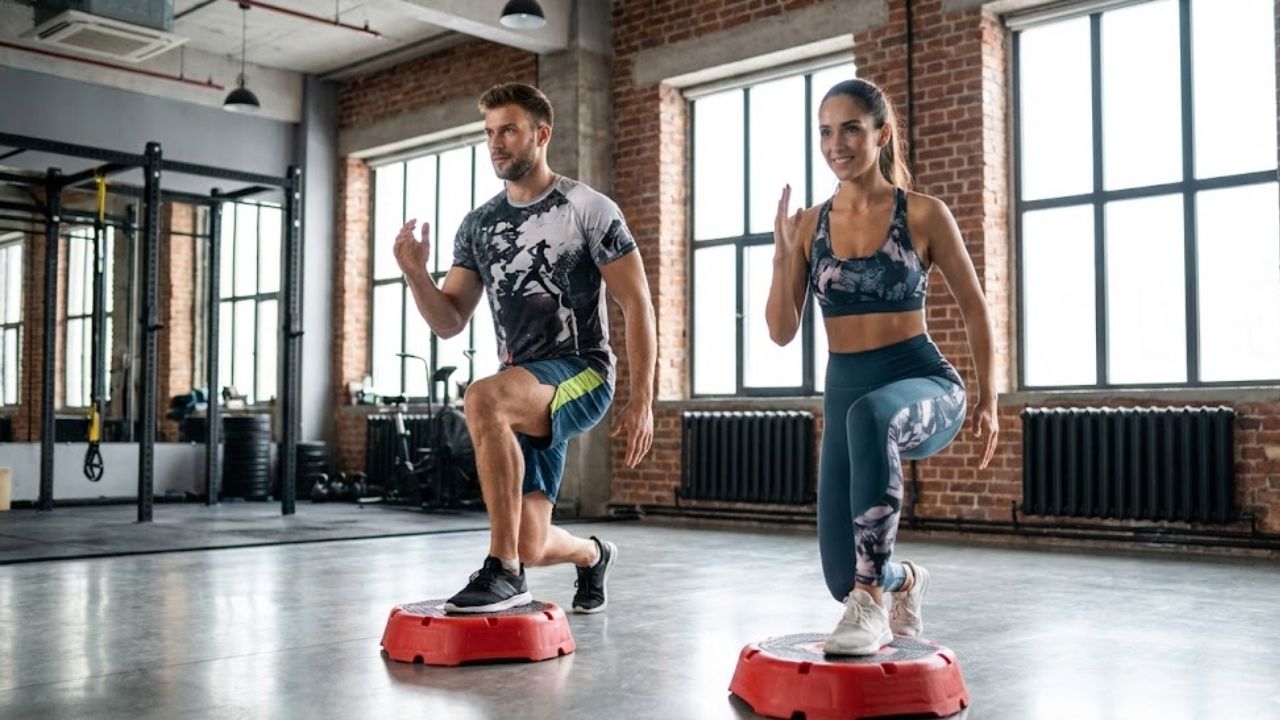
    To ease myself in, I chose a 30-minute step aerobics session inspired entirely by Taylor Swift’s music. The routine, led by personal trainer Christina Dorner, is set to a steady 130 BPM rhythm and sits firmly in the basic-to-intermediate level. Designed to be upbeat and accessible, it only requires a step platform. Dorner’s playlist-driven approach makes the workout feel lively and approachable, whether you’re a dedicated Swift fan or just looking for an energetic cardio option that doesn’t feel repetitive.

    Trainer Energy and Workout Flow

    As both a trainer and participant, I place huge value on an instructor’s presence. Dorner’s infectious energy and clear cueing made the choreography easy to follow, even when my coordination lagged behind. It took me several attempts to fully grasp the steps, but the lighthearted atmosphere meant it never felt frustrating. Instead, the session felt more like a private dance party than a structured workout, which made the time fly by surprisingly fast.

    Physical and Mental Effects I Noticed

    Physically, the workout elevated my heart rate more than expected. To increase intensity, I added light dumbbells, though beginners may not need them. You can also adjust difficulty by raising the step height. What stood out most, however, was the impact on my mental well-being. Moving to music, loosening stiff joints, and learning playful moves left me feeling energized and noticeably lighter in mood by the end of the session.

    Key Benefits of Step Aerobics

    Step aerobics supports cardiovascular health, increases daily movement, and helps offset prolonged sitting. Many routines incorporate weight-bearing movements that engage the glutes, quads, core, and calves, which can also contribute to bone density support. For those focused on fat loss, regular sessions may aid calorie burning, while the coordination required strengthens the mind-body connection.

    The Cognitive and Mindfulness Boost

    Beyond physical gains, step aerobics offers cognitive benefits. Research highlighted by Harvard Medical School notes that combining music and movement activates both reward and motor centers in the brain. Studies referenced by The New England Journal of Medicine also suggest that activities like dancing are linked to a lower dementia risk. With benefits spanning fitness, mood, and brain health, it’s easy to see why these old-school step workouts are finding their way back into modern routines.

  • Can You Quickly Identify the 3 Hidden Differences in This Boy and Dog Picture?

    Can You Quickly Identify the 3 Hidden Differences in This Boy and Dog Picture?

    Are you ready to put your attention to detail to the test? This engaging spot-the-difference puzzle challenges your ability to notice even the smallest visual changes. You will compare two images featuring a boy relaxing with his dog and try to uncover three hidden differences in just 12 seconds. With time ticking away, every glance matters. These puzzles are designed to sharpen your focus, strengthen concentration, and train your brain to recognize subtle changes quickly.

    The 12-Second Challenge: Can You Find the 3 Differences?

    At first look, both images appear almost identical, showing a peaceful moment with a boy and his dog sitting together. The scene includes lush greenery, a clear blue sky, and soft grass beneath them. Despite their similarities, three small differences are carefully hidden between the pictures. Spotting them within the time limit is harder than it seems. The changes are subtle and easy to miss unless you observe closely. This challenge tests how quickly you can identify visual differences while staying calm under pressure.

    Also Read

    Grow Healthier Lashes and Brows Naturally With a Simple Daily Castor Oil Routine Method

    Why Spot-the-Difference Puzzles Challenge the Brain

    If you found this puzzle tricky, you are not alone. These challenges work by tricking the brain’s natural pattern recognition. When viewing similar images, your mind tends to assume they are the same and fills in missing details automatically. This process, known as perceptual filling-in, often causes small changes to go unnoticed. Spot-the-difference puzzles force you to slow down and examine details carefully. With regular practice, they help improve focus, visual awareness, and attention skills, making your observations sharper over time.

    Also Read

    Goodbye Hair Dye for Grey Hair: The Conditioner Mix That Restores Natural Colour Gradually

    Solution Revealed: The 3 Hidden Differences Explained

    How did you do? If you missed a few details, don’t worry. The differences were designed to be subtle and easy to overlook. Here are the three hidden changes between the images:

    • The Cloud: In the second image, the cloud above the boy’s head is missing a small section that appears in the first picture.
    • The Dog’s Food: The food inside the dog’s bowl changes slightly, with a small portion missing in the second image.
    • The Tree on the Right: One leaf near the top-right tree is altered in the second image, creating a subtle visual difference.

    These changes were hidden in plain sight and become noticeable only when you focus on fine visual details.

    Why Spot-the-Difference Puzzles Remain So Popular

    Spot-the-difference puzzles have stayed popular for years because they combine entertainment with mental exercise. They help strengthen memory, improve attention, and sharpen problem-solving abilities. Found in newspapers, magazines, apps, and websites, these puzzles offer an enjoyable way to keep the mind active. Best of all, they feel more like play than practice, making brain training both relaxing and rewarding.

    Cognitive Benefits of Spot-the-Difference Puzzles

    • Improves Focus and Attention: Working against the clock trains your brain to concentrate on specific details more effectively.
    • Boosts Memory and Recall: Repeated practice strengthens visual memory and pattern recognition.
    • Enhances Visual Perception: You become better at processing visual information and spotting small changes.
    • Builds Problem-Solving Skills: These puzzles encourage structured thinking and careful analysis.
    • Reduces Stress and Promotes Relaxation: They provide a calming mental break while keeping your mind engaged.

    Also Read

    6 Eye Shadow Primers That Keep Makeup Smooth Vibrant and Crease-Free From Morning to Night

  • 9-Second Visual Challenge Test Sharp Eyes by Finding 3 Differences in the Boy Skiing Scene

    9-Second Visual Challenge Test Sharp Eyes by Finding 3 Differences in the Boy Skiing Scene

    If you enjoy optical puzzles, this challenge is sure to grab your attention. Spot the Difference games are both entertaining and mentally stimulating, helping sharpen focus and observation skills. Today’s challenge features a cheerful boy skiing down a snowy mountain. Your mission is to identify three subtle differences between two nearly identical winter scenes in just 9 seconds.

    At first look, both images appear identical, showing a bright sun, snow-covered slopes, and a skier gliding happily downhill. But a closer inspection reveals a few small yet important changes. Can you catch all of them before time runs out? Let’s jump into this engaging brain teaser and test your observation speed.

    Why Spot the Difference Puzzles Are So Engaging

    Spot the Difference puzzles have remained popular for years because they offer real mental benefits. These visual challenges serve as a simple yet effective way to exercise the brain while staying entertained. Many people enjoy them as a relaxing activity that also helps keep their minds active.

    Here are some key reasons these puzzles continue to attract puzzle lovers:

    • Improved Focus and Attention: Carefully searching for tiny changes trains your mind to concentrate better, which can help with everyday tasks.
    • Enhanced Memory Skills: Comparing images strengthens your ability to remember visual patterns and small details.
    • Sharper Visual Awareness: Regular practice improves how quickly and accurately you notice visual cues.
    • Stress Relief and Relaxation: Solving puzzles provides a calming mental break from daily routines.

    The 9-Second Skiing Boy Challenge Explained

    Now let’s focus on today’s puzzle. The scene shows a happy boy skiing through a winter landscape. He wears a bright orange helmet, ski goggles, and a colorful outfit that contrasts beautifully with the snowy surroundings.

    The background includes snow-covered trees and a shining sun in a clear blue sky. While both images seem identical at first glance, there are three small differences hidden within the scene. Your challenge is to find them in under 9 seconds. Sounds easy? Let’s see how sharp your eyes really are.

    Effective Techniques to Spot Differences Faster

    Before revealing the answers, here are some useful strategies to help you solve difference puzzles more efficiently:

    • Scan Both Images Quickly: Start with a rapid overview to understand the overall layout.
    • Compare Symmetry: Differences often appear in balanced areas, such as left versus right or top versus bottom.
    • Watch Small Details: Tiny changes like missing lines or altered shapes are common.
    • Use a Time Limit: Short challenges train your brain to process visual information faster.
    • Practice Regularly: Consistent exposure improves visual memory and attention to detail.

    The Three Hidden Differences Revealed

    Ready for the answers? Here’s a clear explanation of the three differences hidden in the skiing boy images:

    1. The Missing Sun Ray

    The first change appears in the sun. In the left image, several rays extend outward. In the right image, one ray is missing. It’s subtle, but focusing on the sun’s outline makes it noticeable.

    2. The Skier’s Scarf Length

    The second difference involves the scarf. In the left image, the scarf appears longer and more flowing. In the right image, it is shorter with a slightly different shape.

    3. The Ski Pole Tip Detail

    The final change is found at the end of the ski pole. The left image lacks a small detail at the tip, while the right image clearly shows it.

    Ways to Improve Your Visual Observation Skills

    Even if you spotted all the differences quickly, continued practice can make you even better. Here are a few simple ways to sharpen your visual skills:

    • Try Different Difficulty Levels: More challenging puzzles train your eyes to notice finer details.
    • Break Images into Sections: Scan corners and edges first, then move toward the center.
    • Practice Often: Regular practice improves both speed and accuracy.
    • Stay Calm and Patient: Some differences are very subtle, so take your time and enjoy the process.
  • I’m a personal trainer — try my 4-week program designed to hone full-body muscle and build strength

    I’m a personal trainer — try my 4-week program designed to hone full-body muscle and build strength

    As a personal trainer, my role is to guide clients toward their fitness goals, whether that means gaining strength and muscle, improving cardiovascular fitness, enhancing mobility and flexibility, reducing body fat, or achieving a mix of all these outcomes.

    Reaching these goals requires more than random workouts. Training programs must follow proven principles to deliver long-term, sustainable results. This includes maintaining a balanced, protein-rich diet, managing daily activity, staying consistent with exercise, and applying progressive overload — the structured adjustment of training to encourage continuous improvement.

    I don’t usually share my programs because they’re customized for each individual, but this is one of my tested, beginner-friendly resistance plans. It’s designed to develop full-body muscle and strength in the gym and works well for beginners and experienced lifters alike.

    The program targets all the major muscle groups and, when followed consistently, can deliver noticeable results within a few months.

    Four-Week Full-Body Training Plan

    This four-week plan is suitable for beginners, with weights adjusted to match your current ability. It’s structured to support progressive strength and hypertrophy, helping you build confidence alongside physical fitness. To keep it accessible, the program uses only free weights and cables, with no machines required.

    You’ll complete two full-body workouts, alternating between them two to three times per week. Expect a focus on compound lifts, sensible training volume, and clear progression. Rest for 90 seconds after the first two main lifts and 30–60 seconds between accessory movements.

    Workout A: Lower Body, Push and Back

    • Barbell back squat: 3×8 at 60–65% 1RM — use a squat rack
    • Dumbbell or barbell bench press: 3×8–10 at 60–65% 1RM — chest and triceps
    • One-arm dumbbell row: 3×10 per side at 65% 1RM — horizontal pull
    • Dumbbell Romanian deadlift: 3×10 at 60–65% 1RM — posterior chain
    • Cable face pull: 3×12–15 at 55–60% 1RM — upper back and posture
    • Incline dumbbell curl: 3×10–12 at 60–65% 1RM — biceps

    Workout B: Posterior Chain, Back and Biceps

    • Barbell deadlift: 3×6 at 65–70% 1RM — primary strength lift
    • Standing dumbbell or barbell overhead press: 3×8 at 65% 1RM — shoulders
    • Lat cable pulldown: 3×10 at 65% 1RM — vertical pull
    • Dumbbell goblet squat: 3×10 at 60–65% 1RM — quad-focused
    • Dumbbell hammer curl: 3×10–12 at 60–65% 1RM — biceps and brachialis
    • Cable straight-arm pulldown: 3×12–15 at 55–60% 1RM — lat isolation

    How to Progress Over Four Weeks

    Week 1: Stay at the lower end of each rep range and leave a few reps in reserve. Prioritize proper form and movement quality.

    Week 2: Increase training volume by adding one to two reps per set on main lifts while keeping the weight unchanged.

    Week 3: Add 2.5–5% more weight and aim to finish each set with one to two reps in reserve.

    Week 4: Maintain the same weight but add an extra set to the first two main lifts in each session.

    For continued progress, you can later split the workouts into upper and lower body sessions or slow down your lifting tempo to increase time under tension. The key is gradually adding reps or load over time.

    Reassessing Strength and Main Lifts

    I recommend re-testing your one-rep max (1RM) every month or two to ensure your training loads reflect your improving strength. If you’re lifting the same weight months later, progression has stalled. Increases should be small and controlled, typically around 2.5–5%.

    The first two exercises in each workout are your primary lifts. Use barbells for the first movement and barbells or dumbbells for the second. All remaining exercises are accessory movements performed with free weights or cables.

    Choosing the Right Starting Weights

    Your working weights are based on a percentage of your one-rep max. This represents the heaviest weight you can lift for a single repetition. For example, if your bench press 1RM is 100kg, then 60% would be 60kg for sets of 8–10 reps.

    If you don’t know your 1RM or prefer not to test it, choose a load where the final reps feel challenging but controlled, leaving no more than two to three reps in reserve. You should complete every rep with good form. If technique breaks down, reduce the weight. If it feels too easy and you could complete several extra reps, increase the load.

    Each session lasts around 60 minutes. To save time, you can superset the final accessory exercises by performing them back-to-back before resting. This approach reduces total rest time and keeps your workouts efficient.

  • Forget Push-Ups After 50: Trainer’s 3 Seated Exercises That Target Arms Fast Without Strain

    Forget Push-Ups After 50: Trainer’s 3 Seated Exercises That Target Arms Fast Without Strain

    Strong, sculpted arms aren’t only a summer goal. However, if you’re a complete beginner or find it challenging to stand or get down on the floor for moves like push-ups, knowing where to begin can feel overwhelming. The good news is there’s a simple solution. This routine features three easy seated exercises that help strengthen and shape your upper body using only your bodyweight.

    Building a strong upper body goes far beyond appearance. Upper body strength supports everyday tasks such as lifting groceries, carrying laundry, or reaching items from high shelves. You also rely on these muscles when opening doors or pushing yourself up from a chair. As we age, this strength becomes even more important. A strong upper body can reduce injury risk during falls and plays a key role in maintaining balance, climbing stairs, and staying independent.

    If you’re recovering from an injury or have specific mobility concerns, it’s always wise to consult a qualified professional before starting a new exercise routine. While this workout is suitable for most people, stop immediately if you feel pain and seek guidance to ensure proper form and avoid injury.

    What Does the Workout Involve?

    This short routine was created by Deron Buboltz, a certified Strength and Conditioning Specialist for Seniors. It includes three seated bodyweight exercises. Each movement is performed for 20 seconds, with the full circuit repeated five times, creating an effective five-minute workout. Short rest breaks between rounds are optional if needed.

    The Three Seated Exercises

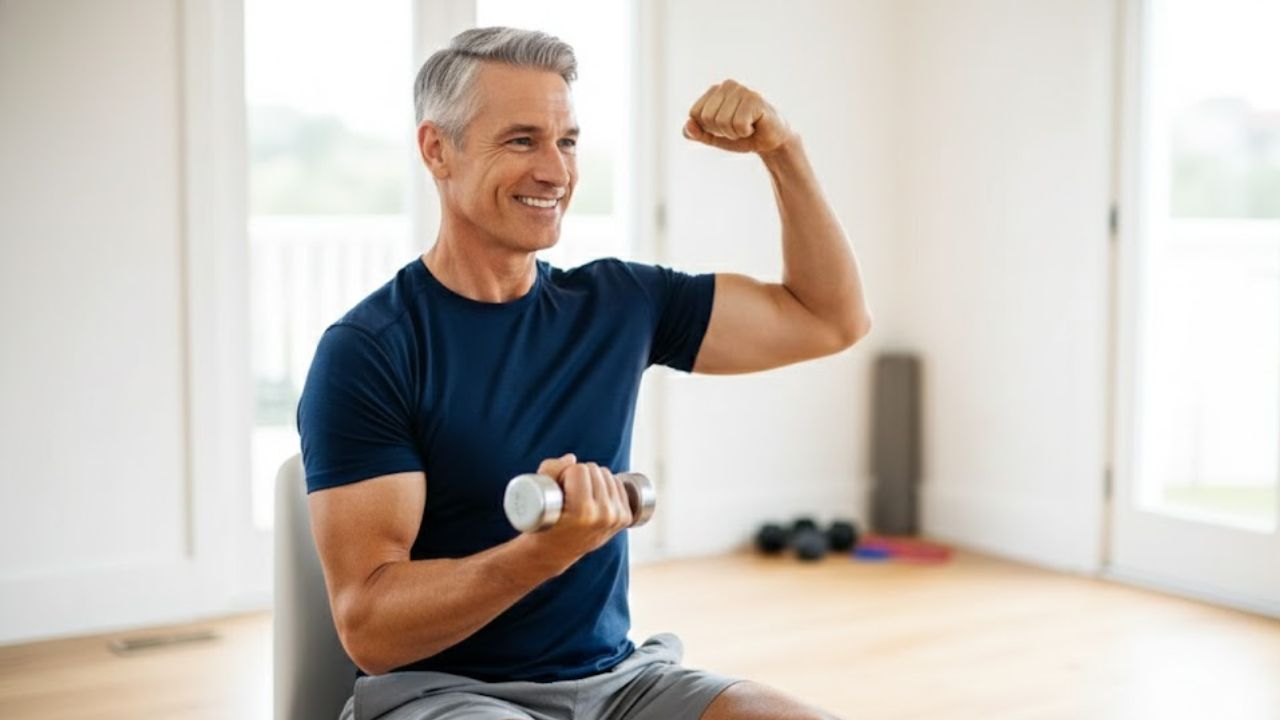
    • Chicken-wing arm raises: Sit tall in your chair and engage your core by gently drawing your belly button toward your spine. With elbows slightly bent, lift both arms out to the sides. Hold briefly at the top, then slowly lower them back toward your body.
    • Double-jab movement: Begin with your arms raised and elbows bent. Focus on squeezing your shoulder blades together. Form fists with your hands, then extend both arms straight forward. Pause briefly before bending your elbows to return to the starting position.
    • Double-arm flutter: Extend your arms straight out in front of your body. Gently flutter your arms up and down in small, controlled movements. This exercise also helps promote healthy circulation.

    This workout is designed to target areas often described as “flabby arms.” While fat cannot be reduced in a single area, these exercises effectively engage the triceps, biceps, and shoulder muscles. To increase the challenge, you can hold light dumbbells in each hand once you feel ready.

  • Skincare Experts Say These 5 Common Mistakes Are Quietly Ruining Your Results

    Skincare Experts Say These 5 Common Mistakes Are Quietly Ruining Your Results

    Skincare routines have become increasingly sophisticated in the United States, with more people investing time and money into products promising glowing, healthy skin. Yet dermatologists and skincare experts agree that many results are quietly undermined by everyday habits people don’t even realize are harmful. From overusing trendy actives to misunderstanding basic application order, these mistakes can slow progress or even damage the skin barrier. Understanding where things go wrong is often more important than buying new products, and small adjustments can dramatically improve how your skincare routine actually performs.

    Common skincare mistakes experts see daily

    One of the biggest issues professionals notice is inconsistency combined with impatience. Many people expect instant changes and end up switching products too often, which prevents skin from adjusting. This often leads to over-exfoliating skin, disrupting the natural barrier and causing irritation. Another frequent problem is mixing active ingredients without understanding how they interact, which can cancel benefits or trigger breakouts. Experts also warn against skipping patch tests, especially with strong formulas. Finally, relying on trends rather than skin needs often results in routine overload stress, where too many steps create more harm than good.

    How skincare habits affect long-term results

    Small daily habits have a much bigger impact than most people realize. For example, inconsistent sunscreen use leads to hidden sun damage that undermines even the best serums. Applying products in the wrong order can cause poor product absorption, meaning expensive treatments never reach the skin properly. Experts also point out that dirty application tools can reintroduce bacteria, triggering inflammation. Another overlooked factor is ignoring skin changes caused by weather, hormones, or stress, which requires routine adjustments. Long-term results come from awareness, not just product strength.

    Skincare expert advice to avoid mistakes

    Professionals recommend simplifying routines before adding complexity. Focusing on cleansing, moisturizing, and protection builds a foundation of barrier-first care. Introducing one product at a time allows for clear reaction tracking, making it easier to identify what truly works. Experts stress the value of consistent application timing, especially for treatments like retinoids. Listening to your skin rather than forcing results helps prevent chronic irritation cycles. When in doubt, dermatologists advise patience and education over constantly chasing the next viral product.

    Why fixing small skincare mistakes matters

    Correcting minor errors often delivers better results than buying new products. Skincare works cumulatively, and repeated mistakes slowly erode progress. By focusing on long-term skin health, people can see steadier improvements instead of cycles of flare-ups and disappointment. Experts emphasize that education over trends leads to smarter choices and fewer setbacks. A routine built on understanding, consistency, and restraint supports sustainable visible results. In the long run, avoiding these common mistakes saves money, time, and frustration while keeping skin healthier and more resilient.

    Common Mistake Why It’s Harmful Expert Recommendation
    Over-exfoliating Damages skin barrier Limit exfoliation to 1–2 times weekly
    Skipping sunscreen Causes premature aging Use daily broad-spectrum SPF
    Product overuse Leads to irritation Apply recommended amounts only
    Wrong product order Reduces effectiveness Apply from thinnest to thickest
    Ignoring skin changes Worsens existing issues Adjust routine seasonally

    Frequently Asked Questions (FAQs)

    1. How long does it take to see skincare results?

    Most products need at least four to six weeks of consistent use to show visible changes.

    2. Is using more products better for skin?

    No, too many products often increase irritation without improving results.

    3. Can skincare mistakes cause breakouts?

    Yes, improper use and overuse of products commonly trigger breakouts.

    4. Should skincare routines change with seasons?

    Yes, adjusting products helps skin adapt to weather and environmental changes.

  • Are You Running More or Less Than Others Your Age These Stats Reveal the Truth

    Are You Running More or Less Than Others Your Age These Stats Reveal the Truth

    Many runners are curious about how their training stacks up against others, whether that means race results, workout habits, or total mileage. This doesn’t mean you should compare yourself to a highly trained athlete with years of experience and professional coaching. Instead, understanding where your average running distance fits within your age group can be a helpful way to set realistic goals and track progress. Looking at broader trends can offer motivation and perspective, especially if you’re aiming to gradually increase how far you run.

    How Average Running Distances Compare Overall

    To understand how runners measure up, data was collected from platforms such as MapMyRun, Strava, and Coros, along with race participation insights from Running USA. These sources provide a broad view of how far people typically run, taking into account differences in age groups and sex. When looking at averages and medians, the data helps smooth out extreme outliers, offering a clearer picture of what most runners actually log per run.

    Typical Distance Per Run Across Platforms

    Across all ages and sexes, the average distance per run varies by platform. MapMyRun users typically log between 1.9 and 4.5 miles per run, while Coros users average around 4.8 miles. Looking at median values, which better represent the middle of the data, Strava reports distances ranging from 3.2 to 3.7 miles. These numbers highlight how user demographics and training focus can influence reported mileage.

    Average Running Distances by Age Group

    A closer breakdown by age provides more detailed insight, including both per-run distance and weekly mileage. Each platform attracts slightly different types of runners, which is reflected in the data.

    MapMyRun User Averages

    MapMyRun describes its community as largely casual to moderate runners. Among female users, average distance per run increases steadily from the 20–29 age group at 2.9 miles to a peak of 3.7 miles in the 50–59 range, before tapering slightly in later years. Male users follow a similar pattern, starting at 3.2 miles in their 20s and peaking around 4.3 miles in their 50s.

    Weekly mileage on MapMyRun also rises with age before leveling off. Female runners average from 5.4 miles per week in their 20s up to around 8.8 miles in their 60s. Male runners range from 6.0 miles in their 20s to just over 10 miles per week in their 50s and 60s.

    Coros Running Data

    Coros users tend to log higher mileage and often record marathon finish times between 4:19 and 4:50. Average distance per run increases gradually from 4.7 miles in the 20–29 age group to about 5.5 miles for runners aged 50 and above. Weekly mileage also climbs with age, ranging from 32.9 miles in the youngest group to 38.4 miles among runners over 50.

    Strava Trends by Generation

    According to Strava’s 2025 Year in Sport Trend Report, runners in Boulder, Colorado logged the longest average runs at 4.4 miles. When broken down by generation, Gen X runners recorded the highest median distance at 3.7 miles, followed closely by Boomers and Millennials at 3.5 miles. Gen Z runners reported a median distance of 3.2 miles.

    Preferred Race Distances by Age

    Data from Running USA shows clear patterns in race distance preferences across different age groups. Among runners aged 20 to 49, the half marathon is consistently the most popular choice. As runners move into their 50s and 60s, shorter distances like the 5K gain popularity, while marathon participation gradually declines. In the oldest age groups, the 5K becomes the clear favorite, reflecting changing priorities and physical considerations over time.

    Smart Ways to Increase Your Mileage

    For those starting from scratch, easing into running is essential. Before focusing on higher mileage or harder workouts, consistent training should be the main goal. Coach Holly Benner, cofounder of Metta Performance and a former professional triathlete, emphasizes that runners should feel happy, healthy, and motivated before increasing volume. Without physical and mental well-being, adding more miles can do more harm than good.

    Once regular running becomes comfortable, Benner recommends following the 10 percent rule, increasing weekly mileage by about 10 percent at a time. For example, moving from 10 miles one week to 11 the next allows the body to adapt safely. More experienced runners who are already consistent and injury-free may increase by up to 15 percent. Beginners and seasoned runners will naturally follow different paths, with weekly mileage varying widely depending on experience and goals.

    Another often overlooked factor is fueling. As mileage increases, so should energy intake. Focusing on nutrient-dense foods such as whole grains, fresh produce, protein, and healthy fats supports both performance and recovery, helping runners sustain higher training volumes safely.