Author: admin

  • Endurance Building Yoga: 7 Poses That Improve Strength and Staying Power

    Endurance Building Yoga: 7 Poses That Improve Strength and Staying Power

    Endurance refers to the body’s capacity to maintain physical effort over extended periods, playing a vital role in sustaining energy, stamina, and overall fitness. While endurance training is often linked to cardio-based workouts, yoga offers a powerful alternative for developing both physical resilience and mental stamina. By combining controlled breathing, focused awareness, and sustained posture holds, yoga strengthens the body while improving flexibility and balance. Below are seven effective yoga poses designed to enhance endurance, stamina, and strength.

    Warrior I Pose (Virabhadrasana I)

    Warrior I is a strong foundational pose that develops stamina in the legs, hips, and core. It also opens the chest and shoulders while sharpening focus. Begin by stepping your feet wide apart, bending the front knee to a right angle while keeping the back leg straight. Raise your arms overhead with palms facing inward. Hold the pose for 30 seconds to one minute before switching sides. This posture reinforces the thighs, calves, and glutes, while also enhancing balance and endurance. Staying in the pose for longer periods trains the body to remain steady under effort, helping build both physical strength and mental resilience.

    Plank Pose (Phalakasana)

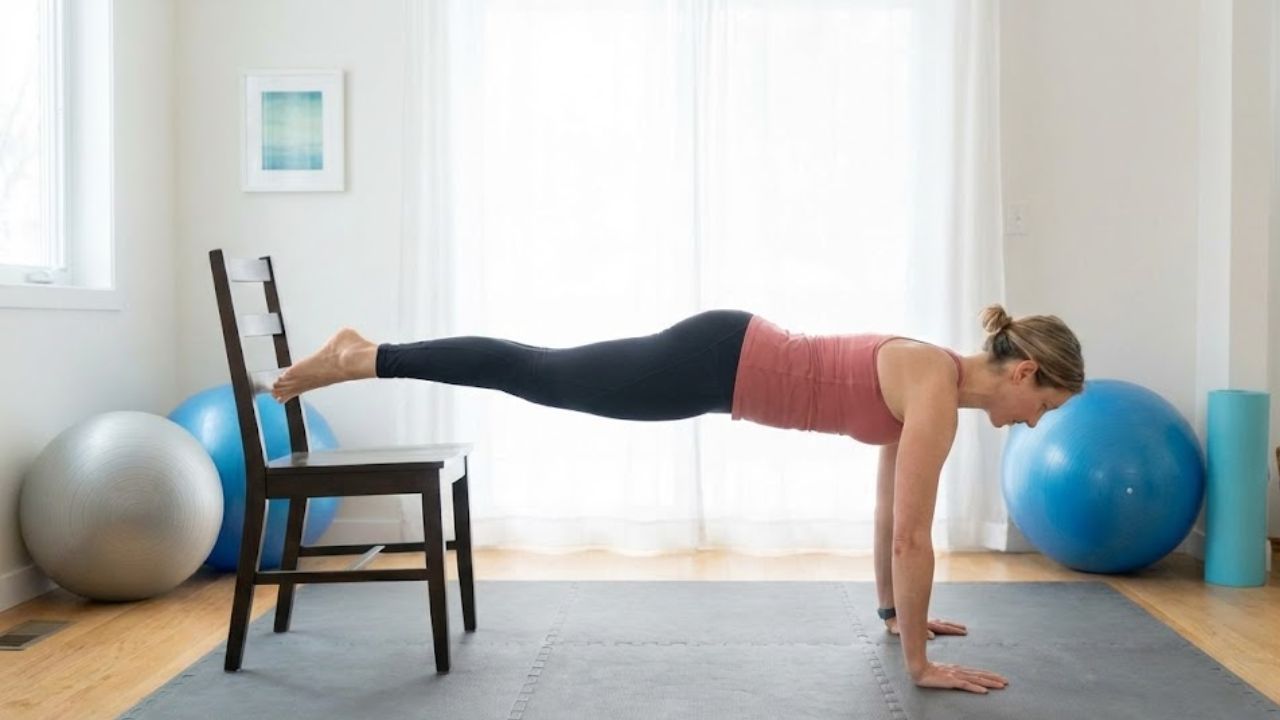
    Plank Pose is one of the most effective postures for improving core endurance. Begin in a push-up position with arms extended, wrists aligned under the shoulders, and the body forming a straight line from head to heels. Engage your core muscles and maintain steady breathing as you hold the pose for 30 seconds to two minutes.

    This pose targets the abdominals, arms, and shoulders, strengthening stabilizing muscles that support endurance. Holding plank for longer durations builds muscular stamina while also cultivating mental focus and discipline.

    Chair Pose (Utkatasana)

    Chair Pose is an intense standing posture that strengthens endurance in the lower body, particularly the quadriceps, hamstrings, and glutes. Stand with feet hip-width apart, bend your knees as if lowering into a chair, and lift your arms overhead with palms facing inward. Hold for 30 seconds to one minute while breathing evenly.

    This pose challenges leg strength and improves hip mobility and spinal stability. As the hold time increases, the pose becomes more demanding, gradually enhancing stamina and lower-body endurance.

    Downward-Facing Dog (Adho Mukha Svanasana)

    Downward Dog is a widely practiced pose that stretches the back, shoulders, and legs while strengthening the arms and core. Start on hands and knees, tuck your toes, lift your hips upward, and straighten your legs while keeping feet hip-width apart. Hold the pose for 30 seconds to one minute.

    This posture improves full-body endurance by requiring sustained engagement of multiple muscle groups. Holding the pose encourages better alignment, flexibility, and muscular stamina through continuous effort.

    High Lunge Pose

    High Lunge is a dynamic posture that builds endurance in the legs and core. From standing, step one foot back, bend the front knee to a right angle, and lift your arms overhead while engaging your core. Hold for 30 seconds to one minute, then change sides.

    This pose enhances balance, stability, and strength in the thighs, calves, and glutes. Maintaining the position for extended periods encourages both physical endurance and mental persistence.

    Boat Pose (Navasana)

    Boat Pose is a demanding core-focused posture that requires sustained endurance. Sit with knees bent and feet grounded, lean back slightly, then lift your feet while balancing on your sit bones. Extend your legs and arms forward if possible, holding for 30 seconds to one minute with the core engaged.

    This pose strengthens the abdominal muscles, hip flexors, and lower back. Maintaining balance for longer durations improves core stamina and overall stability, making it an effective endurance-building posture.

    Bridge Pose (Setu Bandhasana)

    Bridge Pose helps develop endurance in the lower back, glutes, and core. Lie on your back with knees bent and feet flat on the floor. Press into the feet, lift the hips upward, and engage the glutes and core. Hold for 30 seconds to one minute.

    This posture strengthens key muscle groups essential for overall stamina while also opening the chest and lengthening the spine. Sustained holds gradually build muscular strength and mental endurance.

    Practical Tips for Improving Endurance Through Yoga

    Stay consistent: Practice endurance-focused poses three to four times weekly for steady progress.

    Control your breathing: Deep, steady breaths help maintain energy and manage fatigue.

    Extend hold times slowly: Increase duration gradually to avoid strain or injury.

    Build mind-body awareness: Mental focus during long holds strengthens both physical and mental endurance.
  • Leg Strength Yoga: 7 Poses That Build Power and Lower Body Stability

    Leg Strength Yoga: 7 Poses That Build Power and Lower Body Stability

    Strong, well-toned legs play a vital role in overall health, balance, and functional movement. Yoga provides a low-impact yet effective way to improve leg strength, flexibility, and endurance while supporting total body wellness. By activating both major muscle groups and smaller stabilizers, yoga helps develop powerful, supportive legs that enhance daily movement and fitness performance. Below are the top 7 yoga poses that effectively strengthen the legs.

    1. Warrior I (Virabhadrasana I)

    Warrior I is a foundational posture that activates the legs, hips, and core. It strengthens the quadriceps, hamstrings, calves, and glutes while improving hip flexibility. To practice, step one foot back and bend the front knee to a 90-degree angle, keeping the knee aligned over the ankle. Raise your arms overhead with palms facing inward. Hold for 30 seconds to 1 minute, then change sides. This pose enhances balance, stability, and muscular endurance while encouraging mental focus.

    2. Chair Pose (Utkatasana)

    Chair Pose is highly effective for strengthening the thighs, hamstrings, and glutes. Begin standing tall, then bend your knees as if sitting into an invisible chair. Extend your arms overhead with palms facing each other, keeping the chest lifted and core engaged. Ensure the knees stay behind the toes. Hold for 30 seconds to 1 minute. This posture builds leg endurance and muscular stamina, especially when held for longer durations.

    3. Warrior II (Virabhadrasana II)

    Warrior II is a powerful standing pose that strengthens the quadriceps, calves, and glutes. Step your feet wide apart, bend the front knee to 90 degrees, and keep the back leg straight. Extend your arms parallel to the floor with palms facing down, and gaze over the front hand. Hold for 30 seconds to 1 minute before switching sides. This pose builds lower body strength, improves focus, and enhances overall stability.

    4. Crescent Lunge (Anjaneyasana)

    Crescent Lunge is a dynamic posture that strengthens the quadriceps, hamstrings, and glutes while stretching the hip flexors. Step one foot forward, bend the front knee to a right angle, and lift the back heel off the floor. Reach your arms overhead and square the hips forward. Hold for 30 seconds to 1 minute, then switch sides. This pose enhances leg stability, muscle strength, and overall endurance.

    5. Bridge Pose (Setu Bandhasana)

    Bridge Pose targets the legs, glutes, and lower back while gently stretching the front body. Lie on your back with knees bent and feet hip-width apart. Press into the feet and lift the hips upward, engaging the core and glute muscles. Keep your arms alongside your body or interlace your fingers beneath you. Hold for 30 seconds to 1 minute. This pose supports balanced leg strength and improves hip mobility.

    6. Revolved Chair Pose (Parivrtta Utkatasana)

    Chair Pose with a twist intensifies leg engagement while activating the core and spine. From Chair Pose, bring your palms together at the chest and rotate your torso to the right, placing the left elbow against the right knee. Keep the thighs active and spine long. Hold for 30 seconds, then repeat on the other side. This variation strengthens the quadriceps and glutes while improving balance and spinal mobility.

    7. Locust Pose (Salabhasana)

    Locust Pose strengthens the legs, lower back, and core while boosting overall stamina. Lie face down with arms by your sides and palms facing down. Lift your chest and legs off the mat, engaging the thighs and glutes. Hold for 30 seconds to 1 minute, focusing on lengthening through the legs. This posture builds posterior chain strength and supports long-term muscular endurance.

    Helpful Tips for Leg Strengthening Through Yoga

    Practice consistently at least three to four times each week.

    Actively engage muscles during every pose, even gentle stretches.

    Increase hold duration gradually as strength improves.

    Maintain steady breathing to enhance focus and stamina.

    Final Takeaway

    Yoga offers a powerful way to develop leg strength and endurance while enhancing flexibility, balance, and functional movement. Regularly practicing these seven effective yoga poses helps build strong, toned legs that support everyday activities and physical performance. By staying mindful of your breath, maintaining muscle engagement, and practicing consistently, yoga can significantly improve lower body strength and overall fitness.

  • 7 Yoga Poses: Improve Flexibility Naturally Within 1 Week

    7 Yoga Poses: Improve Flexibility Naturally Within 1 Week

    Flexibility matters for your physical health and helps you feel better overall. If you are just starting yoga or have been doing it for years, working on flexibility can lower your chances of getting hurt while helping your posture and movement. Getting more flexible requires time & patience but some yoga poses can speed up your results. If you practice regularly for just one week you can see real improvements in how flexible you are. Here are seven yoga poses that work on important areas to help you become more flexible quickly.

    Downward-Facing Dog (Adho Mukha Svanasana)

    Downward-Facing Dog is a core yoga posture that provides a full-body stretch, with special focus on the hamstrings, calves, shoulders, and spine. Begin on your hands and knees, then tuck your toes under and lift your hips upward, forming an inverted V shape. Keep your arms firm and shoulder-width apart while your feet remain hip-width apart. Gently press your heels toward the floor as you lengthen your spine. Hold this position for 30 seconds to one minute, breathing deeply and evenly. This pose helps decompress the spine, improve circulation, and gradually increase lower-body flexibility.

    Forward Fold (Uttanasana)

    Forward Fold is a calming yet powerful stretch for the hamstrings, calves, and lower back. Stand upright with your feet set hip-width apart. As you exhale, hinge at your hips and fold your upper body forward, allowing your torso to rest closer to your thighs. Let your head and neck relax fully while your hands reach toward the floor, ankles, or shins. Stay in this position for about 30 seconds, using each breath to soften deeper into the stretch. Regular practice of this pose supports improved flexibility and helps release built-up tension in the spine.

    Butterfly Pose (Baddha Konasana)

    Butterfly Pose is well known for its ability to open the hips and stretch the inner thighs. Sit comfortably on the floor and bring the soles of your feet together, allowing your knees to drop outward. Hold your feet or ankles with your hands and sit tall through the spine. Gently encourage your knees toward the ground without forcing them. For a deeper stretch, you may slowly lean forward from the hips. Hold the pose for 30 seconds to one minute. This posture promotes hip mobility and relieves stiffness in the groin area.

    Low Lunge (Anjaneyasana)

    Low Lunge is an effective posture for lengthening the hip flexors, thighs, and groin. Start from a tabletop position, then step one foot forward between your hands, keeping the knee stacked over the ankle. Lower the opposite knee to the floor and allow your hips to sink gently downward. Lift your torso upright and raise your arms overhead if comfortable. Hold the pose for 30 seconds to one minute before switching sides. This pose is especially helpful for counteracting tightness caused by prolonged sitting and improves overall hip flexibility.

    Pyramid Pose (Parsvottanasana)

    Pyramid Pose offers an intense stretch for the hamstrings, calves, and hips while encouraging spinal length. Begin standing with your feet spaced about three to four feet apart. Turn your front foot forward and angle the back foot slightly inward. With a straight spine, hinge at the hips and fold your torso over the front leg. Rest your hands on the floor, shin, or foot depending on flexibility. Hold for 30 seconds to one minute, then change sides. This pose enhances balance, posture, and flexibility in the lower body.

    Cobra Pose (Bhujangasana)

    Cobra Pose is a gentle backbend that improves spinal flexibility while stretching the chest and abdomen. Lie face down with your palms placed beneath your shoulders and elbows close to your ribs. On an inhale, lift your chest by engaging your back muscles, keeping your pelvis grounded. Avoid locking the elbows and focus on lengthening the spine rather than pushing up forcefully. Hold the posture for 15 to 30 seconds before slowly releasing back down. This pose helps strengthen the lower back and counteracts slouching habits.

    Lizard Pose (Utthan Pristhasana)

    Lizard Pose is a deep stretch that targets the hips, groin, and quadriceps. From a low lunge position, place both hands inside the front foot and keep the back leg extended behind you. Maintain steady breathing as you sink deeper into the hips. For added intensity, you may lower your forearms to the floor if comfortable. Hold the pose for 30 seconds to one minute, then repeat on the opposite side. This posture encourages greater hip mobility and releases stored tension in the lower body.

  • A study shows these 2 exercises help lower blood sugar better than others

    A study shows these 2 exercises help lower blood sugar better than others

    When you purchase through links on our site we may earn an affiliate commission. Here’s how it works. Around 35 million Americans have type 2 diabetes and doctors have long recommended exercise as a useful tool for managing blood sugar. Recent research has examined which types of exercise work best for controlling blood sugar levels. The findings point to yoga and walking as particularly effective options. The study appeared in the Cureus Journal of Medical Science & involved 20 adults with type 2 diabetes. Researchers divided participants into four groups: one practiced yoga, another walked regularly a third did both yoga & walking, and a control group maintained their usual routine without changes. All participants were taking oral medication to control their blood sugar. Anyone using insulin was not included in the study. The participants followed their assigned exercise routines for three months. Researchers measured their fasting blood sugar, post-meal blood sugar levels, quality of life and HbA1c which indicates average blood sugar over time.

    The group that combined both activities showed the biggest improvements in controlling blood sugar levels according to the researchers. Participants also reported feeling better overall in their daily lives.

    This study only included a small number of people so researchers would need to conduct a larger study to confirm these findings. However earlier studies have already shown that both yoga and walking can help reduce blood sugar levels.

     Regular physical activity remains an effective tool for managing blood sugar whether someone has type 2 diabetes or not. People who require medication should continue taking it as prescribed since exercise cannot replace necessary medical treatment. Anyone with diabetes should talk to their doctor before starting any new fitness routine.

    Managing blood sugar levels becomes easier when you focus on keeping your weight at a healthy level and choosing nutritious foods that provide balanced nutrition. Reducing the amount of stress in your daily life also plays an important role in helping your body regulate blood sugar more effectively.

  • Build muscle with just 3 moves and 15 minutes using this trainer-approved routine

    Build muscle with just 3 moves and 15 minutes using this trainer-approved routine

    I’m a huge supporter of dumbbell-based training. It’s easy to finish in under 60 minutes, requires very little equipment, and removes the need to rush to a gym or sacrifice a full lunch break. That makes it a smart way to train efficiently without compromising workout quality.

    With that in mind, here’s a three-move dumbbell workout that takes just 15 minutes to complete. It’s simple to adjust, making it an ideal option for anyone looking for a beginner-friendly routine that still delivers results.

    Watch the Three-Move Dumbbell Workout

    Take a moment to review the movements using the demo videos below, then follow the full workout plan to get started.

    The Three Essential Dumbbell Moves

    1. Dumbbell Suitcase Deadlift

    Before suitcases had wheels, you had to bend down, lift them, and carry them — that’s exactly where this movement gets its name.

    The suitcase deadlift targets your core, grip strength, and legs. It should be performed with intent and speed, but never at the expense of proper form. Aim to lightly touch the dumbbells to the floor on every rep, then drive up powerfully to stand.

    Keep your chest lifted, your back neutral, and hinge at the hips. A firm squeeze of the glutes helps maintain stability and protects the lower back throughout the movement.

    2. Dumbbell Devil Press

    The name says it all — this one is challenging. The devil press blends multiple movements into a single exercise, including a burpee, swing, and snatch. It builds full-body power and strength while testing endurance and control under load.

    With the right weight selection, you can settle into a steady rhythm, but it demands focus and minimal pauses. Because of the high rep volume, choosing manageable weights is key.

    You shouldn’t need to stop every few reps. Ideally, aim for one short reset per round. For example, breaking 20 reps into two sets of 10 keeps momentum without excessive fatigue.

    3. Dumbbell Squat Clean

    Squat cleans build leg and core power, increase muscle strength, and train your body to move weights smoothly from the floor to the shoulders. This exercise demands balance and coordination, requiring both sides of the body to work together.

    Focus on an explosive pull from the floor to the shoulders. Quickly rotate the elbows forward to rack the dumbbells, then move straight into the squat. Each rep should be clean, controlled, and fast.

    Make sure to reach full depth — no partial reps. Sit low, drive upward with strength, and reset efficiently before the next repetition.

    The 15-Minute Dumbbell Workout Structure

    Descending Ladder Format

    • 20 / 18 / 16 / 14 … reps
    • Suitcase Deadlift
    • Devil Press
    • Squat Clean

    Start with 20 reps of each exercise, moving from one movement to the next with very little rest. You can alternate arms using a single dumbbell, splitting reps evenly, or extend the time cap if needed.

    Each new round drops the reps by two. Continue descending the ladder until you hit your time limit. Aim for a 15-minute cap, tracking progress as your fitness improves while keeping the same weights.

    Because this workout requires pace, avoid choosing overly heavy dumbbells. Ideally, complete each set with no more than one brief pause. Once you reach 10 to 12 reps per movement, challenge yourself to complete them without stopping.

    Good luck — and may the devil press be in your favor.

  • This 5-move routine strengthens and lengthens muscles in one session

    This 5-move routine strengthens and lengthens muscles in one session

    You need to do more than stretch your muscles. You also need to strengthen them. This five-move routine requires only an exercise mat and some optional equipment to accomplish both goals. The aim is to develop flexibility across your whole body while increasing your joint mobility. The routine relies on dynamic movements that keep your joints active rather than static stretches held for extended periods. It merges both methods so you can build strength in your joints & muscles while transitioning smoothly between different positions. When you complete the routine you should feel taller & stronger. This energizing stretch sequence takes just 10 minutes and will leave your body feeling balanced and prepared for whatever comes next.

    Watch: Sam’s 5-move mobility routine for strength and flexibility

    Below I will show you each exercise so you can understand what you are doing. I will also provide a short introduction to the moves. Keep reading to see how everything comes together for the flow.

    The first exercise is the cat-cow. This stretches the front body and abdomen while mobilizing the spine. This is a chance to center yourself on your mat and lock in while getting away from distractions around you.

     For this exercise focus on inhaling as you lower your stomach and then exhaling as you round your upper back. Move with your breath to connect breath and body. I recommend 9-10 rounds.

    You will now do glute kickbacks. Try to complete 8-12 repetitions on each side. You have the option to place a resistance band just above your knees or you can simply use your bodyweight for this exercise.

    This exercise stretches the hip flexors and works the gluteus maximus. Try to squeeze your butt at the top & keep your hips square without arching your lower back. Move with control and avoid rushing.

    After finishing one round of kickbacks move directly into 8-12 fire hydrants per leg. You can choose to use a band or work with your bodyweight. This exercise targets the outer glutes or the gluteus medius so focus on squeezing your butt as you lift your leg.

     Try to avoid turning your hip outward or arching your back and let all the movement come from lifting the leg sideways.

     Complete a round & then either go back to your kickbacks and repeat both exercises for another round or move on.

     Before starting your bear squats get on all fours in a tabletop position and focus on lifting your knees a few inches off the mat & then lowering them again for a few rounds.

     This activates your quads & glutes and hamstrings while training your core muscles to engage. Keep your back flat and neutral with your gaze toward the top of your mat and pull your stomach inward as you lift your knees. Once you have done this a few times move into 8-12 bear squats.

    Now it’s time to stretch. You can move into this position any way that works for you. I prefer starting with a downward-facing dog and alternating my feet to loosen up my legs after doing bear squats. Once you’re in position you can either sit up straight or lean forward from your hips to make the stretch deeper in your glutes. The important thing is to keep your hips level and rest your weight on the front part of your leg so you don’t put pressure on your knees. If this feels uncomfortable you can put a cushion under your butt or move your front foot closer to your body. If it still doesn’t feel right then try the 90/90 stretch described below instead. Stay in the stretch for one to two minutes on each side & concentrate on closing your eyes and breathing steadily.

    Stretching your muscles helps improve flexibility and plays an important role in preventing injuries. When muscles become tight they can cause strain and restrict your ability to move freely. Your range of motion matters just as much since it determines how much movement your joints can produce. A simple example would be rotating your leg around your hip joint or making circles with your arm. Mobility exercises combine strength and control with movement patterns to expand your range & make movement feel easier. When you look at flexibility and mobility together they provide valuable information about how your body moves and how well you function during everyday activities. If you need help deciding which area to focus on first or want to understand the topic better you can check out my guide that explains the differences between stretching and mobility work.

  • Skip lunges and try this 3-move kettlebell workout to improve balance in 15 minutes

    Skip lunges and try this 3-move kettlebell workout to improve balance in 15 minutes

    Skipping lunges doesn’t mean skipping balance training. In India, where many people look for joint-friendly and time-efficient workouts, a short kettlebell routine can be a practical alternative. This 3-move kettlebell workout focuses on controlled strength, coordination, and stability, helping you improve balance in just 15 minutes. It’s designed for home practice, requires minimal space, and suits busy schedules. By using simple yet effective movements, this routine challenges your core and lower body without the repetitive strain that lunges can cause.

    Why a kettlebell balance workout works better than lunges

    A kettlebell balance workout shifts the focus from repetitive forward motion to controlled, multi-directional movement. Unlike lunges, kettlebell exercises demand constant adjustments, activating stabiliser muscles that often get ignored. This approach encourages core engagement focus, improves joint stability control, and builds functional strength patterns. Because the weight is offset, your body naturally works harder to stay upright, which enhances coordination. Over time, this leads to better movement awareness and smoother transitions in daily activities like climbing stairs or carrying groceries.

    Three-move kettlebell routine to improve balance fast

    This kettlebell routine includes three simple moves performed slowly and with intention. Start with a kettlebell deadlift to establish grounding, followed by a single-arm kettlebell hold to challenge posture, and finish with a controlled kettlebell halo for mobility. Together, they create full-body balance demand while remaining accessible. The sequence promotes steady posture alignment and reinforces controlled weight shifting. Practising these moves back-to-back keeps the workout efficient and helps develop confidence without overwhelming beginners.

    How to structure a 15-minute kettlebell balance session

    A 15-minute session works best when divided into focused rounds. Spend five minutes on each move, resting briefly between sets. This structure supports time-efficient training and reduces fatigue-related mistakes. Maintaining slow reps improves mind muscle connection and encourages safe movement mechanics. Because balance relies on quality rather than quantity, fewer reps done well offer better results. Over weeks, this consistent approach leads to noticeable gains in stability and everyday confidence.

    Summary or Analysis

    Replacing lunges with a short kettlebell routine can be a smart choice for improving balance without stressing the knees. The combination of offset weight and controlled pacing develops long-term balance gains and encourages body awareness growth. For many in India seeking simple home workouts, this method offers a practical path to stronger movement habits. When practised regularly, these three moves create a foundation that supports both fitness goals and daily comfort.

    Workout Element Purpose Time Allocation
    Kettlebell Deadlift Builds base stability 5 minutes
    Single-Arm Hold Challenges balance 5 minutes
    Kettlebell Halo Improves control 5 minutes
    Total Session Full balance focus 15 minutes

    Frequently Asked Questions (FAQs)

    1. Is this kettlebell workout suitable for beginners?

    Yes, beginners can start with light weight and slow movements.

    2. Do I need a heavy kettlebell for balance training?

    No, moderate weight works best for control and safety.

    3. How often should I do this 15-minute routine?

    Practising three to four times a week is usually effective.

    4. Can this replace leg workouts entirely?

    It can complement leg training but shouldn’t fully replace strength work.

  • A mobility coach says this daily routine can help you feel 10 years younger

    A mobility coach says this daily routine can help you feel 10 years younger

    Feeling stiff, tired, or older than you should doesn’t always come from age—it often comes from how your body moves each day. In India, where long sitting hours and low daily movement are common, mobility coaches are increasingly recommending simple daily routines to restore natural motion. This approach focuses on joint health, posture, and controlled movement rather than intense workouts. When practiced consistently, these routines can help improve flexibility, reduce aches, and make everyday activities feel lighter, often giving people the sensation of feeling years younger.

    How a daily mobility routine helps you feel younger

    A well-designed daily mobility routine targets the joints and muscles that quietly lose movement over time. Instead of pushing intensity, it restores range and control through slow, intentional exercises. Mobility coaches often explain that stiffness comes from inactivity, not aging itself. Gentle sequences wake up the hips, spine, shoulders, and ankles, allowing the body to move more freely throughout the day. Over time, this leads to joint freedom gains, better posture, and smoother daily movement. Many people notice less discomfort during walking or bending and experience lighter body feeling as the body stops compensating for tight areas.

    Why mobility coaches recommend this daily routine

    Mobility coaches favor daily routines because consistency matters more than duration. Short sessions done every day help retrain the nervous system to move efficiently again. These routines also reduce injury risk by improving awareness and control. In everyday life, that means fewer sudden strains and more confidence in movement. Practitioners often highlight controlled joint loading and pain-free movement patterns as key benefits. Over weeks, improved circulation and muscle activation can create noticeable energy lift, making common tasks feel easier without needing heavy exercise or equipment.

    What to expect after following the routine consistently

    People who commit to a daily mobility routine usually report changes within a few weeks. Morning stiffness often reduces, and posture naturally improves during sitting and walking. The body feels more responsive rather than rigid. Mobility coaches note that improved movement quality supports long-term health by keeping joints resilient. With time, practitioners experience better movement confidence, reduced daily stiffness, and improved body awareness. These benefits combine to create a younger, more capable feeling that supports both physical comfort and overall well-being.

    Summary or Analysis

    A daily mobility routine works because it aligns with how the body is designed to move—frequently and gently. For people in India balancing work, family, and limited time, this approach offers a realistic path to feeling better without exhausting workouts. By focusing on quality over intensity, mobility training builds resilience gradually. Over months, consistent practice encourages long-term joint health, supports sustainable movement habits, and promotes age-defying mobility that helps individuals stay active, independent, and confident as they grow older.

    Routine Element Primary Benefit
    Spinal mobility drills Improves posture and flexibility
    Hip openers Enhances walking comfort
    Shoulder rotations Reduces upper-body stiffness
    Ankle mobility work Supports balance and stability
    Controlled breathing Encourages relaxation and control

    Frequently Asked Questions (FAQs)

    1. How long should this mobility routine take daily?

    Most routines take 10–20 minutes and focus on consistency rather than duration.

    2. Is this routine suitable for beginners?

    Yes, it uses gentle movements that can be adapted to all fitness levels.

    3. When will results usually become noticeable?

    Many people notice reduced stiffness and better movement within 2–3 weeks.

    4. Can this replace regular workouts?

    It complements workouts but can also stand alone for general movement health.

  • Try these 6 essential stability stacking exercises to improve balance and reduce fall risk safely

    Try these 6 essential stability stacking exercises to improve balance and reduce fall risk safely

    Maintaining good balance becomes increasingly important as we age, especially for older adults looking to stay independent and confident in daily life. In India, where multi-generational households and active lifestyles are common, improving balance can significantly reduce the risk of dangerous falls. Stability stacking exercises focus on layering simple movements that train muscles, joints, and the nervous system to work together more efficiently. When practiced consistently, these exercises help build strength, coordination, and awareness, making everyday activities like walking, climbing stairs, or standing for long periods feel safer and more controlled.

    Stability stacking exercises that strengthen balance foundations

    Stability stacking exercises work by gradually adding layers of challenge, allowing your body to adapt safely. You might begin with a stable stance and then introduce arm movements, head turns, or controlled weight shifts. This method supports joint alignment control, improves core muscle awareness, and enhances postural stability training without overwhelming the body. For beginners or seniors, this approach feels manageable because each layer builds on the last. Over time, these stacked movements encourage smoother reactions and better balance during real-life situations, such as avoiding obstacles or adjusting quickly on uneven ground.

    How stability stacking workouts reduce fall risk safely

    One of the biggest advantages of stability stacking workouts is their focus on safety and gradual progression. Instead of fast or risky movements, these exercises promote controlled movement patterns, reinforce neuromuscular coordination gains, and support safe strength building. By training the body to respond calmly to small challenges, the risk of sudden slips or missteps is reduced. Many people also notice improved confidence, as the body learns how to correct itself before a loss of balance becomes a fall, making daily movements feel more secure.

    Essential stability stacking exercises for daily confidence

    The six essential stability stacking exercises typically include single-leg stands, heel-to-toe walking, gentle squats with support, standing arm reaches, slow marching, and balance holds with eye focus changes. Together, they improve lower body strength, sharpen balance reflex response, and enhance everyday movement safety. Practicing these exercises a few times a week can make a noticeable difference in how steady you feel. They are especially helpful for older adults who want practical improvements without intense workouts.

    Summary and practical takeaways

    Stability stacking exercises offer a simple yet powerful way to improve balance and reduce fall risk, particularly for seniors. By focusing on gradual balance challenges, encouraging mind body connection, and supporting long term mobility, these exercises fit easily into daily routines. Consistency matters more than intensity, and even short sessions can bring lasting benefits. When practiced safely and patiently, stability stacking can help individuals stay active, independent, and confident in their movements.

    Exercise Name Main Benefit Difficulty Level
    Single-Leg Stand Improves leg balance Easy
    Heel-to-Toe Walk Enhances coordination Easy
    Supported Squat Builds lower strength Moderate
    Standing Arm Reach Boosts stability control Easy
    Slow Marching Improves balance rhythm Moderate

    Frequently Asked Questions (FAQs)

    1. Who can try stability stacking exercises?

    They are suitable for most adults, especially seniors, with basic mobility.

    2. How often should these exercises be done?

    Practicing them three to four times a week is generally effective.

    3. Do I need special equipment?

    No, most exercises use body weight and simple household support.

    4. Can stability stacking really reduce fall risk?

    Yes, regular practice improves balance and reaction control, lowering fall risk.

  • Brain Teaser Test: Find 3 Differences in the Shark Pictures

    Brain Teaser Test: Find 3 Differences in the Shark Pictures

    Are you ready for a fun brain teaser that will test how well you notice things? This puzzle shows you two shark pictures that look almost the same when you first see them. But there are three hidden differences between the images. Your goal is to find all the differences in just 10 seconds. It might sound easy but these puzzles are made to challenge your focus & help you get better at spotting small details. This type of game is perfect for anyone who wants to sharpen their mind while having a good time. You need to look carefully at both pictures and compare them side by side. The differences could be anything from a missing fin to a changed color or a small object that appears in one image but not the other. Sometimes the changes are obvious but other times they blend into the background and require extra concentration to find. The 10-second time limit adds excitement to the challenge. It forces you to scan the images quickly without missing important details. This helps train your brain to process visual information faster. Many people find that practicing these puzzles regularly improves their observation skills in everyday life too. Whether you solve it in time or need a few extra seconds the important thing is to enjoy the process. These brain teasers are meant to be entertaining while giving your mind a good workout. So take a close look at those shark pictures and see if you can spot all three differences before time runs out.

    The Puzzle Challenge: Find the Three Differences

    At first look, the two shark images seem almost identical. But with careful observation, small details begin to stand out. These differences may appear in the shark’s appearance, nearby objects, or elements in the background. Our brains naturally assume that similar images are the same, which is exactly what makes this challenge so tricky.

    Get ready to dive in and put your observation skills to the test. You have just 10 seconds to identify all three differences between the shark pictures. Are you ready? Let the challenge begin.

    How to Take on the Challenge

    – Study both shark images closely.

    – Examine every detail, including fins, objects, and surroundings.

    – Scan quickly for small visual changes between the images.

    – Try to find all three differences before time runs out.

    Getting Started: Tips to Spot the Differences

    As you work through this visual puzzle, don’t let the similarities distract you. Begin by focusing on the shark itself. While the overall shape and pose may look the same, the real differences are hidden in finer details. Look closely at what the shark is holding, nearby plants, and background elements.

    Our brains often fill in missing details based on what feels familiar, so staying focused is essential. The differences are subtle by design and meant to test how well you notice small changes under time pressure.

    The Answer Revealed: The Three Key Differences

    After taking time to search for the changes, here is what sets the two shark images apart:

    The Object in the Shark’s Fin: In the first image, the shark is holding a red box. In the second image, that object changes to a small sound icon. This detail is easy to overlook at first glance.

    The Palm Tree Detail: One palm tree appears different between the two images. In the second image, coconuts are visible on the tree, while the first image shows only leaves.

    The Crab’s Color: On the small island in the lower-right corner, the crab changes color. It is red in the first image and yellow in the second, making it one of the smallest but most telling differences.

    Why Observation Puzzles Benefit Your Brain

    Challenges like this are not just entertaining—they also support mental fitness in several ways:

    Enhances Visual Awareness: Searching for small details trains your eyes and brain to notice subtle differences, improving everyday attention to detail.

    Strengthens Mental Processing: Time-based challenges encourage faster analysis and decision-making, helping sharpen cognitive speed.

    Builds Focus and Concentration: Staying attentive during these puzzles helps improve concentration skills in daily tasks.

    Supports Memory Development: Regularly observing and recalling visual details helps improve memory retention across different situations.

    Promotes Relaxation: Engaging with enjoyable brain teasers offers a mental break, helping reduce stress and refresh the mind.

    More Brain Teasers to Explore

    If you enjoyed this shark-themed challenge, there are many other puzzles that can keep your mind active and engaged:

    – Spot-the-difference puzzles featuring natural landscapes

    – Hidden shape challenges within complex images

    – Number search games that test speed and accuracy

    Just like this shark puzzle, these activities are designed to entertain while helping maintain strong observation and thinking skills.