Blog

  • Mental Clarity Yoga: 5 Poses That Sharpen Focus and Clear the Mind

    Mental Clarity Yoga: 5 Poses That Sharpen Focus and Clear the Mind

    Mental clarity plays a vital role in focus, productivity, emotional balance, and overall well-being. In today’s fast-paced lifestyle filled with constant notifications, packed schedules, and ongoing stress, clear thinking can feel difficult to maintain. Yoga offers a natural way to sharpen the mind by combining gentle movement with controlled breathing. This connection helps increase blood flow to the brain, lowers stress hormones, and supports calm alertness. These poses can be practiced almost anywhere, require minimal space, and need no equipment. Below are five yoga poses rooted in traditional practice and modern wellness trends that help enhance mental clarity quickly.

    Yoga unites breath and movement to relax the nervous system and reduce mental fog. Holding a posture with mindful attention sends signals to the brain to shift into a calmer state, which supports clearer thinking. The following poses are especially effective because they activate the parasympathetic nervous system, regulate oxygen flow, and release physical tension that interferes with mental focus.

    Balasana (Child’s Pose) for Deep Mental Calm

    Child’s Pose is well known for easing stress and tension. It gently lengthens the spine while encouraging deeper breath awareness. As the body relaxes into this posture, the heart rate slows and the brain receives more oxygen-rich blood, allowing stress and anxiety to gradually fade.

    Begin on your knees and lower your hips toward your heels, keeping the knees hip-width apart. Stretch your arms forward along the floor and rest your forehead lightly on the mat. Breathe in slowly through the nose and exhale through the mouth. Stay for one to three minutes, focusing on the steady rhythm of your breath and imagining tension releasing with each exhale.

    This pose also helps release neck and shoulder tension. When these areas are tight, mental focus often feels clouded. By easing that physical strain, Child’s Pose creates a sense of inner calm that supports clearer thinking.

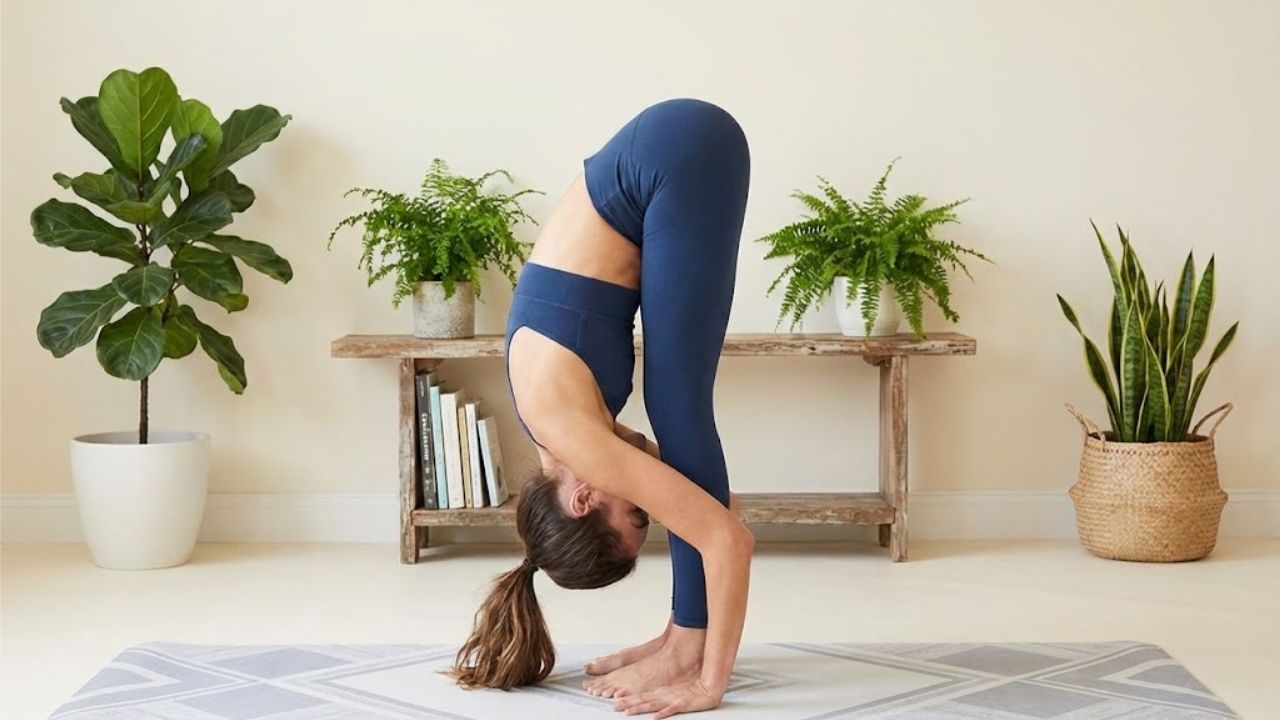
    Uttanasana (Standing Forward Bend) to Refresh the Mind

    Standing Forward Bend is highly effective for improving circulation to the brain. With the head positioned below the heart, fresh blood flow is encouraged, delivering oxygen and nutrients that help sharpen concentration.

    Stand with feet hip-width apart. Inhale as you lift your arms overhead, then exhale and hinge forward from the hips. Allow your arms to hang freely or hold opposite elbows. Keep a gentle bend in the knees if needed. Relax the neck and let gravity guide the stretch. Hold for 30 seconds to one minute, observing each breath and picturing your thoughts settling.

    This forward fold also stretches the hamstrings and calves. Tightness in these muscles can create lower back discomfort that distracts the mind. Releasing them helps the body relax, supporting a more focused mental state.

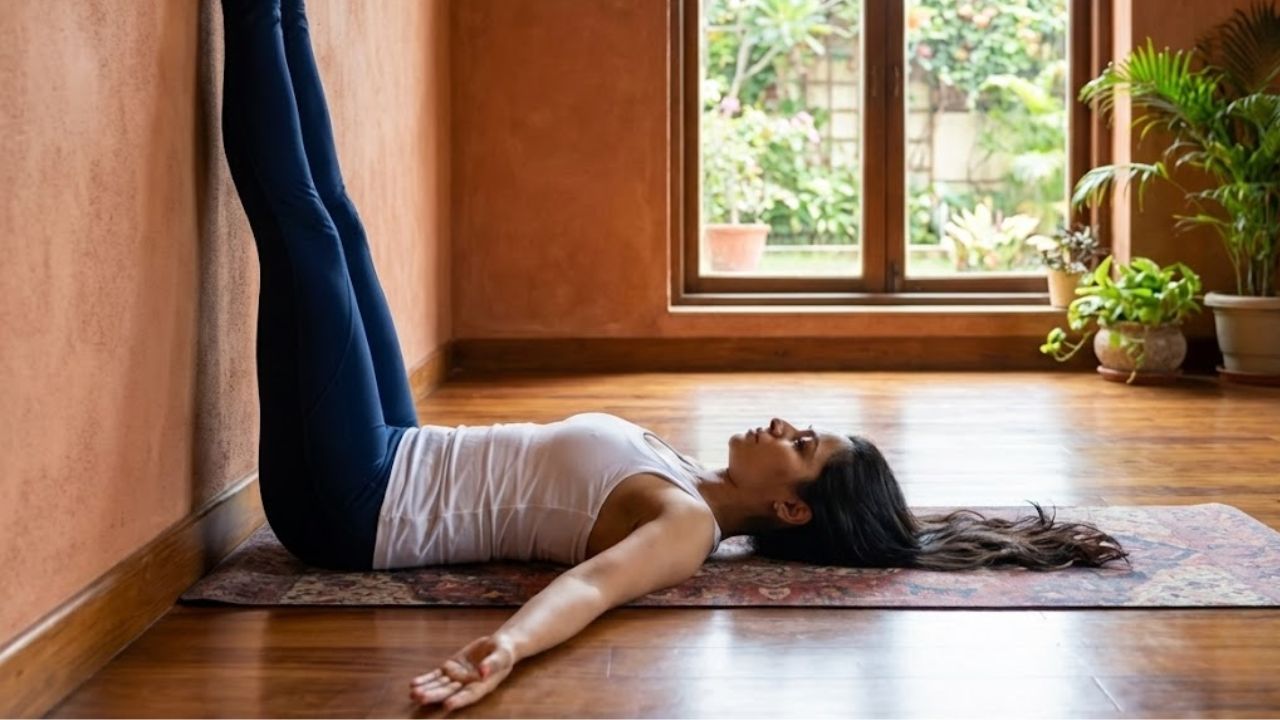
    Viparita Karani (Legs Up the Wall) for Nervous System Reset

    Legs Up the Wall is valued for its restorative and calming effects. It helps quiet mental noise, reduce fatigue, and soothe the nervous system. Elevating the legs above the heart improves circulation and provides a gentle oxygen boost to the brain.

    Sit close to a wall and swing your legs upward so they rest vertically against it. Keep the lower back relaxed and place your arms by your sides with palms facing up. Close your eyes and breathe slowly, inhaling for four counts and exhaling for six. Remain in the pose for five to fifteen minutes, keeping your attention on the breath.

    This posture is especially beneficial after long periods of mental effort. The inverted position encourages the body to enter a parasympathetic state, helping calm the nervous system and clear mental clutter.

    Balancing Table Pose (Dandayamana Bharmanasana) to Improve Focus

    Balancing Table Pose enhances concentration while strengthening the core and grounding the mind. Holding this posture requires steady attention and controlled breathing, which helps eliminate distractions and build present-moment awareness.

    Begin on all fours with wrists aligned under shoulders and knees under hips. Inhale as you extend your right arm forward and left leg back, keeping hips level and gaze downward. Hold for about thirty seconds with smooth breathing, then switch sides.

    This pose supports core stability and posture, which encourages deeper, more efficient breathing. Improved oxygen intake helps boost mental clarity while the balance element trains the mind to remain focused.

    Sirsasana (Headstand) or Safe Supported Inversion

    Headstand is often referred to as the king of yoga poses. It significantly increases blood flow to the brain and, when practiced safely, stimulates glands involved in mood and focus regulation.

    For beginners, practicing near a wall or using support is recommended. Place your forearms on the mat, interlace your fingers, and rest the crown of your head on a folded blanket. Slowly walk your feet closer and lift one leg at a time until both are raised. Keep the core engaged, breathe steadily, and hold for ten to thirty seconds before lowering with control and resting in Child’s Pose.

    If you have neck issues, high blood pressure, or eye conditions, avoid headstand and choose gentler inversions instead. The benefit comes from improved oxygen-rich blood flow, which supports alertness and reduces mental fatigue.

    How to Practice These Poses Daily for Better Clarity

    Consistency is key when using yoga to support mental clarity. Practicing these poses in the morning or during a mid-day break can help reset focus and emotional balance. Even a short ten-minute sequence can create noticeable results, especially when paired with slow, mindful breathing.

    Begin with Standing Forward Bend to stimulate circulation. Move into Balancing Table Pose to sharpen focus, followed by Child’s Pose to release stress. Practice Legs Up the Wall to calm the nervous system, and finish with Headstand or a supported inversion if appropriate. Afterward, observe how your mind feels and notice any improvement in clarity and mood.

    These poses help retrain the nervous system to respond to stress with calm rather than tension. Over time, this practice strengthens resilience, sharpens focus, and supports better decision-making. Clear thinking is not about eliminating thoughts, but about creating space to think with intention. Yoga supports this process through body awareness and breath control, helping the mind stay present, focused, and calm in everyday life.
  • Quick Yoga for Busy Schedules: 6 Poses You Can Do Anytime

    Quick Yoga for Busy Schedules: 6 Poses You Can Do Anytime

    Quick Yoga Poses for Busy Days: Simple Ways to Relax and Reset

    In today’s fast-moving lifestyle, making time for self-care can feel challenging. Between work responsibilities, family demands, and personal tasks, finding even a few moments to unwind often seems out of reach. Yoga provides a practical and time-efficient solution for busy individuals who want to relax and recharge. With just a handful of easy poses, you can release built-up tension, improve flexibility, and restore energy in minutes. Below are six quick yoga poses designed to help you refresh your body and mind without disrupting your schedule.

    1. Mountain Pose (Tadasana): Building Stability and Inner Calm

    Mountain Pose may look simple, but it is a powerful posture for grounding and awareness. It supports better posture, balance, and mindfulness, making it ideal for starting the day or resetting between tasks. Standing tall and engaging your core activates multiple muscle groups and creates a sense of steadiness.

    To practice Mountain Pose:

    • Stand with your feet hip-width apart and arms resting naturally by your sides.
    • Distribute your weight evenly, gently lift your chest, and lengthen your spine.
    • Engage your thighs and lightly draw in your abdominal muscles.
    • Soften your shoulders, gaze forward, and focus on steady breathing.
    • Hold for 30 seconds, breathing deeply and feeling grounded.

    This pose can be practiced anywhere and offers a quick posture reset with minimal effort.

    2. Cat-Cow Pose (Marjaryasana-Bitilasana): Ease Back and Neck Tension

    Long hours at a desk or on your phone can leave your spine feeling tight. Cat-Cow Pose is a gentle, flowing movement that helps release tension in the back, neck, and shoulders. It also improves spinal mobility and encourages mindful breathing.

    To practice Cat-Cow Pose:

    • Begin on your hands and knees in a tabletop position.
    • Inhale as you arch your back, drop your belly, and lift your head and tailbone.
    • Exhale as you round your spine, tuck your chin, and draw your navel inward.
    • Continue flowing between the poses for 1–2 minutes, matching movement with breath.

    This gentle sequence is especially helpful for those with a sedentary routine.

    3. Seated Forward Fold (Paschimottanasana): Stretch the Lower Body Quickly

    Seated Forward Fold provides a deep stretch for the hamstrings, calves, and lower back. It is particularly beneficial after long periods of sitting and helps calm the mind while easing physical tension.

    To practice Seated Forward Fold:

    • Sit with your legs extended straight in front of you, feet flexed.
    • Inhale to lengthen your spine.
    • Exhale as you hinge forward, reaching toward your feet or shins.
    • Maintain a long spine without rounding your back.
    • Hold for 30 seconds to 1 minute, breathing slowly.

    This pose is simple yet effective, making it easy to include during short breaks.

    4. Child’s Pose (Balasana): Gentle Rest for Deep Relaxation

    Child’s Pose is a soothing posture that stretches the hips, thighs, and back while encouraging relaxation. It offers a quiet moment to pause and reconnect, helping calm the nervous system and reduce stress.

    To practice Child’s Pose:

    • Kneel with your big toes together and knees slightly apart.
    • Sit back onto your heels and extend your arms forward.
    • Lower your forehead to the floor.
    • Breathe deeply and allow your body to soften.
    • Remain in the pose for 1–2 minutes.

    This posture is ideal for recharging both body and mind during a busy day.

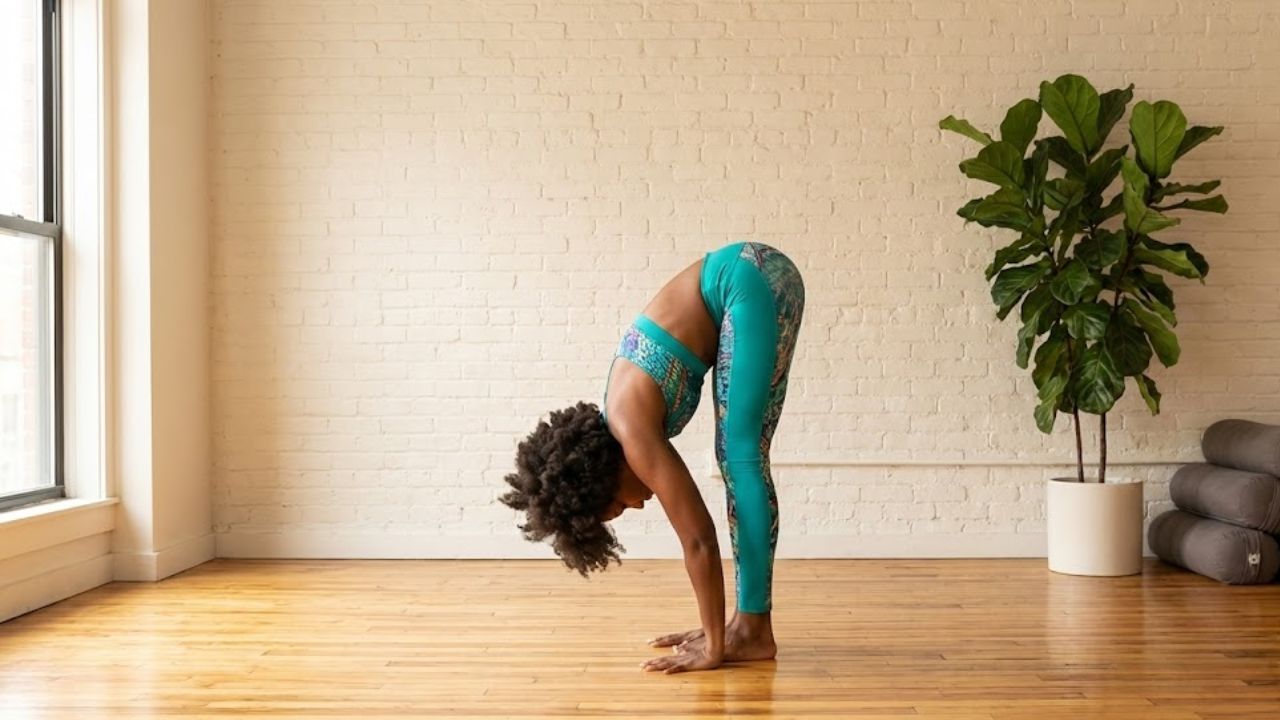
    5. Standing Forward Fold (Uttanasana): Refresh and Re-energize

    Standing Forward Fold helps stretch the hamstrings and back while calming the mind. It is especially useful for relieving stiffness and restoring alertness after sitting for extended periods.

    To practice Standing Forward Fold:

    • Stand with feet hip-width apart and knees slightly bent.
    • Inhale to lengthen your spine.
    • Exhale as you hinge forward from the hips, letting your head drop.
    • Hold your ankles or place your hands on the floor if comfortable.
    • Stay for 30 seconds to 1 minute, relaxing your neck and shoulders.

    This pose offers an instant energy lift and helps release built-up tension.

    6. Legs Up the Wall (Viparita Karani): Restore and Relax in Minutes

    Legs Up the Wall is a deeply restorative pose that supports circulation, relaxation, and lower-body relief. It is an excellent way to unwind and reset when time is limited.

    To practice Legs Up the Wall:

    • Sit sideways next to a wall and gently swing your legs upward.
    • Lower your back to the floor with legs resting vertically against the wall.
    • Place your arms comfortably by your sides, palms facing up.
    • Close your eyes and focus on slow, steady breathing.
    • Hold for 1–2 minutes.

    This pose is ideal for calming the mind and restoring energy quickly.

    Quick Yoga Relief for Tight Schedules

    These six time-efficient yoga poses are well-suited for busy individuals seeking fast relief from stress and stiffness. Whether your goal is to improve posture, ease tension, or feel refreshed during a demanding day, these poses deliver meaningful benefits in just a few minutes. By incorporating them into your daily routine, you can enjoy the physical and mental advantages of yoga without dedicating large blocks of time. Even brief moments of mindful movement can help you stay balanced, energized, and relaxed throughout the day.

  • Relaxation Yoga Guide: 5 Calming Poses That Ease Stress and Tension

    Relaxation Yoga Guide: 5 Calming Poses That Ease Stress and Tension

    In a busy and demanding lifestyle, stress and mental tension are often unavoidable. Finding simple ways to slow down and reset is essential for maintaining both mental and physical balance. Yoga offers a gentle yet effective path to relaxation by calming the mind, easing muscle tightness, and encouraging slow, mindful breathing. The following five calming yoga poses are especially helpful for deep relaxation and stress relief, making them ideal for daily practice or unwinding after a long day.

    Calming Yoga Poses for Relaxation and Stress Relief

    1. Child’s Pose (Balasana)

    Child’s Pose is a restorative posture that supports relaxation and mental calm. Begin in a kneeling position with your big toes together and knees slightly apart. Gently sit back onto your heels, extend your arms forward, and rest your forehead on the mat. Allow your body to soften completely while maintaining slow, steady breathing.

    This pose helps release tension in the back, shoulders, and neck, making it highly effective for stress relief. It also promotes deep belly breathing, which activates the parasympathetic nervous system and encourages a sense of calm. Child’s Pose is ideal for grounding the body and clearing mental distractions.

    2. Legs Up the Wall (Viparita Karani)

    Legs Up the Wall is a gentle restorative pose known for calming the nervous system and improving circulation. Sit close to a wall, lie back, and extend your legs upward against the wall while keeping them straight. Rest your arms comfortably by your sides or on your abdomen. Remain in the pose for 5 to 10 minutes.

    This posture promotes deep relaxation by reversing blood flow and supporting restorative circulation. It helps ease tension in the legs, hips, and lower back while calming the mind and lowering stress levels. Practicing this pose before bedtime can also support better sleep quality.

    3. Seated Forward Fold (Paschimottanasana)

    Seated Forward Fold is a soothing posture that stretches the spine and supports slow, controlled breathing. Sit with your legs extended forward, inhale to lengthen the spine, and exhale as you hinge from the hips, reaching toward your feet or legs. Hold the pose for 30 seconds to 1 minute while breathing deeply.

    This forward fold helps calm the nervous system by releasing tension in the spine, hips, and hamstrings. It encourages mindful breathing, which activates the parasympathetic response and supports relaxation. This pose is especially useful for reducing anxiety and promoting inner calm.

    4. Corpse Pose (Savasana)

    Savasana, also known as Corpse Pose, is the primary relaxation posture in yoga. Lie flat on your back with your legs extended and arms resting comfortably at your sides, palms facing upward. Close your eyes and bring attention to your breath, allowing the body to fully sink into the mat. Stay in this pose for 5 to 10 minutes.

    This pose allows the body and mind to fully relax and recover. It supports mindful breathing and helps release lingering tension. Savasana also activates the parasympathetic nervous system, helping to lower heart rate and blood pressure while encouraging deep relaxation. It is commonly practiced at the end of a yoga session to absorb the benefits of the practice.

    5. Cat-Cow Pose (Marjaryasana–Bitilasana)

    Cat-Cow Pose is a gentle flowing movement that encourages relaxation through spinal mobility and breath awareness. Begin on all fours with wrists under shoulders and knees under hips. Inhale as you drop the belly and lift the chest and tailbone (Cow Pose). Exhale as you round the spine, tucking the chin and tailbone (Cat Pose). Continue for 1 to 2 minutes.

    This sequence helps release tension in the spine, neck, and shoulders while coordinating breath with movement. It supports deep breathing and calms the nervous system, making it effective for stress relief. Cat-Cow also improves spinal flexibility and posture, contributing to overall relaxation.

    Closing Thoughts on Relaxing Yoga Practices

    Yoga is a powerful tool for calming the mind and easing stress. These five poses—Child’s Pose, Legs Up the Wall, Seated Forward Fold, Savasana, and Cat-Cow—are particularly helpful for unwinding and restoring balance. By focusing on steady breathing and allowing the body to relax into each posture, you can release both physical and mental tension. Practicing these poses regularly supports greater relaxation and a calmer daily routine.

  • Better Posture Yoga: 5 Simple Poses to Improve Alignment Naturally

    Better Posture Yoga: 5 Simple Poses to Improve Alignment Naturally

    Maintaining healthy posture plays a vital role in overall physical well-being. With modern lifestyles often involving long hours at desks and extended screen time, postural imbalance has become increasingly common. This can contribute to back discomfort, neck tension, and low energy levels. Yoga provides a gentle yet effective solution. Through consistent practice, yoga helps build strength, enhance flexibility, and increase body awareness, all of which support proper posture. Below are five easy yoga poses that can noticeably improve the way you sit, stand, and move.

    1. Mountain Pose (Tadasana): Building Postural Awareness

    Mountain Pose is a foundational yoga position that develops alignment awareness and encourages correct posture. Although it appears simple, it actively engages the body by teaching you how to stand tall, activate the core, and lengthen the spine, making it an essential starting point for posture improvement.

    To practice Mountain Pose:

    • Stand upright with feet hip-width apart, pressing evenly into the ground.
    • Lift the chest while engaging the thighs without locking the knees.
    • Extend the spine upward by reaching through the crown of the head.
    • Relax the shoulders and rest the arms by your sides, palms facing forward.
    • Hold for 30 seconds to 1 minute, maintaining steady alignment.

    2. Cat-Cow Pose (Marjaryasana-Bitilasana): Enhancing Spinal Mobility

    Cat-Cow is a flowing movement that gently stretches the spine while releasing tension in the neck, shoulders, and back. Alternating between spinal extension and flexion helps improve spinal flexibility and supports healthy posture.

    To practice Cat-Cow Pose:

    • Begin on hands and knees with wrists under shoulders and knees under hips.
    • Inhale, dropping the belly while lifting the chest and tailbone upward.
    • Exhale, rounding the spine and drawing the chin toward the chest.
    • Continue for 5–10 slow rounds, syncing movement with breath.

    This gentle flow increases spinal mobility, which is essential for maintaining an upright and balanced posture.

    3. Cobra Pose (Bhujangasana): Supporting the Upper Spine

    Cobra Pose strengthens the muscles along the spine while opening the chest and shoulders. It is especially helpful for counteracting slouching by activating the muscles that support the upper back.

    To practice Cobra Pose:

    • Lie face down with legs extended and the tops of the feet resting on the floor.
    • Place hands under the shoulders, elbows close to the body.
    • Inhale and gently lift the chest by pressing into the palms.
    • Keep the elbows slightly bent and engage the back muscles.
    • Hold for 15–30 seconds, then slowly release.

    This pose helps strengthen the back while stretching the chest, promoting a more open and upright posture.

    4. Child’s Pose (Balasana): Gentle Spine Release

    Child’s Pose offers a deeply relaxing stretch that soothes the back and lengthens the spine. It is ideal for relieving accumulated tension and encouraging spinal alignment, especially after prolonged sitting.

    To practice Child’s Pose:

    • Kneel on the floor with big toes together and knees slightly apart.
    • Lower the hips toward the heels and extend the arms forward.
    • Rest the forehead on the mat and relax the neck and shoulders.
    • Breathe deeply and hold for 1–3 minutes.

    This restorative pose helps reset the spine and provides gentle relief from postural strain.

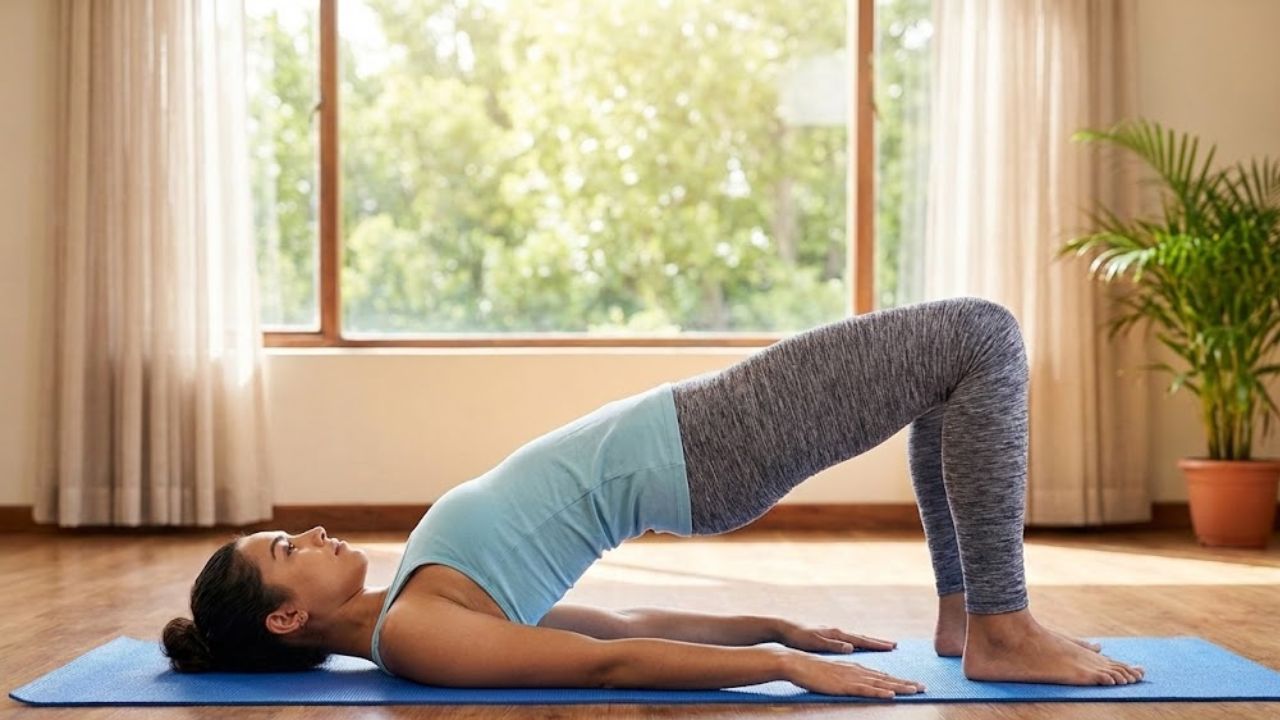
    5. Bridge Pose (Setu Bandhasana): Strengthening the Lower Body

    Bridge Pose targets the lower back, glutes, and core, all of which are essential for proper posture. It also opens the chest and hips, supporting better spinal alignment.

    To practice Bridge Pose:

    • Lie on your back with knees bent and feet flat, hip-width apart.
    • Place arms alongside the body with palms pressing into the floor.
    • Press through the feet and lift the hips upward.
    • Engage the core and glutes while keeping knees aligned.
    • Hold for 30 seconds to 1 minute, then lower slowly.
    • Repeat 3–5 times.

    This pose activates key muscles that help maintain an upright posture and reduce the tendency to slouch.

    Conclusion: Small Daily Steps, Lasting Posture Benefits

    Adding these five simple yoga poses to your daily routine can create noticeable improvements in posture over time. Regular practice helps strengthen the spine, increase flexibility, and sharpen body awareness. Starting with just a few minutes each day and staying consistent can lead to long-term benefits.

    By making yoga part of your routine, you support not only better posture but also greater mindfulness and physical balance. Whether you are new to yoga or already experienced, these gentle movements can positively transform how you feel and carry yourself every day.

  • 5-Minute Relaxation Yoga: A Quick Flow to Feel Calm Instantly

    5-Minute Relaxation Yoga: A Quick Flow to Feel Calm Instantly

    In a world that rarely slows down, finding time to truly relax can feel challenging. Ongoing responsibilities from work, family, and daily routines often leave the mind overwhelmed and the body tense. Thankfully, yoga provides a fast and practical way to ease stress, calm the mind, and restore balance. Even with just five minutes, a focused yoga flow can help you reset and feel noticeably calmer. Below is a simple 5-minute yoga sequence designed to reduce stress and support relaxation, even on the busiest days.

    1. Begin with Mindful Breathing (1 Minute)

    Before moving into physical postures, take a moment to connect with your breath. Conscious, deep breathing is one of the quickest ways to lower stress and bring your attention inward. Slowing the breath sends calming signals to the brain, helping the body shift into a relaxed state.

    • Sit comfortably on the floor or in a chair with your spine upright and shoulders relaxed.
    • Close your eyes and inhale deeply through your nose, allowing your lungs to expand fully.
    • Exhale slowly through your mouth, releasing built-up tension.
    • Continue this steady breathing for one minute, focusing on each inhale and exhale while letting distractions fade.

    This mindful breathing practice helps quiet the mind and gently prepares you for the movements ahead.

    2. Gentle Cat-Cow Flow (1 Minute)

    Move into Cat-Cow Pose to introduce gentle motion into the spine. This flowing sequence helps loosen the back, release tension in the neck and shoulders, and promote relaxation through synchronized breath and movement.

    • Come onto your hands and knees in a tabletop position, aligning wrists under shoulders and knees under hips.
    • Inhale as you lower your belly, lift your chest, and tilt your gaze upward into Cow Pose.
    • Exhale as you round your spine, tuck your chin, and draw your navel inward into Cat Pose.
    • Flow smoothly between these positions for one minute, moving with your breath.

    The rhythmic motion of Cat-Cow helps release stored tension in the spine while calming both body and mind.

    3. Relaxing Child’s Pose (1 Minute)

    Child’s Pose offers a deeply restful posture that gently stretches the hips, thighs, and back. It encourages stillness and relaxation by allowing the body to soften while the breath remains slow and steady.

    • From hands and knees, slowly lower your hips back toward your heels.
    • Extend your arms forward or rest them alongside your body, whichever feels more comfortable.
    • Rest your forehead on the mat and close your eyes.
    • Breathe deeply, allowing each breath to help your body sink further into relaxation.

    Holding this pose for one minute helps calm the nervous system and provides a peaceful pause within the flow.

    4. Soothing Seated Forward Fold (1 Minute)

    The Seated Forward Fold is effective for releasing tension in the back, hamstrings, and neck. It also supports mental relaxation by encouraging the body to turn inward and stretch areas that commonly hold stress.

    • Sit with your legs extended straight in front of you, feet gently flexed.
    • Inhale to lengthen your spine, then exhale as you fold forward from the hips.
    • Reach toward your feet or shins while keeping your spine long.
    • Remain in the stretch for one minute, breathing slowly and evenly.

    This posture helps ease physical tightness while quieting the mind, creating a sense of calm and release.

    5. Restorative Legs Up the Wall (1 Minute)

    To close your five-minute flow, settle into Legs Up the Wall. This restorative pose is deeply calming and helps relieve lingering tension in the legs and lower back, making it an ideal way to finish your practice.

    • Sit close to a wall and gently swing your legs upward, resting them vertically against the wall.
    • Support your hips with a cushion or folded blanket if needed.
    • Allow your arms to relax by your sides with palms facing upward.
    • Close your eyes and focus on slow, steady breathing.

    Remain here for one minute, letting your body fully relax as circulation improves and tension melts away.

    A Simple Five-Minute Reset for Mind and Body

    In just five minutes, this gentle yoga flow can help you feel calmer, more centered, and refreshed. Whether you are at home, at work, or short on time, these easy poses offer a quick mental and physical reset. The blend of mindful breathing, gentle movement, and restorative postures allows you to release stress and reconnect with your body.

    When your day feels overwhelming, taking a few minutes for yoga can make a noticeable difference. Practicing this short flow regularly can support relaxation, balance, and overall well-being, proving that even brief moments of self-care can have lasting effects.

  • Mindset Transformation Yoga: 7 Practices That Improve Focus and Emotional Strength

    Mindset Transformation Yoga: 7 Practices That Improve Focus and Emotional Strength

    Yoga goes far beyond physical poses and flexibility. It is a powerful practice for mental and emotional growth. While yoga is widely recognized for improving flexibility, strength, and posture, its influence on the mind is just as profound. With consistent practice, yoga can help shift thought patterns, ease stress, and support a calmer, more focused, and balanced mindset. Below are seven essential yoga principles that can help reshape your thinking and bring greater peace and clarity into daily life.

    1. Mindful Breathing Through Pranayama

    One of yoga’s most effective mindset tools is mindful breathing, known as pranayama. Controlled breathing techniques help soothe the nervous system, lower anxiety, and enhance mental clarity. By directing attention to the breath, the mind naturally moves from restlessness to calm awareness.

    • Sit comfortably with a straight spine.
    • Close your eyes and breathe deeply through the nose, exhaling slowly.
    • Let distractions fade as you focus on the rhythm of your breath.
    • Practice for 5–10 minutes daily, increasing gradually.

    This practice encourages present-moment awareness, making it easier to manage stress and emotional tension.

    2. Strengthen Your Mindset With Sankalpa

    Setting an intention, or sankalpa, is a meaningful way to guide both your yoga practice and your mindset. A sankalpa is a positive affirmation that reflects what you wish to nurture in your life, such as calm, confidence, or self-acceptance.

    • Pause before practice to identify your intention.
    • Choose a simple, positive phrase like “I am at peace.”
    • Repeat it silently during your session.

    Integrating intention into yoga helps align your thoughts with your values, reinforcing positive self-belief and reducing negative mental patterns.

    3. Welcome Stillness Through Meditation

    Yoga emphasizes that stillness is a strength, not something to avoid. Meditation plays a vital role in calming the mind, improving focus, and enhancing clarity. Even brief daily meditation can create noticeable mental shifts.

    • Sit upright with eyes closed.
    • Focus gently on your breathing.
    • When thoughts arise, return attention to the breath.
    • Begin with 5 minutes and extend gradually.

    Meditation trains the mind to remain steady and calm, helping reduce anxiety while promoting inner balance.

    4. Build Gratitude Into Your Practice

    Yoga naturally encourages gratitude and appreciation for the body and the present moment. By acknowledging what is working well, your mindset shifts from scarcity to abundance.

    • Notice and appreciate your body’s strength and flexibility.
    • Reflect on positive areas of your life.
    • Use each practice to reconnect with gratitude.

    Gratitude supports emotional well-being, enhances happiness, and lowers stress, helping you develop a resilient mindset.

    5. Let Go of Negativity With Forward Folds

    Forward folds are calming postures that support the release of physical and emotional tension. These poses help clear mental clutter while encouraging relaxation.

    • Stand with feet hip-width apart.
    • Exhale as you fold forward from the hips.
    • Keep the spine long and neck relaxed.
    • Breathe steadily while holding the pose.

    These poses promote emotional release, leaving you feeling lighter and more focused.

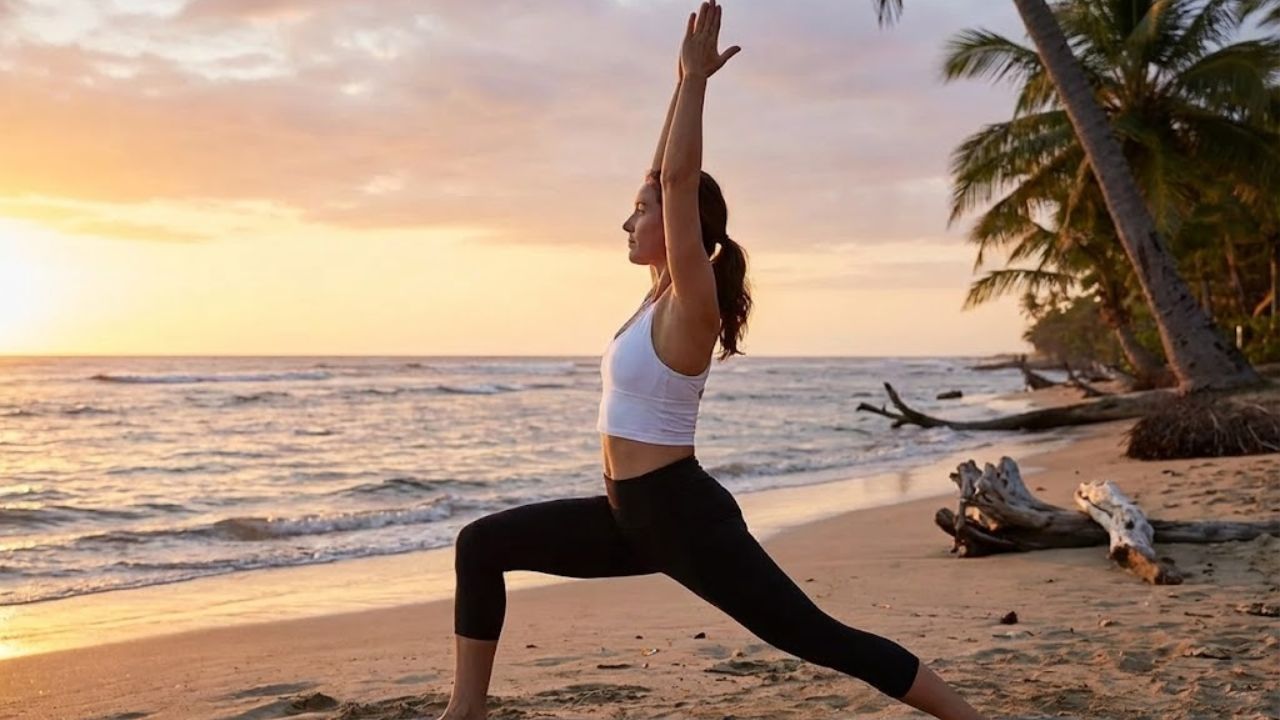
    6. Develop Strength and Focus With Warrior Poses

    Warrior poses, or Virabhadrasana, build strength while reinforcing confidence and presence. They encourage a mindset rooted in determination and resilience.

    • Step one foot back from standing.
    • Bend the front knee to a right angle.
    • Extend arms parallel to the floor.
    • Gaze forward with steady focus.

    These poses help cultivate mental courage, encouraging you to face challenges with confidence.

    7. Restore Balance Using Tree Pose

    Tree Pose, known as Vrksasana, enhances balance, concentration, and mental stability. It teaches steadiness in both body and mind.

    • Shift weight onto one leg.
    • Place the opposite foot on the inner leg.
    • Bring hands to the heart or raise them overhead.
    • Fix your gaze on a steady point.

    This pose strengthens focus and promotes calm mental clarity, even during life’s challenges.

    Conclusion: Embracing a Calmer Way of Thinking

    Yoga offers a powerful pathway to mental transformation and emotional balance. Through mindful breathing, intention-setting, stillness, gratitude, and purposeful movement, yoga helps reshape the way you think and respond to life. By nurturing the connection between body and mind, yoga supports a harmonious inner state that extends beyond the mat. With regular practice and patience, its benefits can lead to a more peaceful, focused, and empowered mindset.

  • He Hid an AirTag in Donated Sneakers and Accidentally Exposed a Disturbing Resale Reality

    He Hid an AirTag in Donated Sneakers and Accidentally Exposed a Disturbing Resale Reality

    The kind of shoes you drop into a donation bin with a faint sense of having done something good. Before parting with them, however, a man in Geneva tucked a tiny Apple AirTag beneath the insole, almost as a quiet challenge. Where would his worn sneakers actually go?

    He snapped a photo, tied the laces together, and carried them to a Red Cross collection point. A quick signature, a polite smile, then back to work. That should have closed the chapter. Days later, his phone vibrated. His “lost item” had moved. Not to a sorting center. Not to a refugee shelter. Instead, it appeared at a street market across town.

    The blue dot on his screen drifted between metal racks and tarpaulins. The sneakers, now officially “donated,” were on sale.

    From donation bin to market counter

    When he first opened the Find My app, he expected the AirTag to be sitting still in a warehouse. Instead, the map highlighted a location near a popular flea market. The kind of place known for second-hand jackets, mismatched chargers, and, apparently, charity sneakers with a hidden tracker.

    Intrigued and slightly uneasy, he cycled there one Saturday morning. The AirTag icon blinked on his phone, growing closer with every step between the stalls. Plastic sheets flapped, vendors called out prices, children tugged at sleeves. Somewhere in that crowded maze, his old shoes waited, now carrying a fresh price tag.

    He moved slowly along the rows, scanning piles of footwear. The signal intensified, then became unmistakable. He no longer needed the screen. The sneakers were right there, neatly arranged with other “donations,” now labeled as cheap finds.

    Tracked donations and unexpected journeys

    This was not an isolated error or an urban myth. In recent years, similar experiments have spread online: hidden trackers placed in donated clothes, toys, or electronics, quietly mapping their paths across cities and borders. In this Geneva case, the journey was short but revealing: collection point, temporary storage, reseller’s stall.

    Other items have traveled farther. A winter coat dropped in Berlin surfaced months later in Eastern Europe. A bundle of used T-shirts in London pinged from a cargo ship near North Africa. A laptop, supposedly “recycled,” moved straight from a charity depot to a refurbishing shop known for exporting old electronics.

    Each time, screenshots of these maps circulate online, sparking fascination and frustration. The donations did not disappear; they slipped into a long, opaque chain where good intentions meet economic reality.

    When generosity meets a global resale system

    For charities, the picture is more nuanced than a simple scandal. Many organizations openly resell part of what they receive to fund programs, pay staff, and keep warehouses operating. Some work with recycling firms or wholesalers who buy unsold clothes by the kilo. There is nothing illegal in this process, as long as it is transparent.

    The grey area appears when donors imagine their shoes on the feet of someone in urgent need, while the items are treated instead as raw material within a global second-hand industry. The Geneva sneakers on a market table capture that tension. One pair, a few francs, but behind it a system most people barely understand.

    Technology brings these blind spots into view. A 35-euro AirTag can trace an invisible journey worth millions.

    Donating more wisely without stopping altogether

    The AirTag story does not suggest abandoning generosity. It points toward adjusting how we give. A first step is to ask clear questions before dropping off bags. Where do items go? What portion is redistributed for free? What is sold, and to whom?

    Many reputable charities respond openly when asked directly or by email. Some publish detailed breakdowns of their donation flows. Spending a few minutes reading those pages can be more useful than hours of online outrage. If responses stay vague or evasive, that silence is also informative.

    Another simple habit is matching donations to what organizations truly need. Some shelters publish seasonal wish lists. Urban charities may prefer durable sneakers and coats, while rural groups might need baby clothes or school bags. Aligning what you give with actual demand reduces the pull toward automatic resale.

    There are also ways to keep generosity personal. Local groups on social platforms often connect donors directly with families, students, or newcomers. You give shoes, you see the smile, you hear the story. This does not replace large organizations, but it counters the feeling that everything vanishes into a black box.

    In many cities, social workers quietly assemble wardrobes for people leaving the streets for a first apartment. They know who needs size 43 sneakers and which job interview is coming up. Asking if they accept direct donations can make tracker-style curiosity unnecessary. The journey from your hallway to their closet may be just a bus ride.

    Of course, not everyone has the time or energy to organize ideal donations. Some weeks, even carrying a bag to the nearest bin feels like a win. Shifting perspective helps. Instead of imagining a perfect story for each item, think of supporting an ecosystem: the charity, its staff, its beneficiaries, and its shops.

    Soyons honnêtes: few people read annual reports and association statutes regularly. Still, taking one evening a year to check where your preferred charity stands can prevent disappointment. Do they run shops? Export surplus clothing? Publish audits? These answers often sit quietly on their websites.

    Some will continue tracking items out of curiosity or mistrust. That choice raises ethical questions about privacy and consent. Yet it also acts as a mirror, asking what we are truly checking: the honesty of others or our own idealized view of giving.

    “I wasn’t shocked that my sneakers were sold,” the donor later told a local journalist. “I was shocked that nobody had clearly said this was happening while asking me to give from the heart.”

    Lessons from one tracked pair of shoes

    Behind this single pair of sneakers, several practical lessons emerge for anyone who wants to keep donating without feeling naïve.

    • Seek transparency: Choose organizations that clearly explain how resale and exports are handled.
    • Give quality items: Clothes in poor condition often become waste rather than help.
    • Balance approaches: When possible, combine traditional charity donations with direct giving to people or groups you know.

    A hidden tracker and an uncomfortable clarity

    The Geneva story resonated because it felt like a social experiment anyone could repeat. A cheap AirTag, an old pair of sneakers, a donation bin. No hacking, no hidden cameras. Just a quiet test many had wondered about but never tried.

    At a deeper level, that blue dot on a phone screen confronts us with a question: how much do we really want to know about what happens after we “do the right thing”? We sort, we fold, we drop off. The mental story ends there. The real one continues through warehouses, ships, markets, and sometimes landfills.

    At a busy market, a vendor may see those sneakers simply as stock. A recognizable brand, decent condition, easy to sell. A few francs earned, perhaps a meal paid. It is difficult to fault someone operating within a system built long before. We have all faced the moment when tidy moral stories clash with messy reality.

    What the AirTag exposes is less a scandal than a gap between imagined impact and logistical truth. Closing that gap will not come from tracking more shoes, but from conversations rarely held. With charities. With local groups. With ourselves.

    Some readers will feel betrayed and step away from large organizations. Others will accept resale as a valid way to fund social programs. Many will sit uneasily in between, still wanting to help. That discomfort may be the most valuable outcome. It forces reflection instead of routine closet cleanouts on autopilot.

    Giving has always been about more than objects. It rests on trust, personal narratives, and a fragile link between giver and receiver. A tiny tracker hidden in a sneaker does not break that link. It simply draws it on a map, pulling it out of the shadows and into view.

    Key takeaways for donors

    • Ask how donations are used: Before dropping bags, contact charities to learn what percentage is given directly, sold, exported, or recycled.
    • Favor local, direct help: Pair traditional donations with local giving to see immediate impact.
    • Donate truly wearable items: Clean, intact clothing is more likely to help as intended rather than become low-value waste.
  • Boiling Rosemary Is an Old Family Ritual That Instantly Resets Your Home’s Energy

    Boiling Rosemary Is an Old Family Ritual That Instantly Resets Your Home’s Energy

    No cakes, no soup, just a few green rosemary sprigs floating in softly bubbling water. The house carried a scent that felt strangely quiet. Calm. Almost like opening a window onto a late-summer hillside and letting the outside drift in.

    She waved her hand through the steam, almost like a conductor. “I’m boiling rosemary,” she said, as though that settled everything. At the time, I brushed it off as an old-fashioned habit, the sort of thing you quietly promise yourself you will never repeat.

    Years later, in a small flat after a long day, with yesterday’s cooking still hanging in the air, I tried it myself. More out of routine than belief. Within ten minutes, the room felt different. The air shifted. And somehow, so did everything else.

    Why simmering rosemary subtly transforms your living space

    The first thing you notice when you try this at home is not the scent, but the near silence. A gentle simmer, barely a sound. Then a warm, resin-like aroma slowly moves through the space. It does not overwhelm like a candle or spray. It arrives gradually, room by room.

    The sofa smells less worn, the hallway loses that stale edge, and the kitchen no longer feels trapped in last night’s garlic. Instead, it hints at a Mediterranean garden. The change is subtle, yet your shoulders ease without effort. Breathing feels deeper. The house seems cared for, even if laundry still waits on a chair.

    On difficult days, the scent works like a quiet reset. A friend of mine does this every Friday after work. She claims her children argue less when the rosemary pot is on. Whether or not that can be measured, stepping into her home around six in the evening feels slower, softer, and undeniably calmer.

    Using a real plant instead of a synthetic spray also feels grounding. The mind registers the difference. Research on natural herbal aromas suggests they can affect mood and perceived stress, and rosemary is often associated with alertness and memory. That may explain why thoughts feel clearer as the steam spreads.

    Unlike diffusers or oils, a pot of rosemary water feels less like decoration and more like a small gesture. Filling the saucepan, rinsing the sprigs, lowering the heat creates a pause. For a moment, your home does more than shelter you. It takes part.

    How to simmer rosemary for a soft, evening-style home scent

    The process is simple, but a few details help the scent travel properly. Take a small saucepan and add about two to three cups of water. Bring it to a gentle boil, just enough for small bubbles to appear.

    Add three to six fresh rosemary sprigs, or about one generous tablespoon of dried rosemary if needed. Reduce the heat to the lowest simmer. Steam is the goal, not a rolling boil. Let it sit on the hob for twenty to forty minutes, adding water if the level drops.

    After a few minutes, leave the room and return. That is when the difference becomes clear. Some people carefully move the saucepan closer to a hallway using a heat-safe surface. The scent naturally drifts under doors and around corners. The simplicity can feel almost suspicious.

    • Good news for drivers of diesel vehicles: what to expect next
    • Underwater rail line linking continents raises bold questions
    • Miniature wind turbines promise lower electric bills
    • A small morning environment change that lifts mood effortlessly
    • An unexpected tulip bloom surprises experienced gardeners
    • A fast method to retrieve your ATM card if it gets stuck
    • Why bird lovers are using simple hangers to help in winter
    • An overlooked oil alternative that is healthier and more affordable

    A few missteps can spoil the effect. Turning the heat up too high rushes the process and leaves the rosemary smelling slightly burnt. Keeping the heat low allows the plant to release its scent gently.

    Another issue is using old, faded dried rosemary. If it barely smells in your hand, it will not offer much in water. Fresh sprigs work best, whether from a shop or a balcony pot. And leaving the saucepan unwashed for a while is more common than anyone admits.

    Always watch the water level. Letting the pot run dry can scorch the pan. A timer helps if you tend to forget. If someone is sensitive to strong aromas, limit the simmer to ten minutes. The ritual can always be repeated another day.

    My grandmother used to say that rosemary puts a house back into its skin. When asked what she meant, she laughed and simply replied that a home has a mood, and rosemary reminds it of itself.

    The idea carries a quiet emotion. One herb and a little steam can make a familiar place feel less like a box and more like a nest. On a slow afternoon, with a book nearby and the pot gently steaming, the outside world feels easier to manage.

    • Best ratio: Use 3–6 fresh sprigs or 1–2 tablespoons dried rosemary with 2–3 cups of water.
    • Ideal heat: Maintain a gentle simmer for 20–40 minutes.
    • Good timing: After cooking, before guests arrive, or while cleaning to refresh the air.
    • Extra touch: Add lemon peel or a cinnamon stick for a layered scent.

    Extending the rosemary ritual beyond the kitchen stove

    Boiling rosemary is not only about covering food smells. Over time, it can become part of how you mark the end of a day. Some people light candles, others switch on soft lights. You might simply place a pot on the hob and let the steam signal that things are slowing down.

    Small habits often form around it. Clearing the table while the air fills with that green, pine-like aroma. Making a phone call as the water simmers. Sitting quietly for a few minutes, watching the steam rise. During a difficult week, that small act can feel like evidence of care.

    Homes sometimes feel heavy, as if walls remember arguments and exhaustion. A saucepan of rosemary will not solve everything. But it can shift the atmosphere just enough to breathe more easily, speak more gently, and rest more fully. That may be why this simple practice continues to pass from one kitchen to another, quietly and without fuss.

    • Ideal rosemary-to-water balance: Simmering the right amount ensures a noticeable but gentle scent.
    • Best moments to use it: Evening routines and post-cooking times help reset the space naturally.
    • Easy scent variations: Lemon peel, cinnamon, or sage allow seasonal and personal adjustments.
  • Neither Vinegar Nor Soap This Surprising Method Erases Kettle Limescale With Almost No Effort

    Neither Vinegar Nor Soap This Surprising Method Erases Kettle Limescale With Almost No Effort

    You lift the kettle, already imagining your first sip of morning tea, and notice it: a pale, chalky crust stuck to the base, frozen like dust in time. The water looks dull. The metal inside no longer gleams; it seems worn and unhappy.

    You pause. Do you boil it anyway? Rinse it quickly and pretend nothing’s there? Or commit to the usual ritual—vinegar, sharp fumes, open windows, and complaints about the smell. Soap feels pointless. Scrubbing feels endless.

    Yet there’s a simple ingredient sitting quietly in the cupboard. No foam. No strong scent. No drama. Just a kettle that ends up clean, almost like new.

    Why Limescale in Your Kettle Is More Than Just an Eyesore

    The first time you spot limescale, it seems harmless. A thin ring, a dusty layer at the bottom. You shrug and pour your tea as usual.

    Days turn into weeks. The ring thickens. The kettle starts to sound different, as if it’s working harder than before. You catch yourself staring at the crusty edges while the water heats, feeling slightly uneasy.

    Eventually, you wonder whether those tiny flakes end up in your cup. You search it online, close the tab, and move on. The kettle stays the same.

    In offices and shared flats, the story repeats. The communal kettle is always the first to give up: white buildup, cloudy water, and sometimes a faint metallic note. People joke about hard water and keep using it.

    On British high streets, appliance shop staff see kettles fail quietly every day. Limescale makes heating elements burn out faster and pushes energy use higher, as the kettle struggles to heat through a mineral layer.

    Everyone has a theory. Someone mentions vinegar as a monthly fix. Someone else recalls the lingering smell. Most people simply accept a half-dirty kettle as normal.

    Limescale forms when hard water minerals like calcium and magnesium stay behind after boiling. They don’t evaporate. They accumulate, creating a rough surface that attracts even more buildup.

    • A family found bundles of $500 bills hidden in a false ceiling, only for the bank to seize them.
    • Working from home makes people happier, a finding that frustrates many managers.
    • A disputed date emerges for the century’s longest solar eclipse as experts debate its impact.
    • A banana peel trick goes viral after baking briefly solves a common problem.
    • Simple ways to stop your washing machine from smelling without pricey cleaners.
    • A gardener explains why a common “weed” can help your vegetable garden.
    • An unusual polar atmospheric shift forms earlier than expected this winter.
    • Greenlanders react angrily after a climate emergency declaration linked to a viral orca video.

    This crust isn’t just unattractive. It can trap bacteria in tiny gaps and forces the heating element to work harder, leading to longer boil times and higher electricity use.

    The surprising part is that you don’t need harsh acids or heavy cleaners. A gentler reaction can slowly dissolve the minerals without attacking everything else.

    Not Vinegar, Not Soap: The Gentle Strength of Citric Acid

    The solution is found in the baking aisle: citric acid powder. No overpowering smell. No sticky residue. Just fine crystals that quietly break down limescale.

    To use it, fill the kettle halfway to three-quarters with cold water. Add one to two tablespoons of citric acid and swirl gently. Switch the kettle on and let it boil once.

    After it switches off, leave the hot mixture inside for 15 to 30 minutes. Pour it out, then rinse twice with clean water. No heavy scrubbing. No need to air out the kitchen.

    The first time, the water may turn cloudy. This isn’t a problem. It’s the citric acid reacting with the limescale, slowly breaking it apart.

    With heavier buildup, you might hear faint crackling as the solution seeps into the crust. It looks dramatic, but it’s simply the minerals loosening.

    Many cleaning professionals switched from vinegar to citric acid years ago. It’s gentler on seals, leaves no stubborn smell, and rinses away easily.

    Soyons honnêtes : no one does this daily. Most people descale only when the kettle looks bad or takes too long to boil.

    Instead of aiming for perfection, think in terms of routine. Every one to three months, depending on water hardness. In hard-water areas, monthly makes sense. In softer regions, seasonal cleaning is often enough.

    A common mistake is using too much. Overdoing the powder or boiling repeatedly can leave an odd taste. Mixing it with other cleaners is worse. Stick to the basics: water and citric acid only.

    “Citric acid feels like a peace treaty between the kettle and the water,” says Ana, a café manager. “We run several kettles all day. Vinegar made the place smell awful. With citric acid, no one notices—except that the tea tastes better.”

    • Less smell: no lingering vinegar odour in the kitchen or your drink.
    • Gentler on components: kinder to seals and heating elements.
    • Quick routine: boil, wait, rinse, and you’re done within an hour.

    The Small Habit That Quietly Improves Your Mornings

    There’s a quiet satisfaction in opening the kettle after treatment. The metal looks smoother. The base shines again. The rough white ring is gone.

    You boil fresh water, and this time there’s no cloudiness, no flakes clinging to the sides. Even the sound changes, more like a clean whistle than a strained hum. That first sip of tea or coffee feels clearer.

    On a deeper level, this small act breaks the habit of accepting things as they are. If a neglected kettle can be refreshed in half an hour with one cupboard ingredient, maybe other things aren’t as stuck as they seem.

    In shared kitchens, the trick often spreads quietly. One person tries it, shows the result, and the kettle shifts from embarrassment to something people look after.

    We’ve all ignored small signs of buildup or grime because they felt too minor to fix. Limescale is one of those compromises—easy to overlook, yet always there.

    So this isn’t only about hard water or heating elements. It’s about taking a few calm minutes to care for something you use every day. Not obsessively. Just better than before.

    Share the trick if you want. Show the before-and-after inside the kettle. Or keep it to yourself—a quiet habit you slip into your day while the water comes back to the boil.

  • Observation Skills Face a Test With This Tricky Bear Difference Puzzle

    Observation Skills Face a Test With This Tricky Bear Difference Puzzle

    Observation puzzles have become a popular way to sharpen attention while having fun, and the tricky bear difference puzzle is a perfect example. These challenges ask readers to compare two nearly identical images and spot subtle changes before time runs out. In India, such puzzles are widely shared on social media and news sites because they appeal to all age groups, from students to working professionals. Beyond entertainment, they quietly train the brain to slow down, focus better, and notice details often missed in everyday life.

    Why a Bear Difference Puzzle Challenges Observation Skills

    A bear difference puzzle may look simple at first glance, but it quickly proves otherwise once you start searching for changes. The human brain tends to assume images are identical, which is why these puzzles test visual focus in a playful way. As you scan the images, your mind switches into pattern recognition mode, comparing shapes, colors, and positions. Small alterations hide in plain sight, forcing you to pay attention to minute details you might normally ignore. Adding a countdown clock increases time pressure, making the task even more engaging. This mix of urgency and curiosity keeps people hooked while quietly improving how they observe the world.

    How Tricky Bear Difference Puzzles Improve the Brain

    Solving a tricky bear difference puzzle does more than pass time; it actively strengthens the brain. When you concentrate for several seconds, you build mental stamina that helps in tasks requiring sustained attention. Your eyes learn quick scanning, moving efficiently instead of randomly jumping around. Each spotted change rewards accurate error detection, reinforcing confidence in your judgment. Over time, repeated exposure works as gentle brain training, improving memory and focus without feeling like homework. That’s why many people in India now treat these puzzles as short mental workouts during breaks.

    Why Bear Difference Puzzles Are Popular With All Ages

    One reason the bear difference puzzle is so widely shared is that it is family friendly and easy to understand. Children enjoy the playful artwork, while adults appreciate the mental challenge. It also encourages healthy screen breaks, replacing endless scrolling with purposeful engagement. Many people turn it into a daily challenge, competing with friends or timing themselves for fun. Successfully spotting all differences gives a noticeable confidence boost, making the experience rewarding rather than frustrating. This balance of fun and focus explains why these puzzles continue to trend.

    What Makes Observation Puzzles Worth Your Time

    Observation puzzles like this are more than casual games; they help sharpen perception in everyday life. Regular practice encourages healthy habits of slowing down and noticing surroundings instead of rushing. Because the activity feels lighthearted, it supports playful learning without pressure or stress. Whether used by students, professionals, or seniors, these puzzles fit easily into busy routines. Over time, that small habit can translate into better focus at work, improved memory, and a calmer, more attentive mindset.

    Puzzle Feature Description Typical Time Main Benefit
    Image Style Two nearly identical bear scenes 30–60 seconds Visual comparison
    Difficulty Level Easy to moderate Varies Focus building
    Number of Differences 3 to 7 changes Timed Attention to detail
    Target Audience Kids and adults Anytime Mental engagement

    Frequently Asked Questions (FAQs)

    1. What is a bear difference puzzle?

    It is a visual game where you spot small differences between two similar bear images.

    2. How long should it take to solve?

    Most people aim to finish within 30 to 60 seconds for a good challenge.

    3. Are these puzzles good for kids?

    Yes, they are safe, fun, and help children improve focus and observation.

    4. Can adults benefit from these puzzles?

    Absolutely, adults use them to sharpen attention and relax mentally.