Blog

  • Spot the Difference Puzzle: The Lazy Dog Challenge That Tests Visual Attention

    Spot the Difference Puzzle: The Lazy Dog Challenge That Tests Visual Attention

    Spot-the-difference puzzles seem easy until you start the timer. In this lazy dog challenge you see two nearly identical cartoon scenes showing a sleepy puppy curled up on a bed in a cozy room with familiar background details like a green armchair, a bright window, toys on the floor and a food bowl nearby. The goal is simple: find exactly three differences in only 10 seconds but the design takes advantage of how human attention actually works. What makes this puzzle so enjoyable is the contrast between comfort & difficulty. The scene feels safe and familiar so your brain quickly decides it’s the same picture twice and then stops making careful comparisons. That’s the trap. To win you need to override that quick assumption & scan with purpose.

    Why This Puzzle Feels Harder Than It Looks

    Your visual system is designed for speed, not precision. In everyday life, you don’t analyze every detail of a scene—you rely on the overall “gist” to function efficiently. That shortcut works well in real situations, but it’s exactly why subtle changes slip past you in puzzles like this.

    When two images look almost identical, your brain leans heavily on prediction. Once the layout feels familiar, it automatically fills in gaps and assumes both images match. Under time pressure, you tend to scan broadly instead of comparing deliberately, which means small changes in color, shape, or count are easy to miss unless your attention lands directly on them.

    Emotion plays a role too. Cute or cozy artwork can soften analytical focus because you’re enjoying the scene rather than scrutinizing it. That doesn’t mean you’re bad at puzzles—it means the visual design is doing its job.

    The Brain Science Behind Change Blindness

    This puzzle is a classic example of change blindness, a well-documented phenomenon in perception research. Studies by psychologist Ronald Rensink and others show that people often miss obvious changes when their attention isn’t focused on the altered area. You can look directly at a detail and still fail to register it if your attention is elsewhere.

    This happens because visual features—such as color, shape, and motion—are processed separately and then bound together into objects. When two scenes are nearly identical, your brain binds them quickly and treats them as stable. Only a small portion of the visual field receives high-resolution processing at any moment, controlled by attentional networks.

    Working memory is also critical. Spotting differences means holding one image in short-term memory while comparing it to the other. With a strict 10-second limit, that comparison becomes fragile. If your eyes move too quickly, details never get encoded strongly enough to notice what changed.

    A Fast Method That Actually Works in 10 Seconds

    Random scanning feels productive, but it’s usually inefficient. A structured, almost mechanical approach works far better—even when the image is visually appealing.

    Start by dividing the image into clear zones: the top area, the middle focal subject, and the bottom details. Compare one zone at a time from left to right without jumping around. Focus first on likely puzzle targets such as faces, repeated symbols, bright objects, and high-contrast edges.

    Use a rapid back-and-forth comparison between the two images so changes appear like a brief “blink.” Slow your eye movements slightly—fast glances skip detail, while controlled scanning reveals edits. This approach lowers cognitive load by reducing how much information you hold in memory at once.

    Solution: The Three Differences in the Lazy Dog Images

    If time ran out or you want to confirm your observations, here are the three changes hidden in the scene:

    The sun in the window has extra rays in the right image. The ball near the bone changes color, appearing multicolored on the left and solid green on the right. One “Z” is missing from the sleep bubbles above the dog’s head in the right image.

    None of these changes alter the meaning of the scene. The dog is still asleep, the room still feels cozy, and the layout remains familiar. That’s why your brain is tempted to treat both images as identical.

    What Your Result Says—and What It Doesn’t

    Finding all three differences quickly suggests strong selective attention and good visual working memory under pressure. These skills transfer well to tasks like proofreading, quality control, interface testing, and any role where small anomalies matter.

    Struggling doesn’t mean poor vision or low intelligence. Many people naturally process scenes holistically, focusing on meaning and relationships rather than fine detail. That big-picture style is valuable in strategy, creativity, leadership, and social reasoning.

    The key takeaway is attentional flexibility. With practice, you can learn to switch between global viewing and detail inspection, which is why these puzzles become easier over time.

    Why These Puzzles Are Still Popular in 2025

    In an age of constant scrolling and fragmented attention, short visual challenges offer a simple way to train focus. They’re quick, easy to share, and surprisingly revealing. More importantly, they teach a modern skill: resisting autopilot perception.

    To improve, vary the types of puzzles you try. Mix different art styles, grid sizes, time limits, and formats like “find the odd one out.” Consistency matters more than difficulty. Even a few minutes of focused practice each day can sharpen how quickly you lock onto meaningful details.
  • Optical Illusion Challenge: Can You Spot the Number 801 With Sharp Observation

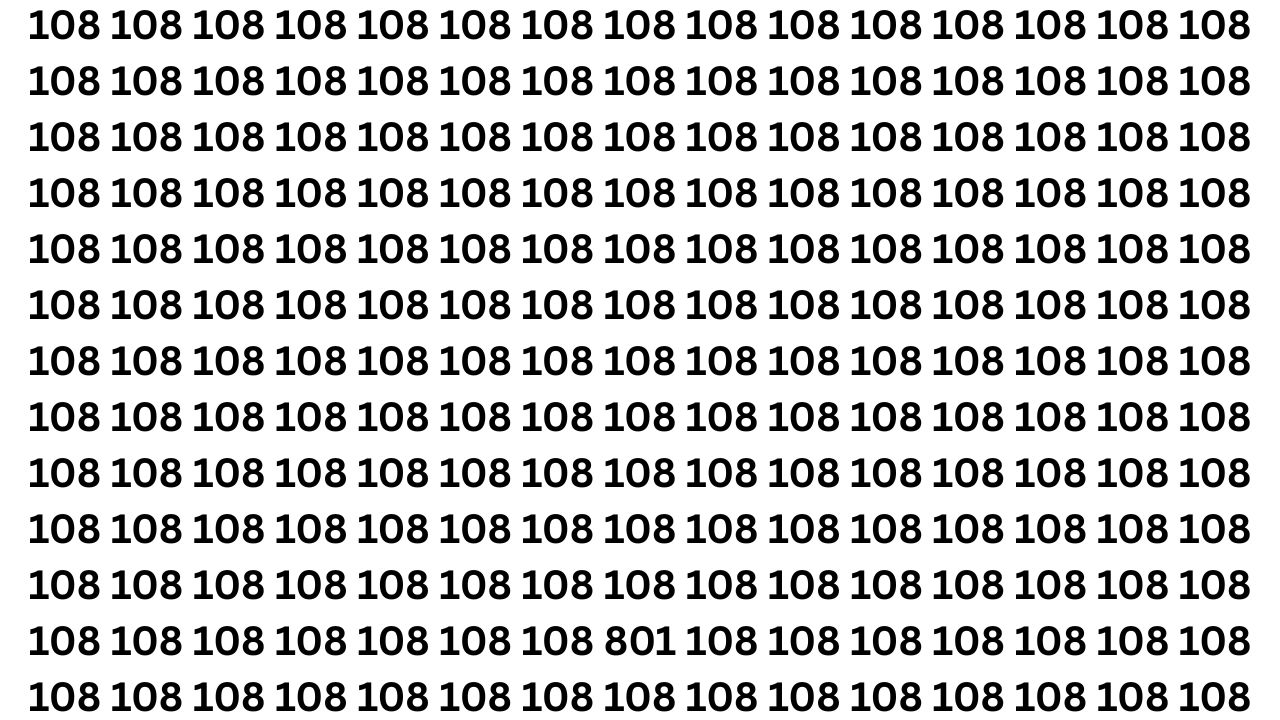
    Optical Illusion Challenge: Can You Spot the Number 801 With Sharp Observation

    Optical illusion challenges have become popular across social media platforms and puzzle websites because they are quick and entertaining. This particular challenge gives you 8 seconds to locate the hidden number 801 in a grid that is mostly filled with the number 807. The task seems straightforward until you actually try it & discover how difficult it can be. When you first look at the image everything appears identical. The repeating pattern of 807 creates a visual trick that makes spotting the different number quite hard. Your goal is to find the number 801 within 8 seconds to demonstrate your sharp observation skills.

    Why Optical Illusion Challenges Feel So Difficult

    This type of challenge feels difficult not because the hidden number cannot be seen, but because the human brain naturally searches for patterns. When the same number appears repeatedly, the brain quickly assumes everything is identical. This shortcut helps in everyday life but becomes a disadvantage in visual puzzles.

    In this illusion, the number 807 fills most of the grid. Its shape closely resembles 801, especially when viewed at speed. Instead of reading each digit carefully, the eyes glide over them. That brief moment of assumption is what causes most people to miss the odd number.

    The 8 Seconds Rule Adds Pressure

    Time pressure significantly increases the difficulty of this puzzle. Eight seconds may seem reasonable, but once the countdown begins, concentration tightens. Many people rush their scan and completely overlook the hidden number. The brain switches into speed mode rather than accuracy mode.

    This explains why the answer can be right in front of you and still go unnoticed. Successful solvers usually stay mentally calm while keeping their eyes moving in an organized way. A structured scan almost always works better than random searching.

    Where the Hidden Number Is Located

    If you struggled to find the answer, you are not alone. The number 801 is positioned in the top-right area of the grid. This section is commonly skipped because most people instinctively start scanning from the center or left side.

    Once revealed, the difference becomes obvious. The final digit is the giveaway. While 807 ends with a seven, 801 ends with a one. That small visual change breaks the pattern, but only for those paying close attention.

    What This Puzzle Reveals About Your Brain

    Optical illusion challenges are more than simple entertainment. They highlight how the brain processes visual information. People who identify the hidden number quickly often have strong attention to detail and pattern recognition skills.

    Slower results do not indicate lower intelligence. They simply show how easily the brain relies on shortcuts. With practice, observation skills can improve, along with focus, short-term memory, and mental flexibility.

    Tips to Solve Similar Challenges Faster

    If you enjoy visual puzzles and want to improve, a few strategies can help. Avoid scanning randomly. Break the image into sections and examine each part carefully to avoid skipping details.

    Focus on one digit at a time rather than the full number. In this puzzle, checking only the last digit makes the solution much easier. Keeping your eyes relaxed also

    Why Eagle Eyes Challenges Are Trendingimproves clarity and reaction speed.

    Eagle eyes challenges are popular because they grab attention instantly. There are no complicated rules or instructions. A single image and a short timer are enough to engage the viewer.

    These puzzles are highly shareable. People enjoy testing friends, comparing results, and boasting about fast solutions. This mix of curiosity and competition makes optical illusions perfect for quick engagement.

    Are You a Genius If You Solved It Quickly

    Finding the answer within eight seconds is impressive, and solving it in under five seconds is even rarer. Fast solvers often possess strong visual discrimination skills, commonly seen in fields requiring precision.

    However, intelligence cannot be measured by a single puzzle. The true benefit lies in consistent mental challenges that sharpen awareness and attention over time.

    Final Thoughts on the Number 801 Illusion

    The 8 Seconds Optical Illusion featuring the hidden number 801 shows how simple visuals can confuse the brain. It appears easy, feels frustrating, and becomes satisfying once solved.

    If you found the number quickly, your observation skills are sharp. If not, there is no need to worry. With practice, both speed and accuracy improve. Keep testing your eyes, and the next challenge may feel much easier.

  • Find 3 Differences Between the Boy and Dog Picture in 12 Seconds

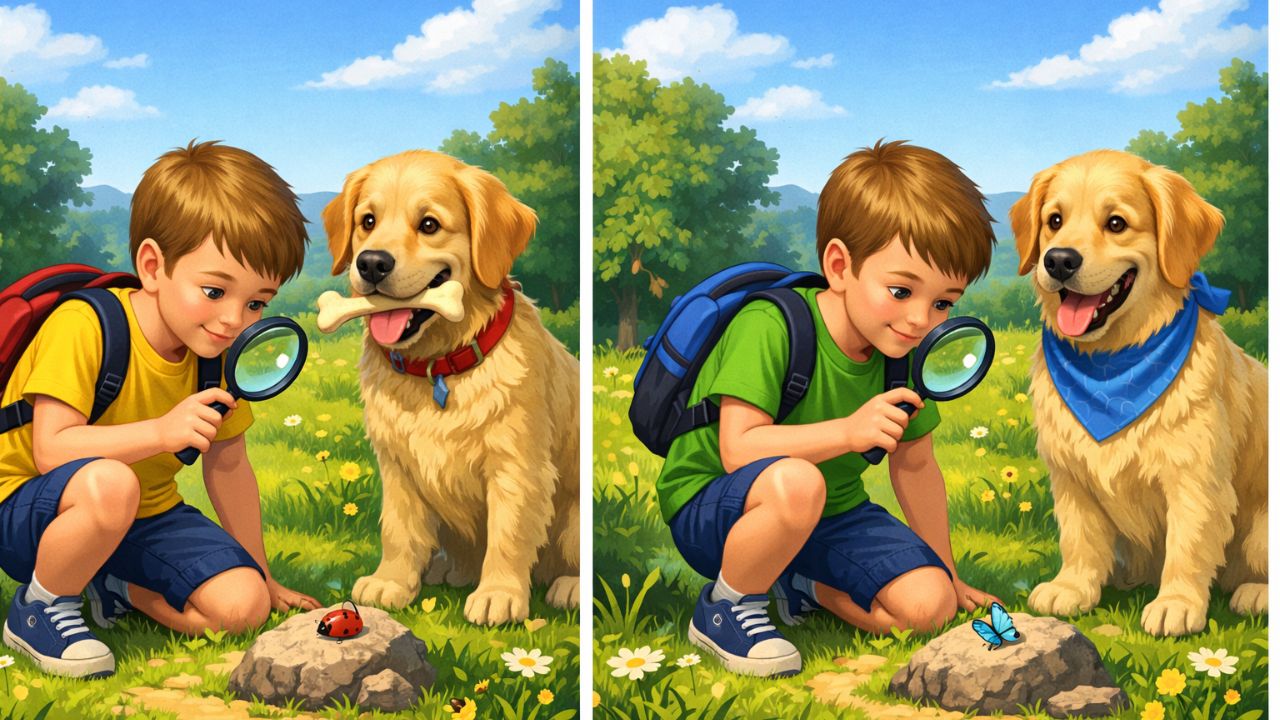
    Find 3 Differences Between the Boy and Dog Picture in 12 Seconds

    Are you prepared for an entertaining challenge that will evaluate how well you notice details? This puzzle will test your ability to concentrate & observe carefully. You will examine two pictures showing a boy spending time with his dog. Your goal is to identify three small differences between these images within a time limit of 12 seconds. Time moves quickly in this exercise & each moment matters as you work to complete the task. The puzzle requires you to look at both images simultaneously and spot variations that might not be immediately obvious. These differences could involve changes in colors or positions of objects or alterations in the background elements. The boy and his dog appear in both pictures but certain details have been modified to create the challenge. You need to stay focused throughout the entire duration to successfully find all three differences. Some people find it helpful to scan the images systematically from one side to the other while others prefer to focus on specific areas where changes are most likely to occur. The strategy you choose depends on your personal preference & what works best for your observation style. This type of puzzle provides mental stimulation and helps improve your visual perception abilities. Regular practice with such exercises can enhance your capacity to notice small details in everyday situations. The 12-second time constraint adds excitement and urgency to the activity making it more engaging than untimed puzzles.

    The Challenge: Spot the 3 Differences in 12 Seconds

    At first look, both images appear almost exactly the same. They show a calm and pleasant scene of a young boy sitting with his dog, surrounded by lush green grass, bright blue skies, and a peaceful outdoor setting. However, hidden within these nearly identical pictures are three small differences. Your task is to find all three within just 12 seconds. It sounds simple, but the details are cleverly disguised and easy to miss at first glance.

    These puzzles are designed to test how quickly and accurately you can observe fine details under time pressure. Even though the differences are clearly visible, your brain may overlook them because everything else looks so similar. Can you beat the clock and spot all three before time runs out?

    Why Do “Spot the Difference” Puzzles Work?

    If you struggled to find the differences, that’s completely normal. These puzzles are intentionally created to challenge your brain’s natural habits. Our minds are trained to recognize patterns and assume continuity when viewing similar images. As a result, small changes often go unnoticed.

    This effect is known as perceptual filling-in, where the brain automatically fills gaps and assumes both images are identical. Spot-the-difference puzzles force your brain to slow down and examine details more carefully, helping improve focus and visual awareness over time.

    Solution: Did You Find All the Differences?

    So, how did you do? Were you able to locate all three differences within the 12-second limit? If not, don’t worry—here are the hidden changes revealed:

    Cloud Change: In the second image, the cloud above the boy has a small missing section that isn’t present in the first image.

    Dog’s Food Bowl: The dog’s food dish looks similar in both images, but a small portion of food is missing in the second picture.

    Tree Detail: In the background on the right side, one leaf near the top of the tree has been subtly altered in the second image.

    These changes are tiny but noticeable once you focus closely. It’s surprising how easily they can hide in plain sight.

    Why Are “Spot the Difference” Puzzles So Popular?

    These puzzles have remained popular for decades because they are both entertaining and mentally beneficial. They engage your brain without feeling like work, making them enjoyable for people of all ages.

    By training your brain to notice small details, these puzzles improve concentration, memory, and problem-solving skills. That’s why they’re commonly found in newspapers, magazines, mobile games, and educational platforms.

    The Cognitive Benefits of “Spot the Difference” Puzzles

    Improves Focus: Searching for small differences helps extend your attention span and concentration.

    Boosts Memory: Remembering patterns and visual details strengthens recall abilities.

    Enhances Visual Skills: Regular practice improves how quickly and accurately you process visual information.

    Develops Problem-Solving: These puzzles encourage analytical thinking and systematic observation.

    Reduces Stress: Solving visual puzzles can be relaxing and provide a refreshing mental break.

    Tips to Improve Your “Spot the Difference” Skills

    Practice regularly to train your eyes and brain. Scan images section by section instead of looking at them as a whole. Don’t rush—accuracy improves with calm focus. Using peripheral vision can also help catch subtle changes more quickly.

    Conclusion: Sharpen Your Observation Skills

    “Spot the Difference” puzzles are a simple yet powerful way to strengthen your mind. They improve focus, sharpen observation, and enhance memory while keeping the experience fun and engaging. Whether you’re playing alone or challenging friends, these puzzles offer an enjoyable way to keep your brain active and alert.

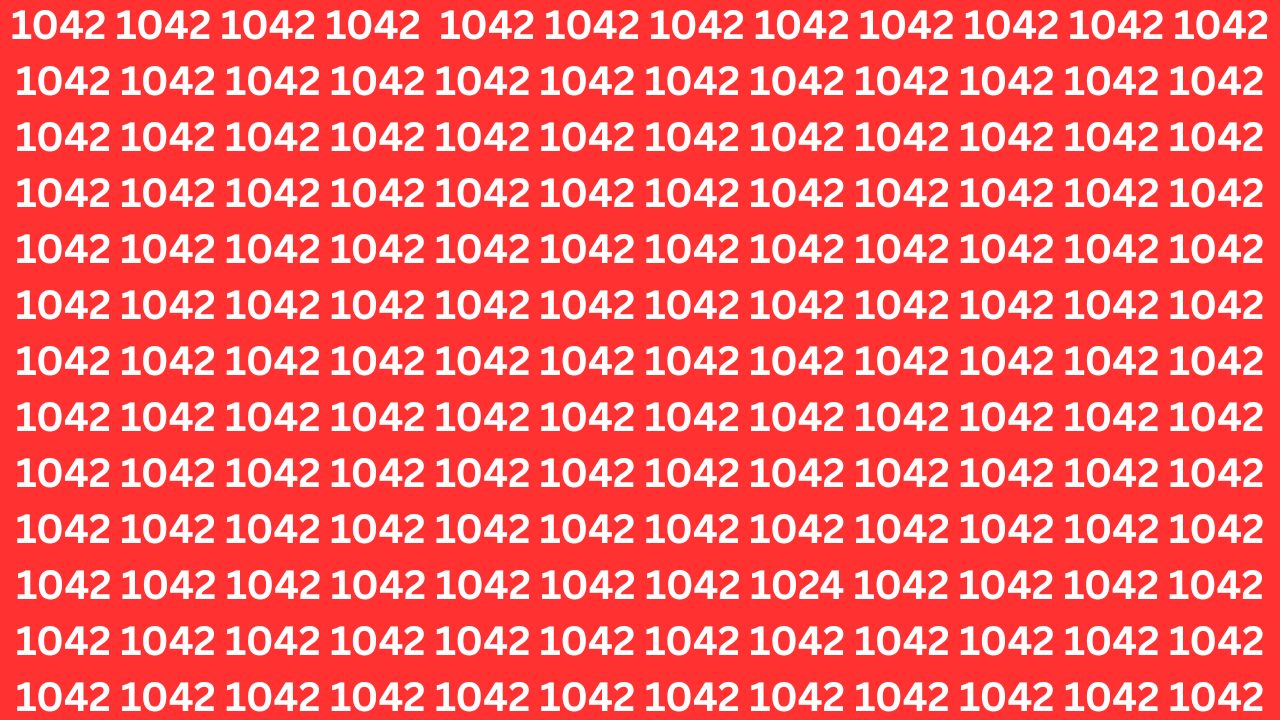
  • Optical Illusion Challenge: Spot 1024 Among 1042s in 7 Seconds

    Optical Illusion Challenge: Spot 1024 Among 1042s in 7 Seconds

    Optical illusions offer an exciting way to challenge your mind and improve your observation skills. These puzzles test how well you can spot small differences in images that look almost identical. You need to focus carefully within a set time limit. In this challenge you must find the number 1024 hidden among many 1042s in just 7 seconds. It might seem easy but the clock is ticking & you need to stay focused to find the hidden number quickly.

    The Fascination Behind Optical Illusions

    Optical illusions are not just entertaining visual tricks—they are powerful tools for sharpening the mind. When you engage with these puzzles, you actively improve key cognitive skills such as concentration, memory, and visual perception. Regular practice trains your brain to detect patterns faster and notice even the smallest visual inconsistencies. By stimulating multiple areas of the brain, optical illusions help enhance mental clarity and keep your thinking sharp and responsive.

    How to Approach an Optical Illusion Challenge

    When tackling an optical illusion like this one, maintaining focus and patience is essential. The goal is to identify the hidden number 1024 among several similar-looking 1042s. Applying a calm and structured approach can greatly improve your chances of success.

    Practical Tips to Spot the Hidden Number

    – Scan Methodically: Avoid jumping randomly across the image. Move your eyes row by row or column by column to ensure no area is missed.

    – Observe Fine Details: Hidden elements often differ only slightly. Look closely at number shapes, spacing, alignment, or subtle visual variations.

    – Stay Relaxed: Time pressure can affect focus. Take slow breaths and remain calm—seven seconds is usually enough when your attention is steady.

    The Answer Explained

    If you successfully found the 1024, well done. If not, there’s no need to feel discouraged. These puzzles are designed to challenge perception. In this case, the 1024 blends in with the 1042s, but its digit order and placement create a small visual difference. With practice, your brain becomes quicker at spotting such irregularities.

    Why Optical Illusions Are So Enjoyable

    The widespread appeal of optical illusions comes from their balance of simplicity and difficulty. They spark curiosity and push us to look beyond what first appears obvious. Solving them delivers a rewarding sense of achievement while also boosting mental alertness.

    A Fun Activity for All Ages

    Optical illusions are perfect for both solo enjoyment and group activities. Whether used during a game night, in classrooms, or as a quick mental break, they provide engaging entertainment while promoting cognitive stimulation for people of all ages.

  • Quick Optical Illusion: Find 26 and 22 Hidden in a Sea of 62s in 8 Seconds

    Quick Optical Illusion: Find 26 and 22 Hidden in a Sea of 62s in 8 Seconds

    Optical illusions provide entertainment while giving your brain a good workout. This fast optical illusion test asks you to find the hidden numbers 26 & 22 among many 62s. You have just 8 seconds to locate them both. Are you ready to take on this challenge? Let’s begin and discover if your observation skills are sharp enough to pass this test.

    Why Do Optical Illusions Fascinate Us?

    Optical illusions are visual tricks that mess with how our brain understands images. They take advantage of the shortcuts our brain uses when looking at things. This often makes us see something that is not really there or causes us to miss small details. In this particular illusion all the numbers seem identical when you first look at them. However the numbers 26 & 22 are actually hidden somewhere in the pattern. These types of puzzles work because our brain tries to process information quickly.

    How Can You Spot the Hidden Numbers?

    The secret to solving optical illusions like this one is paying attention to the details. Here are some tips to help you find the numbers 26 and 22:

    Look for differences: Even though all the numbers might look similar at first glance, examine them carefully for small differences in their shape or how they are positioned that could make them stand out.

    Scan methodically: Rather than looking around randomly, try to concentrate on one section at a time and move your eyes across the image either from side to side or up and down.

    Take your time but not too much: Since you only have 8 seconds this is a challenge against the clock. Stay calm and work steadily but remember to watch the time.

    Avoid distractions: Keep your attention on finding the numbers and try to ignore the pattern of 62s surrounding them. These distracting elements can make it more difficult to locate the hidden digits.

    Why Are Optical Illusions Good for Your Brain?

    Optical Illusions A Simple Brain Workout Optical illusions do more than just entertain us. They serve as an effective exercise for our minds. When you look at optical illusions you train your brain to focus better and notice small details that you might normally miss. These visual puzzles also help develop your problem-solving abilities. Your brain has to work hard to figure out what it’s actually seeing versus what appears to be there. This mental effort strengthens your thinking skills over time. Making optical illusions part of your routine can lead to real improvements in how your brain works. Your ability to concentrate gets stronger with practice.

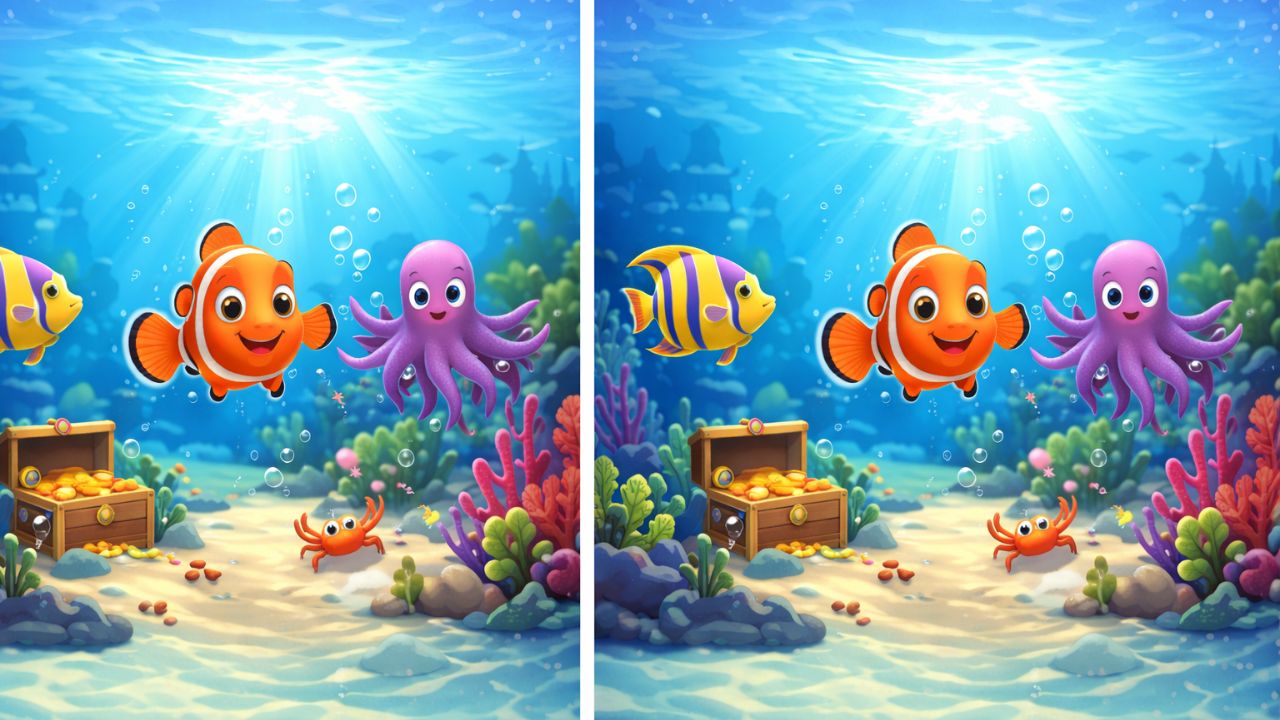
  • Spot the Difference Sea Puzzle: Can You Find 3 Hidden Changes in 10 Seconds

    Spot the Difference Sea Puzzle: Can You Find 3 Hidden Changes in 10 Seconds

    Spot-the-difference puzzles offer a quick brain challenge that requires no special knowledge. You compare two nearly identical images & search for small changes. This sea-themed puzzle adds pressure with a tight 1010-second timer and a specific target: locate 33 differences before time expires. The scene creates a peaceful atmosphere with open water and a ship plus underwater elements like plants and treasure. However this calm setting makes the puzzle harder. Your brain automatically concentrates on the main subject which is usually the ship and dismisses everything else as background. The hidden changes typically appear in these background areas where your eyes rarely focus.

    Why Sea-Themed Puzzles Are Surprisingly Difficult

    Ocean-based illustrations are filled with repeating elements such as waves, bubbles, seaweed, and curved shapes. This repetition creates visual noise, which makes real changes harder to notice. Instead of a clean contrast, your eyes see dense texture, and your brain automatically fills in gaps. As a result, small differences blend into the background and are often overlooked.

    Time pressure adds another layer of difficulty. With only 10 seconds, there’s no opportunity to compare each corner carefully. Fast scanning pushes your focus toward large, obvious objects. Puzzle designers take advantage of this habit by hiding at least one difference in a tiny detail, such as a small plant or a subtle feature on a treasure chest.

    A 10-Second Scanning Strategy That Actually Works

    Random searching wastes precious seconds. A simple, structured approach helps you cover the entire image quickly and prevents your eyes from lingering in one spot while the timer runs out.

    Try this 10-second method:
    Spend 3 seconds checking the ship and anything above the waterline, including the mast, flag, and clouds.
    Spend 4 seconds scanning the underwater mid-section, focusing on fish, bubbles, and floating objects.
    Spend 3 seconds examining the seafloor, including plants, rocks, and treasure chest details.

    This method works because it forces full coverage of the scene. It also aligns with where designers usually hide differences: one near the top, one in the middle, and one near the bottom.

    What Your Brain Is Doing During the Challenge

    When two images look almost identical, your brain tries to save effort by assuming they match. This isn’t laziness—it’s efficiency. Once the overall layout is recognized, your brain stops double-checking smaller elements unless something clearly feels wrong.

    Spot-the-difference puzzles test how quickly you can override that assumption. Skilled solvers don’t rely on the overall picture. Instead, they divide the image into small sections and compare them carefully, looking for missing shapes, gaps, or altered outlines.

    A useful trick is to stop labeling objects and start comparing edges. Rather than thinking “treasure chest,” focus on whether the chest’s outline, hinges, and lock shape are exactly the same. Shape comparison is often faster than interpreting meaning.

    The Three Differences in This Sea Puzzle (Solution)

    If you’ve already attempted the puzzle and want to confirm your answers, here are the three differences that were identified. Read on only if you’re ready for the reveal.

    The ship’s flag is missing in the right image.
    One green plant on the seafloor has been removed.
    The treasure chest in the right image no longer has its lock.

    These are well-balanced differences: one is relatively obvious, one blends into a group of similar objects, and one is a small detail many people skip.

    Why These Particular Differences Work So Well

    The missing flag works because the ship draws attention, but most players focus on the hull and sails first. Thin elements like flags are easy to overlook against a bright sky.

    The missing seafloor plant is harder to detect because underwater plants often appear in clusters. Your brain groups them together, making it less likely to notice that one individual plant is gone.

    The missing chest lock is a classic tiny edit. The chest itself is obvious, but the lock is a small feature. Under time pressure, many players confirm the chest exists and move on without checking its details.

    Turning the Puzzle Into a Quick Group Game

    These puzzles become even more fun when treated as a short, timed challenge. Because the limit is only 10 seconds, everyone can participate without feeling rushed or bored.

    A simple format:
    Give everyone one attempt with 10 seconds and no zooming.
    Score 1 point per difference found, up to a maximum of 3.
    Allow a second attempt with 15 seconds and compare results.
    Reveal the answers only after everyone shares their score.

    This keeps the game fair and highlights different scanning strategies, which is often as entertaining as the puzzle itself.

    How to Get Faster at Spot-the-Difference Puzzles

    Speed improves through technique, not by staring harder. With regular practice, your eyes begin to follow a consistent pattern automatically.

    To build speed:
    Always scan in the same order, such as top to bottom.
    Check small accessories on large objects, like flags, locks, or tags.
    Look for missing items first, since absence is easier to confirm than subtle color changes.
    Confirm a suspected difference quickly, then move on.

    In sea-themed puzzles especially, treat the seafloor as a priority area. Designers often hide differences there because many players rush past it.

  • Find 3 Differences Between the Scientist Pictures in 10 Seconds

    Find 3 Differences Between the Scientist Pictures in 10 Seconds

    Are you prepared for an engaging visual challenge that will test how well you can observe details? This optical puzzle asks you to spot three small differences between two images of scientists in only 10 seconds. When you first look at the pictures they might appear exactly the same but a careful examination will reveal minor yet significant variations hiding in plain view. This exercise goes beyond having good eyesight because it truly measures your concentration and ability to notice fine details while thinking quickly.

    The Challenge: Spot the 3 Differences in 10 Seconds

    The task may sound simple, but it is more challenging than it looks. You are shown two almost identical images of scientists working in a laboratory. Your goal is to identify three differences between the two pictures within just 10 seconds. Time is limited, so sharp focus and quick observation are essential.

    The differences are often hidden in tiny details such as changes in the scientist’s clothing, laboratory equipment, or background objects. At first glance, both images appear exactly the same, but closer inspection reveals subtle alterations. These puzzles test not only your eyesight but also your ability to remain calm and observant under pressure.

    Why Spot-the-Difference Puzzles Are So Engaging

    Spot-the-difference puzzles are not just entertaining; they also offer several mental benefits. One major advantage is that they help improve focus by training your brain to concentrate on small visual details. The need to remember layouts and objects also helps enhance short-term memory.

    Additionally, these puzzles sharpen observation skills by encouraging attention to subtle changes that are easy to miss. They are also known to reduce stress, as solving visual puzzles provides a relaxing mental break while still keeping the mind active and engaged.

    How to Approach the Puzzle

    To increase your chances of spotting all three differences within the time limit, it helps to follow a smart strategy. First, try not to panic or rush. Even with only 10 seconds, staying calm allows you to notice details more clearly.

    Start by focusing on key elements such as the scientist’s face, clothing, and the tools they are using. After that, shift your attention to the background, where small changes often hide. Scanning the image in sections rather than all at once can also make the process more efficient.

    The Solution: Where Are the 3 Differences?

    If you managed to find all three differences within the time limit, well done. If not, here is where they are located. The first difference appears in the scientist’s facial features. In one image, the face is missing key features such as eyes, nose, and mouth, and the glasses are also absent.

    The second difference is found on the microscope eyepiece. A small design change can be seen when you closely examine this part of the equipment. The third difference is located on the lab coat, where a button or marking near the lower middle section has been altered.

    Why Are Spot-the-Difference Puzzles So Popular?

    Spot-the-difference puzzles have remained popular for generations due to their simplicity and mental challenge. They provide instant satisfaction once the differences are found, making them a quick yet rewarding activity.

    These puzzles also offer strong cognitive benefits, including better visual perception and concentration. Since they are easy to understand and require no special skills, they are enjoyed by people of all ages, from children to adults.

    Tips for Improving Your Spot-the-Difference Skills

    If you want to get better at spotting differences quickly, regular practice is key. The more puzzles you solve, the faster your brain becomes at recognizing visual changes. Training yourself to observe everyday objects closely can also strengthen your attention to detail.

    Using timed challenges can help simulate pressure and improve speed. Most importantly, stay relaxed while solving puzzles. A calm mind is far more effective than a rushed one when it comes to spotting subtle differences.

    Conclusion: Sharpen Your Focus and Observation Skills

    Spot-the-difference puzzles are more than just a fun game—they are an effective way to improve focus, memory, and observation skills. Whether you spotted all three differences quickly or needed extra time, every attempt helps sharpen your mental abilities.

    Keep practicing these challenges to improve your visual skills and mental agility. With time and consistency, you will find yourself spotting differences faster and more accurately. Ready for the next challenge? Keep training your brain and enjoy the process.

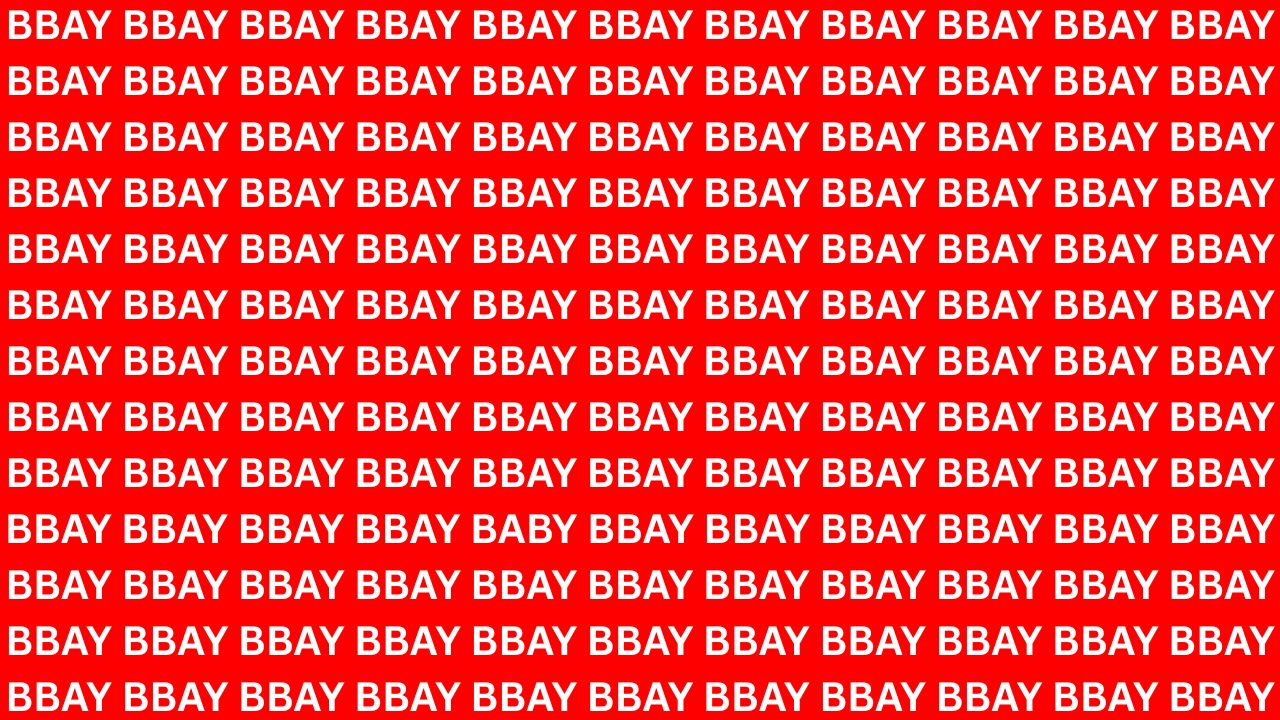
  • Optical Illusion Puzzle: Spot the Word BABY Hidden Among BBAYs in 5 Seconds

    Optical Illusion Puzzle: Spot the Word BABY Hidden Among BBAYs in 5 Seconds

    Are you ready to put your visual skills to the test? This optical illusion challenge pushes your brain to spot hidden words quickly. Your task is simple but tricky: can you find the word “BABY” hidden among many nearly identical words, “BBAYs”, in just 5 seconds? At first glance, everything may look the same, but with sharp focus and keen observation, the difference becomes visible.

    What Are Optical Illusions?

    Optical illusions are fascinating visual phenomena that trick the brain into seeing something that may not truly exist or distort how we perceive images. These illusions occur because the brain processes visual information differently depending on color , contrast, and context. As a result, our perception can be easily fooled. There are many types of optical illusions, ranging from simple patterns that appear to move to complex visuals that hide objects in plain sight. The main reason behind these illusions is the brain’s habit of making assumptions based on past experiences. This is what makes optical illusions so intriguing—they reveal how our mind interprets reality.

    The Optical Illusion Challenge: Spot the Word BABY

    This visual puzzle tests both your observation skills and speed of thinking. Your mission is to locate the word “BABY” among many similar-looking words like “BBAYs”. While they appear almost identical, one subtle difference makes BABY stand out. You only have 5 seconds to complete the task. Under time pressure, your brain must work quickly and accurately. This challenge is not just about seeing—it’s about processing visual information efficiently.

    How to Spot the Word BABY

    The key to solving this puzzle lies in noticing the letter arrangement. The word “BABY” follows a clear pattern: B-A-B-Y. In contrast, the distracting words use a jumbled sequence like B-B-A-Y. Training your eyes to recognize this correct order makes the task easier. A helpful strategy is to start scanning from the top-left corner and move systematically row by row. This structured approach prevents skipping areas and improves accuracy while searching .The biggest challenge is the similarity between words. At a quick glance, everything looks the same, making it easy to miss the correct word. However, with careful focus and patience, the distinct letters of BABY become noticeable.

    Why Optical Illusion Challenges Are Good for Your Brain

    Solving optical illusion challenges is not just entertaining—it provides real cognitive benefits. These puzzles help boost concentration and improve your ability to focus on small details .They also enhance visual perception by training the brain to quickly identify patterns and differences. With regular practice, your ability to notice visual cues in daily life becomes sharper. Optical illusions improve mental agility by encouraging the brain to process information faster. This skill is useful when making quick decisions or handling time-sensitive tasks. Additionally, these challenges strengthen problem-solving skills. They promote critical thinking and help develop a habit of looking beyond the obvious.

    Tips for Mastering Optical Illusion Challenges

    To improve your performance, regular practice is essential. The more puzzles you solve, the better your brain becomes at spotting subtle visual differences. Staying calm under pressure is equally important. Stress can slow your perception, while a relaxed and focused mind performs better. Using a systematic scanning method ensures you don’t miss any details. Whether you scan by rows or columns, consistency improves accuracy. Finally, train your visual memory. Recognizing patterns faster over time allows you to solve future challenges more efficiently.

    Conclusion: How Fast Can You Spot BABY?

    This optical illusion challenge tests how quickly you can identify the word “BABY” among distracting look-alikes. By focusing on the letter pattern and ignoring visual noise, the answer becomes clear. Beyond fun, these puzzles improve focus, mental speed, and visual sharpness. Keep practicing, and you’ll notice your ability to detect details improving every day. Ready for the next optical illusion challenge? Keep testing your brain!

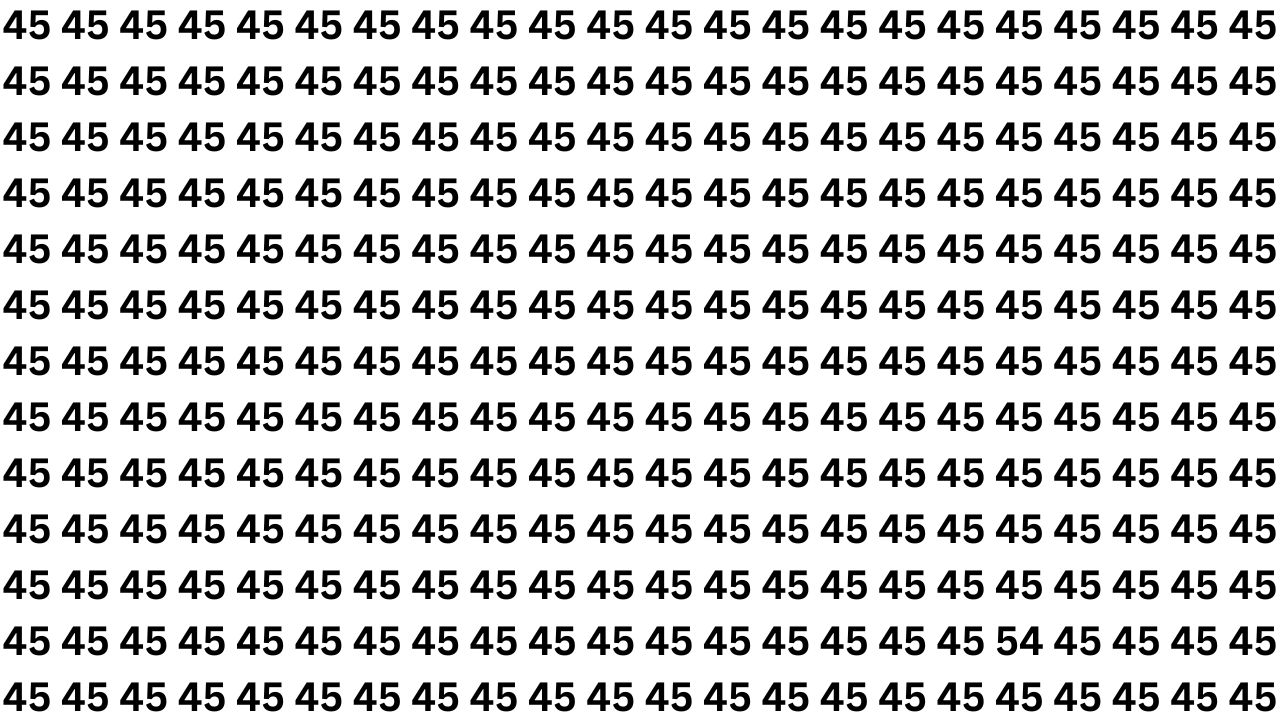
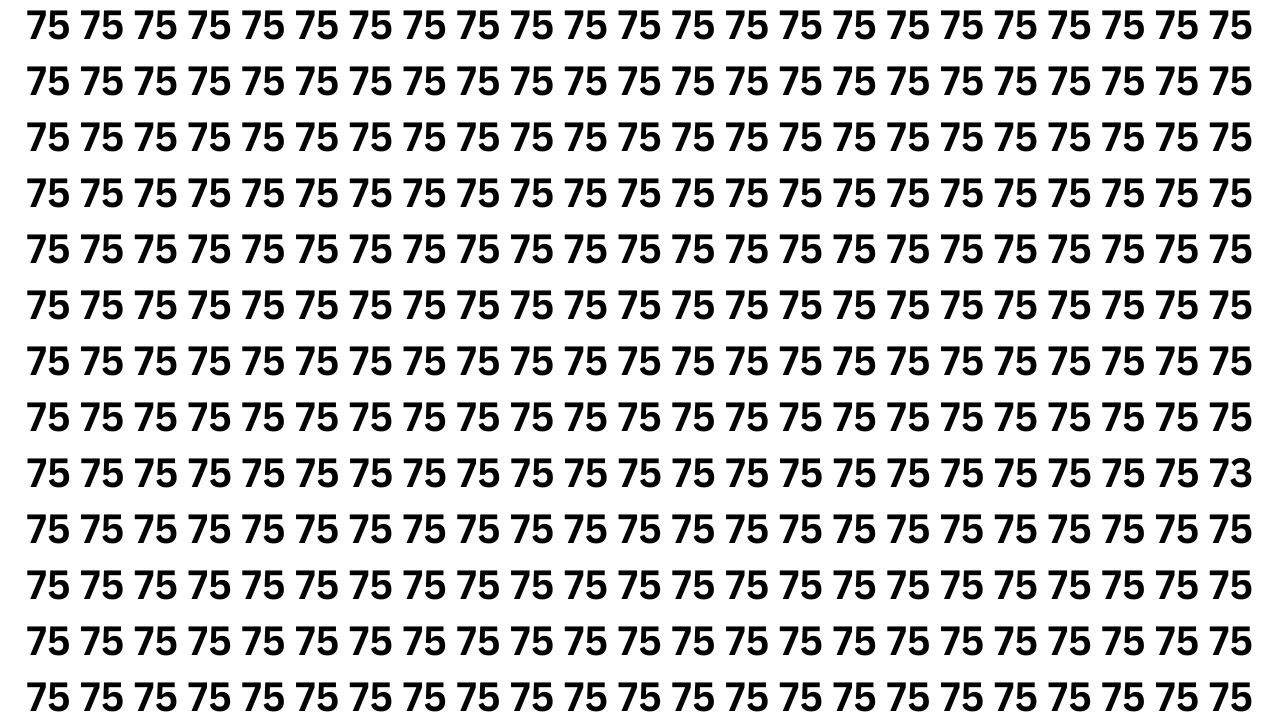
  • Optical Illusion Challenge: Find 73 Hidden Among 75s in 6 Seconds

    Optical Illusion Challenge: Find 73 Hidden Among 75s in 6 Seconds

    Get ready to test your observation skills with this optical illusion challenge. Your task is to find the number 73 hidden among multiple 75s within just 6 seconds. This exercise will measure your focus & attention to detail while pushing you to think quickly. The challenge is harder than it appears. When you look at the rows of numbers your brain gets confused because they all look so similar. The numbers blend together and make it difficult to spot the difference right away. However if you concentrate and look carefully you will eventually find what you are looking for. What makes this challenge interesting is how simple it seems at the start. The real difficulty shows up when you actually try to locate that single different number. The illusion tricks your eyes by making everything look almost identical. This creates an ideal test of how well you can process visual information under time pressure. Try to complete it before the timer runs out and see how your skills measure up.

    Why Are Optical Illusions So Engaging?

    Optical illusions offer an entertaining method to improve your observation abilities. They make you pay attention to small details instead of letting your brain take the easy route. These illusions fool your mind into perceiving something that differs from what actually exists. In this specific test you need to identify one number that stands out from the rest. All the numbers appear nearly identical but one has a slight variation that you must locate before time runs out. These types of puzzles strengthen your mental skills including focus and memory while helping you notice fine details better. They also provide a relaxing break that keeps your mind active & entertained. This optical illusion delivers both fun and a solid mental workout at the same time.

    How Can You Spot the Number 73 Among the 75s in Such a Short Time?

    To succeed in this challenge you need a systematic approach. Here are some tips to help you spot the hidden number in 6 seconds:

    – Start by scanning the numbers quickly. Don’t focus on one section for too long. Instead sweep your eyes across the entire sequence of numbers. Look for subtle differences.

    – The number 73 will be slightly different from the others so focus on looking for small variations in the shape or alignment of the digits. Focus on the shape of the numbers.

    – Since the 75s look almost identical look for any discrepancy in the angles or the curvature of the numbers. Often illusions like this rely on a tiny visual difference so pay close attention to the details.

    – Avoid overthinking it. Trust your initial instincts. The illusion is designed to trick you and sometimes the more you think about it the harder it becomes to spot the difference.

    Why Do Optical Illusions Work?

    Optical illusions work by exploiting the way our brains interpret what we see. They manipulate perspective and color and light and patterns to make us perceive things that do not actually exist. In this particular illusion the numbers appear almost identical so our brains automatically try to treat them as the same thing. This makes it hard to spot the one number that stands out from the rest. When we examine optical illusions we gain insight into how our brains understand the world around us and how easily they can be deceived by small variations. These mental challenges train our brains to concentrate better & improve our ability to notice details.

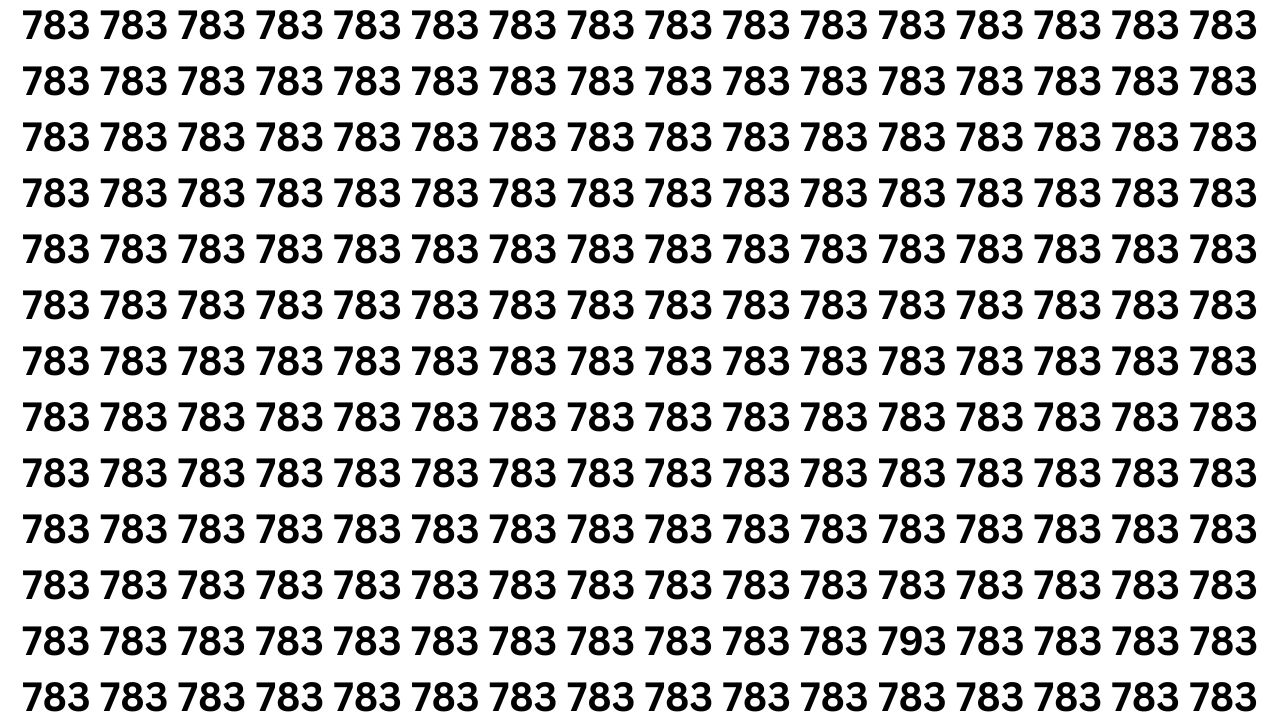
  • Find the Hidden Number 793 Using Focus and Sharp Vision

    Find the Hidden Number 793 Using Focus and Sharp Vision

    Optical illusion challenges are a popular way to test how sharp your brain is & how well you can focus visually. These puzzles might look easy at first but they are actually made to confuse your mind and test how you see things. In this particular challenge you need to find the hidden number 793 inside a grid that looks almost completely uniform. When you first look at the image it seems full of repeating numbers which creates a familiar feeling that makes your brain think everything is identical. This is exactly why finding 793 is both hard and fun. These puzzles are not just about how good your eyesight is. They test how your brain recognizes patterns and whether you can stop relying on automatic visual habits. If you think you have strong focus and good observation skills then this challenge is a great way to test yourself. Take a moment to breathe and relax your eyes and look carefully without rushing.

    Why This Optical Illusion Tricks the Brain

    This puzzle feels difficult because of the way the human brain processes repeated information. When your eyes repeatedly see the same number, such as 798 across the entire grid, the brain quickly categorizes everything as identical. This automatic shortcut helps conserve mental energy, but it also reduces attention to fine details that may differ.

    The hidden number 793 is intentionally crafted to blend into this pattern. Its spacing, alignment, and font style match the surrounding numbers perfectly, allowing your eyes to pass over it without hesitation. This phenomenon is called visual habituation. Once the brain becomes familiar with a pattern, it stops checking every element closely. Optical illusion creators use this natural response to make simple-looking puzzles surprisingly difficult.

    How This Puzzle Measures Visual Intelligence

    This challenge is not purely about how fast you look—it tests how effectively you control your attention. Visual intelligence involves recognizing patterns, managing focus, and spotting subtle variations under pressure. In this illusion, the smallest detail carries the biggest weight: the last digit.

    When scanned quickly, the number 3 can resemble 8, especially when surrounded by repeated 798s. People who solve the puzzle quickly often avoid reading the entire number. Instead, they concentrate on one specific detail, allowing them to break the visual rhythm. This focused approach is commonly associated with strong analytical thinking and heightened concentration.

    Smart Ways to Find the Hidden 793 Faster

    If the number does not stand out immediately, adjusting your method can make a big difference. Rather than letting your eyes wander randomly, use an organized scanning technique. Begin at the top left corner and move systematically across each row. This disciplined approach prevents skipped areas and overlooked details.

    Another helpful trick is to isolate one digit. In this puzzle, the final digit is the giveaway. Ignore the first two numbers and check only whether the last digit is 8 or 3. Slowing down your eye movements and breathing calmly can also help your brain register differences more clearly.

    Why Optical Illusion Puzzles Are Good for the Brain

    Optical illusion challenges offer more than quick amusement. When practiced regularly, they deliver genuine mental benefits. These puzzles sharpen attention to detail, improve mental flexibility, and train the brain to adjust when expectations are incorrect. Over time, this can strengthen problem-solving skills and everyday focus.

    They also encourage patience and mindful observation. In a fast-paced world filled with distractions, carefully studying an image can help reduce mental strain. This is why optical illusion puzzles appeal to people of all ages—they are both engaging and mentally refreshing.

    Optical Illusion Challenge Solution Explained

    For those ready to see the answer, the hidden number 793 appears in the third row from the bottom and the third column from the left. Many people overlook it during their first scan because the surrounding 798s create a strong and steady visual pattern.

    The close resemblance between 3 and 8, especially when viewed quickly, allows the odd number to hide in plain sight. Once the brain accepts the repeated sequence, it stops examining each digit carefully. That is why narrowing your focus to the final digit makes the solution much easier to spot.

    What It Means If You Found 793 Quickly

    Spotting the hidden number in a short amount of time suggests strong observational skills and an ability to break patterns efficiently. These traits are often linked to high levels of focus and sharp visual awareness. Even if the solution took longer, the exercise still benefits your brain by forcing it to process information differently.

    There is no reason to feel discouraged if you missed it initially. Optical illusions are designed to deceive almost everyone. Improvement comes naturally with practice and repeated exposure to similar challenges.

    Final Thoughts on This Optical Illusion Puzzle

    This hidden-number challenge clearly shows how repetition can easily mislead the mind. What seems obvious at first glance turns into a true test of patience and perception. Whether you spotted 793 instantly or needed guidance, the puzzle encouraged careful observation and focused thinking.

    Optical illusion challenges like this are an enjoyable way to sharpen mental skills while satisfying curiosity. By continuing to engage with similar puzzles, you may notice a steady improvement in attention to detail and visual awareness over time.