Blog

  • 5 Yoga Poses That Target Upper Back Tension and Rebuild Mobility Safely

    5 Yoga Poses That Target Upper Back Tension and Rebuild Mobility Safely

    Top 5 Yoga Poses for Upper Back Pain Relief Upper back pain affects many people and usually stems from bad posture or spending too much time sitting at a desk. Physical stress from daily activities can also contribute to this problem. The discomfort often makes everyday tasks harder & reduces your overall wellbeing. Yoga provides practical solutions through specific stretches and poses that target the upper back region. These exercises help reduce pain while building strength and flexibility in the affected muscles. The following five yoga poses are particularly effective for addressing upper back discomfort.

    1. Child’s Pose (Balasana)

    How It Helps:

    Child’s Pose is a calming, restorative posture that gently stretches and relaxes the back muscles. Folding forward while kneeling allows the spine, neck, and upper back to release tension. This pose promotes deep relaxation and helps ease stiffness and discomfort in the back.

    Instructions:

    – Kneel on the mat with your big toes touching and your knees comfortably apart.
    – Lower your hips back toward your heels.
    – Slowly fold your torso forward, resting your forehead on the floor.
    – Extend your arms forward or relax them alongside your body.
    – Breathe slowly and remain in the pose for 30 seconds to 1 minute.

    2. Cat–Cow Stretch (Marjaryasana–Bitilasana)

    How It Helps:

    The Cat–Cow Stretch is a flowing spinal movement that enhances flexibility in the upper back. By alternating between spinal rounding and arching, it improves mobility, reduces stiffness, and increases blood flow to the back muscles.

    Instructions:

    – Begin on all fours with your wrists under your shoulders and knees under your hips.
    – Inhale as you drop your belly, lift your chest, and arch your spine (Cow Pose).
    – Exhale as you round your spine, tuck your chin, and draw your belly in (Cat Pose).
    – Continue moving with your breath for 10–15 slow, controlled rounds.

    3. Thread the Needle (Parsva Balasana)

    How It Helps:

    Thread the Needle deeply stretches the shoulders and upper back while improving movement in the thoracic spine. This pose helps release built-up tension and increases overall upper-body mobility.

    Instructions:

    – Start in a tabletop position with hands and knees grounded.
    – Inhale, then exhale as you slide your right arm under your left arm.
    – Lower your right shoulder and ear toward the floor.
    – Keep your left palm pressing into the mat for balance.
    – Hold for 30 seconds, then switch sides.

    4. Reclining Spinal Twist (Supta Matsyendrasana)

    How It Helps:

    This gentle twisting pose releases tightness in the upper back and shoulders. Rotating the spine improves flexibility and helps relax muscles along the spinal column.

    Instructions:

    – Lie flat on your back with your arms stretched out to the sides.
    – Draw your knees toward your chest.
    – Drop both knees to the right side while keeping your shoulders grounded.
    – Turn your head to the left to deepen the stretch.
    – Hold for 30 seconds to 1 minute, then repeat on the opposite side.

    5. Sphinx Pose (Salamba Bhujangasana)

    How It Helps:

    Sphinx Pose is a mild backbend that strengthens the spine and opens the chest. It helps relieve tension in the upper back and neck while supporting better posture through gentle spinal extension.

    Instructions:

    – Lie on your stomach with your legs extended straight back.
    – Place your forearms on the floor with elbows under your shoulders.
    – Press your forearms down to lift your chest.
    – Keep your neck relaxed and spine long.
    – Hold the pose for 30 seconds to 1 minute while breathing steadily.

  • Memory Exercises After 40 That Most People Ignore

    Memory Exercises After 40 That Most People Ignore

    Somewhere after 40 a quiet shift sneaks up on us. A name stalls on the tip of the tongue. A small errand vanishes. A story we meant to tell slips away. It feels unsettling but it doesn’t have to be scary. Much of this is about attention and not catastrophe. There’s a surprisingly simple memory exercise you can do in just 5 to 10 minutes a day that asks almost nothing of your schedule yet can change how clearly you remember your own life.

    Why Memory Feels Different in Midlife

    As the years pass, many of us begin living on autopilot—taking the same routes, repeating familiar routines, and encountering fewer truly new experiences. To conserve energy, the brain stops carefully recording every detail. At the same time, research suggests that certain skills, especially processing speed, may start to change during our 30s and 40s. Word-finding slips and “tip-of-the-tongue” moments also tend to appear more often as we age.

    These lapses usually come from two sources. First, moments are not fully stored because attention is divided. Second, even when information is stored, pulling it back out can require more effort. That’s why you may instantly recognize a well-known name when you hear it, yet struggle to recall it on your own. The simple drill below gently works on both encoding and retrieval, without feeling like homework.

    The “Reverse Day” Memory Exercise

    This exercise is straightforward: mentally replay your day in reverse, starting from now and moving back to when you woke up. In cognitive science, recalling information backward is more demanding than moving forward. Studies show that people can usually recall about 7–8 items in order, but only around 5–6 when asked to list them backward. That extra challenge is what makes this practice such a useful workout for working memory and attention.

    How to Do It Step by Step (About 5–10 Minutes)

    Choose a calm moment in the evening and gently rewind your day in your mind.

    – Settle in before bed or during a quiet pause and decide to mentally rewind today.

    – Begin with the very last thing you did—perhaps brushing your teeth or checking your phone.

    – Move backward slowly, one small event at a time: the TV show, the dishes, the drive home.

    – Notice details such as snippets of conversation, images, smells, or small emotional reactions.

    – Continue rewinding until you reach the morning and picture yourself getting up.

    – Stay relaxed; the entire exercise usually takes no more than 5–10 minutes.

    Why Rewinding Your Day Challenges the Brain

    We naturally remember our day from morning to night. Reversing that order forces the brain to organize events differently, hold more pieces in mind, and actively search for connections between them. This added mental load gently stimulates the systems that support associative memory—names, appointments, and small commitments—without being so intense that it leaves you tired or overstimulated before sleep.

    Recall Direction Common Experience
    Forward Recall (morning to evening) Generally feels smoother and more natural; most people can comfortably remember around 7–8 events in sequence with minimal mental strain.
    Reverse Recall (evening to morning) Noticeably more challenging and effort-heavy; recall capacity usually drops to about 5–6 events, requiring greater concentration.

    Simple Tweaks to Make the Exercise More Powerful

    Once the basic “reverse day” practice feels familiar, small variations can keep it engaging without adding extra time or pressure. The goal isn’t perfection, but steady, gentle challenge.

    – On some nights, focus on concrete facts and actions; on others, notice emotions, body sensations, or surroundings.

    – Occasionally pause on one meaningful moment—a meeting, a joke, or a disagreement—and replay it in richer detail for 10–20 seconds.

    – Aim for consistency rather than strictness: most nights is enough to keep it sustainable.

    When You Might Notice a Difference

    Many people report that after about 1–2 weeks of regular practice, it becomes easier to replay the day, recall recent conversations, and keep track of small agreements. Large studies on structured brain training in older adults suggest that even modest, targeted mental practice can improve everyday functioning over time.

    The real strength of this “reverse day” exercise isn’t about becoming a memory expert. It’s about spending five quiet minutes each night reminding your brain that recent experiences matter. Over time, that gentle signal can support sharper working memory, fewer frustrating tip-of-the-tongue moments, and a stronger sense of continuity in your daily life—something many of us appreciate more with each passing year.

  • Spot the Difference Challenge: Find 3 Changes in the Violin Player Images in 14 Seconds

    Spot the Difference Challenge: Find 3 Changes in the Violin Player Images in 14 Seconds

    Spot the Difference Can You Find 3 Changes in 14 Seconds? Spot-the-difference puzzles offer a fast way to measure your ability to catch small visual details when time is limited. When two images appear nearly identical your brain naturally treats them as the same. The countdown clock pushes you to challenge that automatic response. This puzzle presents two photos of a man playing the violin and gives you just 14 seconds to spot 3 differences. These puzzles work well because they reflect normal human vision patterns. People don’t examine every part of an image with the same focus. Your eyes naturally lock onto the central subject—in this case the violinist—while the surrounding areas get much less attention. Puzzle creators exploit this tendency by placing changes in spots that most people scan quickly without really looking. Common hiding places include the sky fine details on small objects or minor features on animals in the scene. The challenge tests whether you can override your brain’s efficiency shortcuts and force yourself to compare both images systematically before time runs out.

    How the violin visuals quietly trick your brain’s first impression

    Your brain works by spotting patterns quickly. When two images have the same basic structure your mind decides they match & then stops checking carefully. This works well in daily life but it means you might overlook a different cloud or a minor change on an object. Having limited time makes this worse. With only a short period available you cannot examine every section slowly. You end up looking fast & that kind of looking focuses on large shapes and recognizable outlines. Small changes like tiny curves or missing details or slight differences near a dog’s neck are simple to miss because they do not alter what the picture shows overall.

    A rapid eye-movement method designed for a strict 14-second countdown

    If you want to improve your odds then don’t search randomly. Use a plan that moves through the scene in a consistent order. A good rule is to scan from least important to most important because the least important areas are often where differences hide. Try this 14-second method: Spend 4 seconds on the background first which includes sky & clouds & distant objects. Spend 5 seconds on the main subject which includes the violin body and strings and hands & posture. Spend 5 seconds on smaller supporting elements which includes ground details and pets and accessories. When you think you have found a difference then confirm it immediately by checking the same spot in the other image. Quick confirmation prevents you from wasting time on maybe differences that are not real.

    Common hiding zones artists use to mask tiny visual changes

    Most puzzles are built the same way even if you have not seen the actual pictures. The differences usually come in three types and this violin puzzle includes all three. One difference appears in the background such as a cloud or a detail in the sky. Another difference involves the main object like a small change on the violin or the person playing it. The third type is a tiny detail such as a collar or button or tag or some other small item. This combination exists for a reason. The puzzle does not feel unfair because the changes are not all tiny and hidden in one spot. But it also stops you from solving it too fast because you need to look at different parts of the picture.

    Revealed: the three subtle edits most players miss at first glance

    Most puzzles are built the same way even if you have not seen the specific pictures. The differences usually come in three types and this violin puzzle includes all three. One difference appears in the background such as a cloud or a detail in the sky. Another involves the main object like a small change to the violin or the person playing it. The third is a minor detail such as a collar or button or tag or some other small item. This combination exists for a reason. It makes the puzzle feel fair because the changes are not all tiny & hidden in one spot. It also stops you from solving it too quickly because you need to examine different areas of the picture.

    How quick visual puzzles sharpen focus like a mental mini-workout

    Calling these challenges IQ tests might be misleading but they definitely help you develop useful abilities. Being able to quickly compare two similar images comes in handy during regular activities like spotting mistakes in documents or reviewing design work or proofreading page layouts or scanning through spreadsheets or verifying settings on a dashboard. The skills you develop include visual discrimination which means noticing small differences in shapes and details. You also improve focus control by learning to work systematically instead of looking around frantically. Another benefit is finding the right balance between speed and accuracy so you can move fast while still checking your work carefully. You also get better at switching your attention between background elements and main subjects and small objects without losing your place. The timer creates a realistic limitation. In actual situations you rarely have unlimited time to verify every detail so learning a quick method is what really matters.

    Ways to share the challenge while keeping the solution spoiler-free

    If you’re posting this challenge or sending it to friends you should set simple rules so everyone plays the same way. Many people will try to zoom in or stare for a minute which turns a time challenge into a slow search. A clean set of rules looks like this: One attempt at 14 seconds with no zooming allowed Score out of 3 and share your number found Optional second attempt at 20 seconds and compare improvement Only reveal the solution after everyone posts their result This format creates genuine competition and makes the results more interesting. You’ll also notice that people have different attention biases. Some always check the sky first while others stare at the main object and miss the background.

  • Tricky Optical Illusion IQ Test: Find the Inverted 45 Hidden Among 43s

    Tricky Optical Illusion IQ Test: Find the Inverted 45 Hidden Among 43s

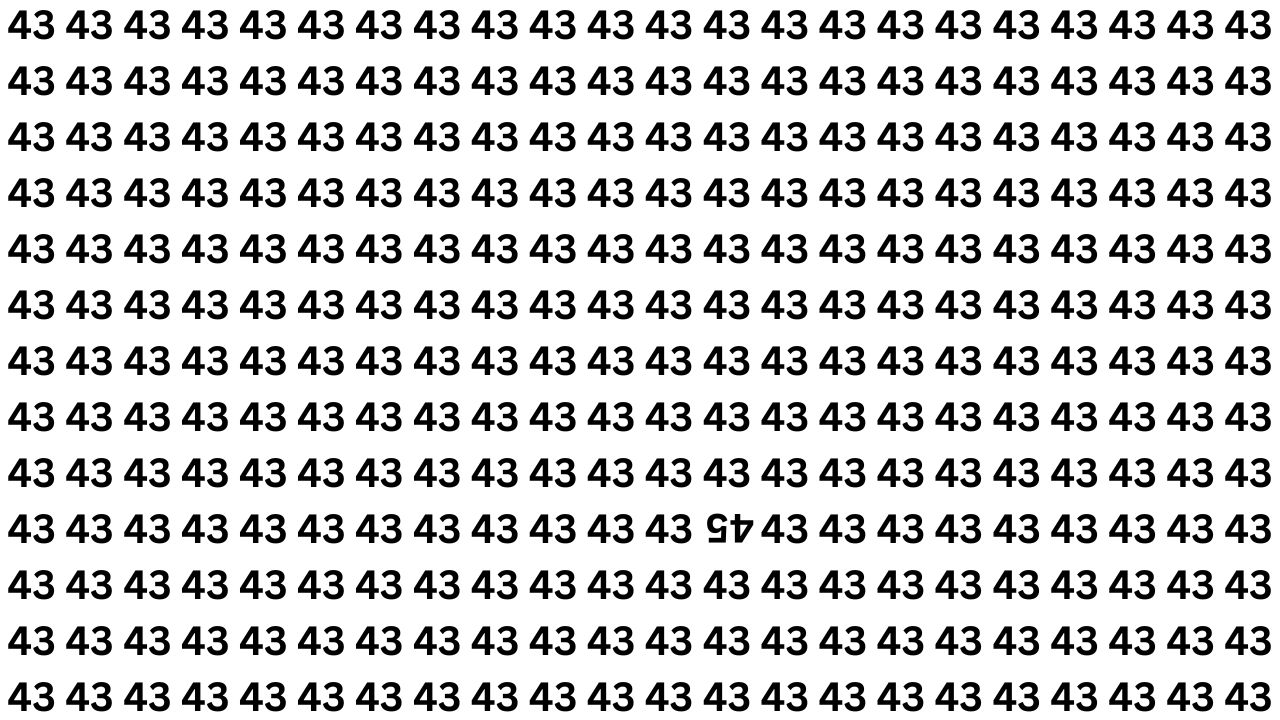
    Optical illusion IQ tests offer an entertaining way to exercise your mind while sharpening your attention to detail. At first look, everything appears uniform, yet one small change alters the entire picture. In this challenge, the goal sounds straightforward but proves surprisingly difficult. You must find an inverted number 45 hidden among rows of nearly identical 43s. With only a few seconds to spare, concentration matters far more than rushing.

    This kind of visual puzzle takes advantage of how the brain interprets repeated patterns. When the same number shows up again and again, your mind begins to recognize it automatically. That is where the illusion succeeds. The inverted 45 slips past your awareness because your brain expects to see nothing but 43s, making the odd number easy to miss.

    Why This Illusion Feels More Challenging Than Expected

    The real challenge lies in repetition and expectation. Your eyes may move across the image, but your brain often assumes it already knows what is there. Because 43 and 45 share similar shapes, especially when one is flipped, the difference becomes much harder to notice. The faster you scan, the more likely you are to miss the hidden detail.

    Visual fatigue also plays a role. Staring at nearly identical shapes, even briefly, can reduce sharp focus. This is why many people fail to spot the inverted 45 on their first try. A slower, more methodical scan, moving line by line, often produces better results than jumping around the image.

    Simple Techniques to Find the Inverted 45 More Quickly

    To increase your chances, resist the urge to scan the entire image at once. Divide the view into smaller sections and inspect each part carefully. Instead of hunting for an obvious difference, watch for anything that feels slightly out of place. Inverted numbers often reveal themselves through mismatched angles or curves.

    Adjusting your viewing distance can also make a difference. Shifting the screen closer or farther away may refresh your focus. Some people even notice the hidden number more easily by lightly squinting, which reduces excess detail and makes inconsistencies stand out.

    What This Optical Illusion Reveals About Your Mind

    These optical illusion IQ tests are not just playful distractions. They offer insight into how your brain manages focus and pattern recognition. Spotting the inverted 45 quickly points to strong visual awareness and sustained concentration. It also suggests an ability to observe actively rather than relying on assumptions.

    If the answer did not come easily, there is no reason for concern. These puzzles are meant to challenge perception. With practice, your brain learns to slow down and pay closer attention to detail, leading to natural improvement over time.

    Give It One More Look Before Revealing the Solution

    Before moving on, take one more careful glance at the image if it is still in front of you. Allow yourself a final moment to search for the inverted 45. Focus on numbers that seem slightly tilted or uncomfortable compared to the rest. Often, the solution appears the instant you stop hurrying.

    Many versions place the inverted 45 near the center or slightly off to one side, though its exact location can vary. Once you finally spot it, the difference becomes obvious and hard to ignore.

    Why Optical Illusion Challenges Remain So Popular

    These tests continue to capture attention because they are quick, engaging, and satisfying. They stimulate several mental processes at once, including visual analysis and decision making. Solving one delivers a small sense of reward, which is why people enjoy sharing them with others.

    They also serve as effective mental warm-ups. Spending a few minutes on puzzles like this can sharpen focus before work or study sessions. This combination of fun and mental exercise explains why optical illusion challenges keep trending across social platforms.

  • Clean Mold from Silicone Caulking Using Baking Soda and Hydrogen Peroxide Paste

    Clean Mold from Silicone Caulking Using Baking Soda and Hydrogen Peroxide Paste

    The trail began as a whisper in the grass, a faint groove shaped by other feet, where deer hooves pressed crescent moons into the damp soil. Morning light spilled over the ridge like a slow-breathing tide, and the air carried the scent of rain not yet fallen. Somewhere ahead, hidden in the hush of trees and the fold of the valley, lay the reason I had come: a quiet, elemental feeling of being pared back to something simple, animal, and alive. I had not named that longing yet, but I felt it as the town fell away and the forest stepped forward, green and unapologetically itself.

    The First Steps Into Elsewhere

    The strange thing about entering wild land is that you rarely notice the boundary until you have crossed it. One moment your mind is busy with phone batteries, unanswered emails, and small domestic routines. Then, almost without warning, your awareness shifts. You begin to notice the movement of light on leaves, the distant dialogue of crows, the knotted architecture of a fallen log easing itself back into moss and soil. The trail climbed gently through ferns and low blueberry shrubs, their leaves holding glassy beads of dew. My boots brushed past with soft, shushing sounds, and each step released a layered scent: wet bark, pine, and the faint mineral tang of stone. Out here, talk of “disconnecting” felt hollow. This was not recharging; it was remembering, a return to a language of the body that had never truly gone silent. A grey squirrel scolded me from a branch, tail flicking with clear indignation. It was a reminder that I was not the center of the story. The forest followed its own timelines, measured in seasons, sap flows, and the slow fall of giants. I felt myself settling, like a stone easing into a riverbed, my edges gradually softening.

    A Quiet Conversation With the Land

    We often treat nature as scenery, but time outdoors reveals it as something far more responsive. The land speaks in patterns, textures, scents, and sounds. I paused near a stand of old beech trees, their smooth trunks marked by faint ghosts of initials. Their roots coiled over stones like slow rivers, while a passing wind stirred their leaves into a shimmering applause. This was a conversation without words. The forest spoke through the spiral of unfurling ferns, the sudden silence before a hawk crossed overhead, and the deepening scent of petrichor as a storm gathered. What we call silence was full of messages: the tap of a woodpecker, the rustle of a mouse in leaves, the invisible hum of insects. Each sound belonged to a living network far older than roads or clocks.

    Small Rituals That Change the Way We Walk

    Deep connection does not require distant wilderness. Simple rituals can shift perception. One habit is a five-sense pause at the start of a walk: noticing what you see, hear, smell, feel, and perhaps taste in the air. Even in a city park, the world becomes more layered when attention leads. Another practice is naming what you see. Not just a bird, but the sparrow with a crooked tail. Not just a tree, but the maple arching over the path like a question. Naming creates relationship, turning surroundings into a familiar cast of characters rather than background objects.

    Rewilding the Edges of Our Days

    Wildness does not live only in national parks. It persists in forgotten corners: behind apartment buildings, along drainage ditches, between cracked stones. When I moved to a city, I feared losing that expansive connection. Instead, I began to notice seasons brushing past daily life: the first crocus by the mailbox, the return of birds at dawn, the changing smell of the river after rain. Nature time became woven into routines: cutting through an ivy-filled alley, opening a window during a storm, watching a spider repair her web. These moments were not smaller. They were intimate, reminders that the boundary between city and wild is porous and alive.

    The Healing Hidden in Plain Sight

    Time outside offers a kind of healing that numbers alone cannot explain. Sitting beside moving water or leaning against a sun-warmed rock loosens something internal. On that trail, in a small clearing, I felt my thoughts slow, rearranged by the sounds of wind, leaves, and my own breathing. There were no grand revelations, only a steady calming. Humans evolved in relationship with landscapes, and returning to them—even briefly—feels like setting down a hidden burden. From this remembering grows gratitude, curiosity, and a softer way of moving through the world.

    Listening as an Act of Care

    Listening to a place is a form of respect. When we ask not “What can I take?” but “What can I learn?” our relationship changes. Care might mean walking gently, honoring boundaries, or helping restore what has been damaged. Familiarity turns land into a relationship, not a resource.

    Twilight on the Return Path

    As evening approached, the forest darkened and the air cooled. Familiar landmarks reappeared: a bent sapling, a louder stretch of stream, the same watchful squirrel. The walk followed a quiet arc: setting out, entering deeply, and returning with something carried inward. Rain began to fall as the town came back into view. The world of screens and schedules waited, unchanged. I felt altered in a smaller, steadier way. The trail had left its mark on me, just as surely as my boots had marked the mud.

    Carrying the Wild Forward

    The wild world persists, even when our attention drifts elsewhere. You do not need perfect gear or distant destinations. Begin with the sky outside your window, the patch of earth nearby. Follow small questions, let curiosity lead, and allow yourself to listen. Our connection to nature is not a luxury. It is an inheritance. Each time we feel wind on our face, touch bark, or pause long enough to hear the quiet music of a place, we claim it again. When a trail—near or far—invites you, say yes, and carry that ember of wildness back into your day.

  • Optical Illusion Challenge: Spot the Odd 8249 Among 8429s

    Optical Illusion Challenge: Spot the Odd 8249 Among 8429s

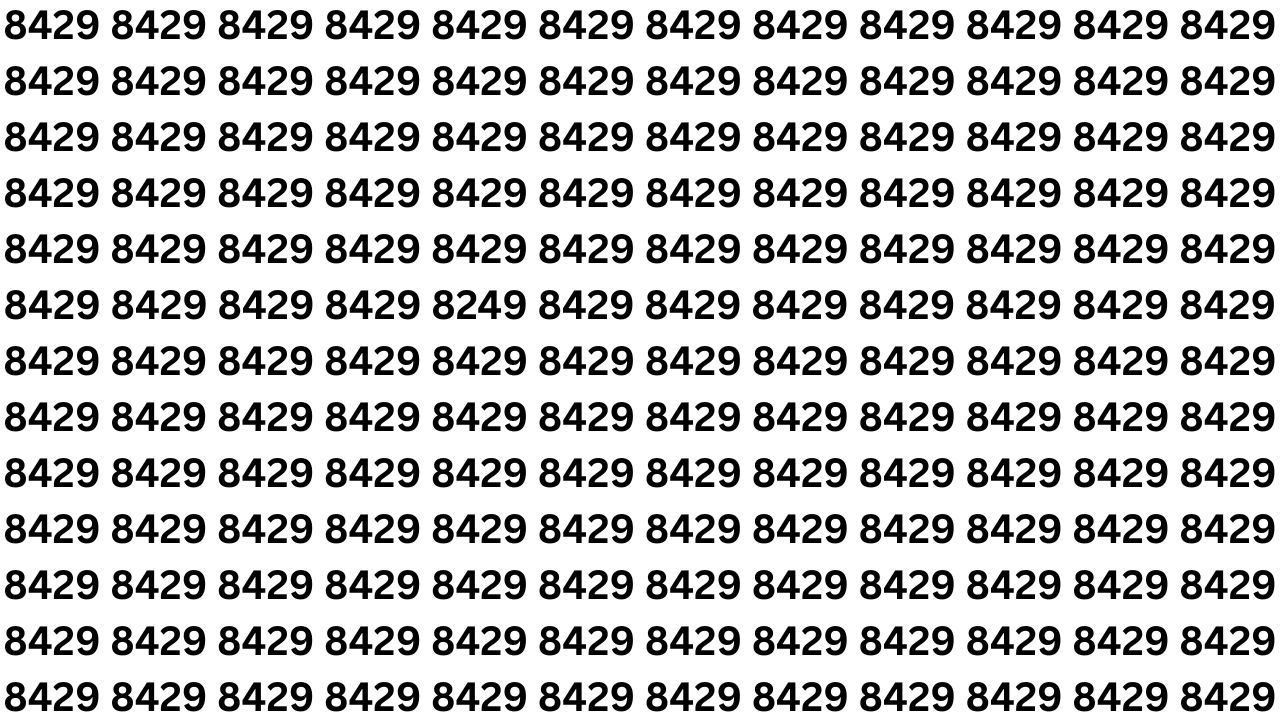
    Optical illusion challenges do more than entertain. They measure how fast your brain handles visual data while blocking out noise. This challenge has a straightforward but difficult goal. You must locate the number 8249 hiding within multiple rows of 8429s. You get only 9 seconds to complete it. Everything appears nearly the same at first. That quality makes this illusion work so well. Your brain automatically clusters similar shapes as one unit. When numbers contain identical digits arranged differently your eyes often overlook the different one. This challenge tests your concentration and sharpness and how quickly you think.

    Why Number-Based Optical Illusions Trick Your Mind

    Our brains are naturally designed to spot patterns as fast as possible. When you look at repeating number sequences like 8429 over and over, your mind begins to assume every group is identical. This fast pattern recognition is useful in everyday situations, but in optical illusions, it can easily mislead you.

    The number 8249 uses the same digits as 8429, just placed in a different order. Because the digits are familiar, your brain often overlooks the change. While your eyes may pass over the numbers, your mind fills in what it expects to see and signals that everything appears normal.

    This effect becomes stronger when time is limited. Under pressure, the brain relies more heavily on mental shortcuts instead of slow, detailed checking.

    Smart Ways to Tackle the 9-Second Number Challenge

    To improve your chances of spotting 8249 quickly, avoid reading each number as a complete unit. Instead, break it down and focus on one digit position at a time. Spend a few seconds checking only the first digit, then move on to the next.

    Another effective method is changing how your eyes scan the numbers. Instead of moving left to right, try scanning from top to bottom. This disrupts your usual reading habit and reduces the chance of missing small differences.

    Staying calm is just as important. Stress narrows your visual focus, making subtle changes harder to detect.

    What This Visual Puzzle Says About Your Attention Skills

    Finding the odd number successfully suggests strong attention to detail and good concentration. It shows that your brain can slow down automatic assumptions and focus carefully, even when time is short.

    If you found it difficult, that is completely normal. These challenges are intentionally designed to mislead the brain. The positive side is that practicing optical illusions can gradually improve focus, memory, and mental speed.

    Many people enjoy these puzzles as short mental exercises during breaks because they challenge the brain without feeling exhausting.

    The Solution Explained

    If you managed to spot 8249 within 9 seconds, well done. That reflects sharp observation and quick thinking. If you did not, take another careful look. Once you notice the difference, it usually becomes obvious, which is part of what makes these illusions so satisfying.

    There is no need to feel discouraged if it took longer. Each attempt helps train your brain to recognize patterns more effectively in the future.

  • Tricky Optical Illusion Test: Locate 32 Hidden Among 23s Within 7 Seconds

    Tricky Optical Illusion Test: Locate 32 Hidden Among 23s Within 7 Seconds

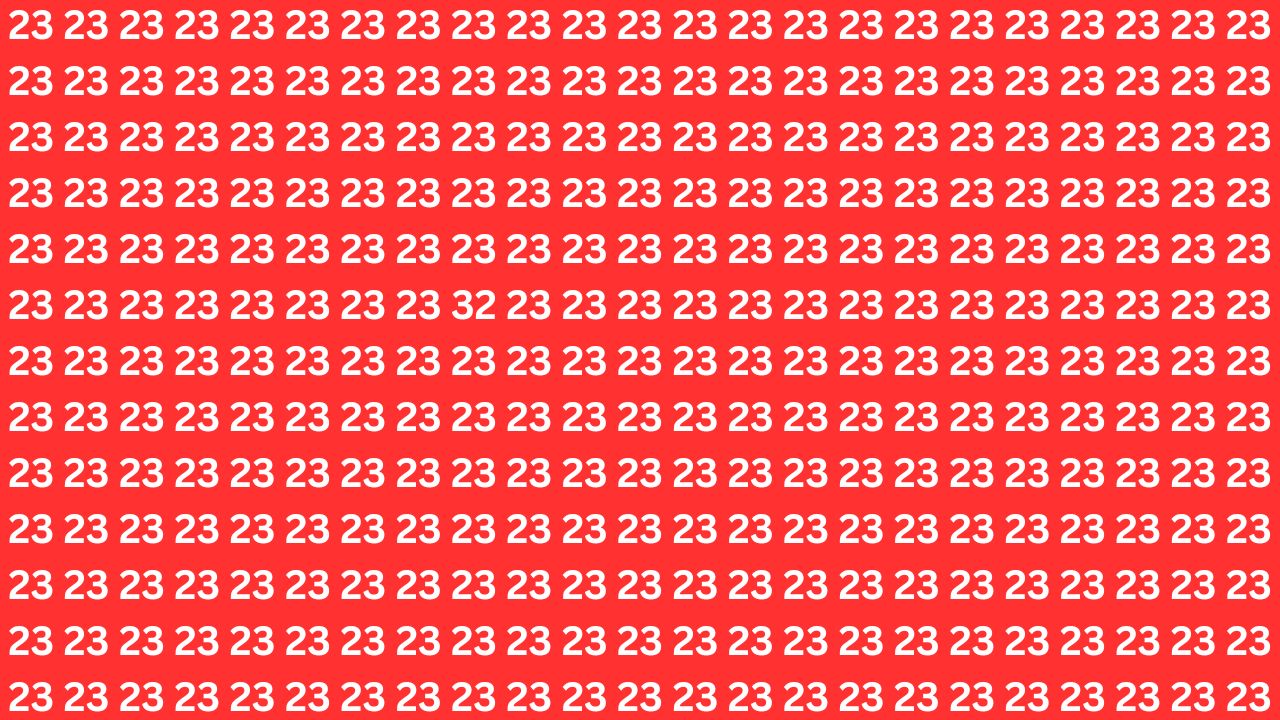
    Optical illusion challenges are not just light entertainment. They quietly examine how sharp your eyesight is and how quickly your brain interprets visual cues. In this visual test, your task is to find the number 32 hidden within a grid filled with 23, all in just 7 seconds. At first look, every number appears identical, but careful observation reveals a small difference that only attentive viewers notice quickly.

    These puzzles have gained massive online attention because they combine curiosity with pressure. The ticking clock forces your brain to scan rapidly, while the repeated numbers work to mislead your perception. If you enjoy fast-paced brain exercises, this challenge is an ideal pick.

    Why This Visual Puzzle Tricks the Brain

    This illusion feels challenging because of visual similarity. The numbers 23 and 32 contain the same digits arranged differently. When the same pattern appears repeatedly, your brain stops reading each number and starts recognizing the overall pattern instead. While this shortcut is helpful in everyday life, it becomes a disadvantage in puzzles like this.

    Time pressure adds another layer of difficulty. Knowing you have only 7 seconds can increase stress, causing your focus to narrow or skip over important details. The brain assumes all numbers are the same, allowing the correct answer to blend in unnoticed.

    Smart Ways to Find the Hidden Number 32

    To spot the number faster, avoid checking each number individually. Instead, divide the grid into sections and scan it in an organized way. Start from a corner and move steadily across rows or columns.

    It also helps to focus on digit placement rather than the entire number. In this challenge, training your eyes to look for a number that begins with 3 instead of 2 can make the difference stand out more clearly. With regular practice, your visual awareness and concentration improve, making it easier to detect anomalies.

    What This Optical Illusion Says About Your Mind

    Finding the number 32 within the time limit suggests strong visual perception and quick pattern recognition. These abilities are closely linked to problem-solving skills, attention to detail, and mental flexibility.

    If it took longer, there is nothing wrong with that. Optical illusions are designed to confuse the brain, not judge intelligence. The real value lies in learning to slow down, observe carefully, and question what your brain assumes to be true.

    Similar visual tests are often used by psychologists to understand how people process information under pressure. They highlight how easily perception can be influenced when the brain relies too heavily on familiar patterns.

    Understanding Where the Answer Is Hidden

    The number 32 is often positioned where your eyes naturally glide past, such as near the center or slightly off to one side. Because your brain expects to see 23 repeatedly, it tends to overlook the reversed digits.

    Once the trick becomes clear, the answer feels obvious. This sudden clarity is common with optical illusions and shows how quickly perception can change when awareness shifts.

    Why Optical Illusion Challenges Go Viral

    These challenges are quick, engaging, and easy to share. They deliver instant results and encourage friendly competition, with people comparing how fast they found the solution.

    They also provide a brief mental refresh. Instead of long tasks, you get a few seconds of focused attention that helps reset the mind. This simplicity and impact are why optical illusion puzzles spread so rapidly across social media.

  • Optical Illusion Challenge: Can You Find 5495 Among Look-Alike 5465s in 6 Seconds

    Optical Illusion Challenge: Can You Find 5495 Among Look-Alike 5465s in 6 Seconds

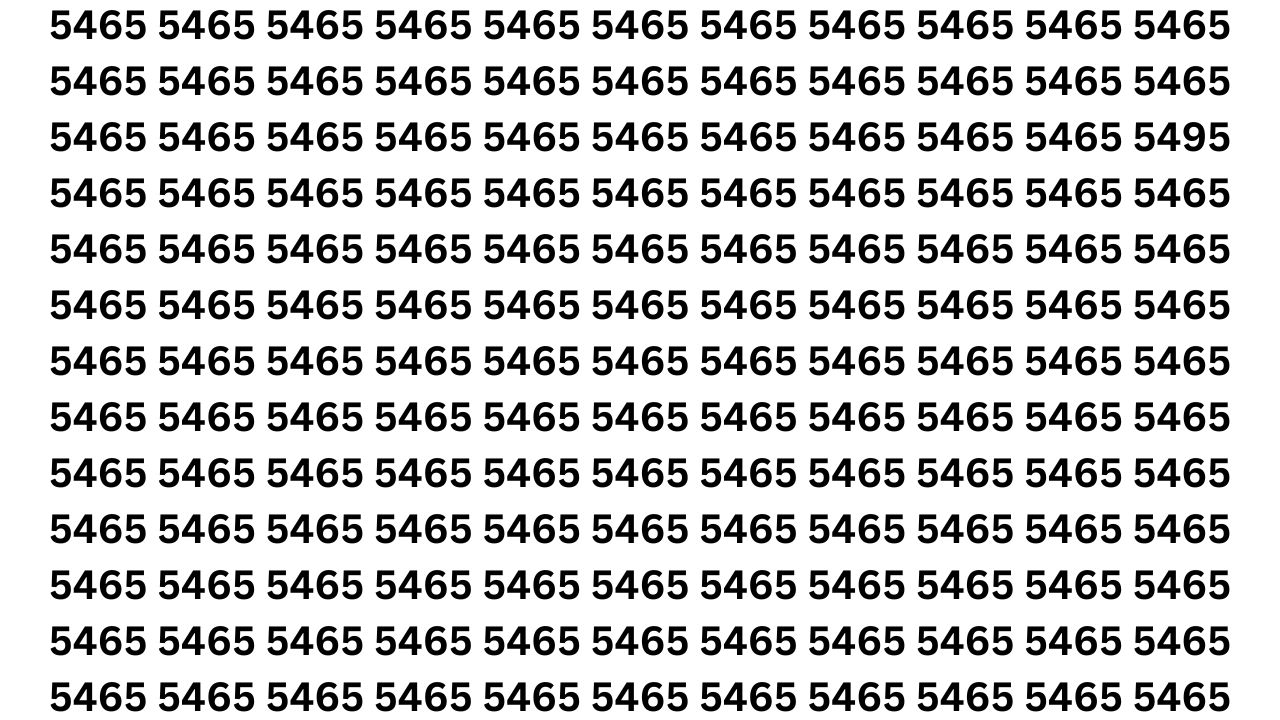
    Optical illusion number puzzles remain popular because they appear easy while quietly testing perception. They feel lighthearted, yet they can challenge even confident observers. This IQ-style challenge asks you to locate the number 5495 hidden among repeated 5465 sequences within just six seconds. At first glance, every entry looks the same, creating a false sense of simplicity. That uniform appearance is what makes the puzzle deceptive, as the brain relaxes while the ticking clock demands speed.

    This guide explores why the illusion is so effective, how the brain handles nearly identical numbers under pressure, and where the hidden number appears. Before reading further, picture the grid in your mind and start counting down.

    Why Do Number-Based Optical Illusions Feel So Misleading?

    The brain is designed to recognize patterns quickly. When it encounters the same sequence repeatedly, it labels everything as identical without rechecking details. This shortcut saves effort in daily life, but it creates blind spots in visual challenges.

    In this puzzle, the grid is filled with 5465. Once the brain commits to that pattern, it stops carefully examining each digit. The lone 5495 blends in because the difference is subtle and easy to miss, especially when time is limited.

    How Does a Six-Second Limit Change Visual Attention?

    Time pressure reshapes how information is processed. With unlimited time, most people would eventually detect the odd number. With only six seconds, the brain switches into fast-scanning mode.

    Instead of reading each number carefully, the eyes skim the grid searching for obvious differences. Since only one digit changes between 5465 and 5495, nothing immediately stands out. The time limit pushes the brain to rely on assumptions rather than verification.

    What Makes 5495 Difficult to Detect Among 5465s?

    The challenge comes from visual similarity. Both numbers share the same structure and differ only in the third digit. Under pressure, the brain often focuses on the first and last digits while filling in the middle automatically.

    The digits 6 and 9 are especially deceptive. Their curved shapes look alike at a glance, making the difference easy to overlook. With consistent font, color, size, and spacing, the hidden number remains well camouflaged.

    How the Brain Handles Repeating Number Patterns

    Visual processing occurs in layers. Early stages detect basic shapes, while later stages interpret meaning. When a pattern repeats, the brain conserves energy by grouping everything together.

    This strategy works well for everyday tasks like reading signs, but it works against you in this puzzle. Finding the odd number requires focused, step-by-step scanning. That slower process depends on attention systems that weaken under time pressure.

    What Is the Best Way to Approach This Puzzle?

    Unstructured scanning rarely succeeds. A methodical approach is far more effective. Mentally divide the grid into sections and scan each row from left to right, just like reading text.

    Another useful technique is to concentrate only on the third digit. Instead of reading the full number, train your eyes to spot where a 9 appears instead of a 6. This breaks the brain’s habit of automatic pattern recognition.

    Remaining calm also helps, as stress narrows focus and increases the chance of missing small details.

    Where Exactly Is the Hidden Number 5495?

    In the solution, 5495 appears in the lower-right portion of the grid. This placement is intentional. Most people start scanning from the top left and move quickly downward.

    As seconds pass, attention fades and lower areas receive less careful inspection. Positioning the anomaly outside common scanning paths increases the likelihood it will be missed within the six-second limit.

    What Does Quickly Finding 5495 Reveal About You?

    Identifying the hidden number within the time limit suggests strong visual focus and the ability to stay attentive under pressure. These traits are valuable in tasks that demand quick yet accurate decisions.

    It also reflects cognitive flexibility, the skill of overriding automatic assumptions and rechecking familiar patterns. This mental control supports analytical thinking and problem-solving.

    Failing to spot the number does not indicate low intelligence. It simply shows that the brain chose efficiency over precision, which is a normal response.

    Can Practicing Optical Illusions Sharpen the Mind?

    Regular practice can improve observation skills. The more puzzles you attempt, the better your brain becomes at questioning assumptions and scanning deliberately.

    Cognitive research suggests that visual challenges can strengthen attention control and processing speed. While these puzzles are not formal IQ tests, they help keep the mind active and adaptable.

    Why Are Fast IQ-Style Puzzles So Popular Online?

    Their appeal lies in the balance between simplicity and difficulty. The task is easy to understand, yet solving it quickly is not guaranteed. This combination sparks curiosity and friendly competition.

    People enjoy testing themselves, sharing outcomes, and challenging others. The short time requirement makes these puzzles easy to try again and again.

    How Can You Perform Better in Similar Challenges?

    Consistency makes a difference. Solving a variety of number and pattern puzzles regularly helps train both speed and accuracy. Gradually reducing time limits can further sharpen performance.

    Quality sleep, limited screen fatigue, and focused attention also matter. A rested brain is far better at catching subtle differences.

    Finding 5495 among 5465 entries in six seconds may seem minor, but it reveals a great deal about perception. Whether you spotted it instantly or needed the answer, the challenge shows how familiarity and pressure shape what we notice. With practice and patience, observation skills can continue to improve well beyond the puzzle itself.

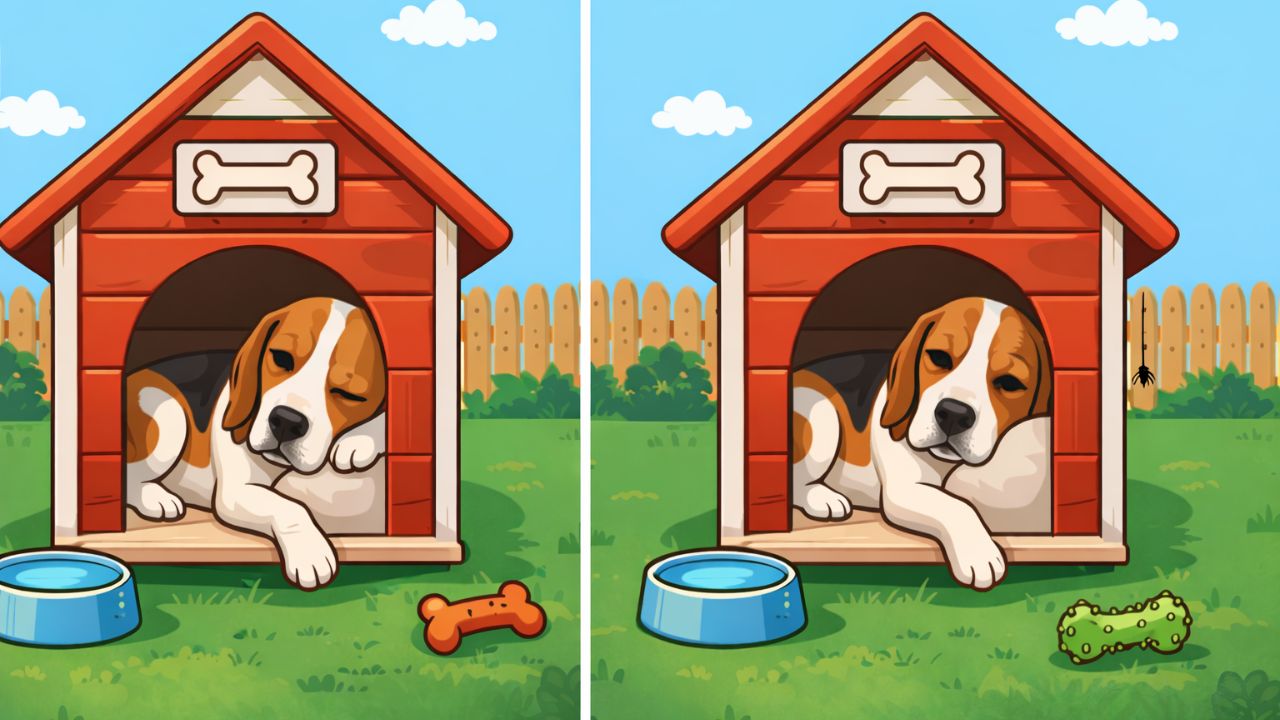
  • Spot the Difference Puzzle: Find 3 Changes in the Dog House Image Within 10 Seconds

    Spot the Difference Puzzle: Find 3 Changes in the Dog House Image Within 10 Seconds

    Spot-the-difference puzzles seem simple until you face one with an actual timer. Two images look the same your brain tells you they match, and then you must prove they don’t in just 10 seconds. This dog house challenge works exactly that way: you get two pictures of a kennel scene and must find 3 small changes before time expires. What makes this puzzle enjoyable is how it blends obvious and hidden details. The main layout remains identical so your focus naturally stays on the dog house itself. Meanwhile the differences appear throughout the scene with one in the sky and one on top of the house and one on the dog’s face. This means you must examine more than just a single area to succeed.

    How Familiar Scenes Trick the Brain Into Overlooking Small Visual Changes

    A dog house scene feels predictable because you expect to see a kennel with a pet inside and maybe a sunny background or a decorative element on the roof. When a scene is familiar your brain relies on expectation to save time. You don’t examine every line of the sun or every curve of the dog’s muzzle because you already know what those things should look like. That expectation helps in everyday life but it becomes a weakness in visual puzzles. When the images are nearly identical the mind switches into pattern recognition mode. You start seeing the scene as a whole rather than as a set of parts. Small edits like a slightly different inner face on the sun can slip past because they don’t change the overall meaning of the picture. The ten-second limit makes it even harder. Under mild pressure people tend to focus on the biggest object which is the kennel and neglect the corners and the sky & small decorative shapes that puzzle makers love to alter.

    The 10-Second Focus Method That Sharply Boosts Spot-the-Difference Accuracy

    Random searching wastes your time. The better method is to scan in a fixed pattern so you check the entire image efficiently. Use this approach: First 33 seconds: examine the upper section including the sky and sun and clouds and everything above the roofline Next 33 seconds: examine the roof & decorations like signs & animals & patterns Final 44 seconds: examine the main subject including the doorway and the dog’s face and paws and shadows This method works because differences usually appear in separate zones. Checking only the center finds one change at most. A systematic top-to-bottom scan improves your odds of spotting all three changes before time runs out. Another useful technique is feature checking. Rather than looking at the whole dog you should pick one specific feature like the nose or eyes or mouth and compare only that feature. Small facial changes become easier to identify when you focus your attention narrowly.

    Common Change Patterns Used in Dog House Spot-the-Difference Puzzles

    Most spot-the-difference puzzles use the same editing tricks over and over because they work well with many different pictures. A detail gets changed like its shape or pattern. A texture or marking gets altered when a pattern moves a little bit. A facial feature gets adjusted such as the nose or mouth or eye shape or whiskers. Your dog house puzzle uses that same classic approach and that’s why it feels fair to solve. The edits are subtle but they aren’t random. Each one becomes a clear change once you look at the right spot.

    Final Reveal: All 3 Hidden Differences Explained Step by Step

    If you have already completed the challenge and need to check your answers here are the three differences found in the images. The sun appears different in the right image because the inner details and face have been modified when compared to the left image. The rooster sitting on top of the dog house shows a different body pattern in the right picture. This change makes the chest design appear altered from the original. The dog’s face visible inside the kennel has been changed in the right image. The modification is most noticeable in the nose & muzzle region. These three differences work well together because they test different observation skills. The sun modification challenges people who typically ignore background elements like the sky. The rooster alteration targets the roofline area where most players look briefly without studying the patterns closely. The dog’s muzzle change takes advantage of how the human brain quickly identifies faces without examining the specific details & lines carefully.

    Why Subtle Sun and Facial Changes Are Hardest for the Eyes to Catch

    Changes to the sun often go unnoticed because the sun works as a background element. Your brain registers it as present and then moves on to other things. When the inner details or small features change it does not alter what the scene means so nothing alerts you unless you are actively looking for differences. Facial differences work differently but are equally tricky. Faces naturally draw your attention but that attention works in a general way. You recognize a dog face right away & then stop examining it closely. A small change in the muzzle can stay hidden because your brain has already decided it knows what it is looking at. This combination of one background change & one facial change creates a reliable method for making a spot-the-difference puzzle challenging without causing frustration.

    Turn This Puzzle Into a Fun 10-Second Group or Family Challenge

    If you want to share this puzzle with friends or family the timer rule makes it more exciting. Without a time limit most people will eventually spot all the differences. With 10 seconds it turns into a real challenge. Here is a simple way to organize it: One attempt with 10 seconds and no zooming allowed Players announce differences as they spot them Keep score out of 3 After the first round give everyone a second try with 15 seconds to see who improves the most Most people do much better on their second attempt because they learn to scan the images systematically rather than just staring at one spot.

    Pro Tips to Get Faster and Sharper at Spot-the-Difference Games

    If you want to solve these puzzles quickly every time you need a good method rather than just trying harder. Having a clear scanning pattern works better than staring intensely at the images. Here are some ways to get better after practicing for a week: Start by looking at the sky & edges because puzzle makers often put changes in those spots. Check the patterns and textures on decorative objects like the rooster’s chest area. When you look at faces treat them as zones with lots of details & examine each feature separately. Once you think you found a difference check it right away in the other picture to make sure. After doing this repeatedly your brain will stop accepting what it sees at first glance and will automatically start searching for differences.

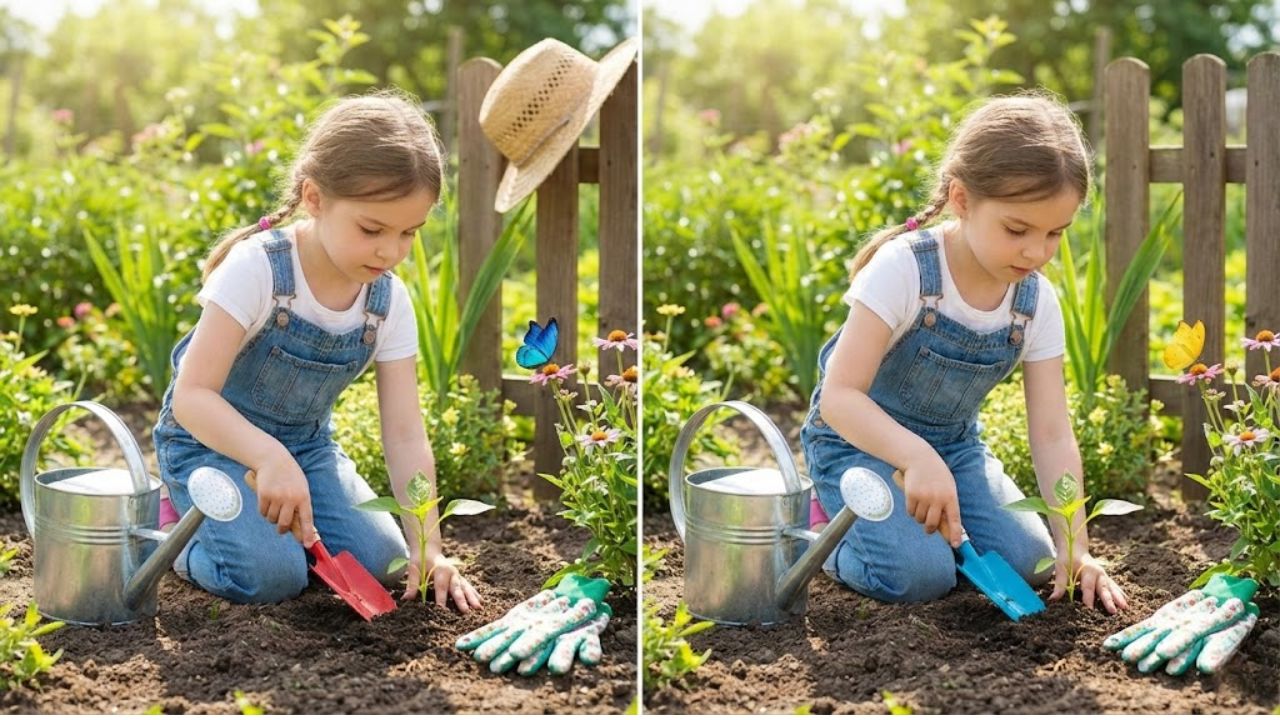
  • 9-Second Visual Challenge: Spot the 3 Differences in the Girl Planting Image

    9-Second Visual Challenge: Spot the 3 Differences in the Girl Planting Image

    If you like mental challenges that need good attention to detail then the Spot the Difference puzzle is perfect for sharpening your mind. These games are fun & they also help you get better at noticing things and staying focused. Today we have an interesting Spot the Difference challenge that shows a girl planting plants in a green outdoor area. Your job is to find the 3 differences between the two pictures in only 9 seconds.

    Why Are Spot the Difference Challenges So Popular?

    Spot the Difference puzzles have existed for decades & remain popular today. The game is simple because you just need to find small differences between two images that look almost identical. This makes it easy for anyone to play while still being challenging enough to stay interesting. These puzzles test how well you notice details and how quickly you can spot changes. Studies show that doing visual puzzles like this might help you remember things better and improve your ability to concentrate. You can play them when you want to kill time or when you need a fun activity to do with friends and family. Spot the Difference puzzles work well in both situations.

    The Challenge: Find the 3 Differences in the Girl Planting Image

    In this puzzle you will see two images of a girl planting greenery in a garden. The images look nearly the same but three differences are hidden between them. Your goal is to find all three differences in just 9 seconds. This might seem easy but the small changes can make it harder than expected. When you examine the images pay attention to minor variations like differences in color or shape or pattern. The timer is counting down so you need to work quickly. Can you find all the differences before the 9 seconds run out?

    How Can You Spot the Hidden Differences?

    When you work on a Spot the Difference challenge you need to train your brain to notice small details. Here is a useful method to help you find differences more easily. Start by looking at the edges of both images and search for small changes. Differences in shape or color or size are typical tricks in these puzzles. Check the symmetric parts of the image because differences often appear there. When you compare one side to the other you might quickly spot subtle changes. Spend a few seconds at the beginning to understand the overall layout of both images even though the challenge has a time limit. After you know the layout you can work faster and find the differences more efficiently.

    The 3 Differences in the Girl Planting Image

    Now let’s reveal the differences you need to find. Here are the three variations hidden within the images:

    – Difference in the Girl’s Headband In the first image the girl wears a headband decorated with yellow diamond shapes. In the second image one of these diamond patterns is missing. This subtle change is easy to overlook at first but it’s a key difference between the two images. Keep your eyes on the headband.

    – The Leaves in Her Hand The girl is holding a handful of leaves in both images but there’s a slight change in the number of leaves. In the first image she holds three leaves while in the second image one of the leaves has disappeared leaving only two. This small variation can be tricky but once you notice it it becomes a clear difference.

    – Different Hat Design In the first image the girl’s hat features a decorative design. However in the second image this design is missing. The hat is plain without the additional details seen in the first image. A keen eye will help you spot this difference quickly as you compare the two images closely.

    How to Improve Your Spot the Difference Skills

    These puzzles offer more than just entertainment since they can help sharpen your mental abilities. Regular practice will make you better at spotting small details. Here are some ways to boost your observation skills:

    Practice Often: Just like any other skill, doing these puzzles frequently will help you get better. The more you work on Spot the Difference games the easier it becomes to notice tiny changes in pictures.

    Try Different Puzzles: Each puzzle uses its own tricks like changing colors or moving objects around or adding & removing things. Working on many types of puzzles will make you better at handling different challenges.

    Use a Timer: If you want to match the 9-second challenge, track your time while solving puzzles. Make your time limit shorter bit by bit to push yourself harder and work faster.