Blog

  • 12 Simple and Effective Yoga Routines You Can Practice at Home for Total Body Wellness

    12 Simple and Effective Yoga Routines You Can Practice at Home for Total Body Wellness

    Yoga is widely recognized as an effective practice for improving both physical fitness and mental well-being. The best part is that you can experience these benefits without stepping outside your home. With only a yoga mat and a small time commitment each day, you can enhance flexibility, build strength, ease stress, and bring a sense of calm into your routine. If you’re looking to design your own sessions or try guided sequences, the following 12 at-home yoga routines offer options for beginners through advanced practitioners, helping you work toward your overall wellness goals.

    1. Morning Wake-Up Flow (15 Minutes)

    Best For: Energizing your body and increasing flexibility at the start of the day.

    • Cat-Cow Pose (1 minute): Gently warm up the spine with smooth, flowing movements.
    • Downward-Facing Dog (2 minutes): Lengthen the body while stretching the hamstrings and back.
    • Sun Salutations (3 minutes): Use dynamic movements to build strength and awaken the body.
    • Warrior I and II (3 minutes): Strengthen the legs and encourage hip opening.
    • Child’s Pose (1 minute): Slow down and softly stretch the back.
    • Seated Forward Fold (2 minutes): Release tightness in the hamstrings and lower back.

    2. Beginner-Friendly Yoga Session (20 Minutes)

    Best For: New practitioners focusing on foundational poses and proper alignment.

    • Mountain Pose (Tadasana) (2 minutes): Establish balance and grounding.
    • Chair Pose (Utkatasana) (2 minutes): Activate the legs and core muscles.
    • Warrior I (Virabhadrasana I) (2 minutes): Develop leg strength and stability.
    • Bridge Pose (Setu Bandhasana) (2 minutes): Strengthen the back and glutes.
    • Child’s Pose (Balasana) (3 minutes): Relax deeply while focusing on the breath.
    • Seated Twist (Ardha Matsyendrasana) (2 minutes): Ease tension in the spine.
    • Shavasana (5 minutes): Rest fully and absorb the benefits of the practice.

    3. Yoga Routine for Stress Relief (20 Minutes)

    Best For: Calming the mind, easing stress, and releasing built-up tension.

    • Deep Breathing (Pranayama) (5 minutes): Use slow, deep breaths to settle the nervous system.
    • Child’s Pose (3 minutes): Ground the body and let stress melt away.
    • Reclining Bound Angle Pose (Supta Baddha Konasana) (3 minutes): Encourage relaxation and hip opening.
    • Cat-Cow Pose (2 minutes): Gently mobilize the spine.
    • Legs Up the Wall Pose (Viparita Karani) (5 minutes): Calm the mind and promote full-body relaxation.

    4. Flexibility-Focused Yoga Practice (25 Minutes)

    Best For: Increasing flexibility and lengthening muscles.

    • Downward-Facing Dog (3 minutes): Stretch the entire body with emphasis on hamstrings and calves.
    • Forward Fold (Uttanasana) (3 minutes): Gently lengthen the back and hamstrings.
    • Pigeon Pose (Eka Pada Rajakapotasana) (5 minutes per side): Deeply open the hips.
    • Cobra Pose (Bhujangasana) (2 minutes): Extend the spine and open the chest.
    • Seated Forward Fold (Paschimottanasana) (3 minutes): Stretch the spine and hamstrings.
    • Butterfly Pose (Baddha Konasana) (4 minutes): Open the hips and inner thighs.

    5. Core-Strengthening Yoga Flow (20 Minutes)

    Best For: Building strength in the core muscles.

    • Plank Pose (3 minutes): Engage the core with short holds and brief rest periods.
    • Boat Pose (Navasana) (3 minutes): Activate the core and hip flexors.
    • Side Plank (Vasisthasana) (2 minutes per side): Strengthen the obliques and shoulders.
    • Downward-Facing Dog (2 minutes): Use core engagement to lift the hips.
    • Cobra Pose (2 minutes): Stretch the front body while engaging the core.
    • Bridge Pose (Setu Bandhasana) (2 minutes): Support glute and core strength.

    6. Yoga for Improved Posture (25 Minutes)

    Best For: Enhancing posture and easing tension from prolonged sitting.

    • Cat-Cow Pose (5 minutes): Mobilize and stretch the spine.
    • Chest Opener (2 minutes): Interlace fingers behind the back to open the chest.
    • Warrior II (Virabhadrasana II) (3 minutes): Strengthen the back and expand the chest.
    • Seated Forward Fold (2 minutes): Release tension in the back and legs.
    • Locust Pose (Salabhasana) (3 minutes): Strengthen the lower back muscles.
    • Tadasana (Mountain Pose) (5 minutes): Focus on standing alignment and posture.

    7. Evening Wind-Down Yoga Routine (20 Minutes)

    Best For: Relaxing the body before sleep and encouraging rest.

    • Child’s Pose (3 minutes): Slow down and focus on breathing.
    • Seated Forward Fold (3 minutes): Gently stretch the spine and hamstrings.
    • Legs Up the Wall Pose (5 minutes): Release tension and calm the nervous system.
    • Reclining Spinal Twist (2 minutes per side): Ease tightness in the spine.
    • Shavasana (5 minutes): Fully relax and let go of the day.

    8. Power Yoga Strength Flow (30 Minutes)

    Best For: A full-body workout that builds strength and endurance.

    • Sun Salutations (5 rounds): Warm up the body with dynamic movement.
    • Warrior I (Virabhadrasana I) (2 minutes per side): Improve strength and stability.
    • Chaturanga (2 minutes): Strengthen the arms and core.
    • Crow Pose (Bakasana) (3 minutes): Build balance and arm strength.
    • Plank Pose (3 minutes): Engage the core and develop endurance.
    • Tree Pose (Vrksasana) (2 minutes per side): Improve balance and leg strength.

    9. Yoga for Digestive Wellness (20 Minutes)

    Best For: Supporting digestion and reducing bloating.

    • Seated Twist (Ardha Matsyendrasana) (3 minutes): Stimulate digestion and spinal mobility.
    • Downward-Facing Dog (2 minutes): Lengthen and stretch the spine.
    • Cat-Cow Pose (3 minutes): Increase spinal movement and digestive stimulation.
    • Revolved Triangle Pose (Parivrtta Trikonasana) (3 minutes per side): Massage the digestive organs.
    • Legs Up the Wall Pose (5 minutes): Encourage relaxation and healthy circulation.

    10. Balance-Enhancing Yoga Practice (25 Minutes)

    Best For: Improving stability and mental focus.

    • Tree Pose (Vrksasana) (5 minutes): Cultivate grounding and balance.
    • Warrior III (Virabhadrasana III) (3 minutes per side): Strengthen legs and enhance balance.
    • Chair Pose (Utkatasana) (3 minutes): Engage the core and legs.
    • Dancer’s Pose (Natarajasana) (3 minutes per side): Build balance and flexibility.
    • Standing Forward Fold (2 minutes): Stretch the hamstrings and reset balance.
    • Shavasana (5 minutes): Practice stillness and integration.

    11. Gentle Prenatal Yoga Routine (20 Minutes)

    Best For: Supporting the body during pregnancy and encouraging relaxation.

    • Cat-Cow Pose (3 minutes): Ease tension in the back and pelvis.
    • Child’s Pose (3 minutes): Calm the body and mind.
    • Modified Warrior II (3 minutes per side): Build gentle strength in the legs.
    • Seated Forward Fold (2 minutes): Softly stretch the back and hamstrings.
    • Legs Up the Wall Pose (5 minutes): Reduce back pressure and support circulation.

    12. Yoga Routine for Athletes (30 Minutes)

    Best For: Enhancing flexibility and supporting muscle recovery.

    • Downward-Facing Dog (5 minutes): Stretch the hamstrings, calves, and back.
    • Lunge with Twist (5 minutes): Open the hips and lengthen the spine.
    • Pigeon Pose (Eka Pada Rajakapotasana) (5 minutes per side): Release deep hip tension.
    • Bridge Pose (Setu Bandhasana) (5 minutes): Strengthen the glutes and lower back.
    • Seated Forward Fold (Paschimottanasana) (5 minutes): Stretch the hamstrings and spine.
    • Shavasana (5 minutes): Relax and allow the body to recover.

    Conclusion

    These 12 at-home yoga routines can be adjusted to suit your individual needs, whether your goal is relaxation, strength, flexibility, or a complete full-body workout. Practicing yoga regularly at home is a simple yet effective way to support overall well-being. By dedicating consistent time to these routines, you can develop a more balanced body and a calmer, more focused mind.
  • 15 At-Home Yoga Poses That Build Strength, Balance, and Body Control

    15 At-Home Yoga Poses That Build Strength, Balance, and Body Control

    Yoga is a powerful way to build strength, increase flexibility, and calm the mind without leaving your home. Whether you are just starting out or already experienced, adding these 15 essential yoga poses to your routine can help create a strong and balanced practice. Each movement supports physical stability, flexibility, and mindful awareness, making it easy to fit yoga into any daily schedule.

    1. Mountain Pose (Tadasana)

    Why It Matters: This foundational pose supports proper alignment, balance, and posture.

    How to Practice:

    • Stand upright with feet placed hip-width apart.
    • Activate your thighs and gently lift your chest.
    • Rest your arms alongside your body with palms facing forward.
    • Ground through your feet while lengthening the spine.

    Benefits: Improves posture, strengthens the legs and core, and enhances overall balance.

    2. Downward-Facing Dog (Adho Mukha Svanasana)

    Why It Matters: A full-body stretch that energizes and lengthens multiple muscle groups.

    How to Practice:

    • Begin on all fours with hands under shoulders and feet hip-width apart.
    • Tuck the toes and lift the hips upward into an inverted “V” shape.
    • Press firmly through the hands while extending the legs and reaching heels downward.

    Benefits: Stretches the back, shoulders, and legs while strengthening the arms and core.

    3. Warrior I (Virabhadrasana I)

    Why It Matters: A strong standing pose that builds stability and focus.

    How to Practice:

    • Stand with feet set wide apart.
    • Turn one foot outward and bend the front knee.
    • Lift both arms overhead and open the chest.
    • Keep the back leg straight and engaged.

    Benefits: Strengthens legs and core, improves balance, and opens the chest and shoulders.

    4. Warrior II (Virabhadrasana II)

    Why It Matters: Enhances endurance while building lower-body strength.

    How to Practice:

    • From Warrior I, rotate the torso to face the side.
    • Extend arms out at shoulder height with palms facing down.
    • Maintain a bent front knee and a straight back leg.

    Benefits: Builds strength in the legs and shoulders, improves focus, and stretches the hips.

    5. Child’s Pose (Balasana)

    Why It Matters: A deeply restful posture that encourages relaxation.

    How to Practice:

    • Kneel and sit back on your heels.
    • Lower the chest toward the mat and extend the arms forward.
    • Rest the forehead on the floor and breathe calmly.

    Benefits: Releases tension in the back and shoulders while calming the nervous system.

    6. Cobra Pose (Bhujangasana)

    Why It Matters: A gentle backbend that improves spinal mobility.

    How to Practice:

    • Lie face down with legs extended and palms under shoulders.
    • Press lightly into the hands and lift the chest using back muscles.
    • Keep elbows soft and shoulders relaxed.

    Benefits: Strengthens the lower back, opens the chest, and increases spinal flexibility.

    7. Seated Forward Fold (Paschimottanasana)

    Why It Matters: Provides a deep stretch for the spine and legs.

    How to Practice:

    • Sit upright with legs extended forward.
    • Lengthen the spine on an inhale.
    • Fold forward on an exhale while keeping the back long.

    Benefits: Enhances flexibility, stretches hamstrings, and helps reduce stress.

    8. Bridge Pose (Setu Bandhasana)

    Why It Matters: Strengthens the lower body while opening the chest.

    How to Practice:

    • Lie on your back with knees bent and feet flat on the floor.
    • Press through the feet to lift the hips upward.
    • Engage the glutes and gently lift the chest.

    Benefits: Builds strength in the glutes and legs and improves spinal mobility.

    9. Triangle Pose (Trikonasana)

    Why It Matters: Combines strength and stretching in a standing position.

    How to Practice:

    • Stand with feet wide apart.
    • Turn one foot outward and extend arms to the sides.
    • Reach forward and lower one hand to the leg or floor while lifting the opposite arm.

    Benefits: Stretches hips and spine, strengthens legs, and improves balance.

    10. Downward-Facing Dog Split (Eka Pada Adho Mukha Svanasana)

    Why It Matters: Enhances balance and lower-body flexibility.

    How to Practice:

    • Begin in Downward-Facing Dog.
    • Lift one leg toward the ceiling while keeping hips stable.
    • Engage the core and maintain shoulder alignment.

    Benefits: Strengthens the core and shoulders while stretching the legs.

    11. Plank Pose (Phalakasana)

    Why It Matters: A full-body strength pose with a strong core focus.

    How to Practice:

    • Start in a push-up position with hands under shoulders.
    • Keep the body in a straight line from head to heels.
    • Engage the core and hold steadily.

    Benefits: Builds core strength, improves posture, and tones the entire body.

    12. Pigeon Pose (Eka Pada Rajakapotasana)

    Why It Matters: A deep stretch for the hips and glutes.

    How to Practice:

    • From tabletop, bring one knee forward between the hands.
    • Extend the opposite leg straight behind.
    • Lower the chest gradually to deepen the stretch.

    Benefits: Opens the hips, releases lower back tension, and improves flexibility.

    13. Crow Pose (Bakasana)

    Why It Matters: A challenging arm balance that develops strength and focus.

    How to Practice:

    • Begin in a squat with hands placed on the floor.
    • Bend the elbows and rest knees on the upper arms.
    • Lift the feet and balance on the hands.

    Benefits: Strengthens arms and core while improving coordination.

    14. Happy Baby Pose (Ananda Balasana)

    Why It Matters: A soothing stretch that promotes relaxation.

    How to Practice:

    • Lie on your back and draw knees toward the chest.
    • Hold the outer edges of the feet.
    • Gently pull the knees downward while breathing deeply.

    Benefits: Relieves lower back tension and opens the hips.

    15. Shavasana (Corpse Pose)

    Why It Matters: Encourages complete relaxation and mental clarity.

    How to Practice:

    • Lie flat on your back with arms relaxed at your sides.
    • Close the eyes and focus on slow, steady breathing.
    • Allow the body to fully release tension.

    Benefits: Reduces stress, supports recovery, and integrates the practice.

    Final Thoughts on Building a Home Yoga Routine

    Adding these 15 essential yoga poses to your home practice can support strength, flexibility, and mindfulness. Whether your goal is to relax, stretch, or build muscle tone, these poses create a balanced and accessible yoga routine. Move at your own pace, respect your body, and experience the physical and mental benefits that regular yoga practice offers.

  • 7 Easy Beginner Yoga Poses to Start Practicing Comfortably at Home

    7 Easy Beginner Yoga Poses to Start Practicing Comfortably at Home

    Yoga is an effective practice for improving flexibility, building strength, and developing mindfulness. While starting yoga may feel overwhelming at first, you don’t need prior experience or advanced skills to begin. With a few simple, beginner-friendly poses, you can start practicing yoga at home and enjoy its physical and mental benefits. The following poses are ideal for creating a strong foundation, increasing mobility, and encouraging calm and focus.

    1. Mountain Pose (Tadasana)

    Why This Pose Is Ideal for Beginners: Mountain Pose is a fundamental standing posture that encourages proper alignment and steady breathing. It builds awareness and prepares the body for more advanced poses.

    How to Perform:

    • Stand upright with your feet together and toes gently spread.
    • Engage your thighs, lift through the chest, and soften your shoulders.
    • Rest your arms alongside your body with palms facing forward.
    • Ground through your feet and take slow, deep breaths.

    Benefits:

    • Supports better posture.
    • Builds strength in the legs and core.
    • Enhances balance and body alignment.

    2. Downward-Facing Dog (Adho Mukha Svanasana)

    Why This Pose Is Ideal for Beginners: This well-known posture stretches and strengthens multiple muscle groups while improving overall flexibility and upper body strength.

    How to Perform:

    • Begin on your hands and knees with wrists under shoulders and knees under hips.
    • Tuck your toes and lift your hips upward, forming an inverted V shape.
    • Press your palms firmly into the mat and keep your arms straight.
    • Breathe deeply while lengthening the spine and easing heels toward the floor.

    Benefits:

    • Stretches the back, calves, and hamstrings.
    • Strengthens the arms, shoulders, and core.
    • Improves posture and spinal alignment.

    3. Child’s Pose (Balasana)

    Why This Pose Is Ideal for Beginners: Child’s Pose is a calming posture that allows the body to rest and release tension, making it perfect for recovery during practice.

    How to Perform:

    • Kneel on the mat with big toes touching and knees comfortably apart.
    • Sit back onto your heels and stretch your arms forward.
    • Lower your forehead toward the mat and relax your body.
    • Breathe slowly and allow the spine to lengthen naturally.

    Benefits:

    • Eases tension in the neck, shoulders, and back.
    • Encourages relaxation and mental calm.
    • Gently stretches the hips, thighs, and spine.

    4. Cat-Cow Flow (Marjaryasana–Bitilasana)

    Why This Pose Is Ideal for Beginners: This gentle movement sequence promotes spinal flexibility while relieving stiffness in the back and neck.

    How to Perform:

    • Start on all fours with a neutral spine.
    • Inhale, drop the belly, lift the chest, and look forward.
    • Exhale, round the spine, tuck the chin, and draw the belly inward.
    • Move smoothly between both poses while syncing with your breath.

    Benefits:

    • Improves spinal mobility.
    • Reduces tension in the back and neck.
    • Enhances coordination and posture awareness.

    5. Seated Forward Fold (Paschimottanasana)

    Why This Pose Is Ideal for Beginners: This pose encourages a deep stretch in the back body while promoting relaxation and mindful breathing.

    How to Perform:

    • Sit on the floor with legs extended straight ahead.
    • Inhale and sit tall, lengthening your spine.
    • Exhale and hinge forward from the hips, reaching toward your legs.
    • Allow your neck to relax while keeping the spine long.

    Benefits:

    • Stretches the hamstrings and lower back.
    • Helps calm the nervous system.
    • Improves flexibility in the spine and legs.

    6. Warrior I (Virabhadrasana I)

    Why This Pose Is Ideal for Beginners: Warrior I builds strength and stability while opening the hips and chest, making it a core pose in many yoga sequences.

    How to Perform:

    • Stand with feet about 3 to 4 feet apart.
    • Turn one foot outward and bend the front knee over the ankle.
    • Lift your arms overhead with relaxed shoulders.
    • Hold for several breaths, then switch sides.

    Benefits:

    • Strengthens the legs, arms, and core.
    • Opens the hips and chest.
    • Improves focus and balance.

    7. Bridge Pose (Setu Bandhasana)

    Why This Pose Is Ideal for Beginners: Bridge Pose is a gentle backbend that supports strength, flexibility, and improved posture.

    How to Perform:

    • Lie on your back with knees bent and feet flat on the floor.
    • Press into your feet and lift your hips upward.
    • Engage your glutes and core while opening the chest.
    • Hold briefly, then lower slowly back down.

    Benefits:

    • Strengthens the back, legs, and glutes.
    • Opens the chest and shoulders.
    • Reduces tension in the lower back and hips.

    Closing Notes

    These seven beginner yoga poses offer a balanced starting point for home practice. They help develop strength, flexibility, and mindfulness while supporting relaxation. With regular practice, you’ll gain better body awareness and experience both physical and mental benefits. Begin with short sessions and gradually increase your practice time. Consistency and patience will help you progress steadily on your yoga journey.

  • My Stress Dropped and Abs Appeared What Happens When You Do Reformer Pilates Almost Daily

    My Stress Dropped and Abs Appeared What Happens When You Do Reformer Pilates Almost Daily

    Before 2025, my reformer Pilates routine was anything but structured. I’d attend a class now and then, or buy a short bundle and let it run out. But knowing that the real benefits — like building lasting strength and improving posture — only come with consistency, I decided it was time to commit. After all, there’s a reason images of Hailey Bieber mastering classic Pilates moves dominate search results. Reformer Pilates demands time, patience, and repetition, especially when learning exercises like the hundred without feeling completely wiped out.

    An Unlimited Membership Changed Everything

    It felt almost symbolic when my nearby studio, Prescription in Lisbon, introduced an appealing unlimited membership offer. Suddenly, I no longer had to ration classes or track credits. Their warm, terracotta-toned studio quickly became a second home. I began attending almost daily, fitting in 50-minute reformer sessions before work, during lunch, or between social plans. While I experimented with their cardio-inspired and recovery-focused options, I mostly stayed loyal to the classic reformer classes that formed the backbone of my routine.

    The Tough First Week and Learning Proper Form

    The opening week was by far the most challenging. Every muscle — even the ones I didn’t know existed — seemed to burn. Pilates offered no instant results or shortcuts. Alongside the physical challenge, there was a strong mental element as I focused on correct alignment and controlled movement. Attending frequently allowed instructors to refine my technique, and with little time between sessions, their feedback truly stuck. This combination helped me finally understand how precision-based training is meant to feel.

    Settling Into a Rhythm and Seeing Progress

    Before long, reformer Pilates became part of my daily flow. I moved through sports bras and leggings at record speed and enjoyed the simplicity of committing to one workout style. Outside the studio, my only other activity was long walks and the occasional game of padel. I didn’t need to overthink my routine — I just showed up and moved. Gradually, I noticed clear physical progress, learning when to push harder and when to ease off, respecting my body’s limits.

    How Often Is Too Often?

    At my peak, I averaged five to six sessions a week, which raised the question of whether that was excessive. According to Pilates instructor and PT Aimee Victoria Long, reformer Pilates thrives on consistent practice. She explains that regular sessions can lead to a stronger integrated core, better posture, and increased flexibility thanks to the machine’s full range of motion. However, she notes that session intensity and recovery time are key factors when determining an ideal weekly frequency.

    Balancing Intensity and Recovery

    While reformer Pilates isn’t comparable to high-impact workouts, it still places deep demands on the body. Long highlights that the spring resistance builds strength without stressing the joints, supporting joint-friendly conditioning. For some, five or six classes may feel like too much, while others thrive with a varied schedule. Including restorative sessions alongside strength-focused classes can make frequent attendance more sustainable. Even practicing two to four times weekly can deliver meaningful results.

    Finding the Sweet Spot

    I noticed that when travel or other commitments reduced my weekly sessions, my body often felt more refreshed. These rest periods allowed for better recovery, helping me return with renewed energy. Still, being away for too long made me miss the studio. Regular attendance helped me connect with instructors I enjoyed and recognize familiar faces, creating a subtle sense of community abroad that felt grounding as a freelancer living overseas.

    The Mental Health Benefits I Didn’t Expect

    One surprising outcome of my reformer Pilates journey was the impact on stress relief. Each class began with bouncing on a built-in trampoline, and with every jump, tension seemed to fade. Long explains that Pilates’ focus on breath control and intentional movement often makes it feel meditative. Over time, sessions became a mental reset, and I found myself craving that release even on rest days.

    Reconnecting With My Body

    Physically, the changes became undeniable after two months of dedicated practice. My Pilates commitment came around ten months after fertility treatment, a period that had left me feeling disconnected from my body. While I stayed active throughout, this new routine restored my sense of control. I felt full-body strength returning, noticed visible muscle tone, and regained confidence. My core definition improved, my legs felt leaner, and seeing myself in the mirror finally felt reassuring again.

    Listening to Your Body Is the Real Key

    Long emphasizes that success comes from body awareness. Persistent fatigue, lingering soreness, or unresolved tightness may signal overtraining. But feeling energized, supported, and able to maintain good form suggests your routine is working. Like most fitness approaches, the answer isn’t extreme commitment or complete rest — it’s balance. For me, that balance meant staying consistent, honoring recovery, and investing in a few extra pairs of grippy Pilates socks.

  • Time-Saving Home Yoga Workouts Perfect for Busy Schedules and Short Sessions

    Time-Saving Home Yoga Workouts Perfect for Busy Schedules and Short Sessions

    In a world that moves quickly, finding time for the gym or scheduled yoga classes can feel almost impossible. The good news is that yoga is highly flexible and can be practiced right at home. This makes it easy to enjoy a few moments of mindful movement, even on the most demanding days. At-home yoga routines support stress relief, improve flexibility, and enhance overall well-being without requiring much time. No matter how full your schedule is, yoga can still be part of your daily routine.

    Why Practicing Yoga at Home Works for Busy Lifestyles

    Convenience: Practicing yoga at home removes the need for travel or advance planning. You can simply roll out your mat and begin whenever it suits you. Any room and any time can work.

    Time-efficient: Even on packed days, yoga can be effective in just 10 to 15 minutes. Short, focused sessions deliver benefits without long workouts.

    Stress reduction: Just a few minutes of yoga can noticeably ease stress and release built-up tension, helping you mentally reset during hectic moments.

    Flexible and adaptable: Home yoga allows you to tailor your practice to your needs, whether that means boosting energy in the morning, loosening up mid-day, or relaxing before sleep.

    Quick and Effective Yoga Routines for Busy Days

    These short yoga sequences are designed to fit seamlessly into your day, no matter how limited your time is. They require very little space and can be practiced comfortably at home.

    1. Gentle Morning Wake-Up Yoga (10–15 Minutes)

    Best for: Beginning the day feeling energized and focused.

    Routine:

    • Child’s Pose (Balasana) – 2 minutes: A soothing stretch to calm the mind and lengthen the spine.
    • Cat-Cow Pose (Marjaryasana-Bitilasana) – 2 minutes: Flow gently to awaken the spine and improve mobility.
    • Downward-Facing Dog (Adho Mukha Svanasana) – 2 minutes: Stretch the back and hamstrings while strengthening arms and legs.
    • Standing Forward Fold (Uttanasana) – 2 minutes: Release tension from the back and legs.
    • Warrior I (Virabhadrasana I) – 2 minutes per side: Open the hips and chest while building leg strength.
    • Seated Forward Fold (Paschimottanasana) – 3 minutes: End with a calming stretch for the back and legs.

    Benefits:

    • Stretches the entire body
    • Activates muscles and boosts energy
    • Reduces morning stiffness and improves flexibility

    2. Midday Energy Reset (10–12 Minutes)

    Best for: Refreshing your body and mind during a busy workday.

    Routine:

    • Mountain Pose (Tadasana) – 1 minute: Stand tall, breathe deeply, and center yourself.
    • Chair Pose (Utkatasana) – 2 minutes: Engage the legs and core for an energizing boost.
    • Warrior II (Virabhadrasana II) – 2 minutes per side: Build endurance while opening the chest.
    • Plank Pose (Phalakasana) – 2 minutes: Strengthen the core, arms, and legs.
    • Downward-Facing Dog (Adho Mukha Svanasana) – 2 minutes: Stretch the back and legs while improving circulation.
    • Seated Twist (Ardha Matsyendrasana) – 2 minutes: Ease spinal tension and support digestion.

    Benefits:

    • Enhances energy and focus
    • Strengthens the core and lower body
    • Improves mental clarity and alertness

    3. After-Work Yoga to Release Tension (15 Minutes)

    Best for: Letting go of stress and unwinding after a long day.

    Routine:

    • Child’s Pose (Balasana) – 3 minutes: Gently release physical and mental stress.
    • Cat-Cow Pose (Marjaryasana-Bitilasana) – 2 minutes: Stretch the spine and ease back tension.
    • Reclining Bound Angle Pose (Supta Baddha Konasana) – 3 minutes: Open the hips and relax the lower back.
    • Bridge Pose (Setu Bandhasana) – 2 minutes: Strengthen the back and glutes while opening the chest.
    • Legs Up the Wall (Viparita Karani) – 5 minutes: Restore the body and calm the nervous system.

    Benefits:

    • Eases back and neck tension
    • Calms the mind after a demanding day
    • Supports relaxation and better sleep

    4. Quick Stretch Break (5–10 Minutes)

    Best for: A short pause to stretch and refresh during a busy schedule.

    Routine:

    • Standing Forward Fold (Uttanasana) – 1 minute: Stretch the hamstrings and lower back.
    • Cat-Cow Pose (Marjaryasana-Bitilasana) – 1 minute: Gently warm up the spine.
    • Downward-Facing Dog (Adho Mukha Svanasana) – 1 minute: Stretch the full body, focusing on the back and legs.
    • Seated Twist (Ardha Matsyendrasana) – 1 minute: Release tension from the spine and shoulders.
    • Warrior II (Virabhadrasana II) – 2 minutes per side: Strengthen and open the hips, legs, and chest.

    Benefits:

    • Improves flexibility and mobility
    • Relieves tight muscles and joints
    • Provides a quick mental reset

    5. Evening Wind-Down Yoga Flow (15–20 Minutes)

    Best for: Relaxing the body and preparing for restful sleep.

    Routine:

    • Child’s Pose (Balasana) – 3 minutes: Settle the body and quiet the mind.
    • Downward-Facing Dog (Adho Mukha Svanasana) – 2 minutes: Gently stretch the spine and legs.
    • Pigeon Pose (Eka Pada Rajakapotasana) – 3 minutes per side: Open the hips and release stored tension.
    • Seated Forward Fold (Paschimottanasana) – 3 minutes: Lengthen the back and hamstrings.
    • Legs Up the Wall (Viparita Karani) – 5 minutes: Calm the nervous system and encourage deep relaxation.

    Benefits:

    • Releases tension in hips, legs, and lower back
    • Encourages relaxation and better sleep quality
    • Helps the body fully unwind before bed

    Helpful Tips for Practicing Yoga at Home on Busy Days

    Stay consistent: Even a short daily practice of 10–15 minutes can noticeably improve flexibility, strength, and overall well-being.

    Create a dedicated space: Setting aside a quiet corner for yoga helps build routine and minimizes distractions.

    Use online resources: Many apps and platforms offer quick sessions for different needs, making it easier to stay motivated.

    Listen to your body: Yoga should feel supportive, not painful. Modify or skip poses whenever needed.

    Keep it simple: Yoga does not require complex poses or equipment. Mindful, basic movements can be highly effective.

    Conclusion

    Yoga fits perfectly into even the busiest days, allowing you to stretch, strengthen, and relax without needing much time or space. Whether practiced in the morning, during a break, or in the evening, these short routines can easily become part of your daily life. Just a few minutes of yoga can help reduce stress, improve flexibility, and restore a sense of calm. Roll out your mat, focus on your breath, and enjoy the balance and peace yoga brings—right at home.

  • CeraVe’s New Affordable Anti Ageing Skincare Is Being Compared to Much Pricier Alternatives

    CeraVe’s New Affordable Anti Ageing Skincare Is Being Compared to Much Pricier Alternatives

    CeraVe’s latest affordable anti ageing skincare launch is creating serious buzz across India, especially among people tired of paying premium prices for visible results. Known for its dermatologist-backed formulas, CeraVe is now being compared directly with luxury anti-ageing brands that cost several times more. Indian consumers, who are increasingly ingredient-aware, are noticing how this new range promises hydration, barrier repair, and wrinkle support without stretching budgets. From pharmacies to online marketplaces, the comparison conversation is growing fast as skincare lovers question whether high prices truly equal better performance.

    CeraVe affordable anti ageing skincare draws attention

    What makes this launch stand out is how closely it mirrors the benefits of expensive alternatives while remaining accessible. The formulas focus on skin barrier repair, long-lasting moisture, and gentle daily use. Instead of harsh actives, the brand relies on ceramide-rich blends that support ageing skin over time. Many users appreciate the dermatologist-developed formula, especially those with sensitive skin who often struggle with luxury products. Another highlight is the fragrance-free approach, which appeals to Indian consumers dealing with humidity, pollution, and reactive skin conditions.

    Why CeraVe anti ageing products rival luxury brands

    Luxury skincare often leans heavily on marketing, but CeraVe focuses on performance. Its anti ageing range is praised for consistent hydration support and gradual improvement rather than quick cosmetic fixes. The inclusion of science-backed ingredients helps address fine lines without irritation. Users also point to daily routine compatibility, meaning products layer well with sunscreen and makeup. Compared to high-end creams, CeraVe offers value-driven skincare that fits real-life routines, making it easier for people to stick with long-term anti ageing care.

    CeraVe budget-friendly anti ageing skincare benefits

    Affordability is the obvious win, but benefits go beyond price. The products are designed for long-term skin health, not instant masking. Many users report improved texture thanks to gentle active balance that doesn’t overwhelm the skin. The formulas also support moisture retention layers, which is crucial as skin ages. Another advantage is easy pharmacy access across India, removing the need for imported luxury purchases. Together, these factors explain why comparisons with premium brands keep surfacing online.

    How CeraVe is reshaping anti ageing expectations

    This comparison trend highlights a shift in how people view skincare value. Consumers are prioritizing ingredient transparency focus over brand names and packaging. CeraVe’s rise shows that affordable clinical skincare can deliver results when formulas are thoughtfully designed. Instead of chasing prestige, many are choosing practical ageing solutions that suit daily life. The growing trust in evidence-led skincare suggests the anti ageing market in India is moving toward smarter, more informed choices.

    Feature CeraVe Anti Ageing Luxury Alternatives
    Average Price Range Affordable Very High
    Key Ingredients Ceramides, Niacinamide Actives, Fragrances
    Skin Type Suitability Sensitive-friendly Often limited
    Daily Use Comfort High Moderate
    Availability in India Easy access Selective stores

  • People Are Sharing the Small Life Adjustments That Made Them Dramatically Happier

    People Are Sharing the Small Life Adjustments That Made Them Dramatically Happier

    Across the United States, people are opening up about the small life adjustments that quietly transformed their everyday happiness. These changes aren’t about massive career shifts or sudden wealth; instead, they focus on simple habits, mindset tweaks, and daily choices that feel manageable. From rethinking morning routines to setting clearer personal boundaries, these shared experiences reveal how subtle shifts can create meaningful emotional relief. The common thread is intention—choosing habits that support mental clarity, emotional balance, and long-term well-being without overwhelming pressure or unrealistic expectations.

    Small life adjustments that made people happier

    Many people found happiness by changing how they structure ordinary days rather than chasing big goals. Simple actions like prioritizing sleep, limiting unnecessary commitments, or scheduling regular breaks had an outsized impact. People often mentioned how daily mental clarity improved once distractions were reduced and routines became predictable. Letting go of perfection also helped, allowing space for realistic self expectations instead of constant self-criticism. Others spoke about reclaiming time by saying no more often, which led to stronger personal boundaries and less resentment. These small life adjustments worked because they focused on consistency, encouraging emotional energy balance that made daily life feel lighter and more manageable.

    How small lifestyle changes improve happiness

    Happiness often grew when people aligned daily habits with how they actually wanted to live. Swapping late-night scrolling for reading or stretching created a calmer start to mornings and supported better sleep quality. Many noticed that reducing negative news intake helped protect mental emotional space throughout the day. Even minor movement, like short walks, boosted mood and reinforced gentle physical routines that felt sustainable. These changes didn’t demand strict discipline; instead, they encouraged awareness and choice. Over time, people felt more present, experiencing steady mood improvement that came from small but intentional lifestyle shifts.

    Why small habits lead to dramatic happiness

    The power of small habits lies in how they quietly reshape thinking patterns. When people focused on one habit at a time, progress felt achievable and reinforced positive habit momentum. Regular reflection, such as journaling or brief check-ins, helped build self awareness growth and emotional understanding. Many shared that reducing comparison on social media restored personal contentment levels and confidence. Over weeks and months, these habits compounded, creating long term emotional resilience. Rather than dramatic change, happiness emerged gradually, rooted in routines that supported both mental health and personal values.

    Summary and practical reflection

    What stands out in these shared experiences is how approachable happiness can be. Instead of chasing constant motivation, people leaned into routines that felt kind and realistic. This approach encouraged intentional daily choices without guilt or pressure. By focusing on small steps, individuals experienced consistent emotional stability and reduced burnout. These stories highlight that happiness isn’t a finish line but a process shaped by everyday decisions. When small life adjustments align with personal needs, they naturally support sustainable happiness habits that last beyond short-term motivation.

    Adjustment Type Example Change Reported Benefit
    Daily Routine Earlier bedtime Improved energy levels
    Mental Habits Limiting negative news Reduced anxiety
    Social Boundaries Saying no more often Lower stress
    Physical Activity Short daily walks Better mood

  • 8 Standing Yoga Poses That Improve Balance Strength and Core Stability for Daily Life

    8 Standing Yoga Poses That Improve Balance Strength and Core Stability for Daily Life

    Balance is something most people rarely notice until it starts to feel off. You may become aware of it while standing on one leg, walking across uneven ground, or feeling slightly unstable after a long day. Balance is not controlled by the legs alone. It is closely linked to the core muscles.

    Your core is more than visible abs. It includes the lower back, hips, pelvis, and deep stabilizing muscles. When these muscles are active and strong, balance improves naturally. Standing yoga poses are one of the most effective ways to train balance and core strength together.

    This article explores eight standing yoga poses designed to improve balance and core stability. These poses suit both beginners and intermediate practitioners. They focus on controlled movement, breath awareness, and steady posture. No special equipment is needed—just space, focus, and patience.

    The Importance of Balance and Core Stability

    Good balance keeps the body safe. It lowers the risk of falls, improves posture, and makes daily movements smoother and easier.

    Core stability supports the spine, protects the lower back, and allows movement with control instead of strain.

    When balance and core strength are lacking, other areas begin to compensate. Knees may ache, hips tighten, and shoulders take on extra work. Over time, this leads to pain, stiffness, and reduced mobility.

    Standing yoga poses challenge the body in a controlled manner. They activate deep muscles that are often overlooked and teach the body to move as one connected system.

    How Standing Yoga Strengthens the Core

    In standing poses, the body works against gravity. The core stays engaged to maintain upright posture, even in simple positions.

    Balance-focused poses activate muscles without excessive tension. This builds functional strength—strength that supports everyday movement.

    With regular practice, standing poses improve stability in daily life. Carrying bags feels easier, standing for long periods becomes more comfortable, and walking feels more confident.

    Preparing for Standing Yoga Practice

    • Choose a flat, stable surface for practice
    • Practice barefoot to improve balance awareness
    • Wear clothing that allows free movement
    • Keep breathing slow and steady to reduce tension
    • Accept wobbling as part of the process
    • Fix your gaze on a steady point to calm the nervous system

    Mountain Pose: The Foundation

    Mountain Pose may appear simple, but it builds the foundation for all standing balance postures. It teaches alignment, posture, and core awareness.

    How to Practice

    • Stand with feet hip-width apart
    • Spread the toes evenly
    • Lift through the crown of the head
    • Gently engage the lower belly
    • Relax the shoulders
    • Breathe steadily
    • Hold for one minute

    Tree Pose: Building Balance and Focus

    Tree Pose is excellent for balance training. It strengthens the legs, activates the core, and improves concentration.

    How to Practice

    • Stand tall in Mountain Pose
    • Shift weight into the left foot
    • Place the right foot on the ankle or calf
    • Avoid pressing against the knee
    • Bring palms together at the chest
    • Fix your gaze forward
    • Hold for 30 seconds, then switch sides

    Warrior One: Strength and Stability

    Warrior One builds lower body strength while engaging the core. It improves body awareness and grounding.

    How to Practice

    • Step one foot forward
    • Bend the front knee
    • Turn the back foot slightly inward
    • Lift arms overhead
    • Engage the core muscles
    • Keep the chest lifted
    • Hold for one minute, then switch sides

    Warrior Two: Lateral Stability

    Warrior Two strengthens the legs and core while improving side-to-side balance and endurance.

    How to Practice

    • Stand with a wide stance
    • Turn one foot outward
    • Bend the front knee
    • Extend arms out to the sides
    • Relax the shoulders
    • Engage the lower belly
    • Gaze forward
    • Hold for one minute, then switch sides

    Extended Side Angle Pose: Deep Core Activation

    This pose challenges balance while strengthening deep core muscles. It also enhances coordination and flexibility.

    How to Practice

    • Begin in Warrior Two
    • Lower the front elbow to the thigh
    • Extend the top arm overhead
    • Lengthen both sides of the body
    • Keep the core engaged
    • Hold for 30 seconds, then switch sides

    Eagle Pose: Focused Stability

    Eagle Pose works deeply into balance, coordination, and core control. It also sharpens concentration.

    How to Practice

    • Stand tall and bend the knees slightly
    • Cross the right thigh over the left
    • Wrap the arms together
    • Sit low while lifting the chest
    • Hold for 30 seconds, then switch sides

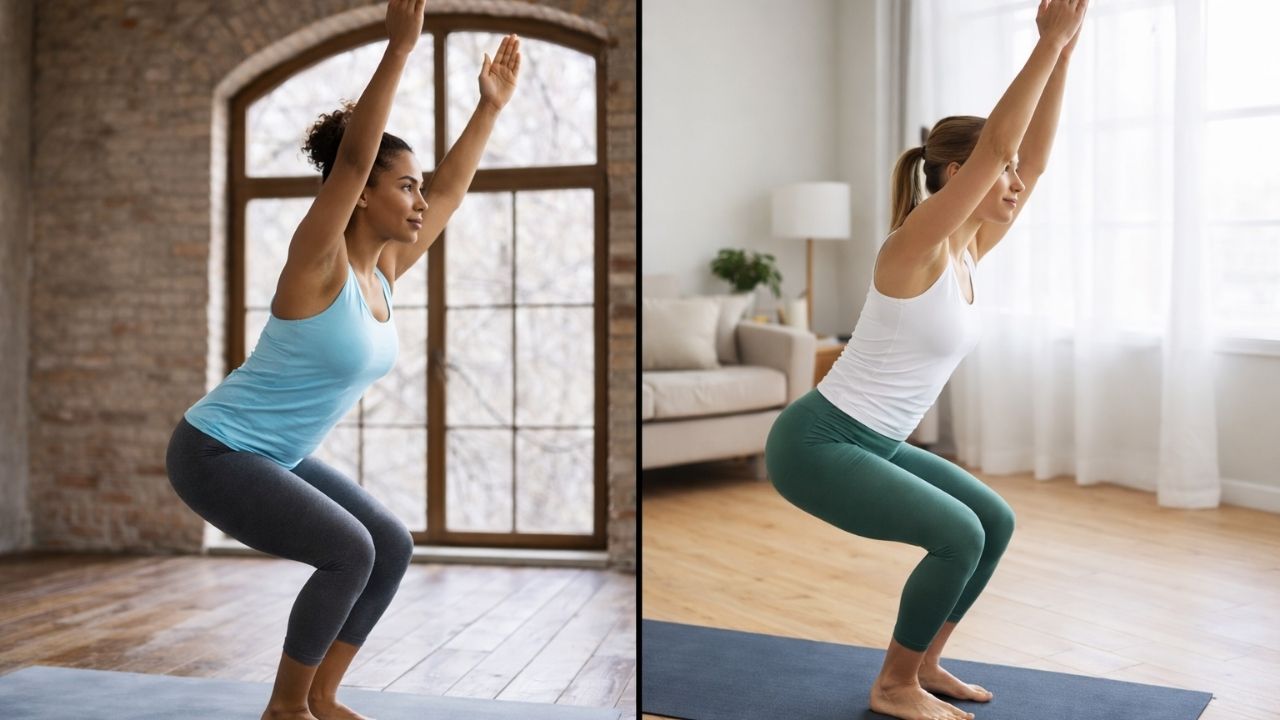
    Chair Pose: Stability Under Effort

    Chair Pose builds strong core engagement while strengthening the legs and improving posture.

    How to Practice

    • Stand with feet together
    • Bend the knees as if sitting back
    • Lift arms overhead
    • Keep the chest open
    • Engage the core muscles
    • Hold for one minute

    Half Moon Pose: Balance and Coordination

    Half Moon Pose challenges balance, coordination, and full-core activation.

    How to Practice

    • Begin in Mountain Pose
    • Step one foot forward
    • Shift weight onto the front foot
    • Lift the back leg
    • Place one hand on the floor or a block
    • Extend the top arm upward
    • Hold for 30 seconds, then switch sides

    Building a Simple Balance Routine

    You do not need to practice all eight poses every day. A simple routine may include:

    • Mountain Pose
    • Tree Pose
    • Warrior One
    • Chair Pose
    • Half Moon Pose

    The Connection Between Breath and Balance

    Breathing plays a key role in balance. Slow, steady breaths calm the nervous system and improve stability.

    When breathing becomes rushed, balance often weakens. Inhale through the nose and exhale slowly, allowing breath to guide movement.

    Handling Common Balance Challenges

    • Wobbling is normal
    • Balance improves gradually with practice
    • Avoid self-judgment
    • Use wall support when needed
    • Focus on effort, not perfection

    How Core Stability Supports Daily Life

    Core strength improves posture and reduces back discomfort. Strong core muscles protect the joints and make walking and standing more comfortable.

    These benefits naturally carry into everyday activities.

    Who Can Practice These Poses

    These standing yoga poses are suitable for:

    • Beginners
    • Office workers
    • Older adults with good mobility
    • Athletes seeking better body control

    Mistakes to Avoid During Practice

    • Avoid locking the knees
    • Do not hold the breath
    • Avoid forcing positions
    • Do not compare your progress to others

    When Results Begin to Show

    Some people notice increased strength within a few weeks. Balance improves gradually, and consistency is key. Regular practice leads to lasting results.

    Final Thoughts on Standing Yoga and Balance

    Standing yoga poses train the body in a smart and effective way. They strengthen the core while enhancing balance and awareness. With short, consistent sessions, these poses support long-term stability and control.

  • 4 Evening Yoga Poses That Gently Release Tight Hips and Calm the Nervous System

    4 Evening Yoga Poses That Gently Release Tight Hips and Calm the Nervous System

    After a long day of sitting, walking, or mental overload, the body often holds tension deep in the hips and lower back. Evening yoga offers a gentle way to unwind while also calming the nervous system, making it easier to rest and sleep. In India, where long work hours and screen time are increasingly common, simple yoga poses can be a powerful nightly reset. These movements don’t require flexibility or advanced skills—just a few quiet minutes and mindful breathing to help the hips soften and the mind slow down naturally.

    Evening yoga poses for releasing tight hips

    Tight hips can affect posture, mood, and even sleep quality. Evening yoga poses focus on slow, supported movements that allow muscles to relax rather than force them open. Poses like reclined figure-four or gentle lunges encourage hip joint mobility while reducing compression from all-day sitting. As you hold each shape, steady breathing helps signal muscle relaxation response to the body. This combination eases stiffness and improves lower body circulation without strain. Over time, these poses can reduce discomfort linked to walking or standing fatigue and support pelvic balance awareness. Practicing consistently in the evening helps the hips release stored tension so the body feels lighter and more at ease before bed.

    Gentle yoga stretches that calm the nervous system

    Evening yoga isn’t just physical—it directly affects how the nervous system behaves. Slow stretches paired with long exhales activate the parasympathetic response, encouraging deep stress relief. When poses are held comfortably, the brain receives signals of safety, leading to mental tension drop. This is especially helpful after busy urban routines common across India. Gentle hip-opening poses combined with floor-based movements create a sense of grounding that supports emotional body calm. As breathing becomes slower, heart rate naturally decreases, promoting sleep readiness state. These effects make evening yoga an effective bridge between an active day and a restful night.

    Relaxing evening yoga routine for better sleep

    A short evening yoga routine doesn’t need to be long to be effective. Even 10–15 minutes of intentional movement can shift the body into recovery mode. Choosing poses that gently open the hips while keeping the spine supported helps maintain joint safety focus. Using props like cushions or folded blankets enhances comfort and encourages passive stretch benefit. This approach reduces the urge to push or strain, allowing the body to respond naturally. Over time, consistent practice improves nighttime body awareness and builds a reliable wind-down habit. The result is smoother transitions into rest and a noticeable improvement in overall sleep quality.

    How these poses support long-term relaxation

    When practiced regularly, evening yoga becomes more than a nightly stretch—it reshapes how the body handles stress. Gentle hip-focused poses reduce chronic tension patterns while teaching the nervous system to downshift more easily. This leads to long-term stress control and improved resilience during busy days. Because the movements are slow and mindful, they enhance breath body connection and improve awareness of subtle tension signals. Over weeks, many people notice improved mobility comfort and fewer aches in the lower body. Most importantly, this routine nurtures consistent relaxation habits, making calmness and better sleep a natural part of everyday life.

    Yoga Pose Main Benefit Target Area Ideal Hold Time
    Reclined Figure-Four Hip release Outer hips 1–2 minutes
    Supine Twist Nervous system calm Spine and hips 1 minute each side
    Low Lunge Hip flexor stretch Front hips 45–60 seconds
    Child’s Pose Full-body relaxation Hips and back 2–3 minutes

  • Here’s How Many Days Per Week You Should Work Out Based on Fat Loss or Muscle Goals

    Here’s How Many Days Per Week You Should Work Out Based on Fat Loss or Muscle Goals

    Whether you’re aiming to gain muscle, build endurance, lose weight, or simply feel healthier overall, creating a sustainable workout routine is key. Most people want a plan that challenges the body while still allowing enough time to recover. Finding that balance can feel confusing, but fitness experts offer clear guidance on how often to exercise and which workouts matter most.

    The first step is identifying your primary goal, explains WH advisor Sohee Carpenter, CSCS, trainer and fitness educator. Most fitness goals fall into three main categories: general health, weight loss, and muscle building.

    Expert Insights

    • Sohee Carpenter, CSCS: Trainer, fitness educator, and WH advisory board member
    • Kehinde Anjorin, NCSF, CFSC: Founder of The Power Method
    • Rebecca Kennedy, CPT: Director of strength for Peloton
    • Natalya Vasquez, CPT: Certified personal trainer, health coach, and founder of Bridal Bootcamp San Diego

    No matter if you want to run longer distances, start strength training, lose weight, or simply feel better day to day, there is an ideal number of workout days for you. The surprising truth? It’s often fewer days than expected. Rest days play a major role in achieving long-term results.

    How Many Days a Week Should You Work Out?

    Your ideal workout frequency depends on your objective. Here’s a simple breakdown:

    • Weight loss: 3–5 days per week
    • Building muscle: 3–5 days per week
    • General health: 3–6 days per week

    Workout Frequency for Sustainable Weight Loss

    If your goal is long-term weight loss, exercising three to four days per week offers flexibility and consistency. Sustainable results are best achieved through a combination of exercise, nutrition, and behavior changes.

    “For weight loss, working out three to four times per week is optimal,” says Kehinde Anjorin. “There’s no finish line, so it’s important to create a lifestyle you can maintain.”

    Daily movement outside of workouts also matters. People who stay more active overall—such as walking while running errands—tend to maintain weight loss more effectively, Carpenter notes. Higher daily activity means more calories burned and greater energy expenditure.

    Nutrition is just as important as workout frequency, adds Natalya Vasquez. Eating beyond your body’s caloric needs or relying on ultra-processed foods can make weight loss harder. Nutrient-dense whole foods support both physical and mental well-being.

    Workout Frequency for Building Muscle

    If muscle growth is your focus, three to four workouts per week is a strong starting point. However, how you train during those sessions is crucial. Strength-focused workouts should take priority over excessive cardio.

    Progressively increasing weight, challenging muscles consistently, and supporting training with proper nutrition are essential. “You have to keep increasing the load to stimulate muscle growth,” says Anjorin. A weight that allows 10 to 12 reps per set is ideal. Adequate protein intake is also critical for results.

    Workout Frequency for Overall Health

    For general health, your routine can be guided by what you enjoy and how much time you have. “Anywhere between three and six days per week works well for most people,” Carpenter explains.

    Those with sedentary jobs benefit from daily intentional movement, while people with physically demanding work may only need three workouts per week to stay healthy.

    Types of Exercise to Include

    Cardio, or aerobic exercise, includes any activity that raises your heart rate and strengthens your heart and lungs. Options range from walking and swimming to dance classes, kickboxing, pickleball, and more.

    The American Heart Association recommends 150 minutes of moderate-intensity or 75 minutes of high-intensity cardio per week. Cardio should be programmed in a way that supports your specific goals.

    Strength Training

    Strength training builds muscle using weights, resistance bands, medicine balls, or machines. For muscle gain or fat loss, Vasquez recommends three to five sessions per week, lasting 30 to 60 minutes.

    Compound exercises like squats, pushups, and deadlifts engage multiple muscle groups, burn more calories, and deliver greater overall benefits.

    Mobility Work

    Mobility focuses on joint range of motion and should be included in every workout. Dynamic stretches during warmups and movements like hip openers and cat-cows help prepare the body for training.

    Balance Training

    Balance helps you control movement and maintain stability. Often overlooked, it becomes increasingly important with age. Exercises like single-leg stands and reverse lunges can be done for 10 to 15 minutes a few times per week.

    What Does an Effective Workout Routine Look Like?

    Cardio for Weight Loss and Muscle Building

    Excessive cardio is no longer recommended for weight loss. “Resistance training is often more effective,” says Anjorin. About two days of cardio per week is usually enough when weight loss is the goal.

    For muscle building, cardio should be limited and strategic. One higher-intensity session per week is sufficient, while the rest should remain low-intensity to support recovery and muscle growth.

    Strength Training Structure

    For weight loss, start with three strength sessions per week. Gradually increase weights to continue challenging muscles. For muscle building, three to four strength workouts weekly are ideal.

    Proper recovery and adequate nutrition, especially protein intake, are essential to support progress.

    Is Working Out Every Day a Bad Idea?

    Yes. Rest days are just as important as workout days. Recovery allows muscles to repair, adapt, and grow.

    Rest Days by Goal

    • Weight loss: 2 rest days per week
    • Muscle building: 2–4 rest days per week

    Rest needs vary based on workout intensity, sleep quality, and nutrition. Listening to your body is key. Feeling overly tired is a sign you may need additional recovery time.

    Balancing Strength and Cardio for Overall Health

    If your main goal is to feel good and stay healthy, there’s no need to overthink the split. A 50–50 balance between strength and cardio is a great starting point.

    For example, if you work out four days per week, aim for two strength sessions and two cardio sessions, with rest days in between. Simple, balanced, and effective.