Category: News

  • Achieve Fuller Thicker Brows at Home Using Simple Lamination Techniques

    Achieve Fuller Thicker Brows at Home Using Simple Lamination Techniques

    The first time you realize your eyebrows are getting thinner it feels significant. You might notice it in the bathroom mirror in harsh morning light or in a selfie where your eyes seem less defined than before. The outer ends look sparse and the arch disappears from certain angles. No amount of pencil seems to fix it. That’s when you start thinking about getting a salon brow lamination like everyone else does. But then you imagine making the appointment and paying for it and traveling there and smelling those chemicals. You close the browser & wash your face and decide there must be a better option.

    The Quiet Magic of Brows You Shape Yourself

    There is something deeply satisfying about sitting at your bathroom counter late at night with the fan humming and your favorite playlist playing softly in the background while realizing you can change how your brows look with just a few careful steps & some patience. No bright salon lights. No small talk. Just you with a mirror and a tiny brush. Home brow lamination sounds more technical than it actually is. The basic idea is to gently guide your existing brow hairs to lie in the direction you want for an extended period so they look fuller and more defined. You are not drawing on a new brow shape. You are simply encouraging your natural brows to show up at their best. The key is removing the intimidation factor. Lamination techniques often get described using salon terminology like solutions and activators and neutralizers but at home they break down into a few simple steps: soften the hairs then shape them then set them in place and finally nourish them. Once you understand the basic pattern the whole process becomes less like a science experiment and more like a simple routine you can repeat every few weeks.

    Gathering Your Tools: A Tiny Ritual Kit

    Before you start working on your brows you should set up your workspace first. Think of it like preparing ingredients before you cook a meal. Clean a section of your counter and remove any toothpaste spots or hair ties that might be in the way. Arrange your tools in the sequence you plan to use them. This simple preparation creates a sense of calm that makes the whole process feel surprisingly relaxing. Most effective home lamination methods use just a few essential items. Some people prefer complete brow lamination kits while others use gentle alternatives from around the house. These might include mild lash lift products or soft-setting hair formulas that are marked as safe for use near the eyes. No matter which option you pick the basic idea remains the same. Use minimal product and always choose the gentlest approach possible.

    Item Name Why It’s Used Best Practice Tips
    Soft Facial Cleanser Cleanses skin and removes excess oil or makeup Opt for a mild, soap-free cleanser, especially for delicate skin types
    Brow Spoolie Helps align and style eyebrow hairs A washed mascara brush can be reused as an effective alternative
    Brow Lamination Formula Relaxes brow hairs for easy reshaping Always perform a patch test at least 24 hours before application
    Fixing or Setting Solution Holds brows in the desired position Use a light layer—excess product can weigh brows down
    Hydrating Oil or Serum Nourishes brow hair and surrounding skin Apply castor oil or a lightweight brow serum overnight for best results

    Standing in front of your mirror with these basic tools makes the whole thing feel less like some major procedure and more like taking care of your teeth with a bit more attention. You are not attempting to turn into a professional brow specialist in one night. You are just figuring out how your brows naturally grow & then carefully shaping them into a look that makes you happy.

    Step by Step: A Slow, Intentional Brow Transformation

    The first time you attempt a lamination technique at home you should take your time. Go slow enough that you become aware of the water flowing from the faucet and how your fingers feel a bit cold touching your skin and the small scratching sensation as the spoolie brushes through your hair. This process is not only about achieving good results but also about giving yourself a few relaxed minutes.

    Clean the canvas thoroughly

    Brows collect everything including sunscreen and moisturizer and small makeup particles and even oil from your fingers when you touch your face without thinking. Begin by washing the area with a gentle cleanser that has no fragrance. Rinse using lukewarm water and gently dry with a soft towel. Use a cotton pad on the brows to ensure no residue remains. When your brows are completely clean each hair stands up more on its own like wet grass after a storm.

    Map your natural brow direction

    Before you try any product you should take a moment to observe your eyebrows closely. Use a clean spoolie brush to comb them upward and notice how each hair naturally behaves. Some hairs will stand up while others prefer to stay flat and some will stick out to the sides. Look for small empty spaces and check if the tail section is thin or if your arch has any unusual patterns. Understanding these natural characteristics will help you decide what steps to take next.

    Soften the hairs with a lamination solution

    Apply a small amount of your lamination or lifting solution to your brows using a micro brush or cotton swab. Try to keep it on the hair & away from the skin. This step works like softening clay before molding it. The solution loosens the hair structure so it can be reshaped & hold a new position. Use your spoolie to comb the solution through your brows. Brush the hairs gently upward and slightly outward in the direction you planned earlier. Take your time with this step. You will notice the brows starting to stay in place where you position them. Let the solution sit for the time the product instructions suggest. This is usually a few minutes. If your brows are fine or delicate you should use less time rather than more.

    Shape with intention, not perfection

    After the solution has worked for the recommended time use a clean spoolie brush to shape your brows into your desired look. Brush the front hairs upward to create a fluffy and full appearance. Then brush the arch and tail sections at an angle toward your temple. Each brushstroke helps you decide how you want to frame your face. You don’t need to achieve perfection. While symmetry looks good, remember that your face is unique & natural. One eyebrow might have a slightly sharper arch while the other might be fuller at the front. Your eyebrows should look like they belong together but don’t need to match exactly. The most important thing is that the final result looks like an improved version of your natural brows rather than copying someone else’s style.

    Set the new shape with a fixer

    After removing any extra lifting solution as instructed, put on a small amount of setting or neutralizing solution. This step gently locks in the new shape you have created. Use the spoolie to comb through your brows again and arrange the hairs into your preferred shape. Press stubborn hairs into position with the spoolie tip for a few seconds so they stay in their new direction. When the setting time finishes, wipe away any leftover product & step back from the mirror. The result is often surprising: your natural brows now look taller & fuller as if someone suddenly made your face more defined.

    The Days After: Letting Your Brows Settle Into Themselves

    Freshly laminated brows can feel like getting a new haircut. For the first day or two you might catch yourself in mirrors & think you look different. But give your face time to adjust. As your skin’s natural oils return and the hairs relax a bit the look becomes softer and more natural. This is when aftercare becomes important. Don’t soak your brows for the first 24 hours & skip steamy showers and saunas. Avoid putting heavy creams on the area. If your skin feels tight use a light moisturizer around the brow line but not directly on it. By day two or three when your brows have settled you will probably find your morning routine much simpler. Instead of drawing on missing parts or using brow gels that flake by noon you can often just brush through with a clean spoolie. The laminated shape keeps the hairs lifted & full looking with almost no effort. It feels like waking up with your hair already styled except this time the style is built into your own features.

    Nourishing the Wild Brow: Oils, Serums, and Small Habits

    To maintain that fuller and thicker appearance you need to treat your brows like a small garden rather than just another makeup feature. You have already done the reshaping work and now you need to keep everything nourished so the foundation remains solid. Each night after washing your face apply a small amount of nourishing oil to your brows using your fingertips. Castor oil works well but you can also find lightweight brow serums made for this purpose. Gently massage the oil into your brows following the natural direction of hair growth as if you were smoothing down grass that has been blown by wind. This simple massage conditions the hairs and increases blood flow to the follicles underneath. Another important habit is knowing when to stop. When you see how full your laminated brows look you might feel tempted to grab tweezers and clean up the area. But removing too many hairs is the fastest way to ruin your results. Instead of plucking every small stray hair you should establish a gentle boundary and only remove the obvious ones that fall outside that line. Leave the rest alone because they add to the thick & natural fullness that looks current and authentic.

    Creating Your Own Brow Rhythm at Home

    As you practice you will find your own rhythm. Some people like to laminate every six to eight weeks & sync it with other quiet self-care rituals like changing sheets or decluttering a drawer or deep conditioning their hair. Others use a softer version of lamination more frequently and rely on less intense formulas with more emphasis on daily nourishing oil and gentle brushing. Think of it less as a rule & more as a tide cycle. Your brows will have their own pattern of growth & rest. On some weeks they will look extra bold with minimal effort. On others you will notice new baby hairs filling in at the front or along the tail. Let these shifts guide you. When they start to feel a little unruly again and droop by midday or refuse to hold shape it may be time for another gentle lamination session. The beauty of doing this at home is that you are always in conversation with your own face. You learn which products your skin tolerates & how long is just enough processing time and where your natural arch wants to live. Instead of handing your brows over to a stranger a few times a year you become your own quiet expert and respond to what you see in the mirror instead of a trend on a screen.

  • Grow Thicker Eyebrows and Eyelashes Naturally Using Safe Household Oils

    Grow Thicker Eyebrows and Eyelashes Naturally Using Safe Household Oils

    You don’t notice your eyebrows getting thinner in some dramatic moment. It happens quietly under the bathroom light when you lean in close with a cotton pad. A few hairs at the end look shorter than before. The arch that used to be bold now seems patchy. It might be from getting older or from plucking too much in the early 2000s or maybe just from stress and dry heated air. Whatever caused it makes your face look different somehow like something important is missing from around your eyes. Then you start paying attention to every single lash that falls in the sink when you take off your mascara at night.

    The Quiet Power of Everyday Oils

    Before investing in expensive serums or decoding long ingredient lists, it helps to pause and look at what you already have at home. In many UK households, simple oils quietly sit on shelves—olive oil near the stove, coconut oil on the counter, or a small bottle of castor oil tucked away. These oils don’t come with flashy promises or luxury packaging, but they offer something more reliable: nourishment, patience, and consistency. For brows and lashes, which are simply fine hairs, this kind of gentle care can make a meaningful difference over time.

    Why Brows and Lashes Matter on a Personal Level

    Eyebrows and eyelashes often carry emotional weight. Many women remember years of overplucking, heavy makeup trends, or periods of hormonal change that altered hair growth. When brows thin or lashes weaken, it can subtly affect how you see yourself, making the face look tired or unfamiliar. Choosing a natural approach feels kinder and more aligned with a slower, more mindful lifestyle. Oils don’t promise instant transformation, but with regular use, they support what your body naturally wants to do.

    Common Household Oils That Support Hair Health

    Castor oil is the most talked-about option because of its thick texture and ability to cling to tiny hairs, helping reduce breakage. Coconut oil works well for dryness caused by frequent mascara use, while olive oil can gently condition brows. Lighter oils like almond or argan suit sensitive skin and absorb more easily. These oils don’t force growth; instead, they strengthen and protect, creating healthier conditions for brows and lashes to thrive.

    Oil Name Texture & Absorption Benefits for Brows & Lashes
    Castor Oil Dense, slightly tacky feel High in ricinoleic acid, helps lock in moisture, strengthen hair fibres, and minimise lash and brow breakage.
    Coconut Oil (Regular or Fractionated) Light to medium, melts quickly on contact Penetrates the hair shaft to reduce protein loss, leaving brows and lashes softer and shinier.
    Olive Oil Medium weight, mildly heavy Rich in antioxidants, supports the skin barrier around hair roots and improves hair flexibility.
    Sweet Almond Oil Smooth, silky, absorbs well Very gentle and calming, making it suitable for sensitive eye areas while nourishing fine hairs.
    Argan Oil Lightweight, non-greasy Loaded with vitamin E and essential fatty acids, helps improve smoothness, strength, and overall resilience.

    Creating a Calm Night-Time Routine

    Consistency matters, and the easiest routines are the ones that fit naturally into your evening. Start with clean, makeup-free eyes and washed hands. Choose one oil or a simple blend, apply a small amount to brows using a clean spoolie, and lightly coat upper lashes with care. Blot away excess oil to prevent irritation. Repeating this nightly for several weeks turns the process into a calming ritual rather than a chore.

    Paying Attention to Skin and Eye Sensitivity

    The eye area is delicate, so listening to your skin is essential. Always patch test new oils and start with minimal amounts. If irritation occurs, switch to a lighter oil. Avoid letting oil enter the eyes, and rinse gently if it does. Anyone with existing eye conditions or ongoing treatments should seek advice from a pharmacist or GP. Progress is gradual, so focus on reduced shedding and subtle fullness rather than quick results.

    Everyday Habits That Encourage Healthier Growth

    Oils work best alongside supportive habits. Limiting waterproof mascara, being gentle during makeup removal, and eating a balanced diet rich in protein, healthy fats, and minerals all help. Managing stress and paying attention to hormonal health can also influence hair growth. Think of oils as external care, while nutrition, rest, and lifestyle form the foundation beneath it.

    Making a Simple Custom Oil Blend

    Once comfortable, you can mix your own small blend at home. A combination of castor oil for thickness, almond oil for softness, and argan oil for light nourishment works well. Store it in a clean bottle, label it with the date, and use within a few months. This personalised blend keeps your routine simple and transparent, with ingredients you trust.

    Noticing Change Without Pressure

    Tracking progress gently helps avoid obsession. Taking a makeup-free photo every few weeks in the same lighting can show subtle improvements over time. Fuller lines, fewer gaps, and stronger lashes often appear gradually. Missing a few nights doesn’t undo progress—just return to the routine when you can. The aim isn’t perfection, but consistent, quiet care for what you already have.

  • Workout Frequency Changes Based on Strength Fat Loss or Endurance Goals

    Workout Frequency Changes Based on Strength Fat Loss or Endurance Goals

    Whether your aim is to build muscle, increase endurance, lose weight, or simply feel healthier overall, creating a workout routine you can stick with is essential. Most people want a plan that challenges the body while still allowing enough time for proper recovery. Finding that balance can feel overwhelming, but fitness professionals agree there are clear guidelines on how often to exercise and which types of workouts deliver the best results based on your goals.

    Before deciding how many days to work out, it’s important to identify your primary objective, explains trainer and educator Sohee Carpenter. Most fitness goals fall into three broad categories: general health, weight loss, and muscle building. Understanding which category matters most to you helps shape a routine that is both effective and sustainable.

    How many days should you work out each week?

    The ideal number of workout days varies depending on what you want to achieve. While it may be tempting to exercise daily, most people actually need fewer sessions than expected to see progress. Rest days play a critical role in recovery and long-term success.

    • Weight loss: 3 to 5 days per week
    • Building muscle: 3 to 5 days per week
    • General health: 3 to 6 days per week

    The US Department of Health recommends at least 150 minutes of moderate physical activity per week. What you do beyond that depends on your lifestyle, recovery capacity, and fitness goals.

    Workout frequency for sustainable weight loss

    For long-term weight loss, working out three to four days per week is often the most realistic and effective approach. This schedule provides enough structure to stay consistent while leaving room for recovery and everyday life. According to trainer Kehinde Anjorin, lasting weight loss has no finish line, so the routine must be something you can maintain over time.

    Daily movement outside of workouts also plays a major role. People who remain generally active throughout the day, such as walking more or staying mobile during errands, tend to maintain weight loss more successfully. These small activities increase overall calorie burn and energy expenditure.

    Nutrition is equally important. Natalya Vasquez notes that exercising regularly will not lead to weight loss if calorie intake consistently exceeds the body’s needs or if meals rely heavily on ultra-processed foods. Choosing nutrient-dense whole foods supports both physical performance and mental wellbeing.

    How often to train for muscle growth and overall health

    If building muscle is your priority, three to four workouts per week is an effective starting point. While the number of sessions may be similar to a weight-loss routine, the focus shifts toward resistance training and progressive overload. According to Anjorin, how you use your workout time matters more than how often you train.

    For overall health, flexibility is key. Carpenter suggests that three to six days of exercise per week works well for most people. Those with sedentary jobs may benefit from moving almost daily, while individuals with physically demanding work may need fewer structured workouts.

    Training volume should always reflect your lifestyle, energy levels, and recovery needs. Enjoyment also matters. Choosing activities you genuinely like makes it easier to stay consistent and active long term.

    Key types of exercise to include

    Cardio training

    Cardiovascular exercise includes any activity that raises your heart rate and strengthens your heart and lungs. This can range from walking and swimming to dance classes, kickboxing, or cycling. The American Heart Association recommends 150 minutes of moderate-intensity or 75 minutes of high-intensity cardio each week, spread across several days.

    Strength training

    Resistance training builds muscle and supports fat loss by using weights, bands, or machines. Vasquez recommends strength training three to five times per week for 30 to 60 minutes per session if muscle gain or fat loss is the goal. This frequency allows you to train multiple muscle groups while maintaining balance.

    Mobility and flexibility

    Mobility work improves joint range of motion and should be included in every workout. Dynamic stretches during warmups and movement drills throughout training help prepare the body for heavier loads. Common examples include hip openers, shoulder circles, and cat-cow stretches.

    Balance training

    Balance exercises help control body position during movement and while standing still. Vasquez notes that balance becomes increasingly important with age. Simple movements like single-leg stands or reverse lunges can be added to workouts or practiced independently for 10 to 15 minutes several times per week.

    What makes an effective workout routine?

    For weight loss, cardio should complement strength training rather than dominate it. Anjorin recommends about two cardio sessions per week, adjusting based on recovery and progress. Excessive cardio is no longer considered the most effective approach for fat loss.

    If muscle building is your focus, cardio should be supplemental. Rebecca Kennedy suggests limiting intense cardio to one session per week and keeping the rest low-intensity. Too much high-intensity cardio can interfere with muscle recovery and growth.

    Strength training frequency

    For weight loss, aim for three strength sessions per week. Start with light to moderate weights and gradually increase the load. Compound movements such as squats, push-ups, and deadlifts engage large muscle groups and burn more calories.

    For muscle growth, three to four strength workouts per week are ideal. Progressive overload and proper nutrition are essential. Anjorin advises lifting weights that challenge you within the 10 to 12 rep range and ensuring adequate protein intake at every meal.

    Is working out every day a good idea?

    In most cases, no. Rest days are just as important as training days. Recovery allows muscles to repair, adapt, and grow.

    For weight loss, taking two rest days per week generally supports better recovery and performance. Anjorin emphasizes listening to your body and adjusting rest as needed.

    For muscle building, more recovery may be required. Kennedy recommends two to four non-lifting days per week, depending on experience and training intensity. Without enough rest, muscles cannot fully recover or grow.

    Balancing strength and cardio for overall wellbeing

    If your main goal is to feel good and stay healthy, there’s no need to overthink the balance. Anjorin suggests a 50-50 split between strength and cardio as a practical starting point. For example, training four days per week could include two strength sessions, two cardio workouts, and adequate rest days to support recovery and consistency.

  • Goodbye to Grey Hair: Shampoo Add-In Trick Revives and Darkens Hair Naturally

    Goodbye to Grey Hair: Shampoo Add-In Trick Revives and Darkens Hair Naturally

    She studies her roots under the bathroom mirror lights, leans in, then steps back as if denying what she just noticed. Fine **silver strands** glint under the neon glow. With a quiet sigh, she reaches for a box labeled dark chestnut, scans the instructions, and slides it back onto the shelf. Too time-consuming. Too chemical. Far too much effort for an ordinary Tuesday night.

    Nearby, another shopper scrolls through her phone and murmurs, “There has to be something simpler than this.” A short video appears: “Add this to your shampoo and greys look darker in weeks.” She pauses. Familiar ingredients. No gloves. No harsh regrowth line along the scalp. Just a shower routine that doesn’t loudly declare a battle with age.

    The hair dye remains untouched. Suddenly, her shampoo feels like a quiet solution.

    But could such a small habit really make a difference?

    Why gentle grey darkening is suddenly everywhere

    Grey hair once felt like a final judgment. Now, it feels more like a conversation. Many people no longer want to erase it completely. They want it **softer**, **less stark**, and less attention-grabbing at the roots. On public transport, you see it often: natural hair with a muted veil of grey instead of a sharp metallic streak announcing overdue dye.

    The shift goes beyond appearance. There is growing fatigue with heavy coloring routines, strong chemicals, and long salon visits. In their place comes curiosity for smaller, quieter habits. A spoon added to shampoo. A familiar kitchen ingredient mixed into a bottle. A subtle adjustment instead of a dramatic overhaul.

    A quieter approach to looking rested, not recolored

    On a rainy Monday in London, 49-year-old Emily recalls noticing white at her temples during a video call. Her reaction was not fear of aging, but the thought that she looked tired. After trying permanent dye once, she disliked the flat color, lingering odor, and the feeling that the hair no longer felt like her own.

    Later, she read about mixing coffee or black tea into shampoo to gradually deepen hair color. No overnight change. No artificial shine. Just a slow, gentle darkening with each wash. Within weeks, friends commented that she looked more refreshed. No one mentioned her hair. That quiet result was exactly what she wanted.

    She is far from alone. Beauty retailers report rising interest in searches for natural grey hair darkening and no-dye grey coverage. These searches reflect a desire for control rather than concealment. People want flexibility: keeping some silver, softening others, and experimenting without committing to aggressive treatments.

    How natural pigments interact with grey hair

    Grey hair appears as melanin production slows or stops. Hair follicles contain melanocytes, which create pigment. As these cells decline, strands lose color and appear white or grey. Traditional dyes use strong chemicals to penetrate the hair shaft and replace missing pigment quickly.

    The newer methods work differently. Natural tannins and plant pigments cling to the outer surface of the hair, much like tea staining fabric. They fade gradually but are typically gentler on the scalp. The goal is not to overpower biology, but to work with it, patiently and repeatedly, during everyday routines.

    So when someone suggests adding something to shampoo, they are really offering a slower, softer agreement with time.

    The simple shampoo trick people keep trying

    The idea is surprisingly straightforward. By adding a natural colorant to regular shampoo, it becomes a mild darkening wash. The most common choices are strong black tea or coffee extract. Think of it as creating a light tint inside the bottle already used each day.

    A concentrated brew is prepared, cooled fully, and mixed into shampoo. With every wash, pigments lightly stain the hair’s outer layer. There are no gloves, no timers, and no sharp chemical scent. Just an extra minute under warm water, massaging what looks like ordinary lather.

    Some go further by adding powdered herbs such as sage, rosemary, or amla. At that point, the process becomes a small ritual. The outcome is never full coverage. Instead, grey strands soften, blending more like highlights than harsh lines.

    What expectations often get wrong

    Disappointment usually comes from unrealistic hopes. Natural pigments do not turn white hair jet black overnight. They build translucent layers over time, similar to watercolor washes. Very light or coarse hair may show subtle results at first.

    Hair texture matters. Thicker hair may require stronger brews or occasional leave-in treatments. Finer hair can darken faster but may also show buildup sooner. Consistency matters, but perfection is unrealistic. The routine is meant to fit real life, not an ideal schedule.

    Overdoing it is the most common mistake. Too much coffee can dry hair, while overly strong tea can leave residue. Moderation is key. It is easier to deepen color gradually than to reverse excess buildup.

    A simple routine many people follow

    • Brew 250 ml of very strong black tea or coffee and allow it to cool completely.
    • Pour half into an almost empty bottle of gentle shampoo and shake well.
    • Use 2–3 times per week, leaving lather on for 3–5 minutes.
    • Observe results for two weeks before increasing strength.
    • Dilute or stop if hair feels dry, and condition lightly if needed.

    What looks simple on paper often feels more meaningful in practice. In the shower, it becomes a moment to quietly renegotiate how hair ages alongside you rather than against you.

    Living with softer greys instead of fighting them

    Those who adopt this habit often describe a subtle psychological shift. When silver appears less stark, people feel freer to change partings, grow hair longer, or ease up on heavy makeup. The mirror becomes less of a challenge and more of a reflection.

    There is also relief. No last-minute salon rushes. No panic before important events. The shampoo trick doesn’t eliminate grey hair, it simply lowers its volume. The change is gentle, but noticeable.

    Some days, the light still reveals every white strand. That remains part of the agreement. What changes is the sense of agency. Small, consistent care replaces waiting for drastic fixes. Over time, many describe reaching a quiet truce with their hair.

    Conversations follow naturally. When asked if they changed color, the answer is often simple: “Not really, I just add tea to my shampoo.” It sounds modest, but it reflects a deeper idea. Aging is not only about loss. It is about adjustment, attention, and small choices that still feel personal.

    There is no promise of turning back time. This approach lives elsewhere. It gently adjusts contrast rather than erasing lines. And for many, that understated shift feels like the most satisfying kind of change.

    • Gentle darkening: Natural pigments slowly soften grey contrast.
    • Simple routine: Adds one realistic step to daily washing.
    • Customisable results: Strength and frequency adapt to personal hair needs.
  • Five Elegant Blouse Trends Pairing Perfectly With Jeans This Spring

    Five Elegant Blouse Trends Pairing Perfectly With Jeans This Spring

    There’s a moment and a mood for dresses, and I’ll always have a soft spot for a midi skirt, but in all honesty, jeans are what I live in day to day. They’re comfortable, endlessly adaptable, and work seamlessly throughout the year. That said, I used to struggle when it came to making them feel appropriate for slightly dressier occasions. Everything changed last year when I bought my first blouse, and since then, this refined top style has become a permanent part of my wardrobe.

    I already own a classic black satin blouse, but with my 2026 goal of adding more visual interest to my otherwise minimal outfits, I decided it was time to explore more current blouse styles. Naturally, my first source of inspiration was the spring/summer 2026 runway collections.

    Staying true to my minimalist approach, I focused on blouse designs that feel modern yet remain easy to integrate into a capsule wardrobe. After browsing through the latest lookbooks from my favourite designers, I narrowed it down to five polished yet enduring blouse trends worth investing in before spring arrives.

    Scroll on to explore the five key blouse trends set to shape spring 2026 and beyond.

    You Might Also Enjoy

    • Johanna Piispa styled in an Almada Label scarf
    • I’m Over My Standard Basics—The 5 Elevated Styles I’m Wearing in 2026
    • 7 Trends That Instantly Make Classic Jeans Feel 2026
    • 33 New Arrivals From Ref, Mango, and Shopbop for Timeless Dressers

    The Blouse Trends Shaping Spring 2026

    1. Pirate-Inspired Romance

    Style Notes: After seeing this aesthetic appear across collections from designers like Zimmerman, Blumarine, and ChloĂ©, I’m fully leaning into the pirate-style blouse trend this year. These buccaneer-inspired silhouettes feel refreshingly modern while maintaining a soft, romantic edge. They’re perfect for elevating classic blue jeans with minimal effort and offer an easy way to inject interest into a neutral-based capsule wardrobe without stepping outside my comfort zone.

  • 9 Habits People Who Felt Deeply Loved as Children Do Naturally Without Realising

    9 Habits People Who Felt Deeply Loved as Children Do Naturally Without Realising

    There is a subtle but powerful difference between people who were deeply loved as children and those who learned early on that love had to be earned.

    This is not about having perfect parents or an ideal home. It is about the lived experience of emotional safety.

    When you were upset, were you comforted? Did your needs feel important? Did love remain present even when you made mistakes?

    When love is consistent, it shapes the nervous system for trust. It teaches that the world is generally safe and that people are mostly dependable.

    When love is unpredictable, conditional, or tied to performance, people can still become capable and accomplished adults. But they often carry an invisible emotional weight.

    They stay alert for danger, overanalyze relationships, and question themselves even when things are going well.

    This pattern appears frequently in counseling work. What many people call confidence or secure attachment is not something suddenly discovered in adulthood. It is often something received early in life.

    The hopeful truth is that even if this was missing in childhood, it can still be learned. It requires awareness, practice, and a great deal of patience.

    Below are nine behaviors that people who were genuinely loved tend to show naturally, and that others often spend years developing.

    They Feel Entitled to Take Up Space

    People who experienced steady love do not enter rooms worried about being a burden. They do not apologize for having opinions or minimize themselves to avoid conflict.

    They speak openly, ask questions, and occupy space without guilt.

    Those who grew up feeling unwanted or emotionally overlooked often learn the opposite lesson: stay small, stay quiet, do not need too much.

    This belief often carries into adulthood, showing up as hesitation at work, discomfort asking for support, or fear of being noticed.

    A gentle practice is to pause in those moments and remind yourself, “I am allowed to be here.” Simple words, but often deeply restorative.

    They Trust Love Will Survive Mistakes

    Children who felt secure learned early that mistakes do not lead to abandonment.

    As adults, they do not panic when they get something wrong. They do not assume one misstep will end a relationship, and they can face conflict without unraveling.

    When love was withdrawn after disappointment, a painful belief often forms: “If I mess up, I lose people.”

    This belief fuels perfectionism, people-pleasing, and anxiety over minor misunderstandings.

    One revealing question is this: when you make a mistake, do you expect repair or punishment? The answer often reflects your emotional foundation.

    They Do Not Carry Responsibility for Others’ Emotions

    People raised in emotionally stable environments generally do not feel obligated to manage everyone else’s feelings.

    They may care when someone is upset, but they do not automatically assume fault or scramble to fix the situation.

    Those who lacked emotional safety often became highly sensitive to mood shifts. If a parent was unpredictable, critical, or withdrawn, monitoring emotions may have felt necessary for survival.

    This can lead to adult habits such as:

    • Scanning the room upon arrival
    • Feeling guilty when others are uncomfortable
    • Owning problems they did not create
    • Walking on eggshells to maintain peace

    It is possible to care without carrying. Kindness does not require emotional self-erasure.

    They Accept Compliments Without Deflection

    Some people can simply say “thank you” and allow a compliment to land. No jokes, no dismissal, no self-criticism.

    This usually reflects an early lesson that receiving is allowed.

    Without consistent love, praise can feel unsafe or undeserved. It may trigger distrust, exposure, or pressure to keep proving oneself.

    Receiving can be practiced. The next time you are complimented, say “Thank you, I appreciate that,” and stop there.

    Allowing the moment to settle helps retrain the nervous system to accept care.

    They Set Boundaries Without Crushing Guilt

    People who were genuinely loved tend to see boundaries as normal rather than selfish or dramatic.

    They can say:

    • “That doesn’t work for me.”
    • “I’m not comfortable with that.”
    • “Please don’t speak to me that way.”

    And they do not spiral afterward.

    Those who felt unloved often learned that having needs made them difficult. They tolerate too much, over-explain, and give until resentment builds.

    If boundaries trigger anxiety, remember this: boundaries are not rejections. They are instructions for how to treat you.

    They Do Not Mistake Intensity for Love

    When emotional safety was missing, love can become associated with anxiety and unpredictability.

    This can show up as chasing approval, confusing emotional highs and lows with passion, or feeling most connected during uncertainty.

    As a result, calm love may feel dull, stability may feel suspicious, and drama may feel familiar.

    Often, what is described as wanting “sparks” is actually wanting to feel nervous.

    Nervousness is not always chemistry. Sometimes it is the nervous system bracing for inconsistency.

    Asking whether a connection is driven by love or anxiety can be life-changing.

    They Ask for Help Without Shame

    Securely loved children learn that others are safe to lean on.

    As adults, they view support as normal. They ask for help early and do not equate needing others with weakness.

    Those who grew up without reliable support often learn self-reliance as survival. They handle everything alone, even when exhausted.

    This can lead to resentment from constant giving and very little receiving.

    If asking feels difficult, start small. Request a favor, advice, or simply someone to listen.

    Support is not earned. It is something you are allowed to receive.

    They Do Not Constantly Prove Their Worth

    This pattern appears in relationships, careers, friendships, and parenting.

    People who felt loved do not usually build their identity around earning care. They want to grow, but they are not driven by a belief that they are never enough.

    Those who felt unloved often chase worth through achievement. They overwork, overgive, and become indispensable because being needed feels safer than being loved.

    You can be impressive and still feel empty if worth was always conditional.

    A revealing question is: if you stopped proving yourself, who would you be?

    They Expect Good Things Without Bracing for Disaster

    People who were securely loved often carry a steady belief that life may work out, and that they can cope even if it does not.

    This is not unrealistic optimism. It is nervous system safety.

    Those who lacked it often expect disappointment. They stay guarded, avoid hope, and prepare for loss because optimism once felt risky.

    This can look like:

    • Overthinking positive moments
    • Anxiety when life feels calm
    • Avoiding dreams to prevent pain
    • Self-sabotage when success appears

    Healing involves slowly learning to expect goodness again, not because life is perfect, but because you are capable.

    Final Thoughts

    If you did not feel genuinely loved as a child, it was never because you were unlovable.

    It was because the adults around you did not know how to provide consistent emotional safety.

    Children do not fail at being loved. They adapt.

    If you are reading this, you are already showing that adaptation through growth, effort, and self-reflection.

    While those who were deeply loved may carry these traits naturally, those who learned them later often develop something equally powerful.

    Emotional intelligence. Resilience. Self-awareness. Compassion.

    Move gently. Practice slowly. Notice every small shift.

    You are not behind. You are rebuilding, and that work matters.

  • This Strength Training Strategy Helps Cyclists Build Power and Endurance Without Adding Extra Miles

    This Strength Training Strategy Helps Cyclists Build Power and Endurance Without Adding Extra Miles

    The most successful cyclists understand that resistance training is an essential part of a well-rounded program. Those who perform at the highest level also know that using a structured, phased approach is the most effective way to unlock its full benefits. Strength work supports stronger riding, helps lower injury risk, and allows cyclists to maintain performance as they age. However, randomly lifting weights without a plan rarely delivers optimal results. A strategic progression ensures safer training and better long-term gains.

    A multi-phase strength training plan offers a clear roadmap. Each stage targets specific goals and prepares the body for the demands of the next phase. Below, experts outline why this method works, what each phase focuses on, and how cyclists can align it with their personal training objectives.

    Why a Structured, Phased Strength Plan Matters

    Following a phased resistance strategy allows athletes to address postural issues and faulty movement patterns before advancing to heavier or more intense work. This gradual progression builds strength safely while reducing the likelihood of setbacks. By laying a solid physical foundation first, cyclists can handle later phases with greater confidence and efficiency.

    This method also introduces planned variation into training. Each phase builds upon the last, supporting continuous improvement both on and off the bike. A structured approach helps reduce training plateaus, prevents overuse injuries, and lowers the risk of mental burnout by keeping workouts purposeful and progressive.

    Phase One: Stability and Movement Control

    The first phase centers on corrective exercise, aiming to address issues like rounded shoulders, limited mobility, or tight hip flexors. The primary goal is restoring balanced mobility and stability throughout the body. Light resistance—or even bodyweight movements—is used to strengthen weak areas and reinforce efficient posture.

    This phase often includes balance training and core control work. The focus is on maintaining stability while the arms and legs move independently. Exercises are designed to ensure joints can move through a full range of motion and tolerate forces from multiple directions before heavier loads are introduced.

    How to Apply Phase One

    Working with a qualified professional can help identify subtle movement limitations that are easy to overlook. Training should begin with static posture drills before progressing to controlled movement. For example, maintaining proper alignment during simple holds can later evolve into dynamic exercises that challenge posture under motion.

    Phase Two: Building Muscular Endurance

    The endurance phase uses lighter resistance to train muscles to sustain effort over extended periods. This stage commonly employs superset training, where one exercise fatigues fast-twitch fibers before another challenges slow-twitch fibers to maintain stability under fatigue.

    This approach helps reinforce proper form when tired, a scenario cyclists frequently face during long rides. It is also an efficient training method, making it well-suited for off-season periods when riders aim to improve strength while preserving a level of cardiovascular fitness and anaerobic capacity.

    How to Apply Phase Two

    Supersets typically pair two biomechanically similar movements performed back-to-back without rest. One focuses on traditional strength, while the other emphasizes endurance in an unstable position. Repetition ranges usually fall between eight and twelve reps per exercise within each superset.

    Phase Three: Maximizing Strength Output

    This phase prioritizes increasing the force-producing capacity of the muscles. Simply put, it is about getting stronger. Greater strength in the quads, glutes, and hamstrings allows cyclists to generate more power with each pedal stroke, directly supporting on-bike performance.

    How to Apply Phase Three

    Training centers on compound, multi-joint lifts performed with heavy loads, often around 85 percent of one-rep max. Sets are short, typically ranging from one to five repetitions. Because of the intensity, longer rest periods—often two to five minutes—are essential for recovery between sets.

    Phase Four: Developing Explosive Power

    Power training focuses on improving explosive force production. This ability is critical for cyclists who want to accelerate quickly, increase cadence, and enhance short-burst speed. Movements are performed with maximum intent and speed.

    How to Apply Phase Four

    This phase includes plyometric exercises such as jumps and explosive push-ups, as well as weighted movements like kettlebell swings and Olympic-style lifts. Power work can also be performed on the bike by increasing resistance and pedaling as fast as possible. Sessions are short and intense, with low repetition counts and generous recovery between sets.

    Adjusting Phased Training to Match Your Goals

    For those new to strength training, progressing through each phase in order is recommended. While timelines vary, many athletes spend four to six weeks in endurance and strength phases, and two to four weeks in power-focused work. The initial stability phase lasts until posture and movement quality are restored.

    More experienced cyclists may rotate between phases using undulating periodization to maintain variety. Seasonal adjustments are also common, with early phases emphasized during the off-season and power-focused work introduced closer to peak riding periods. Regardless of the approach, proper application and individual customization are key. Aligning the model with personal ability and goals ensures the phased system delivers lasting results.

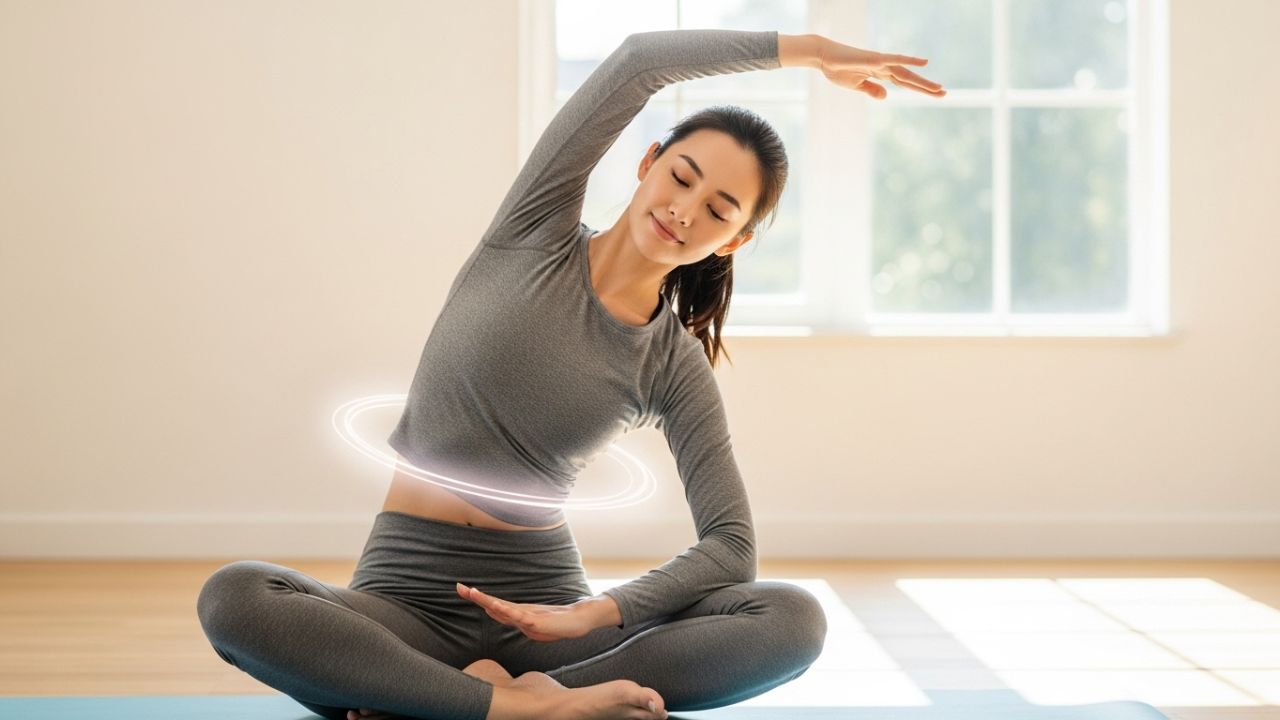
  • Hip Stiffness From Sitting Eases Quickly With Targeted Yoga Poses

    Hip Stiffness From Sitting Eases Quickly With Targeted Yoga Poses

    Spending extended time at a desk, in a car, or relaxing on the couch can quietly push the hips into a tight, restricted state. Over time, the hip flexors shorten, blood circulation slows, and the joints gradually lose their natural range of motion. This often shows up as hip tightness, lower-back discomfort, poor posture, or a heavy feeling when standing up. The good news is that reversing sitting-related stiffness doesn’t require intense workouts. Gentle, mindful yoga poses can help restore hip mobility and make everyday movement feel natural again.

    Why Sitting Leads to Hip Tightness

    When you sit for long periods, the hips remain in a flexed position. The muscles at the front of the hips adapt by shortening, while the glutes and stabilizing muscles become underused. This imbalance reduces joint lubrication and signals the body to protect the area, resulting in stiffness. Yoga works by lengthening tight muscles, reactivating underused ones, and calming the nervous system so the hips can release safely.

    How Yoga Helps Reverse Sitting-Related Stiffness

    Yoga is most effective when practiced slowly and intentionally. By combining gentle movement with steady breathing, it boosts circulation to the hips, supports joint nourishment, and eases tension caused by stress. Unlike forceful stretching, this approach allows the hips to soften naturally, making it ideal for stiffness linked to prolonged sitting.

    Standing Forward Fold to Release the Hips

    A relaxed forward fold allows the hips and lower back to soften while gently decompressing the spine. Keeping the knees bent is essential, as it reduces strain and helps the hips release without resistance. This pose is especially helpful after standing up from long periods of sitting.

    Low Lunge to Open Tight Hip Flexors

    The low lunge directly counters the position the hips stay in while sitting. By gently opening the front of the hips and thighs, this pose helps restore balance and makes walking and standing feel easier. Slow, deep breaths enhance the release.

    Half Split Stretch for the Back of the Hips

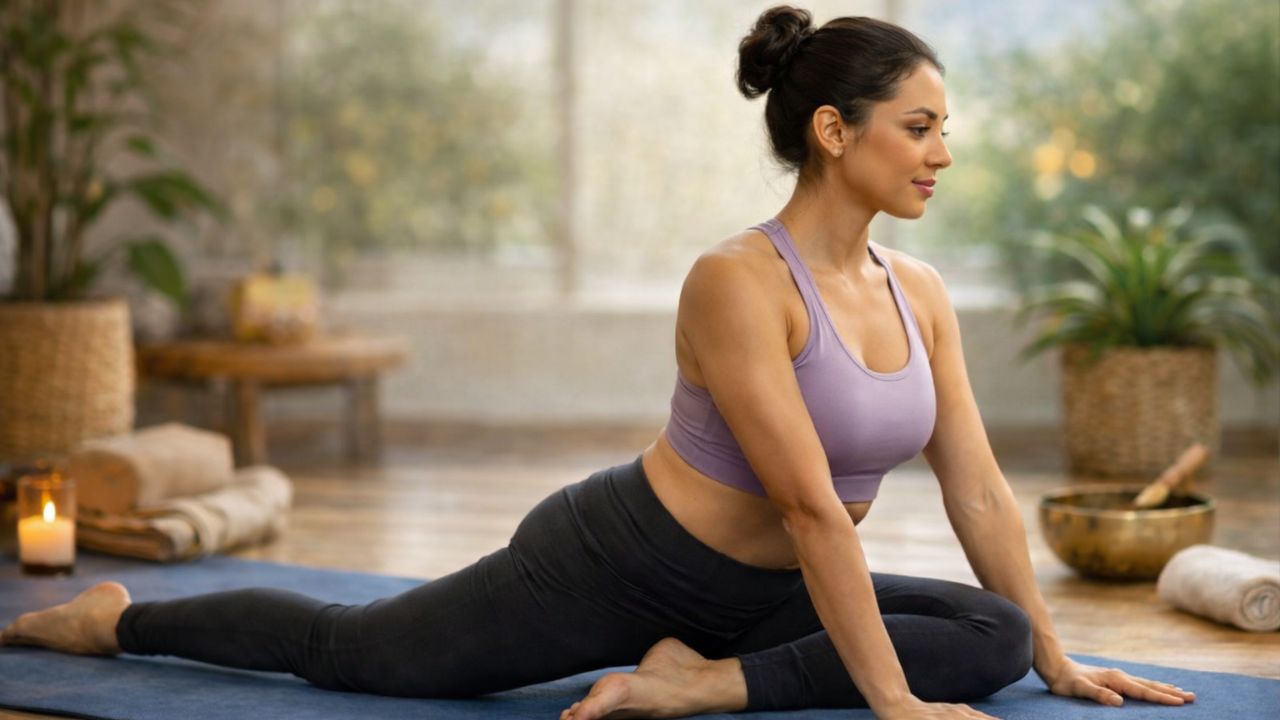
    Shifting back from a lunge into a half split stretches the hamstrings and the back of the hips, areas that often tighten alongside the hip flexors. This balanced stretch supports smoother and more natural hip movement.

    Butterfly Pose for Inner Hip Relaxation

    Sitting with the soles of the feet together encourages the inner hips and groin to relax—areas that can feel restricted after sitting all day. Supporting the knees with cushions allows the hips to open gently without forcing depth.

    Seated Figure Four for Outer Hip Relief

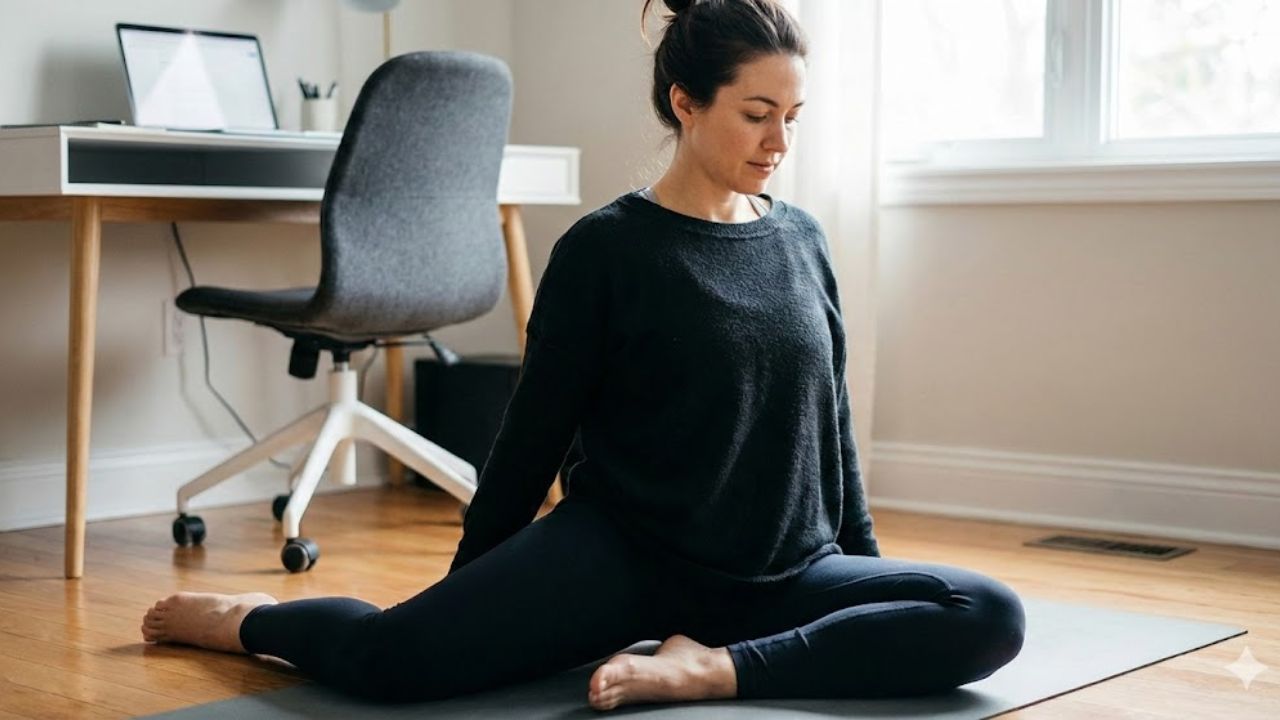
    Crossing one ankle over the opposite thigh targets the outer hips and glutes, which often tighten from prolonged sitting. This mild stretch can help reduce pressure in the lower back.

    Cat–Cow Flow to Restore Joint Hydration

    Moving the spine through gentle flexion and extension improves circulation around the pelvis and hips. This rhythmic flow helps rehydrate the joints and reconnect breath with movement after long periods of stillness.

    Wide-Knee Child’s Pose for Deep Release

    Child’s pose with wide knees allows the hips to open softly while the body fully relaxes. It is particularly effective at the end of the day when physical stiffness is combined with mental fatigue.

    Supine Knee-to-Chest for Decompression

    Lying on the back and gently hugging the knees decompresses the hips and lower spine. This simple, restorative pose helps relieve built-up pressure after hours of sitting.

    Supine Spinal Twist to Restore Natural Rotation

    Gentle twists help bring back natural rotational movement in the hips and spine, which often becomes limited with sedentary habits. Twisting also helps calm the nervous system.

    How Long and How Often to Practice

    Aim for 10–20 minutes most days, especially after long sitting periods. Even short, consistent sessions can make a noticeable difference. Think of these poses as daily movement snacks for your hips.

    Using Props for Comfort and Support

    Pillows, blankets, blocks, or chairs can support the body so muscles relax instead of tighten. Comfort encourages deeper release and helps prevent overdoing the poses.

    Common Mistakes to Avoid

    Avoid forcing depth, rushing transitions, or holding your breath. A mild, comfortable sensation is enough—sharp pain is a signal to ease off. Gentle consistency always works better than intensity.

    Signs the Practice Is Working

    With regular practice, standing up feels easier, walking becomes smoother, posture improves, and the lower back feels less strained. Many people also notice better comfort while sleeping.

    Final Thoughts

    Hip stiffness caused by sitting is common, but it is also reversible. These gentle yoga poses help counter long hours of sitting by restoring mobility, improving circulation, and calming built-up tension. Start slowly, move with awareness, and breathe deeply. With consistent practice, your hips can regain freedom, making everyday movement feel lighter and more comfortable.

  • Yoga Poses That Instantly Relieve Hip Tightness and Restore Movement

    Yoga Poses That Instantly Relieve Hip Tightness and Restore Movement

    Hip stiffness often appears without warning—after long hours of sitting, driving, or even a stressful day with very little movement. When the hips tighten, walking can feel heavy, the lower back may start to ache, and sitting comfortably becomes a challenge. The good news is that relief doesn’t require a long workout. A few gentle yoga poses, practiced mindfully, can ease tension quickly by relaxing tight muscles and calming the nervous system.

    Why Hip Stiffness Feels So Sudden

    The hips are involved in almost every movement the body makes. When they remain in one position for too long—especially while sitting—the surrounding muscles tighten rapidly. Stress also plays a role, as a tense nervous system often causes the hips to grip. Yoga helps by slowing the body down, improving circulation, and signaling that it’s safe to release stored tension.

    Why Gentle Yoga Brings Fast Results

    Instant relief comes from relaxation, not force. Gentle poses paired with slow breathing reduce muscle guarding and improve joint lubrication. As the body relaxes, the hips soften—often within just a few minutes.

    Standing Forward Fold for Quick Release

    A relaxed forward fold is one of the fastest ways to ease hip stiffness. Bending the knees and letting the upper body hang heavy gently stretches the hips and lower back while calming the mind, often creating noticeable relief right away.

    Low Lunge to Ease Tight Hip Flexors

    Low lunge directly targets the front of the hips, which commonly tighten from prolonged sitting. Moving into the pose slowly and breathing deeply helps undo that compressed feeling and makes standing and walking feel easier.

    Butterfly Pose for Inner Hip Tension

    Sitting with the soles of the feet together encourages the inner hips to relax. Supporting the knees with cushions allows the hips to open without resistance, making this pose effective even for very stiff areas.

    Seated Figure Four for Outer Hip Relief

    This pose focuses on the outer hips and glutes, which often contribute to stiffness and lower-back discomfort. Gentle pressure in this area frequently brings immediate comfort.

    Cat–Cow for Hip and Spine Mobility

    Flowing through cat–cow increases circulation around the pelvis and hips. This gentle movement helps rehydrate the joints and reduces stiffness caused by staying still for too long.

    Wide-Knee Child’s Pose for Deep Relaxation

    A wide-knee version of child’s pose allows the hips to open softly while the body fully relaxes. This is especially helpful when hip stiffness is connected to stress or fatigue.

    Supine Knee-to-Chest for Gentle Decompression

    Lying on the back and hugging the knees toward the chest releases pressure from the hips and lower spine. This simple, soothing pose often brings instant comfort after a long day.

    Supine Spinal Twist to Restore Natural Movement

    Gentle spinal twists help restore natural rotation in the hips and spine. They also calm the nervous system, allowing stiffness to melt away more quickly.

    How Long to Hold Each Pose

    Holding each pose for 30 to 60 seconds can already make a difference. For deeper relief, stay for one to two minutes while breathing slowly and focusing on comfort rather than depth.

    A Breathing Tip That Speeds Up Release

    Inhale through the nose for four counts and exhale for six. Longer exhales activate the relaxation response and help tight hip muscles let go faster.

    Common Mistakes That Slow Relief

    Forcing stretches, rushing transitions, or holding the breath can cause the hips to tighten even more. Gentle movement and patience are far more effective for quick results.

    How Often to Practice These Poses

    These poses can be used whenever stiffness appears—after sitting, before bed, or during work breaks. Short, frequent sessions are highly effective.

    Final Thoughts

    Hip stiffness doesn’t always require long routines or intense stretching. These yoga poses can bring instant relief by calming the body and gently restoring movement. When practiced mindfully, even for a few minutes, they help the hips feel lighter, freer, and more comfortable—making everyday movement easier again.

  • How to Squat Safely After 40 The Proper Form Trainers Say Prevents Injury and Builds Strength

    How to Squat Safely After 40 The Proper Form Trainers Say Prevents Injury and Builds Strength

    Resistance training is one of the most powerful ways to shape how we age. It helps strengthen bones, supports heart health, and slows age-related muscle loss, which can otherwise reduce mobility, independence, and overall quality of life. Among all strength exercises, squats offer an especially high return. This simple movement targets multiple areas at once and supports long-term function, making it a valuable addition to any routine focused on healthy ageing.

    Squats are considered a foundational exercise for good reason. They engage several muscle groups simultaneously and mirror everyday actions like sitting and standing, bending, and lifting. Because of this carryover, squats help make daily tasks feel easier and more controlled as the body gets older.

    “As we age, our tolerance to everyday loads such as stairs, lifting, or getting off the floor reduces unless we train it,” says Third Space master trainer Will Pate. He notes that from around 40, muscle mass can begin to decline, averaging 1–2% per year after age 50 in sedentary adults.

    Without intervention, Pate warns that many people may lose 30–50% of muscle mass by age 80 compared with their twenties. The encouraging news is that squats, combined with other strength exercises, can deliver benefits at any stage of life. Resistance training has been shown to improve muscle size and strength even in older adults, helping offset much of the decline associated with ageing and keeping the body capable well beyond the gym.

    If you’re beginning strength training in your 40s or adjusting your routine for this stage of life, you’re on the right track. While the basic mechanics of a squat stay the same at any age, additional factors such as past injuries and hormonal changes can influence recovery. Understanding these considerations helps ensure squats remain safe and effective.

    Key benefits of adding squats to your routine

    “Squats aren’t essential, but they’re extremely efficient,” says Pate. When tolerated well, they provide a significant payoff for a relatively simple movement. According to him, squats deliver several important advantages that support long-term strength and function.

    They reinforce a core human movement

    Getting up from a chair or lowering yourself down is something done every day, yet it becomes more demanding with age. Squats strengthen this pattern, helping daily movements feel smoother and less tiring.

    They promote healthier joints

    When performed with control, squats encourage coordinated motion at the hips, knees, and ankles. This allows joints to share load evenly instead of placing stress on one area.

    They build lower-body strength efficiently

    As a compound exercise, squats work several muscles at once, making them a time-efficient option for beginners or anyone with limited training time.

    They help preserve bone density

    Bones adapt to load. Squats apply healthy stress to the hips, thighs, and spine, which are key regions for maintaining bone strength during midlife.

    They support confidence and independence

    Being able to lower down and stand back up with control is empowering, particularly for those starting exercise later. Building this ability in your 40s helps maintain independence in later years.

    Muscles worked during a squat

    Squats engage several major muscle groups at the same time.

    • Glutes
    • Quadriceps
    • Hamstrings

    They also rely on supporting muscles for stability and control.

    • Core
    • Back
    • Calves

    How to perform a bodyweight squat correctly

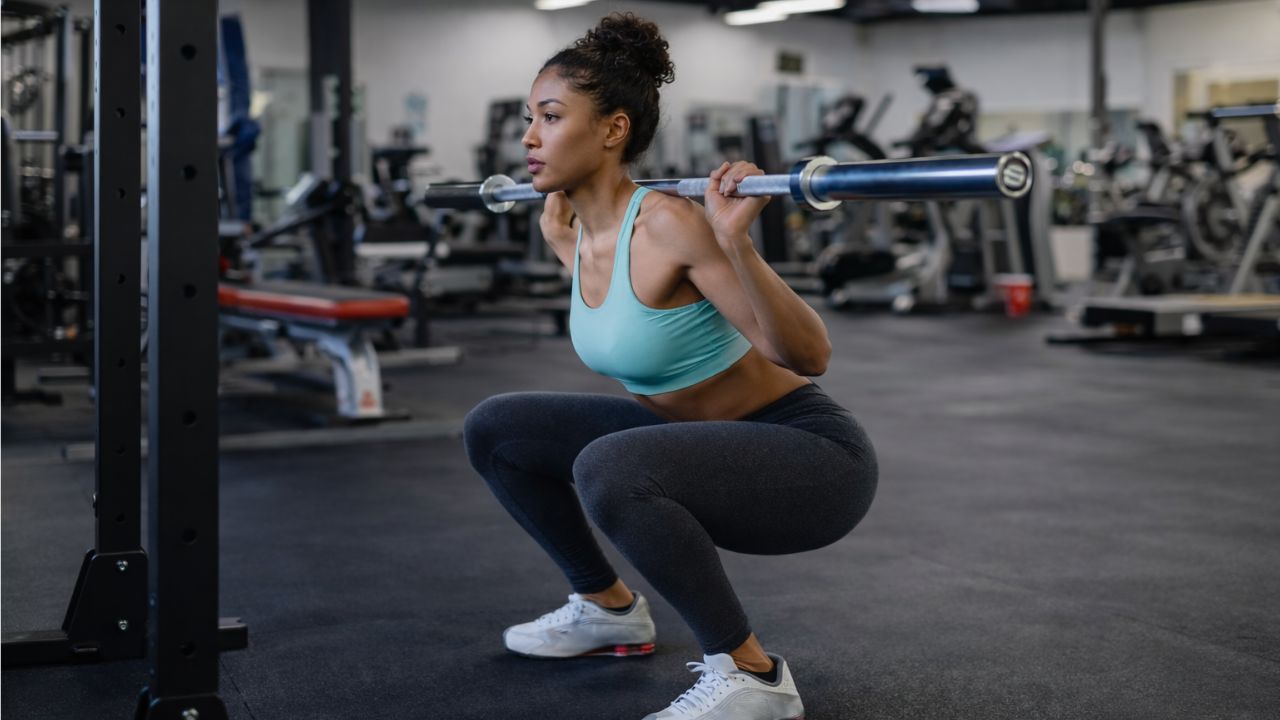
    Start by standing with your feet roughly hip-width apart, allowing the toes to point slightly outward if comfortable. With the ribcage stacked over the pelvis, send your hips back and bend the knees as though sitting into a chair behind you. Keep the chest relaxed and upright as you lower to a pain-free depth. To stand, push the floor away through the whole foot and return to an upright position.

    Signs your squat technique is working for you

    Squat mechanics vary based on individual structure and mobility. Rather than aiming for a perfect visual shape, focus on how the movement feels. A well-suited squat should feel smooth and controlled, allow natural breathing, avoid sharp pain during or after, feel repeatable the next day without joint soreness, and be felt mainly through the thighs and hips rather than the lower back.

    Common squat errors to avoid

    Moving too fast is a frequent mistake. Lowering with control allows the ankles, knees, and hips to bend together naturally. Other issues often come from mismatching the exercise to the individual, such as going deeper than mobility allows, forcing knee alignment, holding the breath, or pushing through discomfort. As Pate explains, discomfort is feedback and shouldn’t be ignored.

    When it’s appropriate to add weight

    A key sign you’re ready to progress is being able to perform multiple bodyweight repetitions with good control. If you can complete 10–20 reps comfortably and feel capable of repeating the set, the resistance may be too light to drive improvement. Other indicators include feeling stable, recovering well between sessions, and maintaining movement quality throughout each set.

    When adding load, begin conservatively. Even 2–5kg can be enough. The goal is to finish feeling worked, not exhausted, while still moving as well as you did without added weight.

    The most suitable squat variations for women over 40

    These variations are designed to be joint-friendly, adaptable, and confidence-building, whether training at home or in the gym.

    Chair squat or box squat

    Stand in front of a chair, lower yourself down slowly, then stand back up using your legs. Use your arms only if needed for assistance.

    Goblet squat

    Hold a light dumbbell or kettlebell close to the chest. Squat comfortably while keeping the weight near the body, then push through the feet to return to standing.

    Supported squat

    Hold onto a stable surface such as a rail or doorframe. Squat to a comfortable depth, relying on the support only as much as necessary.

    Leg press

    The leg press targets the same primary muscles as a squat while offering external stability and reduced balance demands. Sit with the hips fully supported, place the feet hip- to shoulder-width apart on the platform, and move through the exercise with controlled motion, avoiding locked knees at the top.