Category: News

  • Yoga for Emotional Healing: Mindful Practices That Support Balance and Inner Well-Being

    Yoga for Emotional Healing: Mindful Practices That Support Balance and Inner Well-Being

    Yoga has long been celebrated for its physical benefits, but its influence on emotional health is equally profound. Rooted in ancient traditions, yoga combines movement, breathwork, and meditation to foster emotional well-being and healing. It enables individuals to connect deeply with their inner selves, offering a way to release emotional tension, enhance mental clarity, and cultivate inner peace. This article delves into how yoga can serve as a powerful tool for emotional healing, the advantages it provides, and practical tips for incorporating it into daily life.

    Why Yoga Is Beneficial for Emotional Healing

    Yoga supports the balance of body and mind, making it an essential practice for emotional healing. One of the primary ways yoga promotes emotional well-being is by reducing stress. It encourages mindfulness and present-moment awareness, allowing individuals to break free from anxiety or negative thought patterns. By emphasizing breath and movement, yoga teaches people to regulate their emotions instead of being controlled by them.

    How Yoga Affects the Nervous System

    Yoga profoundly influences the nervous system. It activates the parasympathetic nervous system, also known as the “rest and digest” system, which helps calm the body’s stress response. This leads to lower cortisol levels (the stress hormone) and greater relaxation. Consequently, yoga is especially beneficial for individuals experiencing emotional challenges such as anxiety, depression, or trauma.

    Key Yoga Practices for Emotional Healing

    1. Breathwork (Pranayama)

    Breathing exercises are central to yoga and help regulate the nervous system. Techniques like Nadi Shodhana (alternate nostril breathing) or Ujjayi breath (victorious breath) calm the mind, reduce stress, and balance emotions. By consciously controlling the breath, individuals can shift from a fight-or-flight state to one of calmness and clarity.

    2. Mindful Meditation

    Yoga meditation practices, such as Vipassana or Yoga Nidra, promote deep relaxation and self-awareness. These techniques allow individuals to release stored emotional tension, access their subconscious, and achieve profound mental clarity. Meditation is particularly effective in addressing emotional blockages and past traumas.

    3. Asanas for Emotional Release

    Certain yoga postures (asanas) are designed to release emotional tension held in the body. Poses like Child’s Pose (Balasana), Forward Fold (Uttanasana), and Camel Pose (Ustrasana) stretch and open areas where stress is often stored, such as hips and shoulders. Holding these postures helps the body release pent-up emotions, facilitating emotional healing.

    How Yoga Supports Mental Health

    Yoga enhances emotional well-being by promoting awareness and acceptance. It encourages individuals to observe thoughts without judgment, creating a compassionate space for self-reflection. This awareness fosters a deeper understanding of one’s emotions, leading to healthier coping strategies.

    Yoga also helps regulate neurotransmitters such as serotonin and dopamine, which play key roles in mood regulation. Regular practice has been shown to reduce anxiety and depression, increase happiness, and strengthen emotional resilience.

    Tips for Starting Yoga for Emotional Healing

    Start Slow: Begin with gentle yoga styles like Restorative Yoga or Yin Yoga, which focus on long-held poses and deep breathing to promote healing.

    Focus on Breath: Prioritize breathing techniques for emotional well-being, such as 4-7-8 breathing — inhale for 4 counts, hold for 7 counts, exhale for 8 counts.

    Be Consistent: Emotional healing is gradual. Practice yoga regularly to experience lasting benefits. Even 10–15 minutes daily can significantly impact emotional health.

    Create a Calm Environment: Choose a peaceful space free of distractions. Enhance your practice with calming music, essential oils, or candles.

    Listen to Your Body: Yoga is about tuning into your body’s needs. Avoid forcing uncomfortable postures; the goal is to release tension, not strain yourself.

    The Power of Yoga for Emotional Resilience

    Yoga provides a powerful framework for emotional healing, allowing individuals to connect with their body, mind, and emotions. Through breathwork, mindful movement, and meditation, it releases stored tension, reduces anxiety, and improves overall emotional well-being. Whether seeking relief from stress, addressing emotional blockages, or enhancing mental clarity, yoga offers a nurturing and restorative path toward emotional resilience.
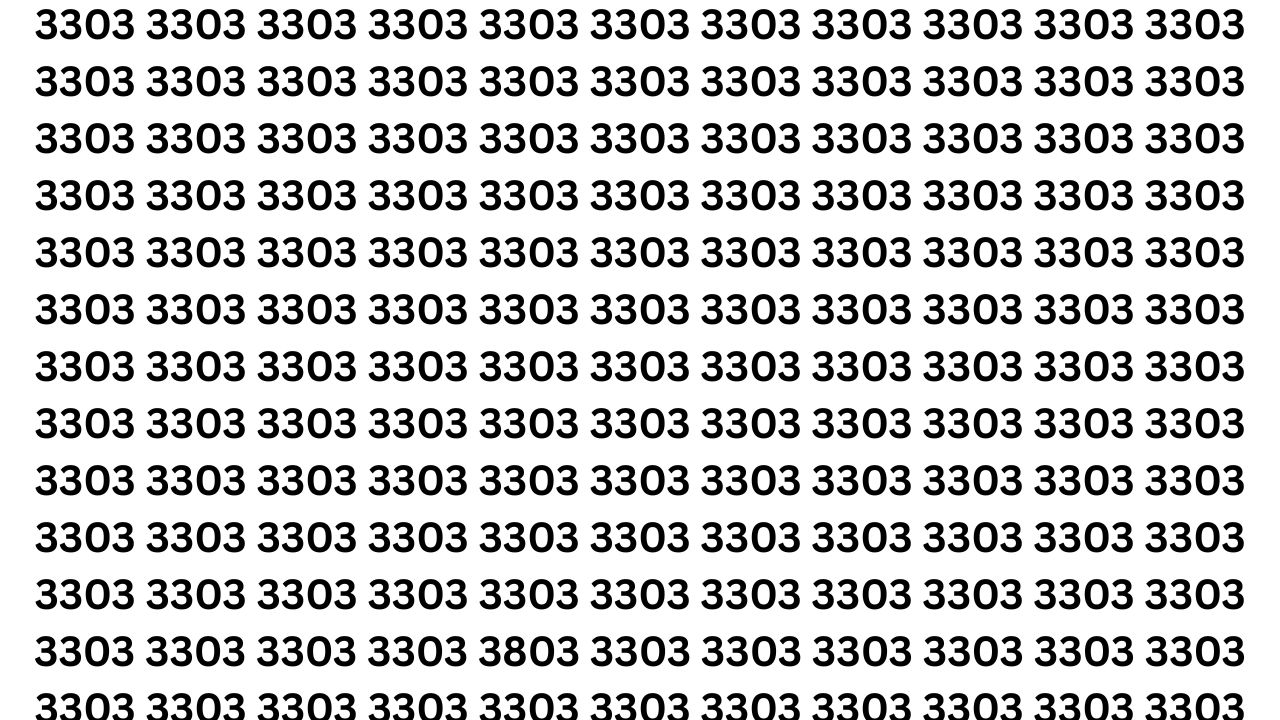

  • Optical Illusion Challenge: Spot 3803 Hidden Among 3303s in 6 Seconds

    Optical Illusion Challenge: Spot 3803 Hidden Among 3303s in 6 Seconds

    Optical illusion puzzles are simple ways to test how sharp your mind is. They look easy but your brain realizes it has work to do once you start searching. This 6 second optical illusion IQ test challenges you to spot the number 3803 hidden among a grid full of 3303s. The difference is small & the time is short and the pressure makes it harder to focus. That is what makes this puzzle engaging for people of all ages.

    Why This 6 Second Optical Illusion Feels Difficult

    When you first look at the grid, everything seems identical. The repeated pattern of 3303 convinces your brain that all the numbers are the same. Once this assumption forms, your eyes stop examining each digit carefully. This illusion works because the numbers share the same structure, with only a single digit changing in the middle, making the difference easy to overlook.

    The six-second time limit also adds pressure. It feels generous at first, but once the challenge begins, the brain prioritizes speed over accuracy. Instead of carefully checking each number, the eyes skim quickly across the grid, often missing the one value that does not belong.

    How the Brain Gets Fooled by Similar Numbers

    The human brain is designed to recognize patterns efficiently. While this skill is useful in daily life, it becomes a weakness in optical illusions. In this puzzle, the brain locks onto the repeated 3s and stops expecting variation. Even when the number 3803 appears, the mind may still interpret it as 3303 without conscious awareness.

    This happens because the brain processes information in chunks rather than focusing on fine details. When numbers appear nearly identical, the brain fills in what it expects to see. Optical illusions exploit this habit, turning simple digits into a surprisingly challenging task.

    Best Way to Spot 3803 Quickly

    If finding the number within six seconds was difficult, a few strategies can help. One effective technique is to avoid reading the entire number. Instead, focus only on the middle digit. Training your eyes to look specifically for an 8 makes the odd number easier to detect.

    Another useful approach is to divide the grid into sections and scan it systematically, either left to right or top to bottom. Random scanning increases the chance of missing small differences. Staying relaxed also helps, as tension narrows focus while calm attention makes details more noticeable.

    Why Optical Illusion IQ Tests Are So Popular

    Puzzles like this spread quickly because they are fast, entertaining, and competitive. They require no special knowledge or preparation, just a few seconds of focus. People enjoy testing themselves and then challenging friends to see who can solve it faster.

    There is also instant gratification involved. Spotting the hidden number creates a brief surge of excitement. That feeling of success, even after struggling, encourages people to try more puzzles and share them with others.

    What This Puzzle Says About Your Focus

    Finding 3803 among many 3303s is not purely a measure of intelligence. It reflects attention to detail, patience, and how well you manage time pressure. Some people notice the difference immediately, while others succeed after slowing down and adjusting their strategy.

    These puzzles highlight how easily the brain can be misled by assumptions. They remind us that careful observation often matters more than speed, especially when we feel rushed.

    Solution to the 6 Second Optical Illusion

    If you could not find the answer, the solution is straightforward. The number 3803 appears in the lower-right section of the grid. It stands out due to the single 8 placed between the 3 and the 0. Once noticed, the difference becomes obvious, making it surprising that it was missed initially.

    This sudden realization is a classic feature of optical illusions. The brain shifts from automatic pattern recognition to focused observation, and the image instantly makes sense.

    How These Puzzles Help Train the Brain

    Practicing optical illusion puzzles regularly can improve focus and visual awareness. They encourage questioning first impressions and paying closer attention to details. Over time, this habit can translate into better observation skills in everyday life.

    These challenges also provide a quick mental workout without feeling tedious. Whether the solution takes six seconds or a full minute, the brain benefits from the exercise. With practice, both speed and accuracy tend to improve.

  • Optical Illusion Challenge: Find the Hidden 2Q3 Among Similar 2O3s in 8 Seconds

    Optical Illusion Challenge: Find the Hidden 2Q3 Among Similar 2O3s in 8 Seconds

    Optical illusions keep fascinating people because they show how our brain handles what we see. Some illusions work with colors and shapes while others use patterns and small visual tricks. This challenge belongs to the second type and looks easier than it really is. You need to find the hidden 2Q3 in a grid filled with almost identical 2O3s & you only get 8 seconds to do it. When you first look at the image it seems simple. The same number combination appears over and over in rows. That repetition makes this puzzle hard. Your brain assumes everything looks the same and goes into autopilot mode. When that happens spotting the one small difference gets much harder.

    Why Optical Illusions Like This Are So Effective

    This type of optical illusion works because the human brain is naturally wired to recognize patterns as quickly as possible. In daily life, this ability helps us save time and mental energy by allowing us to process familiar shapes without overthinking. However, illusion puzzles cleverly exploit this shortcut. When we see repeated characters or sequences, our brain assumes consistency and stops checking each detail closely.

    In this illusion, the characters “O” and “Q” look almost identical at first glance, especially when placed in a dense grid. Surrounded by repeated patterns, the brain automatically fills in what it expects to see. As a result, many viewers overlook the hidden 2Q3 even when their eyes pass directly over it. The short eight-second time limit adds pressure, increasing the chance of mistakes and making the challenge more engaging.

    How This 2Q3 Illusion Challenges Your Brain

    This illusion challenges multiple mental skills at the same time. First, it tests selective attention by forcing you to ignore repetitive patterns and focus on small irregularities. Second, it examines visual discrimination, which is the ability to detect subtle differences between similar shapes. Finally, it places pressure on processing speed, requiring accuracy under time constraints.

    Most people instinctively scan the grid in straight horizontal or vertical lines. While this feels efficient, it often causes the brain to miss small changes hidden within repetition. The illusion is intentionally designed so that the difference blends in rather than standing out. To succeed, you must slow down your visual scanning even as the timer creates urgency.

    Common Reasons People Miss the Hidden 2Q3

    One major reason people fail this puzzle is overconfidence. Because the characters appear simple, many assume the answer will be obvious and rush through the scan. This quick approach reduces careful observation and increases errors.

    Another factor is familiarity. The letter “O” is extremely common, and the brain treats it as a basic shape. The small tail on the “Q” is subtle and easy to ignore, especially when viewed quickly or on smaller screens. Visual fatigue also plays a role. Staring at repeated patterns dulls sensitivity, making differences harder to detect unless attention is deliberately reset.

    The Solution Explained Clearly

    If you could not find the hidden sequence within eight seconds, there is no need to worry. This illusion is designed to be difficult even for experienced puzzle solvers.

    The correct answer is that the 2Q3 appears in the lower left area of the image. All other sequences read 2O3, but this one replaces the “O” with a “Q.” The only distinction is the small tail attached to the “Q,” which separates it from the perfectly round “O.” Once you know what to look for, the difference becomes instantly noticeable, demonstrating how awareness changes perception.

    What Your Performance Reveals About Your Observation Skills

    Spotting the hidden 2Q3 quickly suggests strong attention to detail and controlled visual scanning. It shows an ability to resist automatic mental shortcuts and analyze information carefully under pressure.

    Missing it does not indicate poor observation skills. In fact, most people fail similar illusions on their first attempt. The brain is functioning exactly as designed, prioritizing speed over precision. With practice and repeated exposure to such challenges, many people naturally improve their ability to detect anomalies more efficiently.

    Benefits of Practicing Optical Illusion Puzzles

    Optical illusion challenges offer more than simple entertainment. They help train the brain to slow down and focus on details. Over time, this can enhance concentration and visual awareness in everyday tasks.

    These puzzles also act as effective mental breaks. Spending a few seconds on a visual challenge can refresh the mind and restore focus. Many people use them as short resets during work or study sessions. Modern brain-training approaches emphasize consistency, and regularly solving simple puzzles can be more beneficial than occasionally attempting complex ones.

    Tips to Spot Differences Faster in Similar Illusions

    One effective method is to scan diagonally instead of following straight rows or columns. This disrupts the brain’s pattern-recognition habits. Another strategy is to focus on a single character position, such as examining only the middle symbol in each sequence.

    Changing viewing distance can also help. Zooming out or stepping back sometimes makes anomalies stand out more clearly. Most importantly, remain calm. Rushing or panicking almost always increases the chance of missing subtle details.

    Why This Optical Illusion Is Worth Trying

    The hidden 2Q3 illusion demonstrates how even the smallest change can challenge perception when surrounded by repetition. Its balance of simplicity and difficulty makes it ideal for quick mental exercises.

    Whether you spotted the difference instantly or needed an explanation, the puzzle successfully engaged your brain and sharpened your focus. That is the real value of optical illusions. They remind us that seeing and observing are not the same, and that small details often make the biggest difference.

  • Unlock Flexibility and Calm: Six Yoga Poses That Support Mind–Body Ease and Relaxation

    Unlock Flexibility and Calm: Six Yoga Poses That Support Mind–Body Ease and Relaxation

    Yoga is a practice that not only enhances flexibility but also supports mental clarity and emotional balance. Whether you are new to yoga or an experienced practitioner, incorporating it into your daily routine can bring calmness and vitality to both mind and body. In this article, we explore six yoga poses that help improve flexibility while soothing the mind, offering a holistic approach to wellness and relaxation.

    1. Downward Dog (Adho Mukha Svanasana): How Does This Pose Enhance Flexibility?

    The Downward Dog is a classic yoga pose that stretches and strengthens multiple areas of the body. It elongates the spine, stretches the hamstrings, and eases tension in the back. Holding this pose for several breaths increases flexibility in the hips, legs, and shoulders while calming the mind.

    Benefits of Downward Dog:

    – Enhances flexibility in hamstrings, calves, and shoulders.

    – Strengthens arms and core.

    – Reduces stress and calms the mind.

    How to do it:

    – Start on hands and knees, wrists under shoulders and knees under hips.

    – Lift your hips up and back, straightening your legs to form an upside-down “V” shape.

    – Keep feet hip-width apart and hands shoulder-width apart, grounding them into the mat.

    – Hold for 30 seconds to 1 minute, focusing on deep breathing.

    2. Child’s Pose (Balasana): How Can It Help You Relax?

    Child’s Pose is a restful pose that gently stretches the back, hips, and thighs while promoting relaxation. It releases tension in the lower back and quiets the mind, making it ideal for stress relief.

    Benefits of Child’s Pose:

    – Relieves tension in lower back and neck.
    – Calms the nervous system and reduces anxiety.
    – Improves flexibility in hips, thighs, and knees.

    How to do it:

    – Kneel on the floor, big toes touching and knees spread wide.
    – Lower your torso toward the floor, resting your forehead on the mat.
    – Extend arms forward or place them by your sides.
    – Stay for 1-3 minutes, breathing deeply.

    3. Cat-Cow Pose (Marjaryasana-Bitilasana): Why Is This Sequence Effective?

    The Cat-Cow Pose is a gentle flow between two movements that increases spinal flexibility and eases neck and back tension. Moving between arching and rounding the back loosens the spine and engages the breath to calm the mind.

    Benefits of Cat-Cow Pose:

    – Enhances spinal flexibility.
    – Stimulates abdominal organs.
    – Supports mental clarity and emotional balance.

    How to do it:

    – Begin in tabletop position, hands under shoulders and knees under hips.
    – Inhale, arch your back (Cow Pose), lifting tailbone and chest.
    – Exhale, round your back (Cat Pose), tucking chin and drawing belly toward spine.
    – Repeat for 5-10 rounds, breathing deeply and rhythmically.

    4. Forward Fold (Uttanasana): How Does It Reduce Stress?

    Forward Fold is a simple yet powerful pose that stretches hamstrings, calves, and spine. It calms the nervous system by placing the head below the heart, soothing both body and mind.

    Benefits of Forward Fold:

    – Increases flexibility in hamstrings and lower back.
    – Reduces tension and stress.
    – Promotes deep breathing and mental relaxation.

    How to do it:

    – Stand with feet hip-width apart, knees slightly bent.
    – Inhale, then exhale and fold forward from the hips, bringing head toward floor.
    – Keep spine long, arms dangling or holding opposite elbows.
    – Stay for 30 seconds to 1 minute, breathing deeply.

    5. Seated Forward Bend (Paschimottanasana): How Does It Improve Flexibility?

    Seated Forward Bend stretches the back and hamstrings while promoting relaxation. It offers a deep lower-body stretch and supports spinal flexibility.

    Benefits of Seated Forward Bend:

    – Deeply stretches hamstrings and spine.
    – Calms the nervous system.
    – Supports digestion and reduces stress.

    How to do it:

    – Sit with legs extended straight in front.
    – Inhale, lengthen spine, then exhale and fold forward from hips, reaching for feet or shins.
    – Hold for 30 seconds to 1 minute, deepening stretch with each exhale.

    6. Legs Up the Wall (Viparita Karani): How Does This Pose Promote Relaxation?

    Legs Up the Wall is a restorative pose that relaxes the body after a long day. It improves circulation, reduces leg swelling, and calms the nervous system, offering a deep sense of peace.

    Benefits of Legs Up the Wall:

    – Improves circulation and reduces swelling.
    – Calms the nervous system and promotes relaxation.
    – Releases lower back and leg tension.

    How to do it:

    – Sit next to a wall and lie on your back, extending legs up the wall.
    – Relax arms by your sides, palms facing up.
    – Close eyes, breathe deeply, and stay for 5-15 minutes.

  • Spot the Inverted 83 Hidden Among Identical 83 in 8 Seconds

    Spot the Inverted 83 Hidden Among Identical 83 in 8 Seconds

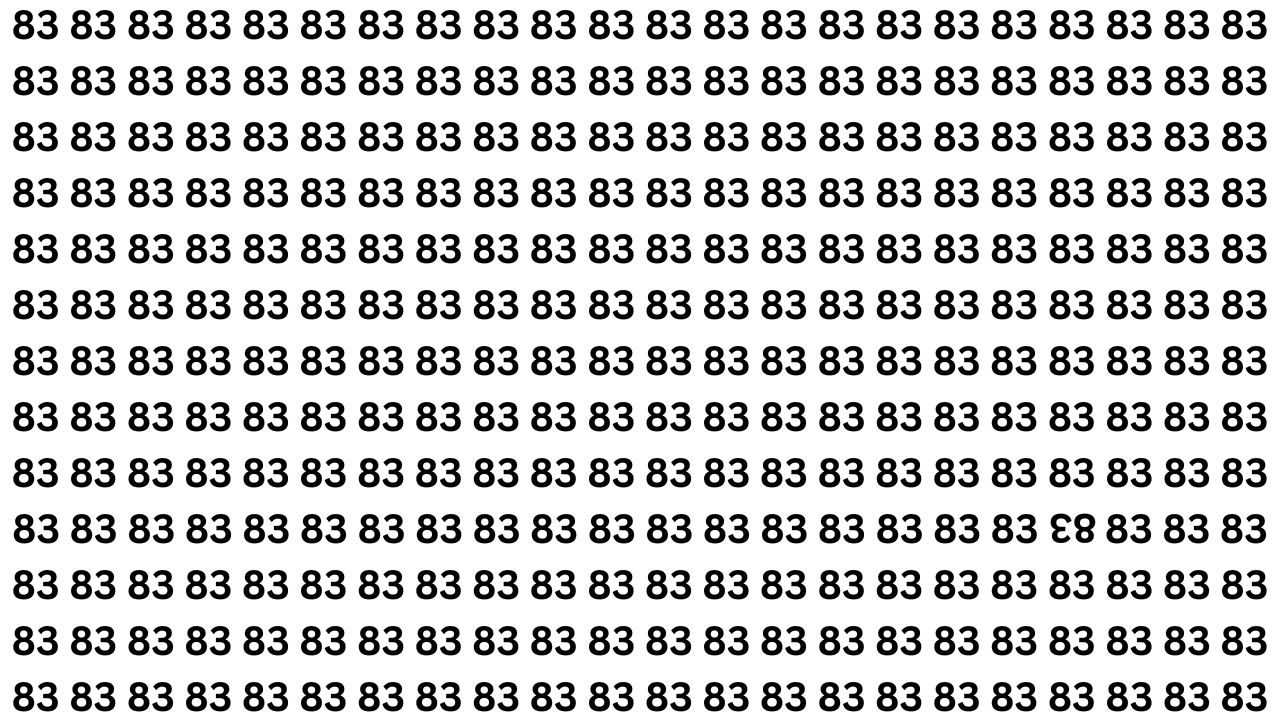
    This mind-twisting optical illusion is designed to test your speed, sharpness, and attention to detail. It’s not just a casual puzzle—it pushes your observation skills and cognitive focus to the limit. You have only 8 seconds to spot the inverted number 83 hidden among a grid full of identical-looking 83s. At first glance, the task seems simple, but don’t be fooled. The challenge is carefully crafted to trick your brain and demand peak concentration.

    The Challenge: Spot the Inverted 83

    In this optical illusion, you are presented with a grid filled entirely with the number 83. Somewhere within this grid, one 83 is flipped upside down. Your task is to identify that inverted number within just 8 seconds. Everything appears uniform at first—the same font, size, and color—making the flipped 83 extremely difficult to notice without intense focus and quick visual scanning.

    Why This Optical Illusion Is So Difficult

    The difficulty of this optical illusion lies in its subtlety. Because the numbers are repetitive, your brain automatically assumes uniformity and skips over minor differences. This mental shortcut makes it easy to miss the inverted 83. Only those who consciously slow down and inspect each number individually can overcome this visual trap and spot the hidden detail.

    How the Optical Illusion Works

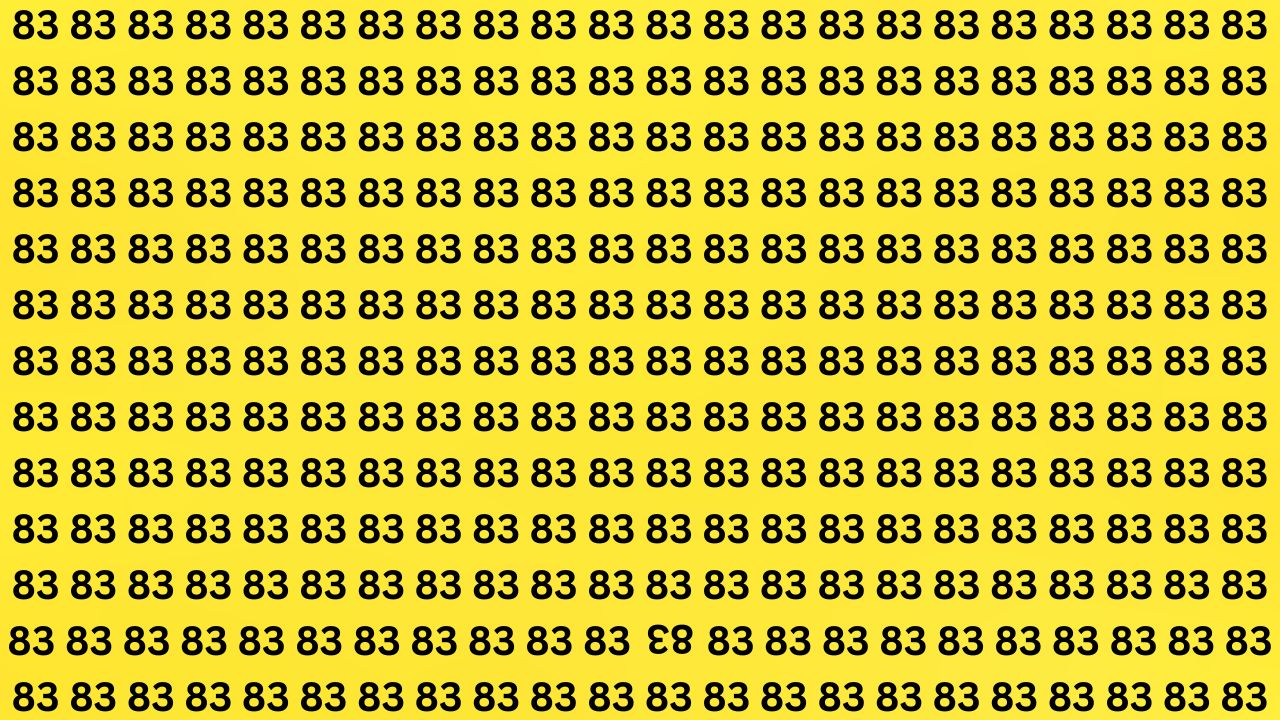
    This optical illusion takes advantage of pattern recognition. The inverted 83 is positioned in the lower-middle section of the grid, blending almost perfectly with the surrounding numbers. When viewed quickly, the flipped orientation is barely noticeable. Your brain prioritizes familiar patterns over fine details, which is exactly why this illusion is so effective.

    Where to Find the Hidden Inverted 83

    If you look closely toward the bottom-center area of the grid, you’ll find the inverted 83. Once identified, the difference becomes obvious, but reaching that point requires patience and sharp observation. Solution images often highlight the correct answer with a red circle, making it clear how subtle the difference really is in this optical illusion.

    Tips to Solve Optical Illusions Faster

    To improve your performance with this type of optical illusion, avoid scanning the entire grid too quickly. Focus on each number one by one, looking for small orientation changes. Staying calm under time pressure helps your brain process details more effectively. If possible, zooming in digitally can also make subtle differences easier to detect.

    Why Optical Illusions Are Good for Your Brain

    Solving an optical illusion isn’t just entertaining—it actively strengthens your brain. These puzzles improve attention to detail, enhance focus, stimulate visual processing, and sharpen problem-solving skills. Regularly engaging with such challenges trains your mind to resist assumptions and analyze information more carefully.

    Final Thoughts on the Optical Illusion Challenge

    This optical illusion challenge of finding the inverted 83 in just 8 seconds is a powerful test of mental agility and visual accuracy. Whether you succeeded or not, attempting these puzzles helps improve cognitive speed and observational strength. With practice, your ability to spot hidden details will continue to improve.

  • Spot the Difference Challenge: Find 3 Changes in the Girl Hiking Image in 9 Seconds

    Spot the Difference Challenge: Find 3 Changes in the Girl Hiking Image in 9 Seconds

    Spot the Difference: Hiking Challenge Spot the Difference puzzles remain among the most popular visual challenges on the internet. This hiking themed puzzle follows that tradition. When you first look at the two images of a girl hiking they appear almost identical. The scenery looks peaceful and the colors seem balanced. Nothing appears unusual at first. However there are three small differences hidden between these nearly matching images. You only have nine seconds to locate them all.

    Spot the Difference Challenge This challenge tests how fast your eyes can notice small visual changes while your brain works under pressure. Most people start feeling confident but the ticking clock makes everything harder. The task seems simple at first. You look at what appears to be identical images and search for tiny differences between them.

    Why This Girl Hiking Image Puzzle Is Harder Than It Looks

    The challenge of this puzzle comes from how simple it looks. The girl’s position and clothing and background seem identical in both pictures. Your brain sees everything as normal and familiar so it assumes nothing has changed & stops looking carefully. The differences are subtle rather than obvious. They hide in places that people usually glance at quickly like the sky behind her or tiny details on her clothes. This is what makes the puzzle harder than it first appears.

    How Spot-the-Difference Challenges Sharpen Visual Focus

    Spot the Difference puzzles make your brain compare two pictures at the same time. Your brain usually works in a way that saves energy by skipping over small details in daily life. These puzzles use that tendency against you. When you have limited time your brain starts scanning quickly. It stops analyzing each part carefully & just searches for clear differences. The changes in these puzzles are usually too small for that method to work well.

    Why the 9-Second Time Limit Changes Everything

    Nine seconds might seem like enough time but it actually goes by very fast when you are looking at a complex picture. When you feel rushed your brain gets stressed & your eyes start moving too quickly across the image. People who do well at these puzzles stay relaxed and look at the picture in an organized way. If you jump around randomly from one spot to another you will probably miss important details.

    Proven Strategies to Detect Image Changes Quickly

    If you want to get better at these puzzles there are some helpful techniques. One good method is to look at the image from top to bottom. Begin with the sky and background before you examine the main subject. Another practical approach is to concentrate on parts that are simple to change like facial features or clothing details or small background items such as clouds. Artists usually put differences in these spots because they fit naturally into the picture. Looking at one section at a time stops your eyes from missing important changes.

    Step-by-Step Breakdown of the 3 Hidden Differences

    If you did not manage to spot all three differences in time here is how to find them. The first difference appears in the sky. The right image is missing a cloud that sits close to the sun in the left image. This is a small change because the sky still looks natural in both versions. The second difference is on the girl’s hoodie. The left image shows an extra line on the clothing that is not present in the right image. This tiny detail is hard to notice when you are looking at the whole picture. The third difference is on the girl’s face. Her cheek has a blush mark in the left image but not in the right image. Since her expression stays the same in both pictures, this color difference is easy to miss.

    What Your Performance Reveals About Your Observation Ability

    Finding all three differences within nine seconds shows excellent visual focus and fast mental processing. It means your brain stays sharp under pressure while still picking up small details others might miss.

    If you didn’t spot all the differences, it doesn’t mean you lack observation skills. Many people naturally focus more on accuracy than speed. Given more time, most can easily find all the changes.

    These puzzles reveal different cognitive styles rather than testing intelligence. Some people are quick scanners, others are careful observers—both approaches have their own strengths.

    Cognitive Benefits of Playing Visual Difference Games

    Regularly engaging in Spot the Difference puzzles can significantly boost mental sharpness. These puzzles enhance your concentration, strengthen your visual memory, and sharpen your attention to detail. By encouraging you to pause and question what you observe, they help your brain move beyond quick assumptions and develop more accurate perception skills.

    Many people also consider these puzzles to be a calming mental activity. They offer a brief but focused escape from daily stress—engaging enough to hold your attention but not too intense to cause fatigue. With consistent practice, your ability to spot differences improves over time, building both your speed and confidence.

    Why Spot-the-Difference Puzzles Never Lose Their Appeal

    Spot the Difference puzzles are simple to grasp & fun for everyone. They take just a few minutes to complete and work great for casual competition with friends. The hiking theme creates a relaxed & appealing setting that keeps the challenge entertaining without adding pressure. This mix of enjoyment and concentration explains why these puzzles remain popular on the internet.

    Challenge Yourself Further to Improve Attention to Detail

    The Girl Hiking Spot the Difference puzzle is a great reminder that small details matter. What appears completely identical at first glance often hides clever changes that are just waiting to be discovered. This kind of challenge sharpens not just your eyes but also your attention to detail, pushing your brain to stay alert even when patterns seem repetitive or familiar.

    If you enjoyed this challenge, consider exploring more Spot the Difference puzzles with varied themes and time limits. Each one offers a fresh way to test and improve your observation skills. Over time, and with regular practice, you’ll find yourself spotting subtle differences faster and with more confidence. It’s a fun and rewarding way to train your brain while staying entertained.

  • Find the Inverted 83 Hidden Among Identical 83 in 8 Seconds

    Find the Inverted 83 Hidden Among Identical 83 in 8 Seconds

    Are you ready for a brain-bending challenge that puts your speed and sharpness to the test? This optical illusion is not just a casual puzzle—it pushes your observation skills, mental focus, and ability to detect tiny visual details under pressure. You have only 8 seconds to find the inverted number 83 hidden among dozens of identical-looking 83s.

    The Challenge: Spot the Inverted 83

    The challenge looks simple but is surprisingly tricky. Within just 8 seconds, you must locate the flipped 83 inside a grid full of normal 83s. At first glance, every number appears identical. The real difficulty lies in recognizing the subtle difference before time runs out.

    Why This Optical Illusion Is So Challenging

    This optical illusion exploits how the human brain processes repetition. Since all the numbers share the same font, size, and color, your brain automatically assumes they are identical and skips over small inconsistencies. That’s why the inverted 83 blends in so easily.

    How the Optical Illusion Works

    The illusion works by tricking your brain’s pattern-recognition system. When you see repeated elements, your mind focuses on the overall pattern instead of individual details. The flipped 83 hides in plain sight because its orientation change is extremely subtle.

    Where to Find the Hidden Inverted 83

    If you look carefully toward the lower-middle section of the grid, you will find the inverted 83. Once pointed out, the difference becomes obvious. In the solution image, the hidden number is often highlighted with a red circle to reveal the exact spot.

    Tips to Solve Optical Illusions Faster

    Slow Down: Even with a timer, staying calm improves accuracy.

    Focus Individually: Examine each number rather than the whole grid.

    Zoom In: Enlarging the image helps reveal tiny differences.

    Trust Instincts: Your first visual reaction is often correct.

    Why Optical Illusions Are Good for Your Brain

    Solving optical illusions strengthens your attention to detail, improves focus, enhances visual processing, and boosts problem-solving skills. These challenges activate different parts of the brain, keeping your mind sharp and alert.

    Final Thoughts

    This optical illusion challenge is a powerful test of visual accuracy, mental speed, and concentration. Whether you spotted the inverted 83 in time or not, each attempt helps train your brain. Keep practicing such puzzles to improve your mental agility and observational power.

  • Spot the Hidden Number 638 Using Focus and Observation

    Spot the Hidden Number 638 Using Focus and Observation

    Optical illusions have fascinated people for centuries, offering an engaging way to challenge the brain and sharpen cognitive skills. Whether you want to improve visual acuity or simply enjoy a mind-bending puzzle, this illusion is a perfect test. Designed to challenge your IQ level and attention to detail, it asks you to spot the hidden number 638 among a sea of 658s. Think you have what it takes? Let’s dive into this exciting challenge and see how sharp your eyes and brain truly are.

    The Challenge: Spot the Hidden Number 638

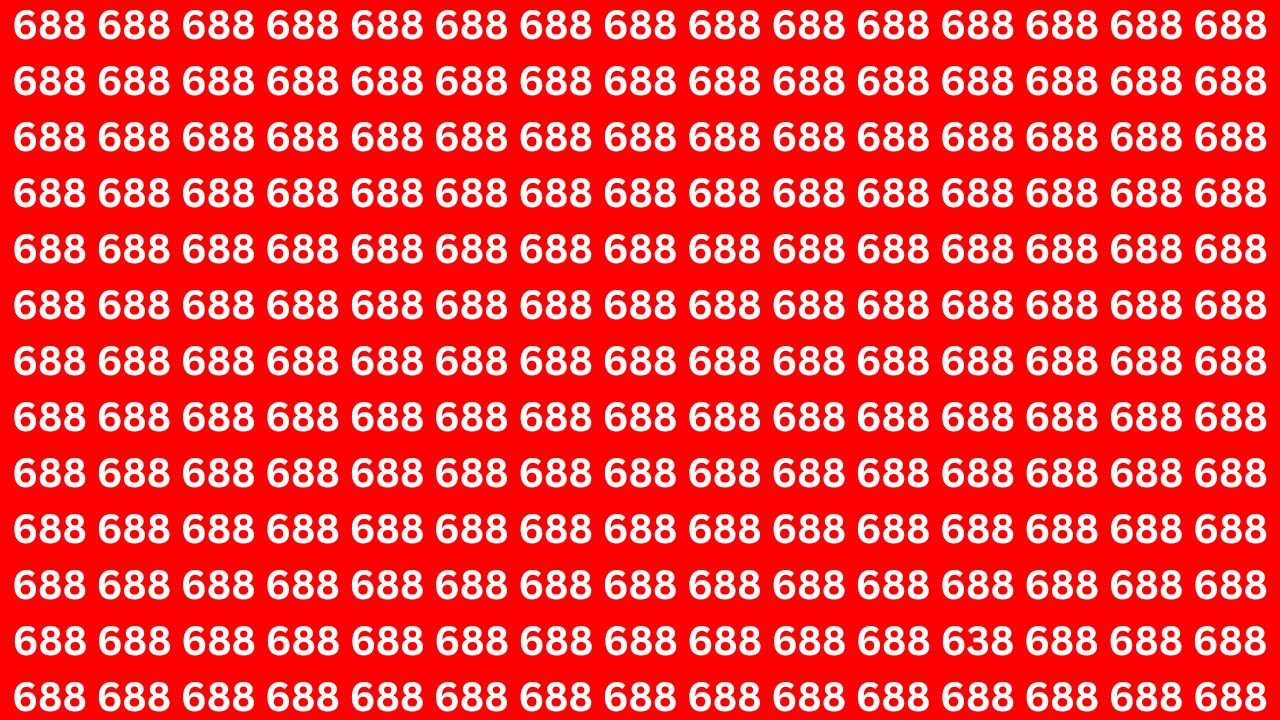
    At first glance, the image may look like a random arrangement of numbers. On closer inspection, however, one number doesn’t belong — 638. This optical illusion hides 638 among numbers that appear almost identical. Don’t be fooled: only those with strong pattern recognition and a sharp eye can find it quickly.This challenge requires more than just good eyesight. You need the ability to focus and scan for subtle differences. The numbers 3 and 5 are intentionally designed to look similar when viewed quickly. The real trick lies in noticing the tiny variations that reveal the hidden 638.

    Why This Optical Illusion Tests Your IQ

    This puzzle is more than simple entertainment. It actively tests your cognitive abilities by pushing your brain to analyze, concentrate, and recognize patterns. Here’s why this illusion is such an effective IQ challenge:

    Attention to Detail: The hidden 638 blends in because the numbers look nearly identical. You must examine each digit carefully rather than scanning the image casually.

    Pattern Recognition: The shape of 3 closely resembles 5, making differentiation difficult. Only strong visual recognition skills can detect the slight curve differences.

    Focus and Patience: Optical illusions reward calm and persistence. The longer you observe, the clearer the inconsistencies become.

    Visual Processing Speed: Quickly interpreting visual data and spotting anomalies helps improve mental processing and visual memory.

    The Solution: Where to Find the Hidden 638

    The hidden 638 is located near the bottom-center of the image. By scanning carefully, you’ll notice the middle digit differs slightly from the rest. While 3 and 5 share a curved appearance, slowing down reveals the mismatch.This illusion exploits the brain’s tendency to follow patterns. Because everything looks similar, your brain may initially skip over the odd number. Once you stop skimming and observe closely, the hidden detail becomes obvious.

    How Optical Illusions Benefit Your Cognitive Health

    Optical illusions are not just fun — they offer real mental benefits. Regular engagement with such puzzles can:

    Enhance Visual Acuity: Training your eyes to detect fine details improves visual accuracy and speed.

    Strengthen Brain Function: These puzzles boost concentration, memory, and overall cognitive strength.

    Improve Focus and Patience: Careful analysis trains the brain to stay calm and attentive in everyday tasks.

    Sharpen Problem-Solving Skills: Illusions encourage critical thinking and creative analysis useful in real-life situations.

    Tips for Solving Optical Illusions Faster

    If you’re struggling to find the hidden number, try these helpful tips:

    Take Your Time: Avoid rushing. A relaxed mind spots details more easily.

    Look for Patterns: Compare numbers carefully and focus on small differences.

    Zoom In: Enlarging the image can make subtle changes more visible.

    Try Again: Step away briefly and return with fresh eyes for better clarity.

    Final Thoughts

    Optical illusions are an excellent way to test your IQ, sharpen mental skills, and keep your brain active. Finding the hidden 638 among the 658s perfectly demonstrates how attention, patience, and pattern recognition work together.If you managed to spot the hidden number, congratulations on your sharp observation skills. Keep practicing these visual challenges — your brain will thank you for it.

  • Find 54 and 89 Hidden Among 84 in 7 Seconds

    Find 54 and 89 Hidden Among 84 in 7 Seconds

    Are you ready to put your eyesight to the test and see how sharp your visual perception really is? This optical illusion is crafted to challenge your focus, speed, and attention to detail—and it’s far trickier than it looks at first glance. In this visual puzzle, your task is to find the numbers 54 and 89 hidden among dozens of 84s, all within just 7 seconds. It may sound simple, but only those with quick reflexes and keen vision will succeed. Are you up for the challenge? Let’s find out if your eyes can keep up!

    What Is the Challenge About?

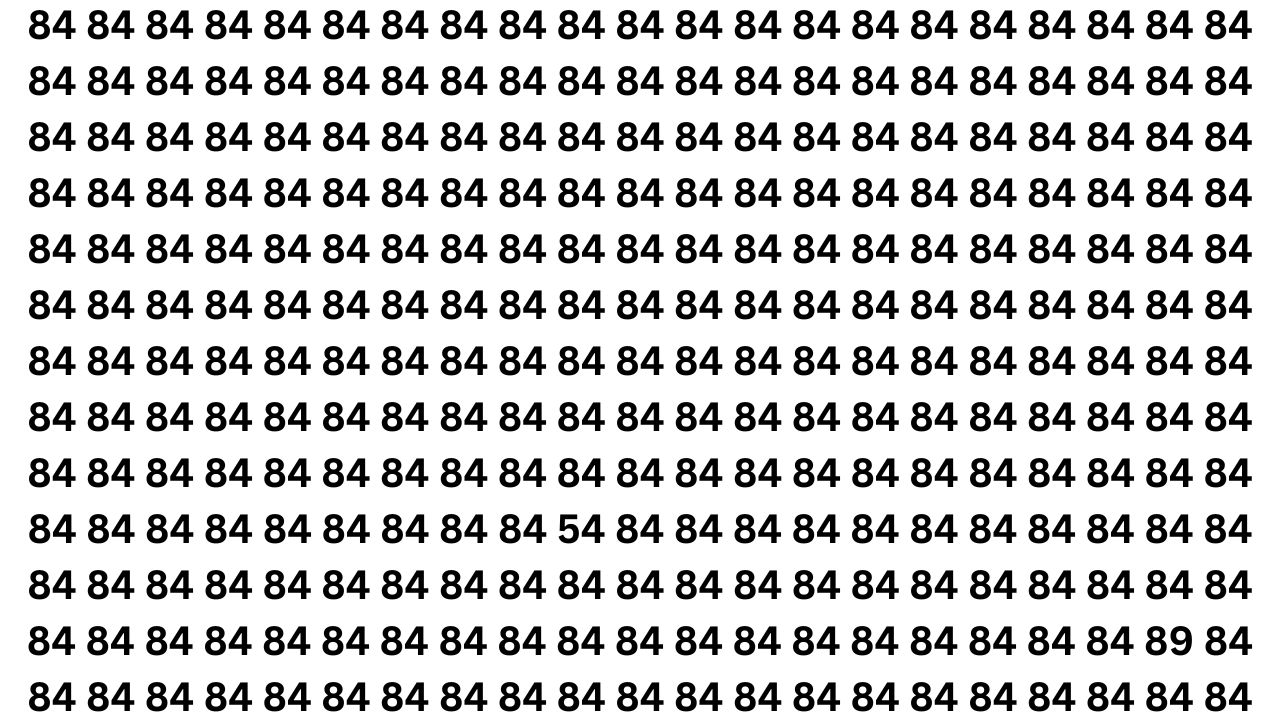
    The objective of this optical illusion is straightforward: identify the numbers 54 and 89 concealed inside a grid packed with 84s. At first look, everything appears uniform, which is exactly what makes the task so difficult. The design of the 84s closely resembles the shapes of 54 and 89, making them easy to overlook. With only 7 seconds on the clock, this challenge pushes your eyesight, concentration, and visual processing skills to their limits.

    Why This Optical Illusion Feels So Difficult

    Our brains are naturally wired to recognize patterns quickly. However, optical illusions exploit this strength by using repetition and similarity to confuse our perception. In this puzzle, the resemblance between 84, 54, and 89 tricks the brain into treating them as identical shapes. The hidden numbers are placed in plain sight, but the surrounding 84s act as visual noise, making it harder for your brain to detect the differences instantly.

    How This Optical Illusion Tricks Your Brain

    The clever design of this illusion lies in how the numbers are arranged. The grid is filled almost entirely with 84s, while the numbers 54 and 89 are subtly embedded among them. This repetition overwhelms your pattern-recognition system, causing your brain to gloss over small variations. Unless you deliberately slow down and inspect each spot carefully, the hidden numbers can easily go unnoticed.

    The numbers 54 and 89 are positioned so they blend seamlessly with the surrounding digits. However, if you look closely, you’ll notice small differences in their shapes—especially in the curves and angles of the numbers. The key is to stop scanning the grid as a whole and instead focus on each individual element.

    Where to Find the Hidden 54 and 89

    Now let’s talk about their locations. While they may seem impossible to find at first, knowing where to focus makes the task much easier. The number 54 is hidden on the right side of the grid, roughly in the upper half. The number 89, on the other hand, is tucked away in the bottom-left area of the image.

    Both numbers are carefully disguised among the 84s, which is why they’re so easy to miss. The 54 tends to stand out once you concentrate on the upper-right section and notice the distinct shape of the digits. The 89 is more challenging and requires close attention to the lower-left portion of the grid. With patience and focus, both numbers will eventually reveal themselves.

    Tips to Help You Spot the Numbers Faster

    If you’re having trouble finding 54 and 89, try these helpful strategies:

    Focus on Smaller Sections: Instead of looking at the entire grid at once, divide it into smaller areas and examine each one carefully. This reduces visual overload.
    Zoom In if Possible: Enlarging the image can make subtle differences easier to see, especially when viewing on a phone or computer screen.
    Don’t Rush Too Much: Even though it’s a timed challenge, rushing can make you miss important details. A steady, focused approach often works better.
    Stay Relaxed: Frustration can cloud your perception. Take a deep breath, stay calm, and refocus your attention for better results.

    Why Optical Illusions Are Good for Your Brain

    Optical illusions aren’t just entertaining—they also offer real cognitive benefits. Here’s how they help your brain:

    Improve Pattern Recognition: These puzzles train your brain to notice subtle differences and hidden details more effectively.

    Enhance Focus and Attention: Concentrating under time pressure strengthens your ability to focus in everyday situations.

    Speed Up Visual Processing: Regularly solving visual challenges can improve how quickly your brain processes information.

    Sharpen Visual Awareness: Optical illusions encourage you to observe your surroundings more carefully, boosting overall visual sharpness.

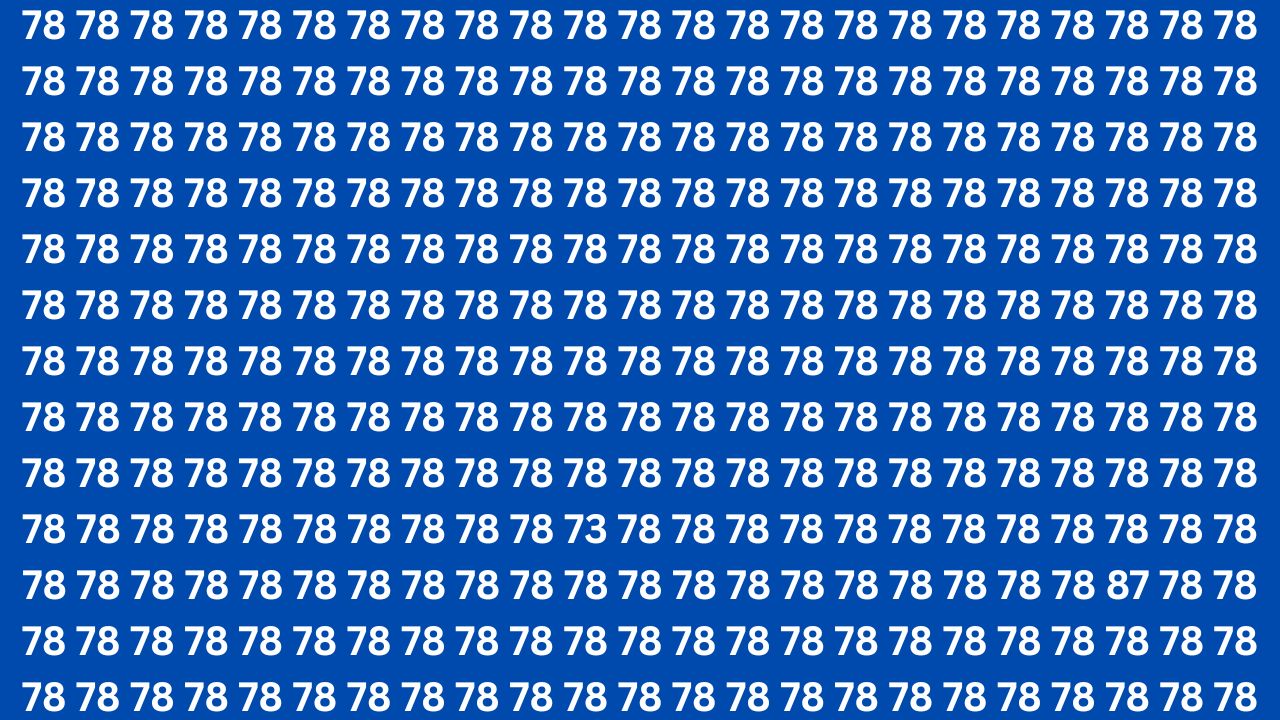
  • Optical Illusion Challenge: Find 87 and 73 Hidden Among 78s in 7 Seconds

    Optical Illusion Challenge: Find 87 and 73 Hidden Among 78s in 7 Seconds

    Optical Illusion Challenge: Find the Hidden Numbers Optical illusion puzzles offer an entertaining method to evaluate your visual perception and mental processing abilities. These challenges appear straightforward initially but become surprisingly difficult once you begin attempting them under time pressure. This particular 7-second optical illusion requires you to locate the numbers 87 & 73 concealed within a grid filled predominantly with the number 78. The task seems uncomplicated but most people find it challenging to identify both numbers before time runs out. The difficulty stems from how our brains process repetitive visual information. When surrounded by dozens of identical numbers your eyes tend to skip over small variations. The numbers 87 & 73 share similar digits with 78 which makes them blend into the background pattern.

    Why Number Optical Illusions Are So Challenging

    Number-based optical illusions are designed to take advantage of how the human brain recognizes patterns. When the same number appears repeatedly, the brain begins to assume uniformity. Instead of carefully checking each detail, it switches to an automatic processing mode. This mental shortcut is exactly what makes these puzzles difficult.

    In this challenge, the number 78 dominates the grid. Once the brain becomes familiar with that pattern, spotting small changes—such as a reversed 87 or a slightly altered 73—becomes surprisingly hard. The closer the numbers look to each other, the more mental effort is required to notice the difference.

    Understanding the 87 and 73 Hidden Among 78

    At first glance, the grid appears crowded and overwhelming. Rows filled with 78 can feel almost hypnotic. Hidden within this repeated pattern are two different numbers: 87 and 73. Both blend in well because they use the same digits found in 78, just rearranged or substituted.

    This challenge is not only about vision but also about speed. With just 7 seconds on the clock, there is no time to slowly read each number. Success depends on fast visual processing, sharp focus, and the ability to spot irregularities under pressure.

    How to Solve This Optical Illusion More Quickly

    A helpful strategy is to avoid reading each number individually. Instead, focus on visual patterns. The number 78 has a consistent shape and flow. When something disrupts that rhythm, your eyes may notice it immediately.

    Another effective method is to search for one digit at a time. For instance, look specifically for a 3 or an 8 that appears out of place. Once an unusual digit is spotted, confirming the full number becomes easier.

    Scanning the grid row by row is also useful. A structured approach reduces confusion and saves time. Staying calm is equally important, as panic can make your vision less accurate and more scattered.

    What This Challenge Reveals About Your Observation Skills

    Finding both 87 and 73 within 7 seconds suggests strong visual awareness and quick decision-making abilities. It shows that your brain can filter out repetitive information and detect subtle differences under time pressure.

    If you only found one number or needed extra time, that is completely normal. Optical illusions are meant to trick perception rather than measure intelligence. They demonstrate how the brain works and how easily it can be misled.

    Common Mistakes People Often Make

    A frequent mistake is focusing too long on the center of the grid. While one hidden number may appear there, the other could be closer to the edge. Fixating on one area wastes valuable time.

    Another error is assuming both hidden numbers are close together. Many puzzles intentionally place them far apart to increase difficulty. Allow your eyes to move freely across the grid instead of locking onto a single spot.

    Some people also rush too much. While speed matters, scanning too quickly can cause you to overlook small details. A balanced and controlled pace works best.

    Solution and Location of 87 and 73

    If you were unable to find both numbers in time, here is the solution. The number 87 is positioned near the center of the grid. It becomes noticeable once you recognize the reversed digit order compared to 78.

    The number 73 is located toward the bottom-left area of the image. It is more subtle because the 3 replaces the 8, which can be easily missed during a fast scan.

    Once their locations are revealed, the differences seem obvious. This reaction is common with optical illusions—what first feels impossible suddenly appears simple.

    Why These Puzzles Are Beneficial for the Brain

    Solving optical illusion puzzles regularly can help improve attention, patience, and mental flexibility. They train the brain to slow down assumptions and examine details more carefully.

    These challenges also serve as quick mental breaks from routine activities. Even a short puzzle can refresh the mind and improve focus before returning to work or study.

    Final Thoughts on the 7-Second Optical Illusion Challenge

    This optical illusion highlights how powerful visual habits can be. Finding 87 and 73 among repeated 78s within 7 seconds is not just about eyesight. It requires focus, strategy, and calm thinking under pressure.

    Whether you solved it quickly or needed help, the experience strengthens perception skills. Practicing similar puzzles can gradually improve reaction time and attention. Optical illusions remind us that perception is not always accurate—and that is what makes them so engaging.