Category: News

  • Full-Body Stretch Yoga: 4 Essential Poses for Daily Flexibility

    Full-Body Stretch Yoga: 4 Essential Poses for Daily Flexibility

    Full-body stretching is one of the most effective ways to improve flexibility and reduce muscle tension while enhancing posture and supporting overall physical health. Whether you sit at a desk or walk regularly or play sports or simply want to feel more limber throughout the day a consistent stretching routine makes a real difference. Yoga offers a balanced approach to stretching because each pose links movement with breath. With mindful breathing muscles relax deeper and joints become more mobile & the nervous system shifts into a calm and receptive state. Stretching is not just about touching your toes or bending farther. It is about improving range of motion in muscles and joints throughout the body. When muscles are supple & joints move freely your posture improves and energy flows more smoothly and you are less prone to pain or strain. The four yoga poses below are chosen for their ability to stretch major muscle groups from head to heel. These poses work the spine & hips & shoulders & legs and core. They help with flexibility and contribute to better movement patterns in daily life.

    Downward Facing Dog Pose

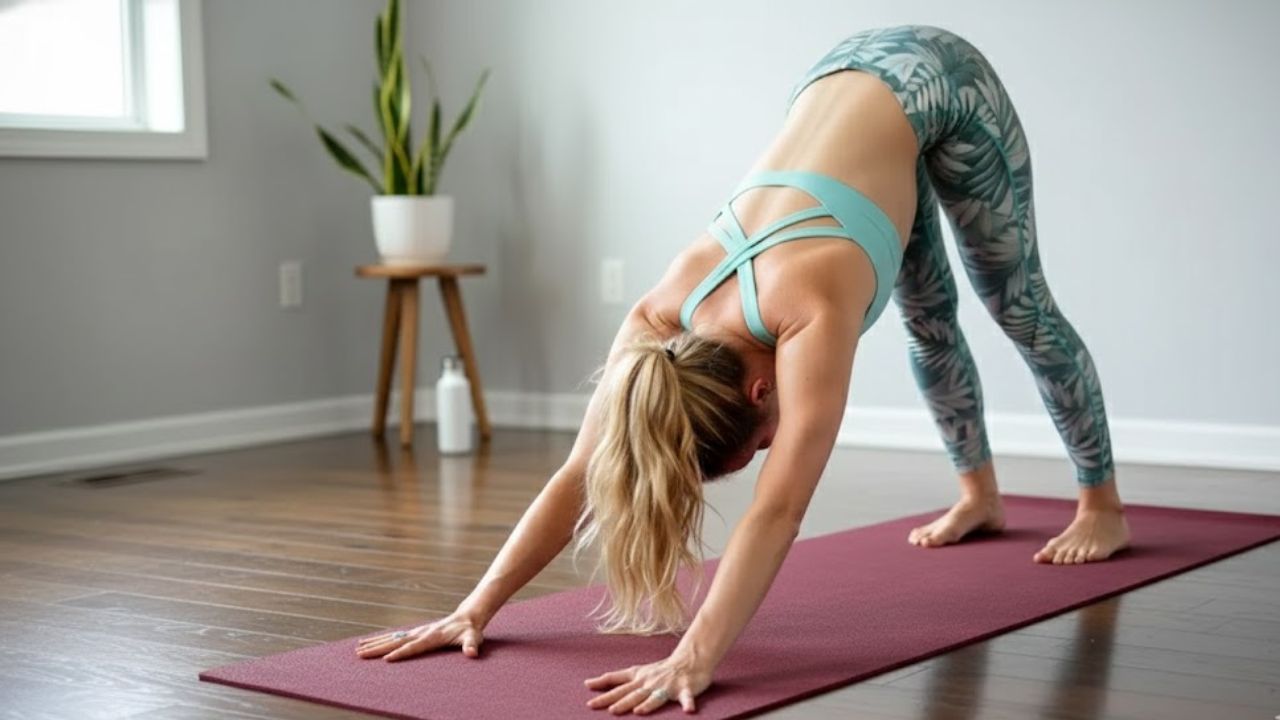
    Downward Facing Dog is a core yoga posture that offers a deep stretch for the hamstrings, calves, spine, and shoulders. At the same time, it builds strength in the arms and upper body as your weight is supported through the hands. This pose gently lengthens the entire back side of the body and helps release built-up tension from long periods of sitting or standing.

    To practice this pose, begin on your hands and knees. Spread your fingers wide and press firmly through your palms. Curl your toes under and lift your hips up and back, creating an inverted V shape with your body. Keep your feet hip-width apart and allow your heels to move toward the floor, even if they do not touch. Relax your head and neck and breathe slowly through your nose. Hold the pose for thirty seconds to one minute.

    This posture helps decompress the spine while stretching the backs of the legs. If your shoulders feel tight, slightly bend your knees and focus on lengthening from the hips down to the heels. Over time, Downward Facing Dog increases blood flow to the arms and shoulders, supporting improved upper body mobility.

    Pigeon Pose for Hip Release

    Pigeon Pose is a powerful stretch for the hips, glutes, and lower back. Tight hips can affect pelvic and spinal alignment, often leading to discomfort in the lower back or knees. Releasing the hips promotes greater ease in everyday movements such as walking, running, and bending.

    Start in a tabletop position. Bring your right knee forward and place it behind your right wrist, then slide your right foot toward your left hip. Extend your left leg straight back with the top of the foot resting on the floor. Square your hips toward the front. Inhale to lengthen your spine, then exhale as you walk your hands forward and lower your torso over your right leg. Rest your forehead on the mat or a block. Stay here for one to two minutes before switching sides.

    Pigeon Pose stretches deep hip muscles that often tighten from prolonged sitting or repetitive motion. As the hips relax, the lower back experiences a gentle release. This pose supports better posture, reduced back tension, and improved hip flexibility.

    Cat Cow Spinal Flow

    Cat Cow Flow is a gentle yet effective movement sequence that stretches the spine, neck, and torso. It enhances spinal mobility and boosts circulation in the back muscles. This flow works well as a warm-up before deeper stretches or as a simple practice anytime during the day.

    Begin on your hands and knees with wrists aligned under shoulders and knees under hips. As you inhale, drop your belly toward the floor, lift your chest and tailbone, and look slightly forward for Cow Pose. On the exhale, round your spine, draw your chin toward your chest, and tuck your tailbone into Cat Pose. Continue moving smoothly with your breath for ten to twenty rounds.

    This flowing sequence lubricates the spine and eases stiffness in the neck and back. It also gently activates the abdominal muscles while opening the chest. Practicing Cat Cow in the morning can help release sleep-related stiffness and support smoother movement throughout the day.

    Standing Forward Fold Stretch

    Standing Forward Fold deeply stretches the hamstrings, calves, and lower back while promoting a calm nervous system. With the head positioned below the heart, this pose increases circulation and encourages blood flow to the brain, supporting mental clarity and relaxation.

    Stand with your feet hip-width apart. Inhale and lift your arms overhead, then exhale as you hinge at the hips and fold forward. Allow your arms to hang freely or hold opposite elbows. Keep a slight bend in your knees if needed. Relax your head and neck and breathe steadily through your nose. Remain in the pose for thirty seconds to one minute.

    This posture helps ease tension in the backs of the legs and along the lower spine. Since tight hamstrings often result from extended sitting or limited movement, this fold gently counteracts those patterns. Deep breathing in this pose supports rib expansion and encourages a relaxed state.

    Creating a Simple Full-Body Yoga Routine

    These four poses combine to form a balanced full-body stretching sequence. Begin with Cat Cow Flow to warm and mobilize the spine. Transition into Downward Facing Dog to lengthen the back and legs. Practice Pigeon Pose on both sides to release the hips and lower back, then finish with Standing Forward Fold to stretch the hamstrings and calm the nervous system.

    Practicing this sequence three to five times per week for ten to fifteen minutes can lead to noticeable improvements in flexibility and reduced tension within a few weeks. Focus on slow, steady breathing in each pose. Inhale deeply through the nose and exhale fully, allowing your body to soften. Consistent stretching supports better posture, balanced movement, and overall physical comfort when practiced mindfully and without pushing into pain.

  • Optical Illusion Test: Spot the Hidden 0 Among 9s in Just 5 Seconds

    Optical Illusion Test: Spot the Hidden 0 Among 9s in Just 5 Seconds

    Optical illusions offer an entertaining way to test how well you see and process visual information. Our brains naturally interpret images in specific ways but optical illusions manipulate this process to make us see things that differ from reality. This optical illusion presents a straightforward challenge: find the hidden “0” among numerous “9s” within just 5 seconds. The task requires quick visual scanning and attention to detail. While the “9” characters fill most of the space, one “0” hides somewhere in the pattern. Your eyes must rapidly distinguish between the curved shapes to locate the different character. This type of puzzle tests your ability to spot subtle differences under time pressure. Success depends on how efficiently your brain can filter through repetitive visual information. Some people find the hidden character immediately while others need more time. The 5-second limit adds difficulty and makes the challenge more engaging. Whether you spot it quickly or need extra time, these puzzles provide good mental exercise and help improve your observation skills.

    Can You Take the 5-Second Hidden 0 Challenge?

    The image shows many numbers with the digit “9” appearing most often. Somewhere in this collection of nines there is a single “0” hiding. Your task is to locate that zero as fast as you can. You have just 5 seconds to complete this challenge so you must stay sharp and concentrate. Your brain will work rapidly as you look through the image and try to spot the single zero surrounded by all those matching digits. This kind of exercise helps you develop better focus and trains your eyes to notice small differences while boosting how fast you process visual information. Are you prepared? Time to start looking!

    Why Optical Illusion Tests Are Trending Online

    Optical illusions have remained popular for a long time because they activate our brains differently than regular images do. These illusions make us view familiar pictures in new ways and push our brains to handle information through different processes. When we engage with optical illusions we actually improve our mental skills such as memory focus and attention span. The way optical illusions work is by challenging what our brain expects to see. Our mind tries to make sense of conflicting visual information which creates the illusion effect.

    This mental exercise strengthens the connections between brain cells and keeps our cognitive functions sharp. Regular exposure to these visual puzzles can help maintain mental agility over time. People of all ages find optical illusions fascinating because they reveal how our perception can be tricked. What we think we see is not always what actually appears in the image. This gap between reality & perception demonstrates the complex way our brain interprets visual data. Scientists and researchers study optical illusions to better understand how human vision and cognition work together.

    Smart Strategies to Quickly Spot the Hidden 0

    To find the hidden “0” in this illusion, it’s important to concentrate on how the numbers are arranged instead of randomly scanning the image. Use the following steps to improve your chances:

    Break the image into sections: Mentally dividing the image into smaller areas helps narrow your focus, making it easier to identify the odd one out (the “0”).

    Watch for subtle differences: Optical illusions rely on small changes within a familiar pattern. Carefully observe the shapes, spacing, and size of the numbers. The “0” may look slightly larger, smaller, or positioned differently compared to the “9”s.

    Avoid rushing your eyes: Even if time feels limited, give your eyes a moment to properly process what you’re seeing. Scanning too fast can cause your brain to miss the hidden detail. Take a steady, section-by-section approach.

    Check the edges first: Hidden elements are often placed near the borders or outer patterns of an image. Examining the edges early can increase your chances of spotting the “0” quickly.

    Answer Revealed: Where Was the Hidden Zero?

    If you found the zero within five seconds then congratulations! You have successfully trained your brain to detect small details and improved your visual perception. If you did not find it then do not worry because it is all about practice. Keep taking these challenges and soon you will be spotting hidden objects in the blink of an eye.

    The hidden zero sits near the center of the image but not exactly in the middle. It hides among many rows of nines. You might not see it right away when you first look. However if you focus carefully and practice these puzzles regularly you will get better at finding the answer more quickly.

  • Yoga Benefits Guide: 7 Ways Yoga Builds a Calm, Strong and Balanced Body

    Yoga Benefits Guide: 7 Ways Yoga Builds a Calm, Strong and Balanced Body

    Yoga is a transformative practice that unites the mind, body, and spirit, delivering benefits that strengthen the body while calming the mind. From enhancing flexibility to easing daily stress, yoga supports a balanced and mindful lifestyle. Whether you are experienced or just beginning, these seven key benefits show how yoga helps create physical stability and mental peace in everyday life.

    1. Greater Flexibility Over Time

    Flexibility is one of yoga’s most recognized benefits. Consistent practice gently stretches muscles, increases mobility, and reduces stiffness. Improved flexibility supports better posture, lowers injury risk, and allows the body to move with ease.

    Body Benefits:

    Poses like Downward-Facing Dog, Forward Fold, and Pigeon help lengthen the hamstrings, hips, and lower back.

    Reduced muscle tightness makes movements such as bending, reaching, and sitting far more comfortable.

    Calming Effects:

    As physical tension releases, the body naturally relaxes, creating a soothing mental calm, especially in stress-prone areas like the shoulders and spine.

    2. Increased Full-Body Strength

    Yoga builds strength alongside flexibility. Many poses require supporting your own body weight, strengthening muscles from head to toe and improving overall endurance.

    Body Benefits:

    Strengthens essential muscle groups including the core, legs, arms, and back.

    Postures such as Chair Pose and Warrior variations enhance muscle stamina and power.

    Calming Effects:

    A stronger body supports confidence and inner stability, helping you feel grounded and centered both on and off the mat.

    3. Reduced Stress and Deeper Relaxation

    Yoga is widely known for stress relief. Controlled breathing combined with mindful movement calms the nervous system and activates the body’s natural relaxation response.

    Body Benefits:

    Helps reduce physical stress symptoms such as muscle tightness, headaches, and digestive discomfort.

    Restorative poses like Child’s Pose and Legs Up the Wall release stored tension.

    Calming Effects:

    Focusing on breath and awareness quiets mental noise, promoting emotional balance and mental clarity.

    4. Improved Posture and Body Alignment

    Yoga increases awareness of alignment. Regular practice strengthens posture-supporting muscles, leading to healthier movement patterns and reduced strain.

    Body Benefits:

    Postures such as Mountain Pose help lengthen the spine and engage the core.

    Correct alignment reduces back and neck discomfort caused by prolonged sitting or standing.

    Calming Effects:

    Proper alignment creates a feeling of balance and grounded confidence, which naturally calms the mind.

    5. Better Balance and Coordination

    Balancing poses enhance stability and control. Yoga improves coordination by training the body to move with awareness and precision.

    Body Benefits:

    Improved balance lowers the risk of falls and injuries, especially with age.

    Standing poses strengthen the legs, ankles, and core for greater physical control.

    Calming Effects:

    Balance poses demand focus, encouraging mental presence and helping reduce anxiety.

    6. Improved Sleep Quality

    Yoga supports deeper, more restful sleep. By easing stress and releasing muscle tension, it prepares the body for restorative rest.

    Body Benefits:

    Gentle poses like Reclining Bound Angle and Savasana trigger the parasympathetic relaxation response.

    Evening practice helps release daily tension, making sleep more consistent.

    Calming Effects:

    Mindful breathing slows racing thoughts, creating mental stillness that supports uninterrupted sleep.

    7. Detoxification and Healthier Digestion

    Yoga supports natural detox and digestion. Through movement and relaxation, it improves circulation and stimulates digestive organs.

    Body Benefits:

    Twisting poses such as Revolved Triangle encourage digestive stimulation and toxin release.

    Improved blood flow supports the function of vital organs like the liver and kidneys.

    Calming Effects:

    Easing digestive discomfort brings physical relief and emotional calm, helping you feel lighter and more energized.

    Conclusion: Strength and Serenity Through Yoga

    Yoga offers a complete approach to well-being. By enhancing flexibility, strength, posture, and balance, it builds a strong and resilient body. At the same time, its stress-reducing and calming effects nurture mental clarity and inner peace. Whether your goal is physical vitality or emotional balance, yoga delivers a lasting blend of strength, calmness, and harmony for both body and mind.

  • Yoga Techniques for Emotional Reset: Mindful Movements That Release Tension and Build Long-Lasting Inner Peace

    Yoga Techniques for Emotional Reset: Mindful Movements That Release Tension and Build Long-Lasting Inner Peace

    Yoga is widely known for keeping the body healthy and flexible. However it also provides significant benefits for emotional health. This ancient practice brings together physical poses with breathing exercises & meditation to support emotional healing and mental wellness. People who practice yoga can develop a stronger connection with themselves and find ways to let go of emotional stress while enhancing mental focus and finding peace. This article looks at how yoga works as a powerful method for emotional healing and discusses its advantages along with practical ways to include it in everyday routines.

    The Emotional Healing Power of Yoga Explained

    Yoga builds a strong link between your body and mind. This connection makes it useful for handling emotional challenges. Practicing regularly reduces stress in ways that improve how you feel emotionally. Yoga teaches you to concentrate on what is happening right now instead of thinking about what happened before or what might happen later. This ability helps you escape from repeated anxious thinking and harmful thought patterns that can block your progress. The poses and breathing exercises give you real tools to control your emotions instead of letting them take over.

    Understanding Yoga’s Impact on the Nervous System

    Yoga has a strong effect on how your nervous system works. When you practice yoga regularly it turns on the parasympathetic nervous system which manages your body’s ability to rest and digest food. This process helps your body recover from stress in a natural way. Your cortisol levels go down when this system becomes active. Cortisol is the main stress hormone that your body creates when you feel tense. The end result is that you feel more relaxed throughout your whole body. These benefits make yoga especially helpful for people who are dealing with challenging emotional problems like anxiety or depression or stress from trauma.

    Essential Yoga Practices That Restore Emotional Balance

    Breathwork (Pranayama)

    Breathing exercises form a key part of yoga that helps control the nervous system. Methods such as Nadi Shodhana (alternate nostril breathing) & Ujjayi breath (victorious breath) can quiet the mind and reduce stress while creating emotional balance. When people control their breathing consciously they can move from a stressed fight-or-flight state to a relaxed condition with better mental focus.

    Mindful Meditation

    Meditation practices like Vipassana & Yoga Nidra allow people to relax deeply and develop better self-awareness. These approaches give individuals tools to release emotional stress that has built up over time. They also help access the subconscious mind and create greater mental clarity. Regular meditation works especially well for addressing emotional blocks and healing from past difficult experiences.

    Asanas for Emotional Release

    Specific yoga postures called asanas help release emotional tension stored in the body. Poses such as Child’s Pose or Balasana & Forward Fold or Uttanasana along with Camel Pose or Ustrasana stretch and open areas where stress typically accumulates like the hips and shoulders. Holding these positions allows the body to gradually release stored emotions and supports emotional healing.

    How Regular Yoga Practice Strengthens Mental Well-Being

    Yoga enhances emotional health by teaching people to become more self-aware and accepting of themselves. When you practice yoga you learn to watch your thoughts without being critical. This creates a kind internal space where you can honestly reflect on yourself. As this awareness grows you begin to understand your emotions better and develop healthier ways to cope with challenges. Yoga also affects the brain by balancing neurotransmitters such as serotonin & dopamine that control mood. People who practice regularly often notice less anxiety and fewer signs of depression. They feel happier overall & handle emotional struggles with greater strength.

    Beginner-Friendly Tips for Emotional Healing Through Yoga

    Starting Your Yoga Journey for Emotional Healing Begin with Gentle Yoga Styles Start your practice with easy yoga classes that focus on relaxation. Restorative Yoga and Yin Yoga work well for beginners. These styles let you hold poses for longer periods while you breathe deeply and allow your body to heal naturally. Learn Simple Breathing Exercises Breathing techniques help with emotional wellness. The 4-7-8 method is straightforward and effective. Inhale for four counts and hold your breath for seven counts before exhaling for eight counts. This simple exercise can help calm your mind and reduce stress. Make Yoga Part of Your Routine Emotional healing requires patience and consistency. Adding yoga to your daily routine brings lasting benefits. Even a short session of 10 to 15 minutes each day can improve your emotional wellbeing over time. Create a Calm Practice Area Find a quiet spot in your home where you can practice without distractions. Consider playing soft music or lighting candles to enhance the atmosphere. Essential oils can also help create a more relaxing environment for your practice. Listen to What Your Body Tells You Yoga is about building awareness of your body & respecting its limits. Never push yourself into poses that feel painful or uncomfortable. The goal is to release tension from your body instead of adding more stress to it.

    Building Emotional Resilience Through Mindful Yoga

    Starting Your Yoga Journey for Emotional Healing  Begin with Gentle Yoga Styles Start your practice with easy yoga classes that focus on relaxation. Restorative Yoga and Yin Yoga are excellent choices for beginners. These styles let you hold poses for extended periods while you breathe deeply and allow your body to heal naturally.  Learn Simple Breathing Exercises Breathing techniques are essential for emotional wellness. The 4-7-8 method is straightforward and effective. Inhale for four counts & hold your breath for seven counts before exhaling for eight counts. This simple exercise can help calm your mind and reduce stress. Make Yoga Part of Your Routine Emotional healing requires patience and consistency. Adding yoga to your daily routine brings lasting benefits. Even a short session of 10 to 15 minutes each day can improve your emotional wellbeing over time.

  • Breath-Driven Yoga: A Mindful Practice Teaching You to Infuse Every Movement With Calm, Strength and Purposeful Intention

    Breath-Driven Yoga: A Mindful Practice Teaching You to Infuse Every Movement With Calm, Strength and Purposeful Intention

    Yoga goes beyond simple physical exercise as it represents a complete method for bringing harmony to your body, mind & spirit. The connection between breathing and movement stands out as one of the most important aspects that makes yoga work so well. When you combine these two elements together they create a natural rhythm that boosts your energy flow while sharpening your mental focus & helping you relax. This article examines how specific breathing methods can improve your yoga movements and change the way you practice.

    The Role of Conscious Breathing in Deepening Yoga Practice

    Breathing forms the foundation of every yoga practice. It goes beyond simply taking deep breaths in and out. The real focus is on matching your breath with your movements. In yoga this breathing practice is called pranayama and it affects both your body & mind. Your breath connects the physical poses you do with the mental concentration you need during practice. When you take a full deep breath you deliver fresh oxygen throughout your body which energizes your cells & organs. Breathing out helps your body release toxins on both a physical and emotional level. Keeping your breath steady and controlled activates your parasympathetic nervous system. This system helps your body relax and lowers your stress levels.

    How Breath Synchronization Shapes Strength, Balance, and Mental Focus

    The connection between breathing and movement in yoga has a scientific foundation. During physical activity your muscles need oxygen to function properly. When your breathing becomes shallow or uneven your muscles might not get enough oxygen which can lead to muscle tension & tiredness. Controlling your breath correctly keeps your body both relaxed & energized while holding different poses. Breathing in sync with your movements also supports better balance and proper body positioning. When you take deeper breaths your body feels more stable and focused which makes transitions between poses smoother. This consistent rhythm creates a calm and flowing practice on your yoga mat.

    Core Pranayama Methods That Guide Breath-Driven Yoga

    Breathing Techniques in Yoga Yoga includes many different breathing techniques that work for various styles & personal needs. Here are some of the most common methods that people practice regularly.

    Ujjayi Pranayama: Building Heat, Control, and Inner Awareness

    Ujjayi breath appears frequently in Vinyasa and Ashtanga yoga practices. The technique requires you to gently tighten the back of your throat while breathing. This creates a quiet sound that resembles ocean waves rolling onto shore. The breathing method helps you maintain a consistent and even flow of air throughout your practice. It also produces warmth inside your body which encourages sweating and helps remove toxins from your system.

    Nadi Shodhana: Restoring Nervous System Balance Through Rhythmic Breathing

    Nadi Shodhana is a breathing exercise that helps you relax by using one nostril at a time. You breathe in through one nostril while keeping the other one closed with your finger and then switch sides. This practice helps balance your body’s energy and makes you feel less stressed while improving your ability to concentrate. Many people use this technique when they meditate or at the end of their yoga session when they are winding down.

    Kapalabhati Technique: Energizing the Body Through Active Exhalation

    Kapalabhati is a breathwork technique that boosts your energy levels. You breathe out quickly and forcefully through your nose and then let the air come back in naturally without effort. This method clears your thoughts & gets your digestive system working better while helping your body remove toxins. People usually do this practice in the morning or when they want a more active yoga session.

    Brahmari Practice: Calming the Mind With Resonant Breath Sounds

    Brahmari breathing creates a humming sound when you breathe out. This sound helps your mind settle down & your body relax. The technique works well for lowering stress and easing worried thoughts. It also releases mental pressure that builds up during the day. Many people find it useful after finishing a tough yoga session when they need to calm their system and return to a peaceful state.

    Practical Ways to Coordinate Breath With Yoga Postures

    To get the most from breathing during yoga you need to link each breath with how you move. Here is a guide for combining breath and movement. Start with Awareness: Sit in a comfortable position and focus on your breathing. Take several deep breaths to become present in the moment. Inhale to Lengthen: When you enter each pose begin with a long inhale to extend your spine or reach into the position. In Downward-Facing Dog you should inhale while extending your arms and legs completely. Exhale to Release: Your exhale helps you go deeper into the pose or let go of tension. During poses like Forward Fold you exhale while hinging at your hips and lowering your upper body toward the floor. Maintain Steady Rhythm: During your practice try to keep a steady rhythmic breath. Avoid rushing your breath and allow it to flow naturally as you move. Use Breath to Move Between Poses: In Vinyasa flow each transition between poses should happen with either an inhale or exhale. Your breath guides the movement and keeps the practice flowing smoothly.

    Physical, Mental, and Emotional Gains From Breath-Centered Yoga

    When you pay attention to your breathing you develop a meditative state that makes your mind sharper. This awareness helps you concentrate better on what is happening right now. Breathing in a controlled way activates your parasympathetic nervous system which lowers stress and makes you feel calmer. When you match your breathing with your movements your muscles get more oxygen which builds your stamina and endurance. This lets you maintain poses for longer periods with greater strength. Breathing correctly helps your muscles loosen up which makes it simpler to go deeper into stretches and become more flexible as time goes on. Working with your breath can help you let go of emotional tension that gets stored in your body. This creates a feeling of emotional renewal & improves your overall sense of wellness.

  • Seven Gentle Yoga Poses That Help Release Muscle Tension Without Strain

    Seven Gentle Yoga Poses That Help Release Muscle Tension Without Strain

    Seven Yoga Poses for Deep Relaxation and Recovery Yoga offers remarkable benefits for both your body & mind. Certain poses are particularly effective when you need to unwind after a demanding day. These specific positions help release muscle tension while simultaneously quieting mental chatter and reducing stress. They contribute significantly to your overall wellbeing and health. The following seven yoga poses can guide you toward profound relaxation and inner tranquility.

    How Gentle Yoga Helps Release Muscle Tension Safely

    Child’s Pose offers a peaceful way to stretch your hips, thighs, and back while calming your mind. This restful position helps release physical tension and provides a moment to pause during your yoga session. As you concentrate on your breathing in this pose your body begins to unwind and stress gradually fades away.

    – Begin in a kneeling position with your big toes together and knees comfortably spread apart.

    – Gently fold your torso forward, lowering your chest toward the floor and placing your forehead on the mat.

    – Stretch your arms out in front of you, or relax them beside your body with palms facing upward.

    – Breathe slowly and deeply, holding this pose for 30 seconds to 1 minute.

    Child’s Pose (Balasana): A Deep Resting Pose for Instant Relaxation

    This pose provides a deep stretch for your back hamstrings and calves while building strength in your arms. It loosens tension in your spine & improves blood circulation to your brain. This process clears mental fog and boosts your overall energy.

    – Start on all fours, placing your hands slightly ahead of your shoulders and your knees directly under your hips.

    – Press firmly through your palms as you lift your hips upward, gradually straightening your legs and guiding your heels down toward the floor.

    – Align your head between your arms, allowing your neck to relax without tension.

    – Hold this pose for 30 seconds to 1 minute, focusing on slow, deep, and even breathing throughout.

    Downward-Facing Dog (Adho Mukha Svanasana): Gentle Full-Body Stretch Without Strain

    Legs Up the Wall is a gentle resting pose that helps lower stress and worry. Lifting your legs in this position boosts blood flow and relieves tension in your lower back. This makes it a great option for relaxing your body and clearing your mind.

    – Sit next to a wall, then slowly lift and extend your legs upward so they rest against the wall as you recline onto the floor.

    – Allow your legs to remain straight while placing your arms in a relaxed position by your sides.

    – Breathe calmly and evenly, staying in this pose for about 5 to 10 minutes.

    Legs Up the Wall Pose (Viparita Karani): Calming Inversion to Ease Tired Muscles

    This pose opens your hips and expands your chest to promote deep breathing and create a feeling of calm. It effectively releases tension in your lower body and relaxes your nervous system.

    – Lie comfortably on your back, bringing the soles of your feet together as your knees gently open out to the sides.

    – Place your hands on your abdomen or rest them relaxed on the floor alongside your body.

    – Close your eyes and breathe slowly and deeply, remaining in this pose for several minutes.

    Reclining Bound Angle Pose (Supta Baddha Konasana): Restorative Hip Opener for Deep Muscle Release

    Savasana is a deep relaxation pose that typically appears at the end of a yoga session. This pose allows your body to absorb the benefits of your practice while promoting a profound sense of calm. It encourages you to remain focused on the present moment and serves an important function in helping your body return to its natural state after physical activity.

    – Lie comfortably on your back with your arms resting by your sides and your palms facing upward.

    – Gently close your eyes and bring your awareness to your breath as your entire body begins to relax.

    – Remain in this position for 5 to 10 minutes, allowing any remaining tension to slowly melt away.

    Savasana (Corpse Pose): Complete Mind and Body Relaxation for Tension Relief

    This flowing exercise increases spine flexibility & decreases back tension while boosting energy flow throughout your body. It serves as an effective warmup and removes stiffness from your neck and back regions. Steps to Perform: Start on your hands & knees with your wrists positioned directly under your shoulders and your knees under your hips. Inhale as you arch your back downward and lift your head and tailbone upward. Exhale as you round your spine upward and bring your chin and tailbone downward. Repeat this pattern for one to two minutes while coordinating your breath with each movement.

    Cat-Cow Pose (Marjaryasana–Bitilasana): Soft Spinal Movement to Reduce Stiffness

    This relaxing position stretches your back & the muscles along the back of your legs. It helps make your body more flexible & eases tension in your spine. The pose encourages you to breathe more deeply which helps reduce stress and makes you feel more relaxed.

    – Sit comfortably on the floor with both legs stretched straight out in front of you.

    – Inhale deeply and lift through the crown of your head, creating length in your spine.

    – Exhale slowly as you hinge forward from the hips, extending your hands toward your shins or feet.

    – Hold this posture for 30 seconds to one minute, maintaining slow, deep, and steady breathing.

  • Cold Floors Can Trick Your Body Into Feeling Chilled Even in Warm Homes

    Cold Floors Can Trick Your Body Into Feeling Chilled Even in Warm Homes

    The tiles appear clean and harmless. You step onto the floor with bare feet and an intense cold sensation rushes up your legs. In moments your shoulders become tight and your hands start to feel cold. You suddenly notice how chilly the entire house seems. You have not opened any windows. The thermostat has not changed. But your entire body responds as though winter has swept inside. The reaction seems unreasonable and perhaps overdramatic. How can such a small area of skin on your feet cause your whole body to shiver? The simple explanation is that those cold kitchen tiles communicate directly with your brain. And your brain pays attention.

    Why Cold Floors Affect You More Than You Realise

    Cold floors are more than just uncomfortable; they are remarkably effective at lowering your sense of warmth. Your feet are packed with blood vessels and nerve endings, positioned exactly where heat escapes fastest—direct contact with the ground. The instant your skin touches a surface cooler than your body, warmth drains away. This sensation doesn’t stay in your feet. Your nervous system interprets it as a cold exposure signal and responds immediately.

    On a warm afternoon, this barely registers. On a damp, overcast morning, the same floor can feel almost aggressive. For many people, it triggers a subtle chain reaction: goosebumps, raised shoulders, and the instinct to reach for warmer clothing. Your body is trying to protect its core temperature, and your feet set that process in motion. The floor hasn’t changed. Your perception has.

    One winter morning in a small Manchester flat, I watched a couple argue over what seemed like socks but wasn’t really about socks at all. She preferred walking barefoot; he lived in thick wool slippers. She felt the heating was adequate. He insisted the place was freezing. The difference was simple: insulated feet versus bare skin. Twenty minutes later, her toes were numb, she was wrapped in a blanket, and they were searching for “cheap underfloor heating” as if it were an emergency fix.

    They’re far from alone. A survey by a UK home energy group found that people consistently rated a room with warm floors as more comfortable than a slightly warmer room with cold ones. The air temperature was identical. The experience was not. When your feet report “cold,” your brain quickly upgrades that message to “the entire room is cold”, without stopping to double-check.

    This reaction has a clear biological basis. Your feet, hands, and face act as early-warning sensors for cold. When they detect a drop in temperature, your autonomic nervous system responds by narrowing blood vessels in your extremities, keeping warmth closer to vital organs. Your core may stay stable, but your fingers and toes feel expendable. Your posture tightens, movement slows, and before long, you genuinely feel colder.

    Cold floors accelerate this process. Materials like stone or tile conduct heat rapidly. When warm skin meets them, energy drains away fast, and the feedback from your feet tells your brain it’s time to conserve warmth. You may be perfectly safe, but your body is wired for survival, not modern heating systems. It reacts as though a long freeze is coming, even if you’re just padding to the kitchen.

    Simple Ways to Stay Warm on Icy Floors

    The most effective solution sounds almost too simple: put a barrier between your feet and the floor. But it’s not just about wearing socks or slippers—it’s about choosing the right ones and using them strategically. Thick, loosely knit socks trap warm air, acting as portable insulation. Slippers with a cushioned sole slow down heat transfer. The real goal isn’t just covering your feet; it’s breaking direct contact with the cold surface.

    If you wake up feeling chilly, place socks or slippers exactly where your feet land when you get out of bed. Not in a drawer. Not across the room. Right there. That brief moment between mattress and floor is where your body decides how the next few minutes will feel. A warm landing calms the nervous system. A cold one jolts it awake.

    Many people fall into the same traps. They rely on thin cotton socks that absorb moisture and turn clammy. Or they buy overly warm slippers and abandon them once the heating comes on. The smarter approach is layering. A light, breathable sock paired with a soft-soled slipper gives flexibility. You can remove one layer without stepping back onto bare tiles. Having the option alone makes it easier to stay protected.

    If cold floors are a daily issue, focus on the places where you stand the longest. The bathroom, the kitchen sink, the kettle spot. Adding a small, dense rug in these areas can transform how your home feels. One reader told me she thought her hallway was the coldest part of the house until she laid down a runner. Same thermostat setting. Completely different experience.

    “I used to crank up the heating and still feel cold,” says Mark, a 39-year-old graphic designer from Leeds. “Then I realised I was working barefoot on a concrete floor. I bought a thick mat and some slippers, and suddenly 19°C felt comfortable. I wasn’t freezing—my feet were just complaining louder than the rest of me.”

    These small adjustments often get overlooked because they seem too basic. Instead, people jump straight to expensive fixes. But your body responds more to surface contact than air temperature. If your feet keep shouting “cold,” no amount of thermostat tweaking will fully quiet that message.

    • Choose warm contact points: socks, slippers, and mats where you stand.
    • Warm up early: cover your feet before the cold sets in.
    • Think beyond heating: posture and movement matter.
    • Notice physical cues: tense shoulders, cold hands, hunched posture.
    • Test small changes: a simple rug can rival a higher energy bill.

    What Cold Floors Reveal About Your Body

    When a cold floor makes your whole body feel chilled, it’s not just about comfort. It reflects how your body interacts with its surroundings. Your nervous system is constantly adjusting—saving heat here, spending energy there, and subtly changing how you move. Bare feet on stone are a reminder that you’re not a machine in a neutral space. You’re a warm, living body, leaving traces of heat behind you.

    There’s something grounding in paying attention to this. On a long day, stepping onto a cold floor can feel like an insult. On another, it might be a signal to slow down and take care. Pull on socks. Make a hot drink. Move a little to get the blood flowing. A single sensation becomes a cue to listen to your body.

    Our homes are filled with modern technology, but our bodies still run on ancient instincts. They respond to stone, wood, fabric, and air. Sometimes they overreact. Sometimes they misjudge the situation. But they’re always trying to protect you. The next time cold tiles make your shoulders tighten and your body tense, remember: it’s not overreaction. It’s your built-in alarm system doing exactly what it was designed to do.

    Key Point Rewritten Explanation Why It Matters
    Feet react strongly to temperature The feet contain many nerve endings and blood vessels that are in direct contact with the floor surface Helps readers understand how a small cold area can influence overall body comfort
    Cold floors drain heat quickly Materials like tiles and stone pull warmth away from the skin much faster than softer surfaces Clarifies why some rooms feel colder even when the room temperature stays the same
    Basic insulation makes a big difference Using socks, slippers, or placing small rugs reduces direct contact with cold flooring Provides simple, affordable solutions to stay warm without increasing heating costs
  • This Car Seat Cleaning Hack Beats Vinegar and Baking Soda on Deep Stains

    This Car Seat Cleaning Hack Beats Vinegar and Baking Soda on Deep Stains

    That familiar smell of stale coffee and old fast food fills the car. When sunlight streams through the window it reveals every mark you’ve been ignoring: dried mud from someone’s shoes, a sticky patch where ice cream melted a dark circle from a drink container. You try wiping one spot with your sleeve but it only makes things worse. You think about all those home remedies people suggest. Leaving bowls of vinegar sitting on the seats. Dumping baking soda powder across the upholstery. Spending an entire Saturday playing amateur scientist with household products. But you know yourself well enough to realize none of that will actually happen. The car will probably stay grimy & slightly gross while you keep telling yourself you’ll deal with it eventually. Then you notice someone at the gas station cleaning their seats with a spray bottle. No vinegar in sight. No white powder scattered everywhere. They spray and wipe and the stain just disappears completely. You lean in to get a better look because this seems almost too easy to be real.

    No Vinegar, No Baking Soda: Why Car Seats Still Look Grimy

    Most drivers obsess over a spotless exterior while quietly ignoring the inside. The paint gleams, but the seats tell a different story. Fabric upholstery slowly absorbs coffee spills, sweat residue, sunscreen oils, fizzy drinks, and leaking shopping bags. A quick vacuum removes loose dirt, but it never reaches the stains hiding deeper in the fibres. The result is an interior that always feels a little worn, even in newer cars. Light-coloured seats suffer most, where every spill becomes visible. Wipe it with a damp cloth and it fades briefly, only to reappear once dry.

    At the core, these stains aren’t mysterious or permanent. They’re simply layers of oil buildup, sugary residue, pigment particles, and dust clinging together. Once you understand that, vinegar and baking soda feel like noisy answers to a simple issue. There’s a quieter, more effective solution.

    A UK valeting survey ranked interior stains among the top three reasons drivers booked full detailing services. Not dents. Not scratches. Just seats they could no longer ignore. On average, people lived with those stains for nearly a year before giving up.

    What’s Really Holding Those Stains in Place

    Think of the family car with dried juice under a child seat, the rideshare back seat dotted with makeup marks, or the commuter’s passenger seat freckled with coffee. These scenes are common because car seats are usually made from synthetic fibres like polyester blends with protective coatings. Stains sit on and between those fibres, bonded by oils and fine particles.

    Vinegar’s acidity and baking soda’s alkalinity can help, but they’re blunt tools. They often leave behind residue that attracts fresh dirt faster. Modern upholstery cleaners use targeted surfactants and mild solvents designed for these materials. They break the bond holding stains in place and keep dirt suspended so it can be removed instead of smeared. The secret isn’t scrubbing harder, but dissolving smarter.

    Once you treat seats as technical textiles rather than household fabric, cleaning becomes a simple process. Spray, work in, extract. No sharp smells, no kitchen experiments.

    The Simple Two-Product Method That Actually Works

    This approach starts with something refreshingly boring: a proper upholstery cleaner and a damp microfibre cloth. A small wet/dry vacuum makes the result even better, but it’s optional. First, vacuum thoroughly so grit isn’t pushed deeper. Lightly mist the stain with cleaner—just enough to cover it. Let it sit for two to three minutes to loosen the grime.

    Using a soft brush or clean cloth, gently work the area in small circles. You’re encouraging the dirt to release, not attacking the fabric. Then wipe with a slightly damp cloth to lift the loosened residue. If you have a wet vac, extract the dirty solution at this stage. Older stains may need a second pass. Let the seat air-dry with windows cracked open. No vinegar. No powder. Just fibres returning to their original colour.

    The biggest mistakes come from rushing. Over-soaking leaves seats damp for days. Aggressive brushing fluffs fibres and creates uneven patches that look worse than the stain ever did.

    Small Habits That Keep Seats Looking New

    Most people only clean seats when a major spill happens or an old smell resurfaces. That’s normal. The key is avoiding three errors: using boiling water, scrubbing too hard, and mixing random kitchen chemicals. Keeping one bottle of proper upholstery cleaner in the boot changes everything. A small kit with one spray, a soft brush, and two microfibres lets you fix fresh spills in minutes.

    For fabric seats, use a water-based cleaner with light pressure. For leather or faux leather, switch to a dedicated leather cleaner and conditioner. For stubborn odours, a neutral-pH formula plus proper drying works better than any pantry mix.

    Clean seats don’t solve life’s problems, but they change how you start and end your day. Once stains are gone, you naturally become more careful. Drinks get lids. Messes get handled immediately. There’s relief in knowing you can offer someone a lift without apologising. It’s not about perfection—it’s about removing small, unnecessary embarrassments. That quiet sense of control is why this method sticks. You clean the stain once, properly, and move on.

    Point clé Détail Intérêt pour le lecteur
    Nettoyer sans vinaigre ni bicarbonate Utiliser un nettoyant textile dédié, légèrement appliqué, puis essuyé ou aspiré Évite les odeurs fortes, les résidus collants et les expériences ratées
    Méthode en deux temps Spray, temps de pause, brossage doux, extraction ou essuyage Permet de retirer les taches tenaces sans abîmer les fibres du siège
    Petite trousse dans le coffre Un nettoyant, une brosse souple, deux microfibres, éventuellement un petit aspirateur eau/poussière Transforme chaque petit arrêt en opportunité de supprimer une tache avant qu’elle ne s’incruste
  • Observation Skills Challenge: Can You Find the Hidden 85 Among 58s in 7 Seconds

    Observation Skills Challenge: Can You Find the Hidden 85 Among 58s in 7 Seconds

    Are you ready for a quick visual challenge that will test your focus and mental sharpness? In this puzzle you need to find the hidden number 85 among many 58s & you only have 7 seconds to complete it. It sounds easy but the ticking clock and the similar looking numbers make this an exciting challenge for your eyes and brain.

    The Visual Test Begins: One 85 Hidden in Plain Sight

    This challenge tests your observation skills. You will see a grid filled with the number 58 scattered randomly across the screen. Hidden among all these repeating 58s is one number 85. Your task is not just to spot the difference but to do it quickly within a 7-second time limit. Can you find the number 85 before time runs out? The task might seem easy at first glance because the numbers look nearly identical. However the time pressure makes it more difficult to spot the subtle difference. This exercise helps enhance your cognitive processing speed and tests how sharp your visual perception really is.

    The Seven-Second Rule: Why Speed Changes What Your Brain Sees

    The 7-second time limit exists for a specific reason. It tests how fast your brain can handle visual information. Your brain is naturally good at spotting patterns and differences but adding time pressure makes it easier to overlook details. The quick pace pushes you to scan the grid rapidly while searching for the number 85. This time constraint does more than increase excitement. It introduces a strategic element to the challenge. You need to search for a small change in the image while watching the clock tick down. These combined factors make the puzzle both engaging and enjoyable.

    Cracking the Pattern: Simple Visual Cues That Reveal 85 Fast

    How to Find the Hidden Number 85 in 7 Seconds Finding the number 85 among all the 58s requires a systematic approach. Here are the steps that will help you succeed.

    Focus on the Pattern Begin by scanning the image in an organized way. The numbers appear scattered randomly and look almost identical at first. Since 58 appears most frequently your brain may assume every number is the same. Break this assumption by examining each number carefully to detect any variations.

    Look for the Difference in Digits The main difference between 85 and 58 lies in which digit comes first. In 58 the five comes before the eight. In 85 the eight comes before the five. This reversed order creates a distinct combination that stands out from the surrounding 58s.

    Scan the Left Side of the Image The number 85 appears on the left side of the image. Knowing this helps you narrow your search area immediately. You can find it in the second row from the bottom & the second column from the left. Once you locate this general area you can concentrate your attention there and identify the number more quickly.

    Stay Calm and Focused Having only 7 seconds creates pressure but rushing will hurt your performance. The time limit makes the challenge exciting but maintaining composure helps you spot differences more effectively. Use a quick & methodical approach to scan for the unusual number in the pattern.

    Practice Makes Perfect If you cannot find the number immediately do not be discouraged. This challenge tests your visual speed and requires some practice to master. The more puzzles you attempt the better you become at identifying differences quickly. Continue practicing and you will soon find hidden numbers with ease.

    More Than Fun: How Observation Puzzles Sharpen Mental Focus

    These puzzles provide more than entertainment as they deliver real advantages for brain function. Here’s why spot the difference games support cognitive growth so effectively. Better Focus and Attention These observation challenges make you examine details closely and maintain concentration for brief periods. Regular practice with these exercises strengthens your attention span and helps you focus better in daily activities. Faster Mental Processing Solving puzzles against the clock trains your brain to handle information more rapidly. Your mind learns to identify differences quickly and recognize patterns faster which improves how fast you process information overall. Stronger Visual Skills These activities develop your ability to recognize visual information.

    Your brain becomes trained to detect small variations in patterns, which strengthens how you identify and understand what you see. Enhanced Problem-Solving Abilities Each spot the difference puzzle presents a small challenge that demands careful observation and critical thinking. As your skills develop you gain better problem-solving capabilities that transfer to other life situations. Relaxation Combined with Mental Exercise These puzzles offer an enjoyable method to decompress & take it easy. They provide your mind with relief from everyday pressures while delivering a useful cognitive workout.

    Train Your Eyes Daily: Smart Habits to Master Visual Challenges

    If you want to improve at finding hidden numbers and objects, here are some ways to develop your abilities: Practice Often The more you work on these puzzles, the quicker you will become at solving them. Begin with easier challenges and slowly move toward harder ones. Your abilities will get better with each puzzle you complete. Do Not Rush Even when there is a time limit you should avoid hurrying through the puzzle. A relaxed and concentrated approach will help you notice differences more easily.

    Try not to feel stressed by the timer & examine each number carefully. Look for Patterns Search for elements that repeat themselves. Many visual puzzles use repetition as a technique, so after you find a few matching numbers pay attention to the ones that seem different from the rest. Stay Relaxed If you cannot find the difference right away, remain patient. Continue looking at the image thoroughly and concentrate on the numbers. A steady mindset will help you discover the hidden elements more successfully.

  • This Jeffing workout builds functional strength and boosts metabolism in under 30 minutes

    This Jeffing workout builds functional strength and boosts metabolism in under 30 minutes

    This Jeffing workout is gaining attention in India for its ability to deliver real results without long gym sessions or complex routines. Designed around intervals of jogging and walking, Jeffing focuses on efficiency, making it ideal for busy individuals who still want to build strength and burn calories. In under 30 minutes, this approach blends cardiovascular movement with bodyweight exercises to support daily mobility and energy levels. For people looking to improve overall fitness while respecting time constraints, this method offers a practical and sustainable option.

    How the Jeffing workout builds functional strength

    The Jeffing workout is not just about moving fast; it is about moving with purpose. By alternating between brisk jogging and controlled walking, the body learns to stabilize joints and activate multiple muscle groups at once. Adding simple strength moves during walking intervals improves coordination and balance, which supports everyday tasks. This structure encourages joint-friendly movement, promotes full-body engagement, and supports natural movement patterns. Over time, these elements help develop strength that translates into real life rather than isolated gym performance, making the workout practical for long-term consistency.

    Why this Jeffing workout boosts metabolism quickly

    One reason the Jeffing workout feels so effective is its impact on metabolism. The constant shift between effort levels keeps the body alert and responsive, which increases calorie burn even after the session ends. Short bursts of effort challenge the cardiovascular system while allowing recovery, supporting efficient calorie burn without extreme fatigue. This pattern also helps with post-workout energy use and encourages steady fat utilization. For people in India balancing work and family commitments, this metabolic boost makes shorter workouts feel just as rewarding as longer routines.

    Fitting the Jeffing workout into a 30-minute routine

    The simplicity of the Jeffing workout makes it easy to fit into a half-hour window. A brief warm-up, followed by structured intervals, ensures time is used wisely without rushing. Because intensity can be adjusted, beginners and experienced exercisers can both benefit. This flexibility supports time-efficient training, encourages consistent exercise habits, and reduces mental workout stress. By removing pressure to perform at a fixed pace, the routine feels approachable, helping more people stick with it and see lasting results.

    Summary and practical analysis

    Overall, the Jeffing workout stands out as a balanced approach to fitness that respects the body and the clock. Its mix of movement styles supports strength, endurance, and metabolic health without overwhelming the nervous system. The method encourages sustainable fitness progress, promotes injury risk reduction, and aligns with modern lifestyle demands. For anyone in India seeking an effective workout that feels manageable and adaptable, Jeffing offers a smart alternative to rigid, high-pressure training plans.

    Aspect Jeffing Workout Traditional Cardio
    Session Length Under 30 minutes 45–60 minutes
    Intensity Style Interval-based Steady pace
    Joint Impact Low to moderate Often high
    Flexibility Level Highly adjustable Limited adjustment

    Frequently Asked Questions (FAQs)

    1. What is a Jeffing workout?

    It is an interval method that alternates jogging and walking to improve fitness efficiently.

    2. Can beginners try this workout?

    Yes, the pace and intervals can be easily adjusted for beginners.

    3. How often should it be done?

    Most people benefit from doing it three to four times per week.

    4. Does it require special equipment?

    No, comfortable shoes and an open space are enough to get started.