Category: News

  • Neck Pain Relief Yoga: Five Effective Poses to Ease Tension and Improve Mobility

    Neck Pain Relief Yoga: Five Effective Poses to Ease Tension and Improve Mobility

    Neck pain is a common issue that can affect people of all ages. It often results from poor posture, stress, or overuse of the neck muscles. Fortunately, yoga can be an effective way to alleviate tension and relieve neck pain. Here are five yoga poses that target the neck and upper back muscles to provide relief and improve flexibility.

    1. Cat-Cow Pose (Marjaryasana-Bitilasana)

    The Cat-Cow pose is a gentle flow between two movements that stretches the spine and relieves tension in the neck and upper back.

    How to do it:

    – Begin in a tabletop position on your hands and knees.

    – Inhale as you arch your back, lifting your chest and tailbone toward the ceiling (Cow Pose).

    – Exhale as you round your spine, tucking your chin toward your chest and drawing your tailbone down (Cat Pose).

    – Repeat for 5–10 rounds, focusing on the movement of your spine and neck.

    This dynamic stretch helps improve flexibility and mobility in the neck while reducing stiffness and tension.

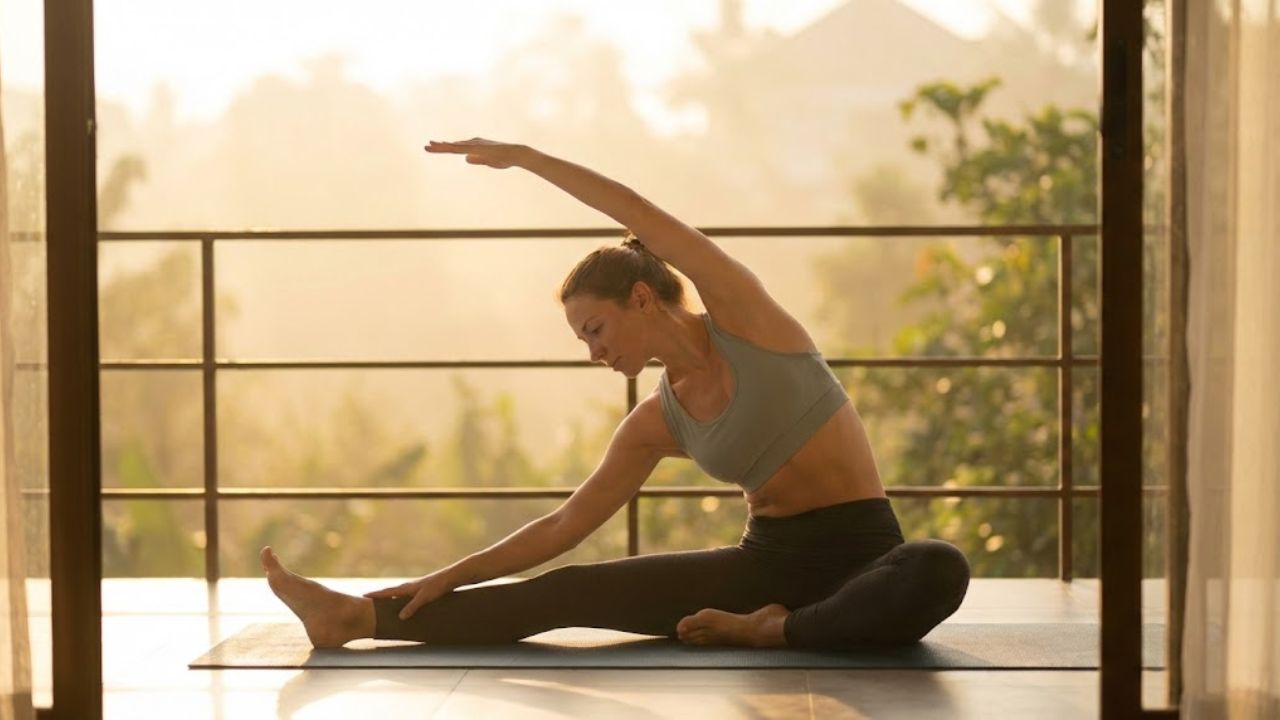
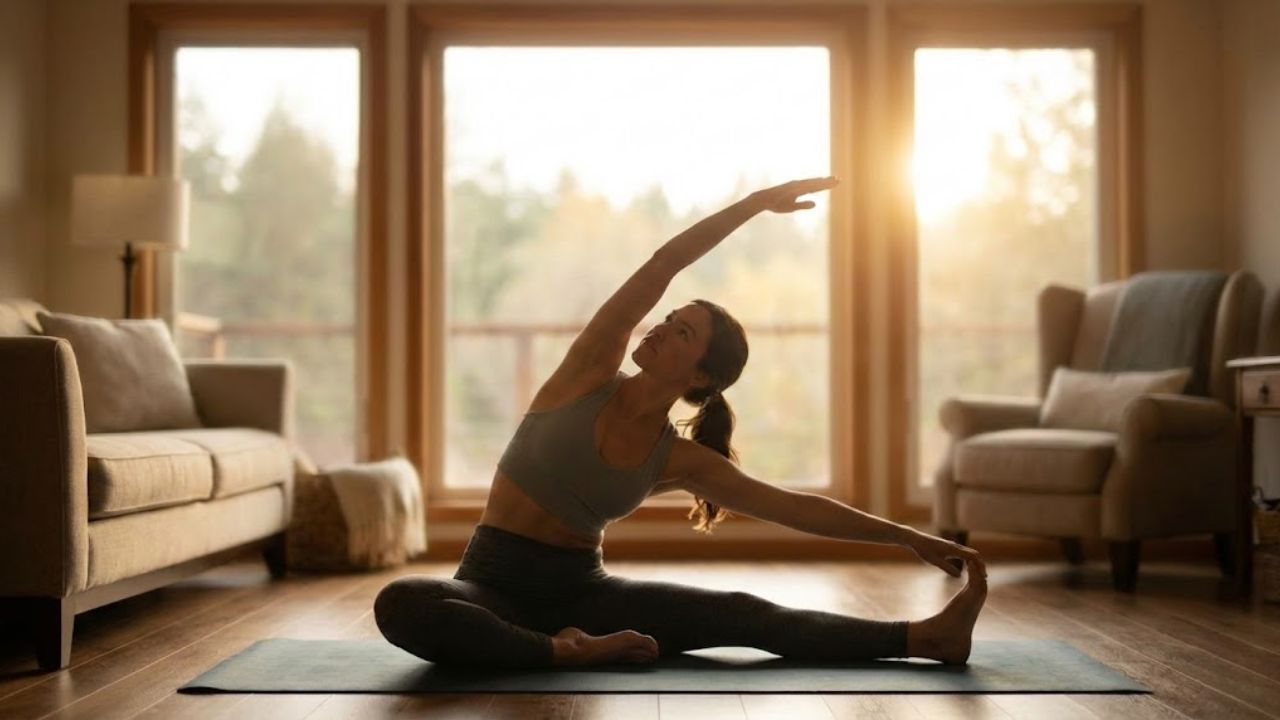
    2. Seated Forward Fold (Paschimottanasana)

    The Seated Forward Fold stretches the entire back of the body, including the neck, shoulders, and spine.

    How to do it:

    – Sit on the floor with your legs extended straight in front of you.

    – Inhale and lengthen your spine, sitting up tall.

    – Exhale as you slowly fold forward from your hips, keeping your spine straight.

    – Reach for your feet or shins, keeping your neck relaxed.

    – Hold the pose for 20–30 seconds, breathing deeply.

    This pose helps relieve tightness in the neck and shoulders while calming the nervous system.

    3. Thread the Needle Pose (Parsva Balasana)

    Thread the Needle is a gentle twist that helps release tension in the shoulders and neck while also stretching the upper back.

    How to do it:

    – Start in a tabletop position on your hands and knees.

    – Inhale, and as you exhale, slide your right arm underneath your left arm, bringing your right shoulder and ear to the floor.

    – Keep your left hand planted on the ground for support or extend it forward for a deeper stretch.

    – Hold for 20–30 seconds, then switch sides.

    This pose targets the neck and upper back, helping to release stiffness and improve circulation.

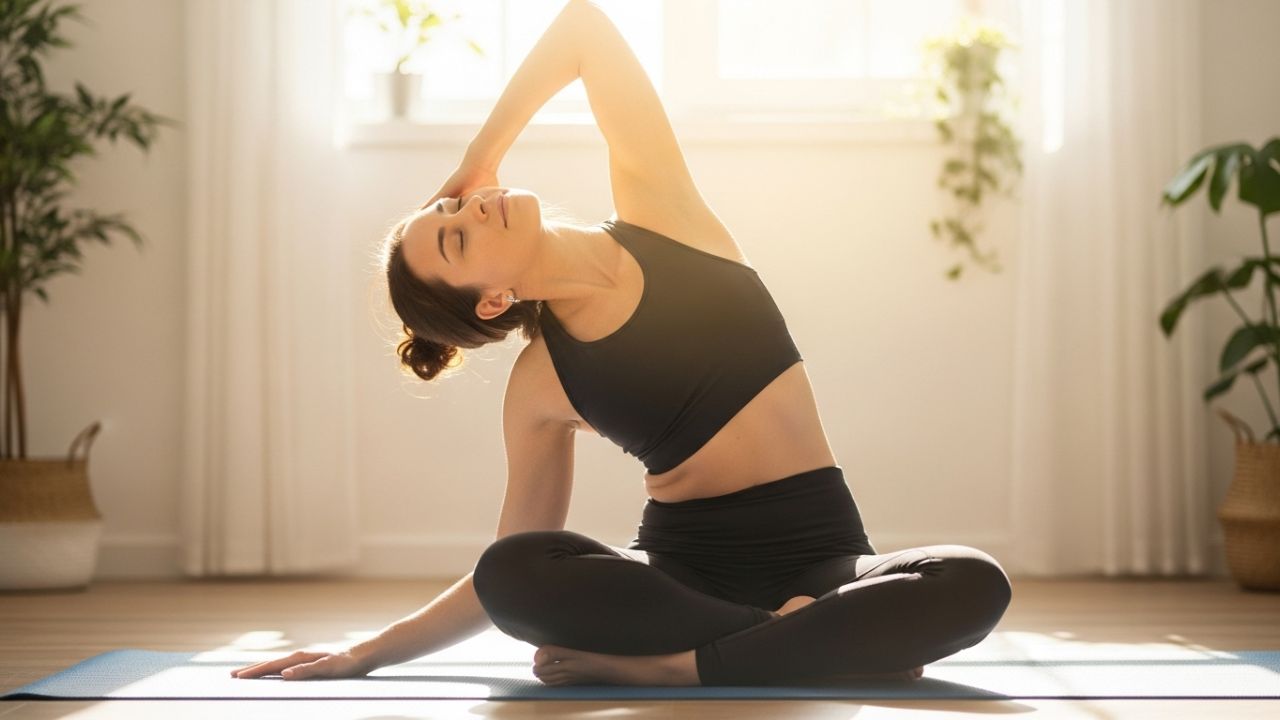
    4. Neck Stretch (Sukhasana)

    The Neck Stretch pose targets the neck muscles directly, providing a simple yet effective way to release tension.

    How to do it:

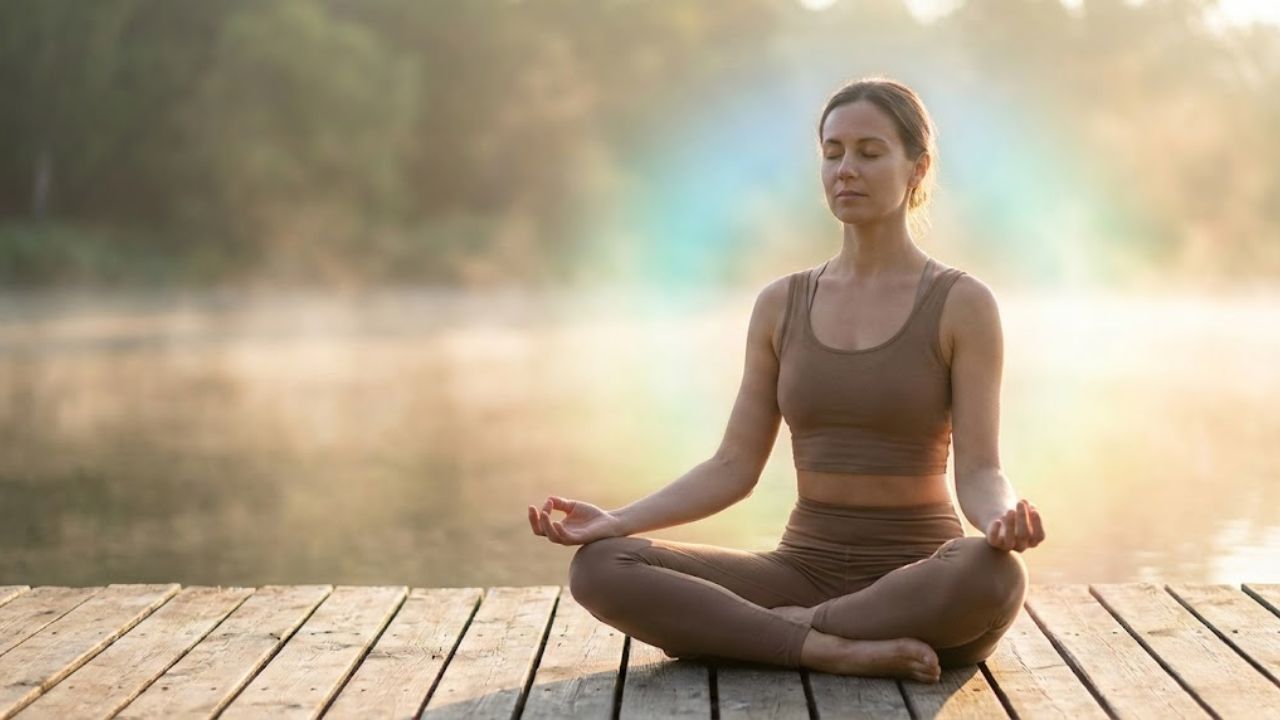
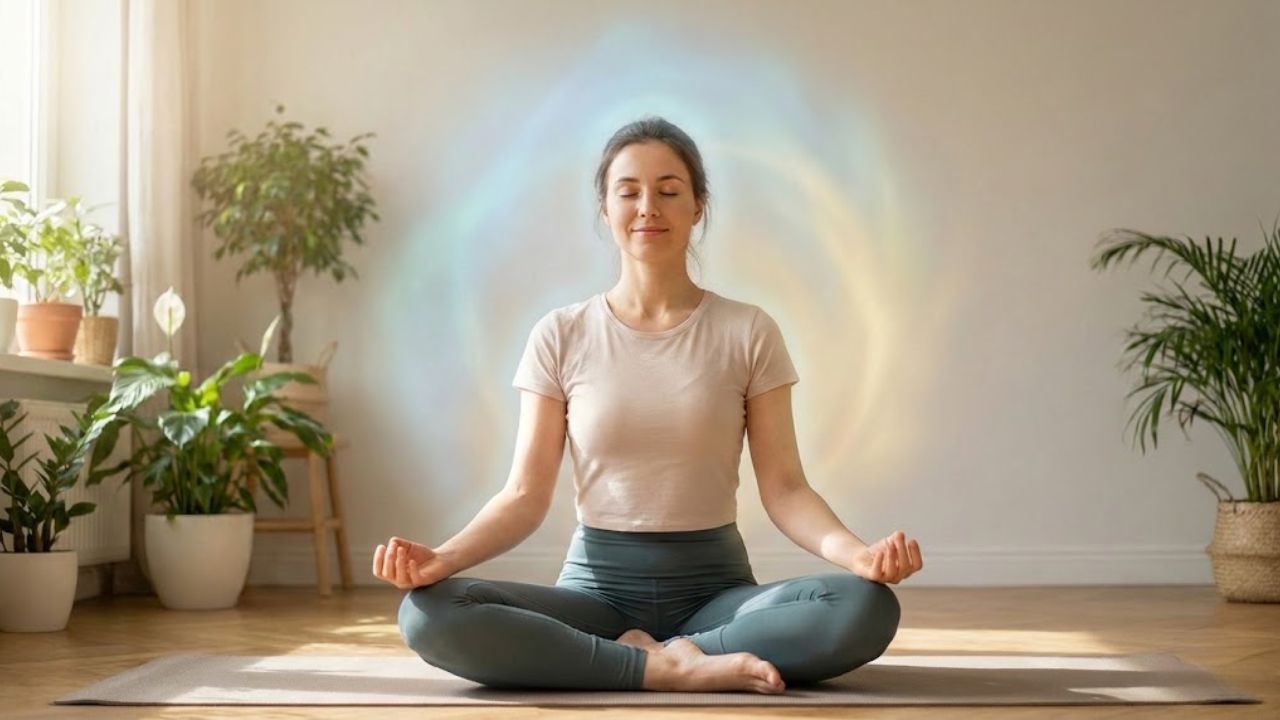
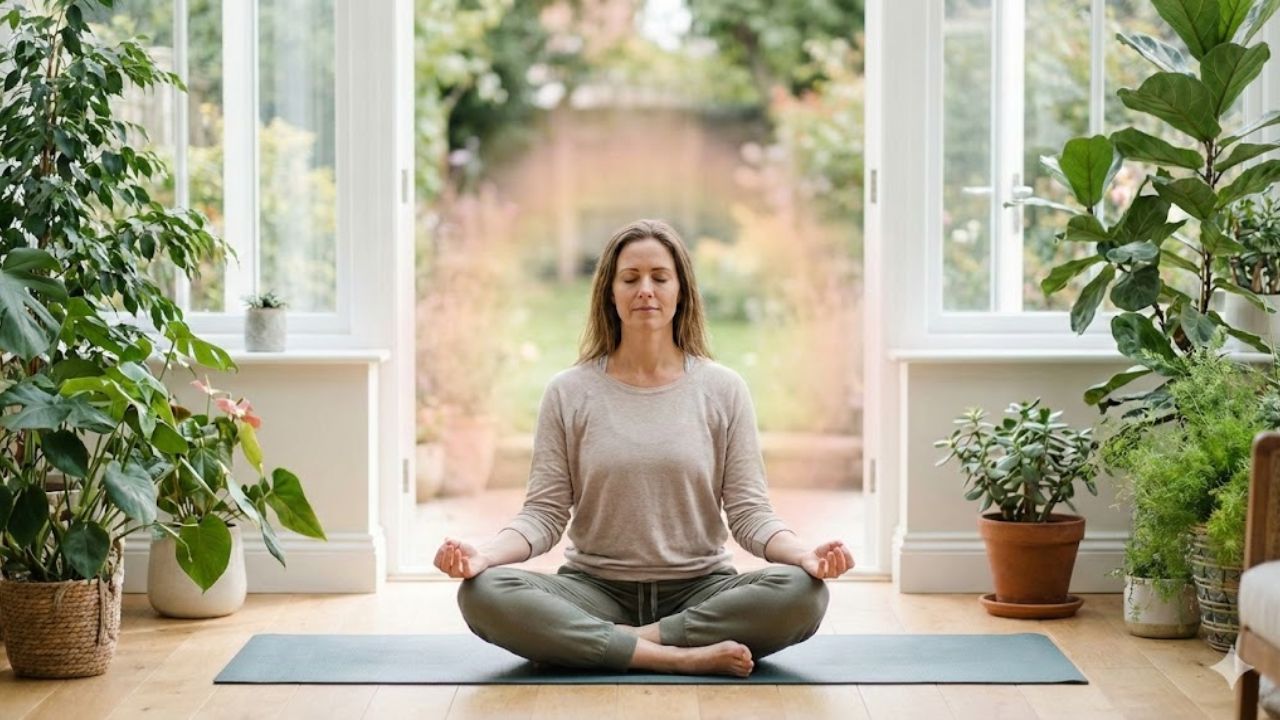
    – Sit comfortably in a cross-legged position (Sukhasana) or on a chair.

    – Inhale and sit up tall, lengthening your spine.

    – Slowly lower your right ear toward your right shoulder, feeling a stretch on the left side of your neck.

    – For a deeper stretch, gently hold your head with your right hand.

    – Hold for 20–30 seconds, then switch sides.

    This simple stretch can be done throughout the day to relieve neck tension caused by sitting at a desk or looking at a screen for long periods.

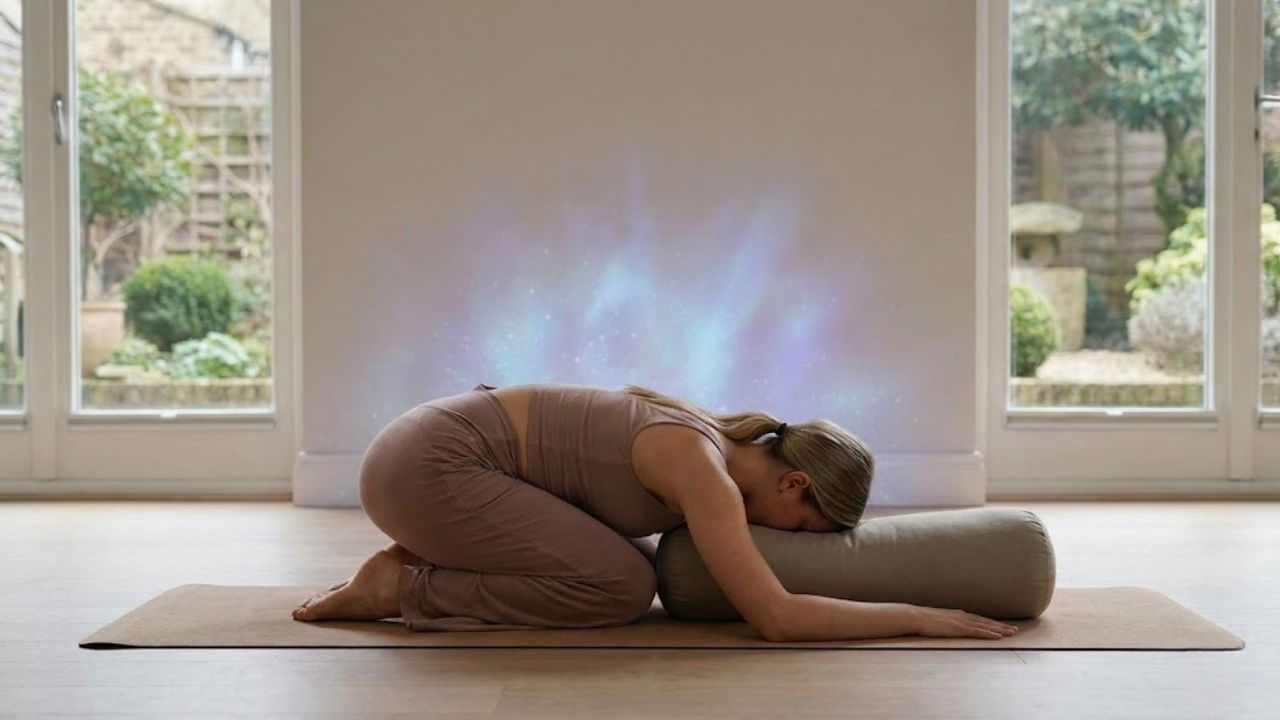
    5. Child’s Pose (Balasana)

    Child’s Pose is a restorative pose that gently stretches the neck, back, and hips. It’s great for relieving tension and promoting relaxation.

    How to do it:

    – Start in a kneeling position with your knees wide apart and your big toes touching.

    – Exhale as you fold forward, bringing your forehead to the floor or a prop.

    – Extend your arms in front of you, or rest them alongside your body.

    – Hold for 1–2 minutes, breathing deeply into your back and neck.

    This calming pose helps release stress from the neck and shoulders, promoting deep relaxation and flexibility.
  • Yoga for Weight Balance: Effective Poses That Support Healthy Metabolism and Sustainable Fat Loss

    Yoga for Weight Balance: Effective Poses That Support Healthy Metabolism and Sustainable Fat Loss

    Yoga is not only a practice for relaxation but also an effective way to boost metabolism, burn fat, and enhance overall fitness. Many individuals are adopting yoga as a natural method for weight loss, combining physical postures with mindfulness and breathing techniques. In this article, we will discuss some of the most effective yoga poses for weight loss and how incorporating them into your routine can support a healthier, leaner body.

    Why Yoga Helps with Weight Loss

    Yoga supports weight loss through multiple mechanisms. First, it increases muscle tone, which raises your resting metabolic rate. Second, yoga improves flexibility and posture, reducing the risk of injury and promoting overall physical activity. Finally, certain styles of yoga, such as vinyasa or power yoga, provide a cardiovascular workout that helps burn calories, especially with regular practice.

    1. Sun Salutations (Surya Namaskar)

    Why Practice It?

    Sun Salutations consist of 12 poses performed in a flowing sequence, stretching and strengthening muscles while improving flexibility. This dynamic movement can elevate your heart rate, providing an excellent cardio workout.

    How to Do It:

    – Start in a standing position with feet together and palms in front of your chest in prayer position.
    – Inhale, stretch your arms overhead, and exhale while folding forward to touch the ground.
    – Step back into plank position and lower your body to the ground.
    – Inhale to lift your chest into Cobra pose, then exhale while pushing back into Downward-Facing Dog.
    – Step forward, bring your hands to your feet, and roll up to a standing position.
    – Repeat the sequence for several minutes.

    Benefits for Weight Loss:

    This sequence engages the entire body, increasing strength, stamina, and endurance. Continuous flow elevates the heart rate and burns calories effectively.

    2. Downward-Facing Dog (Adho Mukha Svanasana)

    Why Practice It?

    This pose stretches the entire body and strengthens the core, arms, and legs. It also aids digestion and overall body awareness.

    How to Do It:

    – Start in a tabletop position with hands under shoulders and knees under hips.
    – Tuck your toes and lift your hips toward the ceiling, forming an inverted V shape.
    – Keep hands shoulder-width apart and feet hip-width apart.
    – Hold for 30 seconds to 1 minute, then slowly lower your knees.

    Benefits for Weight Loss:

    Downward-Facing Dog improves circulation, strengthens core muscles, and raises heart rate when held longer.

    3. Warrior II (Virabhadrasana II)

    Why Practice It?

    Warrior II is a strong standing pose that targets legs, arms, and core, while building stamina and strength.

    How to Do It:

    – Stand with legs wide apart, turning the left foot 90 degrees outward.
    – Bend the left knee directly over the ankle, keeping the right leg straight.
    – Extend arms to the sides at shoulder height, palms down.
    – Gaze over the left hand and hold for 30 seconds to 1 minute.
    – Repeat on the other side.

    Benefits for Weight Loss:

    This pose strengthens legs and core while engaging arms. It enhances balance and flexibility, improving overall fitness.

    4. Boat Pose (Navasana)

    Why Practice It?

    Boat Pose strengthens abdominal muscles and improves balance, making it an excellent core workout.

    How to Do It:

    – Sit on the mat with knees bent and feet flat.
    – Lean back slightly and lift feet off the floor, bringing shins parallel to the ground.
    – Extend legs fully and raise arms to shoulder height, palms facing inward.
    – Hold for 30 seconds to 1 minute, then gently release.

    Benefits for Weight Loss:

    Strengthening the core with Boat Pose helps burn abdominal fat and tones the entire core region.

    5. Plank Pose (Phalakasana)

    Why Practice It?

    Plank Pose is ideal for building core and arm strength. It engages multiple muscle groups, supporting fat burning and toning.

    How to Do It:

    – Start in a tabletop position with hands under shoulders.
    – Step back into a high plank position.
    – Keep your body in a straight line from head to heels, engaging the core.
    – Hold for 30 seconds to 1 minute, then release.

    Benefits for Weight Loss:

    Plank strengthens core, arms, back, chest, shoulders, and legs. Increased muscle mass helps burn more calories at rest.

    6. Chair Pose (Utkatasana)

    Why Practice It?

    Chair Pose provides a powerful lower-body workout, targeting thighs, glutes, and core while strengthening the lower back.

    How to Do It:

    – Stand with feet together, arms at your sides.
    – Inhale and raise arms overhead, palms facing inward.
    – Bend knees as if sitting in a chair, keeping weight in your heels.
    – Hold for 30 seconds to 1 minute, then return to standing.

    Benefits for Weight Loss:

    Chair Pose engages large muscle groups, aiding fat burning and improving lower-body strength.

  • Deep Relaxation Guide: Seven Yoga Poses That Promote Full-Body Calm and Mental Ease

    Deep Relaxation Guide: Seven Yoga Poses That Promote Full-Body Calm and Mental Ease

    Yoga is well known for improving both physical and mental health. Some yoga poses work especially well for relaxing and recovering after a busy day. These poses help loosen tight muscles while calming your mind & lowering stress levels. They also support your overall health and wellness. Here are seven yoga poses that can help you achieve deep relaxation and find inner peace.

    Child’s Pose (Balasana)

    Child’s Pose is a relaxing position that stretches your hips, thighs and back while helping to calm your mind. This gentle pose relieves tension and works well as a resting position during yoga practice. When you focus on breathing in this pose your body naturally settles into a relaxed state and releases any remaining stress.

    How to Do It:

    – Kneel on the floor with your big toes touching and knees spread apart.
    -Lower your torso to the ground, allowing your forehead to rest gently on the mat.
    -Extend your arms either:
    – straight out in front of you, or
    -alongside your body with your palms facing upward.
    -Inhale and exhale deeply, relaxing into the posture.
    -Hold this position for 30 seconds to 1 minute.

    Downward-Facing Dog (Adho Mukha Svanasana)

    This pose stretches your back hamstrings and calves deeply while making your arms stronger. It releases tension from your spine and increases blood flow to your brain. This helps clear mental fog and gives you more energy.

    – Begin in an all-fours position, with your hands slightly ahead of your shoulders and your knees directly under your hips.

    – Press into your hands and lift your hips up and back toward the ceiling, straightening your legs as much as possible.

    – Aim to bring your heels toward the floor while keeping your spine long and your head relaxed between your arms.

    – Stay in this position for 30 seconds to 1 minute, breathing deeply and evenly throughout.

     Legs Up the Wall Pose (Viparita Karani)

    Legs Up the Wall is a restorative pose that helps reduce stress & anxiety. When you elevate your legs in this position it improves blood flow & takes pressure off your lower back. This makes it an excellent choice for relaxing both your body and mind.

    How to Do It:

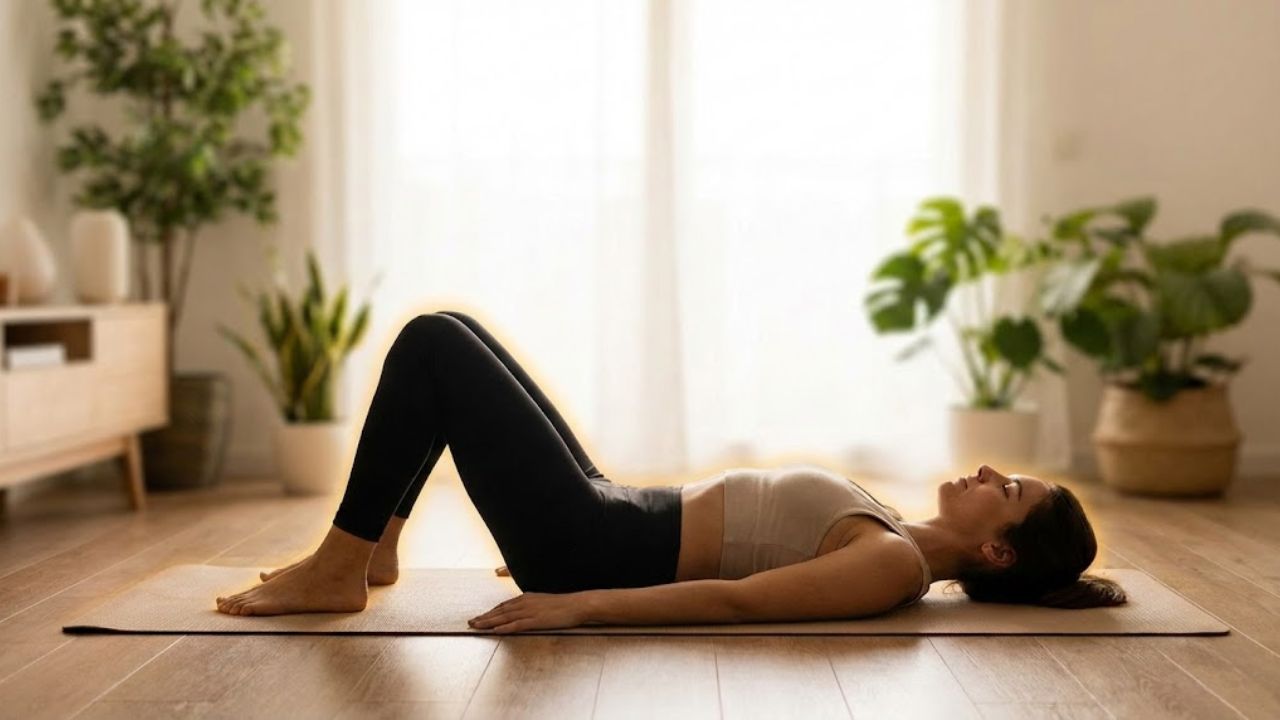
    – Sit next to a wall, and gently lie back on the floor.
    – Swing your legs up and rest them vertically against the wall.
    – Keep your legs straight and arms relaxed at your sides.
    – Breathe deeply and steadily throughout.
    – Hold the position for 5 to 10 minutes.

    Reclining Bound Angle Pose (Supta Baddha Konasana)

    Why Should You Try It?

    This pose opens the hips and allows the chest to expand, promoting deep breathing and relaxation. It’s particularly effective for releasing tension in the lower body and calming the nervous system.

    How to Do It:

    – Lie on your back and bring the soles of your feet together, allowing your knees to fall open to the sides.

    – Place your hands on your belly or stretch them out on the floor.

    – Close your eyes and breathe deeply, holding the position for several minutes.

     Savasana (Corpse Pose)

    Why Should You Try It?

    Savasana is the ultimate relaxation pose, often practiced at the end of a yoga session. It allows your body to absorb the benefits of the practice while fostering a deep sense of calm. This pose encourages mindfulness and is essential for restoring balance after physical exertion.

    How to Do It:

    – Lie flat on your back with your arms by your sides, palms facing upward.

    – Close your eyes and focus on your breath, allowing your body to relax completely.

    – Stay in the pose for 5 to 10 minutes, gradually releasing any remaining tension in your body.

    Cat-Cow Pose (Marjaryasana-Bitilasana)

    Why Should You Try It?

    This dynamic movement helps to loosen up the spine, release tension in the back, and promote a smooth flow of energy throughout the body. It is an excellent way to warm up the body and release any tightness, particularly in the neck and back.

    How to Do It:

    – Start in a tabletop position with your wrists beneath your shoulders and knees beneath your hips.

    – Inhale as you arch your back (Cow Pose), lifting your head and tailbone.

    – Exhale as you round your spine (Cat Pose), tucking your chin and tailbone.

    – Repeat the flow for 1 to 2 minutes, coordinating your breath with the movement.

     Seated Forward Fold (Paschimottanasana)

    Why Should You Try It?

    This calming pose stretches the entire back and hamstrings, promoting flexibility while relieving tension in the spine. It also encourages deep breathing, which helps in lowering stress levels and calming the mind.

    How to Do It:

    – Sit on the floor with your legs extended straight out in front of you.

    – Inhale, lengthening your spine, then exhale as you hinge forward at the hips, reaching for your feet or shins.

    – Hold for 30 seconds to 1 minute while focusing on slow, deep breaths.

  • Tension Release Therapy: Seven Yoga Poses That Gently Ease Stress and Muscle Tightness

    Tension Release Therapy: Seven Yoga Poses That Gently Ease Stress and Muscle Tightness

    Daily stress & tension from life can harm both your body & mind. When you face tight muscles or feel mentally and emotionally drained yoga offers an excellent solution for relaxation & tension release. Adding some straightforward & effective yoga poses to your daily routine helps you feel more relaxed while boosting your overall health. These seven yoga poses work to relieve tension & bring balance back to your body and mind. Yoga provides a natural approach to managing stress that builds up from work deadlines and personal responsibilities and everyday challenges.

    Child’s Pose (Balasana): A Relaxing Restorative Pose

    Child’s Pose provides a gentle stretch for your back hips and thighs. This position calms your nervous system and helps release physical and mental tension.

    Steps to perform this pose:

    – Begin by kneeling on the floor with your big toes together and knees apart.

    – Sit back on your heels while reaching your arms forward and placing your forehead on the ground.

    – Take deep breaths & stay in this position for 30 seconds to one minute while concentrating on your breathing to let go of tension.

    Downward-Facing Dog (Adho Mukha Svanasana): A Full-Body Stretch

    This pose stretches your entire body & works especially well for your spine hamstrings, and shoulders. It reduces tightness in your back and neck while improving blood circulation to your head.

    How to Do It:

    – Begin on your hands and knees with your wrists directly below your shoulders and your knees below your hips.

    – Raise your hips upward while straightening your legs and lowering your heels toward the ground.

    – Extend your arms out in front and push your chest down toward your thighs to form an upside-down V shape with your body.

    – Maintain this position for 30 seconds to one minute and breathe deeply throughout.

    Seated Forward Fold (Paschimottanasana): A Deep Stretch for the Back

    Why It Helps:

    This pose works on your hamstrings and lower back to reduce tension and stiffness in your spine. It works well for easing lower back pain that comes from sitting too long.

    How to Do It:

    – Sit on the floor and stretch your legs out straight in front of you.

    – Breathe in and make your spine longer.

    – Then breathe out as you bend forward from your hips & reach your hands toward your feet.

    – Try to keep your back straight so you don’t hurt your spine.

    – Stay in this position for 30 seconds to one minute and take deep breaths to make the stretch deeper.

    Cat-Cow Pose (Marjaryasana-Bitilasana): A Gentle Spine Mobilizer

    Why It Helps:

    Cat-Cow Pose uses flowing movement to ease tightness in your spine and upper body. This gentle back-and-forth motion stretches and strengthens your back muscles while helping you release built-up tension in your neck and shoulders.

    How to Do It:

    – Start on your hands & knees with your wrists directly below your shoulders & your knees below your hips.

    – Breathe in while you arch your back downward and lift both your chest & tailbone upward for Cow Pose.

    – Breathe out while you curve your spine upward and tuck your chin and tailbone inward for Cat Pose.

    – Continue moving smoothly between these two positions for 5 to 10 repetitions.

    Legs Up the Wall (Viparita Karani): A Restorative Pose for the Legs and Lower Back

    Why It Helps:

    Legs Up the Wall is a gentle resting pose that works on your lower back and legs while improving blood flow. It helps reduce swelling and tightness in your legs & creates a feeling of peace and relaxation.

    How to Do It:

    – Start by sitting sideways next to a wall.

    – Then lie down on your back & swing your legs up so they rest against the wall.

    – Keep your hips near the wall & let your arms rest comfortably at your sides.

    – Stay in this position for 5 to 10 minutes while breathing slowly and deeply.

    – Focus on letting go of any tightness in your legs and lower back.

    Reclining Bound Angle Pose (Supta Baddha Konasana): Open the Hips and Chest

    Why This Works:

    This position effectively releases tightness in your hips & lower back area. It works particularly well if you sit for long periods during the day and need to loosen up your hip flexors and open your chest.

    Steps to Follow:

    – Start by lying flat on your back and bend both knees while keeping your feet on the ground.

    – Press the bottoms of your feet together and let both knees fall open toward the floor on each side.

    – Rest your hands either on your stomach or alongside your body and let yourself sink into the position.

    – Stay in this stretch for one to three minutes while taking slow deep breaths to help your muscles relax.

     Neck Stretch (Sukhasana with Neck Stretch): Targeting the Neck and Shoulders

    Why It Helps:

    The neck often holds tension from sitting at a desk too long or having bad posture. This basic neck stretch releases tightness in your neck & shoulders.

    How to Do It:

    – Sit in a comfortable cross-legged position with your back straight. Breathe in and extend your neck upward.

    – Then breathe out and slowly tilt your head to one shoulder.

    – Place your hand on the opposite side of your head to gently increase the stretch. Stay in this position for 30 seconds to one minute. Then repeat on the other side.

  • Morning Energy Reset: A Quick Yoga Flow Designed to Wake the Body and Sharpen Focus

    Morning Energy Reset: A Quick Yoga Flow Designed to Wake the Body and Sharpen Focus

    Yoga is not just a relaxation practice; it’s also a highly effective way to boost metabolism, burn fat, and improve overall fitness. Increasingly, people are turning to yoga for natural weight loss, combining physical postures with mindfulness and controlled breathing. In this article, we’ll explore some of the most effective yoga poses for weight loss and how integrating them into your routine can help you achieve a leaner, healthier body.

    Why Yoga Works for Weight Loss

    Yoga aids weight loss in multiple ways. Firstly, it enhances muscle tone, which raises your resting metabolic rate. Secondly, yoga improves flexibility and posture, reducing the risk of injuries and encouraging more physical activity. Additionally, certain yoga styles, such as vinyasa or power yoga, offer cardiovascular benefits that help burn calories when practiced consistently.

    1. Sun Salutations (Surya Namaskar)

    Why Practice It?

    Sun Salutations are a sequence of 12 poses performed fluidly, stretching and strengthening muscles while improving flexibility. This dynamic flow raises heart rate, providing an effective cardio workout.

    How to Do It:

    – Begin standing with feet together, palms in prayer position at the chest.
    – Inhale and stretch your arms overhead, exhale and fold forward, touching the ground.
    – Step back into plank position and lower your body down.
    – Inhale to lift the chest into Cobra pose, exhale to push back into Downward-Facing Dog.
    – Step forward, bring hands to feet, and roll up to standing.
    – Repeat for several minutes.

    2. Downward-Facing Dog (Adho Mukha Svanasana)

    Why Practice It?

    This pose stretches the entire body while strengthening the core, arms, and legs. It also supports digestion and overall circulation.

    How to Do It:

    – Start on all fours, hands under shoulders, knees under hips.
    – Tuck toes and lift hips to form an inverted V shape.
    – Keep hands shoulder-width and feet hip-width apart.
    – Hold for 30 seconds to 1 minute, then gently lower knees.

    Benefits for Weight Loss:

    Downward-Facing Dog boosts circulation, strengthens core muscles, and increases heart rate when maintained longer.

    3. Warrior II (Virabhadrasana II)

    Why Practice It?

    Warrior II is a strong standing pose targeting legs, arms, and core, while enhancing stamina and strength.

    How to Do It:

    – Stand with legs wide, turn the left foot 90° outward.
    – Bend left knee over the ankle, keeping the right leg straight.
    – Extend arms to the sides at shoulder height, palms down.
    – Gaze over the left hand, holding 30 seconds to 1 minute.
    – Repeat on the other side.

    Benefits for Weight Loss:

    This pose strengthens legs and core while engaging arms, improving flexibility, balance, and overall fitness.

    4. Boat Pose (Navasana)

    Why Practice It?

    Boat Pose focuses on core strength and balance, making it an effective abdominal workout.

    How to Do It:

    – Sit with knees bent, feet flat on the floor.
    – Lean back slightly and lift feet, keeping shins parallel to the ground.
    – Extend legs fully and raise arms to shoulder height, palms inward.
    – Hold for 30 seconds to 1 minute, then release.

    Benefits for Weight Loss:

    Boat Pose strengthens core muscles, aids in abdominal fat reduction, and tones the midsection.

    5. Plank Pose (Phalakasana)

    Why Practice It?

    Plank Pose strengthens the core, arms, and multiple muscle groups, promoting fat loss and toning.

    How to Do It:

    – Begin on all fours, hands under shoulders.

    – Step feet back into a high plank, body straight from head to heels.

    – Engage the core and hold for 30 seconds to 1 minute, then release.

    Benefits for Weight Loss:

    Plank builds strength in the core, arms, back, chest, shoulders, and legs, increasing muscle mass and calorie burn at rest.

    6. Chair Pose (Utkatasana)

    Why Practice It?

    Chair Pose targets thighs, glutes, and core while strengthening the lower back.

    How to Do It:

    – Stand with feet together, arms at sides.
    – Inhale, raise arms overhead, palms inward.
    – Bend knees as if sitting in a chair, keeping weight in heels.
    – Hold for 30 seconds to 1 minute, then return to standing.

    Benefits for Weight Loss:

    Chair Pose engages large muscle groups, enhancing fat burning and lower body strength.

  • Mind-Calming Yoga Flow: Poses That Quiet the Mind and Encourage Emotional Soothing

    Mind-Calming Yoga Flow: Poses That Quiet the Mind and Encourage Emotional Soothing

    Yoga has always been known for its physical benefits but it also provides significant emotional and mental health advantages. In our busy modern world where stress and anxiety affect many people yoga offers an effective solution to calm the mind & bring peace to the soul. Through intentional movements combined with deep breathing & meditation yoga can create a strong sense of peace & relaxation. Here are some yoga poses that specifically help calm the mind and restore emotional balance.

    Child’s Pose (Balasana)

    Child’s Pose is a restorative posture that promotes a sense of comfort and calm. Used as a resting pose, it helps release tension in the lower back and hips. Deep breathing in this position calms the nervous system.

    How to Perform:
    – Begin by kneeling with big toes touching, knees apart.
    – Lower hips to heels, stretch arms forward, and rest forehead on mat.
    – Breathe deeply, allowing body and mind to relax.

    Cat-Cow Pose (Marjaryasana-Bitilasana)

    The Cat-Cow flow stretches the spine, releases tension in the neck and back, and encourages deep, mindful breathing. This rhythmic movement helps reduce stress and centers your awareness.

    How to Perform:
    – Start on hands and knees in tabletop position.
    – Inhale: arch back, lift chest and tailbone (Cow Pose).
    – Exhale: round spine, tuck chin and belly (Cat Pose).
    – Repeat for several rounds, syncing breath with movement.

    Legs Up the Wall (Viparita Karani)

    This pose is deeply relaxing and enhances circulation. It relieves lower back tension and helps the body shift into a calm state.

    How to Perform:
    – Sit beside a wall and lie on your back, legs up the wall.
    – Position hips close to the wall, arms by your sides.
    – Close eyes, breathe deeply, and stay for 5–15 minutes.

    Seated Forward Fold (Paschimottanasana)

    This pose stretches the hamstrings and back, promoting peace by releasing physical tension and calming the mind.

    How to Perform:
    – Sit with legs extended forward, feet flexed.
    – Inhale to lengthen spine; exhale to fold forward with a straight back.
    – Reach toward feet and rest head on legs or mat.
    – Hold and breathe deeply.

    Reclining Bound Angle Pose (Supta Baddha Konasana)

    A gentle pose for emotional release and relaxation, opening the chest and hips while promoting calm through deep breathing.

    How to Perform:
    – Lie on your back, bring soles of feet together, knees falling outward.
    – Arms rest by your sides, palms facing up.
    – Focus on breath and relax deeply.

    Corpse Pose (Savasana)

    Savasana is key for absorbing the benefits of practice. It provides total relaxation, calming the mind and body.

    How to Perform:
    – Lie flat on your back, legs extended, arms by sides, palms up.
    – Close eyes, breathe slowly and deeply.
    – Let your body sink into the mat.
    – Stay in this pose for 5–10 minutes.

  • Posture Improvement Plan: Five Yoga Poses That Strengthen Alignment and Spinal Stability

    Posture Improvement Plan: Five Yoga Poses That Strengthen Alignment and Spinal Stability

    Modern life has created widespread posture problems because people spend many hours sitting at computers and looking down at phones while dealing with daily stress. Bad posture causes back pain & muscle problems along with various other health concerns. Yoga provides a natural solution to fix posture and improve how your body aligns. Regular practice of certain yoga poses strengthens your core and increases flexibility while creating lasting improvements in how you stand and sit. Here are five effective yoga poses that help you maintain proper alignment & stand taller.

    Why is Posture Important?

    The Importance of Good Posture Posture affects your overall health and well-being in significant ways. When you maintain good posture your body works more efficiently and you avoid unnecessary strain on your muscles & ligaments. Your spine gets the support it needs & your risk of injury decreases substantially. Good posture keeps your joints properly aligned. This alignment means your muscles can work the way they were designed to work. When your body is positioned correctly you use less energy to move and function throughout the day. Your circulation improves when you sit and stand with proper posture. Blood flows more easily through your body when you are not compressed or twisted in awkward positions. This better blood flow delivers oxygen and nutrients to your tissues more effectively. Fatigue becomes less of a problem when you maintain good posture. Your muscles do not have to work as hard to keep you upright and balanced. This efficiency means you have more energy left for other activities. Poor posture forces some muscles to work overtime while others become weak from underuse. The benefits of good posture extend beyond just physical comfort. When your body is aligned correctly you can breathe more deeply because your lungs have room to expand fully. Your digestive system also functions better when you are not hunched over and compressing your internal organs. Taking care of your posture now helps prevent problems later in life. The habits you build today will affect how your body ages & how well you can move as you get older.

    Mountain Pose (Tadasana)

    Mountain Pose is the foundation of all standing poses in yoga. It may seem simple, but it is incredibly powerful for improving posture. In this pose, you learn to align your entire body from head to toe, developing awareness of your posture while standing.

    How to Practice:
    – Stand tall with your feet hip-width apart and your arms by your sides.
    – Engage your thighs, lift your kneecaps, and feel the connection through the soles of your feet to the ground.
    – Lift your chest, keeping your shoulders relaxed.
    – Reach the crown of your head towards the sky, and align your head, neck, and spine.

    Benefits:
    Mountain Pose strengthens your legs and core, encourages proper alignment of the spine, and improves overall body awareness.

    Cat-Cow Pose (Marjaryasana-Bitilasana)

    Cat-Cow Pose is a dynamic movement between two positions that stretches and strengthens the spine. It’s excellent for improving spinal flexibility and posture by promoting a natural curvature of the back.

    How to Practice:
    – Start on your hands and knees in a tabletop position, with your wrists directly beneath your shoulders and your knees beneath your hips.
    – On an inhale, arch your back and lift your chest towards the ceiling (Cow Pose).
    – On an exhale, round your spine, tucking your chin towards your chest (Cat Pose).
    – Repeat for several rounds, moving slowly and consciously.

    Benefits:
    Cat-Cow Pose improves spinal flexibility, promotes fluidity in the spine, and encourages alignment of the neck and back.

    Cobra Pose (Bhujangasana)

    Cobra Pose is a backbend that opens up the chest and stretches the spine. It helps strengthen the muscles of the lower back and improves spinal alignment.

    How to Practice:

    – Lie on your stomach with your legs extended behind you and your palms placed flat on the floor beneath your shoulders.
    – Press into your palms and lift your chest off the floor, extending your spine upwards.
    – Keep your elbows close to your body and your shoulders away from your ears.
    – Hold the pose for several breaths before lowering back down.

    Benefits:
    Cobra Pose strengthens the lower back, stretches the chest and abdomen, and helps to alleviate lower back pain caused by poor posture.

    Child’s Pose (Balasana)

    Child’s Pose is a resting pose that stretches the back and promotes relaxation. It helps release tension in the spine, hips, and shoulders, providing an excellent counter-pose to prolonged sitting or standing.

    How to Practice:
    – Start in a kneeling position with your knees wide apart and your big toes touching.
    – Lower your torso towards the ground, extending your arms forward or placing them by your sides.
    – Relax your forehead on the mat and breathe deeply into your back.

    Benefits:
    Child’s Pose helps release tension in the back, promotes relaxation, and provides a gentle stretch for the spine, helping to reset the body after strenuous activity.

    Bridge Pose (Setu Bandhasana)

    Bridge Pose is a great way to strengthen the lower back and hips while opening the chest. This pose improves spinal alignment and encourages proper posture by strengthening the muscles that support the spine.

    How to Practice:
    – Lie on your back with your knees bent and your feet flat on the floor, hip-width apart.
    – Press your feet into the floor and lift your hips towards the ceiling.
    – Keep your arms by your sides, with your palms facing down.
    – Engage your thighs and core, and hold the pose for several breaths before lowering back down.

    Benefits:
    Bridge Pose strengthens the glutes, lower back, and legs, helping to support the spine and improve overall posture.

  • 5 Targeted Yoga Techniques That Relax the Mind and Improve Emotional Control

    5 Targeted Yoga Techniques That Relax the Mind and Improve Emotional Control

    Why Child’s Pose Works for Stress Relief Child’s Pose is a simple and gentle yoga position that helps your body relax by calming your nervous system. When you fold forward and rest your forehead on the floor you create a sense of safety & comfort that helps quiet your mind. This position gently stretches your back and hips and thighs while releasing tension that has built up in those muscles. The slow and deep breathing you practice in Child’s Pose activates your body’s natural relaxation response through the parasympathetic nervous system.  How to Do Child’s Pose Start by kneeling on your mat with your big toes touching and your knees spread apart. Lower your hips back toward your heels slowly and bring your forehead down to rest on the ground. You can stretch your arms out in front of you or let them relax alongside your body. Pay attention to your breathing and take deep breaths in & slow breaths out for several cycles.

    Grounding Child’s Pose to Calm Racing Thoughts (Balasana)

    How Downward-Facing Dog Reduces Stress Downward-Facing Dog stretches your whole body and releases tension from your neck and shoulders & back where stress usually accumulates. The pose increases blood circulation and quiets your mind because your head drops below your heart which encourages relaxation. Breathing deeply while maintaining this position improves your mental clarity and helps clear the confused thinking that stress produces. Start on your hands and knees with your hands placed under your shoulders and your knees under your hips. Lift your hips upward toward the ceiling while extending your legs to form an inverted V shape with your body. Press your palms firmly into the mat and keep your feet apart at hip width. Hold this position for several breaths while you focus on extending your spine and allowing your neck muscles to relax.

    Inverted Downward Dog for Mental Reset and Stress Release (Adho Mukha Svanasana)

    Legs Up the Wall Legs Up the Wall is a restorative pose that releases tension & improves circulation. This inversion uses gravity to help blood flow back to your upper body & promotes relaxation. The pose calms your nervous system and reduces anxiety by slowing your breathing and encouraging mindfulness. It works particularly well for people dealing with stress headaches or lower back pain.  How to Do It Sit with one hip against a wall and swing your legs up the wall as you lie on your back. Keep your legs straight and rest your arms by your sides or on your belly. Close your eyes and focus on your breathing while letting your body relax into the pose for 5 to 10 minutes.

    Flowing Cat–Cow Movements to Balance Emotions and Breath (Marjaryasana–Bitilasana)

    How Cat-Cow Pose Helps with Stress Relief Cat-Cow Pose involves gentle movement between two positions that releases tension from your spine and neck. The smooth motion of arching & rounding your back helps your body release accumulated stress and anxiety. This pose also improves your breathing and helps you focus your mind while boosting mental clarity. The rhythmic movement of flexing & extending your spine creates a calming effect on both your body and mind.  How to Do Cat-Cow Pose Begin in a tabletop position with your wrists placed under your shoulders & your knees under your hips. When you breathe in drop your belly toward the mat and lift your chest and tailbone toward the ceiling while looking up for Cow Pose. When you breathe out round your spine upward and tuck your chin toward your chest for Cat Pose. Keep flowing between these two poses with your breathing for 5 to 10 rounds.

    Deep Rest Savasana for Emotional Healing and Inner Stillness (Corpse Pose)

    Why Is Savasana Considered the Ultimate Stress Reliever? Savasana serves as the final resting pose in most yoga sessions and works remarkably well for stress relief. This pose may look simple but it promotes complete relaxation and mindfulness. You lie on your back with your body fully relaxed and let your mind release stress while focusing on the present moment. Savasana reduces anxiety and lowers your heart rate while calming your nervous system. This makes it a vital component of any stress-relieving yoga routine. How to Do Savasana: Lie flat on your back with your legs extended & your arms resting by your sides with palms facing up. Close your eyes and focus on your breath while letting go of any tension in your body. Stay in this position for 5 to 10 minutes and focus on the rise and fall of your belly with each breath.

  • Morning Wellness Routine Begins With This Fast Yoga Flow to Energise Body and Mind

    Morning Wellness Routine Begins With This Fast Yoga Flow to Energise Body and Mind

    Starting your day well means waking up with energy and purpose. A short yoga session in the morning can help you feel more alert and focused. This practice wakes up your muscles and clears your mind so you can handle whatever comes your way. You only need a few minutes to complete this simple routine that will make your morning better. Begin by standing tall with your feet together and your arms at your sides. Take a deep breath in and raise your arms overhead while stretching upward. This movement helps you feel more awake and opens up your chest. Hold this position for a moment before breathing out and lowering your arms back down. Next you can move into a forward fold by bending at your hips & letting your upper body hang toward the floor.

    Why is Yoga Important for Starting Your Day?

    Yoga provides numerous benefits when practiced in the morning. It improves your flexibility and builds physical strength while promoting mental clarity. A brief yoga routine energizes your body and mind so you feel more alert & focused during the day. Consistent practice also decreases stress and anxiety which enhances your emotional wellbeing. This improved mood helps you handle daily tasks & responsibilities more efficiently.

    What Are the Best Yoga Poses for a Morning Routine?

    A morning yoga routine does not have to be complex. Just a few basic poses can effectively refresh both your body and mind. Here is a sequence of poses that creates an ideal morning practice. Beginning your day with yoga can be among the most beneficial choices you make for your general health. The appeal of a morning session comes from how simple and easy it is to do. You do not need expensive gear or a full hour available to gain the advantages. The important thing is selecting poses that softly awaken your body after sleeping.

     Mountain Pose (Tadasana)

    Begin in an upright position with your feet separated at hip width. Allow your arms to rest naturally beside your body. Spend a few seconds concentrating on deep breathing while maintaining a straight and elongated spine. This fundamental standing stance creates a sense of stability & connection to the ground. Regular practice gradually enhances your overall posture. The position expands your chest region & prepares your body for subsequent exercises.

    Downward Facing Dog (Adho Mukha Svanasana)

    Downward-Facing Dog Start by standing upright and then bend forward to place both hands flat on your yoga mat. Push your hips upward toward the ceiling until your body creates an inverted V shape. This position stretches your hamstrings and calves along with your back muscles. It also builds strength in your arms & shoulders. The pose promotes better blood flow throughout your body and gives you an energy boost.

    Cat-Cow Pose (Marjaryasana-Bitilasana)

    Get down on your hands and knees & move between two positions. First arch your back downward like a cow stretching. Then round your back upward like a cat. Breathe in and out as you switch between these poses. This movement helps massage your spine and makes your back more flexible. It works well for releasing tightness in your upper body especially after you wake up from sleep.

    Forward Fold (Uttanasana)

    Standing Forward Bend From Downward Dog position walk your feet forward until they reach your hands. Then fold your body forward at the hips. You can keep your knees slightly bent if needed. This pose helps release tightness in your hamstrings and back muscles. It also calms your mind.

    Warrior I (Virabhadrasana I)

    Warrior I Pose Instruction Step one foot back behind you and bend your front knee until it forms a right angle. Your back leg should stay straight and fully extended. Raise both arms overhead with your palms facing each other. This position strengthens your leg muscles & improves your balance. It also stretches your chest and creates more openness in that area.

    How Long Should I Practice This Yoga Flow?

    You don’t need much time to benefit from morning yoga. A quick 10 to 15-minute session is enough to wake up your body & mind. If you have extra time you can repeat the routine or add more poses that work for you. The important thing is consistency. Practicing yoga every morning will make a real difference in how you feel during the day.

    Can I Do Yoga Even if I’m a Beginner?

    Yoga is suitable for everyone regardless of their experience level. The key is listening to your body and avoiding pushing yourself too hard in the beginning. Start with simple poses and gradually progress to more challenging positions as you build confidence. Remember that consistent practice is more important than perfect execution.

  • 5 Energising Yoga Poses That Help You Feel Awake, Active, and Focused Each Morning

    5 Energising Yoga Poses That Help You Feel Awake, Active, and Focused Each Morning

    Getting out of bed in the morning can feel hard after a full night of sleep. Adding a few simple yoga poses to your morning routine can help you start the day with more energy & focus. Yoga offers many benefits like better circulation & increased flexibility while reducing stress at the same time. Whether you need to stretch your whole body or clear your mind these five yoga poses provide a great way to begin your morning and get yourself moving.

    Downward Dog: A Full-Body Wake-Up

    Downward Dog is one of the most popular yoga poses because it actually works. This position stretches your entire body and wakes up muscles that usually feel stiff in the morning. The pose targets your hamstrings & calves while working your shoulders & spine for a full body stretch. When you stay in this position and breathe deeply you will feel the stiffness start to disappear. This makes you feel energized and ready for whatever comes your way during the day. Start on your hands and knees with your wrists placed directly under your shoulders & your knees under your hips. Lift your hips toward the ceiling to create an upside-down V shape with your body. Press your hands firmly into the mat and straighten your legs as much as you can while keeping your heels off the ground. Hold the pose for 5-10 breaths and then slowly return to the starting position.

    Cat-Cow Stretch: Energizing the Spine

    The Cat-Cow Stretch uses smooth movement between two positions to warm up your spine and reduce stiffness from sleeping. This active stretch opens your chest and promotes deeper breathing to send fresh oxygen through your body as you wake up. A few minutes of this stretch helps you feel centered & steady while giving you an effective way to start your day. Start on all fours with your wrists aligned under your shoulders and your knees under your hips. Inhale as you drop your belly toward the mat while lifting your head and tailbone for the Cow pose. Exhale as you round your back toward the ceiling & tuck your chin to your chest for the Cat pose. Continue flowing between Cat and Cow for one to two minutes while focusing on your breath.

    Warrior I: Building Strength and Confidence

    Warrior I is a standing pose that builds physical strength and opens your hips chest and shoulders. This position helps improve your balance and stability while creating a positive start to your day. When you practice Warrior I you stretch key muscle groups and prepare yourself mentally for what lies ahead. The pose develops physical power & mental focus that you can use throughout your day. Start by standing with your feet hip-width apart. Step one foot back and bend your front knee to 90 degrees while turning your back foot outward at a 45-degree angle. Lift your arms overhead with your palms facing each other. Tighten your core muscles and hold this position for 5 to 10 breaths before switching to the other side.

    Seated Forward Fold: Calming the Mind

    The Seated Forward Fold provides a mild stretch for your hamstrings & lower back. This pose helps reduce physical tension and supports calm breathing patterns. It suits people who experience morning stress because it builds a sense of peace and mental clarity to begin the day. Sit on the ground and extend both legs straight ahead of you. Breathe in while lengthening your spine and then breathe out as you bend forward to bring your chest closer to your thighs. Try to reach your feet or rest your hands on the floor for balance. Stay in this position for 5-10 breaths and concentrate on releasing muscle tension as you exhale.

    Mountain Pose: Grounding Yourself for the Day Ahead

    Mountain Pose appears simple but it effectively develops balance & grounding. Standing tall with good posture aligns your body & mind. This alignment increases your confidence and improves your focus. The pose promotes deep breathing that helps you center yourself before beginning your daily activities. This basic stance builds stability in both physical & mental aspects. Stand with your feet hip-width apart and press your feet firmly into the floor. Let your arms hang down by your sides with your palms facing forward. Activate your legs and core while standing tall and lengthening through the spine. You can close your eyes if you want and take several deep breaths while focusing on your body’s alignment.