Category: News

  • Mindset Transformation Yoga: 7 Practices That Improve Focus and Emotional Strength

    Mindset Transformation Yoga: 7 Practices That Improve Focus and Emotional Strength

    Yoga as a Path to Mental and Emotional Change

    Yoga goes far beyond physical poses and flexibility. It is a powerful mental practice that supports emotional growth and inner balance. While many people recognize yoga for benefits such as improved strength, posture, and flexibility, its influence on the mind is just as meaningful. With regular practice, yoga can help reshape thought patterns, ease stress, and encourage a calmer, more focused outlook. By combining movement, breath, and awareness, yoga creates space for mental clarity and emotional stability. Below are seven practical yoga-based insights that can help transform your mindset and invite a deeper sense of peace into everyday life.

    1. Mindful Breathing and the Practice of Pranayama

    One of yoga’s most effective mindset tools is mindful breathing, known as pranayama. Conscious breathing supports the nervous system, helps reduce anxiety, and enhances mental focus. When attention rests on the breath, the mind naturally shifts away from stress and distraction toward calm awareness.

    • Sit comfortably with a straight spine.
    • Close your eyes and breathe deeply through the nose, then exhale slowly through the mouth.
    • Gently guide your attention to the rhythm of your breath.
    • Practice for 5–10 minutes daily, extending the time gradually.

    This simple breathing practice encourages present-moment awareness and supports better emotional control throughout the day.

    2. Shaping Your Mindset Through Sankalpa

    Setting an intention, known in yoga as a sankalpa, is a meaningful way to guide both practice and mindset. A sankalpa is a positive inner statement that reflects what you wish to invite into your life, such as calm, focus, or self-acceptance.

    • Pause before practice and reflect on what you truly need.
    • Create a short, positive phrase like “I am at peace” or “I am enough.”
    • Repeat this intention silently during your session.

    Over time, this practice helps reinforce a supportive self-image and gently redirects the mind away from unhelpful thinking patterns.

    3. Embracing Mental Stillness Through Meditation

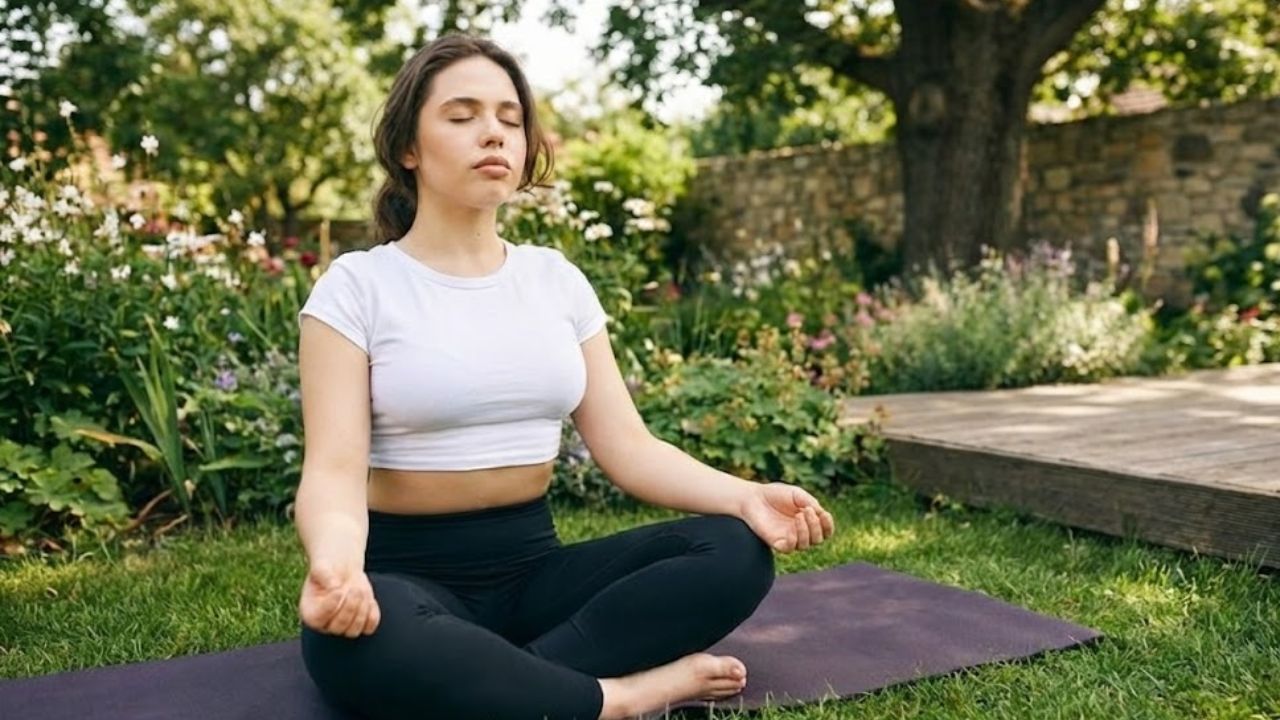
    Yoga encourages stillness as a source of strength rather than discomfort. Meditation plays a key role in calming mental noise and improving focused awareness. Even a few quiet minutes each day can help create a more grounded and balanced mindset.

    • Sit comfortably with your spine upright and eyes closed.
    • Rest your attention on the breath.
    • When thoughts arise, gently return focus to breathing.
    • Begin with 5 minutes and slowly increase the duration.

    Regular meditation supports emotional steadiness, reduces stress, and nurtures inner calm.

    4. Building Gratitude Through Conscious Movement

    Yoga naturally encourages gratitude by drawing attention to the body and the present moment. By acknowledging what your body can do and what you already have, your mindset shifts from scarcity to appreciation and abundance.

    • Notice your body’s strength and flexibility during each pose.
    • Reflect on positive aspects of your life, such as health or personal growth.
    • Use each session to reconnect with the present moment.

    Practicing gratitude regularly can enhance emotional resilience, support mental wellbeing, and promote a more optimistic outlook.

    5. Letting Go of Tension with Forward Folds

    Forward folds are gentle yet powerful postures that help release both physical and emotional tension. These poses encourage the body to soften and the mind to let go of stored stress, creating space for renewed energy.

    • Stand upright with feet hip-width apart.
    • Inhale, then fold forward from the hips as you exhale.
    • Keep the spine long and allow the head and neck to relax.
    • Hold for several slow breaths.

    Forward folds can ease mental heaviness, leaving you feeling lighter and more clear-headed.

    6. Strengthening Focus with Warrior Poses

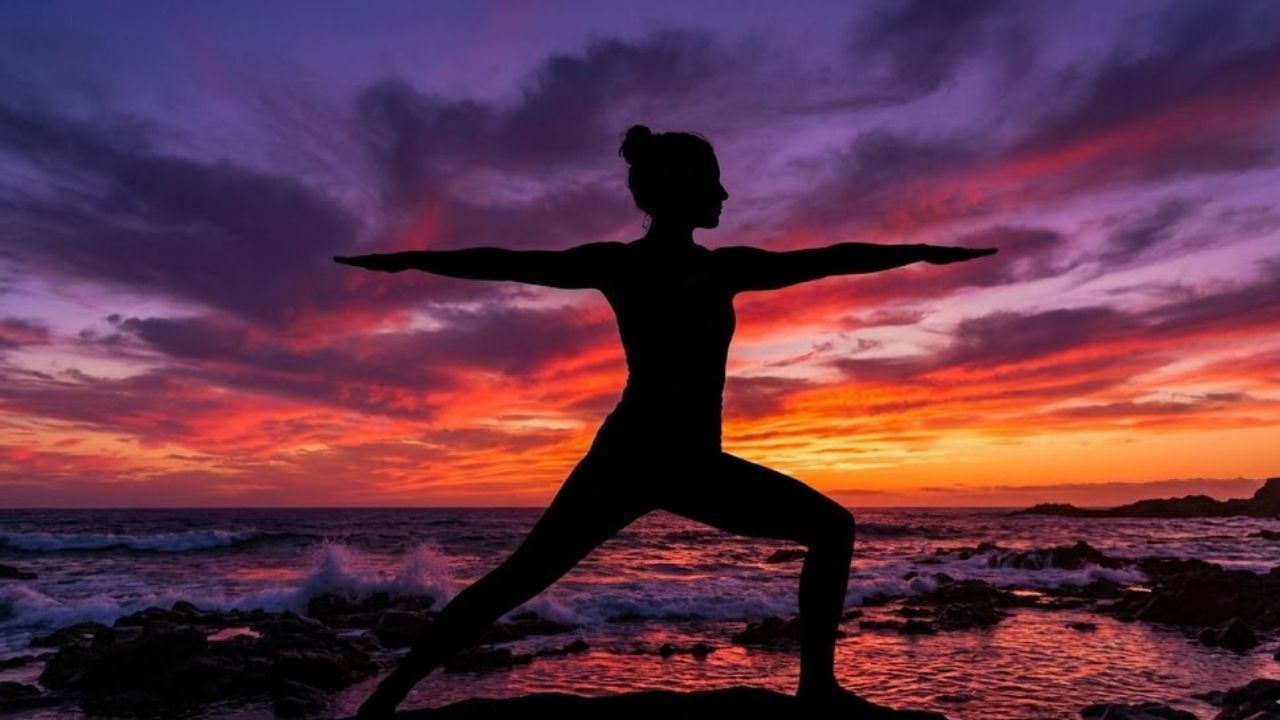
    Warrior poses, known as Virabhadrasana, are energizing postures that support confidence, stability, and mental determination. These poses help connect you with inner strength and promote a focused, resilient mindset.

    • Step one foot back from a standing position.
    • Bend the front knee to a right angle.
    • Extend arms parallel to the floor.
    • Gaze steadily over the front hand.

    Holding warrior poses encourages a sense of inner courage and helps you approach challenges with confidence.

    7. Finding Stability Through Tree Pose

    Tree Pose, or Vrksasana, supports balance, concentration, and mental steadiness. This grounding posture teaches you how to remain centered even when distractions arise, fostering calm focus.

    • Stand tall and shift weight onto one leg.
    • Place the opposite foot against the standing leg.
    • Bring hands to the heart or lift arms overhead.
    • Fix your gaze on a single point.

    Tree Pose strengthens both physical balance and mental clarity, helping you stay composed during daily challenges.

    A Calmer, Clearer Mind Through Consistent Yoga

    Yoga offers a gentle yet effective way to reshape your mindset and experience greater peace and clarity. Through practices like conscious breathing, intention setting, meditation, gratitude, and purposeful movement, yoga helps align the body and mind. With patience and consistency, these practices support a more balanced perspective and encourage emotional wellbeing. By staying connected to yourself on and off the mat, yoga becomes a steady companion in developing a calmer, more empowered way of thinking.


  • Build Muscle and Burn Fat With This Full-Body Workout From Our Latest Training Plan

    Build Muscle and Burn Fat With This Full-Body Workout From Our Latest Training Plan

    With so many fitness trends competing for attention — from Hyrox and hybrid training to functional fitness and beyond — it’s easy to feel overwhelmed. Yet one goal consistently stands out above the rest: improving body composition. That means building muscle, shedding excess fat, and feeling stronger without overcomplicating the process.

    The Build Muscle, Burn Fat plan is created to do exactly that. This straightforward 4–6 week training programme combines structured workouts with a fully comprehensive nutrition guide, helping you create a sensible, sustainable calorie deficit while still fuelling performance. Below, you’ll find a superset-based full-body workout taken directly from the plan so you can experience it first-hand.

    Build Muscle and Burn Fat With a Simple Four-Week Training Plan

    Build strength, add muscle, and strip body fat in 2026 with this simple four-week training plan from Men’s Health fitness director Andrew Tracey. Alongside the workouts, you’ll receive a complete nutrition guide designed to support a smart calorie deficit without compromising training output. Unlock 14 days of free access to the Men’s Health app and start training today.

    Barbell Deadlift

    Hinge down with a flat back to grip the bar, keeping hips low and chest up. Brace your core and drive through the floor to stand tall, maintaining straight arms and a neutral spine throughout the movement.

    Goblet Squat

    Hold a dumbbell or kettlebell tight to your chest. Sink into a deep squat with elbows close to your thighs, then drive upward explosively, keeping your torso upright and the weight secure.

    Incline Dumbbell Press

    Lie back on an incline bench with dumbbells positioned above your chest. Lower them slowly toward your upper chest, elbows slightly tucked. Pause briefly, then press to full extension under control.

    Bent-Over Dumbbell Raise

    Hinge forward until your torso is nearly parallel to the floor, holding light dumbbells at arm’s length. Raise them out to shoulder height while squeezing your shoulder blades, then lower steadily, keeping your torso angle consistent.

    Pull-Up

    Hang from a bar using an overhand grip. Brace your body and pull your elbows down and back until your chin clears the bar. Pause at the top, then lower slowly to a dead hang, avoiding any swinging or kipping.

    Press-Up

    Begin in a strong plank position with hands beneath your shoulders. Lower your chest under control without letting hips drop, then press back to straight arms, keeping elbows close. Perform as many reps as possible — then push for a few more.

    15-Minute Conditioning Challenge

    Select a conditioning machine or head outdoors for a run, ride, or ruck. Cover as much distance as possible in 15 minutes. Repeat weekly and aim to beat your previous best.

  • Optical Illusion Challenge: Can You Detect the Inverted 15 Among Inverted 18s in 7 Seconds

    Optical Illusion Challenge: Can You Detect the Inverted 15 Among Inverted 18s in 7 Seconds

    Optical illusion IQ challenges have become one of the most popular ways to test mental sharpness online. They appear easy, feel entertaining, and yet often leave people doubting their own observation abilities. This specific puzzle increases the difficulty by turning numbers upside down. Your goal is to find a single inverted 15 hidden among multiple inverted 18s, all within just seven seconds. At first look, every number seems the same, which is exactly why this illusion works so well.

    This challenge goes beyond simple eyesight. It measures attention, focus, and pattern processing under time pressure. Below, we explore why the illusion is effective, how the brain responds to it, and what spotting the inverted 15 reveals about perception.

    Why Inverted Number Illusions Confuse the Mind

    The human brain depends heavily on pattern recognition. When it encounters repeated shapes, it quickly labels them as identical to save effort and time. While this shortcut is helpful in daily life, it becomes a disadvantage in optical illusion puzzles.

    In this challenge, every number is already upside down, adding an extra layer of difficulty. Once the brain adapts to the inverted 18 pattern, it stops analyzing individual digits carefully. As a result, the inverted 15 blends seamlessly into the grid because the brain assumes uniformity.

    The Impact of a Seven-Second Time Limit on Vision

    Seven seconds may seem generous, but under pressure it passes extremely fast. As soon as a timer starts, the brain shifts from careful inspection to rapid visual scanning.

    Instead of checking each number closely, the eyes move quickly across the image, hoping the difference will stand out naturally. Because the visual difference between an inverted 15 and an inverted 18 is subtle, nothing immediately draws attention. The time limit pushes the brain to rely on assumptions rather than detailed observation.

    Why the Inverted 15 Is So Difficult to Detect

    This illusion works because the digits share similar visual features when flipped. The number 8 contains two loops, while the number 5 is missing the lower loop. Under time pressure, the brain often processes the overall shape instead of confirming whether both loops are present.

    The brain also tends to interpret numbers as complete units rather than separate digits. Once it identifies the pattern as an inverted 18, it automatically fills in the rest. This automatic completion allows the inverted 15 to remain hidden in plain sight.

    How the Brain Handles Repetitive Visual Patterns

    Visual processing happens in layers. Early stages detect basic lines and curves, while higher brain areas assign meaning. When a pattern repeats, the brain conserves energy by grouping similar elements together.

    In a grid filled with nearly identical inverted numbers, spotting the odd one out requires serial attention. This means checking each item individually, a process that is slower and mentally demanding, especially when a countdown is involved.

    Best Strategies to Solve This Optical Illusion

    Random scanning is rarely effective. A structured approach significantly improves accuracy. Mentally divide the image into rows or columns and scan them systematically, similar to reading text.

    Another useful technique is to focus on a single visual detail instead of the entire number. In this case, look specifically for the missing lower loop. Training your eyes to detect that absence, rather than reading the number, helps bypass the brain’s pattern shortcut.

    Remaining calm is also essential. Stress narrows attention and increases the chances of overlooking small details.

    The Exact Location of the Inverted 15

    According to the solution, the inverted 15 is located near the right side of the image. This placement is intentional. Most people begin scanning from the left and gradually lose focus as they move across the grid.

    By positioning the anomaly slightly off-center, the puzzle takes advantage of common scanning habits, making it more likely to be missed within the seven-second limit.

    What Finding the Inverted 15 Says About Your Mind

    Spotting the inverted 15 quickly indicates strong attention to detail and the ability to maintain focus under pressure. These skills are valuable in fields that demand accuracy, such as analysis, design, technical work, and problem solving.

    It also reflects cognitive flexibility, the ability to override automatic assumptions and reassess visual information. This mental control plays an important role in effective decision making.

    Failing to find the answer does not indicate low intelligence. It simply shows that the brain prioritized efficiency over precision, which is completely normal.

    Do Optical Illusion IQ Tests Improve Mental Sharpness?

    Regular exposure to visual challenges can help enhance observation skills and improve attention control. Over time, the brain becomes better at slowing down and questioning familiar patterns.

    Although these puzzles are not scientific IQ measurements, research on cognitive engagement suggests that activities involving focused attention and visual discrimination support mental agility.

    Why Optical Illusions Dominate Online Platforms

    Their popularity comes from instant engagement. The rules are simple, the challenge is clear, and the time commitment is minimal. Anyone can participate, but not everyone succeeds, which fuels curiosity and friendly competition.

    People enjoy sharing results, challenging friends, and testing themselves repeatedly. This social interaction helps keep optical illusion IQ tests trending across digital platforms.

    How to Get Better at Visual Brain Challenges

    Consistent practice makes a noticeable difference. Try solving various number-based and pattern puzzles regularly. Gradually reducing time limits helps train both speed and accuracy.

    Proper rest, reduced screen fatigue, and focused attention also play a major role. A well-rested brain is far more effective at detecting subtle visual differences than a tired one.

    Spotting the inverted 15 among inverted 18s in seven seconds may seem minor, but it clearly demonstrates how perception is shaped by habit, pressure, and expectation. Whether you found it immediately or needed the solution, the challenge serves as a reminder that true observation requires more than simply looking.

  • Blush Placement Adjustment Subtly Reshapes Facial Balance and Enhances Features After 30

    Blush Placement Adjustment Subtly Reshapes Facial Balance and Enhances Features After 30

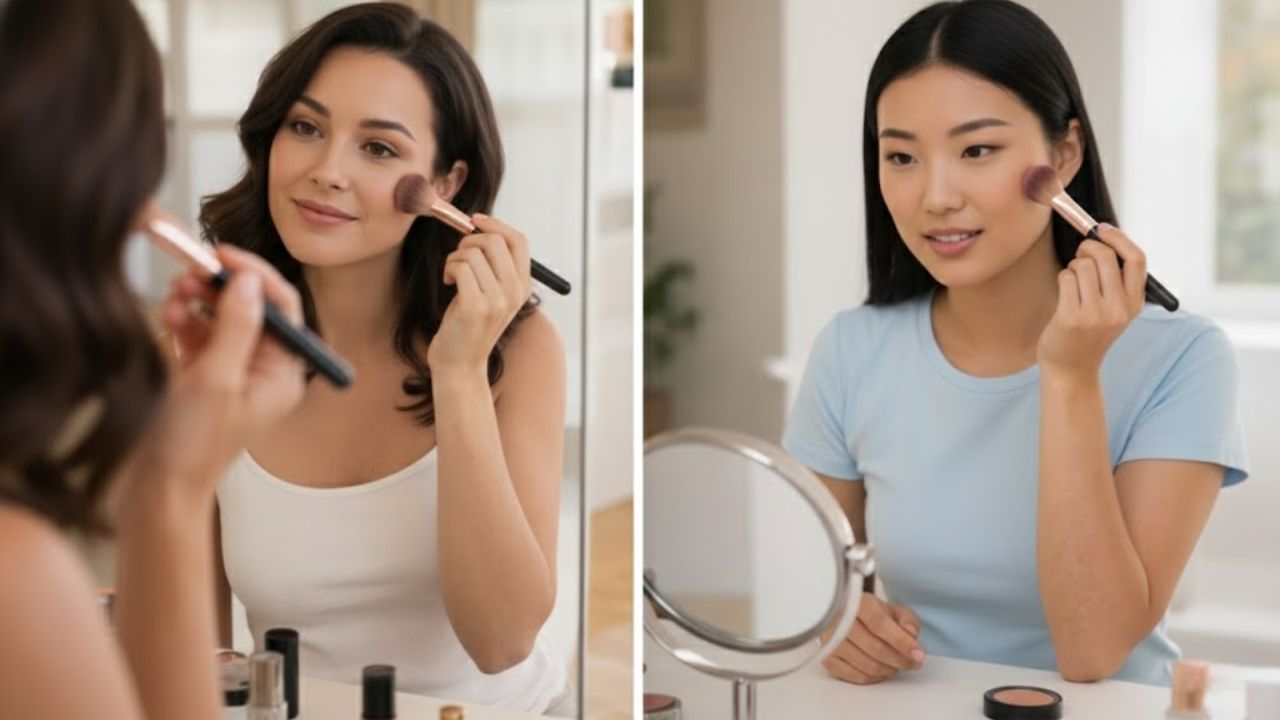
    A woman studies her reflection in the bathroom mirror and notices that, at first glance, she still resembles her mid-twenties self. Yet something feels subtly altered. Her cheeks sit slightly lower, and the fullness that once lifted easily with a smile now softens into her jawline. She reaches for her trusted blush brush and follows the routine she has used for years, smiling and sweeping color onto the apples of her cheeks. She pauses. Instead of looking refreshed, her face appears heavier. Under-eye shadows look deeper, and the center of her face seems puffy.

    She removes the blush and tries again, this time placing it a little higher. The result is immediate. Her cheekbones appear more defined, her face looks lifted, and her eyes seem brighter. The blush hasn’t changed. The placement has.

    Understanding the Shift in Blush Placement

    Why Traditional Blush Techniques Often Stop Working After Your Early Thirties

    There comes a quiet point when a familiar makeup routine no longer delivers the same effect. It doesn’t announce itself. One day, techniques that once worked simply feel off. Blush is often the first clue. Applied low and rounded, it can make someone in their early thirties look tired by midday. Shades that once felt youthful on the apples of the cheeks begin drifting toward fine lines near the nose and mouth, settling rather than lifting. At this stage, placement matters more than the product.

    Also Read

    Remove Scratches From Glass Cooktops at Home Using Smart Techniques That Avoid Replacement

    A makeup artist in London once explained that she can often estimate someone’s age just by watching how they apply blush. Younger people tend to place it directly at the center of the cheeks. Many people over 30 keep this habit, even as facial structure slowly shifts. She recalled working with two sisters, aged 28 and 38, who shared similar skin tones and wore the same makeup. On the younger sister, blush on the apples instantly brightened her face. On the older sister, that same placement emphasized hollows beneath the eyes.

    When the artist moved the blush higher, closer to the temples on the 38-year-old, the difference was striking. She appeared more rested, as though she had slept deeply. The color drew attention upward, highlighting the eyes and cheekbones instead of the center of the face. The explanation is simple. After 30, bone structure remains stable, but facial fat gradually shifts downward. Muscle memory guides the hand to where fullness once sat, placing color too low. Moving placement upward redirects focus and creates a subtle lifting effect.

    Also Read

    Facial Balance Tip: Why Incorrect Blush Placement Near the Nose Disrupts Overall Face Harmony

    A Modern Blush Method That Creates a Natural Lift

    The approach gaining attention today is simple and practical. Instead of smiling and targeting the apples of the cheeks, keep your face relaxed and look straight ahead. Imagine a diagonal line running from the top of the ear toward the side of the nostril. Apply blush along the upper portion of that line, closer to the ear than the nose. The shape should form a soft, angled C that curves toward the outer corner of the eye.

    Blend the color upward into the temples rather than pulling it inward. Let it fade gently into the hairline, similar to watercolor spreading across paper. For many people over 30, this placement instantly reveals cheekbones they forgot were still there. One small adjustment makes a noticeable difference: leave a clean gap between the under-eye area and where the blush begins. A finger-width space helps prevent color from settling into fine lines or highlighting dark circles.

    For a lightly flushed effect, a small touch of blush across the bridge of the nose can work, but keep the main color high and toward the outer face. Many people over 30 want a healthy glow without appearing overdone. That concern is valid, as blush placed too low or applied too heavily can resemble unflattering redness. This is why where blush sits matters more than how much is used. Start lightly and build in soft layers.

    Also Read

    At-Home Eyebrow Tinting Made Simple With an Easy Step-by-Step Process for Soft Defined Brows

    Cream blush formulas often suit mature skin because they blend seamlessly rather than sitting on the surface. Everyday routines aren’t performed in professional studios, and mornings are often rushed. Remembering one guiding rule helps: apply higher and further back. Even this small change can make the face appear more awake and balanced.

    Essential Blush Placement Tips to Remember

    • Think diagonally instead of using a round application.
    • Keep the strongest color away from the nose and mouth.
    • Blend upward into the temples for a lifting effect.
    • Opt for cream or liquid formulas if powder emphasizes texture.
    • Revisit placement every few years as facial structure naturally evolves.

    How Refining Blush Placement Builds Confidence Over Time

    There is something quietly powerful about adjusting how a product you’ve used for years is applied. It reflects an understanding that your face has changed and a willingness to work with that evolution. A diagonal sweep of color becomes an adjustment rather than a correction. Many people describe looking tired or unfamiliar to themselves, but the cause is often subtle. It’s how light and shadow now move across the face.

    Changing where color sits alters how light appears on the skin. The effect feels almost reflective. The pattern created with blush influences how a face is perceived before a single word is spoken. Catching a reflection and feeling briefly disconnected is common. Adjusting placement doesn’t erase that feeling, but it can soften it. The right positioning highlights structure without pulling features downward.

    This technique is easy to share. Once the difference is visible, it’s natural to show someone else. Many people try a side-by-side comparison, applying blush the old way on one cheek and the updated method on the other. The contrast usually explains everything. Blush becomes less about trends and more about understanding individual facial architecture. There is no universal map, only a guiding idea: color that moves upward reads as energy, while color concentrated in the center often reads as fatigue. That’s why this simple adjustment continues to resurface, regardless of changing makeup trends.

  • Optical Illusion Challenge: Can You Spot the Inverted 500 Within 7 Seconds

    Optical Illusion Challenge: Can You Spot the Inverted 500 Within 7 Seconds

    From time to time, a visual brain teaser captures online attention, leaving viewers stunned by what they fail to notice at first glance. The newest challenge poses a deceptively simple task: can you identify the one inverted “500” hidden among dozens of identical ones in just seven seconds? It sounds straightforward, yet most people struggle once they actually try.

    At first look, the image displays rows of neatly aligned blue “500” numbers against a soft background. Everything appears uniform and orderly. But buried within this pattern is a single “500” flipped upside down. That subtle rotation completely changes its shape, yet your brain, eager to conserve effort, keeps registering the same familiar pattern. This clever setup turns a basic search into a true test of perception and speed.

    Why This Inverted “500” Is Hard to Spot

    The difficulty of this puzzle stems from a mental shortcut known as perceptual grouping. Human vision naturally clusters similar elements together, allowing us to process scenes quickly. When rows of identical numbers appear, the brain stops checking each one individually and assumes they are all the same.

    While this habit is useful in everyday life, it becomes a disadvantage here. When flipped, the digits in “500” lose their familiar balance. The “5” forms an unusual reversed curve, while the “0”s remain circular but sit awkwardly. Because every number shares the same color, font, and size, the only cue left is orientation—one of the hardest visual differences to detect under pressure.

    The time limit adds another layer of challenge. With only seconds to react, eyes tend to jump rapidly across the image. These fast eye movements reduce accuracy, as the brain lacks enough time to properly analyze each fixation.

    The Psychology and Neuroscience at Play

    This illusion offers a glimpse into how human vision and attention truly function. Identifying rotated objects requires more than basic visual processing.

    In early visual stages, areas such as the primary visual cortex quickly register edges, curves, and contrasts. However, determining whether an object is upright or inverted relies on higher-level regions like the temporal and parietal lobes, which manage spatial orientation and feature integration.

    Feature Integration Theory, proposed by psychologist Anne Treisman, helps clarify why this task feels mentally draining. Simple features like color or brightness are processed instantly. But when a difference depends on a combination of features—such as shape plus rotation—the brain must switch to a slower, step-by-step search.

    That’s why the inverted “500” doesn’t jump out immediately. It lacks a bold visual contrast, forcing you to consciously scan for subtle inconsistencies in alignment or curvature. This focused search activates brain regions responsible for controlled eye movement and attention.

    Smarter Ways to Spot the Inverted Number

    Success in this challenge depends less on eyesight and more on strategy. Scanning randomly wastes time. A structured approach works far better:

    • Break the image into sections. Mentally divide it into rows or quadrants to reduce overload.
    • Scan systematically. Move left to right, row by row, without jumping around.
    • Focus on the “5.” The inverted version shows an unusual backward curve.
    • Slightly blur your focus. Squinting or stepping back can help the odd shape disrupt the uniform pattern.
    • Stay relaxed. Calm attention keeps your visual field wide and responsive.

    When viewed steadily, many people eventually notice the anomaly near the lower-right area of the grid. Once spotted, the difference feels obvious, proving how strongly expectation shapes perception.

    What Your Performance Says About You

    Finding the inverted “500” quickly suggests strong selective attention and efficient visual discrimination. These abilities are linked to fast pattern recognition and solid visual working memory—skills valued in fields like design, quality control, aviation, and medical imaging.

    Studies also show that puzzles like this engage top-down cognitive control, allowing the brain to override automatic assumptions. People who regularly tackle such challenges often demonstrate greater cognitive flexibility and maintain visual sharpness longer as they age.

    Struggling, however, doesn’t signal low intelligence or poor eyesight. Some individuals naturally process visuals globally, focusing on the overall scene rather than tiny details. This approach supports creative thinking and strategic insight, which are just as valuable.

    Why Optical Illusions Matter Beyond Fun

    Optical illusions do more than entertain—they reveal how the brain interprets reality. They show that perception is an active process, shaped by assumptions and shortcuts rather than pure observation.

    In 2025, these challenges have gained renewed popularity as quick mental workouts on digital platforms. They offer instant engagement while sharpening focus, patience, and pattern recognition in an age of constant distraction.

    Ultimately, the Inverted 500 Challenge highlights a simple truth: seeing is as much about the mind as the eyes. Each discovery, no matter how small, trains us to question familiarity and notice what others overlook.

    So the next time a grid of identical “500”s appears on your screen, pause for a moment. A closer look might reveal just how powerful your perception can be—in only seven seconds.

  • Breathing Improvement Yoga: 9 Poses to Boost Lung Capacity and Breathing Control

    Breathing Improvement Yoga: 9 Poses to Boost Lung Capacity and Breathing Control

    Breathing keeps us alive but most people do not use their lungs completely. Yoga provides different methods & positions that make the body more flexible while also building stronger lungs and better breathing patterns. When you pay attention to your breath during yoga practice you can quiet your thoughts & lower stress levels while helping your body use oxygen more effectively. These nine yoga poses will help you breathe better and strengthen your lungs.

    Yoga Poses That Help Improve Breathing Naturally

    Child’s Pose (Balasana)

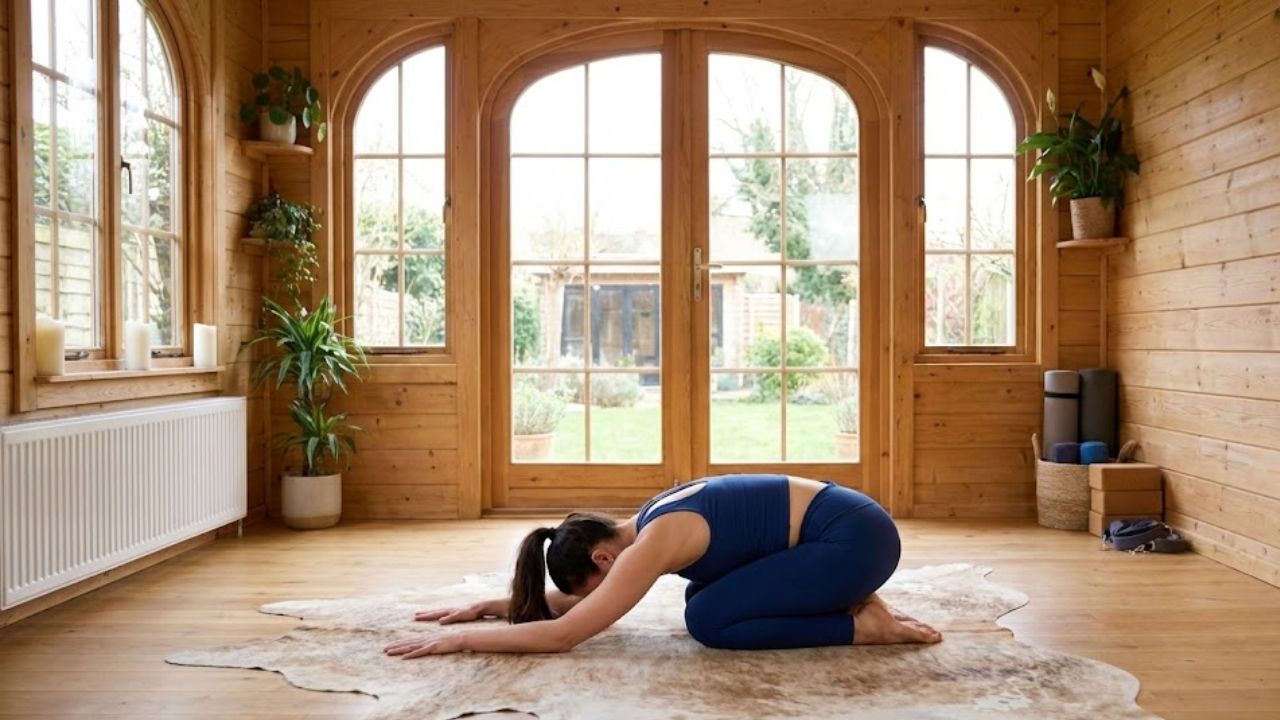
    Child’s Pose is a gentle, restorative posture that supports deep breathing and overall relaxation. Begin by kneeling on the floor with your big toes touching and knees comfortably apart. Slowly sit back onto your heels, extend your arms forward, and rest your forehead on the ground. Focus on slow, deep breaths, allowing your abdomen to rise and fall naturally with each inhale and exhale.

    This pose helps soothe the nervous system and encourages diaphragmatic breathing, which is essential for relaxation and improved lung function. It also gently stretches the back and hips, easing physical tension and supporting smoother, more controlled breathing.

    Cat-Cow Flow (Marjaryasana–Bitilasana)

    Cat-Cow Pose is a rhythmic movement that links breath with spinal motion. Start on all fours with your wrists aligned under your shoulders and knees under your hips. As you inhale, lower your belly, lift your chest, and tilt your tailbone upward into Cow Pose. As you exhale, round your spine, drawing your chin toward your chest and tucking the tailbone into Cat Pose. Continue flowing for 1–2 minutes in sync with your breath.

    This flowing sequence opens the chest and lungs while gently activating the diaphragm. It improves spinal flexibility, promotes deep abdominal breathing, and supports fuller lung expansion with every inhale.

    Mountain Pose (Tadasana)

    Mountain Pose is a simple standing posture that encourages proper alignment and mindful breathing. Stand with your feet hip-width apart, arms resting by your sides, and palms facing forward. Engage your legs, lift through the chest, and allow your shoulders to relax. Inhale deeply as you lengthen the spine, then exhale completely.

    By improving posture, this pose creates more space for deep, unrestricted breathing, supporting better lung capacity. It also enhances breath awareness and encourages calm focus, making it an excellent foundation for developing controlled, intentional breathing.

    Cobra Pose (Bhujangasana)

    Cobra Pose is a gentle backbend that opens the chest and supports fuller, deeper breaths. Begin lying face down with your hands placed beneath your shoulders. Press lightly into your palms to lift your chest, keeping the elbows softly bent. Roll the shoulders back and lengthen the front of the body. Hold the pose for 20–30 seconds while breathing steadily.

    This posture expands the chest and lungs, allowing greater airflow with each breath. It also strengthens the upper back and stretches the abdominal area, which can contribute to improved breath control and respiratory efficiency.

    Bridge Pose (Setu Bandhasana)

    Bridge Pose strengthens the lower body while opening the chest and lungs. Lie on your back with knees bent and feet flat on the floor, positioned hip-width apart. Press through your feet to lift your hips upward, engaging the glutes and core. Keep your arms alongside your body or interlace your fingers beneath your back. Hold for 30 seconds to 1 minute.

    By lifting the chest and expanding the ribcage, this pose encourages deeper breathing and better airflow. It also helps release tension in the neck and shoulders, making breathing feel easier and more natural.

    Downward-Facing Dog (Adho Mukha Svanasana)

    Downward Dog is an inversion that stretches the entire body while supporting steady, deep breaths. Begin on all fours, then lift your hips toward the ceiling, straightening your legs as much as comfortable. Press your hands firmly into the mat and allow your heels to move toward the floor. Hold the position for 30 seconds to 1 minute while breathing deeply.

    This pose lengthens the spine, opens the chest area, and promotes diaphragmatic breathing. It supports lung expansion, improves circulation, and helps calm the mind, which can positively influence breathing rhythm and control.

    Fish Pose (Matsyasana)

    Fish Pose is a chest-opening backbend that stimulates the respiratory system. Lie on your back with legs extended and arms resting by your sides. Press your forearms into the mat, lift your chest upward, and gently arch your back. Allow the crown of your head to rest lightly on the floor. Maintain the pose for 30 seconds to 1 minute while breathing deeply.

    This posture creates space in the lungs and chest, allowing deeper inhalations. It supports better posture and encourages slow, steady breathing, helping increase oxygen intake and lung capacity.

    Seated Forward Fold (Paschimottanasana)

    Seated Forward Fold is a calming posture that stretches the back while promoting slow, controlled breathing. Sit with your legs extended straight in front of you. Inhale to lengthen the spine, then exhale as you hinge forward from the hips, reaching toward your feet or legs. Hold for 30 seconds to 1 minute, maintaining deep breaths.

    This pose supports deep belly breathing and encourages diaphragm movement. By lengthening the spine and opening the back body, it creates more space in the ribcage, allowing breathing to become smoother and more efficient.

    Pranayama Breathing Techniques

    Pranayama breathing practices play a key role in improving breath control and lung capacity. Techniques such as Ujjayi (victorious breath), Bhastrika (bellows breath), and Nadi Shodhana (alternate nostril breathing) focus on regulating the breath and strengthening respiratory function. Practicing these regularly helps train the lungs to work more efficiently.

    These exercises strengthen the diaphragm, enhance oxygen intake, and promote slow, mindful breathing. By refining breath control, Pranayama supports balanced energy flow and overall respiratory well-being.

    Final Thoughts on Enhancing Breathing Through Yoga

    Yoga offers a holistic approach to improving breathing by expanding the chest, increasing lung capacity, and encouraging deep, conscious breaths. Practicing these nine yoga poses regularly can help reduce stress, support respiratory efficiency, and improve overall breath awareness. Whether your goal is better lung function for physical activity or improved daily well-being, yoga provides effective tools for healthier breathing.

  • Observation Game: Spot Differences in Elephant Pictures

    Observation Game: Spot Differences in Elephant Pictures

    If you enjoy puzzles that test your thinking skills & sharpen your observation abilities, the Spot the Difference game might be exactly what you need. This entertaining game challenges your visual skills by requiring you to identify small differences between two images that look almost identical. It serves as both an enjoyable pastime and a practical method for improving your focus & attention span. In this particular brain teaser, you will work with a set of adorable elephant images where your task is to locate three differences in only 10 seconds. This fast-paced activity combines entertainment with mental exercise in an engaging format. The game works by presenting two pictures side by side that appear to be the same at first glance. However careful examination reveals subtle variations in details such as colors shapes, positions or missing elements. Your goal is to identify these discrepancies as quickly as possible within the given time limit. This type of puzzle offers several benefits beyond simple entertainment.

    How “Spot the Difference” Puzzles Actually Work

    “Spot the Difference” games are easy to understand but surprisingly engaging. Players are shown two images that look almost the same at first glance. With careful observation, small variations begin to appear—such as an item missing, a color change, or an object placed slightly differently. The objective is simple: identify all the differences before the timer runs out, adding a sense of excitement and urgency.

    Most puzzles include a short time limit, sometimes as little as 10 seconds, pushing players to think quickly and stay alert. As you play, you’ll notice that these games naturally improve attention to detail while offering a light yet stimulating mental challenge. They’re enjoyable for all age groups and work just as well for solo play as they do for group fun.

    The Elephant-Themed Picture Difference Challenge

    This particular “Spot the Difference” puzzle features two images of a charming elephant. Although the pictures appear nearly identical, three small differences are cleverly hidden. Your challenge is to find all three within just 10 seconds.

    The enjoyment comes from examining the finer details. The differences may be subtle, but they require focused scanning of each part of the image. Follow these simple steps to play:

    – Observe both images side by side.

    – Carefully compare details, including the elephant and the surrounding background.

    – Pay attention to small objects that may be missing, altered, or moved.

    – Identify all three differences before time runs out.

    This type of puzzle is an excellent way to strengthen visual awareness and concentration. With repeated play, it can also help improve memory and overall focus.

    The Three Differences You’re Looking For

    Ready to see the solution? Below are the three subtle differences hidden between the two elephant images. Don’t be discouraged if you missed one or two—the smallest details are often the hardest to notice.

    – Flower Missing from the Tree Stump: In the first image, a small flower sits on the left side of the tree stump. In the second image, that flower is no longer there.

    – Butterfly No Longer Present: The left image shows a butterfly resting on a leaf near the elephant. This butterfly is absent in the right image.

    – Detail Removed from the Elephant’s Right Foot: A small mark or feature is visible on the elephant’s right foot in the first image, but it does not appear in the second one.

    Each difference is minor on its own, yet together they test your observation skills. Identifying them requires patience, focus, and a sharp eye.

    Why “Spot the Difference” Games Benefit Your Brain

    Beyond entertainment, “Spot the Difference” puzzles offer valuable mental benefits. They provide a gentle brain workout that helps keep your mind active and alert.

    – Strengthens Attention to Detail: Regularly scanning for small changes trains your brain to notice details that might otherwise be overlooked.

    – Improves Visual Processing: Closely examining images enhances your ability to interpret visual information accurately.

    – Enhances Focus and Concentration: Time limits encourage sustained attention and quick decision-making.

    – Builds Cognitive Flexibility: Switching between two images helps improve your ability to shift focus smoothly.

    – Supports Stress Relief: Solving puzzles offers a mental break, helping you relax and unwind.

    Tips to Spot Differences More Quickly

    If you want to get better at these puzzles, a few simple strategies can help:

    – Scan the Overall Image First: Look for obvious changes before focusing on smaller details.

    – Examine Tiny Elements Closely: Pay attention to colors, patterns, and small objects.

    – Check for Symmetry Changes: Differences often involve slight shifts or missing elements on one side.

    – Rely on Visual Memory: Remember details from one image as you compare it to the other.

    Final Thoughts

    “Spot the Difference” puzzles, like the elephant-themed challenge, are a simple yet effective way to sharpen observation skills and improve focus. They’re quick to play, enjoyable, and mentally rewarding. Whether you’re looking for a short brain break or a fun challenge, these puzzles offer an engaging way to test your attention to detail anytime.

  • Yoga for Sciatica Relief: A Doctor-Guided Routine to Ease Nerve Pain Naturally

    Yoga for Sciatica Relief: A Doctor-Guided Routine to Ease Nerve Pain Naturally

    If you have ever experienced a sharp shooting pain traveling from your lower back down to your toes you understand how difficult it becomes to move around. This condition is called sciatica and it occurs when the sciatic nerve gets pinched or irritated. Most people immediately turn to medication for relief. However many doctors are now recommending a different approach. A doctor recommended yoga routine for permanent sciatica pain relief can transform your overall health. This post will examine how yoga helps heal the affected nerve. We will also share a safe step-by-step routine that can help you achieve lasting comfort.

    Understanding Sciatica and the Role of Yoga

    The sciatic nerve is the longest nerve in the body, beginning in the lower back and extending through the hips and down each leg. When a spinal disc shifts or surrounding muscles tighten excessively, they can press against this nerve. This pressure often leads to burning pain, tingling sensations, or numbness along the leg.

    Medical professionals often recommend yoga because it addresses sciatica in two key ways. First, spinal decompression helps create space between the vertebrae. Second, muscle balancing stretches tight areas, such as the piriformis muscle, that may be compressing the nerve.

    Important note: Always consult your doctor before beginning a new exercise routine. If any movement causes sharp or sudden pain, stop immediately.

    The Routine: Seven Gentle Poses for Ongoing Relief

    This sequence is designed around slow, controlled movements and proper spinal alignment. Move mindfully through each pose and use steady breathing to help the muscles relax and release tension.

    1. Reclined Pigeon Pose (Sucirandhrasana)

    Often considered the gold standard in doctor-recommended yoga routines for lasting sciatica relief, this pose targets the piriformis muscle without straining the lower back.

    How to do it: Lie on your back with knees bent and feet on the floor. Cross your right ankle over your left thigh, then gently draw your left thigh toward your chest.

    Why it works: It opens the hips and releases deep muscles that commonly trap the sciatic nerve. Hold for one minute on each side.

    2. Pelvic Tilts

    With sciatica, the lower back often becomes stiff or “locked.” Pelvic tilts offer a gentle way to restore movement to the base of the spine.

    How to do it: Lie on your back. As you inhale, gently arch your lower back. As you exhale, press your back into the floor.

    Why it works: This motion creates a pumping effect that improves blood flow to the spinal discs, supporting faster recovery.

    3. Child’s Pose (Balasana)

    This resting posture naturally lengthens the spine and is especially helpful when pain feels heavy or compressed.

    How to do it: Kneel on the floor, bring your big toes together, and sit back on your heels. Fold forward, resting your forehead on the mat, with arms extended ahead.

    Why it works: The pose creates a mild traction effect, easing pressure off the irritated nerve.

    4. Sphinx Pose (Salamba Bhujangasana)

    Many sciatica cases involve a bulging disc. Gentle backbending can help guide the disc material back toward its proper position.

    How to do it: Lie on your stomach and prop yourself up on your forearms, keeping elbows under shoulders and gaze forward.

    Why it works: This pose introduces gentle spinal extension, which doctors often recommend for disc-related nerve discomfort.

    5. Bird-Dog Pose

    As pain begins to ease, rebuilding strength becomes essential. A weak core is a common reason sciatica returns.

    How to do it: Start on all fours. Extend your right arm forward and left leg back, hold for five seconds, then switch sides.

    Why it works: It strengthens the muscles that stabilize the spine, reducing the chance of future nerve compression.

    6. Legs-Up-The-Wall Pose (Viparita Karani)

    This pose deeply relaxes the nervous system and allows the lower back to release tension without effort.

    How to do it: Sit close to a wall, lie back, and swing your legs up so they rest vertically against the wall. Close your eyes and breathe slowly.

    Why it works: It helps reduce inflammation by encouraging fluid movement away from the legs and calming pain signals.

    7. Supported Bridge Pose

    Using support under the hips can help gently realign the pelvis.

    How to do it: Lie on your back with knees bent, lift your hips, and place a block or firm pillow beneath your tailbone. Allow your weight to rest on the support.

    Why it works: The pose stretches tight hip flexors, which often pull the spine out of alignment and contribute to nerve pain.

    Daily Habits That Support Long-Term Relief

    A doctor-recommended yoga routine for lasting sciatica relief works best when paired with healthier daily movement patterns.

    • Avoid prolonged sitting: Sitting for long periods increases pressure on the sciatic nerve. Stand or move every 30 minutes.
    • Stay hydrated: Spinal discs rely on water to maintain their height and cushioning.
    • Use ice and heat wisely: Apply ice during the first 48 hours of a flare-up, then switch to heat to relax muscles before yoga.
    • Be consistent: Practice these poses three times a week as preventive care, not only when pain appears.

    When Medical Attention Is Necessary

    While yoga can be helpful, certain symptoms require immediate medical evaluation. Seek professional care if you notice:

    • Sudden leg weakness
    • Numbness in the groin or saddle area
    • Pain severe enough to disrupt sleep

    Final Thoughts

    Sciatica can feel overwhelming, but it does not have to control daily life. By following a doctor-recommended yoga routine for lasting sciatica relief, you address the root causes rather than masking symptoms. Yoga supports the body’s natural ability to realign, strengthen, and heal, helping maintain a healthier spine over time.

  • Corporate Stress Yoga: A Relaxing Flow for High-Pressure and Demanding Workdays

    Corporate Stress Yoga: A Relaxing Flow for High-Pressure and Demanding Workdays

    In the modern workplace work tends to blend into every part of life. Many corporate professionals who deal with high stress find that being constantly available creates burnout along with back pain & mental exhaustion. You may think there is no time for a complete workout. A focused yoga routine can actually help you perform better at work. The best yoga flow for high stress corporate professionals does not require mastering complex poses. It focuses on movements that reverse the effects of desk work while helping your nervous system relax. This guide presents a specific flow based on scientific research that works well for busy executives. Your body experiences real physical strain from corporate work. Sitting for long periods creates tight hip flexors and weak glutes. Your shoulders roll forward from computer work and your neck carries tension from stress. Mental pressure triggers your fight-or-flight response even when no real danger exists. A good yoga flow addresses these specific problems rather than following a generic routine. The flow should start with breathwork to signal your body that it can relax. Spend three minutes on deep breathing where your exhale lasts longer than your inhale.

    Why Desk-Based Professionals Benefit from a Targeted Yoga Routine

    Spending eight to ten hours seated at a desk places continuous strain on the body. Hip flexors shorten, the chest collapses inward, and the head shifts forward, a posture issue commonly known as Tech Neck. At the same time, demanding deadlines and constant notifications keep the nervous system locked in fight-or-flight mode. This ongoing stress elevates cortisol levels, reducing focus and mental clarity. A purpose-built yoga flow is designed to counter these exact challenges faced by modern professionals.

    How a Focused Yoga Flow Helps

    • Postural Realignment: Reopens muscles tightened by prolonged sitting.
    • Mental Reset: Breathwork calms the nervous system and sharpens focus.
    • Time Efficiency: Delivers meaningful relief in a short session.

    The 20-Minute “Corporate Reset” Yoga Flow

    This routine is designed for small offices or home spaces. Most movements can be done without a yoga mat—only a chair and a quiet corner are needed.

     Seated Centering with Box Breathing (3 Minutes)

    Before physical movement begins, the mind needs to settle. Stress often leads to shallow, rushed breathing.

    How to do it: Sit upright in your chair with both feet grounded. Gently close your eyes.

    The technique: Inhale for four seconds, hold for four, exhale for four, then hold again for four.

    Why it works: This controlled breathing method rapidly lowers heart rate and signals safety to the brain.

    Seated Cat–Cow Spine Movement (2 Minutes)

    This gentle motion is ideal for awakening a stiff spine while remaining seated.

    How to do it: Rest your hands on your knees. Inhale as you arch your back and lift your gaze. Exhale as you round your spine and drop your chin.

    Why it works: It promotes spinal fluid movement and eases lower back tension caused by extended sitting.

    Standing Forward Fold with Interlaced Hands (3 Minutes)

    This pose is especially effective for individuals who type or use a mouse all day.

    How to do it: Stand with feet hip-width apart. Interlace your fingers behind your back and hinge forward at the hips, letting the arms fall overhead.

    Why it works: It stretches the hamstrings while opening the chest and shoulders. The gentle inversion supports oxygen flow to the brain.

    Warrior II for Strength and Concentration (4 Minutes)

    Professional environments demand confidence and stamina, both physically and mentally.

    How to do it: Step your feet wide apart. Turn the right foot outward and bend the knee. Extend your arms and focus your gaze over the front hand.

    Why it works: It builds leg and core strength while cultivating mental endurance useful for long meetings and negotiations.

    Chair Pigeon Pose for Hip Release (4 Minutes)

    Tight hips are a common result of prolonged sitting and often hold accumulated stress.

    How to do it: While seated, rest your right ankle on your left knee with the foot flexed. Lean forward slightly until a stretch is felt in the outer hip. Switch sides.

    Why it works: It targets the piriformis muscle, helping reduce the risk of sciatica and lower back discomfort.

    Eagle Arms Shoulder Stretch (2 Minutes)

    This movement focuses on deep tension between the shoulder blades.

    How to do it: Cross the right arm over the left, bend the elbows, and attempt to bring the palms together. Lift elbows to shoulder height.

    Why it works: It deeply stretches the upper back and neck, common storage areas for workplace stress.

    Legs-Up-the-Wall Restorative Pose (2 Minutes)

    This posture brings the session to a calm, restorative close.

    How to do it: Lie on the floor and extend your legs vertically against a wall.

    Why it works: It supports lymphatic drainage, reduces ankle swelling, and provides a full-body reset.

    Making Yoga Work Within a Busy Schedule

    Knowing the best yoga flow for high-stress corporate professionals is only part of the solution. Consistency is what creates real results.

    • Micro-Break Approach: Break the flow into short segments between meetings or calls.
    • Morning or Evening Practice: Morning sessions prepare you for the day, while evening sessions help you disconnect.
    • Use Digital Tools: Block time on your calendar as a recurring wellness meeting.

    The Link Between Yoga, Stress Reduction, and Productivity

    Many professionals hesitate to take breaks, but evidence shows that short movement sessions improve productivity. Yoga lowers cortisol levels, supporting clearer thinking and better decision-making. Reduced stress leads to improved leadership skills and overall efficiency.

    Final Thoughts

    For corporate professionals, yoga is not an indulgence—it is a practical recovery tool. The physical and mental pressures of demanding roles require structured ways to reset. A well-designed yoga flow maintains flexibility, enhances focus, and keeps stress manageable, allowing professionals to perform at their best.

  • Rosemary and coarse salt: why you should keep them together in a jar indoors

    Rosemary and coarse salt: why you should keep them together in a jar indoors

    Large sea salt crystals, a fresh rosemary sprig pressed against the glass, tiny green needles suspended like a miniature snowfall. Someone loosened the lid, leaned in, and smiled without a word. The room already carried the warmth of roasted vegetables and garlic, yet this aroma felt different. Cleaner. Brighter. Almost like mountain air drifting through a city apartment.

    Later, when plates were stacked and the music softened, the host lifted the jar without much thought. She rubbed a pinch between her fingers, as if testing a secret she wasn’t ready to give away. “This,” she said, “lives on the counter all year.” More than one of us went home thinking about that moment, and about why rosemary and coarse salt seem to turn into something entirely new when they share the same space.

    Why this simple jar reshapes everyday cooking

    The first thing you notice isn’t the taste. It’s the aroma. Open the lid and a wave of pine, citrus, and sea air rises up, instantly changing the mood of a tired kitchen. For something so basic, it feels almost like a trick.

    Salt usually hides in a cupboard. Rosemary, if it’s around at all, sits forgotten in a packet behind dry pasta. Place them together in a clear jar and they stop feeling like mere ingredients. They become a small ritual: twist, inhale, pinch, sprinkle. That pause, barely a few seconds, is enough to remind you that you’re cooking for someone, not just filling a plate.

    We’ve all made meals that were perfectly fine, yet somehow flat. A roast chicken without depth. Potatoes that taste of nothing in particular. A jar of rosemary salt near the stove becomes a quiet rescue. One pinch on hot fries and they suddenly feel alive. Rubbed onto meat before searing, it delivers a restaurant-level finish with almost no effort. Before long, it sneaks onto tomatoes, popcorn, even the rim of a Bloody Mary glass. Each time, the same thought returns: how can something so simple do so much?

    There’s logic behind it. Coarse salt stays dry and stable, naturally drawing out moisture and aroma. Rosemary, rich in essential oils, slowly releases its fragrance into the crystals. The jar becomes a kind of slow infusion. The salt protects the herb; the herb perfumes the salt. Nothing fancy, just time and contact.

    Over time, your hands remember it. Instead of juggling multiple seasonings, you reach for one familiar jar. You season earlier, more evenly, and with more confidence. That’s how this unassuming object quietly changes the way you cook at home.

    Making and using an indoor rosemary salt jar

    Begin with a clean, dry glass jar that seals well. It doesn’t need to be special; a recycled jam jar works perfectly. Fill it about two-thirds with coarse sea salt or kosher salt. Avoid fine table salt, which lacks texture and aroma-holding power. Add two or three fresh rosemary sprigs, washed and thoroughly dried on a cloth. Any moisture will undo the magic.

    Press the rosemary down so it’s fully surrounded by salt, gently buried rather than crushed. Top up with more salt, leaving a small space at the top. Close the lid, give it a slow shake, and keep it on the counter or a cool shelf away from direct sun. After a few days, open it and smell. The change happens quickly. Within a week, it’s ready to use.

    Most people stop at roasted potatoes, but that barely scratches the surface. Use it where heat meets fat: on chicken skin before baking, on focaccia dough, over grilled vegetables, or on mushrooms as they hit a hot pan. Some crush a pinch over fried eggs. Use restraint. The flavor is strong, and rosemary can overpower when pushed too far. Think of it as punctuation, not the entire sentence.

    Soyons honnêtes : no one uses it every day. You’ll forget about it, then rediscover it on a bleak Tuesday and fall for it all over again. There’s comfort in that. You’re not chasing perfection, just creating small shortcuts to better meals. The jar waits quietly, becoming more useful with time.

    If it ever smells off or looks damp and clumpy, discard it and start again. The loss is minimal: a handful of salt and a sprig of rosemary. Nothing more.

    Why this tiny habit resonates

    This kind of kitchen habit spreads for a reason. It isn’t just a trick; it’s a promise of simplicity. The jar suggests that home meals can be easy without being dull. On stressful evenings, when takeout feels tempting, it offers another path. A pan, a few potatoes, oil, and a pinch of rosemary salt. The smell arrives before frustration fades, turning the kitchen into a small refuge.

    Cooking at home is often cheaper and healthier, but knowledge isn’t the problem. Energy and motivation are. This jar lowers the barrier. When flavor feels guaranteed by one easy gesture, starting becomes simpler. Over time, that ease quietly leads to better eating without obsession.

    There’s also something grounding about the ingredients themselves. Rosemary carries centuries of symbolism tied to memory and protection. Salt has always stood for preservation and value. Together, they form a daily ritual that connects modern kitchens to generations of cooks before packaged flavors existed.

    Eventually, you refill the jar, refresh the sprigs, and notice friends spotting it between the wine glasses. Some ask how it’s made. Others copy the idea at home. It spreads naturally, through shared meals and quiet observation.

    Perhaps that’s the real secret. The jar isn’t only about seasoning. It’s about intention made visible—a small, ordinary object that gently suggests a different rhythm in the kitchen.

    Key ideas behind the rosemary salt jar

    • Salt and rosemary synergy: the salt absorbs and releases rosemary’s essential oils over time, deepening flavor.
    • Visual ritual: a clear jar on the counter serves as a constant reminder to cook with care.
    • Versatile use: works as seasoning, finishing touch, and even a natural kitchen scent.