Category: ewgt

  • Endurance Building Yoga: 7 Poses That Improve Strength and Staying Power

    Endurance Building Yoga: 7 Poses That Improve Strength and Staying Power

    Endurance refers to the body’s capacity to maintain physical effort over extended periods, playing a vital role in sustaining energy, stamina, and overall fitness. While endurance training is often linked to cardio-based workouts, yoga offers a powerful alternative for developing both physical resilience and mental stamina. By combining controlled breathing, focused awareness, and sustained posture holds, yoga strengthens the body while improving flexibility and balance. Below are seven effective yoga poses designed to enhance endurance, stamina, and strength.

    Warrior I Pose (Virabhadrasana I)

    Warrior I is a strong foundational pose that develops stamina in the legs, hips, and core. It also opens the chest and shoulders while sharpening focus. Begin by stepping your feet wide apart, bending the front knee to a right angle while keeping the back leg straight. Raise your arms overhead with palms facing inward. Hold the pose for 30 seconds to one minute before switching sides. This posture reinforces the thighs, calves, and glutes, while also enhancing balance and endurance. Staying in the pose for longer periods trains the body to remain steady under effort, helping build both physical strength and mental resilience.

    Plank Pose (Phalakasana)

    Plank Pose is one of the most effective postures for improving core endurance. Begin in a push-up position with arms extended, wrists aligned under the shoulders, and the body forming a straight line from head to heels. Engage your core muscles and maintain steady breathing as you hold the pose for 30 seconds to two minutes.

    This pose targets the abdominals, arms, and shoulders, strengthening stabilizing muscles that support endurance. Holding plank for longer durations builds muscular stamina while also cultivating mental focus and discipline.

    Chair Pose (Utkatasana)

    Chair Pose is an intense standing posture that strengthens endurance in the lower body, particularly the quadriceps, hamstrings, and glutes. Stand with feet hip-width apart, bend your knees as if lowering into a chair, and lift your arms overhead with palms facing inward. Hold for 30 seconds to one minute while breathing evenly.

    This pose challenges leg strength and improves hip mobility and spinal stability. As the hold time increases, the pose becomes more demanding, gradually enhancing stamina and lower-body endurance.

    Downward-Facing Dog (Adho Mukha Svanasana)

    Downward Dog is a widely practiced pose that stretches the back, shoulders, and legs while strengthening the arms and core. Start on hands and knees, tuck your toes, lift your hips upward, and straighten your legs while keeping feet hip-width apart. Hold the pose for 30 seconds to one minute.

    This posture improves full-body endurance by requiring sustained engagement of multiple muscle groups. Holding the pose encourages better alignment, flexibility, and muscular stamina through continuous effort.

    High Lunge Pose

    High Lunge is a dynamic posture that builds endurance in the legs and core. From standing, step one foot back, bend the front knee to a right angle, and lift your arms overhead while engaging your core. Hold for 30 seconds to one minute, then change sides.

    This pose enhances balance, stability, and strength in the thighs, calves, and glutes. Maintaining the position for extended periods encourages both physical endurance and mental persistence.

    Boat Pose (Navasana)

    Boat Pose is a demanding core-focused posture that requires sustained endurance. Sit with knees bent and feet grounded, lean back slightly, then lift your feet while balancing on your sit bones. Extend your legs and arms forward if possible, holding for 30 seconds to one minute with the core engaged.

    This pose strengthens the abdominal muscles, hip flexors, and lower back. Maintaining balance for longer durations improves core stamina and overall stability, making it an effective endurance-building posture.

    Bridge Pose (Setu Bandhasana)

    Bridge Pose helps develop endurance in the lower back, glutes, and core. Lie on your back with knees bent and feet flat on the floor. Press into the feet, lift the hips upward, and engage the glutes and core. Hold for 30 seconds to one minute.

    This posture strengthens key muscle groups essential for overall stamina while also opening the chest and lengthening the spine. Sustained holds gradually build muscular strength and mental endurance.

    Practical Tips for Improving Endurance Through Yoga

    Stay consistent: Practice endurance-focused poses three to four times weekly for steady progress.

    Control your breathing: Deep, steady breaths help maintain energy and manage fatigue.

    Extend hold times slowly: Increase duration gradually to avoid strain or injury.

    Build mind-body awareness: Mental focus during long holds strengthens both physical and mental endurance.
  • Leg Strength Yoga: 7 Poses That Build Power and Lower Body Stability

    Leg Strength Yoga: 7 Poses That Build Power and Lower Body Stability

    Strong, well-toned legs play a vital role in overall health, balance, and functional movement. Yoga provides a low-impact yet effective way to improve leg strength, flexibility, and endurance while supporting total body wellness. By activating both major muscle groups and smaller stabilizers, yoga helps develop powerful, supportive legs that enhance daily movement and fitness performance. Below are the top 7 yoga poses that effectively strengthen the legs.

    1. Warrior I (Virabhadrasana I)

    Warrior I is a foundational posture that activates the legs, hips, and core. It strengthens the quadriceps, hamstrings, calves, and glutes while improving hip flexibility. To practice, step one foot back and bend the front knee to a 90-degree angle, keeping the knee aligned over the ankle. Raise your arms overhead with palms facing inward. Hold for 30 seconds to 1 minute, then change sides. This pose enhances balance, stability, and muscular endurance while encouraging mental focus.

    2. Chair Pose (Utkatasana)

    Chair Pose is highly effective for strengthening the thighs, hamstrings, and glutes. Begin standing tall, then bend your knees as if sitting into an invisible chair. Extend your arms overhead with palms facing each other, keeping the chest lifted and core engaged. Ensure the knees stay behind the toes. Hold for 30 seconds to 1 minute. This posture builds leg endurance and muscular stamina, especially when held for longer durations.

    3. Warrior II (Virabhadrasana II)

    Warrior II is a powerful standing pose that strengthens the quadriceps, calves, and glutes. Step your feet wide apart, bend the front knee to 90 degrees, and keep the back leg straight. Extend your arms parallel to the floor with palms facing down, and gaze over the front hand. Hold for 30 seconds to 1 minute before switching sides. This pose builds lower body strength, improves focus, and enhances overall stability.

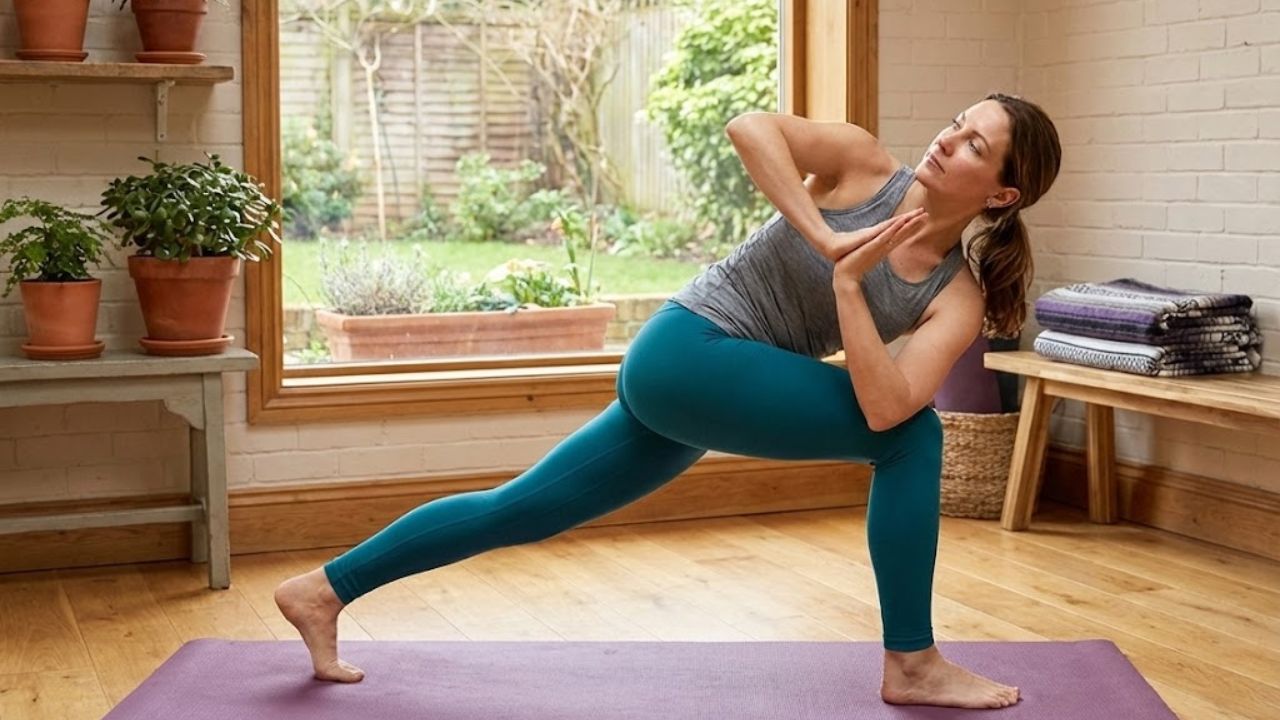
    4. Crescent Lunge (Anjaneyasana)

    Crescent Lunge is a dynamic posture that strengthens the quadriceps, hamstrings, and glutes while stretching the hip flexors. Step one foot forward, bend the front knee to a right angle, and lift the back heel off the floor. Reach your arms overhead and square the hips forward. Hold for 30 seconds to 1 minute, then switch sides. This pose enhances leg stability, muscle strength, and overall endurance.

    5. Bridge Pose (Setu Bandhasana)

    Bridge Pose targets the legs, glutes, and lower back while gently stretching the front body. Lie on your back with knees bent and feet hip-width apart. Press into the feet and lift the hips upward, engaging the core and glute muscles. Keep your arms alongside your body or interlace your fingers beneath you. Hold for 30 seconds to 1 minute. This pose supports balanced leg strength and improves hip mobility.

    6. Revolved Chair Pose (Parivrtta Utkatasana)

    Chair Pose with a twist intensifies leg engagement while activating the core and spine. From Chair Pose, bring your palms together at the chest and rotate your torso to the right, placing the left elbow against the right knee. Keep the thighs active and spine long. Hold for 30 seconds, then repeat on the other side. This variation strengthens the quadriceps and glutes while improving balance and spinal mobility.

    7. Locust Pose (Salabhasana)

    Locust Pose strengthens the legs, lower back, and core while boosting overall stamina. Lie face down with arms by your sides and palms facing down. Lift your chest and legs off the mat, engaging the thighs and glutes. Hold for 30 seconds to 1 minute, focusing on lengthening through the legs. This posture builds posterior chain strength and supports long-term muscular endurance.

    Helpful Tips for Leg Strengthening Through Yoga

    Practice consistently at least three to four times each week.

    Actively engage muscles during every pose, even gentle stretches.

    Increase hold duration gradually as strength improves.

    Maintain steady breathing to enhance focus and stamina.

    Final Takeaway

    Yoga offers a powerful way to develop leg strength and endurance while enhancing flexibility, balance, and functional movement. Regularly practicing these seven effective yoga poses helps build strong, toned legs that support everyday activities and physical performance. By staying mindful of your breath, maintaining muscle engagement, and practicing consistently, yoga can significantly improve lower body strength and overall fitness.

  • 7 Yoga Poses: Improve Flexibility Naturally Within 1 Week

    7 Yoga Poses: Improve Flexibility Naturally Within 1 Week

    Flexibility matters for your physical health and helps you feel better overall. If you are just starting yoga or have been doing it for years, working on flexibility can lower your chances of getting hurt while helping your posture and movement. Getting more flexible requires time & patience but some yoga poses can speed up your results. If you practice regularly for just one week you can see real improvements in how flexible you are. Here are seven yoga poses that work on important areas to help you become more flexible quickly.

    Downward-Facing Dog (Adho Mukha Svanasana)

    Downward-Facing Dog is a core yoga posture that provides a full-body stretch, with special focus on the hamstrings, calves, shoulders, and spine. Begin on your hands and knees, then tuck your toes under and lift your hips upward, forming an inverted V shape. Keep your arms firm and shoulder-width apart while your feet remain hip-width apart. Gently press your heels toward the floor as you lengthen your spine. Hold this position for 30 seconds to one minute, breathing deeply and evenly. This pose helps decompress the spine, improve circulation, and gradually increase lower-body flexibility.

    Forward Fold (Uttanasana)

    Forward Fold is a calming yet powerful stretch for the hamstrings, calves, and lower back. Stand upright with your feet set hip-width apart. As you exhale, hinge at your hips and fold your upper body forward, allowing your torso to rest closer to your thighs. Let your head and neck relax fully while your hands reach toward the floor, ankles, or shins. Stay in this position for about 30 seconds, using each breath to soften deeper into the stretch. Regular practice of this pose supports improved flexibility and helps release built-up tension in the spine.

    Butterfly Pose (Baddha Konasana)

    Butterfly Pose is well known for its ability to open the hips and stretch the inner thighs. Sit comfortably on the floor and bring the soles of your feet together, allowing your knees to drop outward. Hold your feet or ankles with your hands and sit tall through the spine. Gently encourage your knees toward the ground without forcing them. For a deeper stretch, you may slowly lean forward from the hips. Hold the pose for 30 seconds to one minute. This posture promotes hip mobility and relieves stiffness in the groin area.

    Low Lunge (Anjaneyasana)

    Low Lunge is an effective posture for lengthening the hip flexors, thighs, and groin. Start from a tabletop position, then step one foot forward between your hands, keeping the knee stacked over the ankle. Lower the opposite knee to the floor and allow your hips to sink gently downward. Lift your torso upright and raise your arms overhead if comfortable. Hold the pose for 30 seconds to one minute before switching sides. This pose is especially helpful for counteracting tightness caused by prolonged sitting and improves overall hip flexibility.

    Pyramid Pose (Parsvottanasana)

    Pyramid Pose offers an intense stretch for the hamstrings, calves, and hips while encouraging spinal length. Begin standing with your feet spaced about three to four feet apart. Turn your front foot forward and angle the back foot slightly inward. With a straight spine, hinge at the hips and fold your torso over the front leg. Rest your hands on the floor, shin, or foot depending on flexibility. Hold for 30 seconds to one minute, then change sides. This pose enhances balance, posture, and flexibility in the lower body.

    Cobra Pose (Bhujangasana)

    Cobra Pose is a gentle backbend that improves spinal flexibility while stretching the chest and abdomen. Lie face down with your palms placed beneath your shoulders and elbows close to your ribs. On an inhale, lift your chest by engaging your back muscles, keeping your pelvis grounded. Avoid locking the elbows and focus on lengthening the spine rather than pushing up forcefully. Hold the posture for 15 to 30 seconds before slowly releasing back down. This pose helps strengthen the lower back and counteracts slouching habits.

    Lizard Pose (Utthan Pristhasana)

    Lizard Pose is a deep stretch that targets the hips, groin, and quadriceps. From a low lunge position, place both hands inside the front foot and keep the back leg extended behind you. Maintain steady breathing as you sink deeper into the hips. For added intensity, you may lower your forearms to the floor if comfortable. Hold the pose for 30 seconds to one minute, then repeat on the opposite side. This posture encourages greater hip mobility and releases stored tension in the lower body.

  • This 5-move routine strengthens and lengthens muscles in one session

    This 5-move routine strengthens and lengthens muscles in one session

    You need to do more than stretch your muscles. You also need to strengthen them. This five-move routine requires only an exercise mat and some optional equipment to accomplish both goals. The aim is to develop flexibility across your whole body while increasing your joint mobility. The routine relies on dynamic movements that keep your joints active rather than static stretches held for extended periods. It merges both methods so you can build strength in your joints & muscles while transitioning smoothly between different positions. When you complete the routine you should feel taller & stronger. This energizing stretch sequence takes just 10 minutes and will leave your body feeling balanced and prepared for whatever comes next.

    Watch: Sam’s 5-move mobility routine for strength and flexibility

    Below I will show you each exercise so you can understand what you are doing. I will also provide a short introduction to the moves. Keep reading to see how everything comes together for the flow.

    The first exercise is the cat-cow. This stretches the front body and abdomen while mobilizing the spine. This is a chance to center yourself on your mat and lock in while getting away from distractions around you.

     For this exercise focus on inhaling as you lower your stomach and then exhaling as you round your upper back. Move with your breath to connect breath and body. I recommend 9-10 rounds.

    You will now do glute kickbacks. Try to complete 8-12 repetitions on each side. You have the option to place a resistance band just above your knees or you can simply use your bodyweight for this exercise.

    This exercise stretches the hip flexors and works the gluteus maximus. Try to squeeze your butt at the top & keep your hips square without arching your lower back. Move with control and avoid rushing.

    After finishing one round of kickbacks move directly into 8-12 fire hydrants per leg. You can choose to use a band or work with your bodyweight. This exercise targets the outer glutes or the gluteus medius so focus on squeezing your butt as you lift your leg.

     Try to avoid turning your hip outward or arching your back and let all the movement come from lifting the leg sideways.

     Complete a round & then either go back to your kickbacks and repeat both exercises for another round or move on.

     Before starting your bear squats get on all fours in a tabletop position and focus on lifting your knees a few inches off the mat & then lowering them again for a few rounds.

     This activates your quads & glutes and hamstrings while training your core muscles to engage. Keep your back flat and neutral with your gaze toward the top of your mat and pull your stomach inward as you lift your knees. Once you have done this a few times move into 8-12 bear squats.

    Now it’s time to stretch. You can move into this position any way that works for you. I prefer starting with a downward-facing dog and alternating my feet to loosen up my legs after doing bear squats. Once you’re in position you can either sit up straight or lean forward from your hips to make the stretch deeper in your glutes. The important thing is to keep your hips level and rest your weight on the front part of your leg so you don’t put pressure on your knees. If this feels uncomfortable you can put a cushion under your butt or move your front foot closer to your body. If it still doesn’t feel right then try the 90/90 stretch described below instead. Stay in the stretch for one to two minutes on each side & concentrate on closing your eyes and breathing steadily.

    Stretching your muscles helps improve flexibility and plays an important role in preventing injuries. When muscles become tight they can cause strain and restrict your ability to move freely. Your range of motion matters just as much since it determines how much movement your joints can produce. A simple example would be rotating your leg around your hip joint or making circles with your arm. Mobility exercises combine strength and control with movement patterns to expand your range & make movement feel easier. When you look at flexibility and mobility together they provide valuable information about how your body moves and how well you function during everyday activities. If you need help deciding which area to focus on first or want to understand the topic better you can check out my guide that explains the differences between stretching and mobility work.

  • Sleep Better Yoga: 5 Moves That Promote Deep Rest

    Sleep Better Yoga: 5 Moves That Promote Deep Rest

    Quality sleep plays a vital role in maintaining overall health, yet many individuals find it difficult to fall asleep or remain asleep through the night. Daily stress, mental strain, and physical discomfort often interfere with natural sleep rhythms. Yoga offers a gentle, natural way to relax the body, settle the mind, and create the right conditions for restful sleep. The following five yoga poses are designed to help you unwind fully and support a deep, refreshing night’s rest.

    1. Child’s Pose (Balasana): A Deeply Soothing Resting Posture

    Child’s Pose is a restorative posture that gently relaxes the nervous system while easing tension stored in the back and hips. The slow, grounding nature of this pose encourages steady breathing, helping signal to the body that it is time to slow down and prepare for sleep.

    How to do it:

    • Begin on your hands and knees in a tabletop position.
    • Bring your big toes together, widen your knees, and gently sit back onto your heels.
    • Lower your torso toward the floor, resting your forehead on the mat, with arms extended forward or relaxed by your sides.
    • Breathe deeply, allowing your body to soften into the pose.
    • Remain here for 1–3 minutes, focusing on slow, calming breaths.

    Benefits: This pose helps relieve stress, stretches the lower back and hips, and creates a calming effect that supports better sleep.

    2. Legs Up the Wall (Viparita Karani): Restorative Relief for Tired Legs

    Legs Up the Wall is a calming, restorative posture that promotes circulation and deep relaxation. It is especially helpful for easing leg fatigue caused by long periods of standing or sitting and reducing physical discomfort that can interfere with sleep.

    How to do it:

    • Sit close to a wall and gently lie down on your back.
    • Swing your legs upward so they rest comfortably against the wall.
    • Position your hips near the wall and rest your arms by your sides with palms facing up.
    • Close your eyes and focus on steady, relaxed breathing.
    • Stay in the pose for 5–10 minutes, allowing your body to fully relax.

    Benefits: This pose encourages circulation toward the heart, eases lower back tension, and calms the nervous system, making it ideal for winding down before sleep.

    3. Standing Forward Fold (Uttanasana): Ease Tension Along the Spine

    Standing Forward Fold gently releases tightness in the spine, neck, and hamstrings. The inward focus of the pose helps quiet the mind while encouraging slow breathing, supporting a relaxed state that is beneficial before bedtime.

    How to do it:

    • Stand with feet about hip-width apart and inhale to lengthen your spine.
    • Exhale and hinge forward from the hips, letting your head and neck relax.
    • Allow your hands to rest on the floor, shins, or feet, depending on comfort.
    • Hold the pose for 1–2 minutes while breathing slowly and deeply.

    Benefits: This pose stretches the hamstrings, reduces tension in the back and neck, and promotes mental calm, making it helpful for improving sleep readiness.

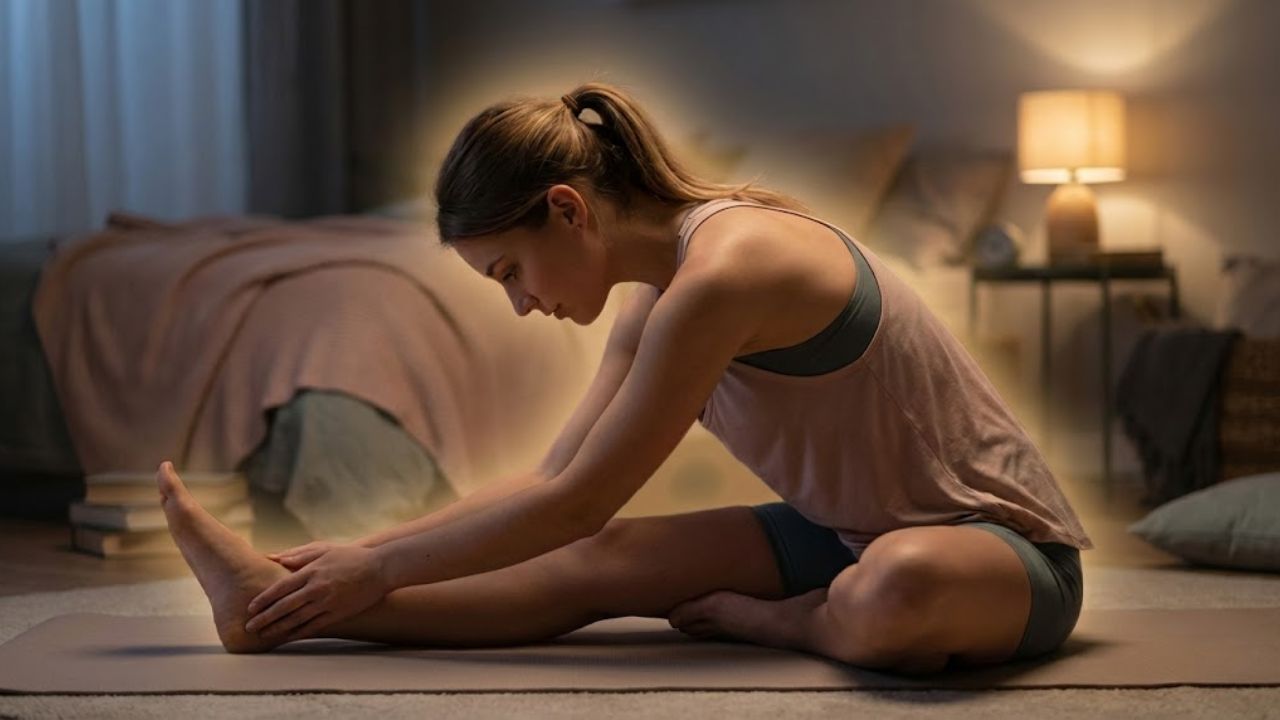
    4. Seated Forward Fold (Paschimottanasana): Gentle Stretch for Calmness

    Seated Forward Fold offers a deep yet soothing stretch for the spine and hamstrings while encouraging relaxation of the nervous system. It is particularly effective for releasing built-up tension from the day.

    How to do it:

    • Sit on the floor with your legs extended straight in front of you.
    • Inhale to lift and lengthen your spine.
    • Exhale and gently fold forward from the hips, reaching toward your feet or shins.
    • Maintain a long spine without forcing the stretch.
    • Hold for 1–2 minutes, breathing deeply throughout.

    Benefits: This posture helps stretch the spine and hamstrings, reduces stress, and promotes a sense of calm that supports restful sleep.

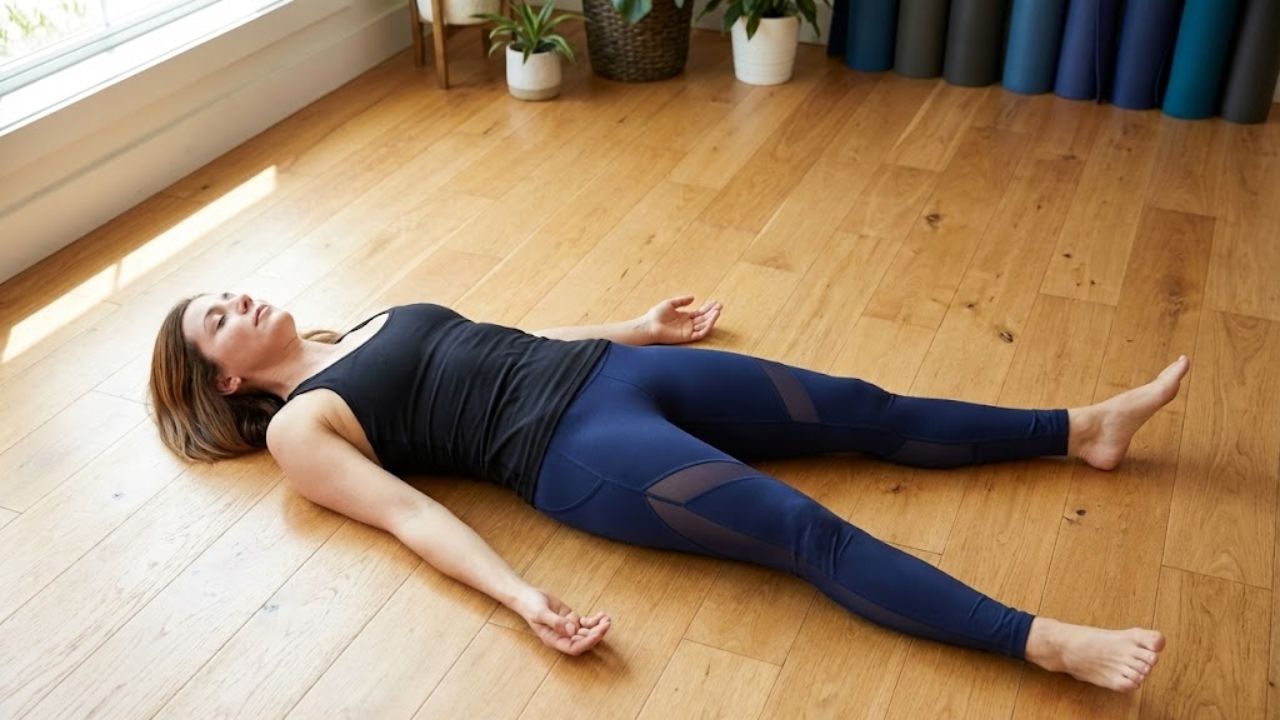
    5. Corpse Pose (Savasana): Complete Relaxation Before Sleep

    Corpse Pose is the final and most restful posture, allowing the body and mind to fully relax. It provides space for releasing lingering tension and helps integrate the calming effects of your practice before sleep.

    How to do it:

    • Lie flat on your back with legs extended and arms resting comfortably by your sides.
    • Turn your palms upward and gently close your eyes.
    • Bring awareness to your breath and gradually relax each part of your body.
    • Remain in the pose for 5–10 minutes, allowing your mind to become quiet.

    Benefits: Savasana deeply calms the nervous system, reduces stress, and prepares both body and mind for a peaceful night’s sleep.

    Final Thoughts

    Adding these five yoga poses to your evening routine can support better sleep by easing physical tension, calming the mind, and encouraging relaxation. Whether sleep issues stem from stress, anxiety, or daily fatigue, these gentle postures help create a smooth transition into rest. Practicing them consistently can train your body and mind to unwind more easily, leading to deeper, more restorative sleep and improved overall well-being.

  • Beginner Yoga Guide: 5 Easy Poses for a Strong and Confident Start

    Beginner Yoga Guide: 5 Easy Poses for a Strong and Confident Start

    Yoga for Beginners: Five Simple Poses to Start Your Practice Yoga is a complete practice that improves both your mind and body. If you want to become more flexible or reduce stress or build strength, yoga provides many benefits. For people just starting out the key is to begin with poses that are simple and comfortable while helping you develop a solid base. This article covers five beginner-friendly yoga poses that work well for anyone new to yoga.

    Mountain Pose (Tadasana)

    Mountain Pose may look simple, but it forms the foundation of many yoga postures. It helps build correct posture, improves alignment, and enhances balance by teaching you how to stand with awareness and stability.

    How to Do It:

    Stand upright with your feet together, distributing your weight evenly across both feet. Firm your thighs, gently lift the kneecaps, and lengthen your spine. Relax your shoulders down and back, allowing your arms to rest naturally by your sides with palms facing forward. Take slow, deep breaths, grounding through your feet while extending upward through the crown of your head. Hold for 30 seconds to 1 minute.

    Benefits:

    Improves posture, strengthens thighs, knees, and ankles, and increases overall body awareness and balance. Mountain Pose is often used as a starting position, helping you connect breath with movement.

    Child’s Pose (Balasana)

    Child’s Pose is a deeply restorative posture that gently stretches the back, hips, and legs. It is commonly used to relax the body, calm the mind, and release built-up tension.

    How to Do It:

    Kneel on the floor with your big toes touching and knees comfortably apart. Slowly fold your torso forward, bringing your forehead to rest on the mat. Extend your arms forward or place them alongside your body, whichever feels more comfortable. Breathe deeply and remain in the pose for 1 to 3 minutes, softening with each exhale.

    Benefits:

    Stretches the spine, hips, and knees, relieves back and neck tension, and promotes relaxation while reducing stress. It is ideal between challenging poses to restore energy.

    Cat-Cow Pose (Marjaryasana-Bitilasana)

    Cat-Cow Pose is a gentle flowing sequence that warms up the spine and improves mobility. It is excellent for releasing stiffness in the back and encouraging healthy spinal movement.

    How to Do It:

    Begin on all fours with your wrists aligned under your shoulders and knees under your hips. Inhale as you drop your belly, lift your chest, and look slightly upward for Cow Pose. Exhale as you round your spine, tuck your chin, and draw your belly inward for Cat Pose. Continue flowing between these movements for 5 to 10 rounds, synchronizing breath with motion.

    Benefits:

    Increases spinal flexibility, strengthens the core and back muscles, and supports better posture and alignment. The rhythmic movement helps prepare the body for deeper poses.

    Downward-Facing Dog (Adho Mukha Svanasana)

    Downward-Facing Dog is a classic yoga pose that combines strength and stretch. It lengthens the spine, stretches the lower body, and builds upper-body strength.

    How to Do It:

    Start in a tabletop position with hands under shoulders and knees under hips. Spread your fingers wide, press firmly into your palms, and lift your hips upward. Straighten your legs as much as comfortable, forming an inverted “V” shape. Let your head relax and gaze toward your legs or abdomen. Hold the pose for 30 seconds to 1 minute.

    Benefits:

    Stretches the hamstrings, calves, and spine, strengthens arms, shoulders, and core, and boosts circulation while energizing the body.

    Bridge Pose (Setu Bandhasana)

    Bridge Pose is a beginner-friendly backbend that strengthens the lower body while opening the chest and hips. It helps counteract poor posture and restores balance to the spine.

    How to Do It:

    Lie on your back with knees bent and feet flat on the floor, hip-width apart. Place your arms alongside your body with palms facing down. Inhale and press through your feet to lift your hips upward, engaging your glutes. Keep your shoulders grounded and neck relaxed. Optionally clasp your hands beneath your back. Hold for 30 seconds to 1 minute before slowly lowering down.

    Benefits:

    Strengthens the lower back, glutes, and legs, opens the chest and hips, and improves posture. This gentle backbend also helps release tension from the lower back and upper body.

  • Full-Body Stretch Yoga: 8 Poses You Can Do in 15 Minutes

    Full-Body Stretch Yoga: 8 Poses You Can Do in 15 Minutes

    Regular stretching plays a key role in improving flexibility, easing muscle tightness, and supporting overall well-being. Yoga is especially effective because it blends mindful movement with controlled breathing, helping muscles lengthen while increasing joint mobility. If time is limited but you still want a complete stretch, this 15-minute yoga routine is designed to work every major muscle group. The flow below delivers a full-body stretch that leaves you feeling relaxed, refreshed, and more flexible.

    1. Downward-Facing Dog (Adho Mukha Svanasana): Begin the Sequence

    Downward-Facing Dog is a classic yoga posture that offers a powerful full-body stretch. It lengthens the hamstrings, calves, and spine while activating the arms and shoulders, making it an ideal pose to start your practice.

    How to do it:

    • Begin in a tabletop position with wrists aligned under shoulders and knees under hips.
    • Lift your hips upward, creating an inverted V shape with your body.
    • Press your palms firmly into the mat, keep feet hip-width apart, and relax your head between your arms.
    • Hold for 30 seconds to 1 minute while breathing slowly and deeply.

    Benefits: This pose stretches the back of the body, particularly the hamstrings, calves, and lower back. It also strengthens the arms, shoulders, and core while encouraging healthy circulation.

    2. Cat-Cow Flow (Marjaryasana–Bitilasana): Gently Wake Up the Spine

    Cat-Cow is a smooth, flowing movement that warms the spine and improves its flexibility. By moving through flexion and extension, it helps reduce stiffness and supports spinal mobility.

    How to do it:

    • Start in tabletop with shoulders over wrists and hips over knees.
    • Inhale as you drop your belly, lift your chest, and tilt your tailbone upward.
    • Exhale as you round your spine, tucking your chin and drawing your navel inward.
    • Flow between these positions for about 1 minute.

    Benefits: This movement loosens the spine, eases tension in the neck and shoulders, and improves overall back flexibility.

    3. Low Lunge (Anjaneyasana): Lengthen Hips and Thighs

    Low Lunge deeply stretches the hip flexors, quadriceps, and hamstrings. It opens the hips and groin while gently engaging the core, preparing the body for deeper movements.

    How to do it:

    • Step your right foot forward into a lunge, keeping the knee stacked over the ankle.
    • Lower your left knee to the mat and shift your hips slightly forward.
    • Lift your arms overhead, creating length through the hips, chest, and shoulders.
    • Hold for 30 seconds, then repeat on the opposite side.

    Benefits: This pose helps release tightness in the hips and thighs, improving lower-body flexibility and comfort.

    4. Seated Forward Fold (Paschimottanasana): Release the Back of the Legs

    Seated Forward Fold provides a deep stretch for the hamstrings, lower back, and spine. It also encourages relaxation and a sense of calm as you fold inward.

    How to do it:

    • Sit with legs extended straight ahead and feet flexed.
    • Inhale to lengthen the spine, then exhale as you hinge forward from the hips.
    • Reach for your feet or shins while keeping the spine long.
    • Hold for 1 minute, breathing steadily.

    Benefits: This stretch targets the hamstrings and spine, helping reduce lower-back tension and improve leg flexibility.

    5. Cobra Pose (Bhujangasana): Open the Chest and Back

    Cobra Pose is a gentle backbend that stretches the chest, abdomen, and spine while strengthening the lower back. It helps counteract slouching and encourages better posture.

    How to do it:

    • Lie on your stomach with hands placed beneath your shoulders.
    • Inhale as you lift your chest, using your back muscles and lightly pressing into your hands.
    • Keep elbows slightly bent and avoid forcing the stretch.
    • Hold for 20 to 30 seconds, then slowly lower down.

    Benefits: Cobra Pose improves spinal flexibility, opens the shoulders and chest, and releases upper-body tension.

    6. Child’s Pose (Balasana): Rest and Unwind

    Child’s Pose is a restorative posture that gently stretches the back, hips, and shoulders. It also promotes mental relaxation, making it ideal for slowing down the body and breath.

    How to do it:

    • Kneel with big toes touching and knees slightly apart.
    • Sit back onto your heels and extend your arms forward.
    • Lower your chest and rest your forehead on the mat.
    • Remain here for 1 minute, breathing deeply.

    Benefits: This pose eases tension in the back and hips while calming the nervous system.

    7. Triangle Pose (Trikonasana): Stretch the Sides and Legs

    Triangle Pose is a standing posture that lengthens the legs, hips, and torso while opening the chest and shoulders. It also supports balance and body awareness.

    How to do it:

    • Stand with feet wide apart and arms extended at shoulder height.
    • Turn the right foot outward and the left foot slightly inward.
    • Lower the right hand toward the shin or ankle while lifting the left arm upward.
    • Keep the chest open and gaze upward.
    • Hold for 30 seconds, then switch sides.

    Benefits: This pose strengthens the legs, stretches the hips and sides of the body, and increases flexibility in the shoulders and torso.

    8. Supine Spinal Twist (Supta Matsyendrasana): Gently Unwind the Spine

    The Supine Spinal Twist offers a soothing stretch for the spine and lower back while releasing tension in the hips and torso.

    How to do it:

    • Lie on your back with knees bent and feet on the floor.
    • Extend your arms out to the sides with palms facing down.
    • Lower both knees to the right, keeping shoulders grounded.
    • Hold for 30 seconds, then repeat on the other side.

    Benefits: This twist helps relax the spine, reduce back tension, and ease stress throughout the body.

    Conclusion

    This 15-minute yoga routine provides an efficient and balanced approach to stretching the entire body. Each posture focuses on specific muscle groups to support flexibility, strength, and relaxation. Practicing this flow regularly can improve mobility, ease muscle tightness, and enhance overall well-being. Suitable for both beginners and experienced practitioners, these poses can be adjusted to match your comfort level while delivering meaningful results.

  • A Pilates instructor shares the only 3 core moves needed after 50

    A Pilates instructor shares the only 3 core moves needed after 50

    When you purchase through links on our site we may earn an affiliate commission. Here’s how it works. If we want to stay mobile and stable and pain-free as we age a strong core is key. From supporting your spine to improving balance and posture core strength plays a major role in how well we move through later life. And if there’s one type of workout that knows this it’s Pilates. Joseph Pilates famously called the core the powerhouse of the body and instructors will consistently tell you to engage your core as you move through a Pilates workout. Core work is indeed an inherent part of any Pilates flow but certain moves lend themselves especially well to building a stronger core. To find out which Pilates moves are the most important to focus on once you hit 50 I spoke to James Shaw. He is a Pilates instructor and founder of James Shaw Pilates. Shaw specializes in helping people build functional strength at every age. He says that most people don’t need complicated core routines. They just need a few key exercises done well and done consistently.

    A Pilates instructor’s go-to moves for building a strong core in your 50s

    The Pilates roll-up is one of the best exercises for building a stronger core.

    “The roll-up teaches you how to keep your lower body stable while moving your upper body. This creates a deep connection to your centre” Shaw says. “It builds internal strength and improves how your spine moves. It also helps train your body to move with control instead of momentum.”

    That’s reason enough to try it. Practice the roll-up a few times each week using the steps below.

    How to do it:

    – Lie on your back with your legs placed together.

    – Extend your arms above your head at shoulder width with your palms facing forward.

    – Breathe in and lift your head & shoulders off the mat.

    – Breathe out as you roll your spine off the mat by rounding forward and moving the top of your head toward your knees.

    – Keep your arms level with the mat and pull your abdominal muscles toward your spine.

    – Breathe in as you roll back down to the starting position.

    The Pilates spine twist might look like it only works your spine but it actually does wonders for your core. Shaw calls it one of the most underrated longevity moves because it teaches your body to rotate correctly. This becomes really important for balance & walking as you get older and it helps keep your back healthy too. If you want to strengthen your obliques & deep abdominal muscles while also improving how your spine moves & fixing your posture then you should try the Pilates spine twist by following these steps.

     How to do it:

    – Sit up straight with your legs stretched out in front of you and flex your feet.

    – Extend your arms out to both sides to form a T shape with your body.

    – Take a breath in & lengthen your spine as you do so.

    – When you breathe out twist your upper body to one side while keeping your hips still and your shoulders loose.

    – Breathe in again as you come back to the starting position and then breathe out while twisting to the opposite side.

    If you want a core exercise that is easy on the spine but still works your midsection effectively Pilates toe taps are an excellent option for people over 50. This movement works the deep stomach muscles including the transverse abdominis & helps create stability in your lower back & pelvis. The exercise moves slowly & deliberately which makes it perfect for anyone wanting to strengthen their core without the stress that comes from crunches or high-speed abdominal routines. How to perform the exercise:

    – Start by lying on your back with bent knees and your feet resting flat on the ground.

    – Tighten your core muscles and raise your legs into a tabletop position where your knees sit above your hips and your shins stay parallel to the ceiling.

    – Take a breath in to get ready and then breathe out as you slowly bring one foot down toward the floor & tap your toes lightly while keeping your lower back steady.

    – Breathe in as you bring your leg back to the tabletop position & then do the same thing with your other leg.

    – Keep switching between legs while maintaining control of the movement & keeping your core muscles gently engaged.

    Why should we strengthen our core after 50?

    As you get older your core muscles do more than help you lift things. They keep you steady on your feet. When your core is strong it helps you balance better and takes pressure off your lower back. This means you can move around more safely & feel more sure of yourself. Scientists have studied this and found clear results. Research published in Frontiers showed that core exercises help older people balance better whether they are moving or standing still. Another study in the Journal of Physical Therapy Science looked at people who did core workouts for eight weeks. These elderly participants ended up distributing their weight better and standing more steadily. The bottom line is simple. When you work on your core strength after age 50 you get more than stronger muscles. You become tougher overall and balance improves. Most importantly you protect your ability to stay independent as you age.

  • Hair Loss Treatments That Actually Help Thicken Hair and What Experts Suggest First

    Hair Loss Treatments That Actually Help Thicken Hair and What Experts Suggest First

    Hair thinning and hair loss are concerns many people in India face at different stages of life, influenced by genetics, stress, diet, and hormonal shifts. With social media full of miracle cures, it can be hard to know what actually works. Dermatologists emphasize that effective hair loss treatments focus on supporting the scalp, extending the hair growth cycle, and preventing further miniaturization of follicles. The good news is that science-backed options do exist, and when started early, they can noticeably improve hair density, texture, and overall scalp health without relying on unrealistic promises.

    Hair loss treatments that help thicken hair over time

    Experts agree that consistency matters more than quick fixes when it comes to regaining thickness. Clinically tested treatments aim to strengthen existing strands and stimulate dormant follicles. Options like topical solutions, prescription medications, and in-clinic therapies work gradually by improving follicle stimulation, enhancing scalp circulation, and supporting growth phase extension. Many dermatologists also stress the importance of early intervention, since treatments are most effective before follicles become inactive. While results vary by individual, combining medical treatments with lifestyle adjustments often leads to visibly fuller hair within several months.

    Expert-approved hair thinning solutions to try first

    Before investing in expensive procedures, specialists usually recommend starting with evidence-based basics. These first-line approaches are widely studied and easier to maintain long term. Doctors often prioritize treatments that reduce shedding, improve strand diameter, and promote healthier regrowth by targeting hormonal balance support, boosting protein synthesis, and maintaining scalp barrier health. In India, where climate and water quality can also affect hair, gentle routines paired with expert-recommended treatments can prevent further damage while setting the foundation for thicker-looking hair.

    Natural and medical hair regrowth treatments combined

    Rather than choosing between natural remedies and medical science, many experts suggest combining both for better outcomes. Medical treatments address the biological causes of hair loss, while supportive habits improve overall hair quality. Approaches that focus on nutrient absorption efficiency, encourage reduced inflammation levels, and build strand resilience can make hair appear denser and stronger. Balanced nutrition, stress management, and proper scalp care don’t replace medical treatments, but they can significantly enhance results and help maintain progress over time.

    What experts say matters most for lasting results

    Dermatologists consistently emphasize that patience and personalization are key. Hair growth is slow, and visible improvement often takes months, not weeks. Treatments work best when tailored to the individual’s cause of hair loss, lifestyle, and health profile. Focusing on long-term consistency, setting realistic expectations, and monitoring treatment response with a professional can prevent frustration. In India’s diverse population, no single solution fits everyone, but informed choices guided by experts greatly increase the chances of thicker, healthier hair.

    Treatment Type Primary Benefit Best For Time to See Results
    Topical Solutions Stimulates follicles Early hair thinning 3–6 months
    Prescription Medication Reduces hair loss Genetic hair loss 4–6 months
    In-Clinic Therapies Improves density Moderate thinning 2–4 months
    Nutritional Support Strengthens strands Overall hair health 2–3 months
    Lifestyle Changes Supports regrowth All hair types Ongoing

    Frequently Asked Questions (FAQs)

    1. Do hair loss treatments really thicken hair?

    Yes, evidence-based treatments can improve thickness by strengthening existing hair and stimulating growth.

    2. How long does it take to see results?

    Most people notice visible changes after three to six months of consistent treatment.

    3. Are natural remedies enough on their own?

    Natural methods help support hair health but work best when combined with medical treatments.

    4. Should I consult a dermatologist first?

    Yes, a professional can identify the cause of hair loss and recommend the most effective plan.

  • Hair Loss: 5 Winter Habits That Help You Keep Dream Hair When Shedding Ramps Up

    Hair Loss: 5 Winter Habits That Help You Keep Dream Hair When Shedding Ramps Up

    Cold weather can be tough on your hair, especially when seasonal shedding quietly ramps up. In India, winter often brings dry air, indoor heating, and changes in diet that can all affect scalp health and hair strength. The good news is that hair loss during colder months isn’t always a warning sign—it’s often a response to environmental stress. With a few smart winter habits and some gentle care, you can protect your strands, reduce breakage, and keep your hair looking full, soft, and healthy until warmer days return.

    Winter hair loss habits that protect your scalp

    One of the biggest mistakes people make in winter is ignoring the scalp while focusing only on hair length. Cold air and hot showers can dry skin fast, triggering winter hair fall that feels sudden but is often preventable. Using lukewarm water, massaging oil weekly, and avoiding harsh shampoos help maintain scalp circulation. Switching to sulfate-free formulas supports gentle cleansing without stripping natural oils. These small changes keep follicles comfortable and balanced, which is essential for holding onto hair during colder months.

    Seasonal hair shedding and winter nutrition choices

    Hair health is closely tied to what you eat, and winter diets sometimes lack variety. Low sunlight and comfort foods can quietly affect protein intake, which hair needs for structure. Adding lentils, eggs, and dairy helps reinforce strands, while leafy greens support iron support for oxygen flow to follicles. Nuts, seeds, and ghee provide healthy fats that prevent dryness and brittleness. Nourishing your body consistently during winter gives hair the internal support it needs to stay strong.

    Hair loss prevention through winter styling habits

    Winter accessories and routines can unintentionally cause damage. Tight caps, scarves, and rough fabrics increase friction, leading to breakage unless you choose protective styling. Dry indoor air from indoor heating also weakens strands, making them more prone to snapping. Sleeping on smooth pillowcases reduces nighttime friction and helps retain moisture. Gentle detangling and loose hairstyles may seem minor, but they play a big role in preventing avoidable hair loss.

    Summary or Analysis

    Most winter-related hair concerns come down to managing seasonal shedding rather than stopping hair loss completely. When scalp care, nutrition, and daily habits work together, results feel more manageable and less alarming. A consistent routine through the colder months supports comfort and confidence while protecting strands from stress. Over time, these habits encourage long term growth and help hair bounce back naturally as the seasons change.

    Winter Habit Main Benefit How Often
    Oil scalp massage Improves moisture balance Once a week
    Lukewarm hair wash Prevents dryness 2–3 times weekly
    Protein-rich meals Strengthens hair strands Daily
    Loose protective styles Reduces breakage Daily
    Satin pillowcase Limits friction damage Every night

    Frequently Asked Questions (FAQs)

    1. Is hair shedding worse in winter?

    Yes, colder weather and dry air can temporarily increase hair shedding.

    2. Can oiling really reduce winter hair loss?

    Regular oiling helps keep the scalp moisturized and supports healthier follicles.

    3. How often should I wash my hair in winter?

    Washing two to three times a week is usually enough to avoid dryness.

    4. When should I worry about hair loss?

    If heavy shedding lasts beyond winter, it’s best to consult a professional.