Blog

  • No equipment needed — these 5 exercises are key to helping you stay strong after 60, according to a pilates teacher

    No equipment needed — these 5 exercises are key to helping you stay strong after 60, according to a pilates teacher

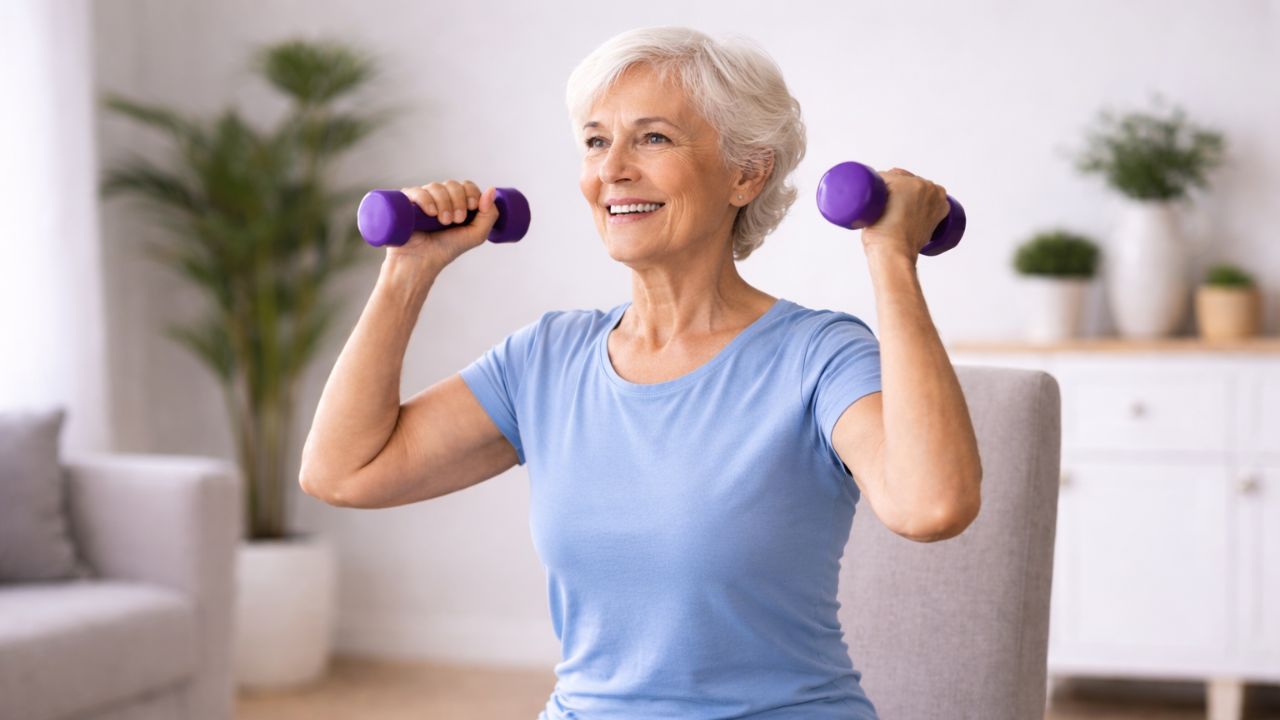
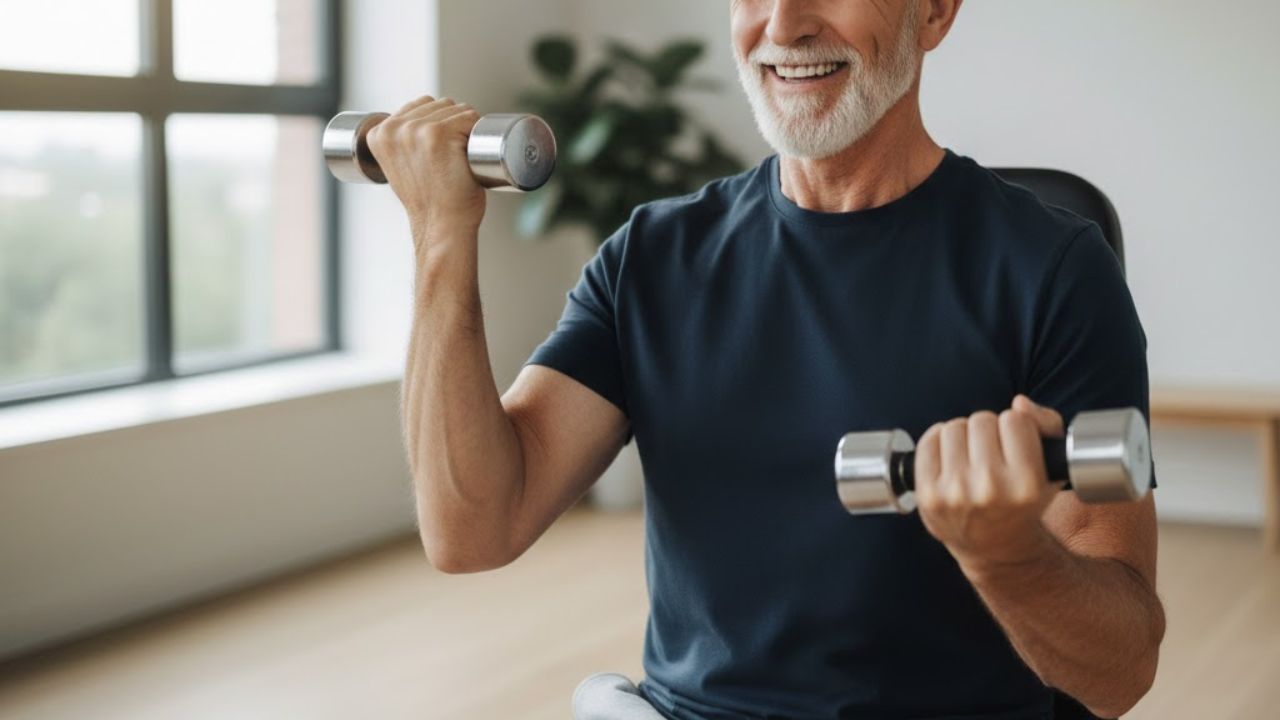
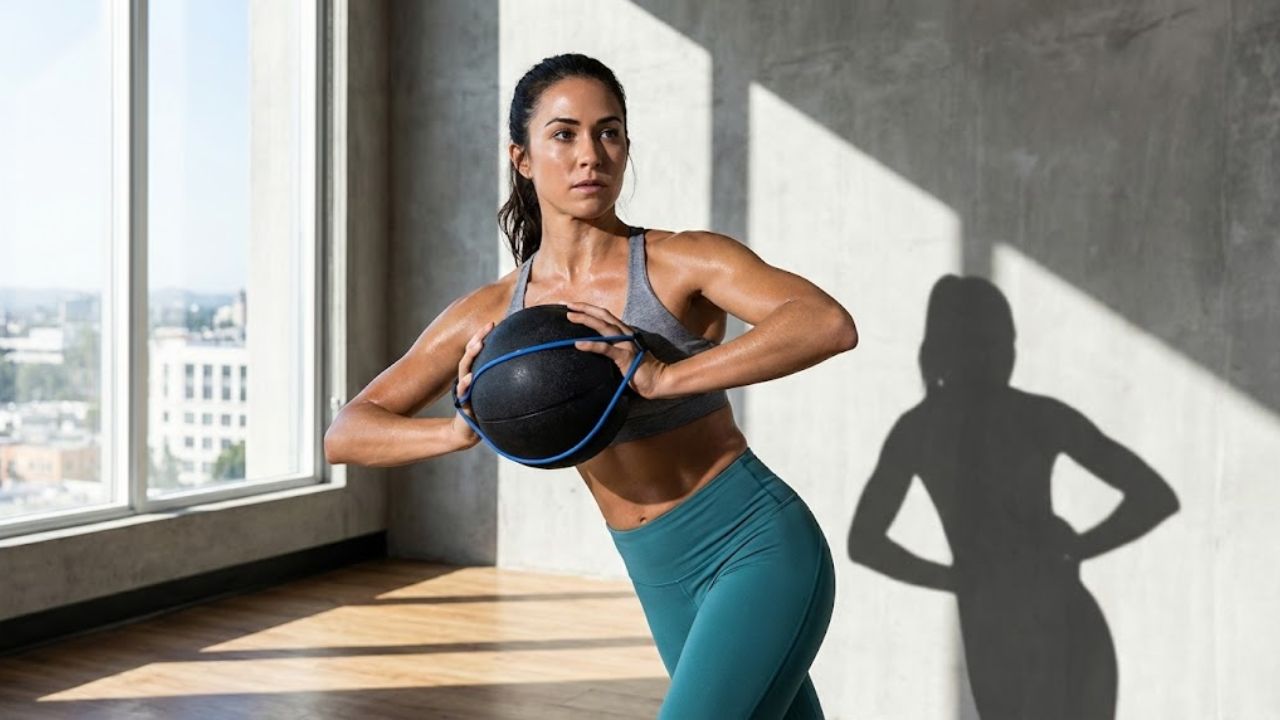
    We may not be able to live forever, but we can make the years we have feel better by maintaining strength and mobility as we grow older. Exercise is often made more complicated than it needs to be. If you’re looking for something practical that can be done anywhere, this no-equipment strength workout offers a refreshingly simple approach.

    Pilates instructor Portia Page shares a five-move bodyweight routine and explains why strength training becomes increasingly important with age. From supporting bone health and metabolism to improving sleep and mood, building strength can have a meaningful impact. Page also notes that regular strength work may help improve hormonal balance and ease menopause symptoms.

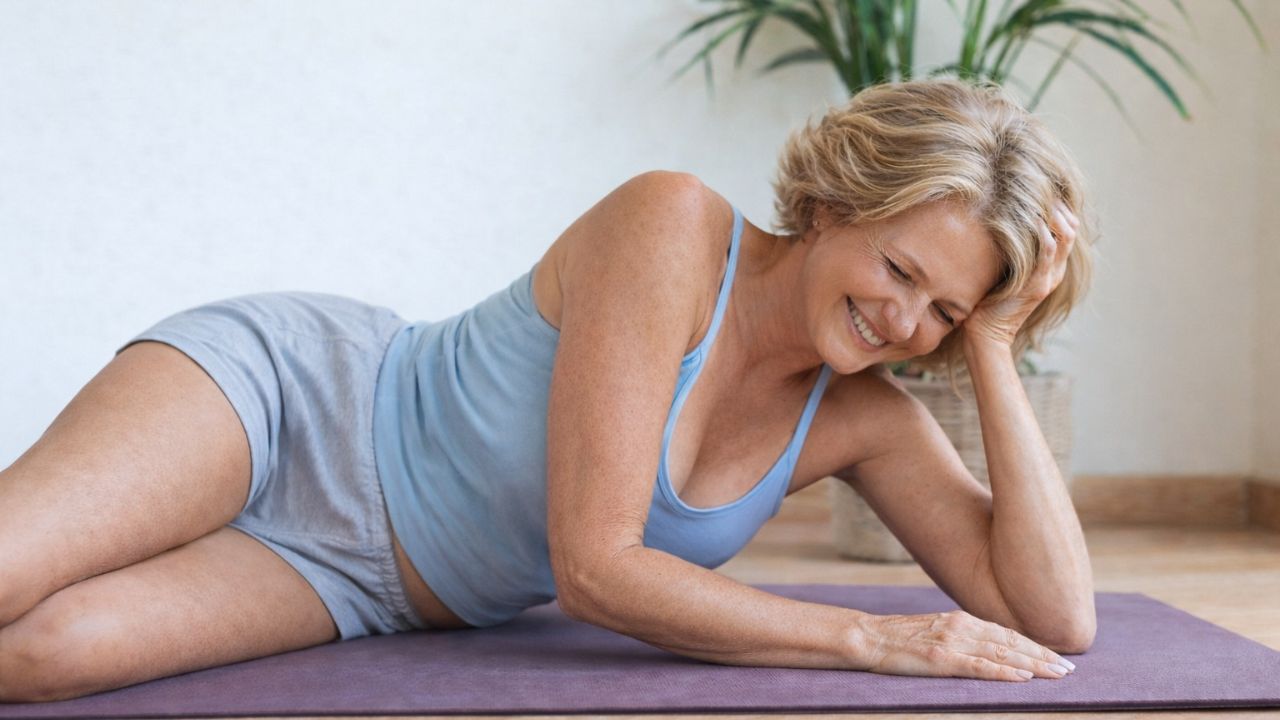
    While no single workout is a cure-all, staying consistent with strength training can help your body feel more supported, capable, and easier to live in. To begin, roll out a yoga mat and try the exercises below.

    What Does the Workout Involve?

    1. Plank Rock

    Start on all fours with your knees under the hips and hands beneath the shoulders. Extend one leg at a time, keeping the back long and straight. Gently rock forward onto the toes, then back so the heels move toward the floor, maintaining a strong, neutral spine. Continue rocking smoothly for one minute.

    2. Squat With Heel Lift

    Stand with feet slightly wider than the hips, arms resting by your sides. Lower into a squat by bending the knees and hinging at the hips, lifting the arms to chest height with thumbs pointing up. Press through the legs to stand tall, sweep the arms to the sides, then lift the heels as the arms move behind the hips. Perform as many controlled repetitions as possible for one minute.

    3. Lunge Drop and Forward Hinge

    Stand tall with feet under the hips and toes facing forward. Step one foot back into a long lunge, bending both knees while raising the arms to shoulder height. Keep the body stacked with the head over ribs, hips, and back knee, and the front knee aligned over the ankle. Straighten the back leg and hinge forward at the hips as the arms move back, keeping the back heel lifted. Repeat for 30 seconds, then switch sides.

    4. Bridge to Crunch

    Lie on your back with knees bent and feet flat, aligned with the sit bones. Arms rest by your sides with palms facing up. Press through the feet to lift the hips into a bridge, forming a straight line from shoulders to knees while keeping the head and arms grounded. Lower the hips, then lift the head, chest, and shoulders as the knees draw in toward the hips for a crunch. Look between the thighs, keeping the chin lifted. Alternate smoothly between movements for one minute.

    5. Single-Leg Deadlift With Row

    Stand with feet under the hips and arms by your sides, all toes facing forward. Hinge at the hips while lifting one leg behind you, reaching the arms toward the floor with the back flat and aligned. Draw the elbows up and back by squeezing the shoulder blades together. Keep the lifted leg at hip height, toes pointing down, and perform 5–10 controlled rows. Return to standing and repeat on the opposite side for 1–3 sets.

    Why This Routine Works

    Taken as a whole, this routine targets the key muscle groups that matter most with age. It strengthens the legs and glutes for daily movement, builds core stability for balance, and supports the upper body to maintain posture and joint health.

    Alongside strength, there is a consistent emphasis on mobility, helping the body move comfortably through its full range rather than simply building muscle alone.
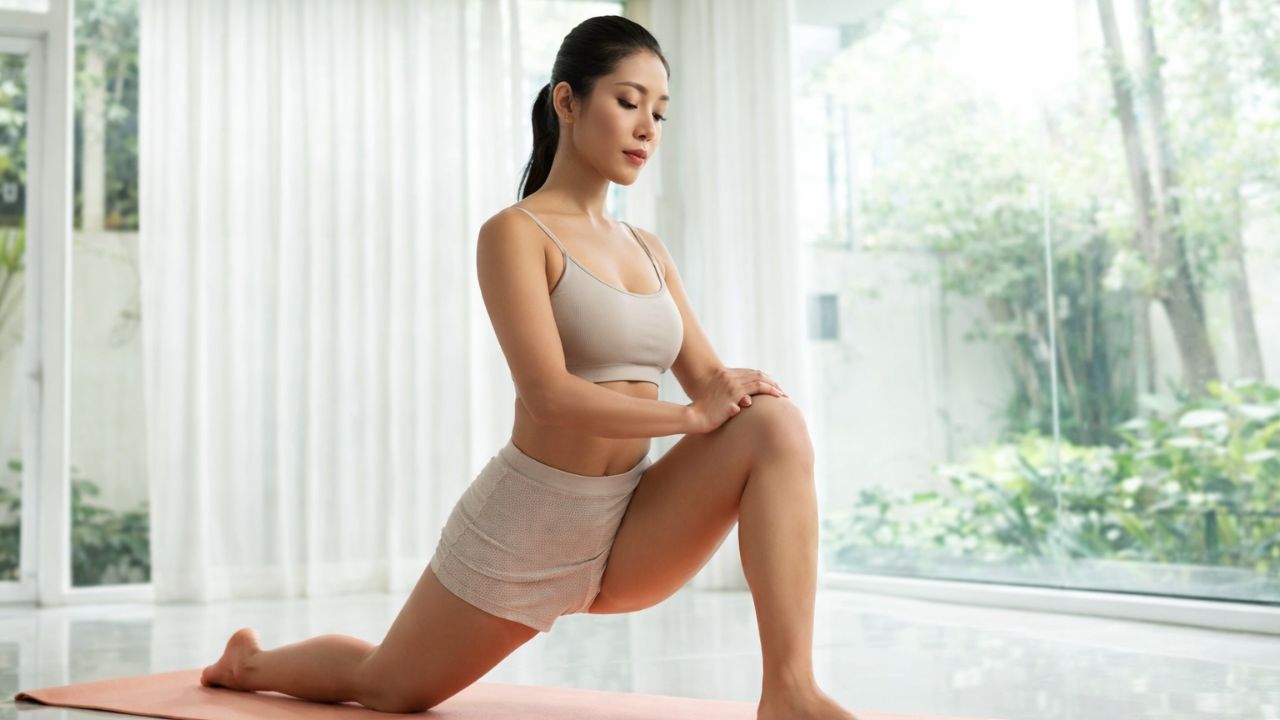
  • 12-Minute Workday Stretch: Quick Full-Body Routine That Loosens Tightness and Resets Your Posture

    12-Minute Workday Stretch: Quick Full-Body Routine That Loosens Tightness and Resets Your Posture

    There are countless ways to build a healthier lifestyle, but one of the most simple and effective habits almost everyone can benefit from is adding more stretching into their day.

    This becomes even more important as we age, when mobility and flexibility naturally decline. It’s also highly valuable for anyone who spends long hours seated at a desk. Taking just a few minutes to release tight muscles can play a key role in supporting your long-term physical wellbeing.

    A Beginner-Friendly Full-Body Stretching Routine

    If you’re unsure where to begin, a balanced, full-body stretching routine like this 12-minute session from fitness trainer Maddie Lymburner — known as MadFit on YouTube — is an excellent place to start.

    In the workout, Lymburner leads you through a sequence of stretches designed to target muscles across the entire body. No equipment is required, although using one of the best yoga mats can make floor-based movements more comfortable.

    How the 12-Minute Stretching Session Works

    The routine is divided into 60-second intervals, with a timer displayed on screen. Each minute focuses on a specific muscle group. Some segments involve holding a single stretch, while others guide you through multiple movements within the same timeframe.

    Throughout the session, Lymburner offers clear cues on how to activate the correct muscles while demonstrating each movement. For the best experience, make sure you can both see and hear the screen clearly as you follow along.

    When Is the Best Time to Stretch?

    There’s really no wrong time of day to complete this stretching workout. You can do it first thing in the morning to gently prepare your body for the day ahead, or in the evening to release tension before going to bed.

    For many people, the most beneficial time may be during the workday. Using this routine to break up long periods of sitting can feel incredibly refreshing. If your fitness tracker reminds you that you’ve been inactive for too long, swapping a short walk for this stretch session could be a great alternative.

    Adapting the Stretches to Your Ability

    This routine is suitable for everyone, though some movements may feel more challenging depending on your current flexibility level. Certain stretches, such as those targeting the hips and hamstrings, can be particularly demanding if those areas are tight.

    If you struggle to match the exact positions shown, focus instead on feeling the stretch in the intended muscles. Even modified positions can deliver the same benefits when done with proper awareness.

    More Than Just Physical Benefits

    Beyond the physical advantages, committing to this routine each day also offers a chance to mentally disconnect from daily stress. Spending a short period fully focused on your body and breath can be a powerful way to reset.

    With minimal time required and virtually no downside, making stretching a daily habit is an easy win. Try this routine, or explore other targeted options if your goal is to specifically counter the effects of prolonged sitting.

  • Dermatologists Warn Frequent Hair Washing Can Throw Off Scalp Balance More Than Skipping Washes

    In the early morning light, a young woman studies her reflection in the mirror. A towel rests on her shoulders, her hair already damp again. She washed it the night before dinner, yet she is about to wash it once more before work. The reason feels urgent: greasy roots and an important meeting where looking unkempt feels unacceptable.

    Her boyfriend, still half asleep, pauses at the doorway and asks, “Didn’t you just wash it?” She barely reacts. Instead, she reaches for the shampoo and scrubs hard, as if trying to erase stress itself. Her scalp turns pink, the ends squeak with dryness. What she doesn’t realise is that this daily ritual, repeated in millions of bathrooms, may be causing more damage than skipping a wash ever would. The issue isn’t dirt. It’s disruption.

    When freshly washed hair starts causing trouble

    In a crowded subway carriage, the scent of perfume, conditioner, and styling spray fills the air as commuters lean forward together. There are fresh blow-dries, damp ponytails, and hair still warm from straighteners. Everything looks polished and clean. Beneath the surface, dermatologists say, the scalp is quietly reacting with stress.

    Each wash removes a thin, protective layer of natural oils and beneficial microbes that keeps the scalp balanced. Occasional washing allows recovery. Daily washing, sometimes twice a day, leaves no time for reset. The scalp responds with more oil, itching, and flakes. What feels clean begins to feel uncomfortable.

    During a video call with dermatologists from three different countries, the response to one question was almost identical. How harmful is skipping a wash? “Almost not at all,” they said. “It’s the constant over-washing that breaks the balance.”

    A real case that revealed the problem

    A London-based dermatologist described a 29-year-old marketing manager who arrived convinced she had a serious scalp condition. She had red patches, tenderness along the hairline, and roots that turned greasy within hours of washing. She had tried clarifying shampoos, scalp scrubs, and daily detox routines found online.

    When asked how often she washed her hair, she hesitated before admitting, “Twice a day when I’m stressed.” Morning gym sessions followed by evening showers meant up to 28 washes a week. Her scalp microbiome—the natural mix of bacteria and yeast—was completely unsettled.

    The solution was simple but uncomfortable. Washing was reduced to three times a week, a gentle fragrance-free shampoo replaced harsh formulas, and she was asked to endure two weeks of “bad hair.” The first days brought extra oil and frizz. Then the redness faded, the greasiness slowed, and her scalp began regulating itself again.

    Why frequent washing keeps backfiring

    Dermatologists describe the cycle clearly. When too much oil is stripped away, the sebaceous glands treat it as an emergency and produce even more sebum. Hair feels greasy faster, leading to another wash. The more often this happens, the more the scalp believes it is under attack. Skipping a wash may leave hair slightly flat, but the protective barrier stays mostly intact.

    Frequent shampooing also disrupts the scalp’s microbiome. Certain yeasts linked to dandruff thrive when balance is disturbed. Ironically, people who shampoo repeatedly to fight flakes may be feeding the very issue they want to solve. Skipping a shampoo occasionally is far less dramatic for the scalp than we’ve been led to believe.

    Reducing washes without feeling uncomfortable

    Dermatologists often recommend a gradual approach. Stretch your routine by one extra day for two to three weeks. Daily washers can try every other day. Those washing every other day can move to every three days. The aim is not to stop washing, but to reduce the shock to the scalp.

    On non-wash days, rinsing with lukewarm water and gently massaging the scalp can remove sweat without stripping oils. Dry shampoo can be used sparingly at the roots, more like a touch-up than a solution. The less it’s relied on, the more the scalp can relearn its rhythm.

    Stylists also suggest having one reliable hairstyle for “in-between” days. Loose buns, low ponytails, or soft braids benefit from a bit of natural grip. Slightly unwashed hair often holds these styles better than freshly washed strands.

    Common habits that quietly worsen scalp health

    One frequent mistake is using harsh clarifying shampoos as an everyday product. These formulas are designed for occasional buildup removal, not daily cleansing. Overuse roughens the scalp, dries the hair, and signals distress to oil glands.

    Another issue is confusing scalp care with hair care. Conditioner is often applied too close to the roots, while shampoo is worked into the ends. Experts repeat a simple rule: shampoo focuses on the scalp; conditioner belongs on lengths and ends. Let the lather rinse through without scrubbing fragile tips.

    The third mistake is emotional. Many people equate “clean hair” with being a responsible adult. One bad hair day while washing less can trigger panic and a return to daily shampooing, preventing the scalp from ever adapting.

    “Skipping a wash is rarely the problem,” says Dr. Aurélie B., a French dermatologist. “What destabilises the scalp is repetition without rest. Another wash often feeds the issue instead of fixing it.”

    Practical steps for a healthier routine

    • Reduce washing gradually rather than making sudden changes.
    • Use gentle, sulfate-free shampoos for regular cleansing.
    • Apply conditioner only to lengths and ends, not the scalp.
    • Use dry shampoo sparingly, not as a daily habit.
    • Allow at least three weeks for the scalp to adjust.

    Redefining what “clean hair” really means

    It can be surprisingly freeing to realise that the scalp isn’t a surface that needs constant disinfecting. It is living skin with its own ecosystem and rhythm. When dermatologists say over-washing is more disruptive than skipping a wash, they are challenging our idea of cleanliness.

    Clean hair doesn’t have to mean stripped, squeaky, or heavily perfumed. It may look like roots that don’t feel tight, ends that move naturally, and a scalp that stays calm after showering. Paying attention to how your scalp feels, not just how it looks, reveals clear patterns.

    For some people, especially those with very oily scalps or living in humid, polluted cities, washing less may seem unrealistic. Still, dermatologists insist the balance point is often much lower than expected. Many people could wash less often if they allowed time for adaptation.

    More openly, people are beginning to admit they don’t wash their hair every day. This honesty creates space for a kinder standard of what looks presentable. In the end, the question isn’t how often hair should be washed, but when the scalp stops thriving. For many, the missed shampoo isn’t the real threat. The endless ones might be.

    Key takeaways

    • Over-washing vs skipping: Frequent washing disrupts the scalp more than missing a shampoo.
    • Scalp microbiome: Repeated shampooing upsets natural bacteria and yeast balance.
    • Gradual routines: Slow, gentle changes help restore long-term scalp stability.
  • Short on time? This 15-minute dumbbell routine crushes your core without one sit-up

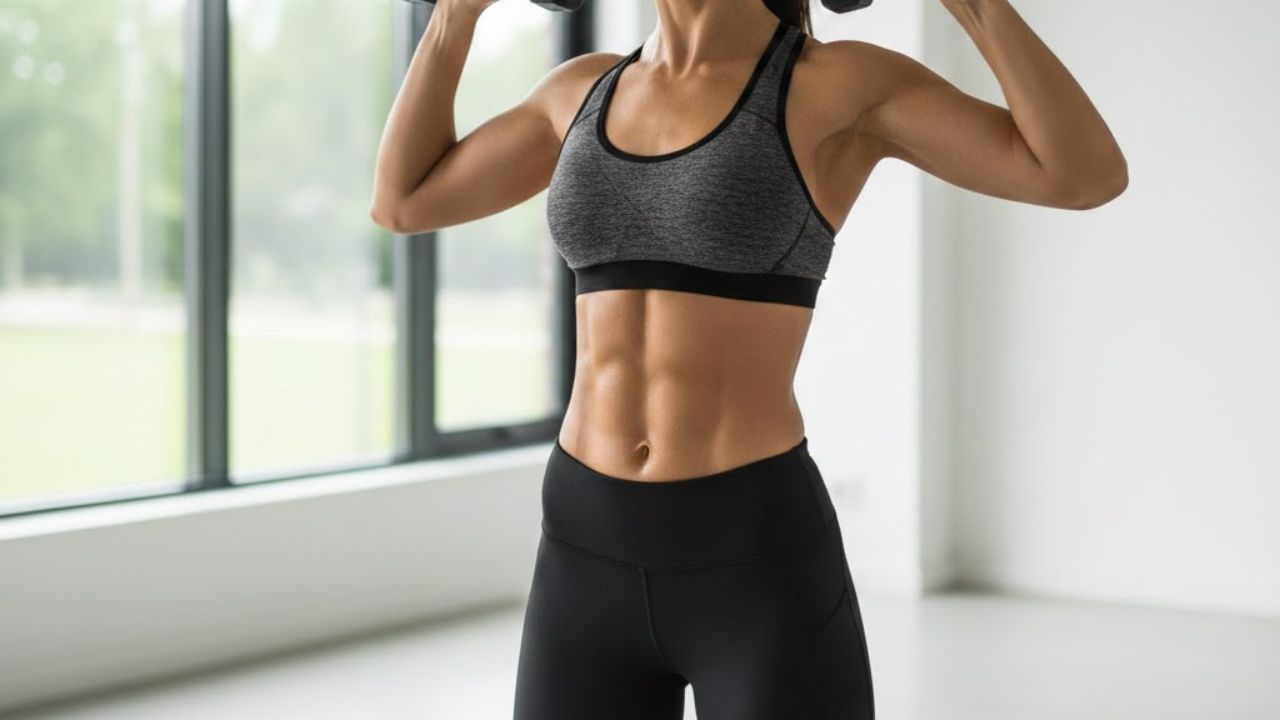
    Short on time? This 15-minute dumbbell routine crushes your core without one sit-up

    If sit-ups aren’t your thing, there’s good news — they’re not the only, or even the most effective, way to train your core. Rather than endless crunches, one of the smartest ways to develop your midsection is to train it like any other muscle group. That means adding dumbbells and using progressive overload to build strength and shape definition.

    Introducing a dumbbell adds extra resistance, instantly increasing the challenge placed on your core. When combined with a balanced, healthy diet, this approach can help make abdominal muscles more visible. Because the intensity is higher, you’ll often see results faster, making a 15-minute workout more than enough.

    Not sure where to begin? Below is a 15-minute dumbbell ab workout that uses just one heavy weight. If you’re completely new to exercise or returning after a long break, pregnancy, or injury, it’s always best to seek personalized guidance from a qualified professional.

    What Does the Workout Involve?

    This routine is designed by fitness trainer Shaina Fata. It includes five different exercises, each performed for 40 seconds, followed by a 20-second rest. You’ll complete two or three full rounds of the circuit, with the option to take short breaks between rounds if needed.

    You’ll need one dumbbell for the entire workout. Choose a weight that feels challenging but manageable — the final few reps should be tough, but still achievable with good form.

    Exercises Included in the Workout

    Sumo Oblique Bends

    Begin in a sumo squat stance with your feet wider than hip-width and toes turned outward. Engage your core and hold the dumbbell behind your head with both hands. Using your oblique muscles, bend to one side, lowering your elbow toward your knee, then return to center before switching sides. Stay low in the squat for the entire 40 seconds.

    Single Dumbbell Swings

    Stand with your feet slightly wider than hip-width and your core braced. Holding the dumbbell in one hand, hinge at the hips and swing it between your legs, then drive it forward until it reaches chest height. Switch hands after 20 seconds, or for a longer challenge, complete 40 seconds per side.

    Dumbbell Core Twists

    With your feet slightly wider than hip-width, hold the dumbbell in both hands in front of your torso. Keeping your abs fully engaged, rotate your upper body from one side to the other with controlled movement. Focus on maintaining tension through your core throughout the exercise.

    Dumbbell Flutter Kicks

    Lie on your back with your lower back pressed firmly into the floor. Lift your head, neck, and shoulders slightly, holding the dumbbell in both hands with arms extended overhead. Raise your legs a few inches off the ground and alternate kicking each leg upward. The movement should stay small and controlled. If you feel strain in your neck, gently rest your head back on the floor.

    Hovering Table Dumbbell Sliders

    Start on all fours with your wrists under shoulders and knees under hips. Hover your knees a few inches above the floor and place the dumbbell beside your body. Keeping your knees lifted, reach the opposite hand under your torso to pull the dumbbell across, then switch hands to reverse the motion. Maintain a steady hover throughout.

  • 72-Year-Old Trainer Approved: 4 Seated Exercises That Improve Mobility Flexibility and Daily Strength

    72-Year-Old Trainer Approved: 4 Seated Exercises That Improve Mobility Flexibility and Daily Strength

    When we’re younger, moving freely often feels effortless. But with age, preserving mobility, strength, and balance becomes essential for maintaining independence and quality of life.

    This is something 72-year-old certified personal trainer Mitch Kahn understands well. The founder of Forever Fit With Mitch, Kahn designs workouts specifically for older adults, focusing on balance, strength, flexibility, and confidence.

    Why Mitch Kahn Recommends Chair Workouts

    Among the many exercise styles he teaches, chair-based workouts are the ones Kahn consistently advocates. As he explains, chair exercises can develop real strength, coordination, and confidence without unnecessary strain.

    Kahn has shared four simple chair exercises he believes every older adult should try. All you need to begin is a stable, comfortable chair and, optionally, a resistance band.

    If you’re new to exercise or returning after a break, it’s important to check with your doctor first and move at a pace that feels right for you.

    The Four Chair-Based Exercises Explained

    Created by Kahn, these seated movements are ideal for beginners and seniors. Together, they target full-body strength, coordination, and functional fitness, helping you feel more stable and capable in daily life.

    Cross-Body Punches

    This bodyweight movement focuses on improving core rotation and coordination, encouraging controlled, fluid motion through the upper body.

    Seated Leg Press (With or Without a Band)

    This lower-body exercise builds leg strength and power, which supports everyday actions such as walking and climbing stairs. Kahn demonstrates it both with and without a resistance band. Beginners are encouraged to start with bodyweight only before adding resistance.

    Overhead Arm Circles

    Modern habits like prolonged sitting and looking down at screens can affect posture. Overhead arm circles help increase flexibility, shoulder strength, and alignment, supporting healthier posture.

    Seated Row With Side Taps

    This movement engages the arms, legs, and core simultaneously. It supports upper-body strength, helps reset posture, and enhances overall coordination.

    Kahn recommends performing 12 repetitions of each exercise, taking a short rest, and repeating the circuit three times.

    Benefits of This Chair Workout

    Chair workouts like this four-move routine offer an accessible way to build strength, flexibility, and balance, particularly for beginners and older adults.

    They also provide a practical option for those who find it difficult to get down onto the floor, allowing continued work on posture, muscle strength, and overall wellbeing, while still delivering that valuable endorphin boost.

    Perhaps most importantly, chair exercises help improve functional fitness—the strength needed for everyday tasks such as climbing stairs, getting in and out of bed, or standing up from a chair.

    Research supports this approach. A 2021 study published in the International Journal of Environmental Research and Public Health concluded that chair-based exercises are not only effective, but should be promoted as simple and easily implemented activities to help older adults maintain and develop strength.

  • Stop guessing: A massive 50-year study finally reveals when our bodies really start to age

    Stop guessing: A massive 50-year study finally reveals when our bodies really start to age

    A 47-year Swedish study set out to uncover when the human body truly starts to age by examining changes in fitness, strength, and muscle endurance throughout adulthood. The findings were eye-opening: physical decline can begin as early as age 35. However, there’s encouraging news — staying physically active can help slow this decline.

    How the Study Tracked Fitness Over Decades

    Conducted at the Karolinska Institutet and published as part of the Swedish Physical Activity and Fitness (SPAF) study, the research followed several hundred randomly selected men and women born in 1958. Participants underwent detailed testing to measure maximal aerobic capacity, muscular endurance, muscle power, and overall physical performance through a range of athletic assessments.

    Peak Physical Performance Comes Earlier Than Expected

    Researchers discovered that the general population experiences physical changes similar to those seen in elite athletes. In both groups, peak physical performance is typically reached before the age of 35, after which gradual declines become noticeable.

    Physical Activity Can Slow Performance Loss

    Importantly, the study also highlighted positive outcomes for those who increased their activity levels. Adults who became more physically active showed performance improvements of 5–10%, proving that regular movement can significantly slow down the loss of physical capacity.

    Expert Insight on Staying Active

    Maria Westerståhl, lecturer at the Department of Laboratory Medicine and lead author of the study, emphasized the importance of movement, stating that it is never too late to start being active. The findings show that while physical activity may not completely stop decline, it can meaningfully reduce its pace. Researchers are now working to understand why peak performance occurs around age 35 and how activity helps delay deterioration.

    What Comes Next in the Study

    The research is ongoing, and participants will be re-evaluated as they turn 68 years old. Scientists aim to connect changes in physical capacity with lifestyle choices, health factors, and underlying biological mechanisms.

  • Jennifer Aniston Workout Test: 5-Move Full-Body Session That Lit Up My Core Muscles

    Jennifer Aniston Workout Test: 5-Move Full-Body Session That Lit Up My Core Muscles

    Jennifer Aniston may be celebrated for her iconic roles and signature hair, but her true powerhouse is her exceptionally strong core, described by her trainer as “bulletproof.” Coming from Dani Coleman, vice president of training at Pvolve, that praise carries serious weight.

    At 56, Jennifer isn’t simply maintaining her fitness — she’s fully stepping into her strength-focused phase. Her journey didn’t happen overnight. She first discovered Pvolve years ago after suffering a back injury on a movie set and later officially partnered with the brand as an ambassador in 2023.

    After more than four years of consistent training, the results speak for themselves. Jennifer credits the method for helping her stay consistent without burnout, even with a demanding schedule. The big question remains: how challenging is the workout really, and what does it involve? Let’s take a closer look.

    Understanding the Pvolve Method

    You might expect Jennifer Aniston’s routine to be packed with intense cardio and punishing gym sessions. That’s no longer the case. After feeling worn down by high-impact training, she shifted to a low-impact, functional movement system designed to build strength through three planes of motion.

    The focus is on mobility, stability, and total-body strength — all without the joint stress associated with traditional high-impact workouts. What follows is a snapshot of the type of exercises included.

    This routine features five carefully selected movements aimed at improving strength, power, and mobility. While some exercises use Pvolve equipment, resistance bands and Pilates-style tools are enough to follow along at home.

    Squat to Overhead Press Using a Band

    Targets: Glutes, quads, shoulders, core.

    This foundational Pvolve movement activates multiple muscle groups simultaneously. The resistance band maintains constant tension, making the exercise effective from start to finish.

    Stand with feet hip-width apart, anchoring the band beneath your feet and holding it at shoulder height. Lower into a squat with your chest lifted and knees aligned. As you stand, press the band overhead until your arms fully extend, then return slowly to the starting position.

    Why it works: As the band stretches, resistance increases, forcing your muscles — especially the shoulders and core — to work harder. It’s a time-efficient, full-body exercise that also elevates your heart rate.

    Inner Thigh Glide with Overhead Oblique Reach

    Targets: Inner thighs, glutes, obliques.

    This smooth, controlled movement may look effortless, but it activates deep stabilizing muscles while testing balance and coordination — a hallmark of the Pvolve approach.

    Place your right toes on a glider or towel, keeping your left foot grounded. Slowly slide your right leg out to the side, maintaining square hips and a tight core. Once extended, reach your right arm overhead toward the opposite side to engage your obliques. Move slowly and with control.

    Why it works: The lateral glide targets the inner thighs, while the overhead reach strengthens the core, helping build stability through the hips and waist.

    Standing Core Exercise with Resistance Band

    Targets: Core, obliques, glutes, stabilizers.

    This standing movement replaces floor-based ab work, using constant band tension to challenge your deep core and balance without crunches.

    Hold the band at chest height with arms extended. Step your right leg slightly forward. Slowly lift your right leg as you rotate your torso away from the anchor point, pulling the band across your body. Return to center with control, completing all reps on one side before switching.

    Why it works: As an anti-rotation exercise, it trains the core to resist movement, improving posture, balance, and functional strength.

    Abdominal Twist with Pilates Ball

    Targets: Core, obliques, transverse abdominis.

    This exercise updates the traditional Russian twist with a Pilates-inspired twist that emphasizes control and precision.

    Sit upright with bent knees and place a Pilates ball behind your lower back. Lean back slightly, engaging your core while allowing the ball to support your spine. Lift your right leg and rotate your torso toward it, then return to center. Repeat on the opposite side, keeping movements slow and deliberate.

    Why it works: The controlled rotation activates the deep core muscles, helping shape the waist and strengthen obliques.

    Plank Stability Challenge with Ball

    Targets: Core, shoulders, glutes.

    This final movement transforms a traditional plank into a full-body stability test, demanding both strength and focus.

    Begin in a high plank with hands placed on a Pilates or stability ball and feet hip-width apart. Engage your core and glutes to steady the ball. Once stable, lift your right foot, bend the knee, and draw it toward your chest. Return to plank and repeat on the left.

    Why it works: The unstable surface forces your stabilizing muscles to work overtime, delivering a low-impact yet intense finisher that activates the entire body.

    Key Benefits of This Routine

    Far removed from the “no pain, no gain” mindset, this routine takes a smarter, joint-friendly approach. Designed to be completed in around 30 minutes, it’s ideal for busy schedules.

    The five-move sequence proves that low-impact workouts can still deliver a deep burn, improved strength, and visible muscle tone, particularly in the core, glutes, and legs.

    Final Takeaway

    Jennifer Aniston’s workout may appear slow and controlled, but it delivers a serious challenge. Each precise movement and sustained resistance keeps your entire body fully engaged.

    It’s an efficient way to build lasting strength and stability without the strain of high-impact training. The routine encourages focus, control, and intentional movement — qualities that make the workout feel both empowering and effective.

    The takeaway is clear: results don’t require pushing harder, just working smarter. By slowing down and engaging every muscle, this method supports long-term strength, confidence, and longevity.

  • Homeschooling “Harms Futures,” a Shocking Study Claims, and Parents Are Pushing Back Hard

    Homeschooling “Harms Futures,” a Shocking Study Claims, and Parents Are Pushing Back Hard

    Homeschooling has long been a growing alternative to traditional education in the United States, but a recent study has reignited the debate in dramatic fashion. The report claims that homeschooling may negatively affect long-term outcomes, from career prospects to social development. As headlines spread quickly online, parents, educators, and policy experts have pushed back, arguing the findings oversimplify a complex reality. With millions of American families choosing home-based education, the discussion now centers on whether the study reflects genuine risks or misses the broader picture of how homeschooling actually works.

    Homeschooling impact on future success

    The study argues that homeschooled students may face challenges later in life, pointing to gaps in standardized benchmarks and employment data. Critics, however, say these conclusions ignore diverse learning paths, individual pacing benefits, and family-driven education. Many parents note that success cannot be measured by one narrow metric, especially when homeschoolers often pursue nontraditional careers or entrepreneurial routes. Researchers behind the report acknowledge limitations, yet the headline message has already shaped public perception. Supporters of homeschooling argue that flexibility and customization matter more than rigid comparisons to classroom-based systems.

    Study on homeschooling outcomes sparks debate

    Much of the controversy centers on how data was collected and interpreted. Parents argue the research relies heavily on limited sample sizes, outdated enrollment data, and short-term performance metrics. Homeschool advocates say these factors fail to capture long-term personal growth and real-world adaptability. In response, several education groups have released counter-studies highlighting strong college completion rates and civic engagement among homeschool graduates. The debate has become less about statistics and more about who gets to define educational success in a rapidly changing world.

    Parents respond to homeschooling criticism

    Across the country, parents have taken to social media, school boards, and legislative hearings to defend their choices. Many describe homeschooling as a response to local school challenges, special learning needs, or values-based instruction. They argue the study dismisses parental involvement levels that are often far higher than in traditional settings. For these families, homeschooling is not an experiment but a deliberate strategy shaped by years of observation, adjustment, and results they see firsthand in their children.

    Looking beyond the headlines

    While the study has drawn attention, experts caution against drawing sweeping conclusions. Education outcomes are influenced by countless variables, from household stability to community resources. Focusing solely on homeschooling versus traditional schooling risks ignoring contextual education factors, student motivation differences, and support network strength. A more balanced discussion may involve improving oversight and resources rather than framing homeschooling as inherently harmful. As the debate continues, families and policymakers alike are being urged to look past the shock value and examine the full educational landscape.

    Aspect Homeschooling Traditional Schooling
    Learning Structure Flexible and customized Standardized curriculum
    Class Size One-on-one or small groups Large classrooms
    Parental Involvement Very high Limited
    Assessment Style Portfolio-based Test-focused

    Frequently Asked Questions (FAQs)

    1. What does the study claim about homeschooling?

    It suggests homeschooling may limit certain long-term academic and career outcomes.

    2. Are the study’s findings universally accepted?

    No, many educators and parents dispute the methodology and conclusions.

    3. Is homeschooling legal in the United States?

    Yes, homeschooling is legal in all states, though regulations vary.

    4. Do homeschoolers succeed in college?

    Multiple reports show many homeschool graduates perform well in higher education.

  • Coffee Lovers Furious as New Research Claims Your Morning Cup Could Be Slowly Poisoning You

    Coffee Lovers Furious as New Research Claims Your Morning Cup Could Be Slowly Poisoning You

    Coffee drinkers across the United States are doing a double take after new research sparked alarm about what might be hiding in their daily cup. The study doesn’t say coffee should be banned, but it raises uncomfortable questions about long-term exposure to certain compounds that can form during growing, processing, and brewing. For millions who rely on coffee to kick-start busy mornings, the idea that a familiar comfort could carry hidden risks feels unsettling. Experts stress context matters, yet the debate has been enough to fuel concern, frustration, and plenty of heated conversations.

    Coffee health risks spark fresh concern

    The research focuses on how coffee beans interact with heat, water, and storage over time, pointing to possible chemical residue risks that may build up unnoticed. Scientists note that hot water extraction can pull more than just flavor from grounds, especially when brewing methods vary widely. While most findings are based on long-term patterns, critics worry about daily brew exposure for heavy drinkers. Others argue the paper filter debate matters too, since filtration can reduce some compounds. The takeaway isn’t panic, but awareness of how small variables may quietly shape what ends up in your mug.

    New coffee study fuels poisoning fears

    One flashpoint in the discussion involves mold-related toxins, often summarized as mycotoxin contamination fears. These substances can develop when beans travel through long storage chains in warm or humid conditions. Researchers also flagged industrial roasting byproducts that may form at very high temperatures, though amounts differ by brand. In the U.S., imported beans raise questions about import testing gaps, since standards vary worldwide. Industry groups counter that levels found are usually far below safety limits, but consumers remain uneasy when science headlines sound more alarming than reassuring.

    How coffee lovers can respond safely

    Health specialists say small adjustments can lower concern without giving up coffee entirely. Choosing methods that support safer brewing choices and avoiding excessive intake reinforces the idea that moderation habits matter. Regular cleaning encourages clean machine upkeep, which helps prevent unwanted buildup inside brewers. Shoppers can also focus on trusted bean sourcing from brands that publish quality testing details. None of these steps guarantee zero risk, but together they give drinkers more control and confidence over what they consume each morning.

    What this research really means

    Despite dramatic headlines, experts urge a balanced risk perspective when reading these findings. Nutrition science is complex, and science still evolving means conclusions shift as methods improve. For now, the goal is informed consumer steps, not abandoning a beloved routine overnight. Understanding the difference between panic versus proof helps keep the conversation grounded, reminding people that everyday foods are often evaluated in extremes that don’t reflect real-life use.

    Factor Examined Potential Issue Typical Risk Level
    Bean Storage Mold growth Low to moderate
    Roasting Temperature Chemical formation Low
    Brewing Method Compound extraction Varies by method
    Daily Intake Long-term exposure Moderate for heavy use

    Frequently Asked Questions (FAQs)

    1. Does this research say coffee is dangerous?

    No, it highlights potential risks rather than declaring coffee unsafe.

    2. Should Americans stop drinking coffee?

    Experts generally recommend moderation instead of quitting entirely.

    3. Are certain brewing methods safer?

    Filtered and well-maintained brewing methods may reduce some compounds.

    4. Is more research expected?

    Yes, scientists say further studies are ongoing to clarify long-term effects.

  • Goodbye to Missed Welfare Updates: Major Rule Changes Begin From Early February 2026

    Goodbye to Missed Welfare Updates: Major Rule Changes Begin From Early February 2026

    From early February 2026, Australia’s welfare system is entering a new phase, with major rule changes designed to reduce missed updates and improve how people receive support. For years, many recipients have struggled to keep up with small but important policy shifts that affected payments, eligibility, and reporting duties. These new reforms aim to close that gap by streamlining communication, updating assessment rules, and improving digital alerts. For millions of Australians who rely on welfare payments, the coming changes could mean fewer surprises and a clearer path to staying compliant.

    Australia’s Welfare Rule Changes Aim to End Missed Updates

    The Australian government says the February 2026 reforms focus on preventing people from missing critical welfare updates that can affect their income. New systems will flag changes earlier, reducing the risk of sudden payment pauses or overpayments. Officials highlight clearer digital alerts, real-time policy notices, and simplified update tracking as core improvements. Instead of relying on occasional letters or website checks, recipients will receive timely prompts when rules shift. The goal is to create a system that adapts as life circumstances change, without placing the entire burden on individuals to constantly monitor complex welfare rules.

    How Welfare Policy Updates Will Affect Payments From February 2026

    Payment accuracy is another major focus of the new welfare rules. Updated assessment tools are expected to align payments more closely with current income and household details. Authorities point to automatic data matching, faster eligibility reviews, and reduced payment errors as benefits of the new approach. While most recipients should see smoother payments, some may notice adjustments if their details are outdated. The government stresses that these changes are meant to protect both recipients and the system, ensuring support reaches those who qualify without long delays or unexpected debts.

    What Welfare Recipients Need to Do Under the New Rules

    Although the system will become more proactive, recipients still have responsibilities. Keeping personal details current remains essential under the revised framework. Services Australia recommends regular account checks, prompt detail updates, and active notification settings to avoid issues. Those who ignore alerts or delay updates could still face temporary suspensions. The difference now is that warnings should arrive earlier and be easier to understand, giving people more time to act before payments are affected.

    Why These Welfare Changes Matter Long Term

    Beyond February 2026, these reforms signal a broader shift in how Australia manages welfare. By focusing on prevention rather than correction, the system aims to reduce stress for recipients and administrative costs for government. Experts highlight predictable payment outcomes, lower compliance anxiety, and stronger system trust as long-term gains. If implemented well, the changes could mark the end of sudden welfare shocks caused by missed rule updates, replacing them with a more transparent and responsive support network.

    Change Area What’s New From Feb 2026 Who Is Affected
    Policy Notifications Earlier digital alerts All welfare recipients
    Eligibility Reviews More frequent automated checks Income-tested payments
    Payment Accuracy Improved data matching Centrelink payment holders
    Account Management Simplified update process Online service users
    Compliance Warnings Earlier reminders before action At-risk accounts

    Frequently Asked Questions (FAQs)

    1. When do the new welfare rule changes start?

    The main updates begin rolling out from early February 2026.

    2. Do I need to reapply for my welfare payment?

    No, existing recipients do not need to reapply under the new rules.

    3. Will my payment amount automatically change?

    Payments may adjust only if your personal or income details are outdated.

    4. How can I avoid missing future welfare updates?

    Keep your contact details current and enable notifications in your online account.