Blog

  • Struggling to Balance Running and Strength Training Use This Simple Weekly Planning Guide

    Struggling to Balance Running and Strength Training Use This Simple Weekly Planning Guide

    Whether you already lift consistently or are planning to begin, it’s smart to schedule a periodic strength training reset. Taking time to review how often you lift—and making adjustments—can support your running goals for the year ahead. Just as running mileage changes from week to week, your strength workouts shouldn’t stay exactly the same year-round.

    “When it comes to weekly strength sessions, two workouts is the general sweet spot,” says Matt Jones, a personal trainer, running coach, and founder of Run Strong Academy in Cardiff, South Wales. Depending on your phase, that may rise to two or three sessions during base building or drop to one session weekly as races approach. Still, two sessions per week is a reliable target for most runners.

    Within that guideline, there’s plenty of flexibility. Your training season, weekly mileage, and upcoming races should shape the exercises you choose, the weights you lift, and the number of sets and reps you perform.

    Five Ways to Build Strength Without Hurting Your Running Performance

    1. Plan a True Offseason

    You don’t need elite status to benefit from an offseason break. After a major race, easing up for about a month allows your body to recover. An offseason doesn’t mean eliminating running altogether. Instead, reduce mileage by 20 to 40 percent, lower intensity, limit races, and include other cardio options like cycling, rowing, or swimming.

    With reduced running, strength work can take center stage. While strength training should always remain part of a runner’s plan, the offseason allows strength adaptations to occur more effectively. During this time, three to four strength sessions per week are appropriate, ideally scheduled on non-running days for better recovery.

    2. Establish a Solid Strength Foundation

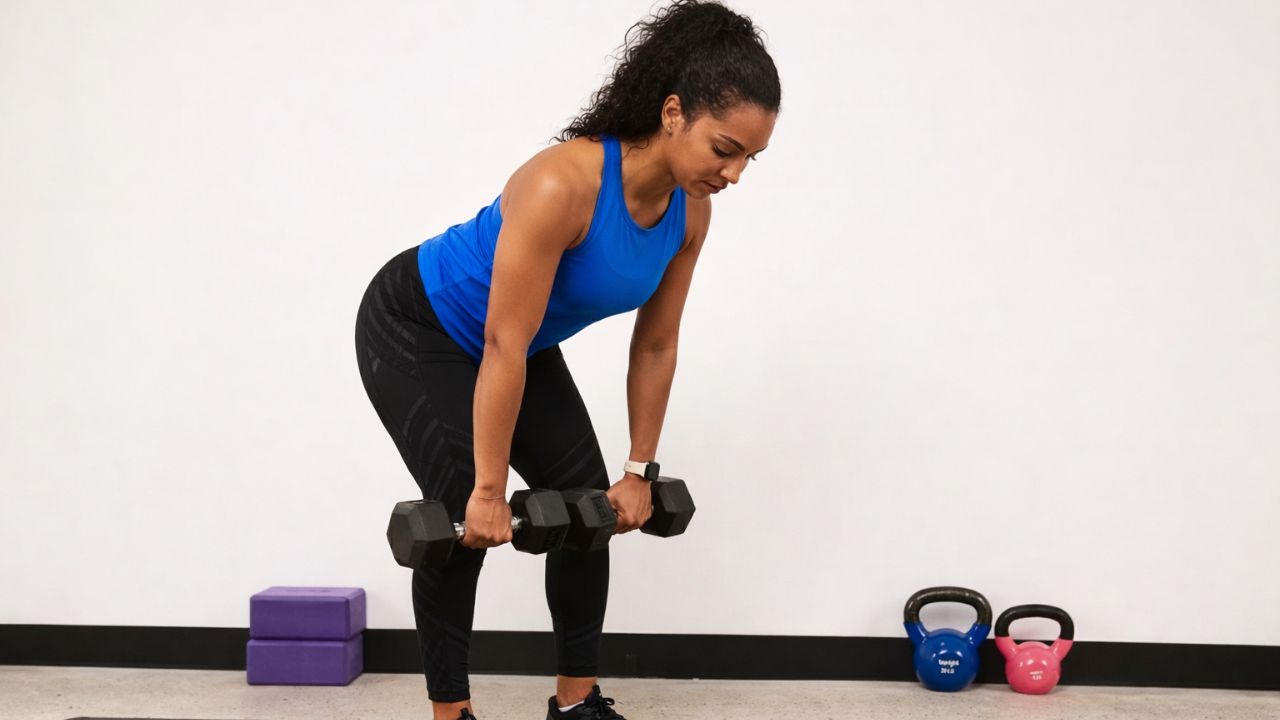
    Time away from race-focused training is ideal for reinforcing proper movement patterns. Emphasize a full range of motion, strong core engagement, and bilateral compound exercises such as squats, hinges, and push-pull movements.

    Since running is largely a single-leg activity, gradually add unilateral movements into your plan. Exercises like lunges, step-ups, single-leg deadlifts, and glute bridges should appear in every phase of training.

    This stage represents the hypertrophy phase, focused on muscle development. Over roughly four weeks, prioritize higher volume with lighter loads—aim for three to four sets of 10 to 12 reps with 60 to 90 seconds of rest. Finish each set around an RPE of 6 to 7, stopping well before failure.

    3. Increase Strength With Heavier Loads

    After completing the hypertrophy block, shift toward pure strength development. This phase uses heavier weights and fewer reps. Perform three to five sets of four to six reps, resting two to three minutes between sets. By the final rep, aim for an RPE of 8 to 9, where the effort feels very challenging without sacrificing form.

    With a solid movement base in place, this phase allows you to apply more force efficiently and begin developing strength-based power. Keep rest periods generous to prevent unnecessary cardiovascular fatigue during these sessions.

    4. Transition to Race-Specific Strength Work

    As race preparation begins, strength training should become more event-specific. Typically, this means two to three sets of six to eight reps using moderate weight.

    For half-marathon training—or the midpoint of marathon prep—adding targeted calf strengthening, particularly for the soleus, can be beneficial. Full marathon training should already include calf work, with the addition of plyometric exercises when appropriate.

    Plyometrics should mirror race demands and often involve unilateral movements such as A skips, explosive step-ups, and reverse lunges with a powerful knee drive. These exercises are best avoided earlier in the year, as they are highly technical and high-effort movements that require a solid strength base to reduce injury risk.

    5. Scale Back Strength as Race Day Nears

    As your race approaches, gradually reduce strength volume to manage fatigue. Strength training remains important, but heavy lifting should be avoided close to competition.

    During the taper period, perform one to two sets of three to five reps using light to moderate loads. Focus on fast, controlled movements rather than maximal strength to stay fresh while maintaining neuromuscular readiness.

    How to Structure Strength and Running Throughout the Year

    The exact timing of each training phase depends on your race calendar. A common approach is to count back roughly 16 weeks from your main event to begin a structured strength reset. After completing a full cycle and allowing for recovery, the process can begin again.

    If your next race is further away, it’s perfectly fine to spend a few weeks running and lifting more freely. Stepping away from structured programming can provide both physical recovery and valuable mental refreshment.

    Weeks 1–4: Base Phase

    This opening block focuses on building a strength foundation. Prioritize hypertrophy with three to four sets of 10 to 12 reps. Running mileage should remain moderate, with most sessions kept at easy, zone 2 intensity.

    Weeks 5–8: Strength Development

    Shift toward heavier lifting with three to five sets of four to six reps. Running volume increases during this phase, and at least one speed workout per week should be included.

    Weeks 9–12: Race-Specific Focus

    Running training becomes more targeted, with increased mileage and refined speed sessions. Strength work transitions to two to three sets of six to eight reps, incorporating calf training and, when appropriate, plyometrics.

    Weeks 13–16: Taper Phase

    As race month arrives, reduce strength sessions to one or two sets of three to five reps. Avoid heavy lifting, but light to moderate weights are acceptable. Running mileage should gradually decrease to support recovery.

    Weeks 17–18: Recovery Period

    Post-race recovery emphasizes rest and easy running. Drop mileage as needed and maintain one gentle strength session per week to preserve movement quality without added stress.

  • A Full-Body Dumbbell Workout Designed Specifically for Women Over 40 at Home

    A Full-Body Dumbbell Workout Designed Specifically for Women Over 40 at Home

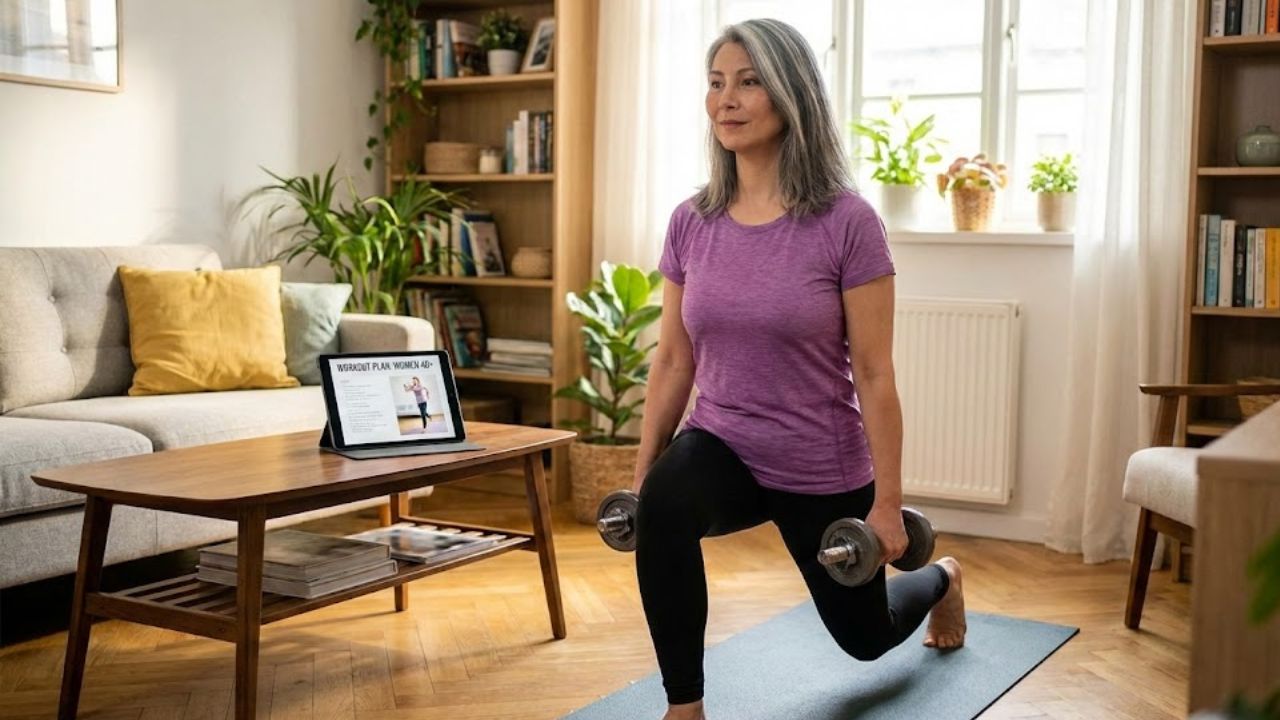
    As she moves into her mid-40s, Laurel’s priority is building muscle and real strength. Her approach is straightforward: no fluff, no wasted time, and no focus on getting smaller. The goal is getting stronger—period. This is intentional strength training designed to feel manageable, not overwhelming, and created with busy women in mind. That means no hours spent in the gym. This week, she’s back with a full-body workout that requires only dumbbells.

    Watching her video is refreshingly easy. Laurel completes the entire workout alongside you, which makes it feel less like following instructions and more like training with a friend. She clearly demonstrates proper technique, including foot placement and back positioning, making it approachable for anyone who’s unsure about form. If form starts to slip, she offers modifications and built-in rest periods, helping you stay safe and confident throughout the session.

    One Workout Session, One Complete Full-Body Plan

    Full-body workouts are especially effective for women over 40 because they help preserve and build muscle, support metabolism, improve posture and joint health, and deliver results without demanding excessive time. You don’t need daily workouts or long gym sessions. What matters is consistent, well-structured strength training that challenges your muscles and allows proper recovery.

    Laurel recommends completing this workout two to three times per week, paired with daily movement such as walking and a focus on eating enough protein to support muscle repair and strength gains.

    How the Workout Is Structured

    This is a full-body strength session designed to be done with control and intention. The focus is on proper form, steady breathing, and quality movement—not rushing through repetitions.

    • 5 compound exercises
    • 10 reps per exercise
    • 3 total rounds
    • 1-minute rest between rounds
    • Dumbbells only

    Exercises Included in the Workout

    • Sumo Squat with Front Raise to Reverse Fly: Targets the glutes, inner thighs, shoulders, and upper back while supporting better posture.
    • Chest Press Crunch: Strengthens the chest and core together, helping the body learn to stabilize under load.
    • RDL to Reverse Lunge with Alternating Curl: Builds the posterior chain—glutes and hamstrings—while challenging balance and arm strength.
    • Plank Row Rotate Press: A full-body stability movement that works the core, back, shoulders, and arms.
    • Hollow Body Hold with Tricep Extensions: Engages the deep core while strengthening the arms.

    As Laurel emphasizes, this routine isn’t about chasing a smaller body. It’s about creating a stronger one. The answer isn’t more cardio or eating less—it’s purposeful strength training done consistently.

  • After 70 It’s Not Walking or Gym Sessions This Specific Movement Pattern Truly Upgrades Healthspan

    After 70 It’s Not Walking or Gym Sessions This Specific Movement Pattern Truly Upgrades Healthspan

    Chairs slide back across the floor of a small-town English community centre. It’s Tuesday afternoon, just after lunch. A group of men and women in their seventies and eighties slowly rise from their seats. They’re not heading for treadmills or pacing laps. Instead, they begin movements that look almost… everyday. They turn, twist, reach, and shift weight from foot to foot, miming placing jars on high shelves, picking up dropped keys, or stepping over imagined puddles.

    A few laugh out loud. One woman wipes away a tear as her pretend shopping bag nearly throws her off balance. The physiotherapist guiding the class grins and says, “This is your new gym.” Then she adds, “It’s called dynamic stability.” The room falls briefly silent. No one expected such ordinary movements to play such a powerful role in deciding how well, not just how long, they might live.

    Why the right movement matters more than step counts

    Visit any park on a Sunday morning and you’ll spot familiar scenes: older adults on their daily walks, tracking steps, comparing numbers from smartwatches. Walking feels safe, reliable, and reassuring. But after 70, the biggest threats to healthspan rarely show up on a pedometer. They appear in moments of sudden imbalance—turning too quickly in the kitchen, stepping off a curb, or reacting a fraction too late.

    The statistics are stark. In many countries, falls are the leading cause of injury-related death among people over 75. A single hip fracture can strip away independence faster than conditions like diabetes or high blood pressure. It’s not headline news, but it quietly reshapes lives.

    Margaret, 78, from Leeds, walked daily in all weather, often hitting ten thousand steps. One winter afternoon, she reached sideways to close her garden gate, slipped, and fell. A broken wrist, bruised ribs, and months of shaken confidence followed. She later told her daughter, “I can walk. What I can’t do is catch myself.” That gap is where traditional exercise often falls short.

    Healthspan—the years lived with real independence and enjoyment—depends less on pure cardio and more on what specialists call dynamic movement capacity. This means rotating, shifting, and reacting, not just moving forward. The nervous system needs practice in these unpredictable patterns. Muscles don’t only propel us; they also stabilise, brake, and absorb shock. When training focuses only on walking or fixed machines, these systems quietly weaken.

    The everyday movement pattern that protects healthspan

    The approach gaining quiet attention has an unglamorous name: multi-directional, task-based movement. It’s essentially a rehearsal of daily actions, done with intention and slightly exaggerated form. Instead of marching in place, you step sideways, rotate your torso, reach across your body, and change direction mid-step. Balance, strength, and coordination blend into one fluid sequence.

    In practice, it resembles a gentle, practical dance built from household tasks. Turning to close a cupboard. Stepping back from the oven. Leaning to pick up a dropped spoon. Pivoting to answer the door. Nothing flashy. Everything necessary.

    One simple drill used in falls clinics feels almost playful. Place three chairs in a loose triangle and stand in the centre. Turn to touch the first chair with your right hand. Pivot and step to touch the second with your left. Rotate again, step slightly back, and tap the third with both hands. Each action is small, controlled, and unremarkable.

    Yet beneath the surface, your ankles adjust, hips guide movement, the spine rotates, and your eyes scan for targets. Your brain is quietly relearning how to stay upright under changing demands. That’s where healthspan quietly lives.

    This is why it often matters more than another twenty minutes on an exercise bike. Daily life rarely asks you to move in straight lines or at steady speeds. It asks you to carry laundry while turning, step around a child’s toy without thinking, or grab a rail on a moving bus. Task-based movement trains the in-between moments where most accidents happen.

    Think of walking and gym machines as building the engine. This kind of training builds the steering, brakes, and reflexes. Without them, even a strong engine can get you into trouble faster.

    How to add dynamic stability to daily life

    The encouraging news is that you don’t need a studio, special clothing, or even a class. You can build this into your routine with something often called a three-planes routine. Stand near a wall or sturdy surface for reassurance. Step gently forward and back while swinging your arms. Then step side to side, as if moving along a narrow shelf. Finally, rotate your upper body to look over each shoulder, letting your hips follow naturally.

    Spend about 20–30 seconds in each direction. It may feel modest, even insignificant. But these movements form the basic template your nervous system relies on to keep you upright.

    Many older adults admit they feel awkward doing this at home. Walking feels normal; twisting in the kitchen does not. Others jump straight into advanced balance drills they’ve seen online, only to wobble and lose confidence. That’s why support matters. A counter, chair back, or hallway wall can be your ally.

    Consistency beats ambition. Link these movements to habits you already have. Do a short sequence while the kettle boils. Repeat one before turning on the TV. Small, repeated actions build more resilience than grand plans.

    As one physiotherapist in Manchester put it: “At 75, I care less about how far you walk, and more about whether you can recover from a stumble in half a second. That recovery is trainable at any age.”

    To keep it simple, rotate through a few categories during the week:

    • Reach and twist – placing imaginary items on a high shelf, then returning to the counter.
    • Step and turn – stepping around an object and changing direction mid-step.
    • Bend and rise – sliding a hand down the thigh as if picking something up, then standing tall again.

    Living longer versus living fully after 70

    A quiet shift is happening in how ageing is discussed. The focus is moving beyond simply preventing disease toward preserving the ability to dress yourself, travel, cook for friends, play with grandchildren, and get back up without fear. Dynamic, multi-directional movement, practised in small daily doses, helps keep those possibilities open.

    It doesn’t promise a life without illness or accidents. Nothing can. What it offers is a stronger buffer between you and the moment life suddenly feels smaller—the first serious fall, the loss of confidence, the decision to avoid stairs altogether. That buffer is often worth more than any step total.

    On a human level, this approach restores a sense of agency. You’re not chasing abstract fitness goals. You’re rehearsing the life you want to keep. Some days, that’s as simple as turning smoothly to answer the door. On better days, it might be dancing—slightly awkwardly—at a grandchild’s wedding.

    Our bodies adapt to what we repeatedly ask of them. Train only straight lines, and the body becomes straight-line. Real life is curved, unpredictable, and sideways. Preparing for that messiness can be unexpectedly freeing.

    Many of us have watched a parent or grandparent quietly give up activities they loved—not because of a diagnosis, but because confidence faded. This isn’t a miracle cure. It’s more like a language. A way to keep muscles, joints, and nerves in conversation with the world instead of retreating from it.

    Tomorrow, it may look like a simple, slightly silly sequence of steps and turns in a living room. At a deeper level, it’s a clear message: I’m not finished moving through life in every direction yet.

    • Dynamic stability – training balance, rotation, and direction changes to target real-life fall risks.
    • Task-based movement – using familiar actions like reaching, bending, and turning to make practice practical and repeatable.
    • Micro-habits – short routines linked to daily cues that improve consistency without feeling like a workout.
  • Skipping the Gym for Walking Works Only If You Walk Continuously 30 Minutes at 5 Kilometres Per Hour

    Skipping the Gym for Walking Works Only If You Walk Continuously 30 Minutes at 5 Kilometres Per Hour

    Every January, gyms overflow with people chasing a fresh start, yet a growing number quietly step away. Some feel gym anxiety, others lose motivation, and many simply dislike indoor workouts. For these people, walking has emerged as a practical alternative. There are no contracts, no mirrors, and no barriers to entry. It fits easily into daily life and feels far less intimidating than crowded fitness spaces, making it an appealing choice for those seeking movement without pressure.

    Scientific evidence supports this shift. Regular walking helps strengthen the heart and lungs, supports healthy weight control by burning fat, improves circulation, and protects bones and muscles. It also reduces the risk of chronic conditions, including type 2 diabetes and cardiovascular disease.

    The 30-Minute Rule and Why Consistency Matters

    Walking works best as a “silent workout” when it reaches the right intensity and duration. Sports nutritionists and trainers often recommend a simple guideline: if walking replaces structured exercise, it should be done for at least 30 minutes in one continuous session. The pace should stay steady, around 5 km/h (about 3.1 mph), without frequent stops.

    This level usually places most healthy adults in a moderate-intensity zone. The heart rate rises, breathing quickens, and the body begins to rely more on fat as fuel. While shorter or broken walks still offer benefits, they rarely challenge the cardiovascular system in the same sustained way.

    Aim for: 30 minutes non-stop, roughly 5 km/h, where talking is possible but singing feels uncomfortable.

    Understanding What a 5 km/h Pace Feels Like

    Many people underestimate or overestimate their walking speed. While trackers provide numbers, the body gives clear physical cues. At this pace, you can speak in short sentences, but long conversations feel tiring. Breathing deepens and speeds up slightly without turning into gasping.

    After 10 to 15 minutes, you may feel lightly warm or sweaty, even in cooler weather. Your stride naturally lengthens, arms swing more freely, and movement feels purposeful and focused. This is not race-walking, but a brisk, steady rhythm without long pauses at shop windows or constant phone use.

    Why One Continuous Walk Beats Scattered Steps

    Many people reach 8,000 or even 10,000 steps spread across an entire day, yet see little change in fitness or weight. Continuous walking affects the body differently than scattered movement.

    • Short, scattered walks: Support joint mobility and circulation, but provide only mild cardiovascular stimulation.
    • One 30-minute brisk walk: Creates a stronger challenge for heart and lungs, increases calorie burn, and has a clearer impact on mood and sleep.

    During an uninterrupted 30-minute session, the cardiovascular system stays active long enough to adapt. Blood flow increases, the heart pumps more efficiently, muscles use oxygen better, and stress-related hormones respond more positively.

    Health Benefits Beyond Weight Loss

    Although weight control often dominates the discussion, walking offers benefits far beyond the scale. Regular brisk walking is linked to better digestion and fewer episodes of constipation, as movement stimulates the gut. Improved circulation and sleep patterns can also support immune function.

    The brain benefits as well. Moderate, consistent activity is associated with stronger memory, improved attention, and a lower risk of age-related cognitive decline. Researchers note that the hippocampus, a key region for memory, tends to shrink more slowly in physically active adults.

    The Added Power of Being Outdoors

    Walking outside adds another layer of benefit. Regular daylight exposure helps support vitamin D production, which plays a role in bone strength and immune health. Time outdoors also helps regulate the body’s internal clock, improving sleep-wake rhythms.

    As sleep quality improves, energy levels and recovery tend to follow. This combination makes outdoor walking especially valuable for those struggling with poor rest or irregular daily schedules.

    Reducing Swelling, Improving Posture, Calming the Mind

    Regular walking can reduce leg swelling by improving venous return. The calf muscles act as a pump, helping blood flow back toward the heart, which is particularly important for people who sit or stand for long periods.

    Posture often improves as well. Brisk walking encourages an upright stance, relaxed shoulders, and gentle core engagement. Over time, this can ease strain on the lower back and neck, especially when combined with looking ahead instead of down at a phone.

    Mentally, daily walks are linked to lower stress levels, fewer low-mood episodes, and better sleep. Many people use walking as a transition ritual, helping the mind shift between work and home.

    Who Can Follow the 30-Minute Brisk Walk Approach?

    One reason health authorities promote walking is its wide accessibility. Young adults, middle-aged workers, and many older people can adapt it to their ability. Beyond comfortable shoes and weather-appropriate clothing, no special equipment is needed.

    This matters in places where gym access is limited. Streets, parks, and even long corridors become training spaces. For people with mild joint concerns, walking often feels gentler than running while still challenging the body.

    When 30 Minutes at 5 km/h Feels Too Demanding

    Not everyone should start at full intensity. Individuals with heart conditions, severe joint pain, respiratory issues, or long periods of inactivity may need medical guidance before increasing pace.

    • Week 1–2: 10–15 minutes at a comfortable pace.
    • Week 3–4: 20 minutes, including 5–10 minutes of brisk walking.
    • Week 5–6: 30 minutes total, keeping most of the session at a steady, faster pace.

    Those unable to walk continuously can split the time into two 15-minute brisk segments. The focus remains on maintaining rhythm and limiting idle pauses.

    Making Walking a Lasting Daily Habit

    Turning guidance into routine often requires small, realistic changes. Many people succeed by treating their walk as a fixed appointment, whether before breakfast, during lunch, or after work, with backup indoor routes for bad weather.

    • Use a simple timer to keep the 30-minute goal accurate.
    • Choose a familiar loop that takes a similar amount of time each day.
    • Walk with a friend occasionally for accountability.
    • Keep essentials ready, such as a cap, gloves, or a light waterproof layer.

    Combining walking with other low-impact activities, like short home strength sessions or mobility exercises, can enhance results. Stronger legs and core muscles make brisk walking easier and help protect the joints.

  • After 70 Not Daily Walks or Weekly Gym Visits This Movement Pattern Boosts Healthspan

    After 70 Not Daily Walks or Weekly Gym Visits This Movement Pattern Boosts Healthspan

    No treadmills. No booming music. No polished machines. Just a loose semicircle of people in their seventies and eighties, barefoot or in socks, gently shifting weight from one leg to the other. A retired teacher. A former truck driver. A woman recovering from last year’s hip replacement. From the hallway, it barely resembled exercise. It looked like waiting. But a closer look revealed toes gripping the floor, ankles wavering then aligning, and hands hovering near a chair, not quite touching. Faces tightened briefly, then softened into small smiles when balance held.

    After 70, the Movement That Shapes Everything

    Ask anyone over 70 how to stay active and you’ll hear familiar advice: walk daily, swim when possible, lift light weights if joints allow. It’s all valuable, and walking truly matters. Yet when researchers look at who will still be cooking, showering, and living independently a decade later, another factor keeps emerging: balance.

    Not the glamorous kind seen online. The ordinary kind. Standing on one leg while waiting for the kettle. Rising from a chair without pushing off. Turning in a hallway without reaching for the wall. These everyday movements quietly decide whether life stays expansive or slowly contracts.

    In Japan, doctors sometimes use a simple balance test to glimpse future health. One major study showed that people unable to stand on one leg for 20 seconds faced higher risks of stroke and early death, even before frailty set in. When balance falters, it often signals weaker muscles, slower reflexes, reduced mental sharpness, and lower confidence.

    Falls become more likely. Movement feels risky. Activity decreases, and ability fades further. This downward loop doesn’t start with a dramatic fall. It often begins with a quiet thought: “I don’t feel steady anymore.”

    That’s why experts now focus less on lifespan and more on healthspan — the years when you can still stand, reach, turn, climb a few steps, and react quickly. In that picture, balance isn’t optional. It’s the foundation.

    Related Reads People Are Talking About

    • How bananas stay fresh and yellow for weeks with one simple household trick
    • A new eight-image spacecraft series reveals the interstellar comet 3I ATLAS
    • A donated DVD box resurfaces as valuable collectibles
    • SpaceX races to bring 4,400 satellites down to avoid catastrophe
    • Abdominal fat after 60 and the simple exercise many skip
    • Why childhood memories often feel sharper than recent ones
    • How over-explaining weakens your message and what to say instead
    • The century’s longest solar eclipse is already scheduled

    The Balance Pattern That Extends Healthspan

    The movement that truly matters after 70 isn’t long workouts. It’s balance in motion — short, frequent moments when your body must find its center again. Standing on one leg while brushing your teeth. Walking heel-to-toe across kitchen tiles. Rising halfway from a chair and pausing as weight shifts through your feet.

    It may sound minor. It isn’t. Balance work activates ankles, knees, hips, core, vision, and inner ear at once. Each tiny adjustment is a conversation between muscles and the nervous system. Over time, those conversations quietly reprogram how the body responds.

    Perfection isn’t the goal. The value lies in approaching the edge of instability and safely finding control again.

    Take Maria, 78. After a small fall in her garden shook her confidence, she didn’t join a class or buy equipment. She chose three daily moments she already had: boiling the kettle, waiting for the microwave, and brushing her teeth. During the kettle, she stood on one leg with two fingers on the counter. At the microwave, she walked heel-to-toe along a floor line. While brushing her teeth, she shifted weight side to side, briefly closing her eyes.

    Six months later, she could stand on one leg for 25 seconds unaided. Her walking speed improved. But what mattered most was this: “I’m not afraid of my stairs anymore.” Healthspan isn’t always measured in charts. Sometimes it’s the confidence to carry laundry without plotting an escape route.

    Long-term studies show the same trend. People who maintain balance — how long they can stand on one leg, how quickly they rise from a chair, how easily they turn — tend to keep more independence. Balance training isn’t about athletic performance at 80. It’s about preserving the movements that keep life your own.

    There’s a reason. Balance sits at the crossroads of strength, coordination, and brain function. When that junction stays active, other systems stay engaged. Muscles remain responsive. The brain keeps predicting and adjusting. Even heart and lungs are gently challenged, because balancing is effort, not decoration.

    Building a Balance Habit That Fits Real Life

    The simplest way to improve balance after 70 isn’t scheduling workouts. It’s weaving movement into what already exists. Think in 30-second moments scattered through the day, like a quiet app always running in the background.

    Start with a safe anchor such as a counter or sturdy chair. Rest one hand on it and lift one foot slightly off the floor. Hold for five seconds, then switch. Over weeks, adjust gently: fewer fingers on support, slightly longer holds, or eyes closing briefly.

    If standing feels difficult, begin seated. Sit on a firm chair, arms crossed over your chest. Stand up slowly, then sit down just as slowly, without using your hands. Repeat five times. It may look simple, but it’s a full-body negotiation.

    Most people don’t stop because exercises are too hard. They stop because routines feel too heavy. When something resembles homework, it rarely lasts. So shrink the commitment. Tie balance to daily cues you already have: making coffee, washing hands, waiting for the news. Stand on one leg while brushing teeth. Walk heel-to-toe down the hallway. Shift weight gently while on the phone.

    Fear is natural, especially after a fall. Treat it as information, not a verdict. Add support if needed: a walker, a high-backed chair, or someone nearby. The aim isn’t bravery. It’s gradual trust.

    As one geriatrician put it, the goal isn’t standing on one leg for show. It’s turning safely in the bathroom at 3 a.m. That’s where healthspan truly lives.

    Rather than a strict plan, think of a small weekly menu you sample from:

    • Stand on one leg twice daily for 10–20 seconds per side, holding a counter.
    • Walk along a real or imaginary line at home, 6–10 steps once a day.
    • Do five slow sit-to-stands from a chair, three times a week.
    • Practice slow 360° turns with feet wide, two to three times.
    • Add brief eyes-closed balance only when you feel safe and supported.

    None of this looks dramatic. A smartwatch may barely register it. Yet for your future self — the one who wants to step into a taxi alone or bend to pick up dropped keys — these moments matter deeply.

    Why Micro-Movements Matter More Than Mileage

    Imagine two neighbours in their late seventies. One walks briskly for 40 minutes every morning, same route, same pace. The other walks less, but her days include small challenges: carrying groceries up stairs, standing on one leg while folding laundry, stepping sideways and backward in the garden.

    On paper, the first exercises more. Yet testing might show the second reacts faster to a stumble, turns more safely, and recovers better from a trip. Her body has trained for unpredictability. And real life is full of it.

    This reflects a growing understanding: after 70, healthspan may depend less on duration and more on movement variety. The brain needs surprises. Joints need unfamiliar angles. Reflexes need small, solvable alarms.

    There’s also a quieter benefit. People who practice balance often feel more present in their bodies. They notice how toes grip, how breath shifts, where tension hides. That awareness influences daily choices, from footwear to how long they sit before standing.

    Nothing guarantees outcomes. Life is unpredictable. Yet there’s something quietly powerful in knowing that a 20-second one-leg stand isn’t a quirky habit. It’s a meaningful vote for your future.

    You don’t need to chase youth or become a magazine-cover grandparent. You need a body that can sway, adjust, and recover, and a mind that trusts it enough to keep stepping forward. That freedom doesn’t come from one heroic workout. It comes from hundreds of small negotiations with gravity, scattered through the week, almost invisible to everyone but you.

    Key Takeaways That Matter Most

    • Balance predicts independence better than exercise volume alone after 70.
    • Short, frequent micro-movements fit real life without overwhelming routines.
    • Training for variety and surprise reduces fall risk and supports living at home longer.
  • A Physical Therapist Says You Can Hit Step Goals at Home With These 4 Simple Alternatives

    A Physical Therapist Says You Can Hit Step Goals at Home With These 4 Simple Alternatives

    Even without a treadmill, weights, or resistance bands, you can still stay active right at home. Beyond equipment-free strength routines, simply walking with purpose can help raise your heart rate and keep your body moving.

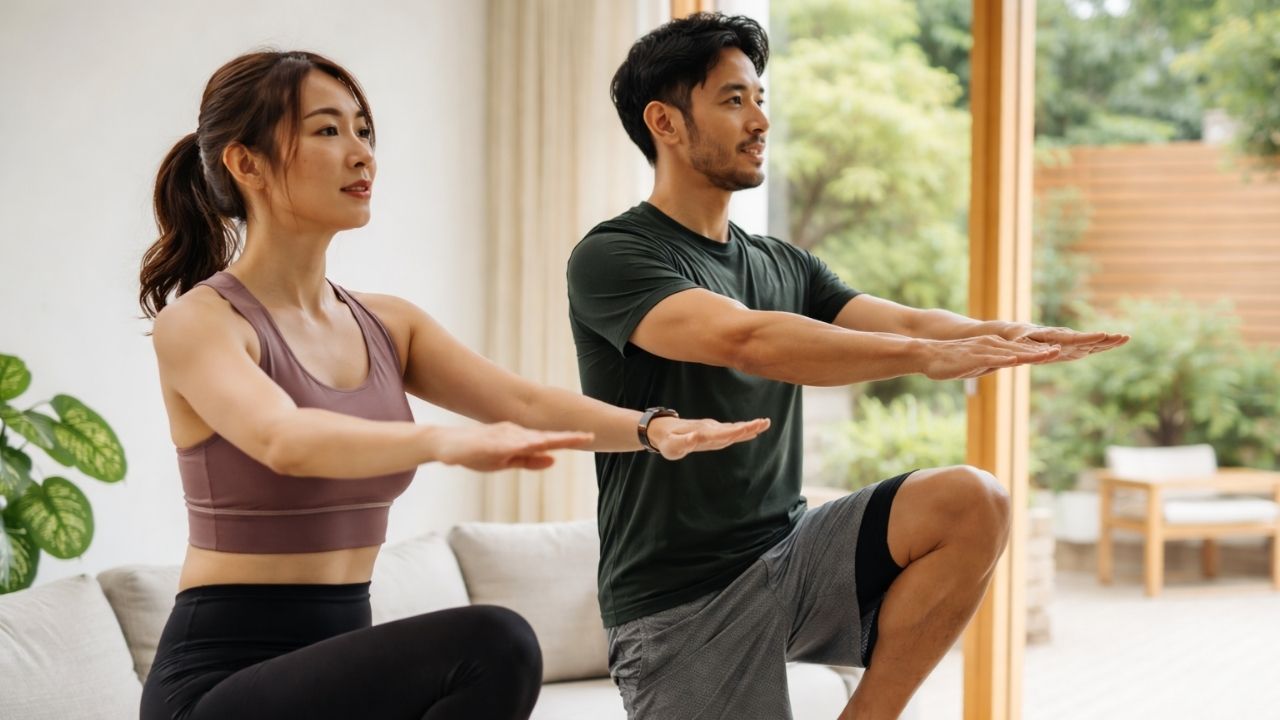
    Physical therapist and Balanced Body educator Lindy Royer shares four simple ways to walk indoors. These movements are effective for full-body activity and may even help boost your mood when boredom sets in.

    If you use a step counter or fitness tracker, Royer notes that you can track your activity while recreating many of the benefits of outdoor walking.

    She recommends performing the following four movements as a short mini circuit, lasting around three to five minutes. Choose a time goal and complete as many rounds as possible within that window.

    Walk or March in Place

    • Begin standing tall and start marching on the spot.
    • Lift your knees higher than you normally would during regular walking.
    • Keep your chest upright and your core engaged throughout.
    • Increase intensity by swinging your arms or adjusting your pace to form intervals.
    • Change things up by widening or narrowing your stance, or perform several high-knee reps on one side before switching.

    Add Butt Kicks for Variety

    • Stand in place with your upper body tall and steady.
    • Kick one heel back toward your glutes, aiming to get as close as possible.
    • Alternate heels or complete multiple repetitions on one side before switching.
    • Use a wall or chair for balance support if needed.

    Use the Stairs If Available

    • Walk up and down the stairs several times at a comfortable pace.
    • Change the challenge by taking two or three steps at once.
    • If you feel confident, try walking backwards while holding the handrail for safety.

    Walk Laps Around Your Space

    • Walk back and forth along the longest area in your home or office.
    • Mix it up by moving forward, backward, or side to side.
    • If space is limited, walk around the perimeter of each room multiple times.
  • The Cable Spider Curl Creates Extreme Muscle Fatigue for Bigger Stronger Biceps Growth

    The Cable Spider Curl Creates Extreme Muscle Fatigue for Bigger Stronger Biceps Growth

    The cable spider curl builds on the strengths of the traditional dumbbell spider curl while improving it with constant muscle tension throughout each repetition. By using cables instead of free weights, the movement removes momentum and forces the biceps to stay engaged from start to finish. This makes it a more demanding curl variation that prioritizes control over heavy lifting.

    If your focus is real muscle development rather than ego lifting, this exercise delivers. When performed correctly, the cable spider curl creates a deep bicep pump and helps refine technique, making it an effective addition to any arm-focused routine.

    Key Benefits of the Cable Spider Curl

    Continuous Muscle Tension

    The biggest advantage of the cable spider curl is its ability to maintain consistent resistance through the entire range of motion. Unlike dumbbells, which lose tension at the bottom of the rep, cables keep the biceps fully loaded from stretch to contraction.

    Eliminates Weight Swinging

    With the upper arms positioned in front of the body and the cable applying steady tension, using momentum becomes nearly impossible. This setup ensures the biceps remain the prime movers, preventing other muscles from stepping in to assist.

    Improved Mind-Muscle Connection

    The constant tension and strong contraction at the top of the movement help reinforce a clear mind-to-muscle connection. This makes it easier to focus on the biceps working through the full motion, leading to more effective reps.

    How to Perform the Cable Spider Curl Correctly

    The cable spider curl is usually performed on a low cable setting using a straight bar, EZ bar, or rope attachment, paired with an incline bench placed in front of the machine.

    • Set the cable to its lowest position and attach your chosen handle.
    • Position an incline bench in front of the cable stack and lie face down on it.
    • Allow your arms to hang straight toward the floor.
    • Keep your elbows fixed as you curl the handle toward your shoulders, squeezing the biceps at the top.
    • Lower the weight slowly, maintaining steady tension on the descent.

    Cable spider curls are best used as an accessory exercise or finisher. Choose a lighter load and perform 2–4 sets of 10–15 controlled reps for optimal results.

  • Haircut for Fine Hair: The Invisible Layering Technique That Adds Volume and Softens Facial Age After 50

    Haircut for Fine Hair: The Invisible Layering Technique That Adds Volume and Softens Facial Age After 50

    The stylist stands ready, scissors poised, head tilted with that calm patience professionals master over time. She lowers her voice. “My hair feels so thin now,” she says softly, almost apologetic. “I want volume, but I don’t want it to look chopped.” At 56, her hair is still silk-soft, yet every extra centimetre seems to pull her features downward. Under the salon lights, the mirror reflects a sparse crown, flattened sides, and a fringe that’s lost its energy.

    The stylist smiles and introduces a technique she’s never heard of: invisible layering. No harsh steps. No obvious graduation. Just fine, hidden layers worked quietly inside the cut to lift everything without announcing a dramatic change. An hour later, her jawline appears sharper, her cheekbones more defined, and her hair suddenly full of life.

    The quiet rise of invisible layers after 50

    Step into a busy city salon on a weekend and you’ll notice a familiar pattern. Women over 50 twist the ends of their hair, pull it away from their faces, and scroll through photos on their phones. They aren’t chasing extremes. They want hair that feels lighter, fuller, and subtly younger, without losing themselves in the process.

    Fine hair makes this balance delicate. One wrong cut can leave it looking thinner instead of fuller. This is where invisible layering makes its difference. The stylist creates micro-layers inside the haircut, keeping the outer surface smooth and intact. The result is hidden support. Hair lifts gently at the roots, moves naturally with motion, and frames the face in a way that quietly softens time.

    It’s the kind of haircut you only fully notice when you compare it to the “before.”

    At a London salon known for serving mature clients, stylists estimate that nearly 60% of women over 50 come in with fine hair and the same request: more volume. One regular, Claire, 62, spent years hiding her hair in low ponytails and headbands. Her frustration was simple. “If I cut it, it looks thinner. If I grow it, it drags my face down.”

    Her stylist suggested a collarbone-length bob with invisible layers. No choppy edges. No visible texture on the surface. Weight was removed from the interior instead, with shorter strands hidden beneath longer ones, especially at the crown and nape. The change wasn’t dramatic in a makeover sense. It was quieter and more convincing.

    A week later, Claire returned just to share that people had been asking if she’d changed her skincare or lost weight. No one mentioned her hair. That’s the point. Invisible layering works because people sense something is fresher, without being able to name it.

    Fine hair behaves differently. Each strand is slimmer, softer, and sits closer to the scalp. Traditional visible layers remove bulk from the ends, leaving fragile lengths exposed. The result can be wispy hair that exaggerates hollows and heaviness in the face.

    Invisible layering works in reverse. The stylist removes weight where hair tends to collapse: near the roots, under the crown, and just behind the ears. These internal adjustments allow the hair to lift and support itself. The outer shape stays clean and full, so the ends remain dense rather than stringy.

    This subtle structure reshapes how the face is framed. Lift at the crown can visually raise the features. Gentle internal layers near the front open the eyes, while fuller ends around the jaw create a soft contour. The brain reads this balance as energy and youth, without the obvious signal of a new haircut.

    Using invisible layers to add volume and soften features

    Invisible layering isn’t a single haircut. It’s a technique. It works with pixies, French bobs, midi cuts, and even longer lengths. The difference lies in where the scissors work. Instead of cutting visible layers on the surface, the stylist shapes the interior, removing weight in tiny, controlled sections.

    Ask your stylist to focus on three key zones: the crown, the occipital bone (the bump at the back of the head), and the area around the cheekbones. These are natural collapse points for fine hair. By lightening them from within, the outer layers can sit higher and appear fuller. Think of it as padding beneath a cushion. You notice the lift, not the structure.

    The result is a haircut that looks simple but styles quickly.

    Invisible layers work best when paired with realistic habits. That means choosing a length that suits your routine. If you dislike blow-drying, a jaw-length bob with subtle internal layers and a natural part will feel far more manageable than a heavily layered style that needs daily effort.

    Many women over 50 hold onto length hoping it reads as more feminine, even as density decreases. Long, fine hair can stretch the face downward, emphasising fatigue. A slightly shorter cut with clever internal layers and fuller ends often does the opposite. It lifts. On a low-energy morning, that difference feels almost magical.

    Let’s be honest: very few people maintain elaborate styling routines every day. The perfect round-brush blow-out, multiple products, timed root lifts. A well-executed invisible-layer cut builds support into the hair itself, so even a rough dry with your fingers looks deliberate.

    “After 50, my job isn’t to make hair trendy. It’s to make the face look awake. Invisible layers let me do that without destroying the cut.”

    Used thoughtfully, invisible layers become a flexible tool. Want more height on top? The layers are carved beneath the crown. Need a softer jawline? The interior around the neck is lightened so the ends curve inward instead of hanging flat.

    • Ask for “invisible” or “internal” layering, not heavy layers.
    • Show photos that highlight movement, not just length.
    • Keep the outer perimeter solid for fullness.
    • Consider a gentle fringe or face-framing pieces.
    • Schedule small, regular trims instead of drastic yearly cuts.

    Living with your cut: everyday volume without effort

    A strong invisible-layer cut has to work beyond salon lighting. It needs to survive busy mornings, long days, heat, and humidity. The advantage of this technique is that much of the work is already built into the shape.

    For fine hair, volume can come from something as simple as rough-drying the roots in the opposite direction of your usual part, then flipping them back. The internal layers catch against each other, creating lift. A small amount of lightweight mousse or root spray, applied mainly at the crown and front, helps activate that hidden structure.

    You don’t need to battle your hair daily. You just need a cut that quietly supports you.

    There are pitfalls to avoid. Over-texturising with thinning shears or razors can cause fine hair to fray and separate, destroying the illusion of density. Strong, blunt fringes paired with heavy interior layers can also throw off balance, leaving the fringe flat while the rest floats.

    At home, product choice matters. Many women still use rich conditioners designed for damaged or curly hair. On fine hair, these formulas can flatten invisible layers completely. Switching to a lightweight, volumising conditioner, applied only to mid-lengths and ends, often reveals lift you didn’t realise you had.

    Emotionally, hair after 50 can feel like a negotiation. New texture, reduced density, emerging greys, all while wanting to recognise yourself in the mirror. A cut with smart, hidden structure can be a quiet statement of continuity: this is still me.

    For many, the first invisible-layer cut feels risky. It sounds less reassuring than “just a trim.” But the shift isn’t about losing length. It’s about subtle architecture. One client described it as “putting air back into my hair”.

    An unexpected bonus is easier styling. When shape is built from within, small imperfections look intentional. A few flyaways highlight lift. Slight unevenness at the ends reads as movement, not neglect. Invisible layers allow hair to be imperfect and still polished.

    That’s the real secret here. Not chasing youth, but working intelligently with what you have, so your hair and face tell the same story: current, alive, and confidently yours.

    Once you experience hair that lifts and moves without constant effort, it’s hard to return to heavy, one-length cuts. You may notice subtle shifts in how you style yourself, how you move, and how confidently you catch your reflection.

    More women are now asking for hair that fits their real lives, not magazine spreads. Invisible layering, especially for fine hair after 50, feels like a thoughtful answer: understated, clever, and low-drama.

    It often begins with one question: “How can we add volume without obvious layers?” From there, you talk about daily habits, collapse points, and features you love.

    The scissors do the rest, quietly reshaping how your hair falls and how your face is framed. You leave not looking transformed, but more like yourself. And that’s the kind of change people notice, even if they can’t explain why.

    • Invisible layering: Hidden micro-layers inside the cut that add volume without thinning fine hair.
    • Face-framing effect: Subtle lift around the crown, cheekbones, and jaw for a fresher look.
    • Low-effort styling: Built-in structure that supports quick, realistic routines after 50.
  • Psychology Highlights Three Colours Often Chosen by People Struggling With Low Self Esteem

    Psychology Highlights Three Colours Often Chosen by People Struggling With Low Self Esteem

    A beige coat, a pale sweater, and a soft grey scarf wrapped twice around her neck. Not a single bright shade in sight. She kept pulling at her sleeves, shrinking slightly each time someone passed her table, as if she hoped to dissolve into the muted tones she wore. Even her phone mirrored the same restraint: soft wallpaper, grey icons, nothing bold, nothing risky.

    Psychologists have tracked patterns like this for years. The colors we choose are rarely accidental; they often reflect how we feel deep down. What’s striking is how often people with low self-esteem return to the same limited palette, across cultures and age groups. The same quiet, “safe” colors appear again and again.

    Three Colors Often Linked to Low Self-Worth

    Ask any stylist who dresses everyday people rather than runway models, and they’ll say the same thing: some wardrobes barely speak above a whisper. Research in psychology repeatedly points to three shades that surface when self-confidence is fragile: dull grey, faded beige, and flat black worn constantly. Each can look refined on its own, but when relied on daily, they begin to act like armor.

    Grey usually leads the way. It’s the color of not wanting to stand out, of staying safely between extremes. Beige follows, with its endless variations of sand, oatmeal, and “office-safe” neutrals. Then there’s black, not the dramatic evening version, but the everyday uniform meant to conceal shape, emotion, and presence.

    Individually, these colors mean nothing. Worn without variation, they begin to tell a quiet story.

    Lisa, 32, a marketing manager, agreed to let a psychologist document her wardrobe for a self-image study. When the doors opened, the camera revealed rows of grey sweaters, beige trousers, and black blazers. “I don’t like attention,” she said with a laugh that felt slightly forced. “These colors just work with everything.”

    Later, her self-esteem assessment placed her firmly in the low range. She described herself as “average at best,” admitted she avoided photos, and steered clear of bright clothing in case people “noticed her body.” The connection was clear. Her color choices had slowly become her camouflage.

    Other participants shared similar experiences. A student who failed an important exam replaced colorful hoodies with grey tracksuits. A new mother, uneasy with her changing body, drifted into an all-black wardrobe. The colors didn’t create their self-doubt; they simply made hiding easier.

    Why Neutral Shades Feel Safer

    Psychologists describe these habits as self-protective strategies: small decisions meant to reduce the risk of judgment or rejection. Color fits neatly into this pattern. When you already feel like you’re “too much” or “not enough,” loud shades like red or vivid blue can feel like stepping onto a stage unprepared.

    So you choose grey, hoping no one remembers your outfit. You choose beige because it’s office-proof and comment-free. You choose black because it hides curves, mistakes, and moods alike.

    • Why employees who take short walks after lunch experience fewer energy dips and higher concentration levels
    • How embracing quiet mornings with tea encourages reflection and sets a positive tone
    • How adding balance exercises to routines improves stability and reduces falls
    • The subtle restaurant cue that nudges you toward a salad instead of a burger
    • Why more gardeners are allowing soil to compact, and how it reshapes spring growth
    • How to stop feeling overwhelmed by to-do lists and focus on what truly matters
    • This century-old countertop making a major comeback in 2026 kitchens
    • How to handle a friend who only talks about themselves without growing resentful

    The logic is simple: less color means less exposure. In the short term, it works. You feel safer in meetings and less visible at gatherings. But the hidden cost is real. Over time, you may feel less present, less real, less like someone who deserves space. Color quietly reinforces the habit of not being seen.

    Rebuilding a Healthier Relationship With Color

    One approach used by therapists and image coaches is known as the “one-step-up rule”. Nothing drastic is required. You keep your greys, beiges, and blacks, but add one item that’s just a touch brighter. A grey sweater paired with a soft blue scarf. An all-black outfit softened with deep green or burgundy.

    This small shift matters more than it seems. You’re not forcing yourself into neon shades; you’re gently stepping out of automatic hiding. Each glimpse of color sends a new signal: perhaps it’s okay to take up space.

    Let’s be honest: no one does this perfectly every day. Some mornings, the black hoodie wins. That’s fine. The goal isn’t perfection, but awareness.

    Color psychologists suggest two steps people often skip. First, experiment privately. Try a colorful piece at home, even if only while cooking dinner. Give your eyes time to adjust. Second, avoid jumping from invisibility to extremes. Too much change too fast can feel unsafe.

    Common missteps include using color as performance or seeking constant approval. Buying a bright blazer for confidence can backfire if it feels like a costume. Asking everyone’s opinion before leaving the house only distances you further from your own preferences.

    Start gently. A softly colored ring. Nail polish that isn’t nude. A T-shirt that makes you smile, even if no one else sees it. These micro-choices quietly build self-respect.

    As one clinical psychologist noted, color won’t magically fix low self-esteem, but it offers a tangible way to notice how much space you allow yourself in the world.

    When Color Carries Emotional Memory

    There’s also an emotional layer that charts can’t measure. Colors hold memory. You might avoid yellow because it recalls a school uniform tied to bullying. You might cling to black because it helped you through chaos. Shifting away from those choices isn’t just about style; it’s about feeling safe.

    • Notice which colors you reject instinctively and ask when that rule began
    • Keep protective shades, but add one piece that feels slightly braver
    • Link new colors to positive moments, not painful ones

    Your Wardrobe as a Silent Journal

    Stand before your wardrobe as if it belonged to someone else. From a distance, what story does it tell? Rows of grey may suggest a need for safety. Stacks of beige may hint at a desire to fit in. Endless black can signal a wish to avoid questions. There’s no judgment here, only observation.

    On another day, pull out three items you genuinely love, not just those deemed “acceptable.” Are they also neutral, or do you spot deep blue, warm rust, or soft green hidden away? The gap between what you wear most and what you love most can be revealing.

    Color becomes a form of self-talk over time. Each morning sends a quiet message: “Blend in.” “Stay neutral.” “Don’t draw attention.” When confidence wavers, these messages harden into rules. Breaking one with a single shade can feel oddly rebellious.

    On difficult days, keeping your neutrals and showing up is enough. On better days, you might add a blue that recalls the sea or a red that feels like a heartbeat. Either way, your wardrobe has likely been telling this story for longer than you realize.

    You don’t owe anyone a brighter outfit. You owe yourself the freedom to choose one when you want to. That distinction changes everything.

    Key Takeaways at a Glance

    • The three refuge colors: Grey, beige, and full black often appear when self-esteem is low, revealing habits of camouflage
    • The one-step-up rule: Adding a single slightly brighter piece creates manageable change without feeling disguised
    • The wardrobe as a mirror: Viewing clothing choices as a silent diary helps link color to inner dialogue
  • 8 Real Life Situations Where a Person’s True Character Always Reveals Itself According to Psychology

    8 Real Life Situations Where a Person’s True Character Always Reveals Itself According to Psychology

    Human behavior is shaped by layers of psychology. While most people wear social masks, certain situations apply enough pressure to make those masks fall away. In these moments, a person’s true character becomes visible.

    Psychology suggests there are specific scenarios where authenticity naturally surfaces, no matter how carefully someone tries to present themselves. Below are eight such situations where a person’s real nature is most likely to emerge.

    Standing Strong in Good Times and Bad

    The phrase “in sickness and in health” exists for a reason. Psychology shows that both extreme hardship and major success can expose who someone truly is.

    During crises, some people demonstrate resilience and inner strength, while others become aggressive or emotionally distant. In moments of success, one person may remain humble and thankful, while another becomes boastful or self-centered.

    When Life Hits Rock Bottom

    Life’s low points often reveal more than its highs. It’s during failure and struggle that a person’s core personality tends to surface.

    When someone faces setbacks, their response matters. Do they accept help while continuing to push forward, or do they sink into self-pity and blame? Those who persevere, adapt, and keep moving despite hardship often reveal a deep sense of dignity and determination.

    How Power Is Used

    Social psychology has long explored the effects of power on behavior. When people gain authority, their conduct often changes in revealing ways.

    Some individuals become controlling or dismissive, while others use their influence to uplift and support those around them. History and workplace dynamics consistently show that how someone wields power reflects their true values.

    Attitudes Toward Money

    Money may not define happiness, but it can expose priorities. A person’s financial habits often mirror their deeper traits.

    Whether someone spends impulsively or saves carefully, gives generously or hoards resources, values experiences or possessions—all these choices provide insight into who they are.

    During Pain and Loss

    Grief and loss are among life’s most challenging experiences. In these moments, emotional defenses weaken, allowing a person’s authentic self to emerge.

    Some transform pain into growth and understanding. Others struggle to cope, becoming withdrawn or resentful. How someone processes loss often shapes their outlook on life.

    Owning Mistakes

    Few situations reveal character faster than being at fault. When errors occur, people are faced with a choice: deflect blame or accept responsibility.

    Those who acknowledge their mistakes, work to correct them, and rebuild trust demonstrate integrity and accountability. Claiming success is easy; admitting failure takes courage.

    Reactions Under Pressure

    Some remain calm and focused, others become irritable or overwhelmed, while a few channel stress into motivation and performance. Much like diamonds forming under pressure, these moments highlight a person’s true resilience.

    Facing Injustice

    Do they stay silent to avoid discomfort, or do they speak up even when it’s inconvenient? Do they intervene or turn away? A person’s willingness to confront unfairness reflects their sense of morality and courage.