Category: News

  • Personal Trainers Share Go-To Exercises for Staying Strong After 50

    Personal Trainers Share Go-To Exercises for Staying Strong After 50

    Anthony Wall is an ACE-certified personal trainer and the Senior Director of Global Business Development and Professional Education for ACE. With more than 25 years of hands-on experience as a trainer, manager, and program developer, he has worked across all Les Mills gyms in New Zealand.

    At age 55, Wall believes that flexibility and consistency are the foundation of long-term fitness. When traveling or feeling fatigued, he adapts by choosing shorter or lighter workouts. According to him, realistic scheduling plays a major role in staying active and avoiding burnout.

    As people age, regular exercise becomes increasingly important. It can help lower the risk of chronic conditions such as diabetes, hypertension, and mental health challenges, while also helping manage symptoms and support longer life expectancy. Sports medicine physician Andrew Getzin, MD, explains that while aging is unavoidable, consistent physical activity can significantly slow physical decline.

    Five Weekly Exercises That Support Fitness After 50

    To maintain strength and endurance, Wall includes five key exercises in his weekly routine. He emphasizes that recovery is essential, as aging muscles experience greater inflammation and require longer recovery periods after workouts or injuries.

    Modifications are available for each movement if needed. Before starting a new routine, anyone with a medical condition or injury should consult a healthcare professional to ensure safe participation.

    1. Regular Three-Mile Runs

    Wall typically runs two to four times per week, covering about three miles per session, which equals roughly 45 minutes. Like other forms of cardiovascular exercise, running supports better mood, blood sugar regulation, and improved sleep.

    He prefers running outdoors, as it helps him mentally disconnect. Research shows that exercise in natural environments can offer additional benefits, including enhanced brain health and improved cognitive function compared with indoor activity.

    However, running is not suitable for everyone. Because it places higher impact on joints, it may cause discomfort if the body cannot tolerate the load. Progressive pain is a sign that stress levels are too high. Lower-impact options such as walking, swimming, elliptical training, or stationary cycling provide effective alternatives.

    2. Hip Drops for Strength and Mobility

    Hip drops improve hip strength and mobility, areas that play a key role in preventing lower back pain and knee discomfort. Weak hips can contribute to tightness and poor movement patterns.

    According to Dr. Getzin, this exercise strengthens the gluteus medius and gluteus minimus, which may help reduce overuse injuries, especially for runners. Stronger lateral hip muscles support better alignment and proper movement form.

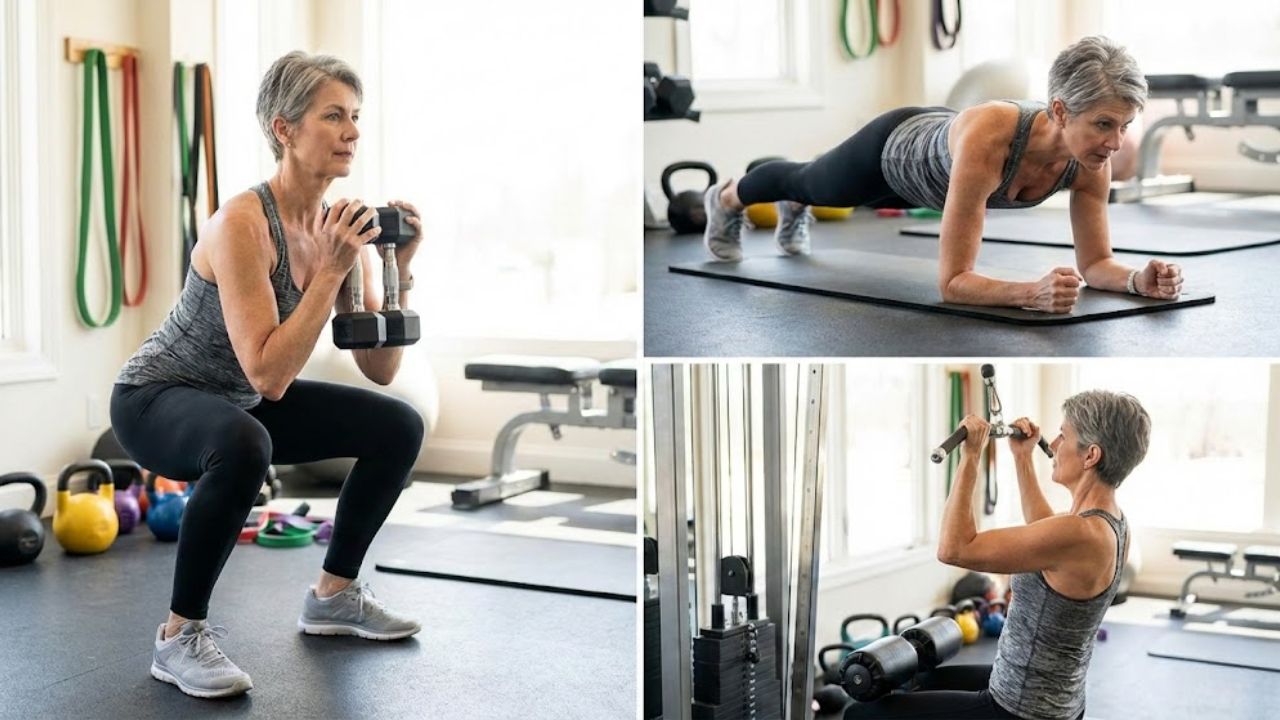
    Other helpful lower-body movements include squats and bridges, which strengthen the quadriceps, hamstrings, and supporting hip muscles. Strength training is also vital for slowing age-related muscle loss, known as sarcopenia.

    To perform hip drops, stand on a step or block with one foot planted and hips level. Lower the free foot by dropping the hip, pause briefly, then return to level. The movement should come from the hips. Wall recommends three sets of eight to twelve reps per side, adjusting volume as needed.

    3. Push-Ups for Upper Body Strength

    Push-ups target the chest, shoulders, and triceps, while also engaging the core muscles for stability. They are a versatile strength exercise that can be done almost anywhere.

    As people age, push-ups help maintain upper body strength and mobility. The exercise can be modified by using knees or a wall to reduce difficulty.

    Start in a plank position with hands slightly wider than shoulder-width. Lower the chest by bending the elbows at about 45 degrees, then press back to the starting position. Wall suggests beginning with five to ten reps and increasing sets once ten reps can be completed comfortably.

    4. Hanging Leg Raises for Core Control

    Leg raises strengthen the core and require coordination, which supports balance. Balance often declines with age, increasing the risk of falls.

    Research shows that core-focused exercises help improve muscle strength, motor control, and postural stability. Dr. Getzin recommends combining stability exercises like planks with contraction-based movements such as leg raises.

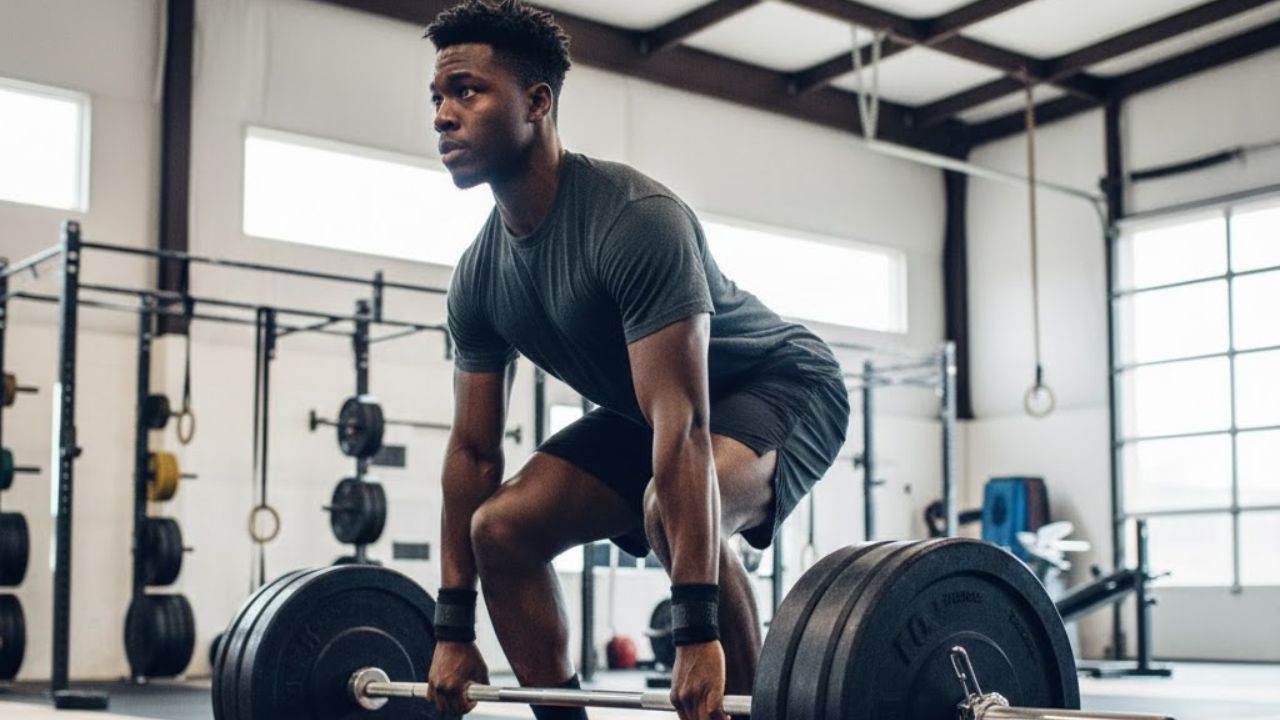
    To perform the exercise, hang from a bar with an overhand grip. Slowly raise the legs in front of the body with controlled movement, then lower them back down. Wall aims for three sets of fifteen to twenty reps, adjusting as needed or starting with simple dead hangs if strength is limited.

    5. Calf Raises for Balance and Power

    Calf raises build lower-leg strength and support balance. The calf muscles play a major role in walking efficiency, running mechanics, and everyday movements like climbing stairs.

    To perform the movement, stand with feet hip-width apart, maintain an upright posture, and engage the core. Rise onto the toes, then slowly lower the heels back to the floor in a smooth motion. Wall performs two to three sets of twenty to twenty-five reps, using a wall or table for support if needed.

    Key Takeaways for Exercising as You Age

    Exercise at any age supports overall health, preserves physical function, and reduces the risk of age-related conditions, cognitive decline, and premature mortality.

    When starting or adjusting a fitness routine, it’s important to progress gradually. Recovery slows with age, making it essential to listen to your body and match intensity to your abilities.

    For best results, combine regular cardiovascular activity with resistance training that targets multiple muscle groups. This balanced approach supports strength, endurance, and long-term mobility.
  • I Train Seniors for a Living Try These Bed-Based Exercises to Build Lower Body and Core Strength Safely

    I Train Seniors for a Living Try These Bed-Based Exercises to Build Lower Body and Core Strength Safely

    Throughout my 15 years as a certified personal trainer, I’ve worked with many senior clients who had varying levels of mobility. A common concern I hear is the fear that limited movement will prevent them from performing exercises that typically require getting down on the floor.

    Many effective movements for the hips, glutes, and core are performed while lying down, but that doesn’t mean the floor is your only option. In my gym, I often used a sturdy massage table, but a firm bed at home can serve the same purpose.

    If using a yoga mat and lowering yourself to the ground isn’t comfortable, these four bed-based exercises offer a practical alternative for working the lower body and core. While firmer surfaces are generally ideal, these movements can still deliver meaningful strength-building benefits.

    How to Perform This Routine Safely

    Before starting any new exercise program, it’s important to check with your doctor. If you’re new to regular exercise, meeting with a qualified personal trainer can help ensure proper technique and reduce injury risk.

    No equipment is required to complete this routine. However, as your strength improves, you may choose to add resistance bands or light dumbbells for additional challenge.

    Aim to complete each movement for 1–3 sets of 10–15 repetitions. Beginners should start with fewer reps and gradually increase as strength and endurance improve.

    Exercise Instructions

    1. Glute Bridge

    • Lie on your back with your knees bent.
    • Engage your core muscles.
    • Squeeze your glutes and lift your hips upward.
    • Hold the position briefly.
    • Lower your hips slowly and with control.
    • Repeat for the desired number of reps.

    2. Heel Slides

    • Lie on your back with your legs extended.
    • Activate your core muscles.
    • Bend your left knee, sliding the heel toward your hips.
    • Return the left heel to the starting position.
    • Repeat on the right side.
    • Continue alternating sides.

    3. Side-Lying Leg Lifts

    • Lie on your left side, resting your head on your left arm.
    • Engage your core to stabilize your body.
    • Stack your legs and keep your hips aligned.
    • Slowly lift the right leg upward.
    • Pause briefly at the top.
    • Lower the leg with control, then switch sides.

    4. Supine Marches

    • Lie on your back with your knees bent.
    • Brace your core.
    • Lift your right foot, bringing the knee toward your chest.
    • Lower the foot slowly.
    • Repeat on the left side.
    • Continue alternating legs.

    Key Benefits of These Bed Exercises

    This routine targets essential muscles in the core and lower body, including the transverse abdominis, glute maximus, glute medius, glute minimus, hamstrings, and hip abductors. As we age, strengthening these areas plays a crucial role in maintaining balance, improving overall stability, and supporting the lower back.

    While these movements are traditionally performed on the floor, adapting them to a raised surface like a bed makes them more accessible. They are low-impact, gentle on the joints, and easier to manage than exercises such as squats or sit-ups. With guidance from a fitness professional, they can also be modified or progressed to match individual ability levels.

  • I Asked ChatGPT to Design a Beginner Workout Plan and It Unexpectedly Motivated Me to Start Training

    I Asked ChatGPT to Design a Beginner Workout Plan and It Unexpectedly Motivated Me to Start Training

    When the ball dropped in Times Square and 2026 officially began, I was doing exactly what I usually do — watching from home with snacks close by. But this year felt different. Instead of reaching for junk food, I found myself eating apple slices with peanut butter, a small change that hinted at a bigger shift.

    As I enjoyed that healthier snack, I made a personal promise: I would finally commit to going to the gym consistently all year and actually follow through on those familiar “new year, new me” goals.

    With that mindset, I turned to my longtime digital companion, Chat GPT, to help with two things — building a workout plan for someone just starting out and creating a matching diet plan. Here’s how the experience unfolded.

    Chat GPT created a workout plan that felt realistic

    To kick things off, I gave Chat GPT a simple but clear prompt:

    I’d like to get in the gym to get fit for the new year. Build me a workout plan for someone who’s starting their workout journey.

    I assumed that being specific about my situation would lead to more tailored guidance, and that turned out to be true. Chat GPT responded with a well-structured approach built around a clear big-picture framework.

    The plan focused on five core elements:

    • Goal: Build strength, improve fitness, and develop a habit
    • Frequency: Three workouts per week
    • Workout length: 45–60 minutes
    • Focus: Full-body training with basic cardio
    • Rest days: At least one day between sessions

    It then laid out a sample weekly schedule, assigning Workout A – Full Body Basics to Monday and Friday, while reserving Wednesday for Workout B – Full Body (Different Angles).

    My first gym session: Workout A

    For my first visit to the gym, I followed Workout A, which ChatGPT designed as a full-body routine. The instructions were straightforward: perform two to three sets per exercise, aim for eight to 12 reps, and rest for 60–90 seconds between sets.

    Here’s the exact routine it gave me:

    • Goblet squat (legs and core)
    • Machine chest press or dumbbell bench press
    • Lat pulldown
    • Seated dumbbell shoulder press
    • Dumbbell Romanian deadlift
    • Plank (20–40 seconds)

    What stood out was how approachable everything felt. Nothing seemed overwhelming, and every movement made sense for someone new to strength training.

    Unexpected motivation and practical guidance

    Chat GPT didn’t stop at exercises. It also offered guidance on recovery, eating habits, and mindset, which ended up being just as valuable.

    What surprised me most was how encouraging it became, delivering reminders like “consistency beats intensity every time,” “everyone starts somewhere,” and my personal favorite, “showing up > being perfect.”

    Combined with advice on rest and nutrition, it gave me everything I needed to walk into the gym feeling prepared and confident.

    Bottom line

    Planet Fitness, here I come. Thanks to Chat GPT stepping in as a digital gym trainer, starting my fitness journey felt far less intimidating. Looking ahead, this approach will likely become even more useful as Chat GPT Health rolls out, allowing gym-goers to sync plans with fitness apps and better track lifestyle changes.

  • Goodbye Hair Dye Grey Coverage Trends Helping People Look Younger Without Colour

    Goodbye Hair Dye Grey Coverage Trends Helping People Look Younger Without Colour

    “I’m exhausted from chasing my roots,” she admits, staring at the faint silver line tracing her part. The counter beside her resembles a color lab, crowded with bowls marked chestnut, espresso, iced mocha brown. She wants none of them. What she’s asking for is softer. Not traditional hair dye. Something subtle, forgiving, and far less desperate-looking.

    Why Traditional Grey Coverage Is Fading Away

    The stylist immediately understands. Instead of pulling out bold shade charts, she opens a different guide filled with sheer tones, soft glosses, and carefully placed light. There’s no drastic color change planned and no hours spent stuck in the chair. Just techniques that blend grey, blur harsh lines, and quietly refresh the face without advertising the effort.

    This marks the end of hair dye as it once existed. What’s taking its place is calmer, smarter, and built for real life. And it’s reshaping how people choose to age in public.

    From Heavy Coverage to Gentle Camouflage

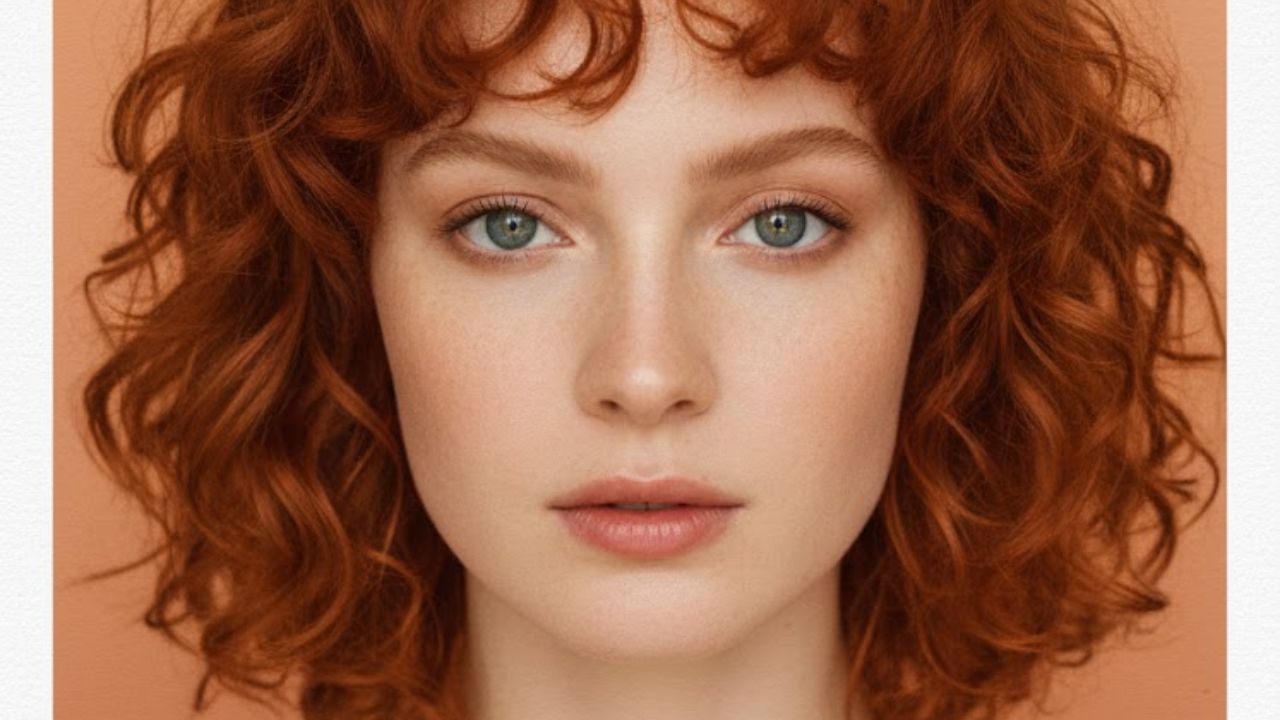
    Walk into a modern salon and you’ll hear the same request again and again: “I don’t want it to look dyed.” The resistance isn’t toward grey hair itself, but toward flat, opaque color that looks unnatural in daylight. The new focus is soft blending — letting silver show while controlling where and how it appears.

    Instead of harsh permanent formulas, colorists now rely on semi-permanent washes, translucent tints, subtle root shadows, and light-reflecting glosses. The result is softer regrowth, shorter appointments, and hair that looks refreshed rather than freshly treated. It’s less about hiding and more about making natural grey work to your advantage.

    In a small London salon, 52-year-old Karen arrived with a familiar request: “Make the grey disappear.” She had been coloring every three weeks, constantly chasing regrowth. Her stylist suggested another option — a soft mushroom-brown glaze, ultra-fine highlights around the face, and no solid root coverage.

    Two hours later, the sharp divide between grey and color was gone. In its place was a smoky, dimensional tone where silver looked intentional, almost like refined balayage. Eight weeks later, the grow-out was barely visible. “I feel younger,” she said — not because the grey vanished, but because she stopped fighting it.

    How Grey Blending Softens the Face

    There’s a practical reason this shift works so well. Solid dark color can frame the face too harshly, emphasizing fine lines and shadows. On the other end, bright white roots against dyed lengths pull attention straight to the scalp. Blending techniques soften both extremes.

    By lowering contrast and adding light around the face, skin appears brighter, features look cleaner, and attention moves away from regrowth. Stylists often compare it to contouring for hair — using light and depth to redirect focus.

    The grey isn’t erased. It’s integrated. Not magic, just a smarter use of what’s already there.

    The Modern Approach to Younger-Looking Grey Hair

    The standout technique today is known as grey blending. It’s less about coverage and more about balance. Rather than coating every strand, the stylist works strategically. A sheer demi-permanent tone softens the brightest whites, while subtle lowlights add depth. Around the face, ultra-fine baby lights break up heavy patches.

    This approach frees people from rigid schedules. With no harsh line between color and grey, appointments can stretch to eight or even twelve weeks. The slightly imperfect finish is intentional — those small shifts in tone create a polished, lived-in look that feels expensive rather than obvious.

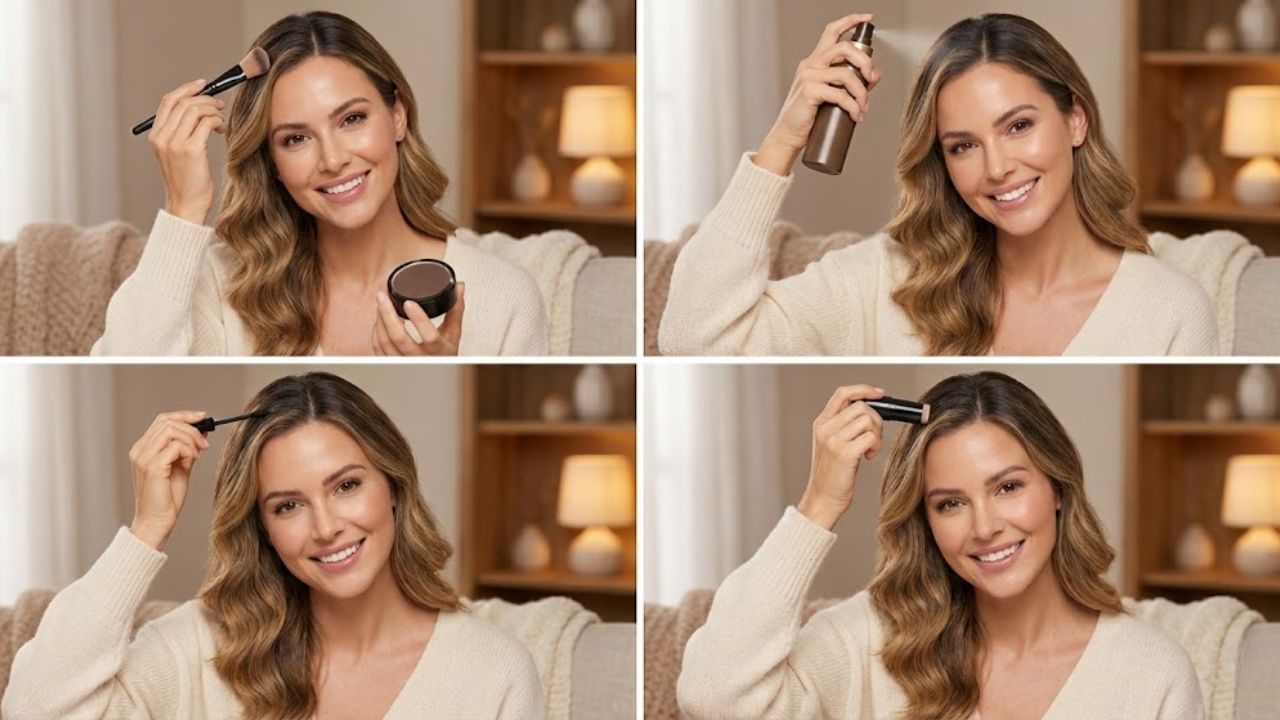
    Daily upkeep stays simple. A gentle purple or blue shampoo once a week prevents yellowing. A lightweight oil or shine serum helps coarse greys lie smoother and reflect light. For special occasions, tinted root powders can soften the part in seconds, blending everything together discreetly.

    What makes this trend last is its realism. No one wants a complicated routine before breakfast. Small habits matter more — mild shampoos, heat protection, and regular trims so silver strands don’t stand out. Over time, these choices make grey hair look intentional, not unruly.

    A Subtle Shift in Confidence

    This softer approach changes more than hair — it changes self-talk. Instead of inspecting every white strand, focus shifts to texture, shine, and movement. The question becomes “Does my hair look alive?” rather than “Does it look young enough?” That alone removes much of the daily frustration grey hair can bring.

    Paris-based colorist Lila Moreau explains that clients no longer ask to cover grey completely. They ask to look rested and brighter — like themselves on a good day. Grey blending, gloss, and face-framing light make that possible without hiding age.

    Common Mistakes That Ruin the Effect

    • Choosing overly dark shades that harden facial features
    • Using frequent permanent box dye that creates a flat finish
    • Ignoring cut and shape even with good color
    • Overusing purple shampoo until hair looks dull
    • Expecting one appointment to undo years of coloring

    Rethinking Age, Hair, and Control

    When people stop chasing the idea of zero grey, something shifts. They experiment again — softer fringe, lighter pieces around the face, or a cut that lifts the neckline. Friends rarely comment on the grey itself. Instead they say, “You look rested,” or “You look different, in a good way.”

    This isn’t a rejection of color. It’s a goodbye to panic touch-ups, hats pulled low, and the stress of visible regrowth. Some still color with flexibility. Others embrace natural grey with a gloss. Many land somewhere in between.

    The deeper change is about choice. When grey becomes a design element instead of a flaw, attention moves from erasing age to shaping how it appears. Refining light, texture, shape, and shine isn’t about hiding — it’s about deciding how you want to be seen.

  • Menopausal Women Increased Lower Body Strength by 19 Percent Using Resistance Training With These 3 Exercises

    Menopausal Women Increased Lower Body Strength by 19 Percent Using Resistance Training With These 3 Exercises

    For women aged between 40 and 60, hormonal shifts linked to menopause are often associated with a noticeable drop in skeletal muscle mass. This decline can reduce overall strength and physical function, while potentially increasing the risk of disability later in life. However, recent research published in Medicine & Science in Sports & Exercise suggests this outcome is not unavoidable. The findings highlight that resistance training can play a meaningful, and in some cases substantial, role in preventing muscle loss during and after menopause.

    How the menopause resistance training study was conducted

    The study analysed 72 physically active women aged 46 to 57 who were not using hormone replacement therapy. Participants were randomly assigned to one of two groups. One group maintained their regular activity routines, which included moderate exercises such as walking or running. The second group followed a supervised low-impact resistance program designed to improve hip and shoulder strength, dynamic balance, and flexibility. This program used Pvolve equipment, including resistance bands and weights worn around the hips, wrists, and ankles, alongside dumbbells and bodyweight movements like squats, lunges, and planks.

    Key strength, balance, and flexibility improvements

    After 12 weeks, women in the resistance training group experienced a 19% improvement in hip function and lower-body strength, a 21% increase in full-body flexibility, and a 10% gain in dynamic balance. In contrast, those who continued with their usual activities showed no significant changes in these measures. While earlier research has documented declines in leg strength and flexibility during menopause, this study was the first to compare the effects of resistance training across pre-, peri-, and post-menopausal phases by including women at different stages rather than tracking the same individuals over time.

    Why the findings matter for women during menopause

    According to lead author Francis Stephens, a professor at the University of Exeter, women are often more prone to leg strength loss as they age, especially after menopause, which can increase the likelihood of falls and hip fractures. He noted that the study demonstrates how a low-impact resistance and bodyweight program targeting the lower body can enhance strength, balance, and flexibility. Importantly, these benefits were consistent across menopause stages, indicating that menopause-related changes do not reduce the effectiveness of exercise.

    Practical takeaways for long-term strength and health

    Although the program used specialised Pvolve equipment, Stephens explained that any progressive resistance training focused on lower-body strength is likely to deliver similar outcomes. The key is choosing an approach that is enjoyable and sustainable. Participants reported increased exercise enjoyment, with some continuing the routine even after the study ended. Women’s health coach Kylie Larson added that mindset plays a critical role, as many women view menopause as a point where physical improvement is no longer possible. She highlighted that strength training can still improve muscle mass, body composition, flexibility, and balance, even with fewer weekly sessions, especially when using progressive overload to gradually increase challenge.

  • My Eyelashes Were Bare Until I Tested These Growth Serums That Finally Delivered Visible Results

    My Eyelashes Were Bare Until I Tested These Growth Serums That Finally Delivered Visible Results

    Before testing the top eyelash growth serums, I often joked that I had baby lashes—short, fine strands that even the best lengthening mascara couldn’t improve. Constantly applying strip lashes or booking expensive extension appointments quickly became frustrating. I wanted a solution that could deliver long-term results, helping lashes look thicker, stronger, and longer over time. As I soon discovered, many others were searching for the same kind of lash-enhancing solution, hoping to restore fullness without relying on temporary fixes.

    Alopecia areata, diagnosed nearly ten years ago, caused Vogue beauty shopping writer Conçetta Ciarlo to experience repeated periods of lash shedding and slow regrowth. She initially tried Latisse, the only FDA-approved lash treatment, but the prescription requirement and mild lash line darkening made it less appealing. While her lashes eventually returned, they were less dense and more fragile. Looking for something easier to access, she began testing over-the-counter serums, many popular online, in hopes of finding a formula that offered visible improvement without unwanted side effects.

    Vogue’s Top-Rated Eyelash Growth Serums

    Through extensive testing, Vogue editors evaluated a range of eyelash-enhancing formulas designed to support healthier-looking lashes. These products focus on strengthening lash fibers, improving overall density, and reducing breakage over time. Each option below was selected based on performance, ingredients, and ease of use.

    “Eyelash growth serums help condition and nourish lash hairs, which can result in a fuller appearance with consistent application,” explains board-certified dermatologist Marisa Garshick, MD. By supporting lash health, these formulas may also make lashes less prone to damage and fallout.

    Although lash types vary—short and curly versus long and straight—both Ciarlo and I have seen positive results from long-term serum use. According to board-certified dermatologist Purvisha Patel, MD, daily application is key, and most users should expect to wait at least one month to notice changes.

    Best Overall Lash Serum: Vegamour Gro Lash Serum

    Vegamour’s Gro Lash Serum stands out for its clean beauty formula made with naturally derived ingredients that are ophthalmologist-approved. The blend includes peptides and mung bean extract, which is rich in selenium—an often overlooked mineral believed to support healthy hair growth. Notably, this serum is prostaglandin-free, making it a preferred option for those concerned about skin discoloration. Many editors rely on it to maintain lash strength and reduce fallout without irritation.

    Key ingredients include red clover, mung bean extract, and peptides. The formula contains no PGAs and is applied to both the upper and lower lash line twice daily for two months, then once daily. It is vegan, cruelty-free, and free from parabens and sulfates.

    Best Prostaglandin Formula: Grande Cosmetics GrandeLASH-MD

    GrandeLASH-MD is widely recognized for delivering noticeable lash growth within weeks. Its formula combines amino acids, vitamins, and antioxidants to support fuller-looking lashes. Hyaluronic acid helps hydrate and condition, while the thin applicator allows for precise application along the lash line. Some users report mild lash line darkening, which can occur with prostaglandin-based formulas.

    This serum includes isopropyl cloprostenate and does contain PGAs. It is applied once daily to the upper lash line and is ophthalmologist-tested, cruelty-free, and suitable for contact lens wearers.

    Best Conditioning Serum: Shiseido Full Lash & Brow Serum

    Shiseido’s lash and brow serum focuses on conditioning existing hairs rather than stimulating new growth. Arginine, an amino acid essential for keratin production, helps strengthen lashes, while vitamin E supports hair follicle health by reducing oxidative stress. This gentle formula is ideal for those seeking breakage prevention and everyday maintenance for both lashes and brows.

    The serum is PGA-free and applied morning and night. It is dermatologist- and ophthalmologist-tested and works best as a daily conditioning treatment.

    Best Castor Oil Option: Sky Organics Organic Castor Oil Serum

    Sky Organics offers a pure castor oil formula for those preferring a natural approach. Castor oil is widely used to help improve the appearance of dry, brittle lashes and support overall lash health. While results may take longer, this option is valued for its minimal ingredient list and versatility for both lashes and brows.

    Made with 100% virgin castor oil, the formula contains no PGAs and is applied nightly. It is vegan, organic, and best suited for those whose skin tolerates richer oils.

    Best Brush-On Serum: Typology L37 Lash & Brow Serum

    Typology’s L37 serum features a spoolie-style applicator that coats lashes like mascara. Its 96% naturally derived formula includes pea peptides, castor oil, and glycerin to condition from root to tip. This approach helps improve overall density while reducing breakage, making it suitable for both lashes and brows.

    The serum is fragrance-free, vegan, and ophthalmologist-tested. It is applied once or twice daily and left on without rinsing.

    Best Keratin-Infused Formula: Kosas Grow Potion Lash & Brow Serum

    Kosas GrowPotion combines keratin, peptides, and vitamin B5 to support healthier-looking lashes and brows. The lightweight, gel-like texture feels refreshing, while the sponge-tip applicator allows for targeted application in sparse areas. Clinical testing showed measurable improvements in lash volume and brow fullness after consistent use.

    This PGA-free formula is applied nightly and is ophthalmologist-tested, vegan, and cruelty-free.

    Best Biotin Formula: Augustinus Bader Eyebrow & Lash Enhancing Serum

    Augustinus Bader’s serum blends biotin, panthenol, and castor oil to support healthy hair growth. Combined with the brand’s signature TFC8 complex, the formula helps hydrate and strengthen lashes and brows. Clinical testing reported increases in lash length and overall prominence after 12 weeks.

    The serum is PGA-free, applied morning and night, and is cruelty-free and ophthalmologist-tested, making it suitable for sensitive eyes.

    Everything You Need to Know About Eyelash Growth Serums

    This guide covers what to look for in a serum, key growth-supporting ingredients, potential side effects, expected timelines, and overall safety considerations. It also explains how these products were tested and highlights additional formulas reviewed by experts.

  • 8 Effective Yoga Stretches to Relieve Hip Stiffness and Tight Muscles for Better Mobility

    8 Effective Yoga Stretches to Relieve Hip Stiffness and Tight Muscles for Better Mobility

    Hip stiffness and tight muscles are common issues linked to long hours of sitting, stress, poor posture, or intense physical activity. When the hips lose their natural flexibility, it can negatively affect posture, lower-back health, and overall movement. The right yoga stretches can gently ease tension, enhance mobility, and help the body regain balance.

    This guide explores 8 powerful yoga stretches for hip stiffness and tight muscles, explaining how each pose works, its benefits, and how to practice safely.

    Why Maintaining Hip Flexibility Matters

    The hips serve as a vital link between the upper and lower body, supporting nearly every movement—from walking and bending to sitting and standing. When the hips become tight, it may lead to:

    • Lower back pain
    • Limited mobility
    • Poor posture
    • Everyday discomfort

    Yoga supports hip health by stretching deep muscle groups while promoting mindful breathing and relaxation.

    8 Best Yoga Stretches for Hip Stiffness and Tight Muscles

    1. Butterfly Pose (Baddha Konasana)

    How it helps: This pose gently opens the hips and inner thighs, releasing long-held tension.

    How to do it: Sit upright, bring the soles of your feet together, and allow the knees to fall outward. Hold your feet, lengthen the spine, and softly guide the knees toward the floor.

    Benefits:

    • Improves hip mobility
    • Reduces inner thigh and groin tightness
    • Encourages deep relaxation

    2. Low Lunge (Anjaneyasana)

    How it helps: This stretch deeply targets the hip flexors, which often tighten due to prolonged sitting.

    How to do it: Step one foot forward into a lunge, lower the back knee, and gently press the hips forward while keeping the chest lifted.

    Benefits:

    • Releases tight hip flexors
    • Supports better posture
    • Improves balance and stability

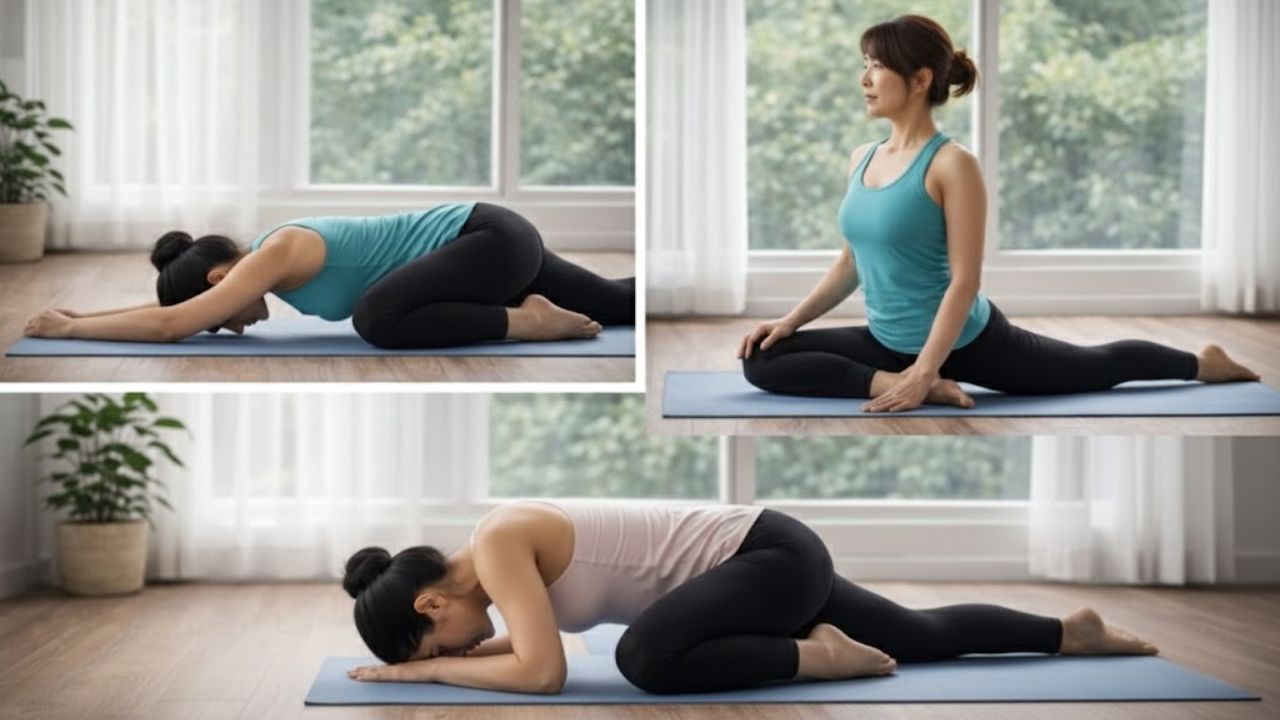
    3. Pigeon Pose (Eka Pada Rajakapotasana)

    How it helps: Pigeon Pose provides a deep stretch for the outer hips and glutes.

    How to do it: From plank or downward dog, bring one knee forward, extend the opposite leg back, and lower the hips. Fold forward if comfortable.

    Benefits:

    • Releases deep hip tension
    • Helps ease lower-back discomfort
    • Enhances overall flexibility

    4. Happy Baby Pose (Ananda Balasana)

    How it helps: This relaxing pose gently opens the hips while soothing the lower back.

    How to do it: Lie on your back, draw the knees toward the chest, and hold the outer edges of the feet. Gently rock side to side.

    Benefits:

    • Loosens tight hips
    • Relieves spinal tension
    • Promotes a sense of calm

    5. Garland Pose (Malasana)

    How it helps: A deep squat that stretches the hips while engaging the ankles and lower back.

    How to do it: Stand with feet slightly wider than hip-width, squat down, and bring palms together at the chest. Use elbows to gently press the knees outward.

    Benefits:

    • Boosts hip and ankle mobility
    • Strengthens the lower body
    • Improves circulation

    6. Wide-Legged Seated Forward Fold (Upavistha Konasana)

    How it helps: This pose stretches the hips and inner thighs while calming the nervous system.

    How to do it: Sit with legs extended wide and gently fold forward, maintaining a long spine.

    Benefits:

    • Releases hip and groin tension
    • Improves flexibility
    • Encourages slow, deep breathing

    7. Supine Figure Four Stretch

    How it helps: A gentle stretch that focuses on the outer hips and glutes.

    How to do it: Lie on your back, cross one ankle over the opposite knee, and draw the supporting leg toward your chest.

    Benefits:

    • Eases hip tightness
    • May reduce sciatic discomfort
    • Beginner-friendly and accessible

    8. Bridge Pose (Setu Bandhasana)

    How it helps: Bridge Pose strengthens and stretches the hips while supporting spinal flexibility.

    How to do it: Lie on your back, bend the knees, press the feet into the mat, and lift the hips upward.

    Benefits:

    • Opens hip flexors
    • Strengthens glutes and core
    • Supports lower-back health

    Safe Practice Tips

    • Move slowly and avoid forcing stretches
    • Maintain steady, relaxed breathing
    • Use props like blocks or cushions when needed
    • Stop immediately if you feel sharp or intense pain

    Practicing these stretches 3–5 times per week can lead to noticeable improvements in comfort and flexibility.

    Final Thoughts

    Hip stiffness doesn’t need to be a constant challenge. With regular practice, these 8 yoga stretches for hip tightness and muscle stiffness can help restore mobility, ease discomfort, and support overall well-being. Yoga emphasizes patience and awareness, allowing the body to open naturally over time.

  • 8 Standing Yoga Poses That Improve Balance Strength and Core Stability for Daily Life

    8 Standing Yoga Poses That Improve Balance Strength and Core Stability for Daily Life

    Balance is something most people rarely notice until it starts to feel off. You may become aware of it while standing on one leg, walking across uneven ground, or feeling slightly unstable after a long day. Balance is not controlled by the legs alone. It is closely linked to the core muscles.

    Your core is more than visible abs. It includes the lower back, hips, pelvis, and deep stabilizing muscles. When these muscles are active and strong, balance improves naturally. Standing yoga poses are one of the most effective ways to train balance and core strength together.

    This article explores eight standing yoga poses designed to improve balance and core stability. These poses suit both beginners and intermediate practitioners. They focus on controlled movement, breath awareness, and steady posture. No special equipment is needed—just space, focus, and patience.

    The Importance of Balance and Core Stability

    Good balance keeps the body safe. It lowers the risk of falls, improves posture, and makes daily movements smoother and easier.

    Core stability supports the spine, protects the lower back, and allows movement with control instead of strain.

    When balance and core strength are lacking, other areas begin to compensate. Knees may ache, hips tighten, and shoulders take on extra work. Over time, this leads to pain, stiffness, and reduced mobility.

    Standing yoga poses challenge the body in a controlled manner. They activate deep muscles that are often overlooked and teach the body to move as one connected system.

    How Standing Yoga Strengthens the Core

    In standing poses, the body works against gravity. The core stays engaged to maintain upright posture, even in simple positions.

    Balance-focused poses activate muscles without excessive tension. This builds functional strength—strength that supports everyday movement.

    With regular practice, standing poses improve stability in daily life. Carrying bags feels easier, standing for long periods becomes more comfortable, and walking feels more confident.

    Preparing for Standing Yoga Practice

    • Choose a flat, stable surface for practice
    • Practice barefoot to improve balance awareness
    • Wear clothing that allows free movement
    • Keep breathing slow and steady to reduce tension
    • Accept wobbling as part of the process
    • Fix your gaze on a steady point to calm the nervous system

    Mountain Pose: The Foundation

    Mountain Pose may appear simple, but it builds the foundation for all standing balance postures. It teaches alignment, posture, and core awareness.

    How to Practice

    • Stand with feet hip-width apart
    • Spread the toes evenly
    • Lift through the crown of the head
    • Gently engage the lower belly
    • Relax the shoulders
    • Breathe steadily
    • Hold for one minute

    Tree Pose: Building Balance and Focus

    Tree Pose is excellent for balance training. It strengthens the legs, activates the core, and improves concentration.

    How to Practice

    • Stand tall in Mountain Pose
    • Shift weight into the left foot
    • Place the right foot on the ankle or calf
    • Avoid pressing against the knee
    • Bring palms together at the chest
    • Fix your gaze forward
    • Hold for 30 seconds, then switch sides

    Warrior One: Strength and Stability

    Warrior One builds lower body strength while engaging the core. It improves body awareness and grounding.

    How to Practice

    • Step one foot forward
    • Bend the front knee
    • Turn the back foot slightly inward
    • Lift arms overhead
    • Engage the core muscles
    • Keep the chest lifted
    • Hold for one minute, then switch sides

    Warrior Two: Lateral Stability

    Warrior Two strengthens the legs and core while improving side-to-side balance and endurance.

    How to Practice

    • Stand with a wide stance
    • Turn one foot outward
    • Bend the front knee
    • Extend arms out to the sides
    • Relax the shoulders
    • Engage the lower belly
    • Gaze forward
    • Hold for one minute, then switch sides

    Extended Side Angle Pose: Deep Core Activation

    This pose challenges balance while strengthening deep core muscles. It also enhances coordination and flexibility.

    How to Practice

    • Begin in Warrior Two
    • Lower the front elbow to the thigh
    • Extend the top arm overhead
    • Lengthen both sides of the body
    • Keep the core engaged
    • Hold for 30 seconds, then switch sides

    Eagle Pose: Focused Stability

    Eagle Pose works deeply into balance, coordination, and core control. It also sharpens concentration.

    How to Practice

    • Stand tall and bend the knees slightly
    • Cross the right thigh over the left
    • Wrap the arms together
    • Sit low while lifting the chest
    • Hold for 30 seconds, then switch sides

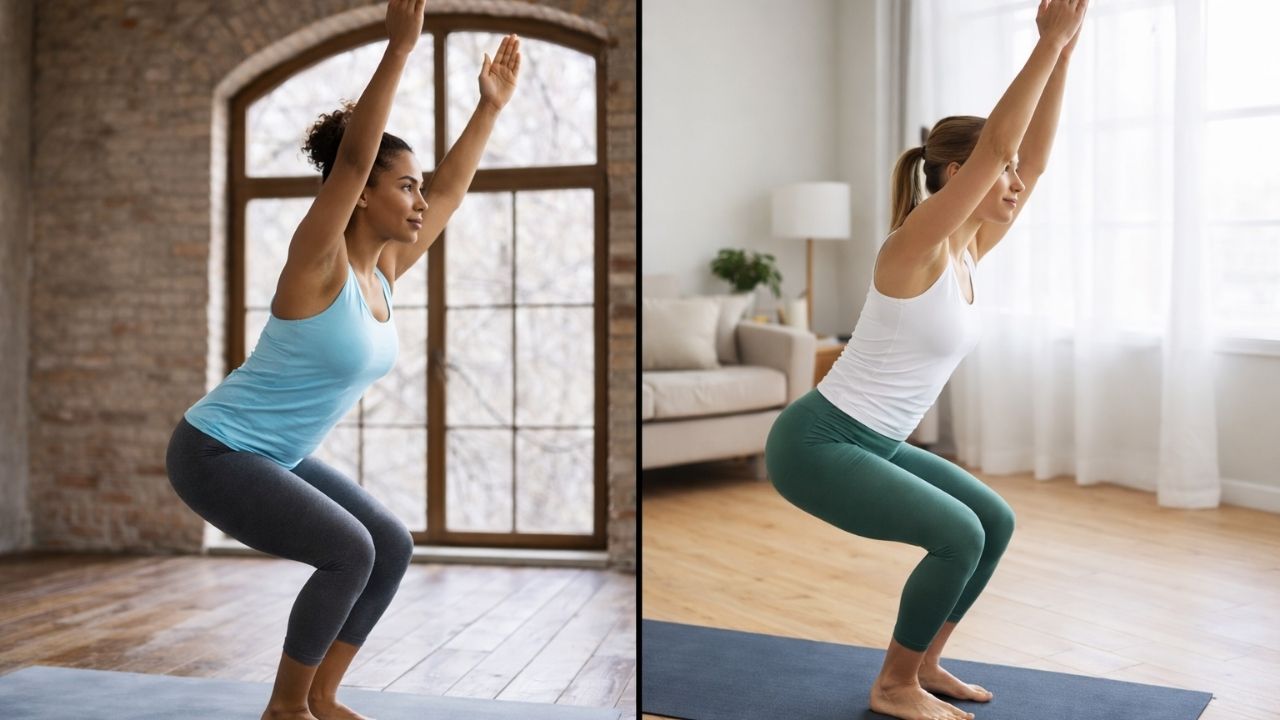
    Chair Pose: Stability Under Effort

    Chair Pose builds strong core engagement while strengthening the legs and improving posture.

    How to Practice

    • Stand with feet together
    • Bend the knees as if sitting back
    • Lift arms overhead
    • Keep the chest open
    • Engage the core muscles
    • Hold for one minute

    Half Moon Pose: Balance and Coordination

    Half Moon Pose challenges balance, coordination, and full-core activation.

    How to Practice

    • Begin in Mountain Pose
    • Step one foot forward
    • Shift weight onto the front foot
    • Lift the back leg
    • Place one hand on the floor or a block
    • Extend the top arm upward
    • Hold for 30 seconds, then switch sides

    Building a Simple Balance Routine

    You do not need to practice all eight poses every day. A simple routine may include:

    • Mountain Pose
    • Tree Pose
    • Warrior One
    • Chair Pose
    • Half Moon Pose

    The Connection Between Breath and Balance

    Breathing plays a key role in balance. Slow, steady breaths calm the nervous system and improve stability.

    When breathing becomes rushed, balance often weakens. Inhale through the nose and exhale slowly, allowing breath to guide movement.

    Handling Common Balance Challenges

    • Wobbling is normal
    • Balance improves gradually with practice
    • Avoid self-judgment
    • Use wall support when needed
    • Focus on effort, not perfection

    How Core Stability Supports Daily Life

    Core strength improves posture and reduces back discomfort. Strong core muscles protect the joints and make walking and standing more comfortable.

    These benefits naturally carry into everyday activities.

    Who Can Practice These Poses

    These standing yoga poses are suitable for:

    • Beginners
    • Office workers
    • Older adults with good mobility
    • Athletes seeking better body control

    Mistakes to Avoid During Practice

    • Avoid locking the knees
    • Do not hold the breath
    • Avoid forcing positions
    • Do not compare your progress to others

    When Results Begin to Show

    Some people notice increased strength within a few weeks. Balance improves gradually, and consistency is key. Regular practice leads to lasting results.

    Final Thoughts on Standing Yoga and Balance

    Standing yoga poses train the body in a smart and effective way. They strengthen the core while enhancing balance and awareness. With short, consistent sessions, these poses support long-term stability and control.

  • Boot Wardrobe Refresh Begins With Celebrity-Inspired Styles Starting at $30

    Boot Wardrobe Refresh Begins With Celebrity-Inspired Styles Starting at $30

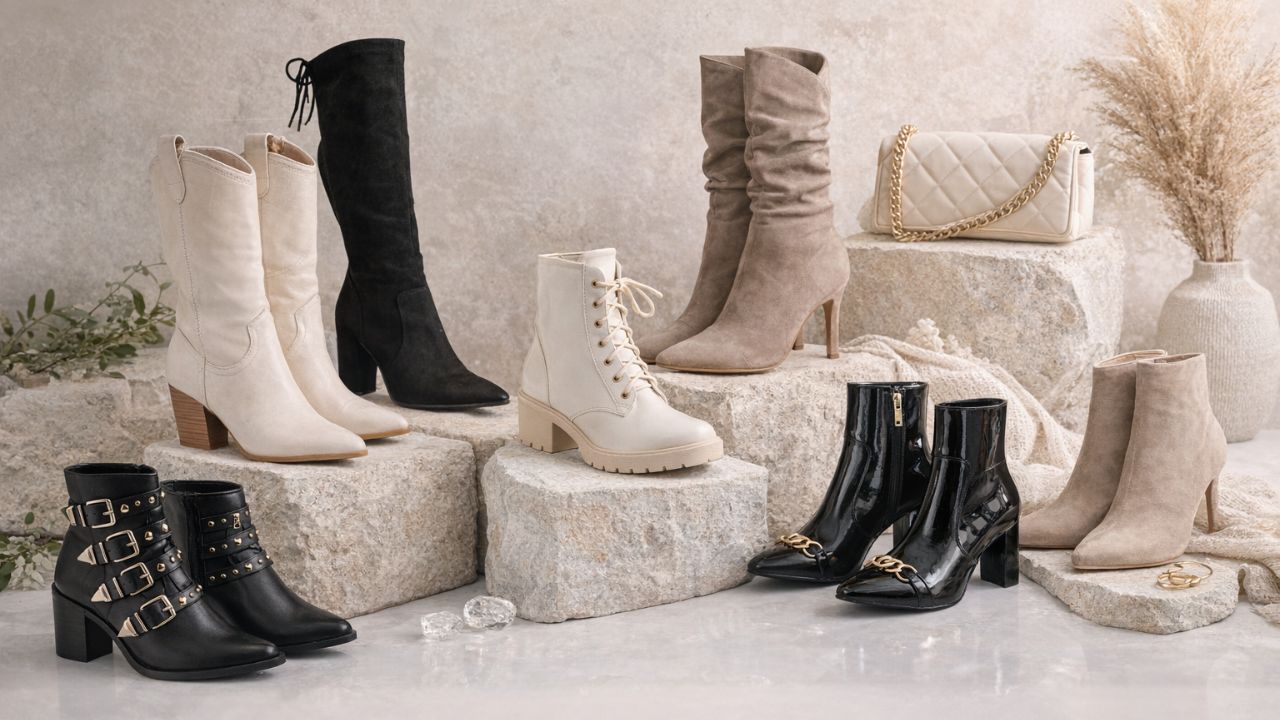
    After growing up in New England and later settling in New York City, I’ve built up an impressive collection of winter boots over the years. Many pairs have seen better days, thanks to salt stains, worn soles, and scuffed leather. With the new year here, I’m ready for a full refresh—focusing on styles that are affordable, comfortable, and guaranteed to draw compliments, the ultimate shoe-shopping trifecta.

    From zip-front Chelsea boots loved by Dakota Johnson to dramatic suede heels worn by Taylor Swift, I’m letting my favorite fashion-forward celebrities guide my picks. I narrowed it down to seven standout pairs that meet all my criteria, featuring budget-friendly finds from Ugg, Sorel, and Sam Edelman, with prices starting at just $30.

    Old Navy Zip Front Chelsea Boot

    Zip-front Chelsea boots have become a winter essential among InStyle editors and style stars like Dakota Johnson. The sleek silhouette, inspired by high-end designers, adds a bold edge to a timeless shape. While luxury versions can cost well over $1,000, this Old Navy pair delivers the same vibe for a fraction of the price. Available in brown suede and classic black, shoppers praise them for being surprisingly comfortable and roomy enough for thicker socks.

    Sorel Joan of Arctic Waterproof Boot

    Even when spring feels far away, Meghan Markle proves that snow boots can still look stylish. Her go-to winter pick offers a lace-up design, faux-fur trim, and full waterproof protection—ideal for rain, snow, and slush. With this popular style now marked down by 45 percent, it’s a rare chance to snag a practical yet polished winter boot.

    Marc Fisher Gismo Boots

    Oprah’s winter footwear never disappoints, and this chic bootie-inspired style is no exception. Featuring a pointed toe and sturdy block heel, the Marc Fisher Gismo Boots come in multiple luxe shades and are deeply discounted right now. Reviewers highlight their unexpected comfort, even for those with foot concerns, and note how the shape creates a leg-lengthening effect.

    VorisVina Knee-High Boots

    Taylor Swift has long set the standard for statement boots, and her recent suede, knee-high heels instantly caught my attention. These VorisVina boots offer a similar dramatic, leg-enhancing look without the designer price tag. At just $55, they’re an easy way to channel celebrity-inspired elegance on a budget.

    Blundstone BL558 Boots

    While heels have their place, nothing beats the comfort of a well-made flat boot. Inspired by Jennifer Lawrence’s effortless off-duty NYC style, these Blundstone boots deliver a cool, laid-back aesthetic that’s easy to wear all day. Known for durability and comfort, they’re a solid choice for anyone who values practical fashion.

    Sam Edelman Sylvia Wide-Calf Knee-High Boots

    Winter whites always feel elevated, and Kate Hudson demonstrated just how chic white boots can look in colder months. This Sam Edelman pair captures that same polished, luxurious feel while also being wide-calf-friendly. The result is a flattering, versatile boot that balances style and comfort beautifully.

    Ugg Classic Mini Lunara Boot

    Ugg boots remain a winter wardrobe staple, even among A-listers like Nicole Kidman. Inspired by her classic city look, this discounted option mirrors the beloved silhouette in a warm Chestnut brown shade. With all sizes currently available, it’s the perfect moment to grab a pair before they sell out.

  • Eye Shadow Primers That Keep Makeup Vibrant and Crease Free All Day

    Eye Shadow Primers That Keep Makeup Vibrant and Crease Free All Day

    The Best Eye Shadow Primers for Long-Lasting Makeup We may earn compensation from retailers or from purchases of products through these links. The best eye shadow primers make the difference between makeup that stays perfect all day and makeup that fades before lunch. One application helps your eye shadow appear more vibrant and blend smoothly without creasing or fading. Think of it as preparing your eyelids before applying makeup. Modern formulas do more than just keep color in place. They smooth out texture & balance skin tone while offering benefits like hydration or oil control. The right primer makes a real difference if you have fine lines around your eyes or want your shimmer shades to look brighter and last throughout the day. Keep reading for recommendations from Allure editors and makeup artists that prove great eye makeup starts with what you apply before the shadow.

    Editor’s Top Picks: Eye Shadow Primers That Truly Deliver

    Best All-Rounder: Urban Decay Eye Primer Potion

    Why it stands out: The Urban Decay Eye Primer Potion has been a long-time favorite among editors and makeup artists. Miami-based makeup artist Natalie Dresher notes that it extends the wear of eye shadow without settling into fine lines or feeling heavy. Its lightweight, almost serum-like texture spreads smoothly for an even finish. Slightly tacky but not sticky, it ensures eye shadow stays in place all day. The primer comes in Original (sheer translucent beige), Eden (matte beige), and Sin (pale champagne shimmer), along with an anti-aging version enriched with plumping peptides and brown algae, perfect for mature skin. Ideal for anyone looking to enhance their eye makeup longevity.

    Top Performer for Mature Lids: Milk Hydro Grip Eye Primer

    Why it stands out: Milk’s Hydro Grip Eye Primer is invisible and acts like double-sided tape for eye shadow, keeping it from settling into fine lines. Pittsburgh makeup artist Patty Bell highlights its thin formula, making it easy to blend on delicate eyelids. It holds eye makeup in place for up to eight hours and contains hyaluronic acid to hydrate and create a smooth, blurred effect. Infused with blue agave for grip and niacinamide and aloe for hydration, it can also be applied under the eyes to prevent concealer creasing. This primer is truly multi-purpose.

    Best Affordable Option: NYX Ultimate Shadow & Liner Primer

    Why it stands out: The NYX Professional Makeup Ultimate Shadow & Liner Primer delivers professional-quality results at a budget-friendly price. Its lightweight formula spreads quickly, making it easy for anyone to apply. Available in four natural shades, it can even be worn alone as cream eyeshadow, helping to conceal veins and uneven skin tones. Enriched with vitamin E, it keeps eyelids moisturized and prevents dryness and flakiness throughout the day.

    Perfect for Dry Eyelids: NARS Pro-Prime Smudge Proof Eyeshadow Base

    Why it stands out: NARS’ Pro-Prime Smudge Proof Eyeshadow Base is a subtle, behind-the-scenes hero that enhances every eye look. Its sheer formula blends seamlessly into the skin, creating a nearly invisible layer that grips shadow without feeling heavy. New York City makeup artist Nick Barose praises its ability to make colors pop while providing hydration through rice extract and sea whip extract. This primer works more like skincare than makeup, ensuring smooth blending and longer wear without dryness.

    Best for Oily Lids: Too Faced Shadow Insurance Eye Primer

    Why it stands out: The Too Faced Shadow Insurance Eye Primer is ideal for those with oily lids. Its formula contains oil-absorbing silica to minimize shine and maintain a smooth surface for eye shadow. The colorless, silky texture works on any skin tone, ensuring brighter, longer-lasting eyeshadow. Its waterproof formula resists fading and smudging, with the brand claiming up to 24 hours of wear, though it performs well for at least 12 hours.

    Great for Evening Out Tone: Laura Mercier Eye Basics Primer

    Why it stands out: Laura Mercier Eye Basics Primer comes in two shades that help even out eyelid skin tone. The light blue shade conceals purple and pink tones, while the peach version brightens dull skin for a more awake appearance. After application, eyelids feel smooth and even, and eye shadow stays in place all day, whether powder or cream. It also nourishes the skin with aloe, lanolin acid, and safflower seed oil, keeping it hydrated and comfortable throughout wear.