Category: News

  • 10 Yoga at Home Essentials to Build a Consistent and Easy Routine

    10 Yoga at Home Essentials to Build a Consistent and Easy Routine

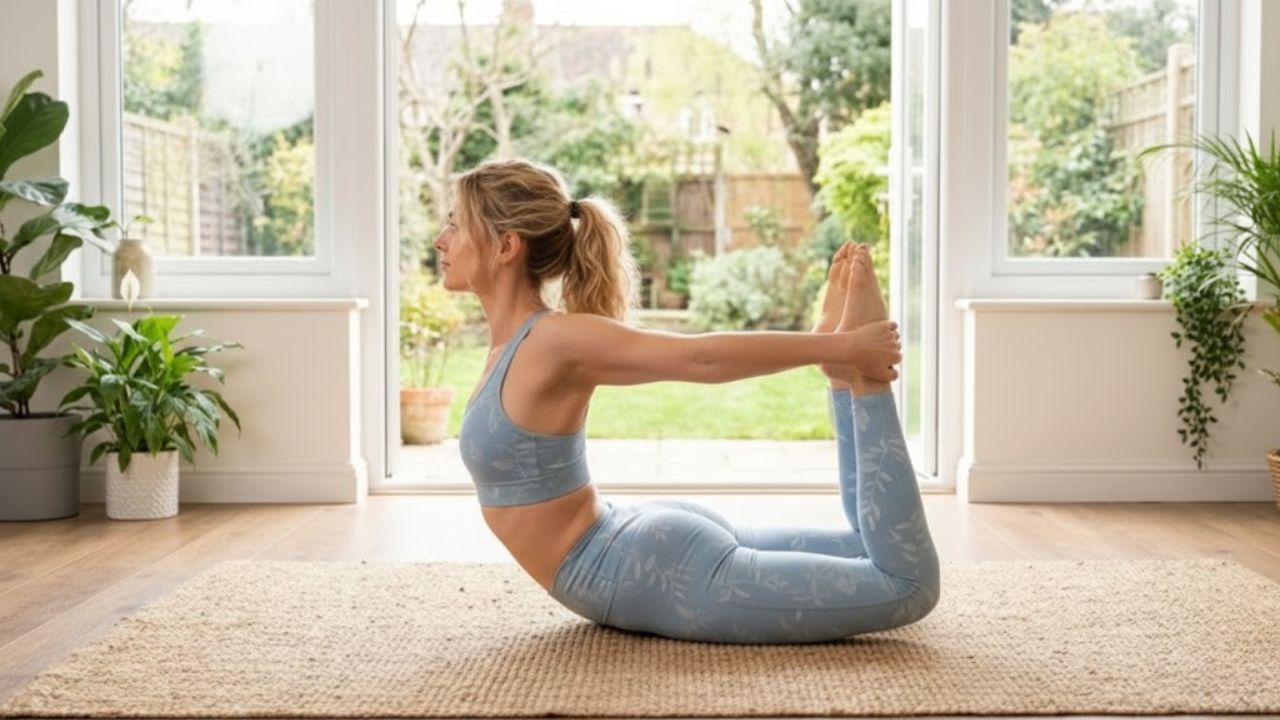
    Yoga is a powerful practice that supports both the body and mind, helping to build strength, enhance flexibility, and promote mental calm. For those with busy schedules, practicing yoga at home offers an easy and effective way to enjoy these benefits without stepping outside. This comprehensive guide outlines 10 essential at-home yoga routines, combining physical postures with relaxation techniques suitable for beginners and experienced practitioners alike.

    Why Choose Yoga at Home?

    • Convenience: Practice anytime without commuting or fixed schedules.
    • Cost-Effective: Eliminate class fees, memberships, and travel expenses.
    • Comfort: Move freely and confidently in your own space.
    • Personalized Practice: Adapt sessions to suit your body, goals, and energy levels.

    1. Energizing Morning Yoga Flow (15–20 Minutes)

    Best for: Waking up the body and sharpening mental focus.

    Routine:

    • Mountain Pose (Tadasana) – 1 minute
    • Sun Salutations (Surya Namaskar) – 5 minutes
    • Warrior I (Virabhadrasana I) – 2 minutes per side
    • Downward-Facing Dog (Adho Mukha Svanasana) – 2 minutes
    • Seated Forward Fold (Paschimottanasana) – 3 minutes

    Benefits: Boosts energy, improves flexibility and core strength, and enhances focus.

    2. Gentle Stretch and Relaxation Flow (15 Minutes)

    Best for: Releasing tension after a long day or during rest days.

    Routine:

    • Cat-Cow Pose (Marjaryasana-Bitilasana) – 2 minutes
    • Child’s Pose (Balasana) – 3 minutes
    • Reclining Bound Angle Pose (Supta Baddha Konasana) – 3 minutes
    • Legs Up the Wall (Viparita Karani) – 5 minutes

    Benefits: Eases back, shoulder, and neck tension while promoting deep relaxation.

    3. Quick Yoga Stretch Break (5–10 Minutes)

    Best for: Loosening tight muscles during long sitting periods.

    Routine:

    • Seated Forward Fold (Paschimottanasana) – 2 minutes
    • Downward-Facing Dog (Adho Mukha Svanasana) – 2 minutes
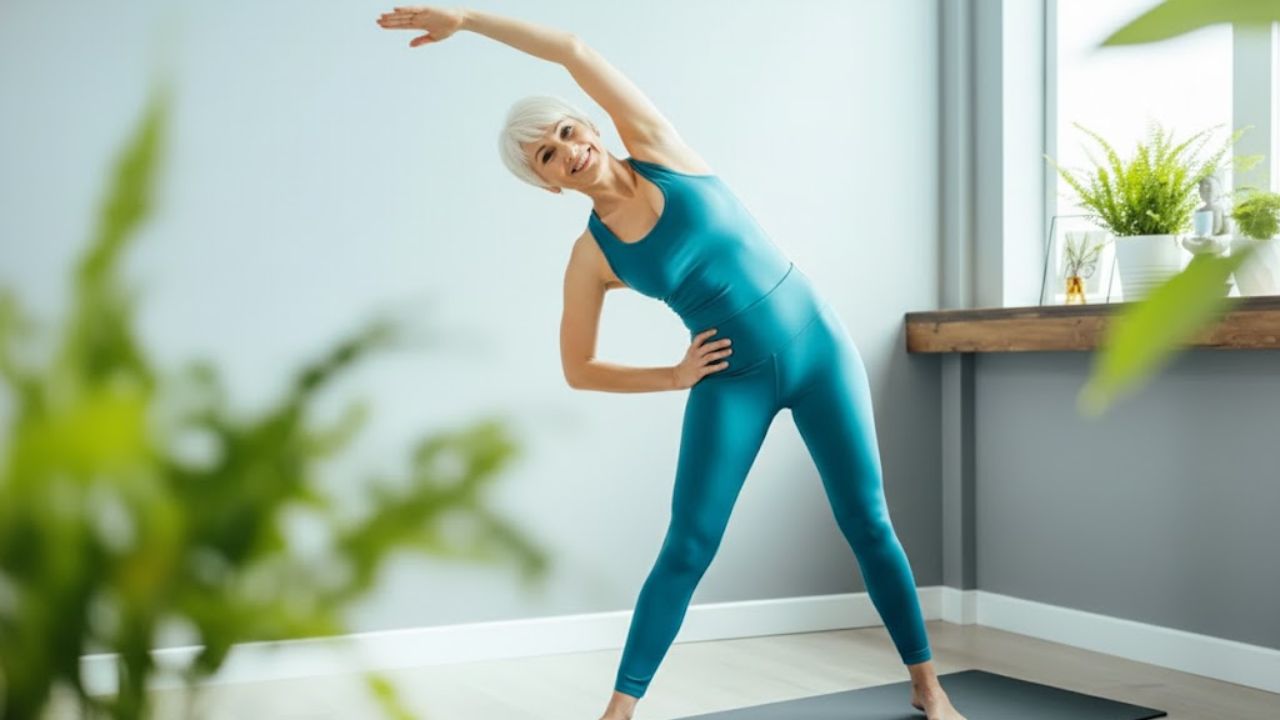
    • Standing Side Stretch – 1 minute per side

    Benefits: Improves circulation, reduces stiffness, and restores focus.

    4. Core-Focused Strength Yoga (20 Minutes)

    Best for: Building abdominal strength and improving posture.

    Routine:

    • Plank Pose (Phalakasana) – 2 minutes
    • Boat Pose (Navasana) – 2 minutes
    • Side Plank (Vasisthasana) – 1 minute per side
    • Downward-Facing Dog Split (Eka Pada Adho Mukha Svanasana) – 3 minutes
    • Cobra Pose (Bhujangasana) – 2 minutes

    Benefits: Strengthens the core muscles, improves balance, and tones the body.

    5. Yoga Flow for Improved Flexibility (25 Minutes)

    Best for: Lengthening muscles and increasing joint mobility.

    Routine:

    • Downward-Facing Dog (Adho Mukha Svanasana) – 3 minutes
    • Pigeon Pose (Eka Pada Rajakapotasana) – 3 minutes per side
    • Seated Forward Fold (Paschimottanasana) – 3 minutes
    • Reclining Hand-to-Big-Toe Pose (Supta Padangusthasana) – 2 minutes per side
    • Butterfly Pose (Baddha Konasana) – 3 minutes

    Benefits: Enhances flexibility in the hips, hamstrings, and spine while encouraging relaxation.

    6. Yoga for Stress and Anxiety Relief (15–20 Minutes)

    Best for: Calming the mind and easing emotional tension.

    Routine:

    • Deep Breathing (Pranayama) – 5 minutes
    • Child’s Pose (Balasana) – 3 minutes
    • Seated Twist (Ardha Matsyendrasana) – 2 minutes per side
    • Legs Up the Wall (Viparita Karani) – 5 minutes

    Benefits: Reduces anxiety, promotes relaxation, and improves mental clarity.

    7. Full-Body Power Yoga Flow (30 Minutes)

    Best for: Building strength, stamina, and overall endurance.

    Routine:

    • Sun Salutations (Surya Namaskar) – 5 rounds
    • Warrior I and II (Virabhadrasana I & II) – 2 minutes per side
    • Chaturanga Dandasana – 5 minutes
    • Chair Pose (Utkatasana) – 2 minutes
    • Plank Pose (Phalakasana) – 3 minutes

    Benefits: Improves endurance, increases strength, and boosts energy levels.

    8. Yoga to Improve Posture and Alignment (20 Minutes)

    Best for: Supporting spinal alignment and easing upper-body tension.

    Routine:

    • Mountain Pose (Tadasana) – 2 minutes
    • Chest Opener Pose – 3 minutes
    • Warrior I and II (Virabhadrasana I & II) – 3 minutes
    • Bridge Pose (Setu Bandhasana) – 2 minutes
    • Downward-Facing Dog (Adho Mukha Svanasana) – 3 minutes

    Benefits: Enhances posture, strengthens the back and core, and relieves neck tension.

    9. Relaxing Yoga Before Bed (20 Minutes)

    Best for: Preparing the body and mind for restful sleep.

    Routine:

    • Child’s Pose (Balasana) – 3 minutes
    • Reclining Bound Angle Pose (Supta Baddha Konasana) – 5 minutes
    • Legs Up the Wall (Viparita Karani) – 5 minutes
    • Shavasana (Corpse Pose) – 5 minutes

    Benefits: Encourages deep relaxation, reduces anxiety, and supports better sleep.

    10. Hip-Opening Yoga Flow (25 Minutes)

    Best for: Releasing tightness in the hips and lower back.

    Routine:

    • Downward-Facing Dog (Adho Mukha Svanasana) – 3 minutes
    • Pigeon Pose (Eka Pada Rajakapotasana) – 3 minutes per side
    • Lizard Pose (Utthan Pristhasana) – 2 minutes per side
    • Butterfly Pose (Baddha Konasana) – 3 minutes
    • Happy Baby Pose (Ananda Balasana) – 2 minutes

    Benefits: Opens the hips, improves flexibility, and relieves lower-back discomfort.

    Final Thoughts on Practicing Yoga at Home

    Practicing yoga at home allows you to strengthen your body, increase flexibility, and calm your mind on your own schedule. With these 10 versatile yoga routines, you can easily tailor your practice to match your goals, whether you need a short stress-relief session or a complete full-body workout. Requiring minimal space and just 10–30 minutes, these routines make yoga accessible no matter how busy life becomes. Stay consistent, move mindfully, and enjoy the lasting benefits of a home yoga practice.

  • 5-Minute Relaxation Yoga: A Quick Flow to Feel Calm Instantly

    5-Minute Relaxation Yoga: A Quick Flow to Feel Calm Instantly

    In a world that rarely slows down, finding time to truly relax can feel challenging. Ongoing responsibilities from work, family, and daily routines often leave the mind overwhelmed and the body tense. Thankfully, yoga provides a fast and practical way to ease stress, calm the mind, and restore balance. Even with just five minutes, a focused yoga flow can help you reset and feel noticeably calmer. Below is a simple 5-minute yoga sequence designed to reduce stress and support relaxation, even on the busiest days.

    1. Begin with Mindful Breathing (1 Minute)

    Before moving into physical postures, take a moment to connect with your breath. Conscious, deep breathing is one of the quickest ways to lower stress and bring your attention inward. Slowing the breath sends calming signals to the brain, helping the body shift into a relaxed state.

    • Sit comfortably on the floor or in a chair with your spine upright and shoulders relaxed.
    • Close your eyes and inhale deeply through your nose, allowing your lungs to expand fully.
    • Exhale slowly through your mouth, releasing built-up tension.
    • Continue this steady breathing for one minute, focusing on each inhale and exhale while letting distractions fade.

    This mindful breathing practice helps quiet the mind and gently prepares you for the movements ahead.

    2. Gentle Cat-Cow Flow (1 Minute)

    Move into Cat-Cow Pose to introduce gentle motion into the spine. This flowing sequence helps loosen the back, release tension in the neck and shoulders, and promote relaxation through synchronized breath and movement.

    • Come onto your hands and knees in a tabletop position, aligning wrists under shoulders and knees under hips.
    • Inhale as you lower your belly, lift your chest, and tilt your gaze upward into Cow Pose.
    • Exhale as you round your spine, tuck your chin, and draw your navel inward into Cat Pose.
    • Flow smoothly between these positions for one minute, moving with your breath.

    The rhythmic motion of Cat-Cow helps release stored tension in the spine while calming both body and mind.

    3. Relaxing Child’s Pose (1 Minute)

    Child’s Pose offers a deeply restful posture that gently stretches the hips, thighs, and back. It encourages stillness and relaxation by allowing the body to soften while the breath remains slow and steady.

    • From hands and knees, slowly lower your hips back toward your heels.
    • Extend your arms forward or rest them alongside your body, whichever feels more comfortable.
    • Rest your forehead on the mat and close your eyes.
    • Breathe deeply, allowing each breath to help your body sink further into relaxation.

    Holding this pose for one minute helps calm the nervous system and provides a peaceful pause within the flow.

    4. Soothing Seated Forward Fold (1 Minute)

    The Seated Forward Fold is effective for releasing tension in the back, hamstrings, and neck. It also supports mental relaxation by encouraging the body to turn inward and stretch areas that commonly hold stress.

    • Sit with your legs extended straight in front of you, feet gently flexed.
    • Inhale to lengthen your spine, then exhale as you fold forward from the hips.
    • Reach toward your feet or shins while keeping your spine long.
    • Remain in the stretch for one minute, breathing slowly and evenly.

    This posture helps ease physical tightness while quieting the mind, creating a sense of calm and release.

    5. Restorative Legs Up the Wall (1 Minute)

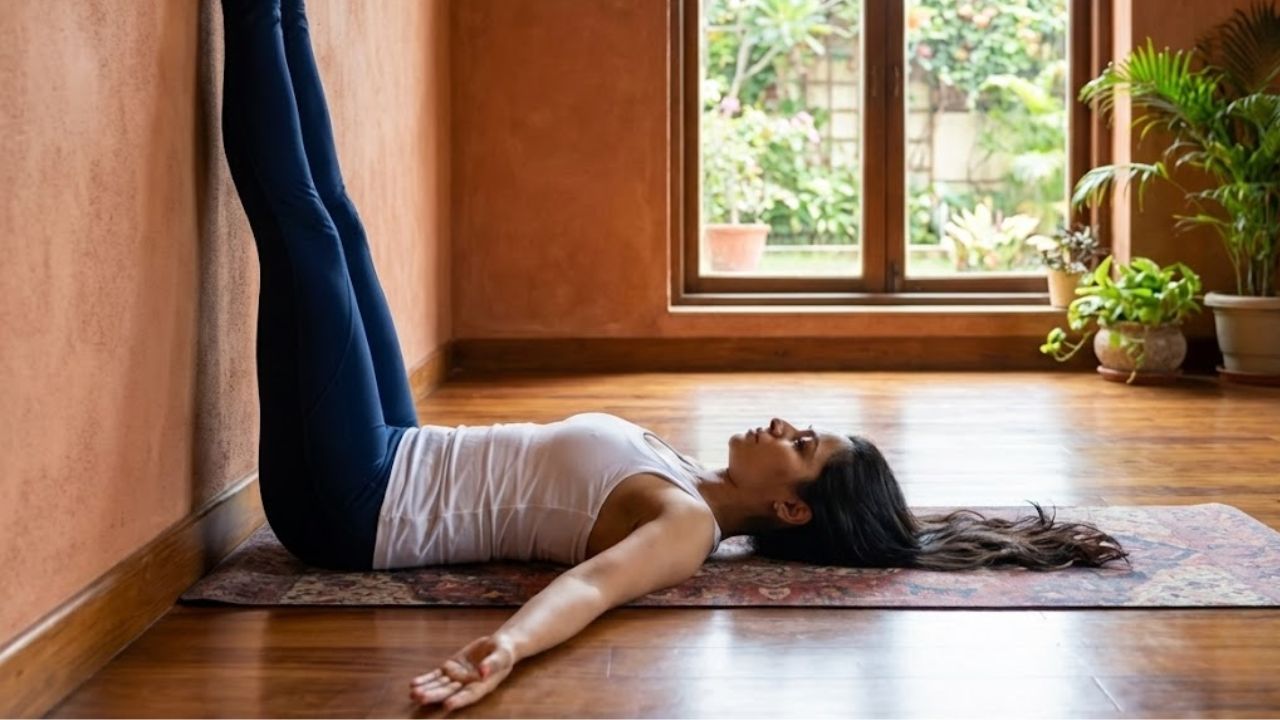
    To close your five-minute flow, settle into Legs Up the Wall. This restorative pose is deeply calming and helps relieve lingering tension in the legs and lower back, making it an ideal way to finish your practice.

    • Sit close to a wall and gently swing your legs upward, resting them vertically against the wall.
    • Support your hips with a cushion or folded blanket if needed.
    • Allow your arms to relax by your sides with palms facing upward.
    • Close your eyes and focus on slow, steady breathing.

    Remain here for one minute, letting your body fully relax as circulation improves and tension melts away.

    A Simple Five-Minute Reset for Mind and Body

    In just five minutes, this gentle yoga flow can help you feel calmer, more centered, and refreshed. Whether you are at home, at work, or short on time, these easy poses offer a quick mental and physical reset. The blend of mindful breathing, gentle movement, and restorative postures allows you to release stress and reconnect with your body.

    When your day feels overwhelming, taking a few minutes for yoga can make a noticeable difference. Practicing this short flow regularly can support relaxation, balance, and overall well-being, proving that even brief moments of self-care can have lasting effects.

  • 10-Second Challenge: Spot 3 Differences Between Two House Images

    10-Second Challenge: Spot 3 Differences Between Two House Images

    Optical illusions and spot-the-difference puzzles are popular brain teasers that people enjoy regardless of their age. These puzzles challenge your ability to observe carefully while testing your mental focus and attention to detail. This article presents a 10-second challenge that will test your visual skills. Your task is to find 3 differences between two pictures of a beautiful house within just 10 seconds. Time is limited and you need to work quickly.

    Understanding the Puzzle: Can You Spot the Differences?

    At first glance, both images appear almost identical, each featuring a delightful yellow house with a red roof and a lovely garden setting. Yet hidden within these seemingly matching scenes are subtle variations waiting to be uncovered. Your challenge is simple but demanding: find 3 differences between the two images in just 10 seconds.

    Although it may sound easy, the close resemblance of the pictures combined with the ticking clock can make this task surprisingly tricky. Spot-the-difference puzzles are designed to test your observation skills, sharpen your focus, and enhance how quickly your brain processes visual details. Are you ready to take on the challenge?

    Why Spot-the-Difference Puzzles Are Good for Your Brain

    Engaging with spot-the-difference challenges offers more than just entertainment. These puzzles actively support mental development in several key ways:

    – Sharper Attention to Detail: Searching for tiny visual changes trains your eyes and mind to notice details you might normally overlook.

    – Faster Visual Recognition: Working against the clock helps improve how quickly your brain interprets visual information.

    – Stronger Focus and Concentration: These puzzles require sustained attention, helping you learn to block out distractions.

    – Better Problem-Solving Skills: Identifying differences encourages pattern recognition and logical thinking.

    A Smart Way to Tackle the Puzzle

    With only 10 seconds on the clock, staying calm and organized is essential. Following a simple strategy can make all the difference:

    – Scan the Scene Quickly: Begin with a fast overview of both images to understand their layout.

    – Divide the Image into Sections: Focus separately on areas like the sky, the house exterior, and the garden.

    – Watch for Minor Changes: Differences are often very small, such as missing objects or altered positions.

    – Move Fast but Stay Systematic: Avoid fixating on one area for too long; keep your eyes moving.

    – Practice Regularly: Repeated practice builds speed and accuracy over time.

    The Three Hidden Differences Explained

    Now that you know how to approach the challenge, let’s break down the three differences between the left and right images. While both show the same charming house, these subtle changes set them apart:

    1. A Cloud Missing from the Sky

    In the left image, a small cloud appears near the roofline. This cloud is completely absent in the right image, making it the first difference.

    2. Fewer Lamps Between the Doors

    The left image displays two wall lamps positioned between the doors. In the right image, one of these lamps has been removed.

    3. An Extra Bush in the Garden

    Look closely at the bottom-right section of the garden. The right image includes an additional small bush that does not appear in the left image.

    Why These Puzzles Feel So Tricky

    Spot-the-difference puzzles challenge the brain because it naturally focuses on similarities rather than discrepancies. When images closely resemble each other, small changes are easier to miss. Adding time pressure increases the difficulty, forcing quicker decision-making and sharper focus.

    These puzzles take advantage of visual perception habits, encouraging you to retrain your brain to notice subtle details more efficiently.

    Final Thoughts: Keep Training Your Observation Skills

    Finding three differences in just 10 seconds is a fun yet demanding mental exercise that strengthens focus, visual awareness, and critical thinking. Whether you spotted all the differences or missed a few, each attempt helps sharpen your skills.

    With regular practice, these puzzles become easier and more enjoyable. Over time, you’ll notice improvements not only in puzzle-solving but also in everyday attention to detail.

  • 8 Yoga Poses: Improve Mental Clarity, Focus and Emotional Control

    8 Yoga Poses: Improve Mental Clarity, Focus and Emotional Control

    Mental clarity can be hard to maintain when you face constant notifications and long work days along with everyday tasks. Your mind gets overloaded & your focus starts to fade until even basic activities feel exhausting. Yoga offers a practical method to restore mental sharpness and reduce internal stress. The combination of deliberate movement and controlled breathing allows your brain to slow down & find balance again. These eight yoga poses work especially well for improving concentration and maintaining clear focus throughout your day.

    Mountain Pose

    Mountain Pose looks easy but it helps build mental focus in important ways. When you stand tall with your spine straight & your feet firmly on the ground you become more aware of the present moment. This position teaches your mind to stay steady and pay attention. Connecting your posture with your breathing helps Mountain Pose remove mental distractions and creates a feeling of calm alertness.

    Tree Pose

    Tree Pose helps improve concentration by challenging your balance & stability. When you stand on one leg you need to focus completely which naturally stops your mind from wandering. Looking at one fixed point helps build mental discipline. Practicing Tree Pose regularly teaches you patience and inner stability while helping you stay calm when things get difficult.

    Warrior Two

    Warrior Two develops strength in your body and mind at the same time. When you hold this position and keep your eyes focused on one point your mental endurance gets better. The wide way you stand combined with stretching your arms out to the sides helps you feel more confident and aware of your surroundings. This pose shows you how to stay stable and balanced while keeping your thoughts clear and your attention sharp.

    Eagle Pose

    Eagle Pose works well for building better focus & coordination. When you wrap your arms & legs together you need to pay close attention and maintain control. The squeezing action in this pose helps blood flow properly and can make your mind feel more alert. This pose encourages mindfulness because it requires you to balance carefully and stay aware of your body position throughout the movement.

    Seated Forward Bend

    Seated Forward Bend calms the nervous system and helps you focus inward. When you fold forward gently it reduces mental overstimulation & lets your mind settle down. This pose works well when your thoughts feel scattered or too much to handle. Breathing slowly and mindfully while holding this position supports emotional balance and mental clarity.

    Downward Facing Dog

    Downward Facing Dog sends more blood to your brain which helps you stay alert & focused. This pose releases tension that builds up in your shoulders and neck where stress often settles. When you hold this position & breathe steadily for a while it refreshes your body and clears your mind.

    Head to Knee Pose

    Head to Knee Pose blends gentle stretching with focused attention. You sit upright and fold forward toward one leg while maintaining mindful breathing and concentration. This position reduces mental fatigue & promotes clarity by soothing the nervous system. It works especially well when your mind feels overwhelmed.

    Corpse Pose

    Corpse Pose might seem like a passive position but it actually serves an important purpose in bringing back mental clarity. When you let your body completely relax it gives your brain the time it needs to process information and reset itself. This position helps reduce mental tiredness and makes it easier to focus once you finish. Just spending a few minutes in conscious relaxation can bring back your mental sharpness.

    How These Poses Improve Focus

    These yoga poses help develop mindfulness because they make you pay attention to your breathing body position, & staying balanced. This kind of focused attention teaches your brain to concentrate on the present moment rather than letting your thoughts wander everywhere. When you practice regularly over weeks and months, you will notice improvements in how you manage your emotions and adapt your thinking to different situations.

    The Role of Breathing in Mental Clarity

    The Power of Breathing in Yoga Taking slow and even breaths while holding yoga poses makes the practice more relaxing. When you breathe deeply your brain gets more oxygen which helps you think more clearly and stay focused for longer periods. Moving your body while controlling your breath gives your mind a natural way to refresh itself.

    Tips for Practicing Yoga for Better Focus

    Daily practice sessions that stay brief work better than longer irregular ones when you want to sharpen your thinking. Setting aside fifteen to twenty minutes every day produces real improvements that you can feel. Starting your practice in the morning creates a peaceful and attentive mindset that carries through the rest of your day.

    Why Yoga Helps Clear the Mind

    Yoga helps improve mental clarity by relaxing the nervous system and decreasing stress. When stress goes down focus gets better on its own. Practicing regularly builds a stronger connection between your mind and body which makes it simpler to recognize and handle mental exhaustion. When you do these eight yoga poses on a regular basis you can boost your concentration and cut down on mental tiredness while keeping your mind clear all day long. Yoga gives you an easy but effective way to teach your brain to stay relaxed and focused during daily activities.

  • Winter sales 2026: the Formill QK101 exercise bike, your cardio partner at -36% at Cdiscount!

    Winter sales 2026: the Formill QK101 exercise bike, your cardio partner at -36% at Cdiscount!

    Winter sales 2026 are in full swing, and fitness lovers across France are keeping a close eye on the best home workout deals. One offer drawing particular attention is the Formill QK101 exercise bike, now available at a generous discount on Cdiscount. As more people look for practical ways to stay active indoors during colder months, compact cardio equipment has become a smart investment. This promotion positions the QK101 as an affordable and convenient option for beginners and casual riders who want reliable daily exercise without the cost of a gym membership.

    Formill QK101 exercise bike deal during Winter Sales

    The Formill QK101 exercise bike stands out during the Winter Sales 2026 thanks to its balance of price and practicality. Designed for home use, it fits easily into small apartments while still offering smooth pedaling for regular sessions. The current offer highlights compact home design, making it ideal for urban living in France. Users also appreciate its quiet pedaling system, which allows workouts without disturbing others. With adjustable resistance levels, the bike adapts to light warm-ups or more intense routines. For those starting a fitness habit, its simple daily workouts feel approachable rather than intimidating.

    Why the Formill QK101 is a smart cardio partner

    Choosing the Formill QK101 as a cardio companion makes sense for anyone seeking consistency over complexity. The bike focuses on essentials, helping users maintain motivation without unnecessary features. Its steady calorie burn supports weight management goals, while the low impact training design is gentle on joints. Many buyers value the beginner friendly setup, as assembly and controls remain straightforward. For busy schedules, the QK101 encourages short effective sessions that can be squeezed in before work or after dinner, reinforcing long-term fitness habits.

    Cdiscount Winter Sales price cut on Formill QK101

    Cdiscount’s Winter Sales 2026 promotion brings the Formill QK101 exercise bike to a more accessible price point. The advertised reduction of 36% highlights limited time savings that appeal to budget-conscious shoppers. Compared to gym fees, this offer represents strong value pricing for home fitness. Buyers in France can also benefit from fast local delivery, making it easy to start training quickly. For those tracking expenses, the deal offers affordable fitness access without compromising on basic performance.

    Is this Winter Sales deal worth considering?

    Looking at the overall package, the Formill QK101 deal during Winter Sales 2026 appears well-suited for everyday users rather than elite athletes. It fills the gap between basic movement and structured exercise, offering reliable home cardio at a reduced cost. The bike’s simplicity supports long term use, especially for people restarting activity after a break. With seasonal discount advantage, buyers can maximize value while minimizing risk. For many households, it represents a practical fitness choice aligned with realistic goals.

    Feature Details
    Product Name Formill QK101 Exercise Bike
    Discount -36% during Winter Sales 2026
    Retailer Cdiscount (France)
    Best For Home cardio and beginners
    Use Type Indoor, low-impact workouts

    Frequently Asked Questions (FAQs)

    1. Is the Formill QK101 suitable for beginners?

    Yes, it is designed for simple, beginner-friendly home cardio workouts.

    2. How much discount is available during Winter Sales 2026?

    The exercise bike is offered at approximately 36% off on Cdiscount.

    3. Can the bike be used in small apartments?

    Yes, its compact design makes it suitable for limited indoor spaces.

    4. Is this offer available only in France?

    The promotion is targeted primarily at customers purchasing through Cdiscount France.

  • 11 Balance Exercises for Seniors to Strengthen Stability and Reduce Fall Risk

    11 Balance Exercises for Seniors to Strengthen Stability and Reduce Fall Risk

    Balance Exercises for Older Adults Try these 11 balance exercises designed specifically for older adults to help prevent falls. Falls are one of the main causes of injuries in people over 65 years old. These movements improve your balance and build muscle strength. Both are essential for staying independent and safe as you age.

    1. Controlled Weight Transfers for Better Body Awareness

    Balance Exercises for Older Adults Try these 11 balance exercises designed for older adults to help prevent falls. Falls are one of the main causes of injuries in people over 65 years old. These movements improve your balance and build muscle strength. Both are essential for staying independent and safe as you age. Why Balance Matters Good balance helps you move confidently through daily activities. It reduces your risk of falling and lets you maintain your active lifestyle. Strong muscles support your joints & make it easier to recover if you start to lose your balance.

    2. Standing Heel Lifts to Build Ankle Strength and Balance

    Heel Raises Heel raises help improve your balance and make your calf muscles stronger. These muscles are important for walking and going up stairs.

    How to do heel raises: Stand with your feet about hip-width apart. You can hold onto something steady like a chair or counter for support. You can also put your hands on your hips if you feel balanced enough. Lift your heels off the ground so you are standing on the balls of your feet. Stay in this position for one or two seconds. Then slowly lower your heels back down to the floor.

    Making it more challenging: If you want to make this exercise harder you can try doing it on one foot at a time. This will require more balance & strength from each leg individually.

    3. Gentle Forward and Backward Steps for Stability Control

    Forward and Backward Stepping Exercise After you have mastered weight-shifting exercises, you can move on to forward and backward stepping. You have two options for completing this exercise. You can finish all repetitions on one leg before moving to the other leg or you can switch between legs after each repetition to increase the difficulty level. Here is how to perform the exercise: Begin by standing with your feet positioned at hip-width distance. Let your arms hang naturally at your sides. Move your right foot forward & then return it to the starting position. Move your right foot backward and then return it to the starting position. Perform the same movements with your left foot.

    4. Feet-Together Standing to Improve Core Balance

    Standing Balance Exercise When you stand with your feet together you create a smaller base that makes balancing harder. This exercise gets more challenging as you improve. Start by standing with your arms stretched out to both sides. Move your feet together until they touch. Stay in this position as long as possible without moving your feet. After you can hold this for one minute try it again with your arms hanging at your sides. Make it harder by crossing your arms over your chest. When that becomes easy go back to holding your arms out to the sides but this time close your eyes.

    5. Walking with Head Turns to Enhance Coordination

    Your balance depends on multiple body parts working together and your vision plays an important role. You can improve your balance by changing where you look while you move. This exercise helps train your body to stay stable even when your head turns in different directions. Start by walking forward at a slow and controlled pace. While you continue moving ahead turn your head to the right & look back over your right shoulder. Bring your head back to face forward again. Next turn your head to the left and look over your left shoulder. Keep switching between looking right and looking left as you walk. Repeat this pattern for as long as you want to practice. This simple activity strengthens the connection between your eyes and your balance system. Regular practice can help you feel more steady on your feet during everyday activities.

    6. Side-to-Side Stepping for Lateral Balance Support

    Side-stepping can be done by sliding your hands along a counter for extra support until you feel comfortable doing it without holding on. Here is how to do it: Stand with your feet positioned at hip width. Keep your toes pointing forward and take a small step to the right using your right foot. Move your left foot next to your right foot. Continue this pattern for the distance you want to cover and then side-step in the other direction to return to where you started.

    7. Forward Step-Ups to Strengthen Legs and Confidence

    Forward Step-Ups for Better Balance Forward step-ups help you maintain better balance when doing everyday activities like walking up stairs. This exercise is practical because it mimics movements you already do throughout your day. You can do this exercise at the bottom of any staircase in your home. Hold onto the handrail whenever you need extra support. If regular stairs feel too high (most are about 7 inches tall) you can use a lower platform or sturdy box instead.

    How to Do Step-Ups Start by standing in front of the step. Put your right foot on the step first. Bring your left foot up to meet it on the step. Step back down with your left foot to the floor. Then bring your right foot down to the floor. Switch which foot leads each time you repeat the exercise. This simple movement pattern strengthens your legs and trains your body to handle stairs more confidently. Practice regularly to see the best results in your daily activities.

    8. Side Step-Ups for Hip Stability and Fall Prevention

    You should only try side step-ups after you can safely perform them moving forward. Find a step or stable raised platform that is wide enough to hold both feet. Follow these steps to do side step-ups: Position yourself so the right side of your body faces the step. Place your right foot on the step. Lift your left foot up to join it on the step. Lower your left foot back down to the floor. Bring your right foot down to the floor. Complete 10 repetitions on this side. Then turn around so your left side faces the step and do 10 more repetitions using the opposite leg to lead.

    9. Heel-to-Toe Standing to Sharpen Balance Focus

    Tandem standing is a more challenging exercise you can try after you feel comfortable standing with your feet placed together. Here is how to do tandem standing:5 Stand up & extend your arms straight out to each side at shoulder level. Place your right foot directly in front of your left foot so the heel of your right foot touches the toes of your left foot. Stay in this position for as long as possible without moving your feet. Switch sides and repeat with your left foot positioned in front of your right foot. You can make this exercise harder by letting your arms hang down at your sides or by crossing your arms over your chest. To add an even greater challenge you can attempt tandem standing while keeping your eyes closed.

    10. One-Leg Standing to Improve Overall Stability

    When you begin balance exercises try standing on one leg next to a solid surface that you can grab if needed. Here is how to do a single-leg stance:5 Stand near a solid surface. Lift your right foot by bending your knee and bringing your heel toward your backside while keeping your body upright. Put your weight on your left foot and stay balanced for as long as you can without moving. Switch legs & repeat. You can make this exercise more challenging by closing your eyes or standing on an unstable surface like a cushion or pillow.

    11. Cross-Step Walking to Boost Coordination and Control

    Braiding Exercise Instructions The braiding exercise is also known as the grapevine or karaoke exercise. This is an advanced balance activity. Here is how to do it: Start by standing with your feet positioned at hip-width apart. Let your arms hang naturally at your sides. If you need extra balance support you can extend your arms straight out to each side so they are parallel to the floor. Take your right leg and cross it over in front of your left leg. Then bring your left foot out from behind your right foot and step it to the left side. Next cross your right leg behind your left leg. After that step your left leg out to the side again. Keep repeating this movement pattern as you travel sideways for whatever distance you want to cover. When you reach your endpoint reverse all the movements and work your way back to your starting position.

  • Optical Illusion Test: Find the Hidden 08 and 66 Numbers Among 88s in 10 Seconds

    Optical Illusion Test: Find the Hidden 08 and 66 Numbers Among 88s in 10 Seconds

    Optical illusion challenges have become a popular way for people in India to test focus, observation skills, and mental sharpness in a fun way. This particular visual puzzle asks readers to spot the hidden numbers 08 and 66 cleverly disguised among rows of similar-looking 88s, all within just 10 seconds. At first glance, everything appears identical, but subtle differences make this test both tricky and exciting. Such challenges are often shared on social media because they engage the brain, encourage quick thinking, and offer a refreshing break from daily routines.

    Optical Illusion Test That Challenges Your Focus

    This optical illusion test is designed to push your visual attention to the limit by hiding two unique numbers among repetitive patterns. When your eyes scan rows of 88s, the brain tends to assume uniformity, which makes spotting 08 and 66 harder. The challenge works because of visual pattern bias, where the mind fills in expected shapes automatically. As seconds tick away, time pressure effect adds urgency and excitement. Many participants report a mental strain moment before clarity sets in, making the experience memorable. Completing the task successfully often leads to a confidence boost and motivates people to try similar puzzles.

    Why Finding 08 and 66 Among 88s Is Tricky

    The difficulty of this illusion lies in how similar the digits appear when placed closely together. The number 88 dominates the visual field, creating repetitive number illusion that confuses the brain’s recognition system. Your eyes may skim too quickly, missing the slight curve changes that define 08 and 66. This puzzle highlights selective attention limits, showing how easily details can be overlooked. Many solvers benefit from slow scanning method, focusing on one row at a time. Overcoming this challenge sharpens detail recognition skill, which is useful beyond puzzles.

    How Optical Illusion Number Puzzles Train the Brain

    Number-based optical illusions are more than entertainment; they actively train cognitive abilities. When searching for hidden digits, the brain practices visual discrimination training and strengthens neural connections. These puzzles encourage focus under pressure, especially with a strict time limit. Regular exposure can improve processing speed awareness and enhance patience. For many people in India, such challenges are a quick way to enjoy mental refresh break during busy schedules. Over time, consistent practice may lead to better concentration and sharper observational habits.

    Summary and Visual Analysis of the Challenge

    In summary, this optical illusion test cleverly combines simplicity with mental challenge. By hiding 08 and 66 among identical 88s, it forces the brain to slow down and truly observe. The experience reveals human perception limits and explains why we often miss small details. It also demonstrates pattern recognition habits that influence everyday decision-making. Whether you solve it quickly or struggle at first, the puzzle offers insightful brain exercise and reminds us that careful observation can make all the difference.

    Aspect Details
    Hidden Numbers 08 and 66
    Distractor Number 88
    Time Limit 10 Seconds
    Skill Tested Visual Attention
    Difficulty Level Moderate

    Frequently Asked Questions (FAQs)

    1. What is the goal of this optical illusion test?

    The goal is to find the hidden numbers 08 and 66 among multiple 88s within 10 seconds.

    2. Why do most people find this puzzle difficult?

    The repeating 88 pattern tricks the brain into overlooking small visual differences.

    3. Does solving such puzzles improve brain skills?

    Yes, regular practice can enhance focus, observation, and visual processing.

    4. Can anyone attempt this optical illusion challenge?

    Yes, it is suitable for all ages and requires no special skills.

  • Quick Yoga for Busy Schedules: 6 Poses You Can Do Anytime

    Quick Yoga for Busy Schedules: 6 Poses You Can Do Anytime

    Quick Yoga Poses for Busy Days: Simple Ways to Relax and Reset

    In today’s fast-moving lifestyle, making time for self-care can feel challenging. Between work responsibilities, family demands, and personal tasks, finding even a few moments to unwind often seems out of reach. Yoga provides a practical and time-efficient solution for busy individuals who want to relax and recharge. With just a handful of easy poses, you can release built-up tension, improve flexibility, and restore energy in minutes. Below are six quick yoga poses designed to help you refresh your body and mind without disrupting your schedule.

    1. Mountain Pose (Tadasana): Building Stability and Inner Calm

    Mountain Pose may look simple, but it is a powerful posture for grounding and awareness. It supports better posture, balance, and mindfulness, making it ideal for starting the day or resetting between tasks. Standing tall and engaging your core activates multiple muscle groups and creates a sense of steadiness.

    To practice Mountain Pose:

    • Stand with your feet hip-width apart and arms resting naturally by your sides.
    • Distribute your weight evenly, gently lift your chest, and lengthen your spine.
    • Engage your thighs and lightly draw in your abdominal muscles.
    • Soften your shoulders, gaze forward, and focus on steady breathing.
    • Hold for 30 seconds, breathing deeply and feeling grounded.

    This pose can be practiced anywhere and offers a quick posture reset with minimal effort.

    2. Cat-Cow Pose (Marjaryasana-Bitilasana): Ease Back and Neck Tension

    Long hours at a desk or on your phone can leave your spine feeling tight. Cat-Cow Pose is a gentle, flowing movement that helps release tension in the back, neck, and shoulders. It also improves spinal mobility and encourages mindful breathing.

    To practice Cat-Cow Pose:

    • Begin on your hands and knees in a tabletop position.
    • Inhale as you arch your back, drop your belly, and lift your head and tailbone.
    • Exhale as you round your spine, tuck your chin, and draw your navel inward.
    • Continue flowing between the poses for 1–2 minutes, matching movement with breath.

    This gentle sequence is especially helpful for those with a sedentary routine.

    3. Seated Forward Fold (Paschimottanasana): Stretch the Lower Body Quickly

    Seated Forward Fold provides a deep stretch for the hamstrings, calves, and lower back. It is particularly beneficial after long periods of sitting and helps calm the mind while easing physical tension.

    To practice Seated Forward Fold:

    • Sit with your legs extended straight in front of you, feet flexed.
    • Inhale to lengthen your spine.
    • Exhale as you hinge forward, reaching toward your feet or shins.
    • Maintain a long spine without rounding your back.
    • Hold for 30 seconds to 1 minute, breathing slowly.

    This pose is simple yet effective, making it easy to include during short breaks.

    4. Child’s Pose (Balasana): Gentle Rest for Deep Relaxation

    Child’s Pose is a soothing posture that stretches the hips, thighs, and back while encouraging relaxation. It offers a quiet moment to pause and reconnect, helping calm the nervous system and reduce stress.

    To practice Child’s Pose:

    • Kneel with your big toes together and knees slightly apart.
    • Sit back onto your heels and extend your arms forward.
    • Lower your forehead to the floor.
    • Breathe deeply and allow your body to soften.
    • Remain in the pose for 1–2 minutes.

    This posture is ideal for recharging both body and mind during a busy day.

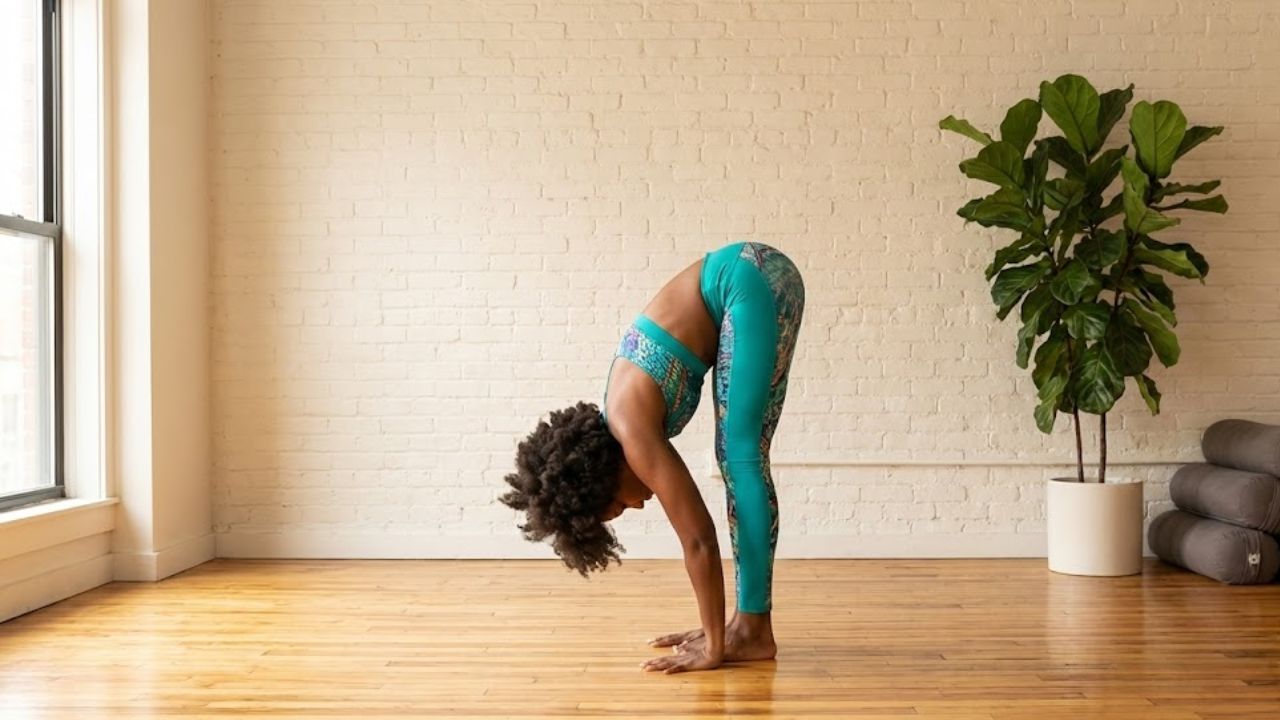
    5. Standing Forward Fold (Uttanasana): Refresh and Re-energize

    Standing Forward Fold helps stretch the hamstrings and back while calming the mind. It is especially useful for relieving stiffness and restoring alertness after sitting for extended periods.

    To practice Standing Forward Fold:

    • Stand with feet hip-width apart and knees slightly bent.
    • Inhale to lengthen your spine.
    • Exhale as you hinge forward from the hips, letting your head drop.
    • Hold your ankles or place your hands on the floor if comfortable.
    • Stay for 30 seconds to 1 minute, relaxing your neck and shoulders.

    This pose offers an instant energy lift and helps release built-up tension.

    6. Legs Up the Wall (Viparita Karani): Restore and Relax in Minutes

    Legs Up the Wall is a deeply restorative pose that supports circulation, relaxation, and lower-body relief. It is an excellent way to unwind and reset when time is limited.

    To practice Legs Up the Wall:

    • Sit sideways next to a wall and gently swing your legs upward.
    • Lower your back to the floor with legs resting vertically against the wall.
    • Place your arms comfortably by your sides, palms facing up.
    • Close your eyes and focus on slow, steady breathing.
    • Hold for 1–2 minutes.

    This pose is ideal for calming the mind and restoring energy quickly.

    Quick Yoga Relief for Tight Schedules

    These six time-efficient yoga poses are well-suited for busy individuals seeking fast relief from stress and stiffness. Whether your goal is to improve posture, ease tension, or feel refreshed during a demanding day, these poses deliver meaningful benefits in just a few minutes. By incorporating them into your daily routine, you can enjoy the physical and mental advantages of yoga without dedicating large blocks of time. Even brief moments of mindful movement can help you stay balanced, energized, and relaxed throughout the day.

  • 12 Yoga Poses That Release Body Stiffness and Improve Flexibility Without Intense Effort

    12 Yoga Poses That Release Body Stiffness and Improve Flexibility Without Intense Effort

    Body stiffness is a common issue for people in India, especially with long work hours, frequent screen use, and limited daily movement. Tight muscles, aching joints, and reduced flexibility often develop from prolonged sitting, stress, or aging. Over time, even simple movements can feel uncomfortable. Yoga offers a gentle and effective way to counter this stiffness without placing strain on the body. By combining slow stretches with controlled breathing, yoga helps muscles relax naturally. Practicing the right poses regularly can restore mobility, improve posture, and make everyday movement feel smoother and easier.

    Yoga poses to reduce body stiffness through gentle movement

    When stiffness builds up across the body, starting with simple standing and spinal poses can make a noticeable difference. Movements like Mountain Pose and Cat–Cow encourage gentle spinal mobility while helping the body reconnect with proper alignment. These poses improve posture awareness and activate muscles that often go unused during the day. Coordinating motion with mindful breathing allows tight areas to soften without forcing a stretch. Over time, these basic poses support healthier joints and smoother transitions in daily movement, making them ideal for beginners or anyone easing back into physical activity.

    Yoga poses for body stiffness in hips, back, and legs

    Many people feel stiffness most intensely in the hips, lower back, and legs, especially after long periods of sitting. Poses such as Low Lunge, Standing Forward Bend, and Butterfly Pose focus on hip joint release while lengthening tight muscles. Seated postures and twists improve seated flexibility and help relieve compression around the spine. As tension eases, practitioners often notice lower back ease and better comfort during daily tasks. These poses also promote circulation support, helping muscles feel warmer, looser, and more responsive with regular practice.

    Yoga poses to release body stiffness and promote relaxation

    Restorative poses play a key role in reducing stiffness that comes from stress and overexertion. Positions like Child’s Pose, Supine Figure Four, and Legs Up the Wall encourage restorative relaxation while gently stretching tired areas. These poses calm the mind and create a sense of nervous system calm, which allows muscles to let go of hidden tension. They also support muscle recovery after long days or intense workouts. Because they rely on passive stretching, these poses are accessible to all fitness levels and ideal for winding down.

    How regular yoga practice improves flexibility over time

    Practicing yoga consistently helps the body adapt gradually, leading to long term flexibility without strain or discomfort. As muscles lengthen and joints move more freely, the risk of aches and strains decreases, supporting injury prevention. The key is consistent practice rather than intensity, allowing the body to respond at its own pace. Over weeks and months, posture improves, movement feels lighter, and stiffness becomes less frequent. Beyond physical benefits, yoga also enhances overall wellbeing, making it a sustainable and calming solution for everyday stiffness.

    Yoga Pose Main Benefit Target Area Recommended Duration
    Cat–Cow Pose Spinal flexibility Spine and shoulders 1–2 minutes
    Low Lunge Hip opening Hips and thighs 30–60 seconds each side
    Butterfly Pose Inner thigh stretch Hips and groin 1–3 minutes
    Child’s Pose Deep relaxation Back and shoulders 2–5 minutes
    Legs Up the Wall Improved circulation Legs and lower back 5–10 minutes

    Frequently Asked Questions (FAQs)

    1. How often should I practice yoga to reduce stiffness?

    Practicing gentle yoga at least three to five times a week can noticeably reduce stiffness.

    2. Can beginners do these yoga poses safely?

    Yes, these poses are beginner-friendly and can be modified for comfort.

    3. Is yoga better than stretching for body stiffness?

    Yoga combines stretching with breathing, making it more effective for overall stiffness relief.

    4. When is the best time to do yoga for stiffness?

    Morning or evening sessions work well, depending on when your body feels tight.

  • Visual Challenge in 8 Seconds Spot 3 Differences in the Duck Wearing Jacket Image

    Visual Challenge in 8 Seconds Spot 3 Differences in the Duck Wearing Jacket Image

    If you love optical illusions and the thrill of a brain teaser, you’re in for a treat. Today’s Spot the Difference puzzle will challenge your observation skills and quick thinking. The puzzle features a charming duck in sunglasses and a stylish jacket strolling beside a peaceful pond. But there’s a twist: two nearly identical images hide three subtle differences. Can you spot them in just 8 seconds? Only the sharpest eyes will succeed!

    8-Second Visual Challenge

    Why Spot-the-Difference Puzzles Captivate So Instantly

    Spot the Difference games have been popular for decades because they are easy to understand, highly engaging, and effective at sharpening cognitive skills. By focusing on tiny details, these puzzles enhance visual perception and boost mental speed. While they seem simple at first, the difficulty increases when differences are cleverly hidden, forcing your brain to work harder.

    These puzzles appeal to a wide audience. Children enjoy them as a playful activity, while adults use them as a quick brain exercise. Spot the Difference challenges also improve memory, focus, and attention to detail, making them a favorite among puzzle enthusiasts.

    The 8-Second Duck Puzzle That Tests Your Sharpness

    Today’s puzzle shows two images of a cute yellow duck wearing sunglasses and a jacket by a serene pond. At first glance, the images appear identical, but small differences are hidden throughout.

    Your task is to find three differences in just 8 seconds. Time flies, so you need to examine every detail carefully to catch all the changes. These differences are subtle, so close attention is key.

    Smart Techniques to Spot Differences Quickly

    Here are some ways to sharpen your observation and spot changes more effectively:

    • Start With a Fast Overview: Quickly glance at both images to grasp the overall layout before focusing on details.
    • Focus on Individual Elements: Examine specific areas like the duck’s jacket, the pond, or nearby objects to spot small variations.
    • Watch for Color, Size, and Shape Changes: Differences often involve tiny shifts in color, shape, or proportion.
    • Use Balance and Symmetry: Designers often place differences in mirrored or balanced positions; comparing sides helps spot inconsistencies.
    • Train With Short Time Limits: Practicing with tight timers, such as 7 seconds, improves your ability to detect subtle differences under pressure.

    Revealing the Three Hidden Differences in the Jacketed Duck

    Here’s a detailed breakdown of the three hidden differences to look for:

    1. The Disappearing Rock Near the Grass

    In the lower part of the image near the grass, a small rock is visible in the left image but missing in the right image. This change blends naturally into the background, so look carefully near the duck’s feet to spot it.

    2. The Missing Hoodie Drawstring

    The duck’s hoodie in the left image has a visible drawstring, but in the right image, the drawstring is gone. Since the hoodie looks almost identical otherwise, focus closely on the neckline to catch this subtle change.

    3. The Vanishing Frog by the Pond

    Near the pond, a small frog sits at the water’s edge in the left image but is absent in the right image. This detail is easy to miss but is crucial for spotting all three differences. Examine the pond area carefully to notice it.

    How Spot-the-Difference Puzzles Enhance Your Observation

    These puzzles do more than entertain—they train your brain. Searching for small differences teaches you to notice details often overlooked in daily life, improving your concentration. Regular practice strengthens focus, which can help in work, study, and everyday tasks.

    Playing these games also speeds up your brain’s visual processing and enhances short-term memory, since you need to remember details from one image while comparing them to another. This skill of analyzing and recalling information quickly is useful in many situations.

    Pro Tips to Master Spot-the-Difference Challenges

    • Practice Regularly: Frequent practice trains your eyes and brain to detect even the smallest differences.
    • Use a Timer: Recreate the 8-second challenge to improve speed while maintaining focus.
    • Pay Attention to Fine Details: Look closely at patterns, textures, outlines, and tiny objects that might be overlooked initially.
    • Move on to Advanced Puzzles: Once comfortable with simpler images, tackle more complex scenes to further enhance visual sharpness and observation skills.