Category: News

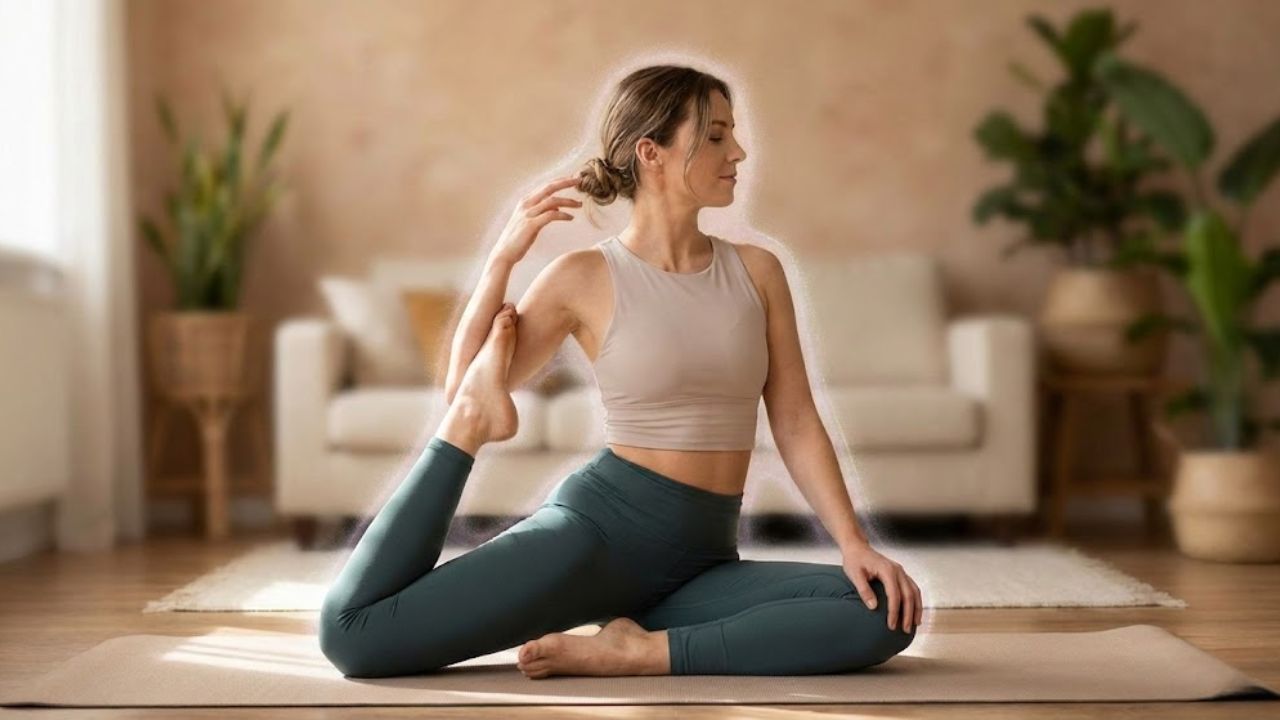
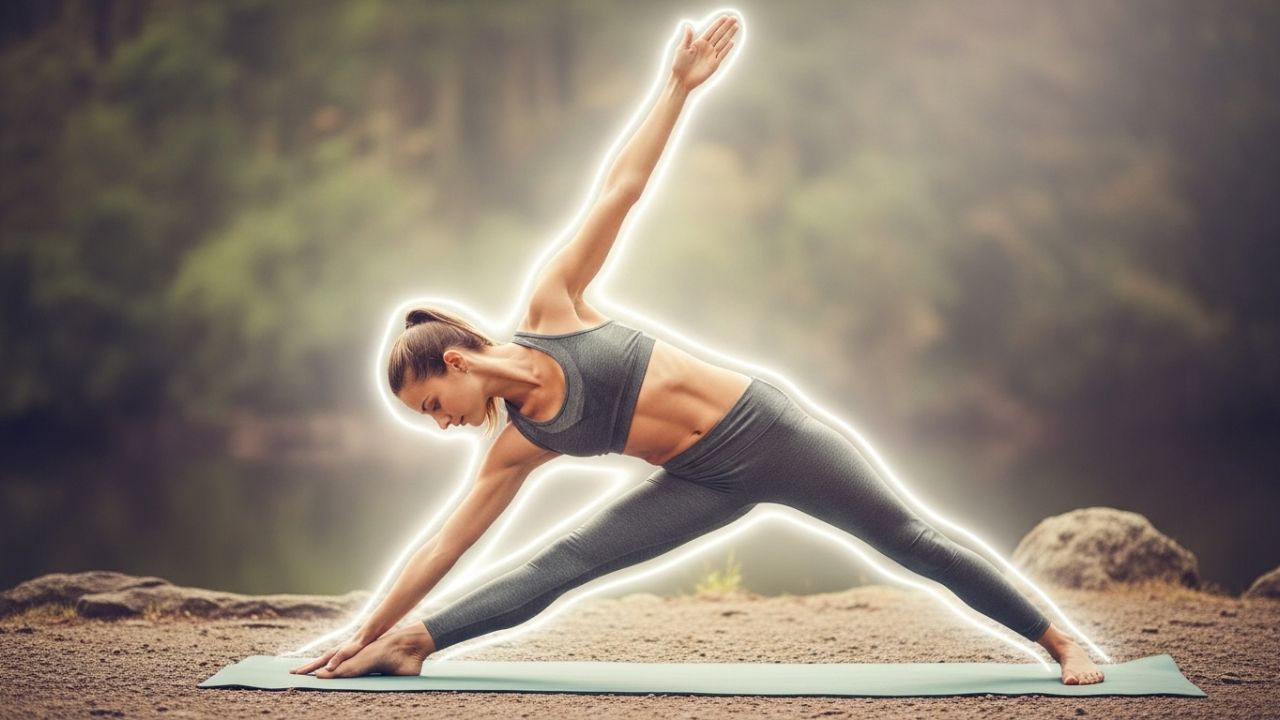
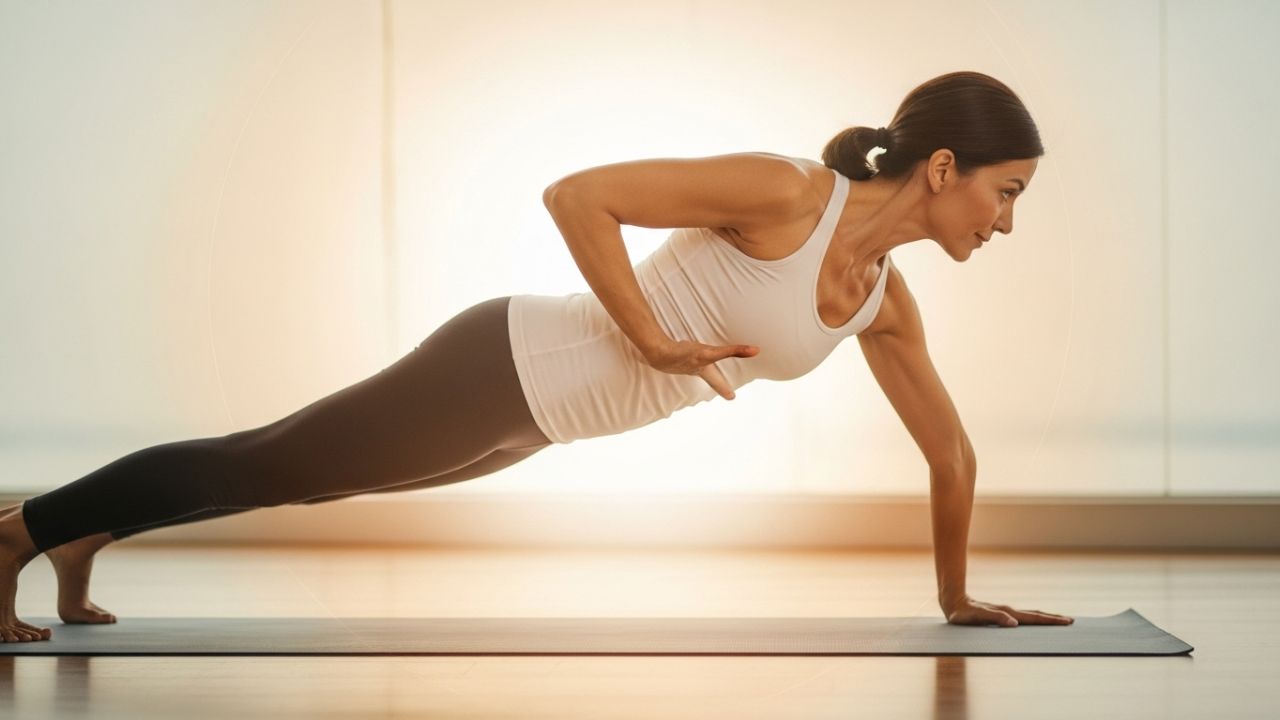
  • At-Home Yoga Flow: Simple Poses to Improve Body Awareness

    At-Home Yoga Flow: Simple Poses to Improve Body Awareness

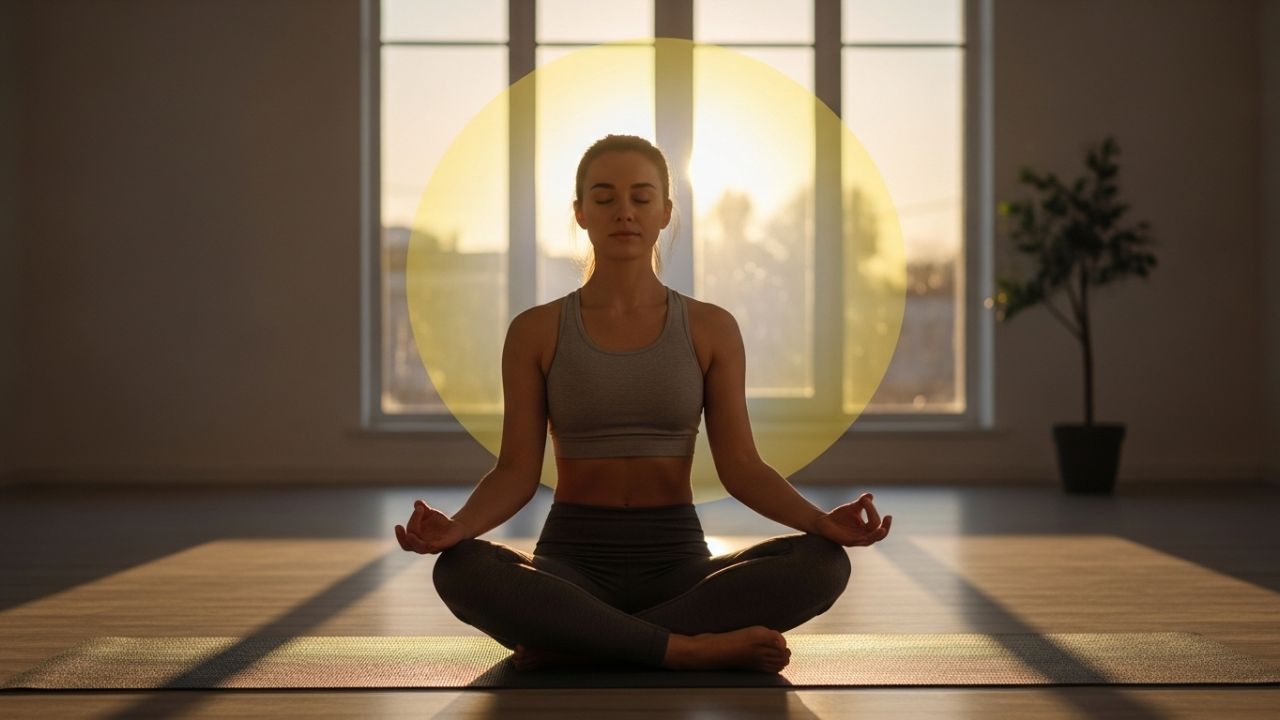
    Practicing yoga at home is one of the simplest ways to reconnect with your body. When life feels rushed, body awareness often takes a back seat. You move through the day on autopilot, ignoring stiffness, shallow breathing, or subtle signs of fatigue. An easy yoga flow can gently bring your attention back to how your body feels, moves, and responds. You do not need advanced poses or long sessions. Just mindful movement and steady breathing are enough to build strong body awareness over time.

    What Is Body Awareness in Yoga?

    Body awareness means noticing sensations in your muscles, joints, breath, and posture without judgment. In yoga, this awareness helps you move with intention instead of habit. You begin to feel where your body is tight, where it is strong, and how each movement affects your balance and energy. This awareness improves posture, reduces injury risk, and creates a deeper mind-body connection even in simple flows done at home.

    Why Practice an Easy Yoga Flow at Home?

    An easy yoga flow is perfect for home practice because it removes pressure. You move at your own pace without comparing yourself to others. Home practice also allows you to pause, repeat movements, or rest whenever needed. Gentle flows activate muscles while keeping the nervous system calm, making them ideal for beginners, busy people, or anyone recovering from stress or long sitting hours.

    Mountain Pose to Breath Awareness

    Stand tall with feet hip-width apart. Relax your shoulders and close your eyes for a few breaths. Notice the weight distribution in your feet. Feel the length of your spine and the rhythm of your breath. This grounding moment sets the tone for mindful movement.

    Neck and Shoulder Rolls

    Gently roll your shoulders backward and forward. Slowly tilt your head side to side. These movements release tension and help you notice stiffness in the upper body, an area where stress often hides.

    Cat Cow Flow

    Come to hands and knees. Inhale as you lift your chest and tailbone. Exhale as you round your spine and tuck your chin. Move slowly and feel how your spine responds. Cat cow improves spinal awareness and connects movement with breath.

    Downward Facing Dog with Soft Knees

    Lift your hips into downward dog while keeping knees slightly bent. Focus on the stretch along your back and legs. Notice how pressing through your palms changes the sensation. Pedal your feet gently to explore tight areas.

    Low Lunge with Gentle Twist

    Step one foot forward into a low lunge. Keep your hands on your thigh or floor. Twist slightly toward the front knee. This pose increases awareness in the hips and lower back. Switch sides and observe any differences.

    Standing Forward Fold

    Slowly fold forward from the hips. Let your head hang heavy. Bend your knees if needed. Feel the release in your spine and hamstrings. Notice how gravity supports the stretch.

    Tree Pose for Balance Awareness

    Stand on one leg and place the opposite foot on your calf or inner thigh. Bring hands together at the chest. Balance poses sharpen body awareness by highlighting subtle shifts and muscle engagement. Switch sides mindfully.

    Seated Body Scan

    Sit comfortably and close your eyes. Mentally scan from your feet to your head. Notice sensations without trying to change them. This final step helps integrate awareness built during the flow.

    Benefits of Practicing This Flow Regularly

    Practicing this easy yoga flow builds a habit of listening to your body. Over time, you may notice improved posture, better balance, and fewer aches. Body awareness also helps you recognize stress signals earlier, allowing you to rest before burnout sets in. Many people find that mindful movement improves sleep quality and emotional balance as well.

  • Spot the Difference Test: Locate 3 Differences in the Boy With Candy Basket Image in 8 Seconds

    Spot the Difference Test: Locate 3 Differences in the Boy With Candy Basket Image in 8 Seconds

    If you enjoy brain games optical illusions and spot-the-difference puzzles, then this text is for you. In the chaos of daily life and our constant screen time, it is easy for our focus to wander. These quick mental exercises work as more than just time killers because they also improve our concentration and perception skills. What seems like a simple 8-second task becomes much harder when you look at it closely.

    When Two Images Trick Your Eyes Completely

    This challenge shows you two pictures of cheerful children holding a basket filled with candies. When you first glance at both pictures they appear completely identical. The smiles look the same and the expressions match. Even the backgrounds seem impossible to tell apart. However this is where the real mental test begins. Tiny differences are hidden within these images and your task is to spot them. Our brains typically see what they expect to see which causes us to miss the small details that set the pictures apart.

    Inside the 8-Second Boy With Candy Basket Challenge

    The puzzle will not cause any stress but it will not be simple either. You need to find three differences between the two pictures in only 8 seconds. The time limit is very short so you must stay focused and alert. The differences might appear on someone’s face or in how many candies are in the basket or somewhere in the background. When the timer begins you should examine the entire image from top to bottom and left to right while staying calm.

    Sneaky Spots Where Differences Love to Hide

    In spot the difference puzzles the changes are hidden very carefully. Sometimes one eye of a child might be slightly bigger or smaller. Other times an object appears or disappears from the scene. It might even be something as small as an extra branch on a tree far in the background. This makes the game more than just looking at pictures. It helps you practice focusing and noticing small details. When you stay calm and look at the image carefully you will spot the differences much faster.

    How Spot-the-Difference Games Sharpen Your Brain

    Spot-the-difference puzzles offer more than just entertainment as they provide an effective way to exercise your brain. Solving these puzzles helps develop your ability to notice small details while improving visual perception and concentration. When you work to identify differences quickly within a set time frame you train your brain to think faster and make decisions more efficiently. These puzzles appeal to people of all ages which explains why they appear frequently in books and mobile apps and on websites dedicated to brain training games.

    Revealed: The Three Hidden Changes Explained

    If you weren’t able to catch all the differences within the given time, or simply want to double-check your observations, the solution is explained below.

    The first noticeable difference appears in the baby’s eyes. In the second image, the baby’s right eye is slightly smaller compared to the first image, making this change quite easy to overlook.

    The second difference is found in the sweets basket. In the second photo, an extra piece of candy appears inside the basket, which is completely missing in the first image.

    The third and final difference is hidden within the background scenery. A new tree branch can be seen growing in the second image, while this branch does not exist in the first image. All three differences are very subtle, which makes spotting them at first glance quite challenging.

    Train Your Mind With More Visual Challenges

    If you spotted all three differences in 8 seconds then congratulations because your observation skills are really sharp. If you didn’t manage it then don’t worry about it. The more you work on these puzzles the sharper your mind gets. Doing visual puzzles and brain teasers on a regular basis helps improve mental agility and makes your concentration better. Next time you have the opportunity make sure to challenge your brain with another puzzle.

  • Observation Puzzle Challenge: Find 45 Hidden Among 54s Without Losing Focus

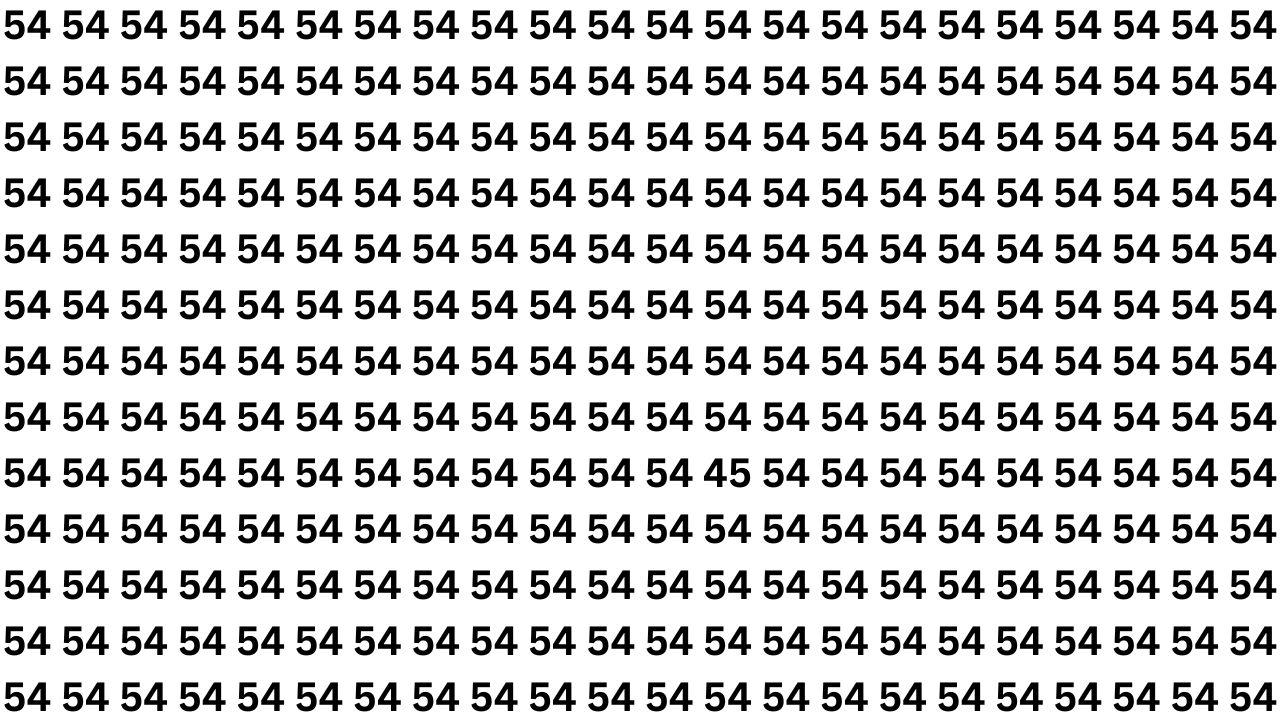
    Observation Puzzle Challenge: Find 45 Hidden Among 54s Without Losing Focus

    If you like fast brain games that check how well you notice small details this tricky puzzle is made for you. When you first look at the image it seems easy. Many rows of the number 54 are arranged in neat lines. But somewhere in the middle of all those numbers is the number 45 hiding. The challenge sounds simple until you start the timer & your eyes start fooling you. This kind of puzzle tests your focus & how quickly your brain works. You are not simply searching for a different number. You are teaching your mind to catch tiny differences when time is running out. Set a timer for 7 seconds and try to find the 45 among all the 54s without getting distracted.

    Why This Observation Puzzle Feels Harder Than It Looks

    The human brain is naturally drawn to patterns. When the same number, like 54, appears again and again, your mind quickly assumes everything on the screen is identical. That assumption is exactly what makes this puzzle challenging. The number 45 contains the same digits but arranged differently, allowing it to blend in almost perfectly.

    To save mental energy, the brain often scans quickly instead of carefully. While this shortcut is useful in everyday situations, it works against you in observation challenges like this one. Success requires slowing down your eye movements while keeping your attention sharp and focused.

    Tips to Spot 45 Faster Among 54s

    A good strategy is to scan the image methodically, moving row by row rather than jumping around randomly. Pay close attention to the first digit of each number. Since most entries begin with 5, any number starting with 4 deserves extra scrutiny. This small shift in focus can make a big difference.

    Another helpful technique is to relax your eyes slightly. Softening your focus can sometimes allow the odd number to stand out on its own. If you do not find it immediately, stay calm. Rushing or panicking only makes it harder to spot what you are looking for.

    What This Puzzle Reveals About Your Brain

    Observation puzzles are not just entertaining distractions. They reveal how your brain handles visual information, especially under time pressure. Spotting the number 45 quickly can indicate strong attention control and pattern recognition skills. Taking longer does not mean weak focus; it often means your brain prioritizes careful accuracy over speed.

    Practicing these puzzles regularly can help sharpen concentration, improve memory, and strengthen problem-solving abilities. They offer an easy and enjoyable way to keep your mind active without needing any special tools.

    Solution Hint for the Curious

    If you are still searching, here is a subtle clue. Shift your attention slightly to the left of the center and examine the middle rows closely. The number 45 is positioned in an area your eyes are naturally inclined to skip.

    Once you finally notice it, you may be surprised it was there all along. That sudden realization is what makes observation puzzles both frustrating and deeply satisfying.

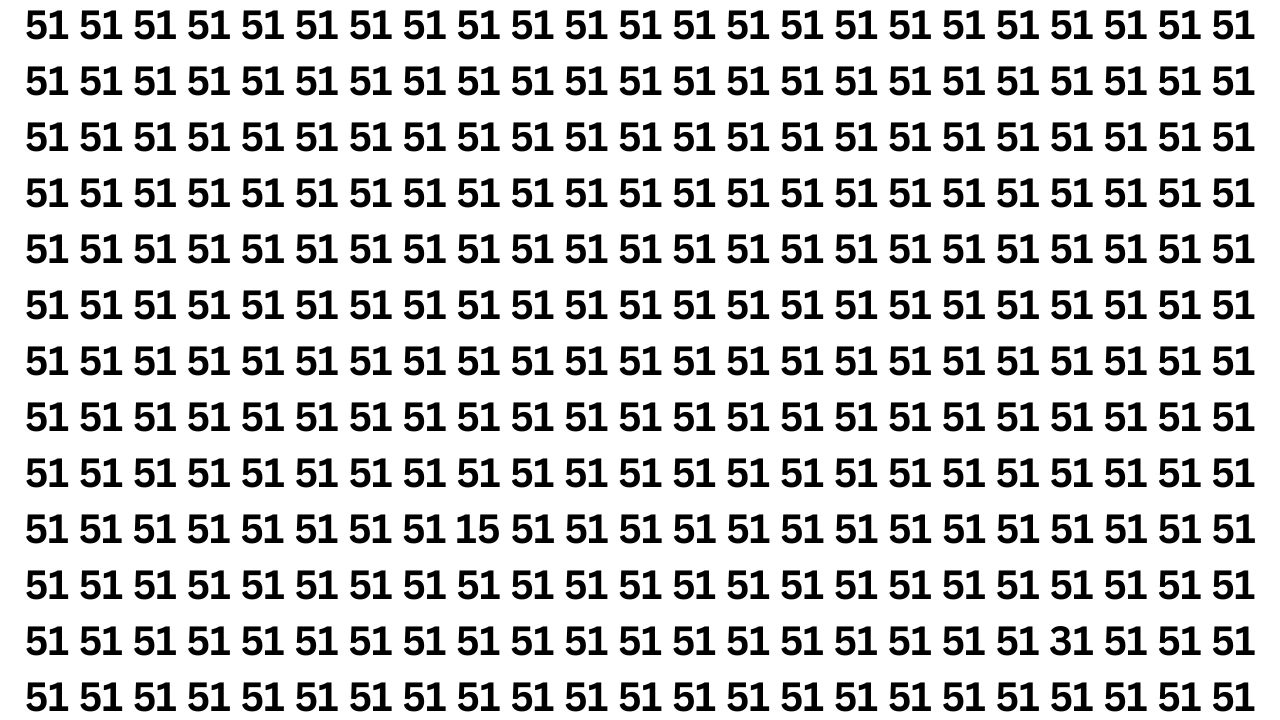
  • Optical Illusion Challenge: Can You Spot 15 and 31 Among 51s Before Time Runs Out?

    Optical Illusion Challenge: Can You Spot 15 and 31 Among 51s Before Time Runs Out?

    Optical illusion challenges do more than entertain. They force your brain to work fast & reveal how well you actually observe details. This challenge seems easy when you first look at it but includes a smart trick that fools even careful observers. Hidden in rows of matching 51s are the numbers 15 and 31. You need to find both before your time ends. Start a timer for five seconds and breathe slowly. When you begin searching your brain will assume every number looks the same. That automatic thinking makes this illusion difficult. The second you lose concentration the hidden numbers disappear from view.

    Why This Optical Illusion Is So Challenging

    The challenge is hard because the numbers look so similar. The digits in 15, 31 and 51 are the same but just placed in different positions. Your brain naturally reads patterns as complete units rather than checking each digit one by one. When you see the same number repeated many times your mind switches to autopilot. The illusion also works because of the time limit. Five seconds creates a sense of urgency but does not give you enough time to look carefully. When you feel rushed your brain chooses speed instead of accuracy and you end up missing small details.

    How Your Brain Processes Number Illusions

    When you see a grid filled with numbers your brain automatically groups similar shapes together through pattern recognition. This mental shortcut works well in everyday situations but creates problems with optical illusions. Because the grid contains mostly 51s your brain treats the whole image as one uniform pattern. Breaking through this illusion requires slowing down your eye movements while staying mentally focused. Rather than reading every number completely try scanning for elements that seem unusual. The different numbers often become more visible when you concentrate on just the first or last digit instead of trying to process the complete number.

    Smart Tips to Spot 15 and 31 Faster

    Begin by checking each row in order rather than looking at random spots. A structured method lowers the risk of missing important elements. Another useful technique is to narrow your eyes slightly or step back from the screen. This makes it easier to spot shapes that look different. You might also consider changing your approach. Rather than hunting specifically for 15 and 31, search for numbers that appear different from 51. The distinction might be small, but it becomes obvious once you see it. To overcome the visual trick you should move your eyes slowly while staying focused. Rather than reading every number completely, watch for anything that seems unusual. The different numbers often become more visible when you look at just the first or last digit instead of the entire number.

    Did You Find Them in Time

    If you found both 15 and 31 in five seconds that shows you have good visual awareness. If you did not find them there is no need to worry. These puzzles are made to trick the brain and they do not measure how smart you are. If you practice more your observation skills will get better over time. A lot of people find one number fast but they cannot find the second one. This happens because the brain stops looking carefully after it finds the first target. It thinks the job is done. Part of the challenge is to stay focused until you locate both numbers. To see past the trick you should move your eyes slowly but keep your mind sharp. Do not try to read every number completely. Instead look for anything that seems a bit different from the rest. The odd numbers often become easier to spot when you look at just the first digit or the last digit instead of trying to see the whole number at once.

    Why Optical Illusions Are So Popular Online

    Optical illusion challenges appear frequently on social media because they work well. They are fast & engaging & people like to share them. The best part is the instant result. You either spot the hidden detail or you miss it. These puzzles also give your brain a light workout. Research shows that regular mental exercises can boost attention and thinking skills. They are not a substitute for serious learning but they help keep your mind sharp. To solve the illusion you need to move your eyes slowly and stay focused. Instead of reading every number completely just look for anything that seems different. The odd numbers often stand out more when you check the first or last digit instead of viewing the whole number.

    Try the Challenge Again

    If you did not see the numbers on your first try look at them again. This time take your time and do not hurry. Pay attention to how your brain works differently when you know something is there to find. The illusion usually becomes weaker the second time you look at it. This happens because knowing what to expect changes how you see things. You can ask your friends or family to try it too and see what they find. Some people will notice 31 right away while others will see 15 first. These different results show that everyone processes visual information in their own way. To see past the illusion you should move your eyes slowly and stay focused. Do not try to read every number completely. Instead look for anything that seems a little different. The unusual numbers often become easier to spot when you look at just the first digit or the last digit instead of trying to see the whole number at once.

  • Short on Time?: This 10-Minute Yoga Routine Still Delivers Real Results

    Short on Time?: This 10-Minute Yoga Routine Still Delivers Real Results

    Some days feel completely full from morning to night. Meetings stretch longer than planned. Daily tasks keep adding up. By the time exercise crosses your mind, the day is nearly finished. I once believed that if I could not fit in a full workout, it was pointless to try at all. That belief changed when I experimented with a short yoga routine. Ten minutes felt insignificant at first. But once it became part of my routine, I noticed clear improvements in both my body and my mindset.

    This quick yoga routine is created for busy days. It is gentle, effective, and simple to follow. You do not need a yoga studio or special tools. All you need is a small space and a few peaceful minutes.

    Why a 10-Minute Yoga Routine Works

    Yoga is powerful because it links movement with breathing. Even brief sessions help improve blood flow and ease muscle tension. Slow movements combined with deep breathing signal the nervous system to relax. This naturally reduces stress and sharpens focus.

    A 10-minute routine is also easier to maintain. When a practice feels achievable, you are more likely to stay consistent. Over time, these short sessions improve flexibility, strength, and mental clarity.

    Starting with Centering Breath

    Begin by sitting or standing in a comfortable position. Close your eyes if that feels comfortable. Inhale slowly through your nose and exhale gently through your mouth. Allow your shoulders to relax with each breath.

    This quiet moment helps your mind detach from daily stress. It prepares your body for gentle movement. Even a single minute of focused breathing can shift your mood.

    Releasing the Neck and Shoulders

    Slowly roll your shoulders backward and downward. Gently move your neck from side to side while keeping your breath smooth and calm.

    These movements help release tension that builds up throughout the day. They support better posture and reduce stiffness, especially if you spend long hours sitting or working on screens.

    Cat Cow for Spinal Movement

    Come down onto your hands and knees. As you inhale, arch your back and lift your chest. As you exhale, round your spine and lower your head.

    Cat Cow improves spinal flexibility and encourages deep breathing. This gentle flow helps awaken the body without putting strain on the muscles.

    Downward Facing Dog for a Full Stretch

    From hands and knees, lift your hips into Downward Facing Dog. Press your hands firmly into the ground and lengthen your spine. Slightly bend your knees if that feels better.

    This pose stretches the back, shoulders, and legs. It also boosts circulation. Holding it for a few steady breaths can feel both energizing and grounding.

    Standing Forward Fold to Ease Tension

    Step your feet forward and slowly fold over your legs. Let your head and arms hang comfortably toward the floor.

    This posture helps calm the nervous system and release spinal tension. It offers a gentle way to slow down and reconnect with your breathing.

    Low Lunge for Hip Opening

    Step one foot back into a low lunge position. Keep your front knee bent and allow the back leg to relax. After a few breaths, switch sides.

    This stretch opens the hips and lengthens the legs. It helps undo the effects of long periods of sitting and improves overall mobility.

    Chair Pose for Strength and Alertness

    Stand upright and bend your knees as if lowering into a chair. Keep your chest lifted and breathe evenly.

    Chair Pose engages the legs and core muscles. It increases circulation and builds strength. Even a brief hold can leave you feeling more energized.

    Seated Twist to Refresh the Body

    Sit comfortably and gently twist your upper body to one side. Hold for a few breaths before switching to the other side.

    Twisting poses release tension in the back and support digestion. They also help improve focus and comfort, making them ideal before ending the practice.

    Ending with Gentle Stretch and Breath

    Raise your arms overhead for a light stretch, then slowly lower them. Sit quietly and take a few deep, steady breaths.

    This final moment allows your body to absorb the benefits of the routine. It helps you return to your day feeling calmer, lighter, and more balanced.

  • 12 Yoga Benefits: Improve Focus, Flexibility and Overall Mind-Body Balance

    12 Yoga Benefits: Improve Focus, Flexibility and Overall Mind-Body Balance

    Yoga goes beyond simple stretching exercises and holding different positions. It represents a full practice that connects your mind & body while helping you develop better focus, flexibility, balance and mental sharpness. Many people today face problems with staying concentrated dealing with tight muscles and feeling mentally exhausted because of their busy schedules. Regular yoga practice offers a natural solution to all these challenges. Here are 12 strong benefits that yoga provides for improving your focus & flexibility when you make it part of your routine.

    Improves Mental Concentration

    Yoga helps train the mind to remain present and attentive. Through mindful breathing and slow, intentional movements, the brain learns to focus on one activity at a time. With regular practice, mental distractions gradually reduce, improving attention span and clarity. This makes it easier to stay focused during work, studies, or daily responsibilities.

    Enhances Body Flexibility Gradually

    One of yoga’s most well-known benefits is improved flexibility. Consistent practice gently stretches muscles, ligaments, and joints. Unlike intense workouts that may strain the body, yoga increases flexibility at a steady and safe pace, reducing stiffness while supporting long-term mobility.

    Strengthens Mind–Body Connection

    Yoga encourages awareness of bodily sensations during every movement. This mindful connection between the mind and body improves coordination, balance, and control. As this awareness deepens, focus naturally improves because attention stays anchored to physical movement and breath.

    Reduces Stress and Mental Tension

    Stress often disrupts concentration. Yoga activates the parasympathetic nervous system, which helps calm the mind and body. Slow movements combined with deep breathing lower stress hormones, allowing the brain to relax, reset, and regain focus more easily.

    Improves Posture and Spinal Flexibility

    Many yoga poses support spinal health. Improved spinal flexibility enhances posture and relieves stiffness caused by prolonged sitting. A healthy spine also promotes better breathing and circulation, which play an important role in maintaining mental clarity and comfort.

    Increases Oxygen Flow to the Brain

    Breathing techniques used in yoga enhance lung capacity and improve oxygen delivery to the brain. Increased oxygen flow supports better alertness, memory, and concentration. This is why yoga sessions often leave practitioners feeling refreshed and mentally sharp.

    Enhances Balance and Stability

    Balancing poses demand complete attention and body awareness. These poses train the mind to stay focused while maintaining physical stability. Over time, improved balance leads to better movement control and a lower risk of falls or injuries.

    Supports Joint Mobility and Muscle Health

    Yoga improves flexibility not only in muscles but also in joints. Gentle, repetitive movements help lubricate joints and preserve their range of motion. This keeps the body agile and reduces stiffness, especially as part of a long-term wellness routine.

    Improves Emotional Control and Patience

    Yoga emphasizes slow progress and mindful practice, which cultivates patience. This mental discipline helps regulate emotions and build resilience. Improved emotional balance supports better focus, particularly in challenging or high-pressure situations.

    Boosts Energy Without Overstimulation

    Unlike high-intensity workouts, yoga increases energy in a calm and balanced way. It releases physical tension and mental fatigue without causing restlessness. This steady energy helps maintain focus and productivity throughout the day.

    Improves Sleep Quality

    Quality sleep plays a vital role in focus and flexibility. Yoga relaxes the nervous system, making it easier to fall asleep and stay asleep. Better rest supports muscle recovery and improves brain function, leading to sharper focus during waking hours.

    Encourages Consistent Healthy Habits

    Regular yoga practice promotes discipline and routine. Over time, it encourages healthier lifestyle habits such as mindful eating, improved posture, and effective stress management. These habits support long-term mental clarity and physical flexibility.

    Why Yoga Is Ideal for Modern Lifestyles

    Modern life often involves long hours of sitting, screen exposure, and constant mental stimulation. Yoga helps counter these effects by calming the mind, improving flexibility, and strengthening focus. It requires minimal equipment and suits all fitness levels, making it accessible for everyone.

    How Often Should You Practice Yoga for Best Results

    Practicing yoga three to five times per week can lead to noticeable improvements in focus and flexibility. Even short sessions of 20 to 30 minutes are effective when done consistently. Regularity matters more than intensity for lasting benefits.

    Final Thoughts

    Yoga provides a natural and balanced approach to improving mental focus and physical flexibility. Its benefits extend beyond physical movement, influencing productivity, emotional stability, and overall well-being. By making yoga part of your routine, you create space for clarity, movement, and calm in everyday life.

  • 7 Yoga Poses to Build a Stronger Core After Age 40

    7 Yoga Poses to Build a Stronger Core After Age 40

    Building Core Strength After 40 with Yoga Getting older makes core strength more essential for staying healthy and keeping your balance. A solid core helps you avoid back problems & stand up straighter while moving more easily through daily activities. If you are over 40 & want to strengthen your midsection without harsh workouts, yoga offers an excellent solution that also increases flexibility and brings mental clarity. Yoga works well for core development because the poses target your stomach muscles along with the deeper muscles that hold your spine and hips in place. These seven yoga poses will help you develop a stronger core after reaching 40

    Plank Pose (Phalakasana)

    Plank Pose is one of the most effective yoga poses for building core strength. It activates the entire abdominal region while also engaging the arms, shoulders, and back, making it a powerful full-body exercise. Regular practice improves endurance, posture, and overall stability.

    How to do it:

    – Begin in a push-up position with your hands placed directly under your shoulders and feet set hip-width apart.

    – Keep your body aligned in a straight line from head to heels, engaging your core and keeping your back flat.

    – Hold the pose for 30 seconds to one minute, ensuring your hips do not sag and your shoulders stay stacked over your wrists.

    Boat Pose (Navasana)

    Boat Pose strongly targets both the upper and lower abdominal muscles, helping to tone the core and improve balance. It also strengthens the hip flexors and supports spinal stability, making it a challenging yet rewarding posture.

    How to do it:

    – Sit on the mat with your knees bent and feet flat on the floor.

    – Lean back slightly and lift your legs, keeping them straight or gently bent as needed.

    – Extend your arms forward so your body forms a “V” shape and hold for 30 seconds to one minute while breathing steadily.

    Bridge Pose (Setu Bandhasana)

    Bridge Pose works the core, glutes, and lower back while increasing spinal flexibility and hip strength. It is especially suitable for beginners and individuals over 40, as it can be easily modified for comfort.

    How to do it:

    – Lie on your back with knees bent and feet placed flat on the floor, hip-width apart.

    – Press your feet firmly into the mat and lift your hips upward while engaging your core and squeezing your glutes.

    – Hold for 15 to 30 seconds, then slowly lower your hips down. Repeat for several rounds.

    Side Plank (Vasisthasana)

    Side Plank is excellent for strengthening the oblique muscles along the sides of the abdomen. It also improves balance and builds strength in the shoulders, arms, and wrists.

    How to do it:

    – Start in a standard plank position and shift your weight onto one hand.

    – Rotate your body to the side, stacking your feet and lifting your top arm toward the ceiling.

    – Hold for 20 to 30 seconds on each side, keeping your core tight and body aligned.

    Cat-Cow Pose (Marjaryasana–Bitilasana)

    Cat-Cow Pose is a gentle flowing sequence that stretches and strengthens the spine while activating the core. It helps improve flexibility and relieve tension in the back and neck, making it ideal for people over 40.

    How to do it:

    – Come onto all fours with wrists under shoulders and knees under hips.

    – Inhale as you arch your back, lifting your chest and tailbone (Cow Pose).

    – Exhale as you round your spine, tucking your chin and drawing your belly inward (Cat Pose).

    – Continue for one to two minutes, moving with your breath.

    Locust Pose (Salabhasana)

    Locust Pose strengthens the lower back, glutes, and core while improving posture. It also helps activate spinal muscles, which may reduce mild back discomfort when practiced correctly.

    How to do it:

    – Lie on your stomach with arms alongside your body and palms facing down.

    – Inhale and lift your chest, arms, and legs off the floor while engaging your core and glutes.

    – Hold for 15 to 30 seconds, then gently lower back down to relax.

    Downward-Facing Dog (Adho Mukha Svanasana)

    Although known as a full-body stretch, Downward-Facing Dog also activates the core muscles and improves overall strength and flexibility. It is an essential pose for maintaining mobility, especially after 40.

    How to do it:

    – Start on all fours with wrists aligned under shoulders and knees under hips.

    – Lift your hips upward, straightening your legs and moving your heels toward the floor.

    – Engage your core and hold the pose for 30 seconds to one minute, keeping your back long and hands firmly grounded.

  • Optical Illusion Challenge: Spot 1436 Hidden Among 1456 in 8 Seconds

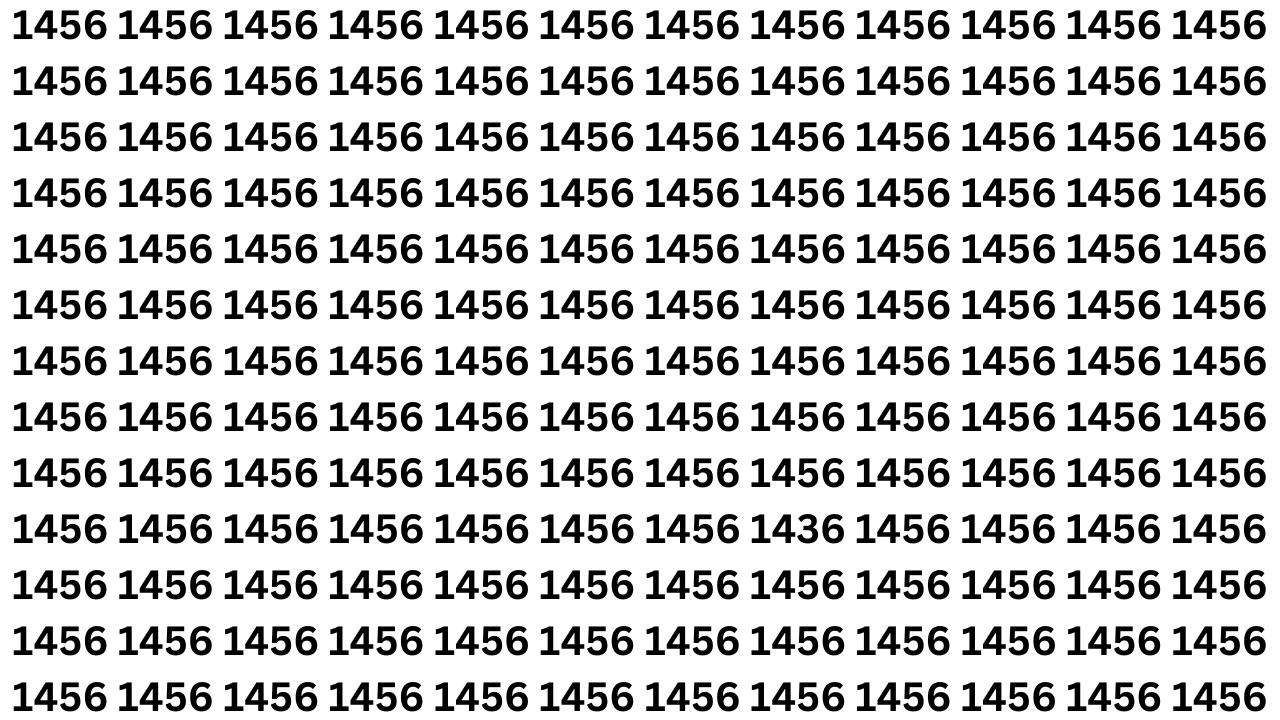
    Optical Illusion Challenge: Spot 1436 Hidden Among 1456 in 8 Seconds

    In our busy modern world these challenges give your brain a quick & useful workout. Technology and screens fill up most of our time but optical illusion games provide a nice change that takes very little effort or equipment. They wake up your mind & work as both fun entertainment and brain training at the same time.

    How Can You Spot the Hidden 1436?

    When you need to find the number 1436 hidden among many 1456s there are several methods that can help you. Here is how you can get better at this task:

    – Look at Each Digit Separately Start by checking each digit in the number sequence. The numbers look almost the same but one number is different by just one digit which is 1436. Try to find that specific combination of 1 4, 3 and 6 among all the 1456s.

    – Try Using Side Vision Rather than staring straight at one spot try looking slightly to the side. This technique lets your brain notice patterns and differences more quickly and makes it easier to find the hidden number. Notice Tiny Differences Even though the numbers look very similar the hidden number usually has something a bit different about it.

    – Look at how the digits are shaped and where they sit. Watch carefully for small changes in how the 1, 4, 3 and 6 appear compared to the other numbers.

    – Move Fast But Stay Calm You only have 8 seconds to locate the hidden number but try not to feel stressed. Stay relaxed & concentrate on the task while following your gut feeling. The more you practice these kinds of puzzles the quicker and more precise you will get at solving them.

    How Can You Improve Your Optical Illusion Skills?

    How to Get Better at Spotting Optical Illusions To improve your ability to spot optical illusions you need to practice regularly. Begin with easier puzzles and slowly work your way up to harder ones. Here are some helpful tips.

    Start Simple

    Choose basic optical illusions when you first begin. These might include simple pattern recognition tasks or straightforward hidden image puzzles. Getting comfortable with easier challenges builds your confidence & trains your brain to look for visual tricks.

    Practice Every Day

    Set aside a few minutes each day to work on optical illusions. Regular practice helps your brain develop pattern recognition skills. Even just ten minutes daily can make a noticeable difference over time.

    Study Different Types

    Optical illusions come in many forms. Some use color and contrast while others rely on perspective or motion. Expose yourself to various types so you learn to recognize different techniques that create these visual tricks.

    Take Your Time

     Avoid rushing through optical illusions. Give yourself time to examine the entire image carefully. Look at different sections and try viewing from various angles or distances. Sometimes stepping back from the image reveals hidden elements.

    Learn the Science

    Understanding how optical illusions work makes them easier to solve. Read about the psychology & neuroscience behind visual perception. Knowing why your brain gets tricked helps you anticipate where illusions might hide.

    Compare Your Answers

    After attempting an illusion check your solution against the correct answer. Understanding where you went wrong teaches you what to look for next time. With patience and regular practice your skills will steadily improve.

  • Optical Illusion Challenge: Find the Inverted 24 and 42 Within 7 Seconds

    Optical Illusion Challenge: Find the Inverted 24 and 42 Within 7 Seconds

    Optical illusions are interesting tricks that make our brains see things differently than they actually are. This optical illusion challenge asks you to find the reversed numbers 24 and 42 that are hiding among many regular 24s in only seven seconds. It might sound simple at first but these illusions are often harder than you expect them to be.

    Why Are Optical Illusions So Engaging?

    Optical illusions work by confusing the brain. Our brains normally process what we see very quickly but illusions make this harder. The brain has to work more to understand what is really there. In this challenge you need to find two numbers that look almost the same as the others so they are hard to spot. These illusions use light and contrast & angles & patterns to trick our eyes. This challenge shows how small changes in what we see can make us perceive something completely different. You might look at the image and think you have found all the numbers but then realize you missed the hidden inverted 24 & 42.

    How to Spot the Inverted 24 and 42

    Locating the inverted numbers might appear straightforward initially but time is limited and each moment matters. Consider these suggestions to help identify the concealed numbers:

    Maintain Concentration: The numbers may look identical during a quick look but careful examination reveals that switching 24 and 42 is essential for finding them.

    Search Systematically: Rather than rushing through the whole image concentrate on individual sections of the pattern. The inverted numbers might be positioned in surprising locations among the 24s.

    Notice Minor Variations: The 24 and 42 will appear similar to the surrounding 24s apart from a small inversion. Observe the form and placement of each number during your search.

    Rely on Your Vision: Occasionally we complicate the process unnecessarily. Pause briefly and follow your intuition as your mind will start identifying the hidden numbers.

    The Science Behind Optical Illusions

    Understanding how optical illusions work helps you appreciate these visual puzzles more. When you look at an image your brain takes shortcuts to process what it sees. These shortcuts rely on past experiences and familiar patterns. Optical illusions fool these shortcuts by showing images that clash with what your brain expects to see. In this challenge the switched positions of numbers 24 and 42 break the normal visual flow of the image. Your brain struggles to notice the differences because these numbers look almost identical to the surrounding ones. But once you teach your brain to catch small differences you will spot the hidden numbers much quicker.

  • Optical Illusion Challenge: Spot 8583 Hidden in a Grid of 8585s

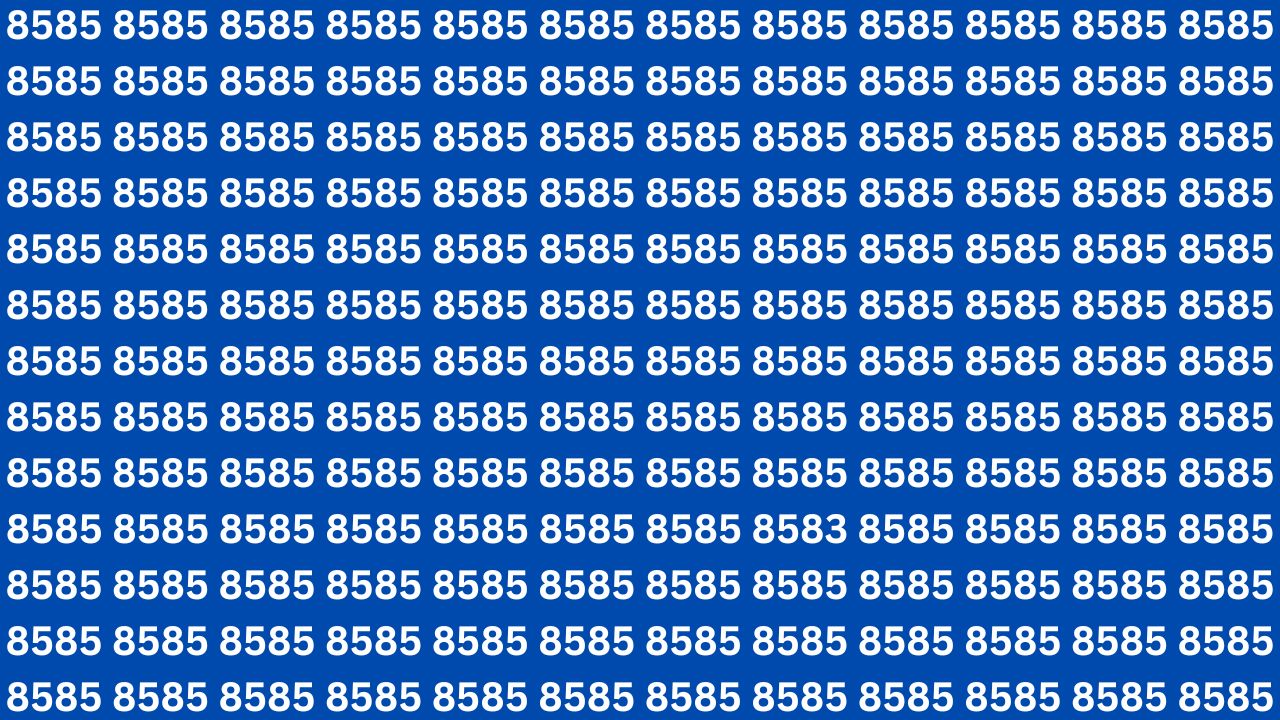
    Optical Illusion Challenge: Spot 8583 Hidden in a Grid of 8585s

    Are you ready to challenge your observation abilities? This visual puzzle will test how well you can concentrate. Your task is to find the number 8583 among many identical 8585s in only 6 seconds. The challenge might look simple when you first see it but the number 8583 blends in with the surrounding digits in a tricky way. This makes the task harder than you might expect. The clock is running so prepare yourself and get ready to solve this puzzle.

    Why Are Optical Illusions So Popular?

    Optical illusions have entertained and puzzled people for hundreds of years. They make the brain see things that do not exist or understand images in ways that seem impossible. These visual tricks remain popular because they test how our minds handle information. Our eyes continuously gather what we see around us but the brain sometimes reads these signals incorrectly. This gap between our perception and reality creates the appeal of optical illusions.

    How Can You Spot the Hidden 8583?

    Finding the Hidden Number: A Simple Guide The key to solving this optical illusion is staying focused and looking carefully at the details. Here are some straightforward tips to help you find the number 8583 hidden among all those 8585s: 

    Pay Attention to Shape

    All the numbers look alike at first glance but 8583 has a small difference. Look closely at the last digit since that is where the numbers differ.

    Take Your Time

    Breathe slowly and do not rush through the puzzle. When your mind is relaxed you will spot the number more easily.

    Search for Pattern Breaks

    The repeated 8585s create a visual pattern across the image. The hidden 8583 disrupts this pattern so try to find where the sequence changes.

    Try Scanning Differently

    Sometimes looking at something indirectly works better than staring right at it. Scan across the image without focusing too hard on any single spot and you might catch the difference faster.

    Why Do Some People Struggle with Optical Illusions?

    The human brain naturally looks for patterns and makes fast decisions based on what it has learned before. Optical illusions take advantage of this by showing images that conflict with how our brain normally works. When you see a picture filled with the number 8585 repeated many times your brain tries to predict what comes next and fills in missing information automatically. This makes it difficult to notice when something is different. The brain also has a tendency to group things that look alike into categories. This is the reason why finding one item that is slightly different among many identical items becomes challenging. When numbers look very similar to each other, separating them becomes harder. This is why most people have trouble locating the number 8583 even though it is actually visible in the image.

    Benefits of Optical Illusions

    Optical illusions are entertaining but they also offer real advantages for your brain. They help you notice small details better. When you work through optical illusions your brain learns to observe more carefully. This skill carries over into daily life and makes you more aware of what is happening around you. Your thinking abilities get stronger too. Figuring out optical illusions makes your brain work through problems and think critically. This mental exercise can improve your memory and overall brain function. These puzzles also build your ability to concentrate. They require you to take your time & pay attention which helps you focus better on other tasks throughout your day.

    Fun Fact: Optical Illusions in Science

    Did you know that optical illusions are also used in scientific research? Researchers study illusions to better understand how the human brain works. By analyzing how we perceive illusions scientists can learn more about visual processing and cognitive function. For instance studies on illusions have helped neuroscientists discover how the brain compensates for missing visual information.