Author: admin

  • 10 Yoga at Home Essentials to Build a Consistent and Easy Routine

    10 Yoga at Home Essentials to Build a Consistent and Easy Routine

    Yoga is a powerful practice that supports both the body and mind, helping to build strength, enhance flexibility, and promote mental calm. For those with busy schedules, practicing yoga at home offers an easy and effective way to enjoy these benefits without stepping outside. This comprehensive guide outlines 10 essential at-home yoga routines, combining physical postures with relaxation techniques suitable for beginners and experienced practitioners alike.

    Why Choose Yoga at Home?

    • Convenience: Practice anytime without commuting or fixed schedules.
    • Cost-Effective: Eliminate class fees, memberships, and travel expenses.
    • Comfort: Move freely and confidently in your own space.
    • Personalized Practice: Adapt sessions to suit your body, goals, and energy levels.

    1. Energizing Morning Yoga Flow (15–20 Minutes)

    Best for: Waking up the body and sharpening mental focus.

    Routine:

    • Mountain Pose (Tadasana) – 1 minute
    • Sun Salutations (Surya Namaskar) – 5 minutes
    • Warrior I (Virabhadrasana I) – 2 minutes per side
    • Downward-Facing Dog (Adho Mukha Svanasana) – 2 minutes
    • Seated Forward Fold (Paschimottanasana) – 3 minutes

    Benefits: Boosts energy, improves flexibility and core strength, and enhances focus.

    2. Gentle Stretch and Relaxation Flow (15 Minutes)

    Best for: Releasing tension after a long day or during rest days.

    Routine:

    • Cat-Cow Pose (Marjaryasana-Bitilasana) – 2 minutes
    • Child’s Pose (Balasana) – 3 minutes
    • Reclining Bound Angle Pose (Supta Baddha Konasana) – 3 minutes
    • Legs Up the Wall (Viparita Karani) – 5 minutes

    Benefits: Eases back, shoulder, and neck tension while promoting deep relaxation.

    3. Quick Yoga Stretch Break (5–10 Minutes)

    Best for: Loosening tight muscles during long sitting periods.

    Routine:

    • Seated Forward Fold (Paschimottanasana) – 2 minutes
    • Downward-Facing Dog (Adho Mukha Svanasana) – 2 minutes
    • Standing Side Stretch – 1 minute per side

    Benefits: Improves circulation, reduces stiffness, and restores focus.

    4. Core-Focused Strength Yoga (20 Minutes)

    Best for: Building abdominal strength and improving posture.

    Routine:

    • Plank Pose (Phalakasana) – 2 minutes
    • Boat Pose (Navasana) – 2 minutes
    • Side Plank (Vasisthasana) – 1 minute per side
    • Downward-Facing Dog Split (Eka Pada Adho Mukha Svanasana) – 3 minutes
    • Cobra Pose (Bhujangasana) – 2 minutes

    Benefits: Strengthens the core muscles, improves balance, and tones the body.

    5. Yoga Flow for Improved Flexibility (25 Minutes)

    Best for: Lengthening muscles and increasing joint mobility.

    Routine:

    • Downward-Facing Dog (Adho Mukha Svanasana) – 3 minutes
    • Pigeon Pose (Eka Pada Rajakapotasana) – 3 minutes per side
    • Seated Forward Fold (Paschimottanasana) – 3 minutes
    • Reclining Hand-to-Big-Toe Pose (Supta Padangusthasana) – 2 minutes per side
    • Butterfly Pose (Baddha Konasana) – 3 minutes

    Benefits: Enhances flexibility in the hips, hamstrings, and spine while encouraging relaxation.

    6. Yoga for Stress and Anxiety Relief (15–20 Minutes)

    Best for: Calming the mind and easing emotional tension.

    Routine:

    • Deep Breathing (Pranayama) – 5 minutes
    • Child’s Pose (Balasana) – 3 minutes
    • Seated Twist (Ardha Matsyendrasana) – 2 minutes per side
    • Legs Up the Wall (Viparita Karani) – 5 minutes

    Benefits: Reduces anxiety, promotes relaxation, and improves mental clarity.

    7. Full-Body Power Yoga Flow (30 Minutes)

    Best for: Building strength, stamina, and overall endurance.

    Routine:

    • Sun Salutations (Surya Namaskar) – 5 rounds
    • Warrior I and II (Virabhadrasana I & II) – 2 minutes per side
    • Chaturanga Dandasana – 5 minutes
    • Chair Pose (Utkatasana) – 2 minutes
    • Plank Pose (Phalakasana) – 3 minutes

    Benefits: Improves endurance, increases strength, and boosts energy levels.

    8. Yoga to Improve Posture and Alignment (20 Minutes)

    Best for: Supporting spinal alignment and easing upper-body tension.

    Routine:

    • Mountain Pose (Tadasana) – 2 minutes
    • Chest Opener Pose – 3 minutes
    • Warrior I and II (Virabhadrasana I & II) – 3 minutes
    • Bridge Pose (Setu Bandhasana) – 2 minutes
    • Downward-Facing Dog (Adho Mukha Svanasana) – 3 minutes

    Benefits: Enhances posture, strengthens the back and core, and relieves neck tension.

    9. Relaxing Yoga Before Bed (20 Minutes)

    Best for: Preparing the body and mind for restful sleep.

    Routine:

    • Child’s Pose (Balasana) – 3 minutes
    • Reclining Bound Angle Pose (Supta Baddha Konasana) – 5 minutes
    • Legs Up the Wall (Viparita Karani) – 5 minutes
    • Shavasana (Corpse Pose) – 5 minutes

    Benefits: Encourages deep relaxation, reduces anxiety, and supports better sleep.

    10. Hip-Opening Yoga Flow (25 Minutes)

    Best for: Releasing tightness in the hips and lower back.

    Routine:

    • Downward-Facing Dog (Adho Mukha Svanasana) – 3 minutes
    • Pigeon Pose (Eka Pada Rajakapotasana) – 3 minutes per side
    • Lizard Pose (Utthan Pristhasana) – 2 minutes per side
    • Butterfly Pose (Baddha Konasana) – 3 minutes
    • Happy Baby Pose (Ananda Balasana) – 2 minutes

    Benefits: Opens the hips, improves flexibility, and relieves lower-back discomfort.

    Final Thoughts on Practicing Yoga at Home

    Practicing yoga at home allows you to strengthen your body, increase flexibility, and calm your mind on your own schedule. With these 10 versatile yoga routines, you can easily tailor your practice to match your goals, whether you need a short stress-relief session or a complete full-body workout. Requiring minimal space and just 10–30 minutes, these routines make yoga accessible no matter how busy life becomes. Stay consistent, move mindfully, and enjoy the lasting benefits of a home yoga practice.


  • Neither Nivea Nor Neutrogena: Experts Now Rate This Moisturizer as the Top Choice for Deep Hydration and Daily Skin Health

    Neither Nivea Nor Neutrogena: Experts Now Rate This Moisturizer as the Top Choice for Deep Hydration and Daily Skin Health

    Blue Nivea tins, crisp white Neutrogena bottles, all lined up like familiar faces that never left town. On a rainy Tuesday afternoon in a crowded London high-street pharmacy, a woman in her thirties stood motionless before them. One hand scrolled endlessly on her phone, the other held yet another “ultra-hydrating” tube.

    The expression on her face gave everything away: a blend of fatigue and quiet surrender. She had clearly been here before. Her cheeks showed mild redness, the skin around her mouth looked slightly flaky. The unmistakable look of someone who owns several moisturizers, yet none truly deliver.

    Then she did something unexpected. She passed over Nivea. She ignored Neutrogena. Instead, she bent down to the nearly empty bottom shelf and picked up a plain white bottle with a soft pastel label. No celebrity face. No shiny promises. Just three words that dermatologists tend to trust.

    The quiet number one: why dermatologists are rethinking hydration

    The product gaining ground in clinics isn’t brand-new. It’s CeraVe Moisturizing Cream — the thick, fragrance-free formula in the white tub or pump. Dermatologists have recommended it for years, but its status has shifted. It has moved from being a reliable pharmacy option to what many experts now consider the gold standard for everyday hydration.

    CeraVe doesn’t try to charm. The packaging is clinical, the name unglamorous. You won’t find it on luxury counters beside glowing supermodels. It simply promises ceramides, hyaluronic acid, and a texture that feels rich for seconds before melting seamlessly into the skin.

    What stands out isn’t how it looks, but how skin behaves afterward. The next morning mirror often shows calmer skin, reduced tightness after cleansing, and makeup sitting more smoothly over areas that once peeled. When dermatologists are asked which single basic moisturizer they would keep, this one repeatedly tops the list.

    Some of the most convincing evidence doesn’t come from marketing, but from patterns seen in real practices. One London dermatologist who tracks patient feedback noticed something consistent: when patients were offered several moisturizer options, CeraVe was the one they were still using months later.

    Not because it feels luxurious, but because it doesn’t provoke reactions. Skin that is sensitive, rosacea-prone, post-retinol, or recovering from acne treatments often settles with this formula. That reliability is what draws professional attention — not influencer perfection, but patients who say, “This is the one I actually finished.”

    • Elon Musk’s workforce cuts reportedly led to a 20-year-old student overseeing AI training
    • A common styling mistake that makes gray hair appear yellow — and how clear products help
    • Alzheimer’s research reveals a form of brain recovery once thought impossible
    • A 10-second cosmic signal traced back 13 billion years
    • An employee paid for seven months after being hired and forgotten
    • Emergency declared in Greenland as tourists watch orcas hunt near collapsing ice
    • Psychologists identify a blink rate often linked to deception
    • $2,000 direct deposit update for U.S. citizens, including eligibility and IRS guidance

    Why this formula works — and why it matters now

    The reason comes down to a simple truth: skin doesn’t just need moisture, it needs a functional barrier. CeraVe is built around three essential ceramides (1, 3, and 6-II) combined with hyaluronic acid, delivered through a technology called MultiVesicular Emulsion (MVE).

    Rather than releasing hydration all at once, the cream delivers it gradually over time. The result is skin that still feels comfortable hours later, not just immediately after application. Ceramides help reinforce the barrier by filling microscopic gaps often damaged by hot water, harsh cleansers, exfoliation, and pollution.

    Brands like Nivea and Neutrogena still have solid formulas, but many were designed in an era when hydration meant feeling thick or shiny. Today, dermatologists focus more on repair and resilience. Moisturizer is no longer a finishing touch — it’s daily maintenance.

    How to use this hydration staple for real results

    CeraVe works well in most routines, but dermatologists highlight one simple adjustment: apply it to slightly damp skin. After cleansing, gently pat the skin so it’s not dripping but still moist. Warm a small amount of cream between your fingers and press it into the skin rather than rubbing aggressively.

    A basic setup is enough: a gentle, non-foaming cleanser, CeraVe Moisturizing Cream, and a separate high-SPF sunscreen in the morning. Once the barrier is stable, targeted actives like vitamin C or retinoids can be reintroduced carefully.

    A good daily cream, she says, should offer:

    • No stinging, even right after cleansing
    • No lingering perfume
    • Comfort that lasts all day
    • A texture you’ll actually use on neck and hands

    What this shift really changes in everyday skincare

    The change is as much psychological as it is dermatological. Hydration stops being an afterthought and becomes the foundation. A calm, resilient barrier often means less redness, fewer products, and less makeup needed to mask texture. For those with eczema or severe dryness, it can even mean sleeping without constant itching.

    There’s also something grounding about a product that looks almost boring. No fragrance, no shimmer, no fantasy ingredients. Just a cream that shows up twice a day and does its job consistently.

    Dermatologists value that reliability because it creates a stable base for introducing treatments for acne, pigmentation, or ageing with less risk. In that sense, CeraVe doesn’t replace active skincare — it makes it safer.

    For people balancing work, stress, family, and pollution, that quiet dependability often matters more than the most glamorous campaign. It’s reassuring to know that at least one item in the bathroom isn’t trying to be dramatic.

    • CeraVe Moisturizing Cream leads: Frequently cited by dermatologists as the current reference for daily hydration, simplifying choices among crowded pharmacy brands
    • Barrier-focused formula: Ceramides, hyaluronic acid, and MVE technology deliver lasting hydration and calmer skin throughout the day
    • Minimal but effective routine: Gentle cleanser, CeraVe, morning SPF, and targeted actives only once skin is stable — fewer products, fewer reactions, fewer disappointments
  • Sharp Eye Challenge: Can You Identify the Word SKIN Hidden Among SIKN in 7 Seconds

    Sharp Eye Challenge: Can You Identify the Word SKIN Hidden Among SIKN in 7 Seconds

    Optical illusion word challenges are an engaging way to see how quickly your brain processes visual details. At first glance, this puzzle appears straightforward. You are shown a grid packed with the repeated letters “SIKN”, and your goal is to locate the correctly ordered word “SKIN” in just 7 seconds. Once you begin, however, the repetition quickly becomes confusing, proving how easily even sharp minds can be slowed down.

    What Does an Optical Illusion Visual Test Do?

    An optical illusion visual test challenges the coordination between your eyes and brain. While your eyes capture the full picture, your brain often relies on shortcuts. It looks for familiar patterns to save time, which can cause errors when something slightly different is hidden right in front of you.

    Why Word-Based Illusions Confuse the Mind

    In word-based optical illusions, vocabulary knowledge is not the challenge. The real test lies in focus, order, and attention. The brain quickly notices the repeated letter pattern and assumes every group is identical, even when one clearly is not.

    How the Brain Reacts to Repeating Letters

    The human brain is designed to recognize patterns rapidly. When it encounters the same letters again and again, it stops analyzing each group carefully. This process, known as automatic processing, is helpful in daily life but works against you in puzzles like this.

    The groups “SIKN” and “SKIN” contain the same letters, making them appear almost identical at a quick glance. Because nothing seems missing or added, the brain assumes the order is the same everywhere, making the correct word harder to notice.

    Understanding the “SKIN Among SIKN” Challenge

    In this optical illusion visual test, nearly every letter group reads “SIKN”. Hidden among them is one group where the letters are arranged correctly as “SKIN”. Your task is to find that single correct word within the 7-second time limit.

    The pressure of limited time causes your eyes to rush and your brain to guess. This is what makes the challenge effective, forcing you to balance speed with careful observation.

    How Time Pressure Impacts Your Focus

    Seven seconds is a very short window. Under pressure, the brain often switches into scanning mode instead of careful analysis. As a result, obvious details can be missed because speed takes priority over accuracy.

    Those who perform well usually stay calm and methodical. They understand that rushing rarely works with pattern-based illusions and that controlled focus leads to better results.

    Smart Ways to Spot the Word Faster

    One effective technique is to read each letter group instead of recognizing the overall shape. Mentally pronouncing the letters forces the brain to process order rather than appearance, breaking the automatic pattern response.

    Another helpful approach is to focus on letter sequence. By paying attention to how the letters follow one another, your brain can lock onto the correct arrangement, making the hidden word easier to identify.

    Solution Explained Simply

    If you were unable to find the word in time, the solution makes it clear. The correctly ordered word “SKIN” appears in the 8th row and 6th column from the left.

    All surrounding groups remain arranged as “SIKN”, which allows the correct word to blend in seamlessly. The illusion works because the difference is only in letter order, not shape, size, or style. Once spotted, it feels obvious, but until then, it stays well hidden.

    Why These Word Illusions Are So Popular

    Word-based optical illusions are quick, simple, and easy to share. They tap into curiosity and friendly competition, encouraging people to test themselves and compare results.

    They also deliver a brief but effective mental workout. In just a few seconds, you engage focus, memory, attention, and processing speed, which keeps these challenges appealing.

    Benefits of Solving Visual Word Puzzles

    Practicing visual puzzles like this can improve attention to detail and strengthen mental clarity. Over time, your brain becomes better at resisting assumptions and examining information more carefully.

    These skills extend beyond puzzles, helping with reading accuracy, proofreading, problem-solving, and decision-making. Training your mind to notice small differences can enhance focus in everyday tasks.

    Final Thoughts on This Optical Illusion Test

    Finding the word “SKIN” among a grid of “SIKN” may seem simple, but it clearly shows how repetition can mislead the brain. This challenge proves that true observation requires more than quick eyesight. It demands patience, focus, and control under pressure.

    If you spotted the word within 7 seconds, your visual processing skills are impressive. If not, that is completely normal. Each attempt trains your brain to slow down and notice details more clearly. Optical illusion word tests like this are an easy, engaging, and effective way to keep your mind sharp while enjoying the challenge.

  • Spot the Difference Test: Can You Identify 3 Changes in the Girl on the Beach Scene

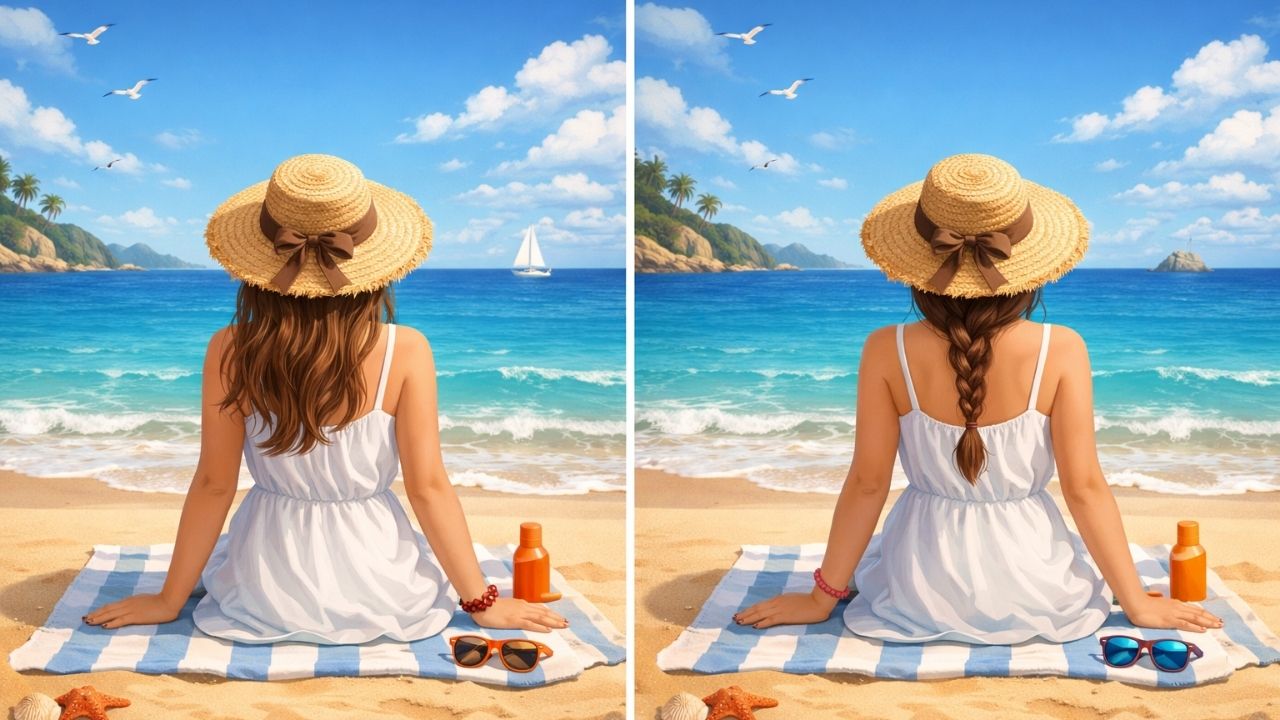
    Spot the Difference Test: Can You Identify 3 Changes in the Girl on the Beach Scene

    Spot the Difference puzzles are a fun yet effective way to challenge how sharp your observation skills truly are. This relaxing beach-themed challenge asks you to identify three hidden differences between two nearly identical images within just 10 seconds. At first look, both pictures appear calm, colorful, and perfectly matched. However, once the clock starts ticking, even the smallest details can become surprisingly difficult to catch.

    Why Spot the Difference Puzzles Keep You Engaged

    These puzzles are engaging because they work with how the brain naturally processes visuals. Instead of examining every detail, the brain prefers shortcuts, assuming familiar images are the same. Spot the Difference challenges break this habit by placing subtle changes directly in your line of sight.

    The beach scene used here feels soothing and familiar. A girl enjoying the seaside, bright colors, and simple elements make the image look effortless. This sense of comfort is intentional. It encourages the brain to relax, which is often when small details slip by unnoticed.

    Why Small Visual Changes Are Easy to Miss

    Most people struggle not because of poor eyesight, but because the brain filters information too quickly. When two images share the same layout, colors, and theme, the brain assumes they are identical and stops checking carefully.

    In this Girl on the Beach puzzle, the differences are subtle yet important. Minor changes to facial features, objects, and details blend naturally into the scene. This forces you to slow down and observe carefully instead of relying on assumptions.

    How Time Limits Affect Observation Skills

    The 10-second time limit adds another layer of difficulty. With limited time, many people rush and scan randomly rather than comparing each section logically. This increases pressure and often reduces accuracy.

    Timed visual challenges like this help train the brain to remain calm while thinking quickly. Those who manage their focus and scan methodically tend to perform better. Learning to balance speed with attention is one of the biggest advantages of solving visual puzzles.

    Key Areas to Focus on in the Beach Scene

    When comparing the two images, it helps to concentrate on three main areas: the girl herself, the object she is holding, and the surrounding elements. Many Spot the Difference puzzles hide changes where the eye naturally rests, making them harder to detect.

    In this challenge, your attention is naturally drawn to the girl, the fruit, and the beach setting. That is exactly where the hidden differences are placed. The real trick is not how fast you look, but where you choose to look.

    Clear Explanation of the Hidden Differences

    If you were unable to find all three differences within the time limit, the solution shows just how subtle they were. The first difference involves the watermelon slice the girl is holding. In the second image, the seeds are missing, making it appear cleaner and less detailed.

    The second difference appears on the girl’s face. Her nose, visible in the first image, is absent in the second. This minor facial change is easy to overlook because the rest of her features remain exactly the same.

    The third difference relates to the object she is holding. In the second image, a tender coconut replaces the watermelon. Since both items fit naturally into a beach setting, this swap blends in smoothly and is often missed.

    What Makes This Puzzle More Challenging Than Expected

    Each difference fits naturally into the beach environment. The missing seeds, facial feature change, and fruit replacement all seem believable within the scene. Nothing appears out of place, which increases the difficulty.

    This design pushes the brain to drop assumptions and focus on fine details. It highlights how easily familiarity can hide change, even when the difference is right in front of you.

    Mental Benefits of Solving Visual Difference Puzzles

    Regularly solving Spot the Difference challenges can help improve concentration, visual memory, and attention to detail. Over time, the brain becomes more skilled at spotting inconsistencies and analyzing images carefully.

    These puzzles also support mental relaxation. They provide short periods of focused thinking without feeling overwhelming. For both students and adults, they offer a healthy balance between entertainment and mental exercise.

    Why Beach-Themed Visual Puzzles Are So Popular

    Beach scenes feel calm and inviting, making them ideal for visual challenges. The peaceful setting contrasts with the mental effort required, creating an enjoyable experience rather than a stressful one.

    This contrast keeps players engaged longer. Even if you miss a difference, the soothing imagery encourages another attempt. That mix of comfort and challenge explains why these puzzles are widely shared online.

    Final Thoughts on the Girl on the Beach Puzzle

    Finding three differences in just 10 seconds is not about perfection. It is about training your eyes and brain to slow down and truly notice what is in front of you. This Girl on the Beach challenge demonstrates how easily small changes can hide within familiar scenes.

    If you spotted all three differences in time, your observation skills are impressive. If not, that is completely normal. Every attempt sharpens your focus and strengthens your attention to detail. Spot the Difference puzzles like this offer a fun, rewarding way to keep your brain active while enjoying a simple visual escape.

  • Optical Illusion Test: Find the Hidden 08 and 66 Numbers Among 88s in 10 Seconds

    Optical Illusion Test: Find the Hidden 08 and 66 Numbers Among 88s in 10 Seconds

    Optical illusion challenges have become a popular way for people in India to test focus, observation skills, and mental sharpness in a fun way. This particular visual puzzle asks readers to spot the hidden numbers 08 and 66 cleverly disguised among rows of similar-looking 88s, all within just 10 seconds. At first glance, everything appears identical, but subtle differences make this test both tricky and exciting. Such challenges are often shared on social media because they engage the brain, encourage quick thinking, and offer a refreshing break from daily routines.

    Optical Illusion Test That Challenges Your Focus

    This optical illusion test is designed to push your visual attention to the limit by hiding two unique numbers among repetitive patterns. When your eyes scan rows of 88s, the brain tends to assume uniformity, which makes spotting 08 and 66 harder. The challenge works because of visual pattern bias, where the mind fills in expected shapes automatically. As seconds tick away, time pressure effect adds urgency and excitement. Many participants report a mental strain moment before clarity sets in, making the experience memorable. Completing the task successfully often leads to a confidence boost and motivates people to try similar puzzles.

    Why Finding 08 and 66 Among 88s Is Tricky

    The difficulty of this illusion lies in how similar the digits appear when placed closely together. The number 88 dominates the visual field, creating repetitive number illusion that confuses the brain’s recognition system. Your eyes may skim too quickly, missing the slight curve changes that define 08 and 66. This puzzle highlights selective attention limits, showing how easily details can be overlooked. Many solvers benefit from slow scanning method, focusing on one row at a time. Overcoming this challenge sharpens detail recognition skill, which is useful beyond puzzles.

    How Optical Illusion Number Puzzles Train the Brain

    Number-based optical illusions are more than entertainment; they actively train cognitive abilities. When searching for hidden digits, the brain practices visual discrimination training and strengthens neural connections. These puzzles encourage focus under pressure, especially with a strict time limit. Regular exposure can improve processing speed awareness and enhance patience. For many people in India, such challenges are a quick way to enjoy mental refresh break during busy schedules. Over time, consistent practice may lead to better concentration and sharper observational habits.

    Summary and Visual Analysis of the Challenge

    In summary, this optical illusion test cleverly combines simplicity with mental challenge. By hiding 08 and 66 among identical 88s, it forces the brain to slow down and truly observe. The experience reveals human perception limits and explains why we often miss small details. It also demonstrates pattern recognition habits that influence everyday decision-making. Whether you solve it quickly or struggle at first, the puzzle offers insightful brain exercise and reminds us that careful observation can make all the difference.

    Aspect Details
    Hidden Numbers 08 and 66
    Distractor Number 88
    Time Limit 10 Seconds
    Skill Tested Visual Attention
    Difficulty Level Moderate

    Frequently Asked Questions (FAQs)

    1. What is the goal of this optical illusion test?

    The goal is to find the hidden numbers 08 and 66 among multiple 88s within 10 seconds.

    2. Why do most people find this puzzle difficult?

    The repeating 88 pattern tricks the brain into overlooking small visual differences.

    3. Does solving such puzzles improve brain skills?

    Yes, regular practice can enhance focus, observation, and visual processing.

    4. Can anyone attempt this optical illusion challenge?

    Yes, it is suitable for all ages and requires no special skills.

  • Test Your Vision: Spot the 3 Hidden Clues in the Lady Cleaning a Car Image in 7 Seconds

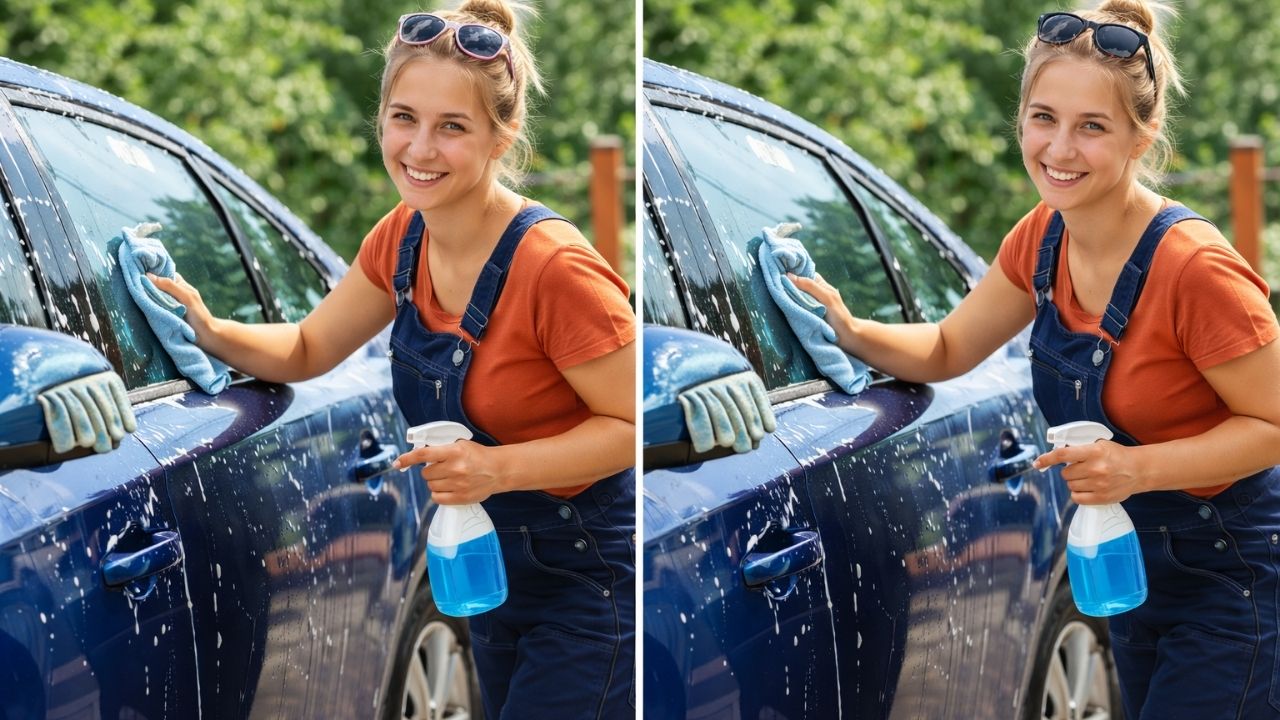
    Test Your Vision: Spot the 3 Hidden Clues in the Lady Cleaning a Car Image in 7 Seconds

    Visual puzzles have become a favorite online pastime in India, blending fun with a quick mental workout. “Test Your Vision: Spot the 3 Hidden Clues in the Lady Cleaning a Car Image in 7 Seconds” challenges readers to observe closely, think fast, and trust their instincts. These spot-the-difference and hidden-clue images are not just entertaining but also help sharpen focus and attention to detail. With a ticking clock adding pressure, the challenge feels exciting and rewarding, making it perfect for anyone looking to refresh their mind during a short break.

    Test Your Vision with This Hidden Clues Image Challenge

    This challenge invites you to carefully scan an image of a lady cleaning a car and uncover three cleverly placed clues. At first glance, everything may look normal, but subtle changes are hidden in plain sight. Your brain must balance speed with accuracy, relying on sharp observation, visual awareness, and quick thinking. Many people rush and miss obvious details, while others take a calm approach and succeed. The real fun lies in training your eyes to notice small inconsistencies, patterns, or missing elements that break the visual flow of the scene.

    Spot the Hidden Clues in 7 Seconds Under Time Pressure

    The seven-second limit adds intensity, turning a simple picture into a thrilling test of focus. Under time pressure, your mind prioritizes important details, enhancing mental agility and focus control. Some clues may involve shape changes, misplaced objects, or unusual reflections. This kind of puzzle improves how you process visual information in daily life, encouraging pattern recognition and faster reactions. Whether you succeed or not, the attempt itself strengthens your ability to stay attentive even when distractions are present.

    Why Vision Puzzles Like This Boost Brain Skills

    Vision-based puzzles are more than casual games; they actively engage multiple brain areas at once. While scanning the image, your brain uses cognitive flexibility, detail detection, and memory recall to compare what feels right versus wrong. Over time, solving such challenges can improve concentration and visual processing speed. In India, these puzzles are increasingly popular among students and professionals alike because they offer a simple yet effective way to refresh the mind without lengthy commitments.

    Final Analysis: What This Puzzle Reveals About Your Observation Skills

    If you managed to find all three hidden clues within seven seconds, it suggests strong visual focus and quick decision-making. Even if you missed one or two, the exercise still trained attention span, visual scanning, and problem solving. Repeating similar challenges helps your brain adapt and improve over time. The key takeaway is consistency—regularly testing yourself with visual puzzles can gradually enhance how you observe and interpret the world around you.

    Aspect Description
    Puzzle Type Hidden clues image challenge
    Time Limit 7 seconds
    Skills Tested Observation and focus
    Difficulty Level Medium
    Ideal For All age groups

    Frequently Asked Questions (FAQs)

    1. What is the goal of this vision test?

    The goal is to spot three hidden clues in the image within seven seconds.

    2. Is this puzzle suitable for all ages?

    Yes, it is designed to be enjoyable and safe for all age groups.

    3. Do vision puzzles really improve brain skills?

    Regular practice can help enhance focus, observation, and visual processing.

    4. What if I can’t find all the clues?

    Missing clues is normal and still helps train your brain through practice.

  • Spot the Difference: Can You Find All 3 Differences in This Gorilla Puzzle in 8 Seconds

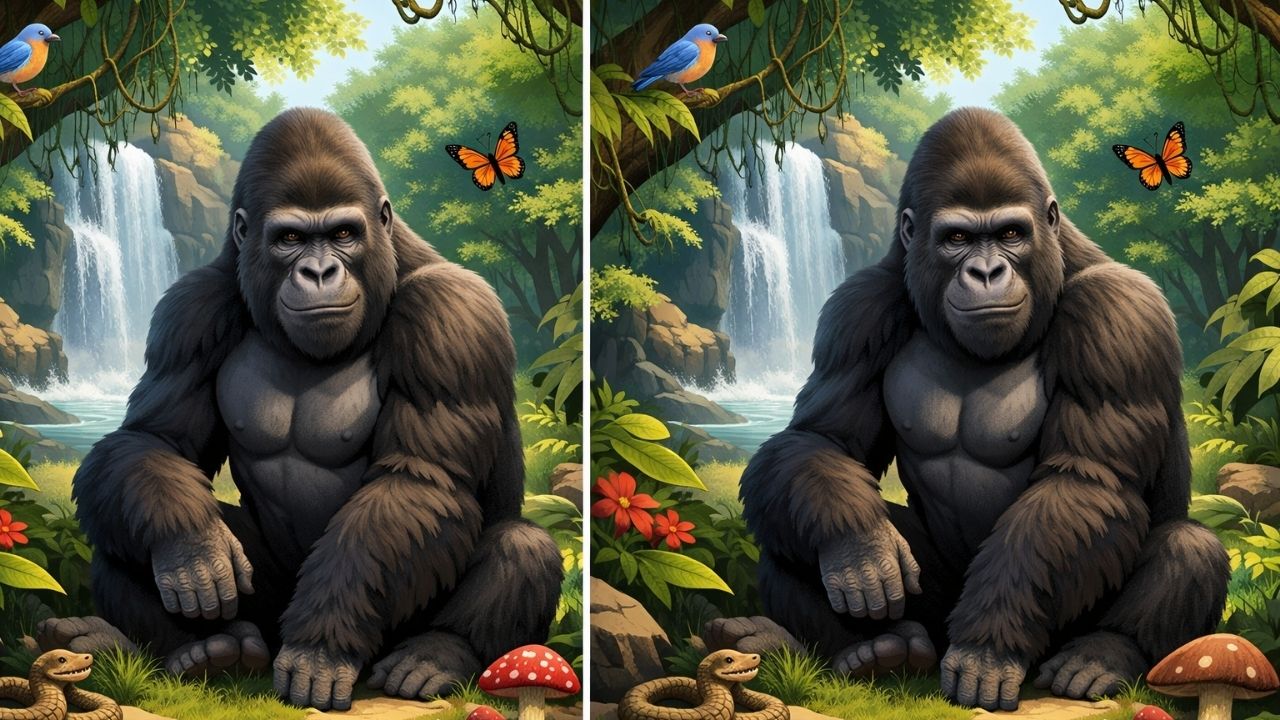
    Spot the Difference: Can You Find All 3 Differences in This Gorilla Puzzle in 8 Seconds

    Spot-the-difference puzzles have become a favorite mental workout for people across India who enjoy quick, visual challenges. This gorilla-themed puzzle pushes your observation skills by asking you to find three subtle changes in just eight seconds. At first glance, both images look almost identical, but tiny visual tweaks are carefully hidden to test your focus and speed. These challenges are not only entertaining but also help sharpen attention, improve visual memory, and offer a refreshing break from daily routines while giving your brain a fun, energizing exercise.

    Spot the Difference Gorilla Puzzle That Tests Sharp Eyes

    This spot the difference gorilla puzzle is designed to trick your brain by using visual distractions and clever symmetry. Your eyes may initially focus on obvious features like the gorilla’s face or posture, but the real changes often hide in unexpected areas. Many players rush and miss tiny visual shifts that blend naturally into the scene. The key is slowing down just enough to scan methodically without losing time. These puzzles reward focused observation skills and punish guesswork. With practice, you start noticing patterns faster and develop strong attention control, making each new puzzle slightly easier and more enjoyable.

    Why Finding Differences in Gorilla Images Feels Tricky

    Gorilla images are especially challenging because the brain recognizes them as familiar shapes, leading to pattern recognition bias. Once your mind thinks it “knows” the image, it stops checking details closely. That’s where subtle detail changes slip through unnoticed. Shadows, fur texture, or background elements may contain hidden visual errors that don’t immediately stand out. This type of puzzle forces your brain to override assumptions and actively search. Over time, regularly solving such challenges can enhance mental scanning speed and improve how quickly you detect inconsistencies in everyday visual information.

    How to Beat the 8-Second Gorilla Difference Challenge

    To succeed within eight seconds, you need a smart approach rather than panic. Start by dividing the image into sections and checking each area quickly for shape inconsistencies. Avoid staring at one spot too long, as that wastes precious time. Many experts recommend scanning edges first because background variations are commonly used as traps. Staying calm helps maintain clear visual judgment, while regular practice builds rapid comparison ability. The more puzzles you attempt, the faster your brain learns where designers usually hide the differences.

    Summary and Visual Puzzle Analysis

    This gorilla spot-the-difference puzzle is more than a race against time; it’s a test of how efficiently your brain processes images. It highlights the balance between speed and accuracy while encouraging active visual awareness. Players often discover that repeated attempts improve cognitive flexibility and confidence. These puzzles are perfect for short breaks, offering mental refresh moments without long commitments. Ultimately, the challenge lies not in eyesight alone but in training your mind to question what it sees, leading to sharper perception and better everyday focus.

    Puzzle Aspect Description
    Time Limit 8 seconds to find all differences
    Total Differences 3 hidden visual changes
    Skill Tested Observation and attention
    Difficulty Level Medium to challenging
    Ideal For Quick brain training

    Frequently Asked Questions (FAQs)

    1. What is the goal of this gorilla puzzle?

    The goal is to find three visual differences between two similar gorilla images within eight seconds.

    2. Are spot-the-difference puzzles good for the brain?

    Yes, they help improve focus, visual memory, and overall observation skills.

    3. Why do these puzzles feel harder than they look?

    They exploit familiarity and small details that the brain tends to overlook.

    4. Can practicing these puzzles improve speed?

    Regular practice trains the brain to scan images faster and more accurately.

  • 5 Second IQ Test: Can You Identify 257 Hidden Among 2S7s Before Time Runs Out

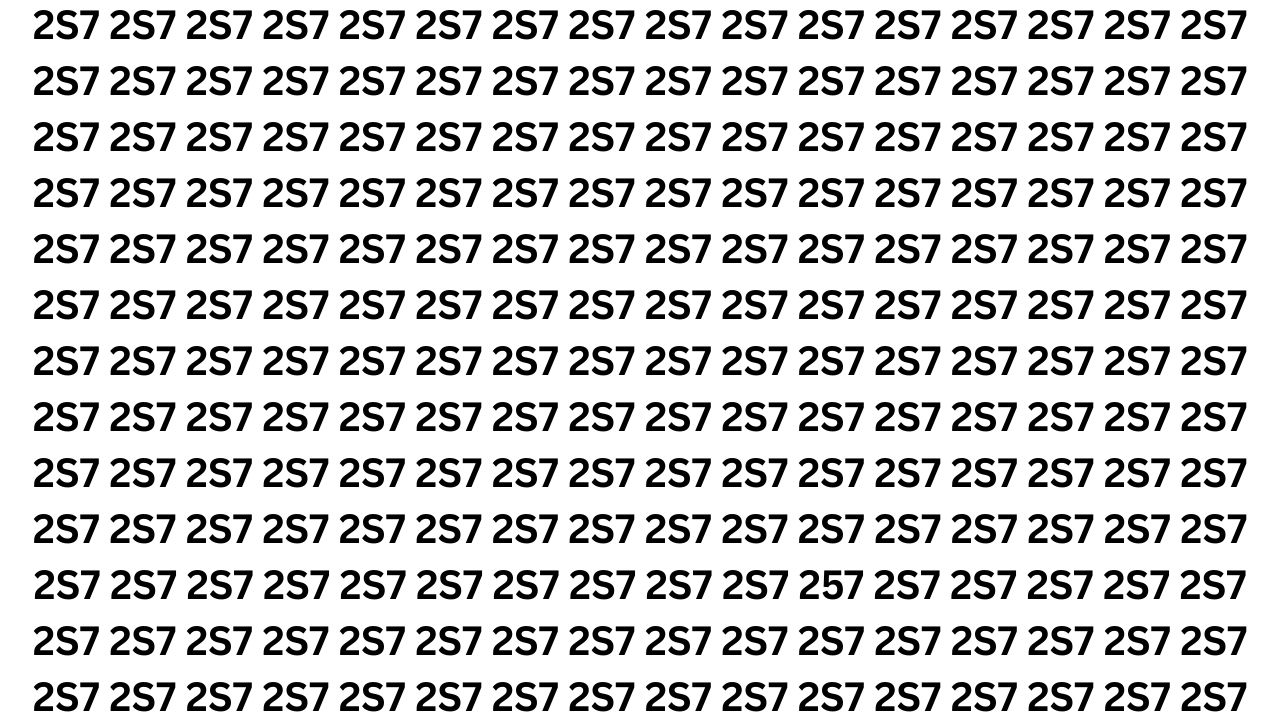
    5 Second IQ Test: Can You Identify 257 Hidden Among 2S7s Before Time Runs Out

    Brain teasers and quick visual puzzles are becoming a popular way to test mental sharpness, especially in India where short challenges are widely shared online. This 5 Second IQ Test invites readers to spot the number 257 cleverly hidden among repeated 2S7 patterns before time runs out. At first glance, the grid looks identical, but the real challenge lies in training your eyes and mind to catch subtle differences under pressure. Such puzzles are not just entertaining; they also help improve focus, attention to detail, and rapid decision-making skills.

    5 Second IQ Test to Find 257 Quickly

    In this fast-paced challenge, you are asked to locate 257 hidden among rows of similar-looking 2S7s within just five seconds. The trick is to avoid reading each number individually and instead rely on pattern recognition and visual scanning. Many people fail because they panic when the clock starts, but staying calm improves results. These puzzles are designed to activate mental alertness while testing time pressure focus. By practicing regularly, players often notice faster reaction times and better concentration, which can be useful in everyday tasks that demand quick judgments.

    Why This 257 Hidden Number Puzzle Is Tricky

    The difficulty of this puzzle comes from how closely the numbers resemble each other at a glance. Your brain tends to auto-correct what it expects to see, a phenomenon linked to cognitive shortcuts. The creators intentionally use similar digit shapes to confuse the eyes and delay recognition. This causes split-second hesitation, which can be costly in a five-second test. Understanding this trick helps you adjust your strategy by slowing your eye movement slightly and scanning in blocks instead of lines, improving your chances of spotting the odd number.

    How 5 Second IQ Tests Improve Brain Skills

    Short IQ tests like this one are more than casual fun; they can support long-term brain health. Regular exposure to visual challenges enhances attention control and strengthens short-term memory. In India, such puzzles are often used by students and professionals as quick mental warm-ups. They also encourage logical observation and build confidence under pressure. While they don’t measure intelligence fully, they do train the brain to stay sharp, focused, and responsive in limited time situations.

    Quick Analysis of the 257 Number Challenge

    This 5 Second IQ Test works because it blends speed with perception, forcing the brain to adapt instantly. The hidden 257 stands out only when your mind stops assuming uniformity and starts actively searching for differences. Over time, practicing such puzzles improves visual discrimination and mental flexibility. They also highlight how stress affects performance, teaching players to remain composed. As a quick daily habit, these challenges can be a fun way to sharpen thinking skills without requiring long study sessions.

    Aspect Description
    Time Limit 5 seconds to find 257
    Main Skill Tested Visual perception
    Difficulty Level Medium to High
    Best Strategy Scan in sections
    Recommended For All age groups

    Frequently Asked Questions (FAQs)

    1. Is this 5 Second IQ Test suitable for beginners?

    Yes, anyone can try it regardless of prior puzzle experience.

    2. Does failing this test mean low intelligence?

    No, it only measures quick visual focus, not overall intelligence.

    3. How often should I try such puzzles?

    Practicing a few times a week is enough to see improvement.

    4. Can children attempt this number puzzle?

    Yes, it is safe and helpful for developing observation skills.

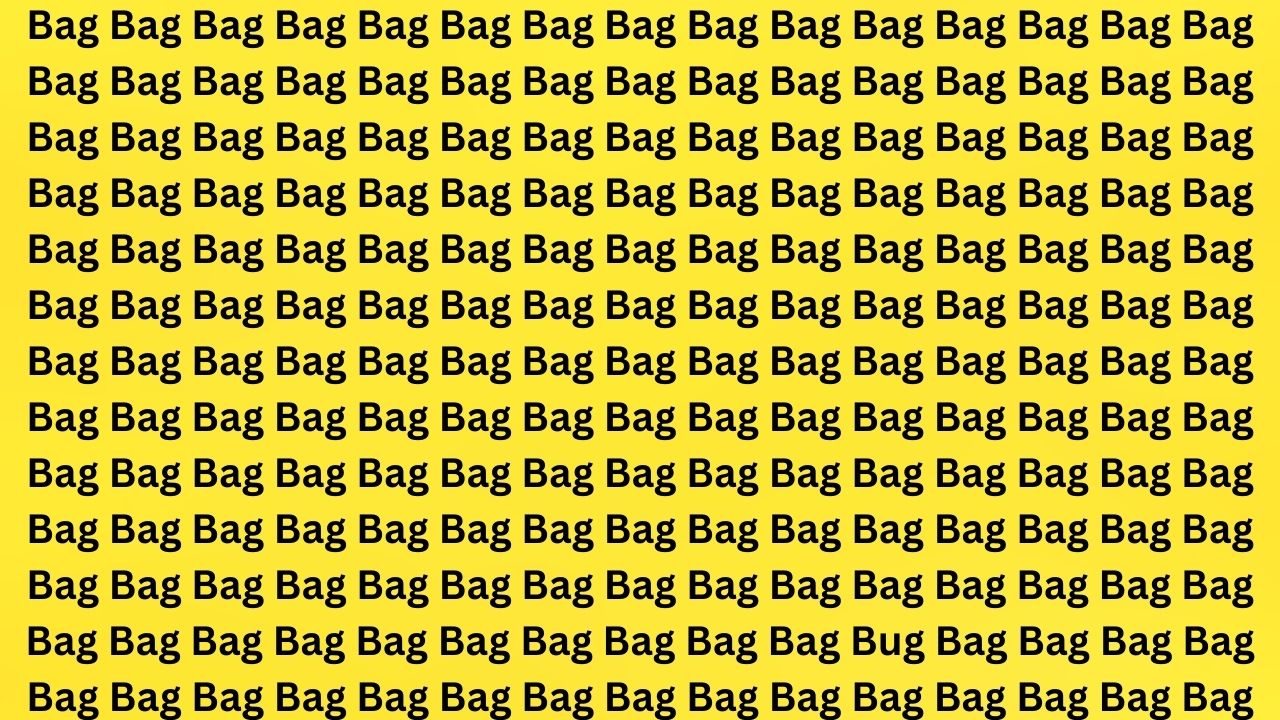
  • Fast Brain Booster: Can You Find the Hidden Word Bug Among Bag in Just 6 Seconds

    Fast Brain Booster: Can You Find the Hidden Word Bug Among Bag in Just 6 Seconds

    Fast-paced word puzzles have become a favorite way to sharpen focus and reaction time, especially among puzzle lovers in India. Challenges like spotting a hidden word under strict time pressure turn simple letters into an exciting mental workout. This brain booster asks you to find the word “Bug” cleverly hidden among multiple instances of “Bag” in just six seconds. While it looks easy at first glance, the similarity between the words forces your brain to slow down, scan carefully, and stay alert. These quick challenges are perfect for daily mental exercise.

    Fast brain booster challenge with hidden word Bug

    This fast brain booster challenge relies on visual similarity to test how quickly your mind can spot subtle differences. At first, every word looks the same, which is exactly where the trick lies. Your brain must rely on visual focus shift rather than speed alone. Many people rush and miss the answer because they don’t apply pattern recognition skill. The goal is to stay calm, let your eyes move naturally, and trust selective attention control. When you finally find “Bug,” it feels rewarding because your brain successfully filtered out distractions using cognitive filtering ability.

    Hidden word puzzle Bug among Bag explained

    The hidden word puzzle works because “Bug” and “Bag” differ by only one letter, making letter distinction challenge the core difficulty. Your eyes may scan quickly, but your brain often auto-corrects what it expects to see. This is known as visual expectation bias. Slowing down slightly improves accuracy and strengthens mental scanning technique. Over time, repeated exposure to such puzzles improves detail detection habit, helping you notice small changes faster in both puzzles and real-life reading situations.

    Quick brain test Bug spotting for mental sharpness

    Quick brain tests like this are not just fun; they actively train mental sharpness. By limiting time to six seconds, the puzzle activates time pressure response and forces instant decision-making. Regular practice enhances reaction speed improvement and builds confidence in handling fast tasks. These puzzles also support short-term focus training, which is useful for exams, work, and daily problem-solving. Even a few minutes a day can contribute to mental agility growth over the long term.

    Why fast word puzzles are effective

    Fast word puzzles are effective because they balance simplicity with challenge. The rules are easy, but success depends on attention accuracy balance rather than guesswork. When your brain repeatedly practices spotting differences, it strengthens neural response efficiency. This leads to better reading precision and quicker comprehension. Additionally, solving under pressure boosts confidence in focus and reduces hesitation. Over time, these small exercises support consistent brain stimulation, making them a smart and enjoyable daily habit.

    Challenge Element Purpose
    Similar words Tests visual accuracy
    6-second limit Builds quick thinking
    Hidden variation Improves attention to detail
    Repeated practice Enhances mental speed
    Simple format Easy daily brain exercise

    Frequently Asked Questions (FAQs)

    1. What is the goal of this puzzle?

    The goal is to find the word “Bug” hidden among many “Bag” words within six seconds.

    2. Is this puzzle suitable for all ages?

    Yes, it is simple, safe, and suitable for both kids and adults.

    3. Does solving such puzzles improve brain power?

    Regular practice can improve focus, speed, and attention to detail.

    4. How often should I try brain booster puzzles?

    Spending a few minutes daily is enough to see gradual improvement.