Author: admin

  • Short on Time?: This 10-Minute Yoga Routine Still Delivers Real Results

    Short on Time?: This 10-Minute Yoga Routine Still Delivers Real Results

    Some days feel completely full from morning to night. Meetings stretch longer than planned. Daily tasks keep adding up. By the time exercise crosses your mind, the day is nearly finished. I once believed that if I could not fit in a full workout, it was pointless to try at all. That belief changed when I experimented with a short yoga routine. Ten minutes felt insignificant at first. But once it became part of my routine, I noticed clear improvements in both my body and my mindset.

    This quick yoga routine is created for busy days. It is gentle, effective, and simple to follow. You do not need a yoga studio or special tools. All you need is a small space and a few peaceful minutes.

    Why a 10-Minute Yoga Routine Works

    Yoga is powerful because it links movement with breathing. Even brief sessions help improve blood flow and ease muscle tension. Slow movements combined with deep breathing signal the nervous system to relax. This naturally reduces stress and sharpens focus.

    A 10-minute routine is also easier to maintain. When a practice feels achievable, you are more likely to stay consistent. Over time, these short sessions improve flexibility, strength, and mental clarity.

    Starting with Centering Breath

    Begin by sitting or standing in a comfortable position. Close your eyes if that feels comfortable. Inhale slowly through your nose and exhale gently through your mouth. Allow your shoulders to relax with each breath.

    This quiet moment helps your mind detach from daily stress. It prepares your body for gentle movement. Even a single minute of focused breathing can shift your mood.

    Releasing the Neck and Shoulders

    Slowly roll your shoulders backward and downward. Gently move your neck from side to side while keeping your breath smooth and calm.

    These movements help release tension that builds up throughout the day. They support better posture and reduce stiffness, especially if you spend long hours sitting or working on screens.

    Cat Cow for Spinal Movement

    Come down onto your hands and knees. As you inhale, arch your back and lift your chest. As you exhale, round your spine and lower your head.

    Cat Cow improves spinal flexibility and encourages deep breathing. This gentle flow helps awaken the body without putting strain on the muscles.

    Downward Facing Dog for a Full Stretch

    From hands and knees, lift your hips into Downward Facing Dog. Press your hands firmly into the ground and lengthen your spine. Slightly bend your knees if that feels better.

    This pose stretches the back, shoulders, and legs. It also boosts circulation. Holding it for a few steady breaths can feel both energizing and grounding.

    Standing Forward Fold to Ease Tension

    Step your feet forward and slowly fold over your legs. Let your head and arms hang comfortably toward the floor.

    This posture helps calm the nervous system and release spinal tension. It offers a gentle way to slow down and reconnect with your breathing.

    Low Lunge for Hip Opening

    Step one foot back into a low lunge position. Keep your front knee bent and allow the back leg to relax. After a few breaths, switch sides.

    This stretch opens the hips and lengthens the legs. It helps undo the effects of long periods of sitting and improves overall mobility.

    Chair Pose for Strength and Alertness

    Stand upright and bend your knees as if lowering into a chair. Keep your chest lifted and breathe evenly.

    Chair Pose engages the legs and core muscles. It increases circulation and builds strength. Even a brief hold can leave you feeling more energized.

    Seated Twist to Refresh the Body

    Sit comfortably and gently twist your upper body to one side. Hold for a few breaths before switching to the other side.

    Twisting poses release tension in the back and support digestion. They also help improve focus and comfort, making them ideal before ending the practice.

    Ending with Gentle Stretch and Breath

    Raise your arms overhead for a light stretch, then slowly lower them. Sit quietly and take a few deep, steady breaths.

    This final moment allows your body to absorb the benefits of the routine. It helps you return to your day feeling calmer, lighter, and more balanced.

  • 7 Yoga Poses to Build a Stronger Core After Age 40

    7 Yoga Poses to Build a Stronger Core After Age 40

    Building Core Strength After 40 with Yoga Getting older makes core strength more essential for staying healthy and keeping your balance. A solid core helps you avoid back problems & stand up straighter while moving more easily through daily activities. If you are over 40 & want to strengthen your midsection without harsh workouts, yoga offers an excellent solution that also increases flexibility and brings mental clarity. Yoga works well for core development because the poses target your stomach muscles along with the deeper muscles that hold your spine and hips in place. These seven yoga poses will help you develop a stronger core after reaching 40

    Plank Pose (Phalakasana)

    Plank Pose is one of the most effective yoga poses for building core strength. It activates the entire abdominal region while also engaging the arms, shoulders, and back, making it a powerful full-body exercise. Regular practice improves endurance, posture, and overall stability.

    How to do it:

    – Begin in a push-up position with your hands placed directly under your shoulders and feet set hip-width apart.

    – Keep your body aligned in a straight line from head to heels, engaging your core and keeping your back flat.

    – Hold the pose for 30 seconds to one minute, ensuring your hips do not sag and your shoulders stay stacked over your wrists.

    Boat Pose (Navasana)

    Boat Pose strongly targets both the upper and lower abdominal muscles, helping to tone the core and improve balance. It also strengthens the hip flexors and supports spinal stability, making it a challenging yet rewarding posture.

    How to do it:

    – Sit on the mat with your knees bent and feet flat on the floor.

    – Lean back slightly and lift your legs, keeping them straight or gently bent as needed.

    – Extend your arms forward so your body forms a “V” shape and hold for 30 seconds to one minute while breathing steadily.

    Bridge Pose (Setu Bandhasana)

    Bridge Pose works the core, glutes, and lower back while increasing spinal flexibility and hip strength. It is especially suitable for beginners and individuals over 40, as it can be easily modified for comfort.

    How to do it:

    – Lie on your back with knees bent and feet placed flat on the floor, hip-width apart.

    – Press your feet firmly into the mat and lift your hips upward while engaging your core and squeezing your glutes.

    – Hold for 15 to 30 seconds, then slowly lower your hips down. Repeat for several rounds.

    Side Plank (Vasisthasana)

    Side Plank is excellent for strengthening the oblique muscles along the sides of the abdomen. It also improves balance and builds strength in the shoulders, arms, and wrists.

    How to do it:

    – Start in a standard plank position and shift your weight onto one hand.

    – Rotate your body to the side, stacking your feet and lifting your top arm toward the ceiling.

    – Hold for 20 to 30 seconds on each side, keeping your core tight and body aligned.

    Cat-Cow Pose (Marjaryasana–Bitilasana)

    Cat-Cow Pose is a gentle flowing sequence that stretches and strengthens the spine while activating the core. It helps improve flexibility and relieve tension in the back and neck, making it ideal for people over 40.

    How to do it:

    – Come onto all fours with wrists under shoulders and knees under hips.

    – Inhale as you arch your back, lifting your chest and tailbone (Cow Pose).

    – Exhale as you round your spine, tucking your chin and drawing your belly inward (Cat Pose).

    – Continue for one to two minutes, moving with your breath.

    Locust Pose (Salabhasana)

    Locust Pose strengthens the lower back, glutes, and core while improving posture. It also helps activate spinal muscles, which may reduce mild back discomfort when practiced correctly.

    How to do it:

    – Lie on your stomach with arms alongside your body and palms facing down.

    – Inhale and lift your chest, arms, and legs off the floor while engaging your core and glutes.

    – Hold for 15 to 30 seconds, then gently lower back down to relax.

    Downward-Facing Dog (Adho Mukha Svanasana)

    Although known as a full-body stretch, Downward-Facing Dog also activates the core muscles and improves overall strength and flexibility. It is an essential pose for maintaining mobility, especially after 40.

    How to do it:

    – Start on all fours with wrists aligned under shoulders and knees under hips.

    – Lift your hips upward, straightening your legs and moving your heels toward the floor.

    – Engage your core and hold the pose for 30 seconds to one minute, keeping your back long and hands firmly grounded.

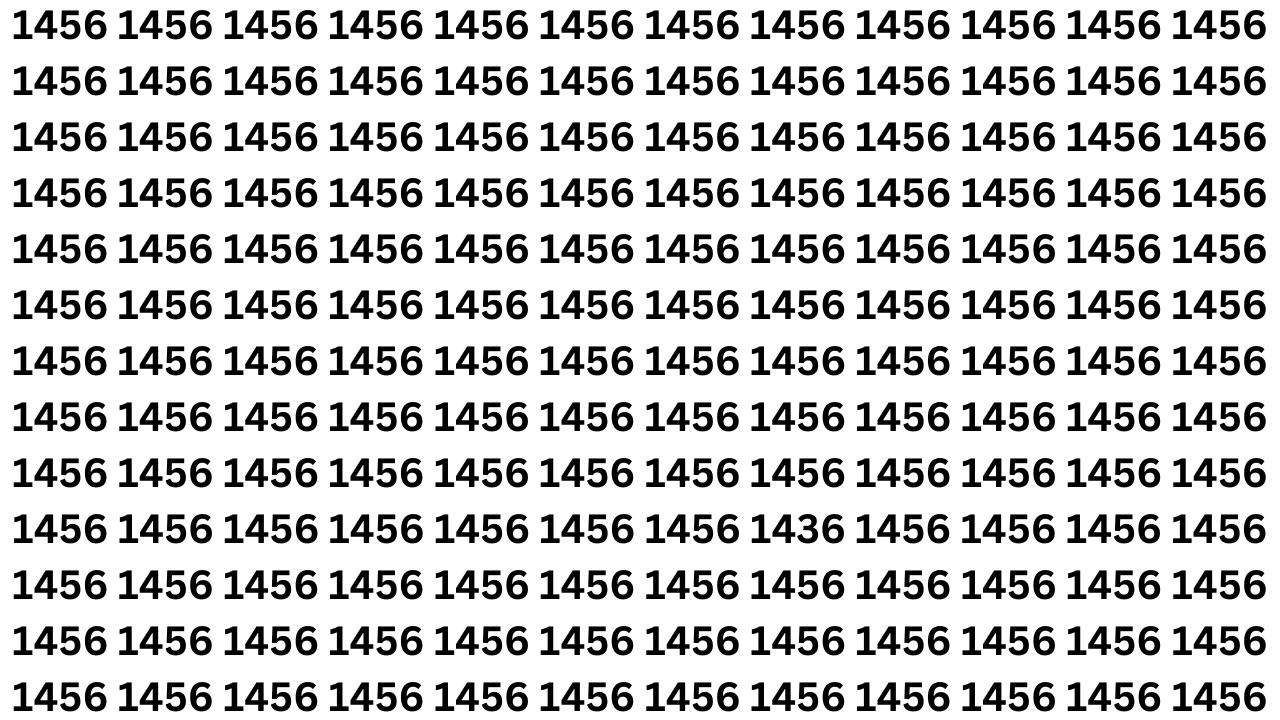
  • Optical Illusion Challenge: Spot 1436 Hidden Among 1456 in 8 Seconds

    Optical Illusion Challenge: Spot 1436 Hidden Among 1456 in 8 Seconds

    In our busy modern world these challenges give your brain a quick & useful workout. Technology and screens fill up most of our time but optical illusion games provide a nice change that takes very little effort or equipment. They wake up your mind & work as both fun entertainment and brain training at the same time.

    How Can You Spot the Hidden 1436?

    When you need to find the number 1436 hidden among many 1456s there are several methods that can help you. Here is how you can get better at this task:

    – Look at Each Digit Separately Start by checking each digit in the number sequence. The numbers look almost the same but one number is different by just one digit which is 1436. Try to find that specific combination of 1 4, 3 and 6 among all the 1456s.

    – Try Using Side Vision Rather than staring straight at one spot try looking slightly to the side. This technique lets your brain notice patterns and differences more quickly and makes it easier to find the hidden number. Notice Tiny Differences Even though the numbers look very similar the hidden number usually has something a bit different about it.

    – Look at how the digits are shaped and where they sit. Watch carefully for small changes in how the 1, 4, 3 and 6 appear compared to the other numbers.

    – Move Fast But Stay Calm You only have 8 seconds to locate the hidden number but try not to feel stressed. Stay relaxed & concentrate on the task while following your gut feeling. The more you practice these kinds of puzzles the quicker and more precise you will get at solving them.

    How Can You Improve Your Optical Illusion Skills?

    How to Get Better at Spotting Optical Illusions To improve your ability to spot optical illusions you need to practice regularly. Begin with easier puzzles and slowly work your way up to harder ones. Here are some helpful tips.

    Start Simple

    Choose basic optical illusions when you first begin. These might include simple pattern recognition tasks or straightforward hidden image puzzles. Getting comfortable with easier challenges builds your confidence & trains your brain to look for visual tricks.

    Practice Every Day

    Set aside a few minutes each day to work on optical illusions. Regular practice helps your brain develop pattern recognition skills. Even just ten minutes daily can make a noticeable difference over time.

    Study Different Types

    Optical illusions come in many forms. Some use color and contrast while others rely on perspective or motion. Expose yourself to various types so you learn to recognize different techniques that create these visual tricks.

    Take Your Time

     Avoid rushing through optical illusions. Give yourself time to examine the entire image carefully. Look at different sections and try viewing from various angles or distances. Sometimes stepping back from the image reveals hidden elements.

    Learn the Science

    Understanding how optical illusions work makes them easier to solve. Read about the psychology & neuroscience behind visual perception. Knowing why your brain gets tricked helps you anticipate where illusions might hide.

    Compare Your Answers

    After attempting an illusion check your solution against the correct answer. Understanding where you went wrong teaches you what to look for next time. With patience and regular practice your skills will steadily improve.

  • Optical Illusion Challenge: Find the Inverted 24 and 42 Within 7 Seconds

    Optical Illusion Challenge: Find the Inverted 24 and 42 Within 7 Seconds

    Optical illusions are interesting tricks that make our brains see things differently than they actually are. This optical illusion challenge asks you to find the reversed numbers 24 and 42 that are hiding among many regular 24s in only seven seconds. It might sound simple at first but these illusions are often harder than you expect them to be.

    Why Are Optical Illusions So Engaging?

    Optical illusions work by confusing the brain. Our brains normally process what we see very quickly but illusions make this harder. The brain has to work more to understand what is really there. In this challenge you need to find two numbers that look almost the same as the others so they are hard to spot. These illusions use light and contrast & angles & patterns to trick our eyes. This challenge shows how small changes in what we see can make us perceive something completely different. You might look at the image and think you have found all the numbers but then realize you missed the hidden inverted 24 & 42.

    How to Spot the Inverted 24 and 42

    Locating the inverted numbers might appear straightforward initially but time is limited and each moment matters. Consider these suggestions to help identify the concealed numbers:

    Maintain Concentration: The numbers may look identical during a quick look but careful examination reveals that switching 24 and 42 is essential for finding them.

    Search Systematically: Rather than rushing through the whole image concentrate on individual sections of the pattern. The inverted numbers might be positioned in surprising locations among the 24s.

    Notice Minor Variations: The 24 and 42 will appear similar to the surrounding 24s apart from a small inversion. Observe the form and placement of each number during your search.

    Rely on Your Vision: Occasionally we complicate the process unnecessarily. Pause briefly and follow your intuition as your mind will start identifying the hidden numbers.

    The Science Behind Optical Illusions

    Understanding how optical illusions work helps you appreciate these visual puzzles more. When you look at an image your brain takes shortcuts to process what it sees. These shortcuts rely on past experiences and familiar patterns. Optical illusions fool these shortcuts by showing images that clash with what your brain expects to see. In this challenge the switched positions of numbers 24 and 42 break the normal visual flow of the image. Your brain struggles to notice the differences because these numbers look almost identical to the surrounding ones. But once you teach your brain to catch small differences you will spot the hidden numbers much quicker.

  • Quick Optical Illusion: Find 28 and 88 Among 82s in 8 Seconds

    Quick Optical Illusion: Find 28 and 88 Among 82s in 8 Seconds

    Find the Hidden Numbers in This Quick Visual Challenge This visual puzzle tests how fast your brain can spot small differences in what you see. Your goal is to find the numbers 28 & 88 hidden among many 82s in just 8 seconds. When you first look at the image the numbers all look the same. But two different numbers are hiding in there somewhere. Can you locate them before time runs out? This exercise will really test your observation skills. The challenge seems simple but your eyes & brain need to work together quickly.

    Why Are Optical Illusions So Fascinating?

    Optical illusions serve as more than simple entertainment. They reveal the mechanisms behind how our brains understand and handle visual information. The brain operates continuously to comprehend our surroundings by using previous experiences and recognized patterns to rapidly identify known objects & shapes. Optical illusions emerge when these patterns get disrupted and cause confusion. These visual phenomena take advantage of the mental shortcuts our brains use & create perceptions that differ from what actually exists.

    How Does This Challenge Work?

    In this optical illusion you see a grid filled mostly with the number 82. Hidden somewhere in this grid are two different numbers: 28 and 88. Your job is to find them within 8 seconds. You need to look carefully and use strong observation skills to spot these numbers quickly. This challenge works your visual memory and tests how fast your brain can process details. Your goal is to find the 28 and 88 among all the 82s as quickly as possible. The more you practice these types of puzzles the better your brain gets at spotting small differences that make them tricky.

    Why Is 8 Seconds So Challenging?

    Eight seconds may sound like plenty of time but it becomes challenging when you need to scan through hundreds of numbers that look almost identical. When we work under time pressure our brains prioritize speed over accuracy. This shift makes it harder to notice small differences between similar items. Optical illusions that use strict time limits take advantage of this mental trade-off. These exercises can help train your brain to process visual information more quickly and efficiently. The tight deadline forces your mind to work faster and develop better pattern recognition skills. Over time this kind of practice can improve how quickly you spot details in everyday situations.

    How Can You Improve at Optical Illusions?

    Getting better at optical illusions requires practice along with some helpful techniques that can boost your results. Start by removing anything that might distract you and concentrate only on the image you are looking at. When you eliminate distractions your brain can use more of its power for the challenge. The more you work with optical illusions the better your observation abilities will get. Doing this regularly helps your brain learn to identify patterns more quickly. Rather than trying to look at everything at once try dividing the image into smaller parts. When you examine one section at a time you have a better chance of finding the hidden numbers. If nobody is timing you then take as long as you need and look at the image carefully. Moving slowly helps you catch details that you might overlook if you rush through it.

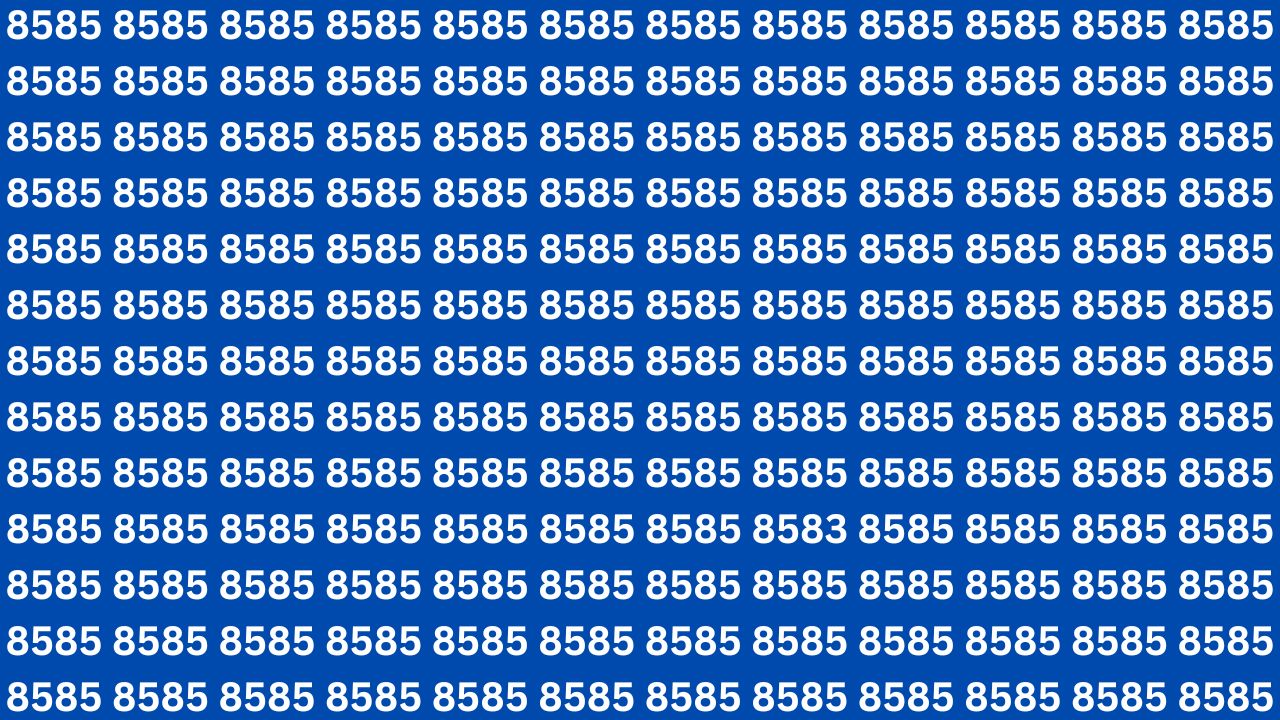
  • Optical Illusion Challenge: Spot 8583 Hidden in a Grid of 8585s

    Optical Illusion Challenge: Spot 8583 Hidden in a Grid of 8585s

    Are you ready to challenge your observation abilities? This visual puzzle will test how well you can concentrate. Your task is to find the number 8583 among many identical 8585s in only 6 seconds. The challenge might look simple when you first see it but the number 8583 blends in with the surrounding digits in a tricky way. This makes the task harder than you might expect. The clock is running so prepare yourself and get ready to solve this puzzle.

    Why Are Optical Illusions So Popular?

    Optical illusions have entertained and puzzled people for hundreds of years. They make the brain see things that do not exist or understand images in ways that seem impossible. These visual tricks remain popular because they test how our minds handle information. Our eyes continuously gather what we see around us but the brain sometimes reads these signals incorrectly. This gap between our perception and reality creates the appeal of optical illusions.

    How Can You Spot the Hidden 8583?

    Finding the Hidden Number: A Simple Guide The key to solving this optical illusion is staying focused and looking carefully at the details. Here are some straightforward tips to help you find the number 8583 hidden among all those 8585s: 

    Pay Attention to Shape

    All the numbers look alike at first glance but 8583 has a small difference. Look closely at the last digit since that is where the numbers differ.

    Take Your Time

    Breathe slowly and do not rush through the puzzle. When your mind is relaxed you will spot the number more easily.

    Search for Pattern Breaks

    The repeated 8585s create a visual pattern across the image. The hidden 8583 disrupts this pattern so try to find where the sequence changes.

    Try Scanning Differently

    Sometimes looking at something indirectly works better than staring right at it. Scan across the image without focusing too hard on any single spot and you might catch the difference faster.

    Why Do Some People Struggle with Optical Illusions?

    The human brain naturally looks for patterns and makes fast decisions based on what it has learned before. Optical illusions take advantage of this by showing images that conflict with how our brain normally works. When you see a picture filled with the number 8585 repeated many times your brain tries to predict what comes next and fills in missing information automatically. This makes it difficult to notice when something is different. The brain also has a tendency to group things that look alike into categories. This is the reason why finding one item that is slightly different among many identical items becomes challenging. When numbers look very similar to each other, separating them becomes harder. This is why most people have trouble locating the number 8583 even though it is actually visible in the image.

    Benefits of Optical Illusions

    Optical illusions are entertaining but they also offer real advantages for your brain. They help you notice small details better. When you work through optical illusions your brain learns to observe more carefully. This skill carries over into daily life and makes you more aware of what is happening around you. Your thinking abilities get stronger too. Figuring out optical illusions makes your brain work through problems and think critically. This mental exercise can improve your memory and overall brain function. These puzzles also build your ability to concentrate. They require you to take your time & pay attention which helps you focus better on other tasks throughout your day.

    Fun Fact: Optical Illusions in Science

    Did you know that optical illusions are also used in scientific research? Researchers study illusions to better understand how the human brain works. By analyzing how we perceive illusions scientists can learn more about visual processing and cognitive function. For instance studies on illusions have helped neuroscientists discover how the brain compensates for missing visual information.

  • Quick Optical Illusion: Spot the Number 1 Hidden Among 7s in Just 7 Seconds

    Quick Optical Illusion: Spot the Number 1 Hidden Among 7s in Just 7 Seconds

    Optical illusions offer an entertaining way to test how our brains work. They make us see things that don’t exist or miss objects right in front of us. Number search puzzles are among the most common types where you need to locate a particular number mixed in with many others. This challenge asks you to find the number 1 hidden among multiple 7s within just 7 seconds. It might sound simple but it’s actually quite tricky. The human brain processes visual information quickly but sometimes takes shortcuts that lead to mistakes. When we look at similar shapes or numbers our mind tends to group them together. This makes it harder to spot small differences.

    Why Do Optical Illusions Trick Our Eyes?

    Our brains process information quickly to understand what we see but they often take shortcuts. These shortcuts help us decide things fast but they can cause mistakes in how we perceive things. Optical illusions take advantage of these shortcuts by showing images that appear to break the rules of logic or reality. When it comes to number illusions like this challenge the brain looks for patterns & repetitions. If numbers are arranged in a way your brain thinks they should follow a certain rhythm it becomes difficult to notice something unusual. The number 1 hidden among the 7s stands out but your brain might be searching for patterns rather than examining each number individually.

    How Can You Spot the Number 1?

    Finding the number 1 in this optical illusion needs focus and attention to detail along with quick thinking. Here are some tips to help you locate the hidden number. Start by scanning the image from left to right and top to bottom or try a zigzag pattern. This approach helps you check every area systematically without missing any part of the image. Since most numbers in the illusion are 7s you should pay attention to any number that looks different. The number 1 will stand out because it does not match the other numbers around it. Sometimes using your peripheral vision can help spot differences that your direct vision might overlook. Try glancing at the image without focusing too intensely on one spot. Although the challenge gives you only 7 seconds you should not panic. Stay calm and maintain your focus. The time pressure might make it more challenging but staying composed will improve your chances of success.

    Why Are Number-Based Optical Illusions Popular?

    Number-based optical illusions test your visual and cognitive abilities in a special way. They challenge both your eyesight and how your brain handles information. These puzzles can sharpen your attention and improve your mental flexibility & reaction speed. People love sharing these illusions on social media and puzzle sites because they are fast to finish and feel rewarding when you solve them. The harder the illusion is the better you feel when you discover the hidden object.

    The Science Behind Optical Illusions

    At their core optical illusions reveal how our brains process visual information. When we look at an image light enters our eyes and is sent to the brain where it is interpreted. Our brain relies on past experiences and patterns to make sense of what we see. However in the case of optical illusions the brain is sometimes tricked into interpreting something incorrectly and creates a false perception. For example in the “Spot the 1 Among 7s” illusion the brain looks for repetition and pattern in the sea of 7s. The 1 is placed in such a way that it doesn’t fit the established pattern but your brain’s tendency to focus on what’s expected may cause it to overlook this anomaly.

  • Mind-Bending Optical Illusion Test Pushes Viewers to Spot 46 and 65 Among 64 in Under Six Seconds

    Mind-Bending Optical Illusion Test Pushes Viewers to Spot 46 and 65 Among 64 in Under Six Seconds

    Welcome to an exciting optical illusion challenge that will test your focus and observation skills. Your task is to find the numbers 46 and 65 hidden among many 64s in just 6 seconds. This challenge is harder than it appears at first glance. Optical illusions help improve your thinking abilities and concentration while providing entertainment. Try to complete this challenge as quickly as possible. This type of visual puzzle requires you to scan the image carefully and identify numbers that look similar but have small differences. The numbers 46 and 65 can easily blend in with 64 because they share similar digits. Your brain needs to process the information rapidly to spot these variations within the time limit. To succeed in this challenge you should focus on one section of the image at a time rather than trying to view everything at once. Look for patterns that break the repetition of 64s. The numbers you seek will stand out slightly if you train your eyes to notice the subtle changes in digit arrangement. These puzzles are popular because they engage your visual processing system and make you think quickly. Regular practice with optical illusions can sharpen your attention to detail and improve your ability to spot differences in everyday situations. Whether you find the numbers within 6 seconds or need more time the exercise still benefits your mental agility.

    Can Your Eyes Detect 46 and 65 Hidden Among 64s Within Six Seconds?

    Optical illusions fascinate people because they challenge how our brains interpret what we see. Our brains naturally seek out patterns and when something breaks those patterns it sparks our interest. These types of visual puzzles work by taking advantage of how our minds automatically look for familiar shapes and arrangements. This makes it harder to spot the differences or unusual elements hidden in the image. However with practice and concentration you can develop your ability to notice even small details that seem out of place.

    Why This Tricky Optical Illusion Confuses Even Sharp Observers

    To finish this challenge you need to train yourself to spot differences and improve your focus on small details. Here is what you can do: Look at the whole image first.

    – Take a fast look at everything. Your brain will naturally notice numbers that stand out from all the 64s.

    – Search for different shapes or shades. The numbers 46 and 65 might be hard to see because they look similar to 64.

    – Try to find numbers that seem wrong or look a bit different. Check the sides and corners. Many times the different numbers are hidden near the edges or in areas with less clutter.

     This can help you find them more quickly. Follow your gut feeling. Your mind can sometimes see patterns that are not really there. Stay alert & trust yourself to find the numbers that do not belong.

    Are You Fast Enough to Crack This Visual Brain Teaser?

    The biggest challenge in this optical illusion comes from how much the numbers 46 & 65 look like 64. Since 64 appears many times throughout the puzzle it becomes even harder to spot the different numbers. Your brain naturally looks for patterns and recognizable shapes so when it sees 64 repeated everywhere it tends to skip over 46 and 65 without noticing them. This puzzle really tests how well you pay attention to small details and whether you can spot minor differences in similar patterns.

    How Solving This Optical Illusion Strengthens Focus and Mental Agility

    Rewritten Text When you take part in optical illusion challenges you are teaching your brain to handle information better. These activities help you focus more clearly and make your visual memory stronger while boosting your ability to notice things that don’t match. If you do these mental exercises on a regular basis you can get better at solving problems and make your mind work faster overall.

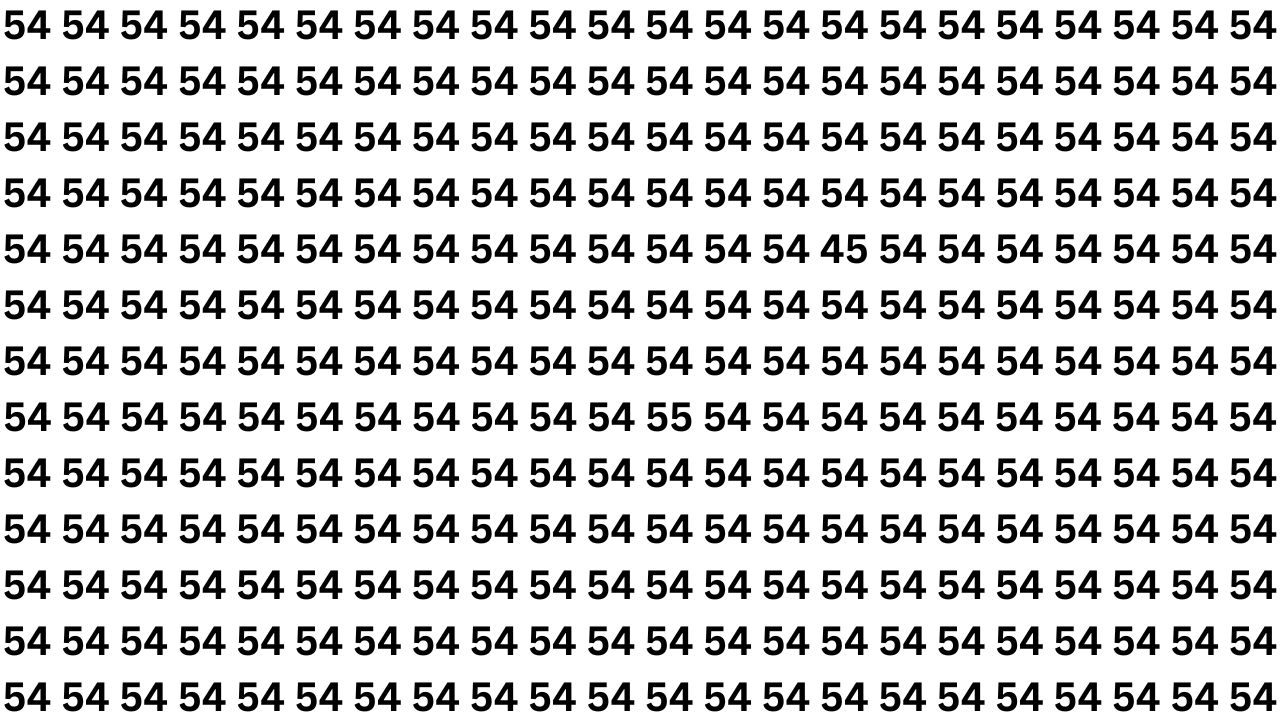
  • Visual Illusion Challenge: Can You Spot 45 and 55 Hidden Among 54s

    Visual Illusion Challenge: Can You Spot 45 and 55 Hidden Among 54s

    Optical illusions have interested people for hundreds of years because they trick our brains into seeing things that differ from reality. This new optical illusion test pushes your observation abilities further than usual. The challenge is simple: find the numbers 45 and 55 hiding in a field full of 54s within just 9 seconds. Can you handle it? This article explains the science that makes optical illusions work & shares tips for improving your observation abilities. We’ll also discuss why certain people excel at finding hidden elements in visual puzzles. At the end we’ll show you where the numbers are located and explain the best methods for spotting them in this difficult illusion.

    The Power of Optical Illusions

    Optical illusions happen when your brain interprets visual information differently from what actually exists. Your brain can be fooled by light and shadow patterns or by the context surrounding an image or even by what it expects to see based on previous visual cues. These illusions offer an interesting window into understanding perception and can help sharpen focus and mental abilities. Finding hidden numbers such as 45 and 55 within a sea of 54s is difficult because these numbers are intentionally designed to merge with their background. The human brain naturally gravitates toward recognizing dominant patterns and often overlooks the subtle differences that distinguish 45 and 55 from the surrounding numbers unless you examine the puzzle carefully.

    How Can You Spot the Hidden Numbers?

    In this illusion challenge the numbers 45 & 55 are hidden within a large group of 54s. So how do you spot them? Here are some useful tips to help you improve your observation skills:

    Focus on the Details: The key to solving optical illusions is paying attention to the fine details. Look closely at the shape of the numbers. Sometimes the numbers that stand out will be slightly different in size or alignment compared to the rest.

    Use Your Peripheral Vision: Often optical illusions work by engaging your peripheral vision where you might notice things that your direct focus misses. Try scanning the entire image without focusing too hard on any one part of it.

    Move Your Eyes Slowly: Instead of scanning the image quickly slow down your movement. This way your brain won’t rush to a conclusion & you’ll have a better chance of noticing subtle differences in the numbers.

    Trust Your Instincts: Our brains are trained to recognize patterns so sometimes the best way to find hidden elements is to trust your first instinct. If you think you spot a number don’t second-guess yourself.

    Why Are Some People Better at Spotting Illusions?

    People different abilities when it comes to finding elements in optical illusions. Several factors affect this skill. Attention span matters because people who excel at optical illusions usually notice small details well and can focus for extended periods. Being able to concentrate without distractions helps you see the subtle differences in these images. Practice is important since this skill improves with repetition. When you work with optical illusions regularly you get better at finding hidden elements. Regular mental exercise increases how fast your brain processes information. Visual acuity affects performance too. Whether someone wears glasses or has naturally good eyesight influences how they handle optical challenges. Clear vision makes it easier to spot differences between objects that look similar. Cognitive processing abilities like pattern recognition & visual memory are significant for solving optical illusions. Some people naturally excel at noticing subtle differences and remembering patterns they have encountered previously. they’ve

    How to Challenge Your Friends

    Once you find the hidden numbers 45 and 55 you can ask your friends to try the same task. This creates a fun competition to see who spots the numbers first. You can make it harder by adding more hidden numbers or giving everyone less time to complete the challenge.

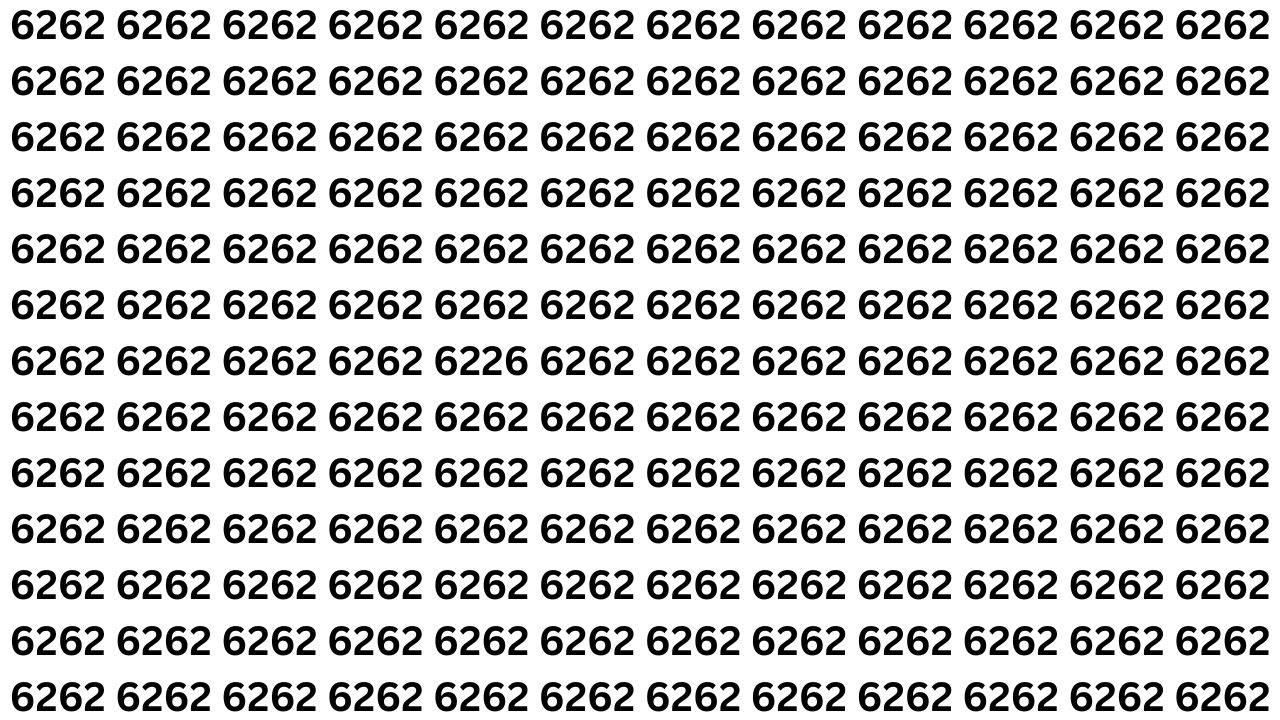
  • Optical Illusion Challenge Drops — Find the Hidden 6226 Among 6262s in Under 7 Seconds

    Optical Illusion Challenge Drops — Find the Hidden 6226 Among 6262s in Under 7 Seconds

    Optical illusions offer an excellent method to train your brain & improve how well you observe things. The challenge today is both entertaining & difficult. You need to find the number 6226 hidden among many 6262s within only 7 seconds. This is a timed challenge that will test how well you can focus and pay attention. This type of puzzle requires you to scan quickly through similar looking numbers while staying alert for the one that differs. The numbers 6226 & 6262 look very similar at first glance which makes this task harder than it seems. Your eyes must work fast to spot the variation before time runs out. When you attempt this challenge you should try to develop a systematic approach rather than looking randomly. Some people prefer scanning from left to right while others find success going row by row.

    How to Approach This Optical Illusion Challenge

    The key to solving this optical illusion is paying close attention to detail. When you first look at it the numbers might seem identical, but looking more carefully will help you locate the 6226 among all the 6262s. Here are some tips to help you complete the challenge:

    – Scan Systematically: Begin from one corner of the image and move your eyes steadily across the screen. This approach ensures you examine every section and reduces the chance of missing any hidden numbers.

    – Notice Small Variations: Pay attention to the minor differences between the numbers. The 6226 has slight variations compared to the others that will make it noticeable once you find it.

    – Manage Your Time: With only 7 seconds available, stay composed and resist the urge to rush. Moving too quickly can cause you to miss important details. Keep your focus steady & take a moment to look carefully when necessary.

    Why Are Optical Illusion Challenges Popular?

    Optical illusions provide more than just entertainment because they offer real benefits for your mental health. These visual puzzles help strengthen important cognitive abilities including focus and memory along with problem-solving skills. When you regularly work on these challenges you train your brain to concentrate better & notice small details in everyday situations. The puzzles encourage you to think critically about what you see and they make excellent activities for taking breaks while keeping your mind engaged & sharp.

    How Can You Spot the 6226 Among 6262s?

    To find the 6226 hidden among all the 6262s you need to look at how each number is built. The 6226 has a different order of digits compared to the others. Focus on where each digit sits and watch for any small shifts in how the numbers look. Another useful trick is to move your eyes from one number to the next rather than staring at a single spot for too long. This lets your brain refresh itself & notice the numbers around it more clearly.

    The Solution

    If you have been looking closely you should have spotted the 6226 by now. It is likely in the middle or a little to the right hidden among the 6262s. If you are still having trouble then do not worry. The more you practice optical illusion challenges the better you will become at spotting patterns quickly.